Sunday, April 28, 2019

#CeciliaBrainard Drawing: Old Haunted House in Cebu Philippines


I'm sharing a corrected version of the Old House in Cebu, my interpretation of the Villalon House. This sat on a hill in Cebu and I used to stare at this last thing at night and wonder about the ghosts and enchanted people that supposedly occupied the house. Sometimes the house would be lit up and the next day people would say the spirits had a party. This was all part of my growing up in Cebu. 
Thanks to those who follow my progress in Art, a new field to me. In this pen and ink, I widened the surrounding yard because a dear friend wisely gave me feedback that the house looked like it would slide down the hill. I also made other corrections. Then I made a mistake on the stairs (fire escape?) and turned it into a woman (ghost?).

Tags: #CeciliaBrainard #Drawing #Sketch #PenandInk #House #HeritageHouse #Cebu #Philippines #Cebuano #hauntedhouse #villalonmansion 

Saturday, April 20, 2019

Easter -- Coloring Easter Eggs


We colored these Easter eggs by drawing designs on hardboiled eggs before dying them. I used food coloring in hot water with a bit of vinegar. The results are pleasing. 

Happy Easter!

#easter #eggcoloring #crafts

Tuesday, April 16, 2019

Remembering the Notre Dame Cathedral of Paris Before the Fire


Like most people I am heartbroken at the fire at the Notre Dame Cathedral in Paris yesterday. April 15, 2019. Today the experts said it may take 10-15 years to rebuild. I've had the privilege of visiting the Notre Dame and even hearing Masses there. Now I realize those were gifts and I am grateful.

Here are some pictures I took of the Notre Dame during various visits to Paris.


Friday, April 12, 2019

Guest Blogger: A Theatrical Experience by Evelyn Morales Del Rosario


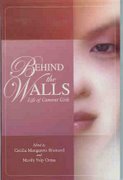
My guest blogger is Evelyn Morales Del Rosario who shares her piece, "A Theatrical Experience". The writing is part of the collection of essays, Behind the Walls: Life of Convent Girls (Anvil, Ed. Cecilia Brainard and Orosa).


A THEATRICAL EXPERIENCE


by Evelyn Morales Del Rosario

We were a Theresian family. All three of my father’s sisters were Theresians. We were the Morales clan, and we all studied at St. Theresa’a Manila from Kindergarten through High School. We were nine girls. My father loved the nuns, and the nuns loved him.

This was not always a benefit for my sisters and me because the nuns knew each one of us individually. Every other class had a Morales student, and every class had either one of us or one of our cousins. We were clearly identified and could never get away with anything.

I was the fourth daughter and had the misfortune of coming after my sister Bunny who was every teacher’s ideal student. She was beautiful with a very sweet and charming personality. I was the awkward one with big feet. Bunny was the president of her class and of the Student Council. I was lucky to have been voted secretary. Bunny breezed through class with high honors while I struggled to keep awake while studying the most boring of all subjects, history. I was a romantic, a dreamer.

The one thing that fascinated me in school was the theater. I volunteered to join any kind of play and ended up having to beg my father to allow me to be part of the production team. I had to sacrifice all other activities just to satisfy the call of a theatrical production. I never thought I was particularly talented, I just wanted to be part of it all. I loved practices that ran until evening. We used to scare ourselves silly with stories of a headless nun roaming the corridors. Of course we never saw anything.

We had a fascinating teacher, Tita Radaic who taught ballet and modern dance. The year I was fourteen, the school decided to interpret in dance, the Song of Songs, more commonly known as the Psalms of David. This was a very radical and modern decision, and it attracted a lot of attention in the local media. Naturally I wanted to be a part of this production. I could not dance, so did not audition. But I was asked to read the Psalms before each dance segment. I was giddy with excitement; I could not believe this was happening to me. Of course I said I would do it and decided to worry about getting my father’s permission later.

It took me about a week to build up the courage to approach my father, and when I did, he said no, I could not do it. He worried about my being in school late at night. I was an indifferent student, and he was afraid I would not be able to keep up. The family was also scheduled to go to Baguio during the performance dates. I was devastated. I had to tell Sister Hilde that my father refused. I prayed harder at Mass every morning, lighting votive candles in San Marcelino church before class and promising God everything I could think of just to make my father change his mind.

Without my knowing, Sister Hilde called phone my Father and asked him to come and talk to her about my involvement in this production. She planned her arguments well, promising Father that my homework would be done between rehearsals, and offering to let me sleep at the dormitory during the performance dates. Father finally agreed. I was ecstatic.

I loved the rehearsals. I would practice my lines and study my lessons every evening. I had never done so well in my classes. We were informed that our presentation was going to be filmed and aired on television. We were awed.

The night of the dress rehearsal came, and my father brought me to school and turned me over to Sister Hilde. I felt like an orphan. Here I was, the lector of the school main production of the year, and my own family would not even be there to see me. I started to feel very sad. But that was nothing compared to the angst I would experience that night. I had not realized that the dormitory would be literally empty except for me. It was a long weekend, and all the boarders had gone home. I was brought to this large hall lined with beds. The mosquito netting was rolled up over each bed. I was given a bed in the middle of the hall, shown how to untie the straps holding the netting up, and how to tuck the netting under the mattress. I had never slept under a mosquito net before. Father always kept our bedrooms at home freezing cold so that we shivered under woolen army blankets. I had brought my long white flannel nightgown, but the dorm was so hot. The nun in charge of the boarders told me that her bedroom was down the hall. I was to sleep in the dorm all by myself.

The dress rehearsal ended at 8:30 pm, and I made my way to the dormitory, half running and trying to keep my head down and my eyes half closed. I was so afraid of seeing the headless nun or some other ghost. I arrived at the dorm shivering from fear. I had to go to the bathroom, but did not want to risk it. I was in agony. Finally I decided to sing my prayers and tiptoed to the bathroom. Afterwards, I ran back to the dorm and slid into bed. I had a flashlight with me, but it made such eerie shadows that I felt less afraid when I turned it off. I pulled the sheet over my head and willed myself to sleep while praying the rosary. I sincerely regretted ever even wanting to take part in this presentation. I had one more night of this torture to live through.

It turned out that the show was a success. I was tickled to see myself on television. But I still shudder whenever I remember those two nights alone in the dormitory.

~~

BIO: Evelyn Morales del Rosario studied at St. Theresa's College in Manila from kindergarten through high school. She obtained her Bachelor of Arts degree from the University of Connecticut. She completed a year of law school at the Ateneo Univerity and obtained an MBA from De La Salle Univedrsity. She completed all coursework for DBA at De La Salle University.
She has worked in the airline industry, has been a food author and food stylist. She has extensive managerial, marketing and corporate communications experience. She has lived and worked in Germany, Geneva, and now lives in Montreal. 


Saturday, April 6, 2019

Guest Blogger: Agape by Tony Robles


My Guest Blogger is Tony Robles who shares his personal essay, "Agape." This story is part of the book Finding God: True Stories of Spiritual Encounters (Ed. Cecilia Brainard). The book won the 2019 Gintong Aklat Award in the Philippines. 


AGAPE
by
Tony Robles


The race was lost before it began. There I stood next to the starting blocks waiting for the fellow in the white cap to say, “Runners, on your mark, get set. . . BANG!” How did I get into this situation—all those white faces in the stands. Who were they? I stood on the track with five or six other boys—all a bit older, all a bit pink in the oppressive Florida sun. I glanced at them and wondered what they were thinking. I looked up at the sea of white faces in the stands and became nauseated. My intestinal discomfort wasn’t primarily due to the sea of white faces surrounding me as it was the fact that I knew I was in a race I wouldn’t— no, couldn’t win. Somehow I wished the fellow in the white cap would just pull the trigger and get it over with. As I stood, I entertained the thought of the fellow in the white cap shooting me—perhaps in the leg or in the ass—then I’d have a legitimate excuse not to run. They would just cart me off and I’d be forgotten quickly.


Thursday, April 4, 2019

Guest Blogger: Thank you by Raquel Villavicencio Balagtas


My Guest Blogger is Raquel Villavicencio Balagtas whose moving personal essay, "Thank You", is part of the book, Finding God: True Stories of Spiritual Encounters (Edited by Cecilia Brainard & Orosa, Anvil 2009).  The book won the Gintong Aklat Award for 2010). Thank you Raquel.

~~~

THANK YOU

by Raquel Villavicencio Balagtas


It was February 2006, two years and five months to date, when I read a pamphlet titled, “How to Avoid Purgatory.” It was given to me by Sister Lily Natividad of the Divine Endeavors Organization (DEO) exactly one year earlier, February 2005, when I went home to Manila.

I said thank you, took it back with me to Charleston, SC, and set it aside, with no intention of reading it at all. I was, still at that time, what I would describe as a “last in, first out Sunday Mass goer,” a cradle Catholic. 

I was cleaning my book shelf, February 2006, when I saw the pamphlet again. I read it and my life has never been the same again. Like St. Augustine, in many ways, I can say to God: “Late have I loved You.”

I was fifty-nine years and two months old, still married to George, but residing separately. I found myself first in New York in 1990. Then I moved to Charleston, SC in 1993 and have been here ever since.


Sunday, March 31, 2019

Guest Blogger: Guia Lim Writes About Mary, Our Lady of Antipolo of the Philippines


Guia Lim shares her article about Our Lady of Antipolo. This is part of the book,  Magnificat: Mama Mary's Pilgrim Sites, Ed. Cecilia Manguerra Brainard, (available from Amazon). The book collects articles by Marian devotees who witness how their lives have been touched by Our Lady. ~ Cecilia

 2024 Update: A Catholic religious book that I collected and edited has a new edition - MAGNIFICAT: MAMA MARY'S PILGRIM SITES gathers 24 people's accounts of Marian sites wherein they found comfort, solace, and sometimes miracles. The pilgrim sites include familiar shrines in Lourdes, Vailankanni, Guadalupe, Fatima, Ephesus, as well as lesser known ones including several in the Philippines (Antipolo, Manaoag, Odlot, Caysasya and more).  It is available from Amazon.

~~~


Our Lady of Antipolo
PHILIPPINES – Shrine of Our Lady of Antipolo

The Shrine of Our Lady of Peace and Good Voyage or Our Lady of Antipolo is located in Rizal Province, east of Manila, in the Philippines. The brown image of Mary was brought to the Philippines from Mexico in 1626. Enshrined in the Antipolo Cathedral, Our Lady of Antipolo has a huge following among Filipinos since Colonial days. Our Lady of Antipolo is known as a miraculous icon. Among the numerous pilgrims who visit the shrine are travelers who pray for a safe journey.

Legend has it that when the statue of Our Lady was going to be transferred from the Church of Antipolo to one in Sta. Cruz, the statue protested and was always found on the tree trunk of a tree called Tipolo which grew in the original site of the old church. Because of this, the Blessed Virgin was known as the Virgin of Antipolo.

OUR LADY OF PEACE AND GOOD VOYAGE / OUR LADY OF ANTIPOLO

by Guia Lim


IF THERE is a shrine of our lady in the Philippines or anywhere in the world that conjures both a sense of prayer and fun, it must be the shrine in Antipolo a city in the Philippines, east of Manila. The shrine honors an image of our lady, made of dark hard wood, with a long history behind it. The brown virgin, in ornately embroidered and beaded finery is enshrined at the Cathedral of Antipolo above the main altar. What appears like a full figure, about four feet tall is actually a bust with hands, clothed to simulate a full figure in a long skirted frock, with a cape and a crown.

The statue of Our Lady of Antipolo has had her share of adversity in her many travels. She was introduced to the Philippines as Our Lady of Peace and Good Voyage at the time of the galleon trade between Manila and Acapulco. The galleons were ships carrying goods and people that served as a means of cross-country transportation for two centuries, when the Philippines was a Spanish colony.

Knowing how treacherous sea travel was then, ships were normally dedicated to a saint or to one of the many titles of our lady in quest of her protection during the journeys. The statue of our lady was taken from a church in Acapulco and placed in a prominent place in the ship, prayed to and sang to most fervently during periods of trouble at sea. Mutiny, piracy, disease, bad weather, rough seas and fire were the dangers faced by every voyage. The voyages took months to complete but the voyages where the statue of our lady was honored were all successful. Troubles confronted were overcome with speed and peace. Placed in perspective, a third of the 108 galleons that plied the route were lost at sea. Such was the awe Our Lady instilled among her devotees. After the final journey of the galleon, the then presiding Governor General of Manila offered his troubled administration to our lady, by placing his cane in her hands. Today, all replicas of Our Lady of Antipolo, carry a staff.

The Philippines is a predominantly Catholic country, a legacy of the more than 300 years of Spanish colonization. The statue came from Acapulco, Mexico, brought to the Philippines by then Governor General of Manila, Juan Niño de Tabora in the 1600s. In the early days, Antipolo was a Catholic mission where the statue of Our Lady was exposed for easy access by the simple folk in this hillside community. Folklore has it that at one time the statue was lost and miraculously found atop a Tipolo tree (breadfruit), the tree after which Antipolo got its name. The tale was believed to be Our Lady’s expression of preference for Antipolo to be her home. It is also said that a stand made from the tipolo tree was made, on which the statue then stood. The face of the statue of Our Lady bears deep scars inflicted by sacrilegious acts of vandals. She also withstood a fire meant to destroy her. Attempts were made at restoration but our lady’s face resisted repair. Her wounds seem to draw more devotion to her.


Our Lady of Antipolo is dedicated to the Immaculate Conception whose December 8 feast day is observed as the traditional annual fiesta. In 1926 by the papal decree of Pope Pius XI, the image of our lady was bestowed the traditional canonical crown in recognition of her antiquity, the enduring faith and devotion of many pilgrims in her intercession and the answered prayers of her devotees. In 1954, the Antipolo cathedral became a national shrine of our lady as declared by the Bishops of the Philippines.


Antipolo was placed on the Philippine map by Our Lady. The Cathedral is a shrine visited by tourists, both local and foreign. As I remember, May time is Antipolo time. Even during the early days, people would have to pay homage at least once a year in May. It meant waking up at early dawn to commence the trek, made long by the sheer number of vehicles on a narrow two lane highway, with limited road arteries to relieve the congestion. The main activity upon arrival was to hear Mass, but to be devout was difficult in the church made too small by the number of pilgrims. In the olden days, when roads were undeveloped and vehicles were non-existent, only the elite made the trip. Ladies wore their best and some were carried on hammocks. Because of the ordeal, the pilgrims stayed for a few days to complete novenas to Our Lady.


Today, with the onset of development, the roads are wider and the Church has had a few renovations to look better and larger but it is still too small for the numerous pilgrims in May even with some spillover to June. The devotion has not waned. The holy Mass is still the main event. The Cathedral as in the past is surrounded by crude stalls selling candles and local delicacies as roasted cashew nuts, rice cakes, native pastries, mangoes and other summer fruits. Food stalls selling hot meals also abound for a quick breakfast, brunch or lunch, depending on the time of day. No visit to Antipolo is complete without food souvenirs, for family members at home who did not make the trip. That makes the entire Antipolo experience well entrenched in Philippine cultural tradition, our lady being at the center of it all.

New expressions of devotion have emerged overtime. The new practices reflect changes in the environment brought about by the cultural and economic evolution of the country. What remains constant are people’s fervor in prayer and faith in our lady’s intercession. Here is to cite a few.

A visit to the shrine has become a pre-departure practice for travelers and migrants moving from the Philippines to other foreign countries. As millions of Filipinos now seek employment abroad, the practice of visiting our lady in Antipolo has become broad based. Filipinos come, before departing for countries all over the world, wherever employment calls. Our Lady’s intercession is sought, for safety during the journey, protection of loved ones to be left behind, and good fortune in their chosen pursuit.


For new car owners, of brand new or previously owned vehicles, the protection of Our Lady is also sought at the shrine. Both the vehicle and the driver are blessed for safety in all their trips. The memento of the blessing is a medal or a rosary, reciprocated by a small token to benefit the shrine.

At dusk every Maundy Thursday, pilgrims walk about 20 kilometers from various points in Manila.An uphill climb at the height of Philippine summer, that lasts through dawn. Final destination is the Antipolo Cathedral. The initiative is purely the pilgrims’ but what is noteworthy is the growing number of participants who undertake this relatively recent prayer phenomenon.

The statue of Our Lady is accessible to every devotee who will pay her a visit. People are shown the way to the sacristy behind the main altar where a staircase leads to the statue of our lady, giving the visitor a chance to touch her hand or at least her cape. Every first Saturday evening, before the anticipated Sunday mass, Our Lady is brought down from the main altar and shown around the church for the Mass goers to visually experience her presence at close range.

The practices observed in honor of Our Lady are too many to narrate but suffice it to say that the faith in Our Lady and answered prayers have kept the fire of Marian devotion burning. It would have been a disgrace for me to look away from this opportunity to give her tribute when after all these years, I have had proximity and easy access to her from my home in Antipolo.

The Cathedral retains its rural surroundings and the church goers remain simple folks, some dressed like one. Attending mass is like going back in time when churches were the dominant attraction in every town. The crowd at Mass can be unsettling at times and distracting in others but somehow it gives me a sense of peace and belonging. From all walks of life, we become one in our desire for a good life and spiritual peace, under Our Lady’s watchful eyes, always available and always comforting.

+++
BIO: GUIA LIM is a banker, a career she built and nurtured since she got out of school. Her formative years were spent at St. Theresa’s College. She maintains a rest house in Antipolo, thus her openness to be a contributor to the Marian Site Anthology. She was Executive Vice President of Union Bank. She also worked for BDO .

Friday, March 29, 2019

Guest Blogger: Our Lady of Peñafrancia by Ma. Teresita Herrera-Tan


Our Guest Blogger is Ma. Teresita Herrera-Tan who writes about our Our Lady of Peñafrancia. Her article is part of a book I edited, Magnificat: Mama Mary's Pilgrim Sites, a collection of personal stories by devotees of our Mother Mary. The book is available in Kindle form. ~ Cecilia

~~~

What they say about: MAGNIFICAT: MAMA MARY’S PILGRIM SITES (Anvil, 2012; Kindle)

This is another outstanding book by Cecilia Manguerra Brainard. Profoundly Marian and beautifully written by the contributors as these are their personal experiences! To our fellow devotees and would-be devotees of the Blessed Virgin Mary, you will surely fall in love with "Magnificat: Mama Mary's Pilgrim Sites" and love Our Blessed Mother even more. ~ +Leopoldo C. Jaucian, SVD, DD, Bishop of Bangued, Philippines

The devotion to Mama Mary is strong in the heart of every Filipino. ~ James B. Reuter, S.J., Author of the Mama Mary and His Children Series


The Magnificat has always been a testament to God’s paradoxical dealings with his people. This book assembles a tableau of witnesses to how a visit with Mary can turn into a life-changing introduction to her Son. Through their stories the authors offer their readers the distinct possibility of setting the stage for a personal, if vicarious, epiphany. ~ Fr. Dionisio M. Miranda, SVD, President , University of San Carlos


Running as a leitmotif in all the essays in this book is the writers’ palpable love for Mama Mary. Each writer has undergone a change in his or her life or outlook following a visit to a Marian site. Some may have experienced a “miracle,” or felt consoled and renewed; others a deepening of spirituality, or an epiphany, an insight into the divine. Although we know that Jesus is the only Way to the Father, it is our belief in the power of Mary’s intercession to her Son, borne out of the Bible’s Cana story, that makes us all turn to Her, whom Her divine Son will never refuse. Kudos to Cecilia Manguerra Brainard for putting together an engaging collection of stories that magnify the humble handmaid of the Lord. ~ Erlinda Enriquez Panlilio, Award-winning writer and editor

+++


Our Lady of Peñafrancia

PHILIPPINES –Shrine of Our Lady of Peñafrancia, Naga City, Bicol

The venerated image of Our Lady of Peñafrancia is a replica of the Madonna of Peñafrancia in Spain. The feast of Our Lady of Peñafrancia is celebrated on the third Saturday and Sunday of September in Naga City, Bicol, Philippines. The official coronation of Our Lady of Peñafrancia as Patroness of Bicol took place in September 20, 1924.

~

OUR LADY OF PEÑAFRANCIA

by Ma. Teresita Herrera-Tan


MANY Catholics from all over the world have a special devotion to the Blessed Virgin and Filipinos are no exception. I, myself, have always been a Marian devotee and I believe that through her intercession, my family has been granted healing. She has always been good to me and my family.

So many titles of the Blessed Virgin Mary came to mind as I was about to write this article. To name a few, Our Lady of Fatima, Our Lady of Lourdes, Our Lady of the Rosary etc. In the Philippines, Filipinos in the vernacular, call her “Ina” (mother), “Inang Maawain” (merciful mother), Mama Mary and other titles referring to her as our mother. There are shrines dedicated in her honor, Our Lady of Peace and Good Voyage (in Antipolo), Our Lady of Manaoag (in Pangasinan), Our Lady of Peñafrancia (in Naga and in Manila). Marian devotees in search of miracles or in gratitude for answered prayers through the intercession of the Blessed Virgin Mary flock to these shrines during her feast day, celebrated in grand “fiestas” in the Philippines.

For this article, allow me to write about the Blessed Virgin Mary as Our Lady of Peñafrancia. This is providential since the Parish Church of Our Lady of Peñafrancia (de Manila), built in 1951, is nestled among the homes in Burgos, Paco Manila. My parents then, had a home in Paco, Manila Philippines in the fifties to the sixties.

In my growing up years, my family and I used to attend mass and other church services in this Parish Church. On weekdays I would attend mass here before I went to school. After we left our Paco residence, it became my devotion to attend Mass during the “fiesta” of Our Lady of Peñafrancia at Paco, Manila, whenever, I could.


Where It All Started

Simon Vela (of French descent) belonged to an affluent family who sold all his inheritance, and donated the proceeds to the church and the needy, when his parents and only sister died. Thereafter, he became a chamber boy in a Franciscan convent. One day while in deep prayer he lost consciousness and Our Lady appeared to him and asked him to go to Peña de Francia and look for an image similar to Our Lady as she appeared to him. 

For five long years, he travelled in France, looking for Peña de Francia to no avail. He went to the University of Salamanca, Spain to do some “research”. One day while in a market place in Salamanca, he overheard two men talking of Peña de Francia, a mountain range, between France and Spain. He immediately set foot to find the place, which in the distant past was occupied by French people who valiantly resisted the vigorous attacks of the Moors, hence the name Peña de Francia or “Rock of France.”

At first he was alone digging in a cave. But when he was about to find the image, Our Lady appeared to him and told him to get companions (to serve as witnesses). With four other companions, Simon Vela went back to Peña de Francia. They dug at the place and on May 19, 1534, excavated the original image of the Nuestra Senora de Peñafrancia (Our Lady of Peñafrancia), so called because the image was excavated in “Peña de Francia.” Soon thereafter, the Virgin granted him and his companions special graces for the healing of their physical ailments. (The official document of these miracles and this discovery is preserved in the archives of San Martin de Castañar). That was the start of the devotion to Our Lady of Peñafrancia. She also became patroness of Salamanca, Spain.


Our Lady of Peñafrancia in the Philippines

In the Philippines, Our Lady of Peñafrancia, came around May 14, 1621 (others say 1697). There are two versions as to the origin of Our Lady of Peñafrancia.

According to legend, the image-painting was fished out of a riverlet in Paco which was then marshland. It was brought to the church of the La Candelaria, run by Franciscan religious at San Fernando Dilao, Paco (behind the present Manila City Hall). After its installation the image disappeared and was later found safe in a “bakawan” (mangrove) tree in the original site where it was found. The lady disappeared three more times and each time, she was returned to the church in San Fernando Dilao.

On the 4th time that she disappeared from the church, the residents kept her and built a small chapel made of nipa and bamboo. That chapel, where the original image painted on thick canvas is enshrined, is now the parish church of Our Lady of Peñafrancia de Manila in Paco and is located at the very spot where the image of our Lady was found. 

The image-painting shows the Madonna, sitting on a throne on top of a mountain, and the Child resting on its mother’s lap, holding a globe on its left hand while His right hand is raised in benediction. Simon Vela (who found the original image) with arms extended in prayer, kneels on the right of the Lady with the brown robe of the Franciscan order draped over his body. Before its restoration by Jun Gonzalez, specimens of the painting were examined at the Instituto Centrale Del Restauro and it was established that it was done in the 1600s by a Spanish artist. Today, the Parish of Our Lady of Peñafrancia de Manila serves the residents of and nearby locations and many pray and seek her intercession to ask for favors and she has not failed them. Our Lady of Peñafrancia was canonically crowned by Jaime Cardinal Sin on November 10, 1985. A cancer survivor gave the crown made of pure gold and studded with diamonds. Her feast day is celebrated on the Sunday nearest to May 14. 

Another version of the origin of the Nuestra Senora de Peñafrancia is that the painting of Our Lady was brought to the Philippines by the family of Covarrubias, a Spanish government official and a native of San Martin de Castanar. They lived near the small Spanish garrison which was located in the vicinity of the present church. 

One of the sons of the Covarrubias family, Miguel Robles de Covarrubias, was sickly and had a special devotion to Our Lady of Peñafrancia. Whenever he was sick or had troubles, he would hold a picture of the image and pray to her. He later became Parish priest of Nueva Caceres (Now Naga) and brought with him the devotion to Nuestra Senora de Peñafrancia to the place. In 1712, Fr. Miguel had an image made of Our Lady of Peñafrancia which was stained with animal blood to preserve it. Thus the dusky color of the image, similar to the complexion of the aetas who were the inhabitants of the place at the time. 

Bicolanos call Our Lady of Peñafrancia “Ina” and every third Saturday of September, a fiesta to celebrate her feast day is held. The image is transferred from the Minor Basilica to the Naga Cathedral where she stays for the duration of the novena. It is also to accommodate the numerous devotees who participate in the fiesta. After the fiesta, a fluvial procession called “translacion” takes place where the image of Our Lady is returned from the Cathedral to the minor basilica. Last year, 2010, her 300th anniversary was celebrated with much festivities and fanfare. Thousands of pilgrims flocked to Naga to pay homage to Our Lady to whom numerous miracles are attributed. 


Miracles in Our Family

My family was also granted the favors we prayed for through the intercession of the Blessed Virgin Mary. I believe these were miracles. Foremost are the healing of my daughter and my Dad.

Tessa Marie Kristinne (Pops, as we fondly call her) was born with Down syndrome and a congenital heart defect. From birth she was sickly and the hospital became a second home for us. I continued my devotion to Our Lady and prayed for special graces for the healing of our daughter. It was a roller-coaster ride for the family especially for the first eight years of her life. There were many times she was in the brink of life and death. When she was twenty-eight years old, her heart condition became worse and she even had to use a wheel chair when we went to church, the malls or when we travelled. She is fond of going out but there was a time she preferred to stay home. This worried us no end. She was confined for a heart operation and an angiogram was made in preparation. However, the results were not compatible with a heart operation. The doctor (though he hoped he was wrong) gave her not more than 3 years to live. Now, he is glad he was wrong! Family, relatives and friends stormed heaven with prayers and today, at thirty-three years old, she is 115 pounds (33 pounds lighter) and though not 100 % recovered from her heart disease, she is still our sweet angel. Just recently when she saw a ballet number on TV, she was dancing around the room and said she wants to dance again. When she was between nine and sixteen years old, she went to a ballet school and had five recitals at the Cultural Center of the Philippines, (CCP), Philamlife Auditorium and the Metropolitan Theater. I cried every time I watched her dance because even with a group she did not miss a step. We still continue to pray to Our Lady and believe that she would always hear our prayers for our daughter.

Another favor granted through the intercession of Our Lady was the recovery of my Dad from stroke in 1998 and the accident he had in 2002. He slipped and hit his head on the floor and had a two–inch cut on his forehead. A cut on the forehead really is bloody. Within the week of his accident he had to be rushed to the emergency room of Makati Medical Center and Asian Hospital four times because the bleeding would stop for a while then would bleed again a few hours after we got home. One night the cut again bled and I pressed the cut with my fingers at the same time we prayed the Hail Mary aloud. Then as I gazed around my Dad’s room, my eyes looked out of the window which opened directly in the direction of the grotto of Our Lady of Lourdes. As I continued pressing the cut for about half an hour, praying the Hail Mary and looking at Our Lady, the bleeding suddenly stopped. Thereafter, my dad was calm and slept soundly until morning. I believed that Our Lady granted our prayers for the bleeding to stop. Last September 2011, Dad celebrated his eighty-seventh birthday. 

Another miracle in the family is the love story of my brother, Jorge and his wife, Mina. Mina who comes from a religious family is a devotee of Our Lady of Peñafrancia. Back in 1978, Mina and Jorge were both legionaries of the Praesidium “Our Lady of Beautiful Love” which is an offspring of Our Lady of Peñafrancia Praesidium. They were partners in most of the legionary works, and group mates in other legionary activities. They believed that Our Lady played cupid in their relationship from friendship/courtship to marriage.

When they were planning their marriage, Jorge was retrenched from Philippine Airlines. It was a big setback but Jorge wanted to push through with their plans believing that the retrenchment was a blessing because it gave them more money to be used for the wedding. Of course, Mina’s Mom was apprehensive to see her daughter married to a jobless man at the beginning of their marriage. Her Mom told her that Jorge should first find a job even as a janitor before they got married. Mina prayed hard and asked for the intercession of Our Lady of Peñafrancia and continued with her daily rosary and masses at the parish church.

On November 30, 1982, a month before the “pamanhikan” (where the prospective groom’s parents would formally ask the girl’s parents for her hand in marriage), Jorge found a job which was even a higher position than his former job. They were married on March 4, 1982, the anniversary of their praesidium “Our Lady of Beautiful Love” offspring of the praesidium, Our Lady of Peñafrancia.

Today, they still continue their devotion to Our Lady, who gave them a beautiful love and an intelligent, beautiful, God-fearing daughter, Martha Joyce. 


Other Miracles 

Through interviews with Rev. Fr. Alexander O. Thomas, Parish Priest of Our Lady of Peñafrancia de Manila and some parishioners in Burgos, Paco Manila, particularly Ms. Nora Aglibata, Mrs. Tess Murillo and her daughter Pie, Mrs. Ruth Jalocon, and a few others, I have also been told of the origin of Our Lady’s image, the church and some answered prayers through the intercession of Our Lady of Peñafrancia de Manila. My eternal thanks to them for helping me in this article.

One devotee tells of how she prayed to the Our Lady of Peñafrancia for almost a decade to have their own home and specifically in Little Baguio, San Juan to be close to her and her spouse’s work and school of their only child. After three years of house-hunting they found their home where else, but in little Baguio, through our lady’s intercession. To this day, the devotee says they are forever indebted to Our Lady.

Another tells of how their house was saved in a fire that razed Burgos, Paco. She prayed to our lady and resigned herself that their house would be the next one to be burned. Lo and behold the firemen came and their house and belongings, though drenched in water was saved.

A devotee’s house was burned twice without any casualty in their family and has now has re built their house through her prayers to Our Lady.

Another mother devotee prayed for her son’s (who had 4 children) second life and her prayers were answered.

My first trip to Naga City was also providential. I was there on an official business and I was glad that I could go there since I have always wanted to go to the basilica of Our Lady of Peñafrancia. However, I seemed not to find the time due to work but it was my work which brought me there! Finally I went to the shrine (a minor basilica) located at the slope of Mt. Isarog, about two kilometers from the municipal building. It was beautiful and the place where it was located was quiet. It has been described as “that first chapel made of nipa and bamboo is now a minor basilica evolving from a series of changes in its architecture and structure, from Chinese influence to baroque style to the neoclassical design that it is today.”

I distinctly remember it was a Wednesday. There were a few people inside the church as I was early for evening Mass for Our Lady of Perpetual Help. The church was beautiful and I felt that kind of indescribable “feeling” when you enter a church for the first time. The Image of Our Lady of Peñafrancia was at the center of the main altar. The image was beautiful as if calling you to pray. I came nearer and prayed a prayer of thanksgiving for all my blessings. After the mass and praying to our lady, my heart felt lighter. A feeling of peace enveloped me which lingered for a long while, after I left the church.

Today, I still continue my devotion to Our Lady who seemed to be always there when things go wrong and I pray for her intercession not only to ask favors but also in gratitude for the many favors and blessings granted to me. Hail Our Lady! Hail Our Lady of Lourdes! Hail Our Lady of Fatima! Hail Our Lady of Peñafrancia! Whichever way I call you, you are still my Mama Mary and the mother of all mankind, our intercessor “to Jesus, through Mary”.


Reference/Acknowledgements:

1. Barcelona, Mary Anne. Ynang Maria: A Celebration of the Blessed Virgin Mary in the Philippines. Edited by Consuelo B. Estepa, P.D. Pasig City: Anvil Publishing, Inc., 2004.

2. Hail, Our Lady of the Poor by Ching M. Alano, Weekend, May 12, 1985.

3. Totus Tuus, Maria Foundation, Inc. “Our Lady of Peñafrancia, Celebrating 300 years of devotion in the Philippines by Dr. Virginia Guzman-Manzo,M.D. (2009)


+++

~~
BIOMA. TERESITA HERRERA-TAN: Daughter of Jose and Rosita Herrera, mother of Tessa Marie Kristinne “Pops” and wife to Rosendo, Jr., Tessa has been in the field of Human Resources Management and is a practicing lawyer in labor laws and intellectual property rights. Schooled in catholic institutions, St. Theresa’s college, UST and San Beda College, she is a staunch Marian devotee.
Tessa is one of the founders of the Down Syndrome Association of the Philippines, pioneer support group for parents and families of down syndrome children. She dabbles in writing every now and then and enjoys reading poetry and non-fiction.  
~~~

Read also Raquel Balagtas' Article "Thank You" which is part of Finding God: True Stories of Spiritual Encounters

Tags: #Catholic #Christianity #MamaMary #Marian #Mary #religion #Magnificat

Thursday, March 28, 2019

Evora Portugal: Chapel of Bones


In Evora, Portugal, we visited the Franciscan Chapel of the Bones. The Franciscans used bones buried outside church grounds to create this meditation chapel. It's a room around 60 by 40 feet with skulls and other bones arranged into a pattern. There is a sign that translates: 
"We bones that here are, for yours await”.

In Lima Peru, we had seen a crypt with human bones at the Franciscan monastery.

#travel #Evora #portugal #tourism ossuary 

Wednesday, March 27, 2019

Evora, Portugal: Mary Our Lady of Mothers


Portugal - Evora: the image that comes to my mind this early morning is that of the statue of a very pregnant Mary. I saw her at the ancient Cathedral of Evora, which was  built in 1186, though restored in the Gothic style in the 1400s. Vasco de Gama had his ships' flags blessed at this same cathedral.

I was surprised to see the pregnant Mary on an altar. Called Our Lady of Mothers,, she was put there in the 15th century by priests who thought she could convert pagans who worship goddess/mothers.

Now I'm sorry I didn't buy a statue of her, but this particular statue was somewhat steep, and my luggage getting full.

As you look at her image, please say a Hail Mary for world peace.

Tags; #marian #portugal catholic christianity 

Tuesday, March 26, 2019

Photo Shrine of Our Lady of Fatima, Portugal


I just returned from a visit to Portugal, including the Shrine of Our Lady in Fatima. I’m in the middle, standing behind our kneeling tour director.

Since I am a devotee to Our Lady, I was thrilled to visit Fatima. Fatima was not as crowded as Lourdes, Guadalupe, or Knock, which I’ve visited. I did notice that churches in Portugal are not filled with people. By contrast, Philippine churches are always full, and even Masses are even said in shopping malls to accommodate the crowds.

I’ll be sharing more pictures from Portugal, so stay tuned.

Tags: #Mary #Marian #Catholic #Christianity #Fatima #Portugal

Thursday, March 14, 2019

Guest Blogger: Carol Ojeda-Kimbrough retells a story "Angge's Piano"


My Guest Blogger is Carol Ojeda-Kimbrough who retells a story.  Carol has been my Guest Blogger in the past, so be sure and read her other work posted in my blog.


Angge’s Piano

by Carol Ojeda-Kimbrough


I had the distinct honor and privilege to have been a guest at Angge and Manny Lahoz’ organic farm in Zambales during my vacation to the Philippines last January 2019. My cousin Ditas and I enjoyed the couple’s hospitality as they took us on a tour of the farm’s vast rice fields where we saw a carabao named “Glorioso” basking in the mud after a hard day’s work, while a Tagak (snowy egret) sat on his back and groomed him. We also walked around their “bahay kubo” garden where I saw, for the first time, cashew trees!!

We were housed at the second story of their building, where the sun peeking through the Capiz windows, and the neighborhood roosters crowing, greeted us each morning and provided the perfect setting for meditation before starting our day.


While everything about Angge’s Organic Farm provided spiritual nourishment to this traveler, Angge and her staff prepared nourishment for the body through their meticulously prepared, delicious and healthy meals. We ate breakfast, lunch, merienda and dinner at a large table that could easily seat eight people. Manny sat at one end, the “kabisera” and Angge sat to the right of Manny. Mealtimes also included story telling and sharing of experiences.


With Angge’s permission, I am retelling one of the stories she shared with us.


~~~

l-r: Angge Lahoz, her husband Manny Lahoz, Carol Ojeda Kimbrough, and Ditas Ojeda

Angge’s Piano

(as narrated by Angelita “Angge” Lahoz)


I want to tell you a story about a piano that gave of itself to generations of children from one big family so that they can learn and enjoy the music coming from within it, as the player softly tickled or pounced on its ivory keys.

I inherited this piano from my Lolo, by way of my aunt and then my dad. It’s something we did as a family, things like that was passed on. I was in high school when my Lolo gave it to me.

And then one by one, my immediate family moved abroad. When that happened, the piano was left with my mother and me. They wanted to trade in the old piano for a more modern piano, I didn’t want to but I cannot say “no, why would you do that?

Then my mother and my brother also went abroad, so the piano had to go somewhere else. As it was the family piano, it went from one cousin to another cousin’s house.

My cousin and their children all learned how to play the piano one way or the other, and then when I came back to the Philippines many years later, they said, “we want to return the piano; this is your piano so come get your piano.” So I said, “okay, give the piano to Project 8, bring it to Manila.”

The piano found a new home in my school in Project 8. I had a teacher who knew how to play the piano, so of course since it was in the school, he played the piano for the kids. And then all of a sudden, he left, so no more teacher, no more piano player.

Then my daughter tried to practice on the piano but it wasn't her type; she could play maybe one or two easy pieces, but that’s it.

So the piano wasn’t being used and then mice started getting inside the piano and it was getting more and more difficult to maintain it. I thought, “Oh my god, I cannot always maintain it if no one wants to play.” I also could not bring it up to my residence on the 3rd floor, it had to stay in the school on the ground floor.

So I called everyone, my cousins and their children and I told them, “I’m sorry guys, I cannot take care of the piano anymore. You know what, I’ve decided to bury the piano.” But because it was not just my piano but the family’s, I had to get permission from everyone, all my cousins, their children, everyone who used the piano.

They didn’t understand what I meant but they said, “it’s okay Tita, now at least you don’t have a big piano in your house, kaysa naman itatapon mo na lang di ba?”

I told them that in order for me to bury the piano, I’ll have to make it into a furniture. At the time I told them my decision, they did not understand what I meant so I had to show them.

Angge showed her family what she meant with her decision to “bury the piano,” and now she motioned for us to follow her as she wanted us to see where the piano is “buried.”

She lifted the tablecloth off of the dining table where we sat and ate our daily meals, exposing a glass table with a 4-inch wood border on all sides. As we looked closer, there in the middle, through the glass, we saw an intact piano soundboard with its ribs and bridges encased within the table. Angge could not contain her excitement as she described how she found “this furniture maker who will transform the piano into a beautiful dining table” and how he helped her with the difficult decision she had to make.

Angge explained, “If you look at the piano, it’s almost like it was buried, it’s buried, the piano is dead, the piano is dead and buried.” Yet, she continued, “The old piano reincarnated itself into a beautiful dining table, a remembrance of my grandfather who loves music, my aunties, and my cousins who enjoyed singing and learning how to play the piano.”


BIOCarol Ojeda-Kimbrough is a long-time community activist involved in political, social and environmental justice causes.  After pursuing careers in the private and public sectors, Carol Ojeda-Kimbrough joined the Asian American Studies Program at CSU Fullerton as an Adjunct Professor.  In 2016, Carol retired from teaching to spend precious time with her grandchildren and in "cultivating and nurturing" a more creative life.  Carol is an avid gardener and enjoys finding ways of preserving the fruits of her labor. Contact info:   asamprof@gmail.com 


Tags: #Philippines #Filipino #story # nonfiction #literature


Guest Blogger: Poem by Ralph Semino Galán


Many thanks to Ralph Semino Galán for being my Guest Blogger.  He shares a poem he wrote for World Poetry Day.  ~ Cecilia Brainard
~~~


Photo grabbed from the internet

Lamentation

by 
Ralph Semino Galán


Could he palliate our sores, 

swat dead the gadflies of our
quotidian miserableness...

-Ophelia A. Dimalanta, “Perhaps a Few Poets”


There are too many poets in my tropical
country. Metaphors compete with one another
thickening the polluted air with imagery.

Things are transformed into symbols, events
are interpreted as signs. Look, that lone
coconut tree withering in the midsummer sun

is the personification of grief, or survival.
The periodic hissing of a passing elevated train
provides rhythm to the daily commuter,

the revving of engines rhyming with the honking
of horns. How can one manage in the metro
where food costs an arm and a leg, and each life

worthless as a cliché? How can we redeem
the mangled parts of a body riddled with bullets
but through the howling implicit in an elegy?

~~


About Ralph Semino Galán

Sui generis!

Teaches literature, humanities and creative writing subjects at the UST Faculty of Arts and Letters and the UST Graduate School.

Graduated magna cum laude with a Literature degree from MSU-IIT.

Fellow to the national writers' workshops (Silliman [1995], U.P.[1996] and Iligan[1997]), and to the 2nd ASEAN Writers' Conference on Poetry.

Poems in English and Filipino have won prizes from the Philippine Panorama (1993) and Home Life Magazine (1998).

Has an M.A. in Creative Writing from UP-Diliman.

Finishing Ph.D. in Literature in the UST Graduate School.

Writes book reviews for the Philippine Daily Inquirer.

First chapbook "The Southern Cross and Other Poems" was launched December 2005 by the NCCA as part of its UBOD New Authors Series. Subsequent books: "Discernments: Literary Essays, Cultural Critiques, and Books Reviews" (UST Publishing House, 2013) and the poetry collection "From the Major Arcana" (UST Publishing House, 2014).  Latest book of poetry translation... "Sa Mga Pagitan ng Buhay at Iba Pang Pagtutulay" (2018)

Juror since its inaugural year of the Gawad Buhay! the PHILSTAGE Awards for the Performing Arts.

Lifetime member of the Council of Department Chairs of English (CDCE) and the College English Teachers Association (CETA) and the Philippine Association of Language Teachers (PALT).

Board member of the Mindanao Creative Writers Group, Inc.

Active member of the Philippine Center of International PEN (Poets, Playwrights, Essayists, Novelists), and UMPIL (Unyon ng mga Manunulat sa Pilipinas)

Faculty co-adviser of the university-wide Teatro Tomasino and adviser of the college-based Literary Society.

~~
Tags: #Philippines #drug war #poetry #literature #poem #universityofsantotomas 

Tuesday, February 12, 2019

Storytelling & Sketching, Talk by Cecilia Brainard


Mysteriously I started sketching last December. I'd never done art in that way before. I'd always just written. This got me pondering on the creative process: where do creative urges come from? Where did my first short stories come from? Where did my Novels come from? How did those endeavors evolve into books? And what about this Sketching that has entered my life? What do I think it's all about?
Please join us for an exploration of these questions and more:
Storytelling & Sketching, Talk by Cecilia Manguerra Brainard
 University of Santo Tomas, Manila, Philippines 
Benavides Bldg.
Friday,  February 22, 3-5 pm,

Description: A Powerpoint Presentation, Talk and Open Forum about the Creative Process by Author and Editor of 21 books, Cecilia Manguerra Brainard

PS: I'm sharing a pen and ink inspired by a memory - "Schoolgirl with Her Dog"


Tuesday, January 15, 2019

Sarimanok, Maranao art, Sketch by Cecilia Brainard


I sketched this antique "sarimanok" silver item which I got from Zamboaga when I did a talk for USIS, around 1992. From Wikipedia: "The Sarimanok is the legendary bird that has become an ubiquitous symbol of Maranao art. It is depicted as a fowl with colorful wings and feathered tail, holding a fish on its beak or talons. The head is profusely decorated with scroll, leaf, and spiral motifs. It is said to be a symbol of good fortune.

I have more sketches in this blog post. 

https://cbrainard.blogspot.com/2018/12/pencil-sketches-by-cecilia-brainard.html

I also want you know that I have a new Wordpress blog, which can be accessed via my updated official website - links below.  

https://ceciliabrainard.com/

https://ceciliabrainard.com/blog/


tags: #USIS #Mindanao #sarimanok #Philippines #sketch