.png)
YOUTUBE Link of Cecilia Brainard Talk - https://youtu.be/wPLlM6NTFVg
.jpg)


Cecilia Brainard's Talk for the Cebuano Studies Center
ONE-ON-ONE WITH AUTHOR CECILIA
MANGUERRA BRAINARD
ABOUT PHILIPPINE PARTICIPATION IN
INTERNATIONAL FAIRS
By Cecilia Manguerra Brainard, Copyright 2026 by Cecilia M. Brainard
Good morning and happy New Year.
Today, I will be sharing with you my
observations of International Book Fairs, in particular the Frankfurt Book Fair
and the Porto Alegre Book Fair which I attended in October and November in 2025,
respectively.
I share these thoughts from the lens
of one who has written and edited over 20 books. My three novels and Selected
Short Stories have also been translated into Arabic, Azerbaijani, Greek,
Japanese, North Macedonian, Portuguese, Serbian, Slovenian, and Turkish.
I also run a small press, PALH (Philippine
American Literary House) that has published such as the anthologies as Fiction
by Filipinos in America, Growing Up Filipino, and some of Linda Ty-Casper’s
books.
Further, I served as an Executive
Board Member of PEN (Poets, Essays, and Novelist) USA-West, and was a PEN
delegate in Barcelona and Santiago de Compostela, Spain. I was a member of
PAWWW (Pacific Asian American Women and Artists), and founding member of PAWWA
(Philippine American Women Writers and Artists), and served in many other
literary-arts boards and committees.
In this talk, I will describe the
October 2025 Frankfurt Book Fair, and the Porto Alegre Book Fair in Brazil, and
I will address some questions:
-
How are Filipino publishers and authors
perceived in global spaces?
What opportunities and challenges
are there when representing Philippine Literature aboard?
Is involvement in such International
book fairs worthwhile?
Is involvement relevant to
Philippine Literature?
We
will have time for Q and A.

FRANKFURT
BOOK FAIR
Let us start with the Frankfurt Book
Fair.
In 2024 I was a delegate to the
Frankfurt Book Fair along with Dr. Hope Sapanpan Yu and Dr. Julius Relampagos and
around 70 other delegates. Drs. Hope and Julius and I shared some productive as
well as fun times together. At that time I acquired a literary agent, met and
made new friends, and experienced what the “world’s largest book fair” had to
offer.
In 2025, without any explanation, NBDB’s application process for Individual grants did not happen. Over 100 individuals were chosen, funded, and designated as the core literary team, without this application process. I was not funded although I was one of the 400 delegates who went to Frankfurt. I had an actual purpose to be at Frankfurt because some 9 foreign publishers, who had been approved for translation grants under the NBDB program, would be at the Frankfurt Book Fair with 12 translations of my work. I made arrangements to go to Frankfurt on my own.
The
Frankfurt Book Fair has been held in Frankfurt Germany since 1949 as a trade
show where attendees meet to conduct the buying and selling of books rights
(publications rights, foreign rights, film rights, and other subsidiary rights).
This book fair runs for five days in October, in an area of around 400,000
square meters, and is said to have around 240,000 visitors The first 3 days are
for trade, exclusively for publishers, literary agents, and scouts; this is
when buying and selling of rights and business deals and connections are made.
The last two days are open to the public, at which time most of the agents and
publishers have left, and visitors can attend book talks, book sales, and
author signings.
Philippine
participation at the Frankfurt Book Fair started in 2015, instigated primarily
by Karina Bolasco, Neni Sta. Romana Cruz and Ani Almario. Senator Loren
Legarda’s involvement brought in the assistance of agencies like the National
Commission for Culture, the National Book Development Board, and the Department
of Foreign Affairs. Charisse Aquino-Tugade was Executive Director of the
National Book Development Board when the Philippines became Guest of Honor in
2025.
Every
year, the Frankfurt Book Fair has a Guest of Honor country, which is chosen
among applicants. The Guest of Honor program allows the showcasing of the
literature and culture to a global audience, to boost international rights
sales and create connections. The Philippines applied, was chosen, paid the fee
(approximately 20.8 million pesos was the fee paid by the Guest of Honor the
year before), and was in the spotlight in 2025.
The
Frankfurt Book Fair says the Guest of Honor program is to give a selected
country significant international exposure, boosting its publishing industry,
increasing book translations and promoting its culture globally through
extensive media attention, events, rights trading opportunities, and acting as
a springboard for long-tern cultural and literary exchange.
An NBDB representative stated
the goal slightly differently: Participation at the Frankfurt Book Fair is to
push the Filipino creative at the forefront of the global publishing industry,
and for increased cultural branding and visibility.
Because the Frankfurt Book Fair is
primarily a trade fair, past Guest of Honors have not invested in bringing in
many authors to the Frankfurt Book Fair. Indonesia had 70 delegates. Canada had
58 authors. Slovenia had 75. The Czech Republic, the Guest of Honor for 2026,
plans on having 50 attend the fair.
On the other hand, the Philippines had
around 400 delegates. (To clarify, while some 400 Filipino “delegates” attended
the book fair, only a group of over a hundred “grantees” were funded. The rest
paid their way to be at the Frankfurt Book Fair.) The result was that many did
not have active roles in the trade fair. There were many people milling about
the Philippine book stands, adding to the chaotic crush of people at the Fair.
Many were hungry for a bit of attention.
There were
numerous book talks, panel discussions, film screenings, concerts, exhibitions,
performances, Igorots in bahag, an Epic Singer, karaoke, hiphop, and the
“Jeepney Journey”, which was a mobile stage on Rossmarkt Square featuring a
real jeepney and kiosks serving Filipino food. Events occurred before and after
the 5-day book fair, and were located in and outside the Frankfurt book fair
complex.
As far as translations are concerned (the end-all at the Frankfurt Book Fair), recent information available shows185 translation projects from the period 2024-2025, including 34 German editions. Only German titles (and Spanish to some extent) received active promotion at the fair.
THE
BOYCOTT
You may have read about the Boycott at
the Frankfurt Book Fair. To simplify, there was a call for Filipinos to boycott
the Frankfurt Book Fair by organizations allied with the BDS (Boycott, Divest,
Sanction) movement for a Free Palestine.
There is a backstory to this: in 2023, the
award ceremony at the Frankfurt book fair for the Palestinian author Adania
Shibli was postponed because of the Israel-Hamas War. Initially, Frankfurt Book
Fair Director Jörgen Boos issued a statement expressing “complete solidarity on
the side of Israel” and said the fair would give Israeli and Jewish voice
special visibility. Boycotts, withdrawals, and condemnation followed his
statement, and he later issued a new statement emphasizing his sympathy with
innocent people in both Israel and Palestine.
This year, because the Israel-Hamas
hostilities continued and in fact escalated, Filipino writers and publishers
announced a boycott in solidarity with the Palestinians. This matter caused a
rift among Filipino literary folk. Some, who were slated to attend the book
fair, dropped out. Others stuck it out. To simplify this story: most delegates
didn’t have an opinion about the boycott; some compromised by trying to give
voice to Palestinians at the fair; others ardently defended their presence at
the book fair.
ANONYMOUS
FEEDBACK FROM OTHERS
I am sharing these comments came from
anonymous sources.
The NBDB does not seem to have a Conflict of Interest
policy. Several Philippine publishers and authors were hired by the NBDB to be
part of the Guest of Honor core team and continue to be in government payroll.
Many received substantial grants—covering translations, travel to international
book fairs, Asian rights fair implementation, and publication projects, among
others. Their respective organizations also received funds as co-implementors.
·
Foreign
publishers who were awarded translation subsidy grants are not paid on time. One
publisher understood he would be paid a larger amount but was told he would get
less because the novel was for young adult.
·
There was no clearly published criteria for selecting the
Philippine delegation. The lack of transparency made it appear that certain
“favorites” were arbitrarily chosen to join the FBM delegation.
·
A broader inclusion of Filipino authors in the diaspora could
have brought in more diverse and alternative perspectives to what Philippine
literature is.
·
A lot of money seems to be spent on comics and graphic
novels—(separate booths, foreign trips, for e.g.)—more so than other genres.
·
More than 20 press and media representatives were funded
by both the NCCA and NBDB. In addition, a German media company was also paid to
handle publicity and press relations.
·
The press team of 20 highlighted just few individuals, at
times repetitively, instead of providing broader coverage of events, authors,
and creatives at the fair.
·
Some
self-funded prominent authors who went to Frankfurt were not acknowledged.
· A FilAm publisher who flew in from the US was initially refused to display the books he had brought.

PORTO
ALEGRE BOOK FAIR
Let’s move on to the Porto Alegre
Book Fair.
The Porto Alegre Book Fair in Brazil, described as the
largest outdoor book fair in Latin America is held for two to three weeks in
late October and November.
My Brazilian publisher, Editor Rua do Sabao, arranged for me
to speak at the 71st Porto Alegre Book Fair in Brazil, on November 5 and 6,
2025.
The energy at this Book Fair was different
from Frankfurt. It was smaller, cozier, and friendlier event. Attendance was
around 20,000, not the 240,000 at Frankfurt. It had a more cultured and intellectual
feeling. Frankfurt was more of a market place, where wheeling-and-dealing went
on.
The Porto Alegre Book Fair is run like a beloved community
event, with literary folk as organizers. They featured writers, publishers,
other literary folk, and they sold books. Situated in a park most of the book
selling and book signing occurred in outdoor booths. Some building spaces were
used for book talks.
I was there with a woman writer from Cairo, Mai Khaled, who
was also invited by my publisher. We traveled together, arriving first in Sao
Paulo, then flying to Porto Alegre, where Morgana
Baldiserra met us at the airport. She was nicknamed “Angel” because she took
care of us, escorted us everywhere to make sure we were safe, on time, etc. Further
she also acted as the translator for our podcast interview.
At the Porto Alegre Book Fair,
everyone was kind and welcoming at every turn. The women interviewers for the
podcast and program (Sabrina Thamazi and Catia Simon respectively) were highly intelligent
and well-prepared. The photographers made sure they took nice photos of
us. Production people, everyone great. I appreciated very much the care
and respect extended to us.
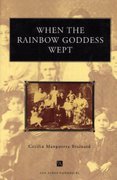
From Porto Alegre, we spent a few days in Sao Paulo, Brazil, where I had the pleasure of seeing my Brazilian publisher Leonardo Garzaro again. I had met him in Frankfurt, and now I met his wife, Isabela Figueira, who translated into Portuguese my books: When the Rainbow Goddess Wept and my Selected Short Stories. I also met their lovely children who reminded me of my grandchildren, brimming with their curiosity and energy.
HOW
ARE FILIPINO PUBLISHERS, AUTHORS,
AND
LITERATURE PERCEIVED IN GLOBAL SPACES
When I was in Brazil, I discovered that people knew very little about the Philippines. Many were surprised to hear of the Spanish colonization in the Philippines, which happened while Portugal colonized Brazil. I informed them about Philippine history, geography, culture. They were fascinated with the piña cloth of my camisa; they were intrigued that fiber from the pineapple leaves was woven to make the delicate cloth. In fact, they laughed when I used the word “camisa,” because they also use that word in their Portuguese language. My Brazilian publisher told me that my Selected Short Stories and novel When the Rainbow Goddess Wept would inform Brazilians about the Philippines. He has recently acquired the rights of my 2 other novels and a non-fiction book.
So this is how it is: most people outside
of the Philippines know very little about the Philippines. It was the same
thing when I represented PEN in Santiago de Compostela and Barcelona in the
1990s. People really didn’t know us. Some Spaniards had a vague knowledge that
the Philippines had been their colony. They may have heard of Filipino nurses,
of lumpia, or adobo, of some memorable political personalities, but there it
ended.
Cross-cultural exchange of ideas are
important. There are some international literary arts organizations, and
academic institutions that have conferences, talks, residencies, publications
to allow this.
In terms of Filipino authors being
published by big international publishing house, there are a few, like Maria
Ressa, Patricia Evangelista, some Filipino young adult writers and romance
writers who have published mainstream. But having been around in the literary
field for a long time, I know that generally, when the books stop selling the
kind of volume that commercial publishing houses want, the books will be remaindered
(removed from shelves, essentially killed). The literary field is very
competitive. Only 1 percent of books become best-sellers. The majority of
writers cannot live off their writing and have other jobs or are supported by a
spouse.
There is another thing to consider and
I’ll tell you a story to get my ideas across. In 1965, the Filipino author, Wilfrido
Nolledo, was in the US attending the Iowa Writers Workshop. While he was in the
US, his World War 2 novel, But for the
Lovers, was picked up by E.B Hotton.
This publication was a big deal for a Filipino author. But as usually happens,
the title was remaindered. In 1994, Dalkey Archive picked it up and reprinted
it, but that edition also went out of print. What happened was that Nolledo’s
novel lapsed into oblivion. The US editions had never really been accessible in
the Philippines anyway. Only a few academics and elites had copies. So for 50
years, the novel was essentially forgotten until Exploding Galaxies reprinted it
in 2024.
My point in telling this story, is to make
you aware that this sort of thing can happen. If you care at all to have your
work available to Filipino readership, you have to be careful about what rights
you give up to publishers. Also, it can be a curse to publish big in the US or
abroad, then be forgotten.
OPPORTUNITIES
AND CHALLENGES WHEN REPRESENTING
PHILIPPINE
LITERATURE ABROAD
As mentioned, a big challenge is
that many people know little about the Philippines. Related to this is the
question of marketability of such “unknown” literature in different countries. Publishing
is a business and most publishers have to sell books to keep their business
going. I myself wonder how many books my foreign publishers will sell. How many
Brazilians, Japanese, Greeks or Arab-speaking people will buy my books?
I have mentioned earlier that there
are some opportunities for Philippine authors, but not too many. There are
publishers who specialize in international titles, in translations, in fine
literature, or in commercial titles. It is a matter of finding these little
pockets of opportunities.
I was fortunate that I met my
literary agent in 2024 and she loved and believed in my fiction. She actively
sold translations of my 3 novels and Selected Short Stories in Arabic,
Azerbaijani, Greek, Japanese, Portuguese, Slovenian, and Serbian. My work has
other translations in Turkish and Finnish.
But this does not happen often. It
is just as difficult finding a literary agent, as it is to find a publisher.
I am not suggesting that Filipinos
should not aspire to be published or translated internationally, but what I am saying
is that it isn’t the end-all to be published abroad. We must remember that the
primary readers Filipino materials are Filipinos. Writers of Filipiniana should
focus on writing the best stories or poems or whatever for the Filipino people.
International publication should not be the pinnacle of your literary career. Getting
your work published in America or abroad does not mean your work is better than
others; it just means that a publisher gambled on your work and thinks it will
sell.
IS
IT WORTH IT TO PARTICIPATE IN INTERNATIONAL FAIRS
International participation comes in
all forms. As mentioned, there is academic participation, such as conferences,
which provide important exchanges and dialogues. There is participation in
international literary-arts organizations such as PEN. There is participation
in book fairs like the Porto Alegre or Los Angeles Festival of Books, which provide
opportunities to network, sell books, promote the authors or publishers
The Frankfurt Book Fair is different from these international literary events. This fair is a trade fair, a market place for book rights. It is not a place to find a literary agent. It is not the place to find a publisher. Even though books are sold in the last 2 days, the focus of the Frankfurt Book Fair is not book selling. In fact, the literary agents, publishers, and scouts who are rushing to get their rights buying and selling in the first three days of the fair get irritated at writers who interrupt their back-to-back meetings.
The question of COST comes into play
in this matter of participation in international fairs.
Is it worth it to a writer or
publisher to participate it the Los Angeles Book Fair for instance?
In the case of the Frankfurt Book Fair the
same question should be asked, especially because government funds are used.
Let’s
look at the cost of Philippine participation at the Frankfurt Book Fair. As I
understand it, the Philippines paid a total of approximately 186 million pesos
to be at the October 2025 book fair, plus 2025 trips to Bologna, France, and a
second trip to Frankfurt).
Some
expenses include:
Grantees plane fare and housing –20
million pesos
German press coordinator – 7 million pesos
– (this German entity is in addition to the Philippine press teams of the NBDB,
NCCA, and Senator Legarda)
Pavilion – 68.4 million pesos
Philippines Stand – 5.5 million pesos
Comics Stand – 1.2 million pesos
There were other expenses, but the estimated
total of 186 million pesos was paid in 2025, and 185 translations were gotten
for the period 2024-2025.
Think about that for a while.
There is another very important fact to
consider, and that is the literacy rate in the Philippines.
Three fairly recent articles point out the
high rate of illiteracy in the Philippines. In fact, the headline of the Nikkei Japan is: “Frankfurt Book Fair
Highlights Filipino Literacy Crisis.”
-
the Nikkei Japan (November 10, 2025
-
the May 2025 article by the Development
Aid (United Nations)
-
and the Philippine Star (January 1. 2025)
These articles inform us that:
-
24 million Filipinos aged 10-64 are functionally
illiterate,
-
5.8 million are basically illiterate;
-
one in five high school
graduates in 2024 were functionally illiterate, with over 18.9 million struggling with basic skills such as
reading, writing, arithmetic, and comprehension.”
Think about that for a while, as well. Millions of Filipinos cannot read or cannot understand what they are reading.
Because the Philippines is a developing country with this dismal literacy rate, plus other problems in education, the cost of participation in such international book fairs needs to be carefully considered when allocating government funds.
HOW
RELEVANT IS IT TO FILIPINO LITERATURE
TO
BE INVOLVED INTERNATIONALLY?
Yes, while cross-cultural exchanges are
important, we should consider Cost (as mentioned), Time, Resources, and Sensibilities.
I will elaborate.
One of our National Artist was invited to
attend the Frankfurt Book Fair and he declined because he had a lot of work to
do in the Philippines, and I believe he looked at the trip as a junket, a waste
of Philippine funds.
Additionally, some Filipino publishers
translated Gabriel Garcia Marquez’s novel and Antoine de Saint-Exupery’s The Little Prince, into Tagalog. I don’t
get how these translations enrich Filipino literature. Do we want to feed our
Filipino children more Eurocentric literature? We should be offering them fine
Filipiniana writings to enhance their sense of identity and pride.
As long as the Philippines is a
developing country with limited resources, most of our government funds and
efforts should be allocated to help those in the home front, to insure that our
children are educated, that their classrooms are functional, their teachers paid,
that they have books, in their classrooms, in libraries, as well as in their
homes. Even something like feeding breakfast for school children should be
considered, if this is not happening yet. (There are programs like this in
other parts of the world.)
With that I close this talk and we
can proceed with our discussion.
~end~
Bio:
Cecilia Manguerra Brainard is the award-winning author and editor of over 22
books,
including
the novels: When the Rainbow Goddess Wept, Magdalena, and The Newspaper
Widow, and
her Selected Short Stories. Her official website is https://ceciliabrainard.com .
Brainard has worked with Asian American youths
for which she received a Special Recognition Award from the Los Angeles Board
of Education. She has also received awards from the California State Senate, 21st District, several
USIS Grants, a California Arts Council Fellowship, an Outstanding Individual Award from
the City of Cebu, Philippines, Brody Arts Fund Award, a City of Los Angeles
Cultural grant, and many more. The books she has written and edited have also
won awards, the Philippine National Book Award, the Gintong Aklat Award and the
International Gourmand Award, among others.
Her three novels (When the Rainbow Goddess Wept, Magdalena, and The Newspaper Widow) and Selected
Short Stories have been translated into Arabic, Azerbaijani, Greek,
Japanese, North Macedonian, Portuguese, Serbian, Turkish. and Slovenian,
ranking her among the Top Translated Filipino Authors of the Philippine Works
and Translation Data Base. Some short stories of hers have been translated into
Finnish.
She runs a small press, PALH or Philippine
American Literary House.
In 2025, she attended the Frankfurt Book Fair where the Philippines was Guest of Honor, and she was invited by her Brazilian publisher to attend the Porto Alegre Book Fair in Brazil.
***
Read also:
Positively Filipino, Nov. 5, 2025: Was the Philippines' Star Turn at Frankfurt Book Fair Worth the Fuss?
Nikkei Asia, May 21, 2025: Frankfurt Book Fair Highlights Philippines Literacy Crisis
https://asia.nikkei.com/life-arts/arts/frankfurt-book-fair-highlights-philippines-literacy-crisis
Development Aid (UN): The Cost of Illiteracy: Why the Education System in Philippines is Failing Millions
https://www.developmentaid.org/news-stream/post/195634/education-crisis-in-philippines
Philippine Star, Jan. 1, 2026: 24 Million Pinoys Illiterate, 5.2 million children unserved
https://cbrainard.blogspot.com/2025/11/porto-alegre-brazil-book-fair-day-1.html
https://cbrainard.blogspot.com/2025/10/cross-cultural-exchangevia-cecilia.html
Tags: Filipino literacy, Philippine literacy
#Booksphilippine
#GoH2025











No comments:
Post a Comment