I bought a hardcover edition of The Screwtape Letters by C.S. Lewis. I had a paperback, which I now can't find. The book consists of letters from Screwtape, an older devil who is mentoring his devil nephew Wormwood. It's funny and insightful at the same time. It cleverly reveals how evil seduces people. Here are some excerpts from Screwtape's letters:
- Your man has been accustomed, ever since he was a boy, to have a dozen incompatible philosophies dancing about together inside his head. He doesn't think of doctrines as primarily "true" or "false", but as "academic" or "practical", "outworn" or "contemporary", conventional" or ruthless". Jargon, not argument, is your best ally in keeping him from the church.
- Above all, do not attempt to use science (I mean, the real sciences) as a defense against Christianity. They will definitely encourage him to think about realities he can't touch and see.
- The best thing, where it is possible, is to keep the patient from the serious intention of praying altogether.
- Of course a war is entertaining. The immediate fear and suffering of the humans i a legitimate and pleasing refreshment for our myriads of toiling workers.
- One of our great allies at present is the Church itself.
Etc. etc. - the book is great! Blurb from the back cover, "Screwtape is an experienced devil. His nephew Wormwood is at the beginning of his demonic career and has been assigned to secure the damnation of a young man. Their letters are one of C.S. Lewis's most brilliant imaginative creations."
Tuesday, July 29, 2008
Excerpts from The Screwtape Letters by C.S. Lewis

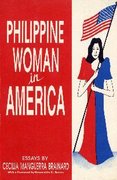
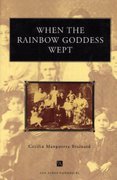
 Cecilia Manguerra Brainard's official website is ceciliabrainarddotcom. She is the award-winning author and editor of 22 books, including When the Rainbow Goddess Wept, The Newspaper Widow, Magdalena, Selected Stories, Vigan and Other Stories, and more. She edited Growing Up Filipino 1, 2, & 3, Fiction by Filipinos in America, Contemporary Fiction by Filipinos in America, and other books..
Her work has been translated into Finnish and Turkish; and many of her stories and articles have been widely anthologized.
Cecilia has received many awards, including a California Arts Council Fellowship in Fiction, a Brody Arts Fund Award, a Special Recognition Award for her work dealing with Asian American youths, as well as a Certificate of Recognition from the California State Senate, 21st District, and the Outstanding Individual Award from her birth city, Cebu, Philippines.
She has lectured and performed at UCLA, USC, University of Connecticut, University of the Philippines, PEN, Shakespeare & Company in Paris, and many others. She has served in the Board of literary arts groups such as PEN, PAWWA (Pacific Asian American Writers West), among others.
Cecilia Manguerra Brainard's official website is ceciliabrainarddotcom. She is the award-winning author and editor of 22 books, including When the Rainbow Goddess Wept, The Newspaper Widow, Magdalena, Selected Stories, Vigan and Other Stories, and more. She edited Growing Up Filipino 1, 2, & 3, Fiction by Filipinos in America, Contemporary Fiction by Filipinos in America, and other books..
Her work has been translated into Finnish and Turkish; and many of her stories and articles have been widely anthologized.
Cecilia has received many awards, including a California Arts Council Fellowship in Fiction, a Brody Arts Fund Award, a Special Recognition Award for her work dealing with Asian American youths, as well as a Certificate of Recognition from the California State Senate, 21st District, and the Outstanding Individual Award from her birth city, Cebu, Philippines.
She has lectured and performed at UCLA, USC, University of Connecticut, University of the Philippines, PEN, Shakespeare & Company in Paris, and many others. She has served in the Board of literary arts groups such as PEN, PAWWA (Pacific Asian American Writers West), among others.
Sunday, July 27, 2008
Lucha Libre - Fray Tormenta
The kids watched a movie about a wrestling Mexican priest, and I recalled reading about such a real person who had done that to be able to feed the children in his orphanage. I googled him, and here's something about him:
"Strange and wild it certainly is, but this totally implausible story is, in fact, based on the life of one of Mexico's most beloved grapplers - the legendary Fray Tormenta (Friar Storm). A professional luchador, Tormenta fought for 23 years, until 2005, and survived 4,000 bouts while remaining incognito inside his golden cape, yellow leotard and red-and-yellow mask. But in real life, Fray Tormenta is a real priest who, like the fictional Nacho Libre, donned the leotard in order to feed the children he had found abandoned on the streets of Mexico City. "No one would have taken me seriously as a wrestler had they known I was a priest," explained the wrestler, whose real name is Father Sergio Gutierrez Benitez. "The fans, the impresarios, thought my nom de guerre was a joke, like all the other characters we impersonate in the ring."
If he stopped fighting in 2005, I wonder what he's doing now.
"Strange and wild it certainly is, but this totally implausible story is, in fact, based on the life of one of Mexico's most beloved grapplers - the legendary Fray Tormenta (Friar Storm). A professional luchador, Tormenta fought for 23 years, until 2005, and survived 4,000 bouts while remaining incognito inside his golden cape, yellow leotard and red-and-yellow mask. But in real life, Fray Tormenta is a real priest who, like the fictional Nacho Libre, donned the leotard in order to feed the children he had found abandoned on the streets of Mexico City. "No one would have taken me seriously as a wrestler had they known I was a priest," explained the wrestler, whose real name is Father Sergio Gutierrez Benitez. "The fans, the impresarios, thought my nom de guerre was a joke, like all the other characters we impersonate in the ring."
If he stopped fighting in 2005, I wonder what he's doing now.
Cecilia Manguerra Brainard's official website is ceciliabrainarddotcom. She is the award-winning author and editor of 22 books, including When the Rainbow Goddess Wept, The Newspaper Widow, Magdalena, Selected Stories, Vigan and Other Stories, and more. She edited Growing Up Filipino 1, 2, & 3, Fiction by Filipinos in America, Contemporary Fiction by Filipinos in America, and other books..
Her work has been translated into Finnish and Turkish; and many of her stories and articles have been widely anthologized.
Cecilia has received many awards, including a California Arts Council Fellowship in Fiction, a Brody Arts Fund Award, a Special Recognition Award for her work dealing with Asian American youths, as well as a Certificate of Recognition from the California State Senate, 21st District, and the Outstanding Individual Award from her birth city, Cebu, Philippines.
She has lectured and performed at UCLA, USC, University of Connecticut, University of the Philippines, PEN, Shakespeare & Company in Paris, and many others. She has served in the Board of literary arts groups such as PEN, PAWWA (Pacific Asian American Writers West), among others.
Sunday, July 20, 2008
John Silva's National Museum Tour
From Manila, John Silva sent an email about the tours he gives at the National Museum. Schedule follows:
FINDING BEAUTY IN OUR OWN
A National Museum Tour by John Silva
Tour Dates:
July 5, 12, 19, 23, 26, 29, 30
August 2, 10, 13, 16, 20, 23, 27
Tour starts 10- 1
500 pesos - child; 700 pesos - adult
Museum of the People Finance Road, Rizal Park, Manila
Reservations Required- Call/text 0926-729-9029 or 527-5082; or email jsilva79@mac.com
A three-hour lecture tour through 21 galleries in 2 colonial-era buildings, full of the museum's artifacts and works of art.
FINDING BEAUTY IN OUR OWN
A National Museum Tour by John Silva
Tour Dates:
July 5, 12, 19, 23, 26, 29, 30
August 2, 10, 13, 16, 20, 23, 27
Tour starts 10- 1
500 pesos - child; 700 pesos - adult
Museum of the People Finance Road, Rizal Park, Manila
Reservations Required- Call/text 0926-729-9029 or 527-5082; or email jsilva79@mac.com
A three-hour lecture tour through 21 galleries in 2 colonial-era buildings, full of the museum's artifacts and works of art.
Cecilia Manguerra Brainard's official website is ceciliabrainarddotcom. She is the award-winning author and editor of 22 books, including When the Rainbow Goddess Wept, The Newspaper Widow, Magdalena, Selected Stories, Vigan and Other Stories, and more. She edited Growing Up Filipino 1, 2, & 3, Fiction by Filipinos in America, Contemporary Fiction by Filipinos in America, and other books..
Her work has been translated into Finnish and Turkish; and many of her stories and articles have been widely anthologized.
Cecilia has received many awards, including a California Arts Council Fellowship in Fiction, a Brody Arts Fund Award, a Special Recognition Award for her work dealing with Asian American youths, as well as a Certificate of Recognition from the California State Senate, 21st District, and the Outstanding Individual Award from her birth city, Cebu, Philippines.
She has lectured and performed at UCLA, USC, University of Connecticut, University of the Philippines, PEN, Shakespeare & Company in Paris, and many others. She has served in the Board of literary arts groups such as PEN, PAWWA (Pacific Asian American Writers West), among others.
Friday, July 18, 2008
Dinner in Zulueta, Historic Old Cebu, Philippines

There is a small group of die-hard lovers of Old Cebu whom I socialize with when I am Cebu. We will sometimes have dinner in my Zulueta place. It is really quite a fun group that usually ends up talking about Cebuano history, culture. What I love most of all is their passion about wanting to revitalize historic Old Cebu. July 13, we had such a potluck dinner, Cebuano food, was the theme.

Our guests that evening were Dr. and Mrs. Michael Cullinane, assistant director of the Center for Southeast Asian Studies of the University of Wisconsin at Madison, who is currently in Cebu on a Fulbright Senior Research Fellowship. Honorable Arsenio Pacana also graced the group with his presence.
The group photo shows seated l-r: Melva Rodriguez Java, Louella Alix, Louie Nacorda, Margarite Cullinane, standing l-r: Cecilia, Terry Manguerra, Gavin Bagares, Toti Villalon, Councilor Pacana,Joy Gerra, and Michael Cullinane. (Val and Booging Sandiego were supposed to be there but got hung up with an event in their heritage Yap-Sandiego house).
The photo of three shows l-r: The Cullinanes and Toti Villalon.
The food picture shows Louie Nacorda's delicious Balbacua Cebuana

Here's Louie's recipe for the Balbacua Cebuana and note proposing a Spanish themed food the next time we do a Zulueta dinner:
~~~~
From Louie Nacorda:
The pleasure is mine in sharing my mother's recipe of Balbacua
Cebuana. Here's the recipe:
Ingredients:
2kgs ox tail, cut in serving size
1 kg beef kinche, cut in serving size (I don't know what this is called in
English but its on the leg part, used also for pochero)
1/4 kg raw peanuts, shelled and peeled
1 can black salted beans
2 red onion bulbs, peeled and quartered
1 pc fresh duwaw, about 3"long, half inch in diameter (turmeric? Im not
sure of its English name)
2 tablespoon annato oil
Procedure:
Boil ox tail in salt and water for 15mins, then drain;
Boil ox tail again in water and duwaw for about 2-3 hours, or until
semi-tender;
Add beef kinche and raw peanuts, continue boiling over slow fire for
another 2-3 hours;
When tail and kinche are almost tender, add the quartered onions, salted
black beans (rinsed once in running water, and quick) and annato oil;
Cook for another 30mins-1 hr.;
Serve with hot steamed rice. Perfect combination is dry pork adobo, or
Ilocano bagnet (boiled in Rufina patis) or bocaue lechon kawali.
Got to check my flicker url
internet explorer and type "Louie Nacorda", it will come out along with the
other cyberspace entries about me.
I did enjoy very much our get-together last night and yes, please, let's do
it again when you get back and have Spanish-themed food. I can hardly wait
to taste Chona's Galantina and Jamonada, and Louella's Pastel de Lengua. No
Paella please as it is a complete dish by itself and must be eaten alone. I
can do Beef Pochero and a mean Leche Flan (that will hold a spoon standing
when you stab into it. More like tocino del cielo actually, but I still
call it Leche Flan because of the heavy syrup and caramelized topping)
Terry, I will try your chicken TIMKEE one of these days, but I will add
duwaw, black mushroom and glass noodles to your Shiao Shing Chinese Wine
and water, and perhaps, a spoon or two of White Horse Chinese Soya Sauce,
because I remember my mom's recipe of it had some black mushroom and
sotanghon on it, and it was rather brownish. Thanks! I just hope I could
buy dressed culled chicken, as I find the butchering and the dressing part
rather tedious and messy.
See you guys again in the near future.
Louie
Read also:
Cooking with Cecilia Brainard - Quiche
Cooking with Cecilia Brainard - Linguine with Clams
Cooking Lengua Estofada
Food Essay - Fried Chicken Caribbean-style
How I Learned to Make Leche Flan (or How I Met my Husband)
Cooking with Cecilia - Leche Flan (Vietnamese Style)
Recipe of Balbacua Cebuana from Louie Nacorda
Easy Filipino Recipes from Maryknollers
Cooking with Cecilia - Beef Bourguignon
Cooking with Cecilia - Chicken Soup for my Bad Cold
~~~
Links:
Cathedral Museum- Where Louella Alix and Terry Manguerra work
Casa Gorordo Museum where Joy Gerra works
Yap Sandiego Heritage House owned by Val and Booging Sandiego
Dr. Michael Cullinane - Fullbright Scholar, more information
Dr. Augusto Villalon, more information
Honorable Councilor Arsenio Pacana
Top Photo l-r
Cecilia Manguerra Brainard's official website is ceciliabrainarddotcom. She is the award-winning author and editor of 22 books, including When the Rainbow Goddess Wept, The Newspaper Widow, Magdalena, Selected Stories, Vigan and Other Stories, and more. She edited Growing Up Filipino 1, 2, & 3, Fiction by Filipinos in America, Contemporary Fiction by Filipinos in America, and other books..
Her work has been translated into Finnish and Turkish; and many of her stories and articles have been widely anthologized.
Cecilia has received many awards, including a California Arts Council Fellowship in Fiction, a Brody Arts Fund Award, a Special Recognition Award for her work dealing with Asian American youths, as well as a Certificate of Recognition from the California State Senate, 21st District, and the Outstanding Individual Award from her birth city, Cebu, Philippines.
She has lectured and performed at UCLA, USC, University of Connecticut, University of the Philippines, PEN, Shakespeare & Company in Paris, and many others. She has served in the Board of literary arts groups such as PEN, PAWWA (Pacific Asian American Writers West), among others.
Antonio Pigafetta Statue in Cebu, Philippines

Ciao Cecilia,
I really enjoyed your very informative piece on Ferdinand Magellan, and very much appreciate the photos you took for me of the statue of Antonio Pigafetta in Cebu. Italians everywhere should honored that such a tribute is in the Philippines. However there is a lot of Italian culture that goes unrecognized in that part of the world. Much of it within the Catholic church, and the other is the many Italian surnames, including my own, throughout the Philippines.
If you come to Boston, let me know and I'll treat you to a cappuccino in the North End of Boston.
We seem to be on the same mission, which is to preserve our cultures, and maintain our links to our original countries. America is a great place, but the culture that it offers is for the most part contrived and amalgamated at best - to be engaged with caution. As I mentioned, my daughter grew up on the island of Guam, is part Chamorro but now lives in Italy. She feels quite attached to both cultures.
The real richness of America is the original authenticity of the individual cultures of its immigrants. One can observe such a contrast between the totally contrived Olive Garden at the mall or a small Italian family restaurant in Boston's little Italy.
I greatly admire the culture of the Philippines, and the intellect, determination, dignity, and genuine good nature of its people. I love the food, and have always felt comfortable and welcome in Philippino circles. Also a Spanish dominion, which endured wars and occupations... and liberations; I see many parallels between the Philippines and Southern Italy. And of course there is the Catholic Church.
You're works are quite impressive and it would be interesting to hear your impressions on the importance of maintaining your cultural links. I have been thinking of doing a multicultural piece with just that focus, from different ethnic writers.
Lets keep in touch.
Grazie di nuovo e Maraming salamat po,
Philip Celeste
Publisher
The Italian-American Magazine
Italo Publishing
48 N. Bennet Street
Boston, MA 02113
781-485-5711
www.theitalianamerican.com
Photo shows statue of Antonio Pigafetta near Fort San Pedro, Cebu City
Cecilia Manguerra Brainard's official website is ceciliabrainarddotcom. She is the award-winning author and editor of 22 books, including When the Rainbow Goddess Wept, The Newspaper Widow, Magdalena, Selected Stories, Vigan and Other Stories, and more. She edited Growing Up Filipino 1, 2, & 3, Fiction by Filipinos in America, Contemporary Fiction by Filipinos in America, and other books..
Her work has been translated into Finnish and Turkish; and many of her stories and articles have been widely anthologized.
Cecilia has received many awards, including a California Arts Council Fellowship in Fiction, a Brody Arts Fund Award, a Special Recognition Award for her work dealing with Asian American youths, as well as a Certificate of Recognition from the California State Senate, 21st District, and the Outstanding Individual Award from her birth city, Cebu, Philippines.
She has lectured and performed at UCLA, USC, University of Connecticut, University of the Philippines, PEN, Shakespeare & Company in Paris, and many others. She has served in the Board of literary arts groups such as PEN, PAWWA (Pacific Asian American Writers West), among others.
Friday, July 11, 2008
Manila Friends Activities
I don't know if Manila is a place where something is always happening, but when I go there, it seems that way. It is a sprawling busy metropolis, that's for sure, and it seems as if at every time of day, Manila buzzes.

I have many friends in Manila and when I'm there, I see them. During this recent visit, I saw: Guia Lim, Araceli Lorayes, Mila Santillan, Cynthia Posa, and Lourdes Gimenez, Theresian classmates; we had dinner at the Dusit and spent close to five hours getting caught up. Mila, Cynthia and Lourdes had just visited Europe in April, and they recounted their trip to Spain, Central Europe, France and Italy. Guia, Araceli and some other classmates had visited Macau not too long ago, to see if Macau does compare with Las Vegas, since it is now a gambling center in Asia.
On another occasion, Mila, Cynthia and Lourdes Gimenez brought me to Santa Ana church to visit the small chapel of Our Lady of the Abandoned, patroness of this old church. Upstairs, behind the statue of the Our Lady is a small little known chapel where one can see the back of the Virgin (there are mirrors so you can see her face). The chapel is old, with blue and white tiled floor, capiz-shell windows, other 17th century statues, and silver candle holders, painted mural of bible scenes on the ceiling. It is quite a lovely restful place, with piped in religious music.
After that Santa Ana pilgrimage, we had dinner at Nicotina on Roxas Boulevard. The decor of this place is interesting - high ceilings, airy feeling, something native, something Asian in feel, and there's live entertainment as well. I guess this is a supper club, reminiscent of the old-style supper clubs along Roxas Boulevard, but this place isn't dark and it's more of a restaurant than a dancing place.
I also saw some college Maryknoll classmates: Marily Orosa, Meldee Perez, and Ana Marie Sison de Jesus - all of them looking great. We met at the trendy Museum Cafe in Makati, where we talked for a good four hours, capped by Mass at the nearby Greenhills circular Chapel.
 Marily Orosa also hosted a lunch for literary folks: Karina Bolasco of Anvil, Felice Sta, Maria, me, and Marily, this time in Felix's in Greenbelt 5, Makati. It was great fun to get caught up on literary news in the Philippines.
Anvil is posting giant posters of their authors in the forthcoming Book Fair (September I believe), and Marily Orosa dragged me to Pacific Star beauty parlor for a serious makeover and photo shoot at Studio 5. It was fun acting like celebrities, although I am amazed at how the camera can capture the most subtle of expressions - a sour look, a haughty expression, eyes half-closed, a fake smile, a tired look, a trying-hard look, double-chin, too much teeth - so really, in balance, despite so many photos taken by the photographer, you end up with just 3 or 4 good ones.

Cecilia
(Top Photo seated l-r: Guia Lim, Lilu Gimenez, Mila Santillan; standing l-r: Cecilia, Araceli Lorayes, Cynthia Posa
Middle photo shows the Santa Ana chapel
Next photo l-r: Marily Orosa, Karina Bolasco, Cecilia, and Felice Sta. Maria
Bottom photo show Cecilia and Marily)

I have many friends in Manila and when I'm there, I see them. During this recent visit, I saw: Guia Lim, Araceli Lorayes, Mila Santillan, Cynthia Posa, and Lourdes Gimenez, Theresian classmates; we had dinner at the Dusit and spent close to five hours getting caught up. Mila, Cynthia and Lourdes had just visited Europe in April, and they recounted their trip to Spain, Central Europe, France and Italy. Guia, Araceli and some other classmates had visited Macau not too long ago, to see if Macau does compare with Las Vegas, since it is now a gambling center in Asia.
On another occasion, Mila, Cynthia and Lourdes Gimenez brought me to Santa Ana church to visit the small chapel of Our Lady of the Abandoned, patroness of this old church. Upstairs, behind the statue of the Our Lady is a small little known chapel where one can see the back of the Virgin (there are mirrors so you can see her face). The chapel is old, with blue and white tiled floor, capiz-shell windows, other 17th century statues, and silver candle holders, painted mural of bible scenes on the ceiling. It is quite a lovely restful place, with piped in religious music.

After that Santa Ana pilgrimage, we had dinner at Nicotina on Roxas Boulevard. The decor of this place is interesting - high ceilings, airy feeling, something native, something Asian in feel, and there's live entertainment as well. I guess this is a supper club, reminiscent of the old-style supper clubs along Roxas Boulevard, but this place isn't dark and it's more of a restaurant than a dancing place.
I also saw some college Maryknoll classmates: Marily Orosa, Meldee Perez, and Ana Marie Sison de Jesus - all of them looking great. We met at the trendy Museum Cafe in Makati, where we talked for a good four hours, capped by Mass at the nearby Greenhills circular Chapel.
 Marily Orosa also hosted a lunch for literary folks: Karina Bolasco of Anvil, Felice Sta, Maria, me, and Marily, this time in Felix's in Greenbelt 5, Makati. It was great fun to get caught up on literary news in the Philippines.
 Anvil is posting giant posters of their authors in the forthcoming Book Fair (September I believe), and Marily Orosa dragged me to Pacific Star beauty parlor for a serious makeover and photo shoot at Studio 5. It was fun acting like celebrities, although I am amazed at how the camera can capture the most subtle of expressions - a sour look, a haughty expression, eyes half-closed, a fake smile, a tired look, a trying-hard look, double-chin, too much teeth - so really, in balance, despite so many photos taken by the photographer, you end up with just 3 or 4 good ones.

Cecilia
(Top Photo seated l-r: Guia Lim, Lilu Gimenez, Mila Santillan; standing l-r: Cecilia, Araceli Lorayes, Cynthia Posa
Middle photo shows the Santa Ana chapel
Next photo l-r: Marily Orosa, Karina Bolasco, Cecilia, and Felice Sta. Maria
Bottom photo show Cecilia and Marily)
Cecilia Manguerra Brainard's official website is ceciliabrainarddotcom. She is the award-winning author and editor of 22 books, including When the Rainbow Goddess Wept, The Newspaper Widow, Magdalena, Selected Stories, Vigan and Other Stories, and more. She edited Growing Up Filipino 1, 2, & 3, Fiction by Filipinos in America, Contemporary Fiction by Filipinos in America, and other books..
Her work has been translated into Finnish and Turkish; and many of her stories and articles have been widely anthologized.
Cecilia has received many awards, including a California Arts Council Fellowship in Fiction, a Brody Arts Fund Award, a Special Recognition Award for her work dealing with Asian American youths, as well as a Certificate of Recognition from the California State Senate, 21st District, and the Outstanding Individual Award from her birth city, Cebu, Philippines.
She has lectured and performed at UCLA, USC, University of Connecticut, University of the Philippines, PEN, Shakespeare & Company in Paris, and many others. She has served in the Board of literary arts groups such as PEN, PAWWA (Pacific Asian American Writers West), among others.
Saturday, July 5, 2008
Manila Updates

I took the ferry from Makati to Quiapo to take pictures of Pasig River and to shop in Quiapo. The Makati terminal is in Guadalupe on J.P. Rizal, a very nice, clean terminal. I caught the 10:55 a.m. ferry, and in about 40 minutes I was in Quiapo. I was able to take some pictures. The Pasig River now is nothing like what it had been when I was young. Then it was incredibly polluted, with garbage and plants covering the water surface, meaning there were no fish in the river. Now it's much cleaner and you can see fish frolicking and birds flying over - it's quite amazing how the river has come back to life.
My friend Tillic had taught me how to take this ferry to Quiapo. We had done this six months ago when the weather was good. Now that it's rainy season, the river has risen, flooding Quiapo. The area in front of the stores had knee-high water, and believe me, you don't want to wade in that filthy water! I had to hire a tricycle to drive me a few feet, just to keep me above water level. The stores themselves are above water level but if you step off the store, you're in the flood area. I found some Filipiniana clothes in the shop. The thing with shopping in Quiapo is that it's incredible cheap and fun (for the local color). Consider the Filipino blouse, skirt and panuelo (shawl) for P1,100; the same item sells for around P4,000 in the Makati department store. I also found some nice kimona tops and bakya (wooden clogs).
Next time I'd like to take the ferry to Fort Santiago - that should be fun. When I see the Pasig from the ferry boat, I can imagine what it had been years ago when it had been the main artery for transportation, from Manila de Bay all the way to Laguna de Bay.

Today, met with Maryknollers Marily Orosa, Meldee Perez, and Ana Marie Sison for lunch in the Museum Cafe. We had a lot of catching up to do, and the lunch went on for four hours, capped by Mass in the lovely circular Greenbelt Chapel.
Manila at this time of year is not as hot. It's definitely more pleasant even with the occasional drizzle.
All for now,
Cecilia
(Top photo shows Lambingan Ferry Station; bottom photo shows l-r: Ana Marie Sison, Marily Orosa, Meldee Perez, and Cecilia Brainard)
Cecilia Manguerra Brainard's official website is ceciliabrainarddotcom. She is the award-winning author and editor of 22 books, including When the Rainbow Goddess Wept, The Newspaper Widow, Magdalena, Selected Stories, Vigan and Other Stories, and more. She edited Growing Up Filipino 1, 2, & 3, Fiction by Filipinos in America, Contemporary Fiction by Filipinos in America, and other books..
Her work has been translated into Finnish and Turkish; and many of her stories and articles have been widely anthologized.
Cecilia has received many awards, including a California Arts Council Fellowship in Fiction, a Brody Arts Fund Award, a Special Recognition Award for her work dealing with Asian American youths, as well as a Certificate of Recognition from the California State Senate, 21st District, and the Outstanding Individual Award from her birth city, Cebu, Philippines.
She has lectured and performed at UCLA, USC, University of Connecticut, University of the Philippines, PEN, Shakespeare & Company in Paris, and many others. She has served in the Board of literary arts groups such as PEN, PAWWA (Pacific Asian American Writers West), among others.
Tuesday, July 1, 2008
Cebu Updates

Dinner last night at the Casino Espanol with Terry Manguerra, Chinggay Utzurrum, Inday Blanco and Chona Bernad. Conversation included travels done by Ching and others to different parts of the world. Chinggay shared old photos that she had of those attending; some photos were from the 1990s when my brother Jess Manguerra, Lyn Suaco, and Dr. Guimo Blanco were still alive! Terry, Ching, Inday, and Chona have been blessed; they have been members of an informal group for decades.
What else to say about Cebu? Oh, terrible news about the corpses of those who had drowned filling the mortuaries. The Princess of the Stars sank on June 21, 2008, victim of Typhoon #3, Frank. Eight hundred people perished.
The weather in Cebu continues to be pleasant early in the morning, then hot, then in the afternoons and/or evenings, it rains.
Manila tomorrow!
Photo shows, seated l-r: Terry Manguerra, Inday Blanco; standing l-r: Cecilia, Chona Bernad, and Chinggay Utzurrum
Cecilia Manguerra Brainard's official website is ceciliabrainarddotcom. She is the award-winning author and editor of 22 books, including When the Rainbow Goddess Wept, The Newspaper Widow, Magdalena, Selected Stories, Vigan and Other Stories, and more. She edited Growing Up Filipino 1, 2, & 3, Fiction by Filipinos in America, Contemporary Fiction by Filipinos in America, and other books..
Her work has been translated into Finnish and Turkish; and many of her stories and articles have been widely anthologized.
Cecilia has received many awards, including a California Arts Council Fellowship in Fiction, a Brody Arts Fund Award, a Special Recognition Award for her work dealing with Asian American youths, as well as a Certificate of Recognition from the California State Senate, 21st District, and the Outstanding Individual Award from her birth city, Cebu, Philippines.
She has lectured and performed at UCLA, USC, University of Connecticut, University of the Philippines, PEN, Shakespeare & Company in Paris, and many others. She has served in the Board of literary arts groups such as PEN, PAWWA (Pacific Asian American Writers West), among others.
Saturday, June 28, 2008
Cebu Update

Thursday - Dinner at Pino's Restaurant, a new chic restaurant in Camp Lapulapu, on Wilson street. Dined with Toti Villalon, Eva Gullas, Jackee Gullas Weckman, Jing Ramos, Amparito Lhullier, Teresing Mendazona in a private room, with champagne, Chilean wine pouring endlessly - superb Western-style food. Pino's also serves Filipino food and when Toti heard this, he whispered to me: Let's come back to eat Filipino food. Which doesn't mean the lobster and steak and all the wonderful trimmings weren't good. They were, but coming from the US I would have been curious to sample their Filipino food. After dinner, Toti, Eva, Jackee, and Jing came to my place for lemoncello and a stimulating conversation about book publishing and books. Very interesting.
Jackee and I talked about the famous sikwati or chocolate that her grandmother (?) used to make in the Parian; and she told me she continues to make this and promised to give me some. Ah - it will be nice to taste test the Gullas sikwati, versus Argao, Batangas sikwati, and Mexican chocolate.
 It was a very fun evening. The conversation was stimulating; in fact Toti commented that there were six conversations going on. Indeed energy was high and ideas sparked all over the place.
 I hope I'm not jumping the gun but Joy Martinez Onozawa (architect and environment planner) who was also at Pino's stopped by and chatted with us. Did I hear correctly - is it true that she was asked to draft an ordinance by the City Council? Joy has been promoting a revitalization program in the downtown area. Once I get the story straight, I will post in this blog.
Saturday: Terry Manguerra, Erma Cuizon, and I made a pilgrimage to the Marianne site of Theotokus in Perilos, Carcar. Father John Rona, and Sister Remy Yares talked to us. The site drew 80,000 people in 1992 when the "dancing sun" phenomenon occurred during sunrise. Called a "place of conversions" by Msgr. Salvador, miracles have also occurred, although Father Rona does not emphasize such healings.

The story goes that Father John Rona, a diocesan priest, was looking for a church site outside the city. Guided spiritually, he found the beautiful piece of land in Perilos, on a hill, overlooking the sea. Every 12th of the month, from 10 p.m. until sunrise the next day, people gather and pray. The church has not been built as of yet, although there is a lovely chapel area, and the grounds are lovely. We arrived when there were hardly any pilgrims and it was very restful there.
After donating for Masses we moved on to Argao where we had lunch at Alex Kafe. The Cafe is a converted warehouse, done up in an antique style, simple, with charm. I am afraid the food was not that good and it was also a bit steep, considering the place, but it was a nice rest stop and the bathrooms were okay. Around the corner is the famous Torta place, and we bought some. Here's a bit of trivia: tortas began during the Spanish times when egg whites were used in construction and the yolk was then made into this cake/pastry. If I recall right, pork lard is used in Tortas; I am not sure if they still use this, but it's supposed to give the best flavor. Cebuano Torta is like a cake or muffin. Sigh - I got three huge tortas.

In Argao, we also visited their Museum, which had mostly Spanish Colonial stuff: santoses, priests' vestments, paintings, ivory statues, other religious artifacts. The nicest thing I thought was that the priests and personnel in Argao had not stolen these artifacts that date back to the 17th century. Apparently Argao had direct connection with Mexico; the galleons stopped there; and the old section indicates that it was indeed a small walled Spanish colonial post.
We headed toward the city, stopping in Sibonga to see the Simila Shrine, another Marianne site, which is called the "Fatima in Cebu." The church was much bigger than I expected, and there were numerous people. It has a shrine with white veils. Our Lady apparently wept and her tears fell on these white veils. You cover your head with the veil as you pray. There is a huge display of crutches, wheelchairs, and written testimonials of healings and assistance from Our Lady. There were also numerous nuns posted all over the church to collect donations for Mass intentions.
All for now,
Cecilia
(Top photo shows l-r: Cecilia Brainard, Toti Villalon (standing), Jing Ramos, Amparito Lhullier (standing), Jackee Werkman, Eva Gullas (standing), and Teresing Mendozana
Next photo shows l-r: Erma Cuizon, Father John Rona, Cecilia Brainard, Terry Manguerra
Bottom photo shows the Argao Museum)
Cecilia Manguerra Brainard's official website is ceciliabrainarddotcom. She is the award-winning author and editor of 22 books, including When the Rainbow Goddess Wept, The Newspaper Widow, Magdalena, Selected Stories, Vigan and Other Stories, and more. She edited Growing Up Filipino 1, 2, & 3, Fiction by Filipinos in America, Contemporary Fiction by Filipinos in America, and other books..
Her work has been translated into Finnish and Turkish; and many of her stories and articles have been widely anthologized.
Cecilia has received many awards, including a California Arts Council Fellowship in Fiction, a Brody Arts Fund Award, a Special Recognition Award for her work dealing with Asian American youths, as well as a Certificate of Recognition from the California State Senate, 21st District, and the Outstanding Individual Award from her birth city, Cebu, Philippines.
She has lectured and performed at UCLA, USC, University of Connecticut, University of the Philippines, PEN, Shakespeare & Company in Paris, and many others. She has served in the Board of literary arts groups such as PEN, PAWWA (Pacific Asian American Writers West), among others.
Tuesday, June 24, 2008
Fiesta in Parian, Cebu, Philippines


The Fiesta celebration of the Parian District in Old Cebu, Philippines came to pass, without rain and with old world touches. First the tridium (3 day) pre-Fiesta prayers were held at the Casa Gorordo, and attended by members of the Cofradia of St. John the Baptist. There was one evening when the rain fell and the wind blew, but it quickly passed.
The actual fiesta day was yesterday, June 24. Members of the Cofradia met in Casa Gorordo at 5 p.m. Each one was assigned to carry a standard with a painting of one aspect of St. John's life. Visiting scholar from the University of Wisconsin, Michael Cullinane carried a standard as well. There were three antique carrosas: one carrying statues of the Holy Family, the second carrying two statues of the young John and Jesus, and the third carrying the antique statues of John baptizing Christ, with an angel by the side. The carrosas (carriages) were decorated with fresh flowers and pulled by men. The lineup then was: Holy Family carrosa, some standard bearers, Young John and Jesus, some standard bearers, adult John and Jesus, followed by candle-bearing devotees who trailed behind.
There was a 5:30 Mass in the Parian chapel. It was concelebrated by four priests from the Cathedral, including Msg. Alesna who now heads the Cathedral. After the Mass, the procession started. It wound around the small district. The highlight of the procession, was when the carrosas passed by Casa Gorordo. Following old tradition, each carrosas stopped in front of the window facing the street. Below there were seranaders who sang religious songs, accompanied by guitarists; and above, viewers threw down flower petals onto the carrosas.

It was also quite nice to "process" in front of the Yap-Sandiego antique house. The house was dolled up, with dining tables and above, guests of Val and Booging watched the procession.
There is another section in the Parian where people decorate the street with banana trees and fireworks and they watch from the balcony.
After the procession, the carrosas, and banners were returned to the side of the Casa Gorordo for storage. There was an induction of the 3 new Cofradia members: Teresita Manguerra, Chona Bernad, and me. There was dinner in the lovely garden of the Casa Gorordo, simply stunning that balmy star-studded night.
For entertainment, there was singing and dancing provided by the Sandiego Troupe. It was delightful to see the Franco sisters, Marilou Chiongbian, and many others in Filipiniana attire. Seen among the guests: Resil Mojares, Linda Alburo, Chinggay Utzurrum, Inday Blanco, Erma Cuizon, Jaime Picornell, Beth Reyes, and the Manguerra kids and grandkids were also there.
Cofradia members Louie Nacorda, Pepit Gorordo Revilles, Joy Gerra, Gavin Bagares,Cheding Hermosa, Margie Mattheus were flitting about talking to city officials, their Manila, US guests, and others.
And down the street, Val and Booging Sandiego hosted their first fiesta celebration in the antique house. We visited the house, talked to Val's mother, Luz Mancao Sandiego (a friend of a Cuenco-aunt) and admired the recent developments in this beautiful treasure of a house. The downstairs has now been opened up; they discovered a window and a door, that leads to nowhere now, but it's fun to speculate that it once led to a garden. The ancient well still has fresh water! The Yap-Sandiego is such a magical place, I highly recommend it as a must-see if you are in Cebu.
For more pictures of the Fiesta, click here, Louie Nacorda's flicker site.
All for now,
Cecilia
(top photo: Cecilia Brainard, photo by Louie Nacorda;
next photo l-r: Chona Bernad, Terry Manguerra, Loy Alix, Cecilia Brainard, Marilou Chiongbian
Other photo shows Casa Gorordo with guests throwing flowers)
Cecilia Manguerra Brainard's official website is ceciliabrainarddotcom. She is the award-winning author and editor of 22 books, including When the Rainbow Goddess Wept, The Newspaper Widow, Magdalena, Selected Stories, Vigan and Other Stories, and more. She edited Growing Up Filipino 1, 2, & 3, Fiction by Filipinos in America, Contemporary Fiction by Filipinos in America, and other books..
Her work has been translated into Finnish and Turkish; and many of her stories and articles have been widely anthologized.
Cecilia has received many awards, including a California Arts Council Fellowship in Fiction, a Brody Arts Fund Award, a Special Recognition Award for her work dealing with Asian American youths, as well as a Certificate of Recognition from the California State Senate, 21st District, and the Outstanding Individual Award from her birth city, Cebu, Philippines.
She has lectured and performed at UCLA, USC, University of Connecticut, University of the Philippines, PEN, Shakespeare & Company in Paris, and many others. She has served in the Board of literary arts groups such as PEN, PAWWA (Pacific Asian American Writers West), among others.
Saturday, June 21, 2008
More from Cebu

My goodness, an honest-to-goodness typhoon blew into Cebu, Philippines - wild rain, wilder wind, cool weather - it was fantastic! Hadn't experienced that in a long time. People brought out their sweatshirts and coats! This typhoon was only a Number 1 - the lowest caliber, although I heard there is a boat sinking right now, somewhere. If this was a mild typhoon, I dread to think what a Typhoon #3 is! Believe me streets were drowned, trees strained against the fierce wind.
The tridium prayers for St. John the Baptist in Old Cebu's Parian District began last night - typhoon or no typhoon. This year, the prayers were held in a covered area; we couldn't have it on the gorgeous open air balcony. Louie Nacorda had dressed the santoses: Jesus, St. John, and angel; and there they stood on the altar, resplendent in their gold braided velvets and satin. Louie also presented two statues of baby John the Baptist and baby Jesus. He found them in an antique shop in Manila. He first saw the St. John the Baptist baby statue. He wanted the buy it but wanted a stand and a sheep made; the owner didn't have the wood, couldn't comply, Louie did not buy it. But when he returned a year later,there was a new statue of Baby Jesus, and according to Louie, he immediately understood why the St. John statue did not wish to be purchased the first round. He waited for the Jesus statue.
Aside from the members of the Cofradia of St. John the Baptist, there were some guests, members of the Urdaneta 500, a commission lining up events to celebrate Fray Urdaneta's anniversary here in the Philippines. I am not sure which anniversary specifically, but Urdaneta came here with Legazpi in the 16th Century.
I heard that it's official: there are now tourism police patrolling the Old Historic Cebu District. I find this thrilling because now visitors can feel safe as they visit the five museums in the area: Casa Gorordo, Yap-Sandiego House, Cathedral Museum, Santo Nino Museum, and Fort San Pedro Museum. I don't know if the exhibit is still there apparently the Fort San Pedro Museum had displayed galleon artifacts uncovered by Jacques Costeau.
All for now,
Cecilia
(Photo shows Louie Nacorda and devotee of St. John the Baptist)
Cecilia Manguerra Brainard's official website is ceciliabrainarddotcom. She is the award-winning author and editor of 22 books, including When the Rainbow Goddess Wept, The Newspaper Widow, Magdalena, Selected Stories, Vigan and Other Stories, and more. She edited Growing Up Filipino 1, 2, & 3, Fiction by Filipinos in America, Contemporary Fiction by Filipinos in America, and other books..
Her work has been translated into Finnish and Turkish; and many of her stories and articles have been widely anthologized.
Cecilia has received many awards, including a California Arts Council Fellowship in Fiction, a Brody Arts Fund Award, a Special Recognition Award for her work dealing with Asian American youths, as well as a Certificate of Recognition from the California State Senate, 21st District, and the Outstanding Individual Award from her birth city, Cebu, Philippines.
She has lectured and performed at UCLA, USC, University of Connecticut, University of the Philippines, PEN, Shakespeare & Company in Paris, and many others. She has served in the Board of literary arts groups such as PEN, PAWWA (Pacific Asian American Writers West), among others.
Wednesday, June 18, 2008
Cebu Philippine in June
It's technically the rainy season in the Philippines, and here in Cebu it drizzles now and then. It's terrible humid and hot. In a way it is more uncomfortable than Egypt which has dry desert heat. It's stiflingly muggy and you just swelter.
I asked a taxi driver about the shortage of rice and he said there are warehouses full of sacks of rice, so he doesn't believe there is a shortage. I think what is happening is some vendors are hording rice, holding on them until the price goes up. The fact it that the very hording limits the amount of rice out there, thus driving up the price. I'm sure this isn't legal, but I don't know what the government is doing about this matter.
I'm thinking of the 1960s when the Philippines was exporting rice. There was a lot of experimentation in IRRI (International Rice and Research Institute) to be able to grow rice several times a year. Unfortunately the government did not encourage rice farmers, and for years rice farms lay dormant. I wonder if they are now cultivating those rice farms.
I'm in Cebu for personal business and for the fiesta in the Parian Old Cebu District. For the second year now, Louie Nacorda, Pepit Gorordo and I co-host a fiesta dinner at the Casa Gorordo on the feast day of St. John the Baptist. In fact, Louie and Pepit have been doing this for years. I'm a johnny-come-lately. Louie leads the tridium prayers for St. John the Baptist at the Casa Gorordo (3 days before the fiesta). Devotees go all out decorating the antique statues of St. John and an Angel. They also decorate the prayer area - last year it was on the beautiful balcony of the Casa. It's all quite lovely, with a guitarist, singing, prayers, followed by a merienda and stimulating conversation. I recall that last year Louie talked about the Ghosts of Casa Gorordo, which was quite a lot of fun.
All for now,
Cecilia
I asked a taxi driver about the shortage of rice and he said there are warehouses full of sacks of rice, so he doesn't believe there is a shortage. I think what is happening is some vendors are hording rice, holding on them until the price goes up. The fact it that the very hording limits the amount of rice out there, thus driving up the price. I'm sure this isn't legal, but I don't know what the government is doing about this matter.
I'm thinking of the 1960s when the Philippines was exporting rice. There was a lot of experimentation in IRRI (International Rice and Research Institute) to be able to grow rice several times a year. Unfortunately the government did not encourage rice farmers, and for years rice farms lay dormant. I wonder if they are now cultivating those rice farms.
I'm in Cebu for personal business and for the fiesta in the Parian Old Cebu District. For the second year now, Louie Nacorda, Pepit Gorordo and I co-host a fiesta dinner at the Casa Gorordo on the feast day of St. John the Baptist. In fact, Louie and Pepit have been doing this for years. I'm a johnny-come-lately. Louie leads the tridium prayers for St. John the Baptist at the Casa Gorordo (3 days before the fiesta). Devotees go all out decorating the antique statues of St. John and an Angel. They also decorate the prayer area - last year it was on the beautiful balcony of the Casa. It's all quite lovely, with a guitarist, singing, prayers, followed by a merienda and stimulating conversation. I recall that last year Louie talked about the Ghosts of Casa Gorordo, which was quite a lot of fun.
All for now,
Cecilia
Cecilia Manguerra Brainard's official website is ceciliabrainarddotcom. She is the award-winning author and editor of 22 books, including When the Rainbow Goddess Wept, The Newspaper Widow, Magdalena, Selected Stories, Vigan and Other Stories, and more. She edited Growing Up Filipino 1, 2, & 3, Fiction by Filipinos in America, Contemporary Fiction by Filipinos in America, and other books..
Her work has been translated into Finnish and Turkish; and many of her stories and articles have been widely anthologized.
Cecilia has received many awards, including a California Arts Council Fellowship in Fiction, a Brody Arts Fund Award, a Special Recognition Award for her work dealing with Asian American youths, as well as a Certificate of Recognition from the California State Senate, 21st District, and the Outstanding Individual Award from her birth city, Cebu, Philippines.
She has lectured and performed at UCLA, USC, University of Connecticut, University of the Philippines, PEN, Shakespeare & Company in Paris, and many others. She has served in the Board of literary arts groups such as PEN, PAWWA (Pacific Asian American Writers West), among others.
Sunday, June 15, 2008
Father's Day 2008
St. Monica's Parish Church does this really nice thing on Mother's Day and Father's Day. During the Offertory of the Mass, the priest invites mothers (on Mother's Day) and fathers (on Father's Day) to surround the altar. They are given flowers as well, and the community says a special prayer and blesses for them. It's a nice touch. Today's 9:30 a.m. Mass was standing room only. This 9:30 Mass is usually attended by California Governor Arnold Schwarzenegger, Maria Shriver and their family.
On another matter, my online class (Essential Beginnings in Creative Writing, UCLA Extension) ended last week. It was a particularly good class. There was a lot of talent and the participants bonded nicely. It was nice to see them develop dramatically in six weeks.
All for now,
Cecilia
On another matter, my online class (Essential Beginnings in Creative Writing, UCLA Extension) ended last week. It was a particularly good class. There was a lot of talent and the participants bonded nicely. It was nice to see them develop dramatically in six weeks.
All for now,
Cecilia
Cecilia Manguerra Brainard's official website is ceciliabrainarddotcom. She is the award-winning author and editor of 22 books, including When the Rainbow Goddess Wept, The Newspaper Widow, Magdalena, Selected Stories, Vigan and Other Stories, and more. She edited Growing Up Filipino 1, 2, & 3, Fiction by Filipinos in America, Contemporary Fiction by Filipinos in America, and other books..
Her work has been translated into Finnish and Turkish; and many of her stories and articles have been widely anthologized.
Cecilia has received many awards, including a California Arts Council Fellowship in Fiction, a Brody Arts Fund Award, a Special Recognition Award for her work dealing with Asian American youths, as well as a Certificate of Recognition from the California State Senate, 21st District, and the Outstanding Individual Award from her birth city, Cebu, Philippines.
She has lectured and performed at UCLA, USC, University of Connecticut, University of the Philippines, PEN, Shakespeare & Company in Paris, and many others. She has served in the Board of literary arts groups such as PEN, PAWWA (Pacific Asian American Writers West), among others.
Friday, June 13, 2008
BOOKS IN MY HANDS
Here are four books that I'm reading/will be reading:
1. The Hacienda a memoir by Lisa St. Aubin De Teran, (Backbay Books 1997) - I found this in a used rare bookstore in Santa Monica. The bookstore is really cool. It's near Santa Monica College on the corner of 17th and Ocean Park. It's an account of Lisa's life in Venezuela. The world she describes is fantastic, I felt I was reading something fictional - a child that turns green, her pet vulture, her bizarre husband, the other characters of the gente in the provincial hacienda. It's dark and gothic and a fascinating read.
2. Queen of Angels by Janice T. Connell (Paraclete Press, 2008) - This is a religious book about Mother Mary. The subtitle is Mary's Answers to Universal Questions - and the book includes questions to Mary and answers by her. The book includes meditation and prayers. The book is a prayer guide. Initially I thought the first person part where Mary is talking were quotes from Mariane apparitions. I was somewhat disappointed to realize it's the author who wrote these parts. But I'm giving the book a chance. The author does suggest keeping a spiritual journal wherein you write, daily:
a) How do you feel that day;
b) Why do you feel that way;
c) Who or what you have encountered that day and their effects on you;
d) An honest evaluation of how, where and why God does or does not fit into your day and your experiences;
e) A small personal prayer for light.
The above looks worthwhile doing.
3. Mortal Beauty, God's Grace by Gerard Manley Hopkins (Vintage Spiritual Classics, 2003) - I've had this book for a while. After reading Merton and C.S.Lewis, I bought this book, but I didn't enjoy it as much as I did Merton and Lewis. I'll give it another try. Gerald Manley Hopkins ia one of those great Christian minds so he has a lot to offer. I just have to reeeaaaaddd his work.
4)God's Spy by Juan Gomez-Jurado (Plume 2008) - This is a bestseller thriller set in the Vatican. I bought it for my husband to read in Egypt and he actually enjoyed it, so I'm going to give it a try.
1. The Hacienda a memoir by Lisa St. Aubin De Teran, (Backbay Books 1997) - I found this in a used rare bookstore in Santa Monica. The bookstore is really cool. It's near Santa Monica College on the corner of 17th and Ocean Park. It's an account of Lisa's life in Venezuela. The world she describes is fantastic, I felt I was reading something fictional - a child that turns green, her pet vulture, her bizarre husband, the other characters of the gente in the provincial hacienda. It's dark and gothic and a fascinating read.
2. Queen of Angels by Janice T. Connell (Paraclete Press, 2008) - This is a religious book about Mother Mary. The subtitle is Mary's Answers to Universal Questions - and the book includes questions to Mary and answers by her. The book includes meditation and prayers. The book is a prayer guide. Initially I thought the first person part where Mary is talking were quotes from Mariane apparitions. I was somewhat disappointed to realize it's the author who wrote these parts. But I'm giving the book a chance. The author does suggest keeping a spiritual journal wherein you write, daily:
a) How do you feel that day;
b) Why do you feel that way;
c) Who or what you have encountered that day and their effects on you;
d) An honest evaluation of how, where and why God does or does not fit into your day and your experiences;
e) A small personal prayer for light.
The above looks worthwhile doing.
3. Mortal Beauty, God's Grace by Gerard Manley Hopkins (Vintage Spiritual Classics, 2003) - I've had this book for a while. After reading Merton and C.S.Lewis, I bought this book, but I didn't enjoy it as much as I did Merton and Lewis. I'll give it another try. Gerald Manley Hopkins ia one of those great Christian minds so he has a lot to offer. I just have to reeeaaaaddd his work.
4)God's Spy by Juan Gomez-Jurado (Plume 2008) - This is a bestseller thriller set in the Vatican. I bought it for my husband to read in Egypt and he actually enjoyed it, so I'm going to give it a try.
Cecilia Manguerra Brainard's official website is ceciliabrainarddotcom. She is the award-winning author and editor of 22 books, including When the Rainbow Goddess Wept, The Newspaper Widow, Magdalena, Selected Stories, Vigan and Other Stories, and more. She edited Growing Up Filipino 1, 2, & 3, Fiction by Filipinos in America, Contemporary Fiction by Filipinos in America, and other books..
Her work has been translated into Finnish and Turkish; and many of her stories and articles have been widely anthologized.
Cecilia has received many awards, including a California Arts Council Fellowship in Fiction, a Brody Arts Fund Award, a Special Recognition Award for her work dealing with Asian American youths, as well as a Certificate of Recognition from the California State Senate, 21st District, and the Outstanding Individual Award from her birth city, Cebu, Philippines.
She has lectured and performed at UCLA, USC, University of Connecticut, University of the Philippines, PEN, Shakespeare & Company in Paris, and many others. She has served in the Board of literary arts groups such as PEN, PAWWA (Pacific Asian American Writers West), among others.
Wednesday, June 11, 2008
St. Cecilia Poem by W. H. Auden
Blessed Cecilia, appear in visions
To all musicians, appear and inspire:
Translated Daughter, come down and startle
Composing mortals with immortal fire.
W.H. Auden
To all musicians, appear and inspire:
Translated Daughter, come down and startle
Composing mortals with immortal fire.
W.H. Auden
Cecilia Manguerra Brainard's official website is ceciliabrainarddotcom. She is the award-winning author and editor of 22 books, including When the Rainbow Goddess Wept, The Newspaper Widow, Magdalena, Selected Stories, Vigan and Other Stories, and more. She edited Growing Up Filipino 1, 2, & 3, Fiction by Filipinos in America, Contemporary Fiction by Filipinos in America, and other books..
Her work has been translated into Finnish and Turkish; and many of her stories and articles have been widely anthologized.
Cecilia has received many awards, including a California Arts Council Fellowship in Fiction, a Brody Arts Fund Award, a Special Recognition Award for her work dealing with Asian American youths, as well as a Certificate of Recognition from the California State Senate, 21st District, and the Outstanding Individual Award from her birth city, Cebu, Philippines.
She has lectured and performed at UCLA, USC, University of Connecticut, University of the Philippines, PEN, Shakespeare & Company in Paris, and many others. She has served in the Board of literary arts groups such as PEN, PAWWA (Pacific Asian American Writers West), among others.
Saturday, June 7, 2008
Review Movies - The Savages & Grace Is Gone
Saw a couple of movies last night: The Savages and Grace Is Gone. I think they may be the most depressing movies out in Blockbuster, so if you want an evening looking at what surviving families do after their mom is killed in Iraq or when their father has dementia - go right ahead and rent them.
Grace Is Gone is a character-driven film. It presents a character under stress and follows the actions of that character. I generally like character-driven films, as opposed to plot-driven films, but this one left me somewhat irritated. The dad, Stanley, is just doing impractical, whacky things after he is informed of his wife's death in Iraq. I know people wig out when they lose someone they love, but it's fantastic to me for a father to suddenly suggest to his daughters a trip to Enchanted Gardens, a several-day trip it seems, and without packing, without informing school and work, without securing the house (mail, newspaper, plants, etc.) the father and two daughters drive off to Florida.
This one reminds me of a movie we had seen in Princess Theater about a second wife whose husband dies and she brings his ashes to the daughter in Santa Barbara. At least that one was funny.
The second film we saw was The Savages. I swear the shorts of this one made the film sound funny, but the actual film isn't. A middle-aged daughter and son make arrangements for the care of their father after his old girlfried dies and he himself has dementia. This film shows you the last depressing scenes of some people's lives - Sun City, old people driving golf carts, women doing exercise, convalescent homes, and oh, listen to the middle-class whining of these two kids whose lives have been rudely disrupted by all this.
Character - character- character, my teachers in film school and writing often said - so maybe it just boiled down to my not feeling sympathetic enough with the protagonists.
Grace Is Gone is a character-driven film. It presents a character under stress and follows the actions of that character. I generally like character-driven films, as opposed to plot-driven films, but this one left me somewhat irritated. The dad, Stanley, is just doing impractical, whacky things after he is informed of his wife's death in Iraq. I know people wig out when they lose someone they love, but it's fantastic to me for a father to suddenly suggest to his daughters a trip to Enchanted Gardens, a several-day trip it seems, and without packing, without informing school and work, without securing the house (mail, newspaper, plants, etc.) the father and two daughters drive off to Florida.
This one reminds me of a movie we had seen in Princess Theater about a second wife whose husband dies and she brings his ashes to the daughter in Santa Barbara. At least that one was funny.
The second film we saw was The Savages. I swear the shorts of this one made the film sound funny, but the actual film isn't. A middle-aged daughter and son make arrangements for the care of their father after his old girlfried dies and he himself has dementia. This film shows you the last depressing scenes of some people's lives - Sun City, old people driving golf carts, women doing exercise, convalescent homes, and oh, listen to the middle-class whining of these two kids whose lives have been rudely disrupted by all this.
Character - character- character, my teachers in film school and writing often said - so maybe it just boiled down to my not feeling sympathetic enough with the protagonists.
Cecilia Manguerra Brainard's official website is ceciliabrainarddotcom. She is the award-winning author and editor of 22 books, including When the Rainbow Goddess Wept, The Newspaper Widow, Magdalena, Selected Stories, Vigan and Other Stories, and more. She edited Growing Up Filipino 1, 2, & 3, Fiction by Filipinos in America, Contemporary Fiction by Filipinos in America, and other books..
Her work has been translated into Finnish and Turkish; and many of her stories and articles have been widely anthologized.
Cecilia has received many awards, including a California Arts Council Fellowship in Fiction, a Brody Arts Fund Award, a Special Recognition Award for her work dealing with Asian American youths, as well as a Certificate of Recognition from the California State Senate, 21st District, and the Outstanding Individual Award from her birth city, Cebu, Philippines.
She has lectured and performed at UCLA, USC, University of Connecticut, University of the Philippines, PEN, Shakespeare & Company in Paris, and many others. She has served in the Board of literary arts groups such as PEN, PAWWA (Pacific Asian American Writers West), among others.
Wednesday, June 4, 2008
More on Computer Problem
My son tested my husband's computer at his place and it worked without any problem at all. The laptop at home started becoming stupid again. Tech Support Son said to call Verizon to complain about the router. Verizor's tech support gave us directions by phone, and essentially we had to change the channel. It worked. So all three computers are functioning.
Right now we're cleaning up all the computers of spyware; it's incredible the number of stuff in there.
We downloaded Spybot and have installed AVG for virus protection.
I hope this solves the computer problems.
Right now we're cleaning up all the computers of spyware; it's incredible the number of stuff in there.
We downloaded Spybot and have installed AVG for virus protection.
I hope this solves the computer problems.
Cecilia Manguerra Brainard's official website is ceciliabrainarddotcom. She is the award-winning author and editor of 22 books, including When the Rainbow Goddess Wept, The Newspaper Widow, Magdalena, Selected Stories, Vigan and Other Stories, and more. She edited Growing Up Filipino 1, 2, & 3, Fiction by Filipinos in America, Contemporary Fiction by Filipinos in America, and other books..
Her work has been translated into Finnish and Turkish; and many of her stories and articles have been widely anthologized.
Cecilia has received many awards, including a California Arts Council Fellowship in Fiction, a Brody Arts Fund Award, a Special Recognition Award for her work dealing with Asian American youths, as well as a Certificate of Recognition from the California State Senate, 21st District, and the Outstanding Individual Award from her birth city, Cebu, Philippines.
She has lectured and performed at UCLA, USC, University of Connecticut, University of the Philippines, PEN, Shakespeare & Company in Paris, and many others. She has served in the Board of literary arts groups such as PEN, PAWWA (Pacific Asian American Writers West), among others.
Tuesday, June 3, 2008
FIGHTING BACK! - COMPUTER MALWARE
Our youngest son, also known as our Tech Help for computer problems, believes in Tough Love. When one of our computers started to slow down and act stupid, we turned to him.
"It's slow," I emailed him.
"I need more information than, 'It's slow,'" he replied.
"It became slow, constantly 'loading' and then it became difficult to connect with the internet. Then it stopped connecting with the internet entirely."
We have three computers, and my husband's computer was the sickest of all three.
My son gave me three sites to download for free anti-virus and spyware software: AVG, Avanti, and Spybot. "Try these and if they don't work, I'll check out the computers," he emailed back.
I hate being dependent on anyone. I've hated this reversal of roles where we, the parents, have to ask our sons how to operate computers and these new-fangled machines. So, the other night, I worked on this problem, staying up until 3 a.m.
First, I decided to diagnose the problem. Using the computer that was still functioning, I googled phrases like: computer slow spyware, computer not connecting internet. There were numerous sites with other people complaining about the same problems. Some said the problem could be caused by spyware, some said, a virus.
I checked for solutions. There were many suggestions to do a Systems Restore. I googled, "Systems Restore" and felt assured that it couldn't damage the computer.
It's amazing what you can learn from the internet. I learned to click on programs, accessories, systems tools, then systems restore. Assured that this action was reversible, I bravely clicked on an arrow on the calendar and moved back in time the systems-brain. My understanding was that if the virus was picked up a couple of days ago, if I go back a week when the computer didn't have a virus, I could restore that functioning brain.
OK - I did that to all three computers. But - lo - this didn't help. I did a second systems restore, and still the computers were becoming more and more demented. One could no longer connect with the internet.
Some of the Google suggestions was to use an anti-virus programs, as my son had suggested. I tried to download the programs suggested by my son. I got one computer to download AVG, and when I ran the anti-virus program, found that the machine had over 400 Spyware! I felt some satisfaction deleting Ad-ware and all that crap. The thought that these insidious little spies live in your computer and keep track of everything you are doing and are reporting back to their Evil Masters is absolutely infuriating.
The one computer couldn't connect with the internet, so I couldn't even download anything on that one. I did a triage and set that aside. I had to save what I could.
The second computer had to be tricked to be able to connect with the internet. When I tried to connect, I'd get a message that there was no internet connection, but if I actually typed in the url, it would connect. However, when I got to the anti-virus programs, the computer couldn't download the free program. It was caught in la-la land just downloading forever.
I decided that if the doctor couldn't come to the patient, maybe I could get long-distance help. I found out about Trend Micro Housecall, where their program can diagnose and heal your computer. I was able to connect to Housecall and this got rid of some spyware and cookies. Afterwards, the machine seemed better, well enough so we could download the Avanti anti-virus free program, which my other son swears is the best. We ran the Avanti and discovered the machine had a Trojan virus hiding in a music file! Troj_caiinj - hateful, sneaky virus, screwing up my computer! Got rid of that.
With the help of two sons, we got the two computers more or less back to normal. (The husband wasn't much help; he just pushed the same buttons over and over and fretted that his computer wouldn't connect with the internet.) The third computer is still sick, in deep malaise. Using a disc we were able to run an anti-virus program, which said it had no virus. We ran Spybot to check for spyware - some infections were cleaned up. But it still would not connect properly, and was extremely slow. My sons were wondering if it was a connection problem. But why would the other two computers connect properly? On and on the discussion went - TCP/IP, ping, etc. The sons kept asking for the password for the router. The husband said there was no password. The sons insisted there had to be a password. The husband found a piece of paper that the Verizon man had given him - with the password. "DAaaadddd...." the boys went.
Not wanting to spend hours with strung-out parents, our Tech Help picked up the sick computer and it's now with him, in ICU, so to speak. I'm sure he'll get it fixed. Meantime, I'm crossing my fingers that the other two computers really are healed.
"It's slow," I emailed him.
"I need more information than, 'It's slow,'" he replied.
"It became slow, constantly 'loading' and then it became difficult to connect with the internet. Then it stopped connecting with the internet entirely."
We have three computers, and my husband's computer was the sickest of all three.
My son gave me three sites to download for free anti-virus and spyware software: AVG, Avanti, and Spybot. "Try these and if they don't work, I'll check out the computers," he emailed back.
I hate being dependent on anyone. I've hated this reversal of roles where we, the parents, have to ask our sons how to operate computers and these new-fangled machines. So, the other night, I worked on this problem, staying up until 3 a.m.
First, I decided to diagnose the problem. Using the computer that was still functioning, I googled phrases like: computer slow spyware, computer not connecting internet. There were numerous sites with other people complaining about the same problems. Some said the problem could be caused by spyware, some said, a virus.
I checked for solutions. There were many suggestions to do a Systems Restore. I googled, "Systems Restore" and felt assured that it couldn't damage the computer.
It's amazing what you can learn from the internet. I learned to click on programs, accessories, systems tools, then systems restore. Assured that this action was reversible, I bravely clicked on an arrow on the calendar and moved back in time the systems-brain. My understanding was that if the virus was picked up a couple of days ago, if I go back a week when the computer didn't have a virus, I could restore that functioning brain.
OK - I did that to all three computers. But - lo - this didn't help. I did a second systems restore, and still the computers were becoming more and more demented. One could no longer connect with the internet.
Some of the Google suggestions was to use an anti-virus programs, as my son had suggested. I tried to download the programs suggested by my son. I got one computer to download AVG, and when I ran the anti-virus program, found that the machine had over 400 Spyware! I felt some satisfaction deleting Ad-ware and all that crap. The thought that these insidious little spies live in your computer and keep track of everything you are doing and are reporting back to their Evil Masters is absolutely infuriating.
The one computer couldn't connect with the internet, so I couldn't even download anything on that one. I did a triage and set that aside. I had to save what I could.
The second computer had to be tricked to be able to connect with the internet. When I tried to connect, I'd get a message that there was no internet connection, but if I actually typed in the url, it would connect. However, when I got to the anti-virus programs, the computer couldn't download the free program. It was caught in la-la land just downloading forever.
I decided that if the doctor couldn't come to the patient, maybe I could get long-distance help. I found out about Trend Micro Housecall, where their program can diagnose and heal your computer. I was able to connect to Housecall and this got rid of some spyware and cookies. Afterwards, the machine seemed better, well enough so we could download the Avanti anti-virus free program, which my other son swears is the best. We ran the Avanti and discovered the machine had a Trojan virus hiding in a music file! Troj_caiinj - hateful, sneaky virus, screwing up my computer! Got rid of that.
With the help of two sons, we got the two computers more or less back to normal. (The husband wasn't much help; he just pushed the same buttons over and over and fretted that his computer wouldn't connect with the internet.) The third computer is still sick, in deep malaise. Using a disc we were able to run an anti-virus program, which said it had no virus. We ran Spybot to check for spyware - some infections were cleaned up. But it still would not connect properly, and was extremely slow. My sons were wondering if it was a connection problem. But why would the other two computers connect properly? On and on the discussion went - TCP/IP, ping, etc. The sons kept asking for the password for the router. The husband said there was no password. The sons insisted there had to be a password. The husband found a piece of paper that the Verizon man had given him - with the password. "DAaaadddd...." the boys went.
Not wanting to spend hours with strung-out parents, our Tech Help picked up the sick computer and it's now with him, in ICU, so to speak. I'm sure he'll get it fixed. Meantime, I'm crossing my fingers that the other two computers really are healed.
Cecilia Manguerra Brainard's official website is ceciliabrainarddotcom. She is the award-winning author and editor of 22 books, including When the Rainbow Goddess Wept, The Newspaper Widow, Magdalena, Selected Stories, Vigan and Other Stories, and more. She edited Growing Up Filipino 1, 2, & 3, Fiction by Filipinos in America, Contemporary Fiction by Filipinos in America, and other books..
Her work has been translated into Finnish and Turkish; and many of her stories and articles have been widely anthologized.
Cecilia has received many awards, including a California Arts Council Fellowship in Fiction, a Brody Arts Fund Award, a Special Recognition Award for her work dealing with Asian American youths, as well as a Certificate of Recognition from the California State Senate, 21st District, and the Outstanding Individual Award from her birth city, Cebu, Philippines.
She has lectured and performed at UCLA, USC, University of Connecticut, University of the Philippines, PEN, Shakespeare & Company in Paris, and many others. She has served in the Board of literary arts groups such as PEN, PAWWA (Pacific Asian American Writers West), among others.
Friday, May 30, 2008
Travel to Batanes, Philippines
The following is an email from my friend Darn. This reminds me of our earlier attempt to visit Batanes. Batanes is the northern-most island of the Philippines - rocky, windy, with temperamental weather. Four of us: Darn, Mila, Joy, and I were in the Manila Domestic Airport, with tickets and bags in our heads, ready to go to Batanes for a few days. It turned out the flight was cancelled due to bad weather. The other passengers, possibly used to the erratic weather in Batanes, filtered away from the airport lounge. The four of us looked at one another to decide what we'd do. The general concensus was that people didn't want to go home. So up and down we walked, looking at the airline announcement boards, shopping for a place to go to. Palawan won, and we exchanged our tickets and flew to Palawan instead. We had a great time there. But this description of Batanes by Darn, leaves me curious about Batanes:
Hi to you all. Went to Batanes last weekend. Awesome place really! Everyone but everyone should go to this lovely province.
The 360 degree scenery of what they call Marlboro Country got me misty-eyed. (OA ba?) Think soft rolling hills of pasture land meeting the sea. Somebody wrote in a magazine that if you're looking for God, you'll find him in Batanes. I completely agree.
According to our guide, another visitor so overtaken by the beauty of the place, spewed expletives, saying "pa-Maldives-Maldives pa tayo, nandito lang pala ito." (We went to Maldives, but Maldives is right here after all.)
And guess what, they have practically zero crime rate. The only ones in jail are some Taiwanese for encroaching on Philippine waters.
At hindi pa nalulugi yung "HONESTY STORE" where nobody keeps watch (Even the Honesty Store doesn't lose money). In fact, business is thriving for the lady owner. Busy siya sa likuran making sugar cane vinegar & garlic orders. The Ivatans seem to be a hardworking lot which I suppose comes from their having to cope up with the many typhoons that pass their way.
The construction work in Sto. Domingo Church in Baser and the convent in Sabtang Island are done bayanihan style. Kasama ang mga kababaihan sa mga volunteer workers (The women are among the volunteers).
They have a low poverty incidence level - Walang gutom (no hunger) and no beggars. Hence the low crime rate. You can feel safe in Batanes. Can't say the same thing for Barcelona.
Got to see Pacita Abad's (the artist) house strategically perched, overlooking the Pacific or is it South China Sea? GANDA! (Beautiful!) They're gearing up the compound to take in transients in the next few months.
Those coming next year may want to consider spending 3 nights in Batanes. I promise you won't be disappointed. February till April would be a good time.
The downside lang - walang credit card charging pa sila. Took me by surprise. Pero meron daw naman ATMs. GO, all you nature-trippers.
And oh yes - we had lobsters and coconut crabs - the latter bawal maglabas or bring out of the province there are not too many of them I guess kaya pang local consumption lang.
DARN
Hi to you all. Went to Batanes last weekend. Awesome place really! Everyone but everyone should go to this lovely province.
The 360 degree scenery of what they call Marlboro Country got me misty-eyed. (OA ba?) Think soft rolling hills of pasture land meeting the sea. Somebody wrote in a magazine that if you're looking for God, you'll find him in Batanes. I completely agree.
According to our guide, another visitor so overtaken by the beauty of the place, spewed expletives, saying "pa-Maldives-Maldives pa tayo, nandito lang pala ito." (We went to Maldives, but Maldives is right here after all.)
And guess what, they have practically zero crime rate. The only ones in jail are some Taiwanese for encroaching on Philippine waters.
At hindi pa nalulugi yung "HONESTY STORE" where nobody keeps watch (Even the Honesty Store doesn't lose money). In fact, business is thriving for the lady owner. Busy siya sa likuran making sugar cane vinegar & garlic orders. The Ivatans seem to be a hardworking lot which I suppose comes from their having to cope up with the many typhoons that pass their way.
The construction work in Sto. Domingo Church in Baser and the convent in Sabtang Island are done bayanihan style. Kasama ang mga kababaihan sa mga volunteer workers (The women are among the volunteers).
They have a low poverty incidence level - Walang gutom (no hunger) and no beggars. Hence the low crime rate. You can feel safe in Batanes. Can't say the same thing for Barcelona.
Got to see Pacita Abad's (the artist) house strategically perched, overlooking the Pacific or is it South China Sea? GANDA! (Beautiful!) They're gearing up the compound to take in transients in the next few months.
Those coming next year may want to consider spending 3 nights in Batanes. I promise you won't be disappointed. February till April would be a good time.
The downside lang - walang credit card charging pa sila. Took me by surprise. Pero meron daw naman ATMs. GO, all you nature-trippers.
And oh yes - we had lobsters and coconut crabs - the latter bawal maglabas or bring out of the province there are not too many of them I guess kaya pang local consumption lang.
DARN
Cecilia Manguerra Brainard's official website is ceciliabrainarddotcom. She is the award-winning author and editor of 22 books, including When the Rainbow Goddess Wept, The Newspaper Widow, Magdalena, Selected Stories, Vigan and Other Stories, and more. She edited Growing Up Filipino 1, 2, & 3, Fiction by Filipinos in America, Contemporary Fiction by Filipinos in America, and other books..
Her work has been translated into Finnish and Turkish; and many of her stories and articles have been widely anthologized.
Cecilia has received many awards, including a California Arts Council Fellowship in Fiction, a Brody Arts Fund Award, a Special Recognition Award for her work dealing with Asian American youths, as well as a Certificate of Recognition from the California State Senate, 21st District, and the Outstanding Individual Award from her birth city, Cebu, Philippines.
She has lectured and performed at UCLA, USC, University of Connecticut, University of the Philippines, PEN, Shakespeare & Company in Paris, and many others. She has served in the Board of literary arts groups such as PEN, PAWWA (Pacific Asian American Writers West), among others.
Monday, May 26, 2008
The Surprise of Alabaster - it dissolves in Water!!!
One of the stops we made in Egypt was an Alabaster Shop near the Valley of the Kings. I've had my eye on alabaster for a while now. What turned me on to alabaster was a lamp I saw somewhere. It had the most beautiful veins and markings when it was lit, and I made a mental note I'd get an alabaster lamp one day.
In this alabaster shop in Egypt, I looked for but did not find a lamp. I considered a candle holder, perhaps three of varying sizes. I could imagine how pretty they would look when candles were placed inside and lit. But when I asked how much a candle holder was, the man said, $115. I knew this was negotiable, but I thought this was a high starting price, so I didn't bother and walked out of the shop.
Some people in our group did buy some alabaster pieces, and I just heard from one of the buyers. She had bought a small bowl; she wanted to use this as a flower vase, that is to put water in it and float a flower in the middle. This she did, and to her great disappointment discovered that the alabaster cup had crumbled. My initial reaction was that what she had bought was not real alabaster. After all they made/make vases, cups, other receptacles made of alabaster.
Well,I was flabbergasted to learn from my teacher (google) that alabaster dissolves in water. What a shocker! I never would have thought this. I thought it was something tough, like marble or glass. But here's what google says:
"Yes, alabaster does dissolve in water. How quickly? well, a few drops of water on a waxed alabaster surface probably won't make marks. I filled a bowl with water once and found the surface to be noticeably etched half an hour later. It was as if the water just floated off the very top surface of the stone. It was easy to re-polish the piece. Obviously, if there is a fracture in the piece where water can seep through it will, and things will only get worse. One possible way to work with this is to lacquer the surface. Lacquering would work fine except for those always possible natural fractures which may cause the lacquer to check and then we're back in the same boat."
I never imagined it would be ruined by water!
Still, it might have been nice if the alabaster vendors informed people that water can damage alabaster.
In this alabaster shop in Egypt, I looked for but did not find a lamp. I considered a candle holder, perhaps three of varying sizes. I could imagine how pretty they would look when candles were placed inside and lit. But when I asked how much a candle holder was, the man said, $115. I knew this was negotiable, but I thought this was a high starting price, so I didn't bother and walked out of the shop.
Some people in our group did buy some alabaster pieces, and I just heard from one of the buyers. She had bought a small bowl; she wanted to use this as a flower vase, that is to put water in it and float a flower in the middle. This she did, and to her great disappointment discovered that the alabaster cup had crumbled. My initial reaction was that what she had bought was not real alabaster. After all they made/make vases, cups, other receptacles made of alabaster.
Well,I was flabbergasted to learn from my teacher (google) that alabaster dissolves in water. What a shocker! I never would have thought this. I thought it was something tough, like marble or glass. But here's what google says:
"Yes, alabaster does dissolve in water. How quickly? well, a few drops of water on a waxed alabaster surface probably won't make marks. I filled a bowl with water once and found the surface to be noticeably etched half an hour later. It was as if the water just floated off the very top surface of the stone. It was easy to re-polish the piece. Obviously, if there is a fracture in the piece where water can seep through it will, and things will only get worse. One possible way to work with this is to lacquer the surface. Lacquering would work fine except for those always possible natural fractures which may cause the lacquer to check and then we're back in the same boat."
I never imagined it would be ruined by water!
Still, it might have been nice if the alabaster vendors informed people that water can damage alabaster.
Cecilia Manguerra Brainard's official website is ceciliabrainarddotcom. She is the award-winning author and editor of 22 books, including When the Rainbow Goddess Wept, The Newspaper Widow, Magdalena, Selected Stories, Vigan and Other Stories, and more. She edited Growing Up Filipino 1, 2, & 3, Fiction by Filipinos in America, Contemporary Fiction by Filipinos in America, and other books..
Her work has been translated into Finnish and Turkish; and many of her stories and articles have been widely anthologized.
Cecilia has received many awards, including a California Arts Council Fellowship in Fiction, a Brody Arts Fund Award, a Special Recognition Award for her work dealing with Asian American youths, as well as a Certificate of Recognition from the California State Senate, 21st District, and the Outstanding Individual Award from her birth city, Cebu, Philippines.
She has lectured and performed at UCLA, USC, University of Connecticut, University of the Philippines, PEN, Shakespeare & Company in Paris, and many others. She has served in the Board of literary arts groups such as PEN, PAWWA (Pacific Asian American Writers West), among others.
Thursday, May 22, 2008
World Land Marks

Sharing some pictures of world land marks:


Pictures show: The Dome of the Rock, Israel; Little Mermaid, Denmark; Leaning Tower of Pisa, Italy; and Pyramid of Gisa, Egypt
Cecilia Manguerra Brainard's official website is ceciliabrainarddotcom. She is the award-winning author and editor of 22 books, including When the Rainbow Goddess Wept, The Newspaper Widow, Magdalena, Selected Stories, Vigan and Other Stories, and more. She edited Growing Up Filipino 1, 2, & 3, Fiction by Filipinos in America, Contemporary Fiction by Filipinos in America, and other books..
Her work has been translated into Finnish and Turkish; and many of her stories and articles have been widely anthologized.
Cecilia has received many awards, including a California Arts Council Fellowship in Fiction, a Brody Arts Fund Award, a Special Recognition Award for her work dealing with Asian American youths, as well as a Certificate of Recognition from the California State Senate, 21st District, and the Outstanding Individual Award from her birth city, Cebu, Philippines.
She has lectured and performed at UCLA, USC, University of Connecticut, University of the Philippines, PEN, Shakespeare & Company in Paris, and many others. She has served in the Board of literary arts groups such as PEN, PAWWA (Pacific Asian American Writers West), among others.
Wednesday, May 21, 2008
Egypt's Goddess Nuit

When we were in Cairo, we visited a Papyrus place. I forget now if it was called a "Papyrus School" or a "Papyrus Factory." It was a tourist stop, and inside a man demonstrated the making of papyrus paper. Click here to read about the process of making paper from papyrus. Apparently papyrus paper does not tear. Its wrinkles can be smoothened away. It has long life, so that papyrus from thousands of years ago still exist.
Hyped up like that our small group of 30 was eager to buy papyrus. The place had all sorts of papyrus paintings for sale. There were a lot of Egyptian gods and goddesses and hieroglyphics. I wanted to get a painting on papyrus of the Holy Family - a stylized painting of Joseph pulling a donkey that's carrying Mary and Jesus. My husband spotted a painting of a woman wearing blue. Her body was curved like a horseshoe, with her head and feet on the ground. She had gold stars on her clothing and she looked quite glorious. We were told that she was the goddess Nuit or Nut. That was all we knew about her. We bought her because her image appealed to us.
When we visited the Valley of the Dead, we saw more paintings of the goddess Nuit in the funerary chambers. There were several versions of her but always she stood on all fours, with her body curved like canopy. One image showed her with a bubble in front of her mouth. Our guide explained that Nuit swallowed the Sun God Ra in the evening and gave birth to him in the morning. She was a friend of the dead, a mother-protector. She looked magical.
The above image is not the one we own, but it's one version of the goddess Nuit with her husband Geb (earth god) beneath her. This site gives you more information about the goddess Nuit.
We haven't had time to get the two papyrus paintings framed, but we're looking forward to getting that done soon. We won't be around to see if these will last for thousands of years though.
Cecilia Manguerra Brainard's official website is ceciliabrainarddotcom. She is the award-winning author and editor of 22 books, including When the Rainbow Goddess Wept, The Newspaper Widow, Magdalena, Selected Stories, Vigan and Other Stories, and more. She edited Growing Up Filipino 1, 2, & 3, Fiction by Filipinos in America, Contemporary Fiction by Filipinos in America, and other books..
Her work has been translated into Finnish and Turkish; and many of her stories and articles have been widely anthologized.
Cecilia has received many awards, including a California Arts Council Fellowship in Fiction, a Brody Arts Fund Award, a Special Recognition Award for her work dealing with Asian American youths, as well as a Certificate of Recognition from the California State Senate, 21st District, and the Outstanding Individual Award from her birth city, Cebu, Philippines.
She has lectured and performed at UCLA, USC, University of Connecticut, University of the Philippines, PEN, Shakespeare & Company in Paris, and many others. She has served in the Board of literary arts groups such as PEN, PAWWA (Pacific Asian American Writers West), among others.
Tuesday, May 20, 2008
Kaiser's Therapy Dog
I should be reading a student's novel that I'm critiquing but it's been a while since I've blogged so here goes.
I will not get into details, dear Readers, but I was in Kaiser's emergency room last week, not because of me but of someone else. The last time I had been in Kaiser's emergency room was years ago. I was surprised to find it less crowded and less frenentic and depressing. In the past there were these sick, groaning people, sometimes bleeding people, crammed in the waiting room. This visit, it didn't look like that. Maybe the sense of order was because of some changes made, such as the triage rooms. The nurses determine who needs immediate attention or who can wait, and dispatch patients in an orderly fashion to the doctors. Past reception, there were various pods or clusters of rooms ran by a certain number of doctors, nurses, and administrators. Over all, it was better this time.
Even though I've grumbled about Kaiser, I have to hand it to them. The emergency visit resulted in thorough tests, and the visit cost only $50. Surely it would have been thousands of dollars elsewhere.
The best part of this Kaiser experience was the Therapy Dog that came to visit. This beautiful golden labrador with sunglasses on and his owner/trainer stopped by to visit. The dog had a cape that said, "Riley, Therapy Dog," and his master had him do tricks. It was amusing and brightened this ER visit.
I'd read that seniors who own pets live longer, so maybe pets can indeed provide health benefits.
This sounds a bit fantastic for me to consider because our cat is selfish and self-centered, but despite her unrelenting selfishness she is amusing and lightens our lives.
A short entry this time, dear Readers, I have to get back to the novel that I'm critiquing.
For more information about therapy pets, click here, and here.
I will not get into details, dear Readers, but I was in Kaiser's emergency room last week, not because of me but of someone else. The last time I had been in Kaiser's emergency room was years ago. I was surprised to find it less crowded and less frenentic and depressing. In the past there were these sick, groaning people, sometimes bleeding people, crammed in the waiting room. This visit, it didn't look like that. Maybe the sense of order was because of some changes made, such as the triage rooms. The nurses determine who needs immediate attention or who can wait, and dispatch patients in an orderly fashion to the doctors. Past reception, there were various pods or clusters of rooms ran by a certain number of doctors, nurses, and administrators. Over all, it was better this time.
Even though I've grumbled about Kaiser, I have to hand it to them. The emergency visit resulted in thorough tests, and the visit cost only $50. Surely it would have been thousands of dollars elsewhere.
The best part of this Kaiser experience was the Therapy Dog that came to visit. This beautiful golden labrador with sunglasses on and his owner/trainer stopped by to visit. The dog had a cape that said, "Riley, Therapy Dog," and his master had him do tricks. It was amusing and brightened this ER visit.
I'd read that seniors who own pets live longer, so maybe pets can indeed provide health benefits.
This sounds a bit fantastic for me to consider because our cat is selfish and self-centered, but despite her unrelenting selfishness she is amusing and lightens our lives.
A short entry this time, dear Readers, I have to get back to the novel that I'm critiquing.
For more information about therapy pets, click here, and here.
Cecilia Manguerra Brainard's official website is ceciliabrainarddotcom. She is the award-winning author and editor of 22 books, including When the Rainbow Goddess Wept, The Newspaper Widow, Magdalena, Selected Stories, Vigan and Other Stories, and more. She edited Growing Up Filipino 1, 2, & 3, Fiction by Filipinos in America, Contemporary Fiction by Filipinos in America, and other books..
Her work has been translated into Finnish and Turkish; and many of her stories and articles have been widely anthologized.
Cecilia has received many awards, including a California Arts Council Fellowship in Fiction, a Brody Arts Fund Award, a Special Recognition Award for her work dealing with Asian American youths, as well as a Certificate of Recognition from the California State Senate, 21st District, and the Outstanding Individual Award from her birth city, Cebu, Philippines.
She has lectured and performed at UCLA, USC, University of Connecticut, University of the Philippines, PEN, Shakespeare & Company in Paris, and many others. She has served in the Board of literary arts groups such as PEN, PAWWA (Pacific Asian American Writers West), among others.
Thursday, May 15, 2008
TIME OUT!!!
TIME OUT! - I started an online class (Essential Beginnings) and have a lot of things to do, so I haven't been able to write.
Bear with me, and stay tuned, dear Readers!
Here are some pictures of cool grandkids:


Bear with me, and stay tuned, dear Readers!
Here are some pictures of cool grandkids:


 Cecilia Manguerra Brainard's official website is ceciliabrainarddotcom. She is the award-winning author and editor of 22 books, including When the Rainbow Goddess Wept, The Newspaper Widow, Magdalena, Selected Stories, Vigan and Other Stories, and more. She edited Growing Up Filipino 1, 2, & 3, Fiction by Filipinos in America, Contemporary Fiction by Filipinos in America, and other books..
Her work has been translated into Finnish and Turkish; and many of her stories and articles have been widely anthologized.
Cecilia has received many awards, including a California Arts Council Fellowship in Fiction, a Brody Arts Fund Award, a Special Recognition Award for her work dealing with Asian American youths, as well as a Certificate of Recognition from the California State Senate, 21st District, and the Outstanding Individual Award from her birth city, Cebu, Philippines.
She has lectured and performed at UCLA, USC, University of Connecticut, University of the Philippines, PEN, Shakespeare & Company in Paris, and many others. She has served in the Board of literary arts groups such as PEN, PAWWA (Pacific Asian American Writers West), among others.
Cecilia Manguerra Brainard's official website is ceciliabrainarddotcom. She is the award-winning author and editor of 22 books, including When the Rainbow Goddess Wept, The Newspaper Widow, Magdalena, Selected Stories, Vigan and Other Stories, and more. She edited Growing Up Filipino 1, 2, & 3, Fiction by Filipinos in America, Contemporary Fiction by Filipinos in America, and other books..
Her work has been translated into Finnish and Turkish; and many of her stories and articles have been widely anthologized.
Cecilia has received many awards, including a California Arts Council Fellowship in Fiction, a Brody Arts Fund Award, a Special Recognition Award for her work dealing with Asian American youths, as well as a Certificate of Recognition from the California State Senate, 21st District, and the Outstanding Individual Award from her birth city, Cebu, Philippines.
She has lectured and performed at UCLA, USC, University of Connecticut, University of the Philippines, PEN, Shakespeare & Company in Paris, and many others. She has served in the Board of literary arts groups such as PEN, PAWWA (Pacific Asian American Writers West), among others.
Friday, May 9, 2008
JERUSALEM - #4 - The Bethlehem Incident
The Bethlehem incident happened this way.
Lauren and I arranged a half-day tour of Bethlehem with Alternative Tours, a Palistinian outfit. Alternative Tours is relatively cheap; they basically provide transportation, no tour guide to speak of. This was fine with us. One could easily take a taxi or bus to the Bethlehem border, but we'd been warned that once you got into the West Bank side, the hawkers and taxi drivers were very aggressive as to be threatening. My friend Marichi warned that taxi drivers will take your money, then abandon you when you are in church; or they will jack up prices even if previously negotiated. We didn't want to deal with this hassle and therefore arranged for the tour. Alternative Tours could accompany you to Bethlehem and back to Jerusalem.

Anton picked us up at the Jerusalem hotel. There were four young Americans in the group - one man, three women, one of them a Muslim-American wearing a veil. The young man was from Utah, the Muslim-American was from Florida, and I forget where the other two came from. They were graduates from Harvard, Brown, and the University of Miami, now studying Middle East Policies in the University of Cairo. They all spoke Arabic. They had taken a bus from Cairo through the Sinai, via Taba, a 15 hour trip.
In the van, we small-talked about Egypt and Israel and looked forward to seeing Bethlehem. The tour included a visit to the Church of the Nativity, the Milk Grotto, and the Bazaar.
Bethlehem is not far from Jerusalem and in around 30 minutes we were at the border. We thought it'd be cursory check. We handed our passports to the border guard, a young woman in her early 20s who peered into the van window. She took the passports, scrutinized the pictures on the passports, matching these with our faces. Then she riffled through the passport pages, studying each and every stamp. Then, there was a problem. She spoke in Hebrew to the driver who answered, and I caught something like "Americain," explaining that we were all Americans. There was still a problem, and she continued talking. The driver answered her. Then the border guard returned to her kiosk and called someone. We asked Anton what the problem was, and he said one passport did not have an entry stamp - it was Sahara's the Muslim American woman from Miami.
We waited, remaining unruffled. After all, we held American passports. Sahara, who was born and raised in Miami of Bangladesh background, was very calm, sweet, and composed. While waiting, we looked at the wall separating Bethlehem from Israel - tall, gray, looking like concrete slabs.
Two military men with uzis showed up, peered into the van to study all of us, their eyes zeroing in on Sahara's little sweet face covered with the veil. More Hebrew between them and the driver. They asked why Sahara did not have an entry stamp. The students explained that they had traveled by bus, and they had a separate piece of paper that had the entry stamp. The military police said he had the three documents, but where was Sahara's? She said someone took it away from her. Back and forth this went, and just when I was feeling they would pull her out of the van, one of the military police shoved his head into the window and said, "Where are your visas?" In unison, we said, "We don't need visas!" Our driver said something like, "They are Americans. They do not need visas here." The police had an embarrassed look, and he straightened himself and waved us off.

Israel and the West Bank look the same - the same hills, the same olive trees, the same sheep gnawing on the grass; it's just the wall and man's minds that have separated the two places.
In any case, when we got to the Church of the Nativity, Anton turned us over to a West Bank Palistinian tour guide. He led us into the church where Christ was born. Bypassing the long line of tourists, he led us to the Exit side, and instructed us to slip in two by two into the lower area where the Nativity site was. He had made arrangements with the church to do this, otherwise we'd have to stand in line for 2 hours. I was still nervous from that border experience, and add to that having to sneak into the Exit door where another Tour Guide shouted, "This is exit only!" and an Orthodox priest saying the same - I was somewhat fuzzy when I first saw the Nativity site. Fortunately I was able to visit it a second time. Click here for a site about the Church of the Nativity.The actual site where Jesus was born is marked by a silver star, which visitors kiss. Above this is a recess containing an altar, and hanging oil lamps. There are the Manger Chapel and Altar of the Three Kings in the area, which in my haste, failed to visit.

The rest of the tour included a visit to the adjoining St. Catherine's church with St. Jerome's relics and the Milk Grotto Chapel. We did a bit of shopping - Bethlehem makes olive wood products, rosaries, Crosses, statues. We walked down the Bazaar and through Manger Squre. It was very clear that the economy in Bethlehem was in bad shape. Numerous souvenir shops were closed. Children were begging. People seemed more hardup than in Jerusalem. In the bazaar area, we saw a poster of a recent Hamas martyr. Our guide said many Christians have left Bethlehem.
Returning to Jerusalem, I worried that we'd have the same problems as we did earlier, but fortunately nothing eventful happened. But what lingered was the feeling of fear. I thought to myself that if this kind of interrogation and intimidation could happen to US citizens, how much worse could it be to Palistinians. I had the feeling that someone like Sahara could have been whisked off somewhere and possibly never seen again. That was how I felt.
Lauren and I arranged a half-day tour of Bethlehem with Alternative Tours, a Palistinian outfit. Alternative Tours is relatively cheap; they basically provide transportation, no tour guide to speak of. This was fine with us. One could easily take a taxi or bus to the Bethlehem border, but we'd been warned that once you got into the West Bank side, the hawkers and taxi drivers were very aggressive as to be threatening. My friend Marichi warned that taxi drivers will take your money, then abandon you when you are in church; or they will jack up prices even if previously negotiated. We didn't want to deal with this hassle and therefore arranged for the tour. Alternative Tours could accompany you to Bethlehem and back to Jerusalem.

Anton picked us up at the Jerusalem hotel. There were four young Americans in the group - one man, three women, one of them a Muslim-American wearing a veil. The young man was from Utah, the Muslim-American was from Florida, and I forget where the other two came from. They were graduates from Harvard, Brown, and the University of Miami, now studying Middle East Policies in the University of Cairo. They all spoke Arabic. They had taken a bus from Cairo through the Sinai, via Taba, a 15 hour trip.
In the van, we small-talked about Egypt and Israel and looked forward to seeing Bethlehem. The tour included a visit to the Church of the Nativity, the Milk Grotto, and the Bazaar.
Bethlehem is not far from Jerusalem and in around 30 minutes we were at the border. We thought it'd be cursory check. We handed our passports to the border guard, a young woman in her early 20s who peered into the van window. She took the passports, scrutinized the pictures on the passports, matching these with our faces. Then she riffled through the passport pages, studying each and every stamp. Then, there was a problem. She spoke in Hebrew to the driver who answered, and I caught something like "Americain," explaining that we were all Americans. There was still a problem, and she continued talking. The driver answered her. Then the border guard returned to her kiosk and called someone. We asked Anton what the problem was, and he said one passport did not have an entry stamp - it was Sahara's the Muslim American woman from Miami.
We waited, remaining unruffled. After all, we held American passports. Sahara, who was born and raised in Miami of Bangladesh background, was very calm, sweet, and composed. While waiting, we looked at the wall separating Bethlehem from Israel - tall, gray, looking like concrete slabs.
Two military men with uzis showed up, peered into the van to study all of us, their eyes zeroing in on Sahara's little sweet face covered with the veil. More Hebrew between them and the driver. They asked why Sahara did not have an entry stamp. The students explained that they had traveled by bus, and they had a separate piece of paper that had the entry stamp. The military police said he had the three documents, but where was Sahara's? She said someone took it away from her. Back and forth this went, and just when I was feeling they would pull her out of the van, one of the military police shoved his head into the window and said, "Where are your visas?" In unison, we said, "We don't need visas!" Our driver said something like, "They are Americans. They do not need visas here." The police had an embarrassed look, and he straightened himself and waved us off.

Israel and the West Bank look the same - the same hills, the same olive trees, the same sheep gnawing on the grass; it's just the wall and man's minds that have separated the two places.
In any case, when we got to the Church of the Nativity, Anton turned us over to a West Bank Palistinian tour guide. He led us into the church where Christ was born. Bypassing the long line of tourists, he led us to the Exit side, and instructed us to slip in two by two into the lower area where the Nativity site was. He had made arrangements with the church to do this, otherwise we'd have to stand in line for 2 hours. I was still nervous from that border experience, and add to that having to sneak into the Exit door where another Tour Guide shouted, "This is exit only!" and an Orthodox priest saying the same - I was somewhat fuzzy when I first saw the Nativity site. Fortunately I was able to visit it a second time. Click here for a site about the Church of the Nativity.The actual site where Jesus was born is marked by a silver star, which visitors kiss. Above this is a recess containing an altar, and hanging oil lamps. There are the Manger Chapel and Altar of the Three Kings in the area, which in my haste, failed to visit.

The rest of the tour included a visit to the adjoining St. Catherine's church with St. Jerome's relics and the Milk Grotto Chapel. We did a bit of shopping - Bethlehem makes olive wood products, rosaries, Crosses, statues. We walked down the Bazaar and through Manger Squre. It was very clear that the economy in Bethlehem was in bad shape. Numerous souvenir shops were closed. Children were begging. People seemed more hardup than in Jerusalem. In the bazaar area, we saw a poster of a recent Hamas martyr. Our guide said many Christians have left Bethlehem.
Returning to Jerusalem, I worried that we'd have the same problems as we did earlier, but fortunately nothing eventful happened. But what lingered was the feeling of fear. I thought to myself that if this kind of interrogation and intimidation could happen to US citizens, how much worse could it be to Palistinians. I had the feeling that someone like Sahara could have been whisked off somewhere and possibly never seen again. That was how I felt.
Cecilia Manguerra Brainard's official website is ceciliabrainarddotcom. She is the award-winning author and editor of 22 books, including When the Rainbow Goddess Wept, The Newspaper Widow, Magdalena, Selected Stories, Vigan and Other Stories, and more. She edited Growing Up Filipino 1, 2, & 3, Fiction by Filipinos in America, Contemporary Fiction by Filipinos in America, and other books..
Her work has been translated into Finnish and Turkish; and many of her stories and articles have been widely anthologized.
Cecilia has received many awards, including a California Arts Council Fellowship in Fiction, a Brody Arts Fund Award, a Special Recognition Award for her work dealing with Asian American youths, as well as a Certificate of Recognition from the California State Senate, 21st District, and the Outstanding Individual Award from her birth city, Cebu, Philippines.
She has lectured and performed at UCLA, USC, University of Connecticut, University of the Philippines, PEN, Shakespeare & Company in Paris, and many others. She has served in the Board of literary arts groups such as PEN, PAWWA (Pacific Asian American Writers West), among others.
Thursday, May 8, 2008
JERUSALEM - #3
I will be lazy here and post an excerpt of an email sent to a friend about Israel primarily:
"I will admit I had a bit of apprehension about going to the Middle East, given the political situation. I was worried for Lauren, not for me because he's the one who looks like the "enemy." Surprisingly he didn't get any flack really. You will have heard about the Muslim-American young student who had a difficult time at checkpoints (in Israel)? She and 3 other American students attending Cairo University were in Jerusalem, and we were together to visit Bethlehem. Now these kids entered Israel via land and didn't get their passports stamped; they got a piece of paper, which in the case of Sahara, had been taken away at some point, so she had no entry record. At the Bethlehem border there was a lot of excitement over this, with the young-woman-with-an-uzi checkpoint guard calling her superiors etc. After a lot of la-de-dah they allowed her/us to go to Bethlehem. We didn't have trouble returning to Jerusalem. But these young kids joined a Political Tour and we learned that they had difficulty returning to Jerusalem; their Palistinian tour guide had to travel far to another check point to get that kid back into Jerusalem.
When we were in the Old City during Passover (we lucked out) there were numerous military people with uzis; and there were the checkpoints on the way to Nazareth and Masada. The soldiers are so young, and at the checkpoints and at the airport security, there are many young women. They were arrogant and made little attempt to be polite - I guess this is what power does. In the Tel Aviv airport on our way out, someone cut in front of us and when Lauren asked about this, this woman said, "I'm security and I can do anything."
I kept thinking that there was a reversal of roles there, where the abused is now the abuser. The Palistinians are clearly second-class citizens and I can imagine that they must need to have their IDs and documents in strict order at all times, in case they are quizzed. We stayed in a Palistinian hotel and used a Palistinian tour agency; they were fine. The Palistinian tour guide was an angry man and he went on about the shelling that killed children.
Too many stories really. I'll try and blog them bit by bit.
So, yes, I enjoyed the visit to both Egypt and Israel. It was safer than I imagined, but in Egypt we were insulated; our group had an armed guard. The tourist sites were great. The political situation is disturbing. I think the US is now the modern day Romans."
(more later)
"I will admit I had a bit of apprehension about going to the Middle East, given the political situation. I was worried for Lauren, not for me because he's the one who looks like the "enemy." Surprisingly he didn't get any flack really. You will have heard about the Muslim-American young student who had a difficult time at checkpoints (in Israel)? She and 3 other American students attending Cairo University were in Jerusalem, and we were together to visit Bethlehem. Now these kids entered Israel via land and didn't get their passports stamped; they got a piece of paper, which in the case of Sahara, had been taken away at some point, so she had no entry record. At the Bethlehem border there was a lot of excitement over this, with the young-woman-with-an-uzi checkpoint guard calling her superiors etc. After a lot of la-de-dah they allowed her/us to go to Bethlehem. We didn't have trouble returning to Jerusalem. But these young kids joined a Political Tour and we learned that they had difficulty returning to Jerusalem; their Palistinian tour guide had to travel far to another check point to get that kid back into Jerusalem.
When we were in the Old City during Passover (we lucked out) there were numerous military people with uzis; and there were the checkpoints on the way to Nazareth and Masada. The soldiers are so young, and at the checkpoints and at the airport security, there are many young women. They were arrogant and made little attempt to be polite - I guess this is what power does. In the Tel Aviv airport on our way out, someone cut in front of us and when Lauren asked about this, this woman said, "I'm security and I can do anything."
I kept thinking that there was a reversal of roles there, where the abused is now the abuser. The Palistinians are clearly second-class citizens and I can imagine that they must need to have their IDs and documents in strict order at all times, in case they are quizzed. We stayed in a Palistinian hotel and used a Palistinian tour agency; they were fine. The Palistinian tour guide was an angry man and he went on about the shelling that killed children.
Too many stories really. I'll try and blog them bit by bit.
So, yes, I enjoyed the visit to both Egypt and Israel. It was safer than I imagined, but in Egypt we were insulated; our group had an armed guard. The tourist sites were great. The political situation is disturbing. I think the US is now the modern day Romans."
(more later)
Cecilia Manguerra Brainard's official website is ceciliabrainarddotcom. She is the award-winning author and editor of 22 books, including When the Rainbow Goddess Wept, The Newspaper Widow, Magdalena, Selected Stories, Vigan and Other Stories, and more. She edited Growing Up Filipino 1, 2, & 3, Fiction by Filipinos in America, Contemporary Fiction by Filipinos in America, and other books..
Her work has been translated into Finnish and Turkish; and many of her stories and articles have been widely anthologized.
Cecilia has received many awards, including a California Arts Council Fellowship in Fiction, a Brody Arts Fund Award, a Special Recognition Award for her work dealing with Asian American youths, as well as a Certificate of Recognition from the California State Senate, 21st District, and the Outstanding Individual Award from her birth city, Cebu, Philippines.
She has lectured and performed at UCLA, USC, University of Connecticut, University of the Philippines, PEN, Shakespeare & Company in Paris, and many others. She has served in the Board of literary arts groups such as PEN, PAWWA (Pacific Asian American Writers West), among others.
Wednesday, May 7, 2008
JERUSALEM - #2

The places we visited in Jerusalem included: the Via Dolorosa, the Church of the Holy Sepulchre, the Ethiopian Church, the Tomb of David, the Last Supper Room (Coenaculum), the Wailing (Western Wall), the Temple Mount, the Dome of the Rock, house where Mary was born, Mary's tomb, Mount of Olives, the Grotto of Gethsemane, and the Garden Tomb. We also walked around part of the ramparts.

There was much to see and do in the Old City. Each corner seemed to have a church or structure that had some biblical or historical importance. I talked about the number of people worshipping in the Church of the Holy Sepulchre. The Wailing Wall on Passover was just as crowded. At first I didn't understand why a wall could be the holiest place for Jews but I later understood that it was the retaining wall of the temple wherein the holy of holies had stood. The wall butts up against the Temple Mount. The first and second Jewish temples had stood on the Temple Mount where the Dome of the rock now stands, and which is under Muslim control. Jews are forbidden, according to their Torah, to go to the Temple Mount because of its sanctity. It is believed that Abraham was prepared to sacrifice Isaac on the Temple Mount. The second temple on the mount was where Christ walked, preached, and performed miracles. The Dome of the Rock had been built by Muslims to commemorate Mohammad's ascension into heaven. In short, the Temple Mount is holy to all three religions: Islam, Christianity and Judaism.
One of the places we particularly enjoyed was the Mount of Olives which is a huge stretch of hilly land dotted with olive trees. It was more peaceful there, and I could understand why Christ liked resting here. There is a grotto near an ancient Roman cemetery, and this was where Christ and his apostles liked to stay. It was here where Christ experienced His "agony in the garden." A nearby church has a courtyard with ancient olive trees, some of which were witnesses to Christ's agony.
We also enjoyed visiting the Garden Tomb which has a lovely garden and a tomb site. A British had suggested that this was the actual site where Jesus was buried, but archeologists have disputed this. In any case the place is serene and it has many sections tucked away in the garden where people could meditate or have Mass.
Cecilia Manguerra Brainard's official website is ceciliabrainarddotcom. She is the award-winning author and editor of 22 books, including When the Rainbow Goddess Wept, The Newspaper Widow, Magdalena, Selected Stories, Vigan and Other Stories, and more. She edited Growing Up Filipino 1, 2, & 3, Fiction by Filipinos in America, Contemporary Fiction by Filipinos in America, and other books..
Her work has been translated into Finnish and Turkish; and many of her stories and articles have been widely anthologized.
Cecilia has received many awards, including a California Arts Council Fellowship in Fiction, a Brody Arts Fund Award, a Special Recognition Award for her work dealing with Asian American youths, as well as a Certificate of Recognition from the California State Senate, 21st District, and the Outstanding Individual Award from her birth city, Cebu, Philippines.
She has lectured and performed at UCLA, USC, University of Connecticut, University of the Philippines, PEN, Shakespeare & Company in Paris, and many others. She has served in the Board of literary arts groups such as PEN, PAWWA (Pacific Asian American Writers West), among others.
Tuesday, May 6, 2008
JERUSALEM - #1

Last year we saw a movie about the fall of Jerusalem to Saladin in 1187 a.d. The Kingdom of Heaven was criticized for inaccuracies, but I found it exotic and romantic. It gave me an understanding of how the Europeans fought hard to keep the Arabs from over-running Europe. It was the same thing in Spain, when Ferdinand and Isabela fought the Moors - it was a battle of boundaries.
Jerusalem to me hearkened Christianity and Crusaders and the bible and Jesus Christ and his apostles, the temple, ancient gates, pool of Bethesda, Mount of Olives and Golgotha - places that I'd made pictures of in my head from scraps of information gathered throughout the years. Same thing with Nazareth, Bethlehem and the River Jordan - I had my own images of these places. Because of this, I was afraid of being disappointed in seeing the Holy Land. This had happened before when I saw a place and become disappointed because it didn't match my fantasy.
So it was with a bit of nervousness that I went to Israel. Well, you do get nervous because El Al, the Israeli flagship plane checks every thing you are carrying. An El Al representative (or Israeli representative) interviews you making sure you alone packed your bags, and then each bag is opened and the person runs a wand through everything. Even our boxed breakfast (sent by the Fairmont Heliopolis, demoted to a three-star hotel in my mind) was whisked away for thorough inspection. God knows how much radiation the orange juice and croissants had by the time we got them back. The small lamp I picked up in Cairo caused a slight delay because the wires had to be checked to make sure I didn't have a bomb. It's just as well, really, because we wanted to have a safe bomb-free plane ride from Cairo to Tel Aviv.
The plane ride was less than 2 hours; they're that close. There was no problem when we arrived Tel Aviv. Outside the airport terminal, we took Nesser shuttle service, recommended to us by our hotel. For 45 sheckels each, the shuttle brought us to Jerusalem Hotel which is near the Damascus Gate. (Exchange rate was around 3.5 sheckles to a dollar.)
We had found the Jerusalem Hotel in the internet. There's a site I google that gives me ratings made by customers, and Jerusalem Hotel had excellent reviews. It's a restored 19th century mansion built in the Spanish-Moorish style, with few rooms. The best part about the hotel is that it's walking distance to the Old City. A nice breakfast is included, and the restaurant's food is quite good so we had most of our dinners there. My husband swears their beer is excellent, and he looked forward to his cold glass of beer in the early evening after our touring.
When we arrived Jerusalem at around 7:30, our room wasn't ready and so we left our luggage and walked a few blocks to catch the bus that goes all around the Old City. It was great orientation although having had little sleep I dozed on and off.

Later that afternoon, after we'd checked in and rested, we went to the Old City to walk the Via Dolorosa. It was Friday and I'd read that the Franciscans have a procession every Friday afternoon. It was in fact better than an ordinary Friday because it was Good Friday, per Orthodox figuring. Add to that the fact that it was Passover. The Old City was crawling with Christians doing the Via Dolorosa and Jews heading for the Wailing Wall. It was great! I had never seen such a variety of people, all focused on their religion in such a small space. Listen: there were Muslims; there were assorted Christians - Roman Catholics, Greek Orthodox, Coptic Christians, Ethiopian Coptics, Armenian Coptics, and Protestants I'm sure - and there were various types of Jews, Hasidic one of them. And they were all so intent in worshipping their God - the Christians venerating the site where Jesus was reportedly crucified and where He was entombed; the Jews bowing their heads in prayer in front of the Wailing Wall, and the Muslims in their mosques. And the wonder of it all was that the God these three religions prayed to was the same God of Abraham.

The configuration and boundaries of Jerusalem have changed through the years. The Old City now is not what the City had been during the time of Christ. This explanation is used when people puzzle over why the Via Dolorosa - the road Christ took as He headed toward Golgotha for His crucifixion - is right smack in the middle of a busy bazaar. In fact, others question if this Via Dolorosa that is marked in the Old City really is the genuine Via Dolorosa. It's like that in Jerusalem: there are two places that claim to be where the Last Supper was held; there are two places that claim that Christ was buried there, and so on.
Somehow we missed the Franciscan-led procession and so we walked the Via Dolorosa, searching for the Stations of the Cross markings in the busy souk (bazaar) until we finally made it to the Church of the Holy Sepulchre (the holiest Christian site in the world), where the last four Stations are. Before getting there, we stumbled upon a joyous celebration of Ethiopians in their church, which is right next to the Holy Sepulchre. It's like a maze in the Old City, with buildings connected to one another. The custody of the Holy Sepulchre is shared by the Franciscans, the Greek Orthodox and the Armenian Apostolics, with a Muslim family holding the door keys.
There were so many people in the Church of the Holy Sepulchre, you were wedged into a group and moved along with the wave of humanity up the stairs to Golgotha where Christ was crucified. I thought I'd fall off the narrow stairs because of all the shoving and pushing. Upstairs I took out some money for my donation, and when there was a surge of people, promptly lost the money. In any case, I did get to kiss the spot where Christ is believed to have been crucified. And we managed to visit other areas in the Holy Sepulchre; but I did not get into the tomb itself because of the crowd. By the way, during our visit to Jerusalem, I returned two other times to try and visit the Sepulchre or tomb and still couldn't get in. I had to content myself by praying and touching the outside walls.
It was Helena, mother of Constantine, who is credited for discovering the religious sites relating to Christ's passion. To be honest, I wondered how the sites where Christ was imprisoned, Crucified and entombed would all be within a few meters apart. There is a Protestant group that suggests the Crucifixion was on a former quarry, now a parking lot, and that the tomb of Christ was elsewhere. These inconsistencies did not diminish my faith; what was important to me was to look at Jerusalem and the Holy Land as a whole - in a long shot, so to speak, as opposed to a closeup. Christ, Mary, Joseph went to the Temple in Jerusalem during Passover; the Temple was destroyed by the Romans, but the Western Wall (Wailing Wall) remains. The Pool of Bethesda where Jesus performed a miracle exists. Stephen's Gate near where St. Stephen was stoned stands. The Mount of Olives and the grotto exist, and some ancient olives are said to have witnessed Christ's passion. Later, when we visited Bethlehem, Nazareth, Cana, Galilee, Capernaum, the River Jordan, I didn't concern myself with the exact spot where Jesus did this or that, but just took in the bigger picture of where Our Lord walked, worked, ate, preached, lived, died, and resurrected.
 Cecilia Manguerra Brainard's official website is ceciliabrainarddotcom. She is the award-winning author and editor of 22 books, including When the Rainbow Goddess Wept, The Newspaper Widow, Magdalena, Selected Stories, Vigan and Other Stories, and more. She edited Growing Up Filipino 1, 2, & 3, Fiction by Filipinos in America, Contemporary Fiction by Filipinos in America, and other books..
Her work has been translated into Finnish and Turkish; and many of her stories and articles have been widely anthologized.
Cecilia has received many awards, including a California Arts Council Fellowship in Fiction, a Brody Arts Fund Award, a Special Recognition Award for her work dealing with Asian American youths, as well as a Certificate of Recognition from the California State Senate, 21st District, and the Outstanding Individual Award from her birth city, Cebu, Philippines.
She has lectured and performed at UCLA, USC, University of Connecticut, University of the Philippines, PEN, Shakespeare & Company in Paris, and many others. She has served in the Board of literary arts groups such as PEN, PAWWA (Pacific Asian American Writers West), among others.
Cecilia Manguerra Brainard's official website is ceciliabrainarddotcom. She is the award-winning author and editor of 22 books, including When the Rainbow Goddess Wept, The Newspaper Widow, Magdalena, Selected Stories, Vigan and Other Stories, and more. She edited Growing Up Filipino 1, 2, & 3, Fiction by Filipinos in America, Contemporary Fiction by Filipinos in America, and other books..
Her work has been translated into Finnish and Turkish; and many of her stories and articles have been widely anthologized.
Cecilia has received many awards, including a California Arts Council Fellowship in Fiction, a Brody Arts Fund Award, a Special Recognition Award for her work dealing with Asian American youths, as well as a Certificate of Recognition from the California State Senate, 21st District, and the Outstanding Individual Award from her birth city, Cebu, Philippines.
She has lectured and performed at UCLA, USC, University of Connecticut, University of the Philippines, PEN, Shakespeare & Company in Paris, and many others. She has served in the Board of literary arts groups such as PEN, PAWWA (Pacific Asian American Writers West), among others.
Monday, May 5, 2008
GRAND TOUR OF EGYPT - # 3 Edfu, Kom Ombo, Aswan, Abu Simbel
In Luxor, we boarded a boat, the Royal Lotus, for a three-night river cruise on the Nile. It was interesting to see how the boats docked along the Nile. Sometimes three boats would sit side-by-side and passengers had to cut through the reception area of the other boats to get on or off the boat. The accomodations were all right, not great, but all right. The room was nice; but comparing the Royal Lotus with the Princess Cruise Lines the Royal Lotus pales. The buffet meals were not great; the staff was sometimes rude or at least lacking in finesse that the Princess staff have. And - this is a small matter but irritating - on the first day we were on the boat, I asked about the price to use the internet, and the fellow at reception quoted $5 per hour. The next day, when I went to use it, he said it was $6. I reminded him about the $5 quote, and he gave me some story about the sudden increase in price.
Perhaps from the poverty of the people, vendors and service people tended to be grasping for the dollar (sinking as it was). Another matter: our Tour Guide informed us that we had to give an Egyptian pound to the bathroom attendants. Later we learned that this was if you used the toilet paper they handed you. Also, people could just give 50 piastres, instead of an Egyptian pound. There was a constant demand for tips, and some people were extremely demanding. At times, it was a relief to have our Tour Director act as a buffer between us and others. She could silence some pushy vendor with a couple of Arabic sentences, while we had to deal with scarves and other goods flounted in front of our faces.

It was pleasant to float down the Nile. One could see the farms along the sides, the villages, the crumbling temples, the changes in terrain as it got drier. The area near the Nile was generally green, but further out, it could get viciously dry and sandy.
We visited more temples. In Edfu, we took a horse drawn carriage to the Temple of Horus, the falcon god. This temple had Roman influence and had been built when Cleopatra was around 2,000 years ago - young by Egyptian standards. It was a particularly hot day and I remember covering up to protect myself from the fierce sun. There were numerous tourists, so between the heat and the crowd, it was difficult taking in what the temple had to offer. This temple had niches for essential oils, and the hieroglyphics and pictures on the walls indicated which oils were stored inside. The priests had a huge area where they adorned and anointed themselves before entering the altar area. This particular temple also showed some Crosses etched on the walls in the area used as a church. Our Muslim Tour Guide talked about how the early Christians defaced the ancient temples. But it just wasn't the early Christians who did this, because Pharaoh Ramses II was big on replacing earlier pharaoh's names with his. Of course, we have the grave robbers who for centuries have been looting the pharaoh's funerary sites.
The Temple Kom Ombo is dedicated to the crocodile and falcon gods. Click here for a site with a list of Egyptian gods and goddesses. The temple grounds had a deep pool wherein a crocodile used to be kept. There were mummified crocodiles but the line was too long and we didn't see these. This particular temple had a section in the back that had been used as a hospital, and the wall showed drawings of medical instruments and a woman on a birthing chair. Another wall showed a calendar; the ancient Egyptian year consisted of 36 10-day weeks, plus 5 festival days. The wall also showed the scheduled duties of the priest throughout the year.

We went through a canal lock and while waiting for our turn, there were little boats with vendors that clustered around. The boat vendors were selling their tablecloths, scarves and galabiyas to the people on the top deck, and parcels were thrown up to the top deck. It was fun to watch. Some of the people in this part of Egypt were Nubians, dark, lean, tall, handsome people. A famous Egyptian queen who was Nubian was Queen Nefertari, a favorite wife of Ramses II, for whom he made a temple in Abu Simbel - but I am jumping ahead of myself.
We disembarked in Aswan and transferred to the lovely Elephantine Island Resort hotel - yes, it's on an island and accessible by ferry. In Aswan, we visited the pink granite quarry where we saw the Unfinished Obelisk. It had a flaw and was left incomplete giving modern people the chance to see how the ancient peoples made such an obelisk. It is fascinating to see this huge piece sitting in the quarry. The question going through our minds was: how did the ancient people move an obelisk of this size to the temples? We are talking of 150 feet, and 1,150 metric tons! Here is a site that discusses moving such an obelisk.
In Aswan we visited a factory that makes Essential Oils and I picked up four scents: Lotus, Papyrus, Summer Jasmine, and Flower of Sakkara. The scents are delicate and subtle, really quite pleasing.
In Aswan we also visited the Temple of Isis which had been transferred from the Island of Philae to higher ground. With the building of the Aswan Dam, water rose, flooding many of these temple sites. The Egyptian government and Unesco saved the Temple of Isis by moving it to higher ground, a task that was an engineering feat in itself.
To tell the truth, by this time, we were having "temple-itis." The heat and crowds of tourists were sometimes too much. Visiting temples as we did - quickly, without time to really observe and study details - the temples started to blend together. So right now, I'm having a difficult time remembering details about this temple, which is said to be one of the greatest temples in Egypt, but here's a site if you want to know more about it.

We went on a felucca boat ride, but there was no wind, and sadly, our felucca had to be towed. We also visited a Nubian village where we saw their homes with sand floors and, oh, the charming camels rushing home in the early evening.
The last temples we saw were in Abu Simbel. This was one morning when we had one of those 4 a.m. wake up calls. We had to catch the plane and get to the site before it got too hot. It was excruciatingly hot anyway and the tourists were as (pardon the cliche) thick as flies. Ramses II, who loved a good press, built two temples, one to honor himself, and one to honor his Nubian wife, Nefertari. Of course Nefertari's temple is slightly smaller. These temples had also been transferred to higher ground. The size of the temples are mind-boggling. The temple of Ramses showed battle scenes between Ramses and his army and the Nubians, with Ramses the victor of course, one foot on an enemy while he slaughters another man. The Temple of Nefertari shows a lovely image of Nefertari and two attendants, tall, willowy, handsome women. Here is a site with information about Abu Simbel.
One problem we had was that our Tour Director wasn't always with us to point out details and to discuss matters. She would talk before releasing us to these places, and oftentimes we didn't know what to look out for.
Our last day in Cairo was spent visiting the Old section. Earlier in the tour, we had visited Saladin's 12th century Citadel, the Alabaster Mosque, and stopped by the bazaar. Now we visited the synagogue, the hanging Church and the Church of Saints Sergius and Bacchus where the Holy Family had taken refuge during their flight into Egypt.
We stayed in the Fairmont Heliopolis for our final night. It's a large, flashy hotel with a lot of amenities - pool, sauna, nice reception area - but our room didn't have hot water, and heaven-help-me, this is true, the bed I lay on smelled bad. We only spent a few hours resting before leaving for the airport. We were going to board an El Al flight and had to be in the airport three hours before scheduled departure.
Tomorrow I'll get started on the Holy Land. I realize I'm zipping through these blog entries, but you can understand dear Readers, that I'm actually behind in everything and am trying desperately to get caught up. It's nice to think about the places I've seen though, so I don't mind blogging about the sites. I do have more thoughts actually about Egypt but simply do not have enough time to explore them in these blog entries.
Let me add that I thoroughly enjoyed the Grand Tour of Egypt. Egypt, like India, offers numerous ancient sites and a culture that is different and fascinating. It's a developing country, like India and the Philippines, and there's poverty and annoyances, but if you go there with a spirit of adventure, you'll get much from the place. I had gone to Egypt with some trepidation - the political situation, this is an Arab country after all - but that wasn't so much of an issue. Several times, people approached my American husband and in a friendly way said, "America, forever!" I thought the veiled women would be passive and subservient, but after seeing our Tour Guide - a veiled Muslim woman - show spunk, intelligence and sophistication, I understood that like all other places, Egypt has passive women as well as assertive ones. Our Tour guide said that many Arabic women like to visit Egypt because it's one of the liberal Arabic countries where they can watch belly dancing and enjoy themselves. As liberal as it may be, I suspect that Egypt is still a man's world. I should add that these observations came from a tourist who was insulated from the "real" Egypt.
~~~
Read also Grand Tour of Egypt Part 1;
and Grand Tour of Egypt Part 2
~~~
Tags: travel, Egypt, Luxor, Cairo, pyramids, Cecilia Brainard
Perhaps from the poverty of the people, vendors and service people tended to be grasping for the dollar (sinking as it was). Another matter: our Tour Guide informed us that we had to give an Egyptian pound to the bathroom attendants. Later we learned that this was if you used the toilet paper they handed you. Also, people could just give 50 piastres, instead of an Egyptian pound. There was a constant demand for tips, and some people were extremely demanding. At times, it was a relief to have our Tour Director act as a buffer between us and others. She could silence some pushy vendor with a couple of Arabic sentences, while we had to deal with scarves and other goods flounted in front of our faces.

It was pleasant to float down the Nile. One could see the farms along the sides, the villages, the crumbling temples, the changes in terrain as it got drier. The area near the Nile was generally green, but further out, it could get viciously dry and sandy.
We visited more temples. In Edfu, we took a horse drawn carriage to the Temple of Horus, the falcon god. This temple had Roman influence and had been built when Cleopatra was around 2,000 years ago - young by Egyptian standards. It was a particularly hot day and I remember covering up to protect myself from the fierce sun. There were numerous tourists, so between the heat and the crowd, it was difficult taking in what the temple had to offer. This temple had niches for essential oils, and the hieroglyphics and pictures on the walls indicated which oils were stored inside. The priests had a huge area where they adorned and anointed themselves before entering the altar area. This particular temple also showed some Crosses etched on the walls in the area used as a church. Our Muslim Tour Guide talked about how the early Christians defaced the ancient temples. But it just wasn't the early Christians who did this, because Pharaoh Ramses II was big on replacing earlier pharaoh's names with his. Of course, we have the grave robbers who for centuries have been looting the pharaoh's funerary sites.
The Temple Kom Ombo is dedicated to the crocodile and falcon gods. Click here for a site with a list of Egyptian gods and goddesses. The temple grounds had a deep pool wherein a crocodile used to be kept. There were mummified crocodiles but the line was too long and we didn't see these. This particular temple had a section in the back that had been used as a hospital, and the wall showed drawings of medical instruments and a woman on a birthing chair. Another wall showed a calendar; the ancient Egyptian year consisted of 36 10-day weeks, plus 5 festival days. The wall also showed the scheduled duties of the priest throughout the year.

We went through a canal lock and while waiting for our turn, there were little boats with vendors that clustered around. The boat vendors were selling their tablecloths, scarves and galabiyas to the people on the top deck, and parcels were thrown up to the top deck. It was fun to watch. Some of the people in this part of Egypt were Nubians, dark, lean, tall, handsome people. A famous Egyptian queen who was Nubian was Queen Nefertari, a favorite wife of Ramses II, for whom he made a temple in Abu Simbel - but I am jumping ahead of myself.
We disembarked in Aswan and transferred to the lovely Elephantine Island Resort hotel - yes, it's on an island and accessible by ferry. In Aswan, we visited the pink granite quarry where we saw the Unfinished Obelisk. It had a flaw and was left incomplete giving modern people the chance to see how the ancient peoples made such an obelisk. It is fascinating to see this huge piece sitting in the quarry. The question going through our minds was: how did the ancient people move an obelisk of this size to the temples? We are talking of 150 feet, and 1,150 metric tons! Here is a site that discusses moving such an obelisk.
In Aswan we visited a factory that makes Essential Oils and I picked up four scents: Lotus, Papyrus, Summer Jasmine, and Flower of Sakkara. The scents are delicate and subtle, really quite pleasing.
In Aswan we also visited the Temple of Isis which had been transferred from the Island of Philae to higher ground. With the building of the Aswan Dam, water rose, flooding many of these temple sites. The Egyptian government and Unesco saved the Temple of Isis by moving it to higher ground, a task that was an engineering feat in itself.
To tell the truth, by this time, we were having "temple-itis." The heat and crowds of tourists were sometimes too much. Visiting temples as we did - quickly, without time to really observe and study details - the temples started to blend together. So right now, I'm having a difficult time remembering details about this temple, which is said to be one of the greatest temples in Egypt, but here's a site if you want to know more about it.

We went on a felucca boat ride, but there was no wind, and sadly, our felucca had to be towed. We also visited a Nubian village where we saw their homes with sand floors and, oh, the charming camels rushing home in the early evening.

The last temples we saw were in Abu Simbel. This was one morning when we had one of those 4 a.m. wake up calls. We had to catch the plane and get to the site before it got too hot. It was excruciatingly hot anyway and the tourists were as (pardon the cliche) thick as flies. Ramses II, who loved a good press, built two temples, one to honor himself, and one to honor his Nubian wife, Nefertari. Of course Nefertari's temple is slightly smaller. These temples had also been transferred to higher ground. The size of the temples are mind-boggling. The temple of Ramses showed battle scenes between Ramses and his army and the Nubians, with Ramses the victor of course, one foot on an enemy while he slaughters another man. The Temple of Nefertari shows a lovely image of Nefertari and two attendants, tall, willowy, handsome women. Here is a site with information about Abu Simbel.
One problem we had was that our Tour Director wasn't always with us to point out details and to discuss matters. She would talk before releasing us to these places, and oftentimes we didn't know what to look out for.
Our last day in Cairo was spent visiting the Old section. Earlier in the tour, we had visited Saladin's 12th century Citadel, the Alabaster Mosque, and stopped by the bazaar. Now we visited the synagogue, the hanging Church and the Church of Saints Sergius and Bacchus where the Holy Family had taken refuge during their flight into Egypt.
We stayed in the Fairmont Heliopolis for our final night. It's a large, flashy hotel with a lot of amenities - pool, sauna, nice reception area - but our room didn't have hot water, and heaven-help-me, this is true, the bed I lay on smelled bad. We only spent a few hours resting before leaving for the airport. We were going to board an El Al flight and had to be in the airport three hours before scheduled departure.
Tomorrow I'll get started on the Holy Land. I realize I'm zipping through these blog entries, but you can understand dear Readers, that I'm actually behind in everything and am trying desperately to get caught up. It's nice to think about the places I've seen though, so I don't mind blogging about the sites. I do have more thoughts actually about Egypt but simply do not have enough time to explore them in these blog entries.
Let me add that I thoroughly enjoyed the Grand Tour of Egypt. Egypt, like India, offers numerous ancient sites and a culture that is different and fascinating. It's a developing country, like India and the Philippines, and there's poverty and annoyances, but if you go there with a spirit of adventure, you'll get much from the place. I had gone to Egypt with some trepidation - the political situation, this is an Arab country after all - but that wasn't so much of an issue. Several times, people approached my American husband and in a friendly way said, "America, forever!" I thought the veiled women would be passive and subservient, but after seeing our Tour Guide - a veiled Muslim woman - show spunk, intelligence and sophistication, I understood that like all other places, Egypt has passive women as well as assertive ones. Our Tour guide said that many Arabic women like to visit Egypt because it's one of the liberal Arabic countries where they can watch belly dancing and enjoy themselves. As liberal as it may be, I suspect that Egypt is still a man's world. I should add that these observations came from a tourist who was insulated from the "real" Egypt.
~~~
Read also Grand Tour of Egypt Part 1;
and Grand Tour of Egypt Part 2
~~~
Tags: travel, Egypt, Luxor, Cairo, pyramids, Cecilia Brainard
Cecilia Manguerra Brainard's official website is ceciliabrainarddotcom. She is the award-winning author and editor of 22 books, including When the Rainbow Goddess Wept, The Newspaper Widow, Magdalena, Selected Stories, Vigan and Other Stories, and more. She edited Growing Up Filipino 1, 2, & 3, Fiction by Filipinos in America, Contemporary Fiction by Filipinos in America, and other books..
Her work has been translated into Finnish and Turkish; and many of her stories and articles have been widely anthologized.
Cecilia has received many awards, including a California Arts Council Fellowship in Fiction, a Brody Arts Fund Award, a Special Recognition Award for her work dealing with Asian American youths, as well as a Certificate of Recognition from the California State Senate, 21st District, and the Outstanding Individual Award from her birth city, Cebu, Philippines.
She has lectured and performed at UCLA, USC, University of Connecticut, University of the Philippines, PEN, Shakespeare & Company in Paris, and many others. She has served in the Board of literary arts groups such as PEN, PAWWA (Pacific Asian American Writers West), among others.
Subscribe to:
Posts (Atom)