Showing posts with label literature. Show all posts

Thursday, May 16, 2019

Interview of Cecilia Brainard by Students and Campus Bulletin

(I'm reposting some older posts because Google's changes make them difficult to find. This was originally posted in 2007 - Cecilia)


Interview of Cecilia Manguerra Brainard, by Students and Campus Bulletin in the Philippines, 2007

A REASON TO WRITE


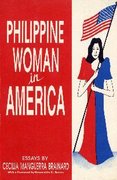
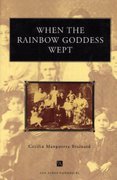
Cecilia Manguerra Brainard is the award-winning author and editor of 12 books, including the internationally- acclaimed novel, "When the Rainbow Goddess Wept," "Magdalena," Acapulco at Sunset and Other Stories," Philippine Woman in America," and "Woman With Horns and Other Stories" She edited "Growing Up Filipino: Stories for Young Adults," "Fiction by Filipinos in America," "Contemporary Fiction by Filipinos in America," and "Journey of 100 Years: Reflections on the Centennial of Philippine Independence." The book, "Cecilia's Diary 1962-1968" was released in August 2003. The anthology, "Behind the Walls: Life of Convent Girls," which she co-edited,was released in 2005.

Her work has been translated into Finnish, and many of her stories and articles have been widely anthologized. Brainard has received a California Arts Council Fellowship in Fiction, a Body Arts Fund Award, and a Special Recognition Award for her work dealing with Asian American youths, as well as a certificate of recognition from the California State Senate, 21 st District.

She has been also awarded by the Filipino and Filipino American communities she has served. In 1998, she received the Outstanding Individual Award from her birth city, Cebu, Philippines. She has lectured and performed in worldwide literary arts organizations and universities, including UCLA, USC, University of Connecticut, University of the Philippines, PEN, Beyond Baroque, Shakespeare & Company in Paris, and many others. She teaches creative writing at the Writers Program at UCLA- Extension. In this interview, Ms. Brainard shares her expertise on the one subject she's passionate about: writing.

Students and Campus Bulletin (SCB): Are there any good and bad reasons for being a writer?

Cecilia Manguerra Brainard (CMB): The bad reasons are for fame, money, immortality, and revenge. The good reasons are because you have no choice but to write; for self-expression, to keep sane, to create something beautiful out of something painful or unpleasant; to educate others and ultimately to educate yourself.

SCB: What are the common misconception about writers and writing?

CMB:The common misconceptions about writers are: They are (or will be) rich and famous; that they are good and therefore not subject to being criticized by someone who isn't a writer; that they are right/correct about what they write about.

SCB: What are the biggest writing fears and how does one get over them?

CMB: These are the biggest writing fears: that one's work is terrible, embarrassing, and awful. How does one get over them? A writer has to accept that the first (or second or even third) draft will generally not be perfect. Anne Lammott in her book, Bird by Bird, calls this the "Shitty First Draft." So what the writer should do is write this "shitty first draft" afterwards, look at it and see what is in that draft that's worth developing, and take it from there. Very rarely is a first draft ready for publication. At times, first drafts may even need to be discarded. Sometimes, there is a kernel there, a seed, a line or two, or paragraph, or maybe more, that sparkles and can be developed.

SCB: What is considered "basic etiquette" for writers?

CMB: Writers live with many unwritten rules, for instance, in terms of giving feedback to someone else's work - a writer should always start by mentioning the strengths of the piece, before mentioning the weaknesses. Another unwritten rule is to mention sources for material you quote or refer to in your own writing. In other matters, if a writer happens to be in a panel for instance, the writer should make sure he/she is not taking more time than others in answering the questions. Perhaps all of the above can be summarized by saying a basic etiquette for writers is to try always to be generous and thoughtful to other writers.

SCB: How does one live with writing rejection?

CMB: Rejection is so much a part of a writers life and a beginning writer needs to understand early on that there are many reasons why a piece is rejected, aside from the quality of the work. It's possible that the editor does not have the space in the magazine or journal. It's possible that the editor has just published a similar piece recently, etc. However, having said this, I will say that if my work is rejected over and over, I will stop sending it out and scrutinize it once again, seriously asking myself if there is indeed something wrong with the piece. If my conclusion is that the piece is publishable, I will continue sending it out.

SCB: How does one respond to comments, criticisms and reviews?

CMB: First you need to realize that critiquing or feedback of your work is necessary. A writer can only do so much, and then he/she loses objectivity. Having others read your work can help you a lot. Think of it as having someone hold up a mirror to your work, allowing you to see the flaws as well as the strengths. If you are in a workshop, and your work is being critiqued, keep quiet, take notes, don't protest or explain. Sit quietly, listen carefully, jot down what is said about your work, and after, and only after, should you ask questions to those giving feedback. Ask specific questions. Don't challenge the critics. And lastly, thank the critics because they have taken the time and effort to read your work and thought things through. Even if they said things that were not positive, thank them anyway. It is the gracious thing to do. Anything can be rewritten. Besides you the writer do not have to act on everything told you; you are the author and should make the final decisions.

YCB: How does one spot and ignore bad writing advice?

CMB: Good writing advice is usually specific, for instance, the dialogue was confusing, or there was a lot of repetition. Bad writing advice is broad, mean, and is given not to help the writer, but to make the critic sound smart. In many cases, I like to attend writing workshops so that more than one or two people read the work. If five or say nine people read it, I can better gauge my work from their comments. For instance if more than one half say the dialogue is not strong, then, I will look carefully at the dialogue. There are also some people whom I trust and whose comments I respect. Further, I can feel in my gut when someone says something about my work and it resonates inside, then I have to pay attention to what was said.

YCB: What would you advise beginning writers on the craft?

CMB: 1) Keep a journal and write, write, write;

2) Read a lot, and read the type of pieces that are similar to what you want to write (articles or stories or poems);

3) Don't compare yourself with the others. It will do you no good to fret because some of your contemporaries are getting published or getting awards. You have your own struggle, your own stories to write.

4) Take classes or join workshops so you have a structure.

Tags: Philippine Literature, #CeciliaBrainard 

Monday, April 11, 2016

Coming soon: Author Cecilia Brainard Gives Talks in Jackson, TN


Cecilia Manguerra Brainard

               FROM THE JACKSON SUN NEWSPAPER: 

Santa Monica, California-based writer Cecilia Brainard co-founded Philippine American Women Writers and Artists and teaches creative writing at UCLA. On April 22, she will lecture on the influence of Filipino history and culture in American literature at St. Mary’s Catholic Church at 6 p.m.
On April 23 at 1 p.m. Brainard will speak at the library as part of the Spring Literary Symposium in partnership with the West Tennessee Fil-Am Association.

“I’m actually very impressed that the people in Tennessee have arranged this, and because of what’s happening in the world — in Brussels and in Paris — and thinking of the Muslim community there that hasn’t been integrated well, I think it’s wonderful the people of Tennessee are going out of their way to reach out to the Filipino-American community,” Brainard said.
Brainard said as a Filipino-American, seeing the two dynamic cultures merge is a challenge. English is not her first language, and it took a while to find her voice as a writer.
“When I started writing stories, they would come out in English, but the subject matter was set in the Philippines,” she said. “As a writer you don’t really limit yourself. I’ve seen a lot, and I try to express that in my writing.”
Reach Danica at (731) 425-9643. Follow her on Twitter: @danicasmithwick
~~~~~
2016 Second Annual Literary Symposium, Jackson Tennessee

Sponsored by the Friends of the Jackson-Madison County Public Library

Fri. April 22 - 6 p.m. Brainard talk "The Impact of Filipino History and Culture Upon American Literature" at St. Mary's Catholic Church, 1665 Highway 45 Bypass, Jackson


Sat. April 23
     Breakfast meeting with West TN FilAm Group
     1:00-2:30 p.m.  - Brainard Talk at the Library


Read also:

    This is all for now,
     Cecilia

Sunday, March 13, 2016

Lunch with Linda Nietes and Robert Little of Philippine Expressions


I had lunch with Linda Nietes and Robert Little in San Pedro, California. Linda Nietes owns the iconic bookshop Philippine Expressions, which has been selling Philippine and Philippine American books for over 30 years.

Monday, February 1, 2016

Invitation: Conversation with Filipino-American Fictionist Cecilia Manguerra Brainard

AN INVITATION


The University of Santo Tomas Center for Creative Writing and Literary Studies Invites you to 

A Conversation with  Filipino-American Fictionist

Cecilia Manguerra Brainard

February 9, 2016, Tuesday, 3:00-5:00 PM
Tangbalang TeresitaTomas, Espana, Manila

Open to the Public

~~~~

NOTE: Cecilia Manguerra Brainard is also involved in The Food Writing Workshop sponsored by the Power of Pen on Feb. 13, Sat. at the Shangri-La Manila - please see link 
http://cbrainard.blogspot.com/2015/12/power-of-pen-how-to-turn-your-love-for.html

~~~

Tags: Philippines, Philippine, Filipino, literature, author, writer, books, UST, creative writing, University of Santo Tomas, novelist, lecture, literary, program


This is all for  now,

Monday, December 14, 2015

LA Writer Rachelle Benveniste's Poem "The Moth"


Some friends of the writer, Rachelle Benveniste, have been trying to gather her writings. I came across her poem published in the Spring of 1992 in UCLA extension's MindscapeS, which I'm sharing here:

The Moth
by Rachelle Benveniste
published Spring 1992, MindscapeS

It must have been there
all night
lodged at the center of my brain
like a moth
stuck to the hot darkness
not able to lift
and drift away
through my consciousness
but clinging
as to some screen door
hard as a bullet.

It must have been waiting
with its wings held tight
against its center,
thick and dusty,
harboring its flight,
racking up some energy
in that deep black space,

For at that fierce gleam
in your eye,
it flew wildly into the room,
ramming itself
against window, lamp, clock,
searching for a place
to quiet its flight,
then hurling itself
in desperation
against the blank wall
of your mind.

Read also
     Tags: poem, literature, poetry, writings, Rachelle Benveniste, LA poet, LA writer, #poetry

     This is all for now,
      Cecilia


Monday, November 30, 2015

World War II and the novel When the Rainbow Goddess Wept #warnovels #wwii


On December 7, 1941 (December 8, Asian Time Zones), Japanese fighter planes attacked the American naval base at Pearl Harbor in Honolulu.  Ten hours later, Japan launched an attack on the Philippines. 

My novel, When the Rainbow Goddess, chronicles the coming-of-age of  nine-year-old Yvonne during wartime in the Philippines. The novel garnered excellent book reviews from Booklist, Publishers' Weekly, Los Angeles Times, Kirkus Review, the Associated Press, and many others.

I'm reprinting the review by Associated Press, dated December 18, 1994: (you can see what a sorry state my copy is!):

Associated Press
Capsule Reviews:

When the Rainbow Goddess Wept by Cecilia Brainard is the tearful, seldom-told story of the Japanese invasion of the Philippines during World War II as seen through the eyes of a young Filipino girl. The many hardships that 9-year-old Yvonne Macaraig and her family are faced with teach her the value of hope and endurance.

Sunday, November 29, 2015

Student Films Based on Cecilia Brainard's Story Flip Gothic


Yesterday I posted some student films based on a story of mine, but I found more student films on another story entitled "Flip Gothic." These stories (and others) are being taught in English/Lit classes in the Philippines.

"Flip Gothic" is part of my short story collection, Acapulco at Sunset and Other Stories (Anvil 1995).

The short story is about a rebellious Filipina American in New York who is dispatched to her grandmother in Ubec when her parents had had enough of her Goth look and unruly behavior. Here's the complete transcript of Flip Gothic. The student films and a student analysis follow.


Student Film Adaptation of Cecilia Manguerra Brainard's short Story "Flip Gothic" - Joshua's Group

Student Film Adaptation of Cecilia Manguerra Brainard's short Story "Flip Gothic" - Mary Rose's Group

Student Film Adaptation of Cecilia Brainard's short story "Flip Gothic" - Lara Monegro's group

Elaine Catubig's article "Flip Gothic: A Cultural Analysis"

Flip Gothic presentation by Carmz Daculap


Read also
           Students Films Based on Cecilia Brainard's Story Woman With Horns
     Tags: Philippines, Philippines, Filipino, literature, Flip Gothic, young adult, story, Filipina

     This is all for now,
     Cecilia

Saturday, November 28, 2015

Student Films Based on Cecilia Brainard's story Woman With Horns


For your enjoyment, here are several student films based on my short story, "Woman With Horns". Here's a brief summary of the short story, courtesy of Wikipedia:

The story is set in 1903 a year after the tumultuous Philippine-American War. America was busy sending American administrators to their newly acquired colony in the Pacific. One of those who went to the "Islands" and who ended up in Ubec was a New York doctor and widower, Gerald McAllister. As the Public Health Director of Ubec, he carries on with his duties of establishing a vaccination program to stop a cholera epidemic. His initial meeting of the beautiful and sensual widow, Agustina Macaraig, disturbs and irritates the doctor. It is his assistant, Dr. Jaime Laurel, who reminds him that life is more than work: "Friend, you don't know how to enjoy life. Look at the sun turning red, getting ready to set spectacularly. It is a wonderful afternoon, you walk with a friend, you talk about beautiful women, about life..."[2]
It is Agustina Macaraig who eventually teaches Gerald McAllister to love and live once more.


SOME LINKS TO STUDENT FILMS FOLLOW:


2014 Student Film adaptation of Woman with Horns (UST Group 3 2-6, Philippine Literature)

2014 Student Film adaptation of Woman with Horns (uploaded by Gio Castillo)

2011 Student Film of Woman with Horns (Lit 102 project) (gynetheagustine)

"Woman With Horns" Bloopers re Mendoza Production (Bagaslao and Bocobo)

Read also:

Links relating to "Woman With Horns":
Wikipedia's page on "Woman With Horns"
Enotes on "Woman With Horns"
Oscar V. Campomanes' Cecilia Manguerra Brainard, Scenographer
Leonard Casper's Possibilities of Humaneness in an Age of Slaughter (critique of Brainard's When the Rainbow Goddess Wept)
Student Films based on Cecilia Brainard's Story Flip Gothic
World War II and the novel When the Rainbow Goddess Wept

There are more student film adaptations of my story in YouTube - search "Woman With Horns"

Tags: Philippines, Philippine, Filipino, literature, story, Ubec, Woman With Horns, film, students, Cebu #philippines

This is all for now,
Cecilia

Monday, October 12, 2015

The Kindness of the French, by Cecilia Manguerra Brainard #Paris essay

The following personal essay is part of the anthology, Portal: Gateway to Adventure (Studio5, 2015) edited by Marily Orosa. This book was just released and is available from Studio 5 or email marilyo@yahoo.com.


The Kindness of the French

by

Cecilia Manguerra Brainard
Copyright 2015 by Cecilia Brainard

           IN THE SPRING  of 2013, something happened to me in Paris — it had to do with my perception of that city, of my husband, and of myself.
            May 2013, my husband, Lauren, and I flew to Paris with the intention of spending three nights there. One evening was set aside to have dinner with our friends Max and Christine who come from Lyon but would be in Paris just to see us. After our short visit to Paris, we’d rent a car and drive north to Belgium and Normandy. Lauren had it all mapped out: flight, hotels, rental car. He loved planning trips. We enjoyed travelling, although visiting France made me a bit wary. During my prior visits there, I found that the clichés said about the French being rude, arrogant and condescending seemed true. Parisians answered in French even when I spoke to them in English. In addition, I had discovered that some vendors and taxi drivers had been dishonest with me, all petty matters, but annoying.

Thursday, October 8, 2015

Interview: Cecilia Brainard's Novel "Magdalena" Revealed


The protagonist in my second novel is a woman who defies Philippine society and takes on a lover. Following is a student interview regarding my novel, Magdalena.

~~
Interview Questions from Shiela Mae P. Abas, BA Literature IIIA:


When did you realize that you wanted to be a writer? 
Did someone push you to become one, or was it your will as it was your dream since you were young? 
Are there authors who influenced your work particularly Magdalena? Who are they? 
What/who inspired you to write the book, Magdalena
Could you give us an insight into your main character? What does she do that is so special? 
Did you use real-life facts based on true stories? 
Who is your target reader? 
As a literature student myself, what is your advise for young writers like us? What motivates you to write?

Tuesday, October 6, 2015

Recap 3rd Filipino American International Book Festival in San Francisco


Lisa Suguitan Melnick at the mic, and Edwin Lozada behind her

THE 3rd Filipino American International Book Festival was held in San Francisco last October 2-4, 2015. It was presented by PAWA (Philippine American Writers and Artists), the San Francisco Public Library, the Filipino American Center (SFPL), in partnership with the Consulate General of the Philippines in San Francisco and other community organizations.

l-r: Nikki Alfar, Dean Francis Alfar, Penelope Flores, Veronica Montes, Cecilia Brainard, Lisa Suguitan Melnick

Friday, September 4, 2015

'Watchman' a Disservice to Author Harper Lee


I was in Costco recently where I saw a pile of hardcover copies of Harper Lee's new-old novel Go Set a Watchman. I picked up a copy, but decided not to buy it.  I had read that this novel is set in the 1950s with Scout as an adult and her father Atticus Finch an older man, and -- a racist. Further, the other characters in the second novel aren't that likable and the writing is poorly done.

Wednesday, September 2, 2015

Philippine Literary Greats, Leonard and Linda Ty Casper


Leonard Casper, photo by Tina Casper-Denman

I was delighted to get news about two Philippine Literary Greats, the noted critic Dr. Leonard Casper and award-winning novelist, Linda Ty-Casper. Linda shared with me a photo of her husband, Leonard Casper. The photo was taken by their daughter, Tina Casper-Denman.  I have Linda's permission to share this wonderful photo:

From Syracuse University Libraries where Leonard Casper's papers are stored, I quote:

Leonard R. Casper (dates unknown) is a graduate of the University of Wisconsin, Madison and emeritus professor of English from Boston College where he taught for 45 years. He is the author or editor of numerous books on Philippine literature, as well as several pieces of fiction and two volumes on the works of Robert Penn Warren. Casper taught in the Philippines on five separate occasions, twice as senior Fulbright lecturer, and was contributing editor to Solidarity (Manila) and Pilipinas (Kansas; Arizona State). His wife Linda Ty Casper is a noted Filpino novelist.

The Leonard Casper Papers consists of correspondence, notes, manuscripts, drafts, published books and printed material.

Sunday, August 2, 2015

Philippine Literature: Filipino and Filipino American Literary Figures


These links from my blog have bios of noted Filipino and Filipino American Literary figures:


Estrella D. Alfon (her picture shown above)


~~
Read also:
Good Night, Gilda Cordero Fernando

Tags: Philippines, Filipino, literature, writer, authors, books

This is all for now,
Cecilia

Thursday, June 11, 2015

Preparing for a Literary Reading at the Writers' Program UCLA Extension


I'm getting ready for a literary reading tonight, dear Readers.  

I'll be reading from a novel excerpt, "The Incident" that first appeared in the Philippine Graphic.  The excerpt is part of my third novel, a literary mystery, titled "Dead Priest in the Creek."

I'm looking for a literary agent to market this novel, by the way!

Here's what writer-professor Brian Roley says about it:

"I’ll just say here that it’s a terrific book. I’m not just saying that. This is one of the books I’ve long wanted to have written—a crime novel set in the Philippines that seamlessly brings in US colonial history in a way that would be interesting to both US and Philippine audiences, and with engrossing characters. Congratulations." ~ by Brian Roley, Author, Professor


Read also
     Tags: literature, novel, literary, reading, Cecilia Brainard
    This is all for now,
     Cecilia


Wednesday, June 3, 2015

Invitation: June 11, 2015 Writers' Program 22nd Annual Publication Party


 I'll be reading in this event, which is free and open to the public.

Participants are instructors of UCLA Extension's Writers Program. It's around a two-hour program. Join us if you can!

Writers’ Program 22nd Annual Publication Party
Thursday June 11, 2015
7:00pm – 9:30pm (Doors open at 7pm; readings begin at 7:30pm)

The Skirball Cultural Center is located at 2701 North Sepulveda Blvd., just off the 405 Freeway and Mulholland Drive.  Once inside the complex, drive north to the NORTH LOT. This is in Los Angeles, California.

Sunday, May 31, 2015

Travel France: Ernest Hemingway in the Left Bank of Paris

Ernest Hemingway, photo courtesy of Wikipedia

Sunday, I set out to trace (some of) the steps of the famous American writer Ernest Hemingway. I'm staying in the Saint Germaine District, on the Left Bank, where Hemingway had lived in the 1920s. It was a cloudy and brisk day, very different from the sunny days we've been having, a good day for a walk.  From our apartment near the Pont Neuf, I walked South in search of the buildings Hemingway had occupied and to get a feeling of his Paris world back then.

Thursday, February 17, 2011

Chapter from "Magdalena", a Novel by Cecilia Manguerra Brainard


I'm reprinting here a chapter from my second novel, Magdalena. This one has to do with the Vietnam War, and since I've just returned from a visit to Vietnam, I've been thinking about this war. I took the picture of the abandoned helicopter at the War Memorial Museum in Saigon Magdalena will soon be available at Kindle, Amazon.com.

Winning Hearts and Minds (1967)
by Cecilia Manguerra Brainard
Copyright by Cecilia Manguerra Brainard 

During a visit to Nakhon Panom Air Base in Thailand, Colonel March Adams heard that Major Ron O’Connor had been shot down during a strike near the Plain of Jars, in Laos. When he returned to Mactan Air Force Base, which he commanded, he told his men about O’Connor, how he had been a member of the reputed 602nd Special Operations Squadron, which was primarily a search-and-rescue (SAR) outfit, responsible for all of Laos and parts of Cambodia. Known as the Sandy Mission, the 602nd also conducted strikes in Northern Laos and made sorties against the Vietcong enemy truck and troop convoys along Ho Chi Minh Trail; but they were famous for their rescue efforts. O’Connor and his wingman, Captain Jose Cass, had been on a rescue mission to save a gunned-down pilot when the enemy got their plane. The pilot whom they had tried to save in the first place, survived; but Major O’Connor “bought the farm,” as the colonel called it.

He said this matter-of-factly. This was his second war, and he had learned to look at war in terms of wins and losses, as if it were a giant chess game with pawns and horses sacrificed for the more important chess pieces.
His men, however, were young, and they assumed a somber tone. “I knew Ron,” someone said, “he’s got a wife and two kids.”

Another spoke: “Once I went with Ron to Francois Restaurant. He had heard that Francois was the best French restaurant in Vietnam. Only problem was, Francois was in VC territory. No problem, Ron said, the VC left Francois’ clients alone. So one Friday, a group of us went, three jeeps, and guys holding machine guns all the way through VC territory to Francois. We picked a table that backed up against a wall and guys continued taking turns with the machine guns throughout the entire meal. We ate and had a lot of laughs. Oh, man, I can’t believe he’s gone.”

Thinking to console them, the colonel added, “His commanding officer recommended he be listed as MIA (missing in action) instead of KIA-NBR (killed in action, no body recovered) so his widow will continue collecting twenty grand a year. If he’s KIA-NBR, she’ll get a lump-sum settlement and less than half the continued compensation.”

The airmen proceeded to talk about their preferred listing if something did happen to them in Southeast Asia. Some men agreed that MIA was a better deal for their families; others thought the psychological anguish would be torture on them. The overall tone of the conversation turned so grim that all of them jumped at the suggestion to go to St. Moritz Bar.

The owner of the bar was an expatriate German named Karl, a loud, effusive man, whose life centered on his bar. “We have some new girls,” Karl said with a thick German accent. He gestured toward the stage in the center of the bar where half a dozen Go-Go girls were dancing. “Some clubs have goldfish, I have beautiful girls.” He sat beside the colonel and ordered a bottle of Scotch for the Americans. “Look at that. Just look at that, their bikinis are no larger than postage stamps,” he said with a wink.

The airmen laughed and hooted. The colonel relaxed, glad that the fiery memory of O’Connor was receding from his men’s minds.

“They come to me, begging for work,” Karl continued. “I take good care of them. Why, some of them have married my clients! Last month, a dancer stopped by with her New Yorker husband — and a three-carat diamond ring. Not too bad for someone from a barrio. I am the one who picks them, each and everyone of them. I go to small barrios; I pick the prettiest. Sometimes I pick some ugly ones, like that one over there who looks like King Kong. Believe it or not, some men like ugly girls. But this girl with the ring, she was beautiful. And obedient. What else can a man want? Her husband must be very happy.” He slapped his thigh and guffawed.

The colonel glanced at the smiling dancers who were furiously gyrating; and for some reason, he remembered his wife, two children, and their Golden Retriever back in Charleston, South Carolina. It had been five months since he met his wife in Honolulu for a brief R&R; and he wondered how she was.

“So, Colonel, how is your war coming along? News is always about Vietnam. Last week there was a picture in Time of a village burning. And inside, a story about more American bombings. The North, the South, they don’t get along. It is a mess, ja? Well, here in St. Moritz, everybody get along. Have more whiskey, Colonel.”

Before the colonel could answer, the German left. The colonel was relieved. The German’s accent grated on his nerves, bringing back memories of an earlier war.
The whiskey loosened the knots in his shoulders. He closed his eyes and pictured the airy houses in Charleston. He imagined himself walking along the city walls, looking across the sea at Fort Sumter. He recalled his grade school teacher, Miss Hill, a passionate Southerner, proudly relate the story of how Charlestonians had bombarded the fort, thus starting the Civil War. As a little boy, he used to recreate famous battles like the Battle of Gettysburg, using small toy metal soldiers. He wondered what happened to the toy soldiers. The last time he had seen them, they were in a box in his mother’s attic.

A girl spoke, startling him. “Maybe you find it one day.”

He raised an eyebrow at the girl who had sat beside him.

“What you are looking for,” she continued. “A while ago, you said, ‘I need to find them.’”

Embarrassed that he had voiced his foolish thoughts, he said, “It was nothing.”
“Do you want more Scotch? Sir says to take care of you.” She pointed at the German who was now at the other end of the room.

“I’m sorry, I have to leave.”

“If you go, he’ll think I’m no good. He’s watching me because I’m new here. I’m a singer. I started work last Wednesday. Were you here last week?” she asked.

The colonel shook his head. “No, I was in Pleiku.”

“What’s ‘Pleiku’? A beach or something?”

“No, not a beach.”

“Here in Philippines? Or someplace else?”

“In Vietnam,” he said, irritated at her persistence.

“Ah, yes, Vietnam. Is there fighting in Pleiku?”

“It’s a place in Vietnam, that’s all.” He didn’t add that driving toward Pleiku, he had seen graves on either side of the highway. Markers, as far as the eyes could see, 150,000 of them, an endless stretch of worn, gray-white markers. An ocean of grave markers. Thousands of these were graves of French soldiers who had died at Dien Bien Phu. For the rest of his life, he would never forget the sight of those markers.

“You have to be happy like others. Sir likes everyone happy. Want to dance?” She gestured toward the pulsating dance floor.

The colonel shook his head.

She hesitated, but said: “Maybe you want a good time? Bar-fee is twenty dollars, but the boss says to go with you, no problem. He wants you to have a good time. He likes Americans here. Lots of dollars. I can give you a good time. Two hours, three hours, even four, forget the sad times; be happy. But not all night. I go home before morning.”

She was wearing tight black pants and a sparkly red top. Although her lips were bright red, her face looked young, like a fourteen-year-old playing grownup. Her hand was resting near his, and her skin looked soft. For a moment, the colonel imagined the feel of human skin against his, and how comforting that would be; and he was tempted. No one would care; and his wife wouldn’t know. He could take her to the hotel down the street; they could be together for a couple of hours. He would feel her body, taste her lips, find release; he would forget O’Connor, Pleiku, the war. One-hundred-twenty-minutes, that was all; and there the matter would end.

But quickly lust gave way to anger at his weakness; and later, anger at the corruptness in Asia, how women like their politicians sold themselves, just like that. Here there was a price for everything. And here, in this far-off, God-forsaken place, men like O’Connor were dying. What for? What were they sacrificing their lives for? If he died, would he have died for his country, or for Asia? And what in hell were they doing in Asia in the first place, a place he didn’t even like, peopled by people he couldn’t even understand; peopled by people who didn’t even like Americans? What was it all about? Americans would bleed to death as the French had in Dien Bien Phu until it fell in 1954. That was the fate of Americans in Vietnam. This war was a waste of time, a waste of money, a waste of American lives.
He got up, ramrod, and headed for the door.

Unfazed, the girl shouted after him, “I’ll tell sir you have a wife back home.”


Saturday, the colonel did a double-take when Captain Nathan Spencer reminded him about his afternoon schedule.

“A child care what?” the colonel shouted.

“Its inauguration, sir. A child care center, in Ubec. You’d okayed giving them old medical and dental equipment, Colonel, and the women had invited you to give a talk. You said yes.”

“I don’t care about the equipment; they’ve had it. But what is this about a talk? I’m here to fight a war, not to give goddamn lectures.”

“You accepted their invitation, Colonel, sir. You agreed it may be a good way to win the hearts and minds of the people. I understand the center is for children of prostitutes, Colonel, and apparently a lot of the kids are half-Americans. The women organizing the event wanted to make sure you’re aware the archbishop and mayor will be speaking along with you, Colonel.”

“The church and state will be there, so by gum, the US government must be represented.”

“Something like that, Colonel.”

“Well, then, you come along, Captain.”

Before serving in Asia, Colonel Adams had been part of the mission at the North American Air Defense Command in Colorado and he had taught part-time at the Air Force Academy in Colorado Springs where he had met Captain Nathan Spencer and struck a friendship with him. He liked the young man and gave him what he considered fatherly advice.

On the way to the city, the captain said, “I can’t help wondering, Colonel, about the poverty here. I understand there are a lot of resources, gold, silver, copper; the land is rich. I’ve flown over acres and acres of green rice paddies; clearly the land is fertile. Yet I’ve heard babies die from disease and hunger. It’s fascinating, Colonel, the contrast between the beauty and poverty here. I can’t figure it out.”

“Corruption, Spencer. There’s corruption in every level of society. You can’t get anything done without paying someone. We’re doing our best for them, trying to establish a democracy in these countries, but sometimes I wonder if it’s worth it.”
“And there’s the question of democracy, Colonel. I’ve read the Vietnamese government is repressive. And we’re supporting them, Sir. I should be simply doing my job, I know that Colonel; but I saw that picture in Time, a Vietnamese village, sir, in flames, with a child bleeding, and other people around. And Colonel, well, when we’re up in the air, we don’t see the faces of these people. The navigator locates the target; the bombardier pushes the button; and we return to the base. I guess what I’m saying Colonel, was that it felt strange to see that picture, to realize we were responsible for all that.”

“Let me give you sound advice, Captain. Don’t do drugs; avoid the women; do your job in the best way you can, and you’ll get out of here alive.” It had sounded so simple; surely Ron O’Connor had followed that advice, but Ron was dead. The colonel wondered what else was needed to survive this war.


Erlinda Sabados and Josie Martinez, president and vice-president respectively of the Catholic Women of the Virgin Mary Most Pure, greeted the men. “Colonel Adams, Captain Spencer,” Erlinda began in a sing-song voice, “how nice of you to join us. We are happy, so very happy that you are here with us.” She was a large woman, a spinster, in her mid-fifties.

“So happy, Colonel,” said Josie who was a younger, smaller version of Erlinda (Erlinda’s shadow, Ubecans called her).

“You have fifteen minutes, Colonel. You come after Archbishop Montalban and the mayor. You’re with two very important figures in Ubec, so you see Colonel, how much we consider American support an honor.” Erlinda stood on tiptoe and draped a sampaguita lei over Colonel Adam’s neck and another over Captain Spencer’s neck.

“An honor,” Josie echoed.

“Some GROs will be present Colonel. The women. The mothers of the unfortunate children. Out of delicadeza, we call them GROs,” Erlinda whispered.

“Guest Relation Officers,” explained Josie.

“Even before Kaugma-an was finished, twenty children signed up, Colonel. Somehow, the GROs heard about the center and begged that we take their children in. Because they are out all night, they sleep in the daytime, leaving the children totally unattended. No Catholic training whatsoever, none. Those poor children grow up like heathens. A place like this is a haven to them. The GROs have been particularly busy, Colonel, as you know. Since you Americans expanded your base, there are quite a lot of soldiers around our city.

“I’ll be frank, Colonel, when I first introduced the idea of a child care center, there was great resistance from members. They accused me of avoiding the real issue, prostitution. They insisted prostitution is immoral, corrupt, not to mention unhealthy; and that prostitution needs to be stopped once and for all. I agreed with them; but the question was how to stop prostitution. How do you stop the oldest profession? Do you have the answer, Colonel? I didn’t. We thought that since GROs were in the business for money, we could start a training center to teach them some other trade — sewing perhaps, or cooking, or some other small cottage industry. The idea was shot down by a GRO herself who said it would take a week of stitching rag-dolls to earn what she made in one night as a prostitute. And of course your base, these Americans on R&R with their dollars to spend — well, it was an issue of economics, pure and simple, and eventually the others supported my proposed child care center project, hoping to save these children since we can do nothing more for the mothers.”

This was a matter that the colonel had never even remotely considered, and he became curious. He asked if the center’s name, Kaugma-an, meant anything; and he nodded approvingly when Erlinda said it meant tomorrow. He observed the three rooms that served as classrooms, the kitchen, the nursery, and the clinic with the American equipment. He was glad that he had had the wisdom to give them the old equipment.
The women led them to some chairs near the podium in one of the larger classrooms, and they left to test the mike and gather everyone for the program.

The mayor and archbishop, who were already seated, were discussing the Catholic Women.

“These women are the backbone of Ubec society,” the archbishop expounded. “Good and pure. They do not let their wealth get in their way. They see everything in clear perspective. They fixed up the old Spanish fort; now they are taking care of these unfortunate children. They use their own money; they beg, they borrow, they virtually steal, to get these worthy projects done. But they get them done. God bless them.”

The mayor spoke: “Your Imminence, let’s not forget the city donated the building. It’s old, that’s true, but it’s rent-free. And of course Your Excellency, our good American friends here have donated medical and dental equipment. You cannot imagine, Colonel, how very much appreciated these things are. The doctors, all volunteers by the way, had nothing more than stethoscopes — I exaggerate — but seriously, they had little else. But now, they have these fancy American equipment, why these are better than the equipment at Ubec General Hospital.”

The colonel felt embarrassed; he had simply been junking the equipment. Helping these children, these people, had been the last thing in his mind.

Erlinda and Josie returned with soft drinks and plates of food, which they set in a low table in front of the men, and then Erlinda started the program.

She spoke for a long time, and the solitary electric fan could not dispel the heat that sprang from the cement floor. The colonel took his handkerchief from his pocket and mopped his brow. He glanced at his watch, and noted that it was already mid-afternoon. Tomorrow, he would have to fly to Vietnam for a meeting with General Westmoreland. The program plodded along.

Erlinda introduced another member of the Catholic Women, who in turn introduced a priest, who in turn introduced Archbishop Montalban. The archbishop congratulated the Catholic Women on the completion of the child care center; he praised their vision in responding to “what was happening in Ubec in the face of the expansion of the nearby military facility.” He touched, very delicately, on the unfortunate reality that GROs could not afford to acquire respectable jobs; and he talked at great length about the children of these women, the innocent children, who fortunately would be in a proper Catholic environment within this child care center.
Erlinda returned to introduce the mayor who kicked off his talk by reading an excerpt from “The Hound of Heaven.” Nobody got the connection between the poem and the center, but the mayor was an eloquent orator, and he segued nicely into a detailed account of how the Catholic Women had asked him for the city’s support, how delighted he had been that he could provide assistance, and he assured everyone he would continue to help them as long as he remained in office.

It was the colonel’s turn. Erlinda introduced him. Colonel Adams had planned on speaking for no more than five minutes. He surprised himself when words flowed. He side-stepped the issue of prostitution and the question of the children’s paternity and started to talk about how pleased the American people were to provide assistance to Filipinos and other Asians. He found himself elaborating on how Americans wanted nothing better than to win the hearts and minds of the people. When he sat down, he thought he had sounded more like a USAID officer than an Air Force Colonel. He felt embarrassed.

There were more speeches from various officers of the Catholic Women, from the doctors who volunteered at the clinic, from the woman who made lunches and snacks, from the restaurateur who donated food, and then, to the colonel’s great surprise, a familiar-looking woman took the mike. It was the singer at St. Moritz Bar. The memory flustered him. He hoped she would not recognize him. Her eyes paused ever slightly at the Colonel, but her face showed no sign of recognition. “Good afternoon, ladies and gentlemen. I am a singer,” she began, “I sing at night, at St. Moritz. Some people say it is a bad place, but they pay and I am able to buy food and clothes for my child. I have a little boy. At night he is with my mother, but in the daytime, he comes here. He can now make the Sign of the Cross; and he can say ‘Jesus.’ One day he will have a better life than me; and it will be because of you. Kaugma-an — Tomorrow — he will do better than me. Thank you. Now I will sing.”
She sang a plaintive rendition of “We Shall Overcome” followed by a rowdier “Boots Were Made for Walking.” A ripple of tension swept through the audience when the singer marched provocatively around the room, but vanished when the archbishop himself cocked his head to one side, and started snapping his fingers in time to the music.

Later, the singer brought the children to the middle of the room. The older children giggled and pushed one another. The younger children clung to the woman’s legs. The colonel wondered which one was her son. When they were in position, the woman whispered something to the children that made them smile and relax. Eyes riveted on them, she lifted a finger and led the children to sing a playful Ubecan song about a local fisherman, Filemon, catching a tambasakan fish. After, they sang a couple of medleys that involved audience participation.

There was a final dance number by the younger members of the Catholic Women who did a bamboo dance. Clad in colorful native costume, they hopped and glided over bamboo poles that were rhythmically banged together; and finally the program ended.
Colonel Adams and Captain Spencer got up and said goodbye to the mayor and the archbishop, who suddenly exclaimed to people’s bewilderment, “Yes, Sinatra! The daughter sang the song!”

Erlinda and Josie escorted them to the main door. There, waiting by the side was the singer, with a little boy in her arms.

“Sir,” she called, addressing the colonel, to the surprise of everyone. They paused. “This is my son,” she continued.

The colonel looked at the child.

“I come home to him every night, after work. Every night without fail,” the singer said.

“He’s a nice-looking boy.”

“Do you think so? Sometimes he is naughty.” “A strong will, that is all. He has strong jaws. A strong will is good.”

“I want him to do better than me.”

“I believe he will. He’ll do all right.”

The singer beamed. “Thank you, sir. Goodbye.”

The colonel nodded and he and the captain continued to the doorway. They said goodbye to Erlinda and Josie who appeared puzzled at the exchange.

When they were in their car, the captain said, “That was a good speech, Colonel.”
“I overdid it, Captain. I’m a soldier, not anything else.”

“Oh, no, Colonel, I believe your speech won their hearts and minds.”

The colonel looked out the window and saw shanties along the road and piles of garbage. Young children, no older than the bigger children at the child care center, were rummaging through the garbage. Sticks in their hands, they poked through incredible filth to find empty bottles and newspapers, little treasures which they could later sell. He must have seen them before; but this was the first time the colonel noticed these children. How peculiar Asia was, he thought, with all its different facets.

He paused and said, “And I’m afraid, Captain, they have won ours.”

-End-

~~
tags: Philippine, literature, fiction, writer, author, Cecilia Manguerra Brainard