Showing posts with label Filipino Philippine American literature. Show all posts

Thursday, May 16, 2019

Interview of Cecilia Brainard by Students and Campus Bulletin

(I'm reposting some older posts because Google's changes make them difficult to find. This was originally posted in 2007 - Cecilia)


Interview of Cecilia Manguerra Brainard, by Students and Campus Bulletin in the Philippines, 2007

A REASON TO WRITE


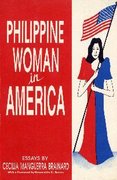
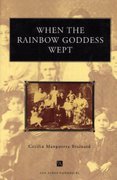
Cecilia Manguerra Brainard is the award-winning author and editor of 12 books, including the internationally- acclaimed novel, "When the Rainbow Goddess Wept," "Magdalena," Acapulco at Sunset and Other Stories," Philippine Woman in America," and "Woman With Horns and Other Stories" She edited "Growing Up Filipino: Stories for Young Adults," "Fiction by Filipinos in America," "Contemporary Fiction by Filipinos in America," and "Journey of 100 Years: Reflections on the Centennial of Philippine Independence." The book, "Cecilia's Diary 1962-1968" was released in August 2003. The anthology, "Behind the Walls: Life of Convent Girls," which she co-edited,was released in 2005.

Her work has been translated into Finnish, and many of her stories and articles have been widely anthologized. Brainard has received a California Arts Council Fellowship in Fiction, a Body Arts Fund Award, and a Special Recognition Award for her work dealing with Asian American youths, as well as a certificate of recognition from the California State Senate, 21 st District.

She has been also awarded by the Filipino and Filipino American communities she has served. In 1998, she received the Outstanding Individual Award from her birth city, Cebu, Philippines. She has lectured and performed in worldwide literary arts organizations and universities, including UCLA, USC, University of Connecticut, University of the Philippines, PEN, Beyond Baroque, Shakespeare & Company in Paris, and many others. She teaches creative writing at the Writers Program at UCLA- Extension. In this interview, Ms. Brainard shares her expertise on the one subject she's passionate about: writing.

Students and Campus Bulletin (SCB): Are there any good and bad reasons for being a writer?

Cecilia Manguerra Brainard (CMB): The bad reasons are for fame, money, immortality, and revenge. The good reasons are because you have no choice but to write; for self-expression, to keep sane, to create something beautiful out of something painful or unpleasant; to educate others and ultimately to educate yourself.

SCB: What are the common misconception about writers and writing?

CMB:The common misconceptions about writers are: They are (or will be) rich and famous; that they are good and therefore not subject to being criticized by someone who isn't a writer; that they are right/correct about what they write about.

SCB: What are the biggest writing fears and how does one get over them?

CMB: These are the biggest writing fears: that one's work is terrible, embarrassing, and awful. How does one get over them? A writer has to accept that the first (or second or even third) draft will generally not be perfect. Anne Lammott in her book, Bird by Bird, calls this the "Shitty First Draft." So what the writer should do is write this "shitty first draft" afterwards, look at it and see what is in that draft that's worth developing, and take it from there. Very rarely is a first draft ready for publication. At times, first drafts may even need to be discarded. Sometimes, there is a kernel there, a seed, a line or two, or paragraph, or maybe more, that sparkles and can be developed.

SCB: What is considered "basic etiquette" for writers?

CMB: Writers live with many unwritten rules, for instance, in terms of giving feedback to someone else's work - a writer should always start by mentioning the strengths of the piece, before mentioning the weaknesses. Another unwritten rule is to mention sources for material you quote or refer to in your own writing. In other matters, if a writer happens to be in a panel for instance, the writer should make sure he/she is not taking more time than others in answering the questions. Perhaps all of the above can be summarized by saying a basic etiquette for writers is to try always to be generous and thoughtful to other writers.

SCB: How does one live with writing rejection?

CMB: Rejection is so much a part of a writers life and a beginning writer needs to understand early on that there are many reasons why a piece is rejected, aside from the quality of the work. It's possible that the editor does not have the space in the magazine or journal. It's possible that the editor has just published a similar piece recently, etc. However, having said this, I will say that if my work is rejected over and over, I will stop sending it out and scrutinize it once again, seriously asking myself if there is indeed something wrong with the piece. If my conclusion is that the piece is publishable, I will continue sending it out.

SCB: How does one respond to comments, criticisms and reviews?

CMB: First you need to realize that critiquing or feedback of your work is necessary. A writer can only do so much, and then he/she loses objectivity. Having others read your work can help you a lot. Think of it as having someone hold up a mirror to your work, allowing you to see the flaws as well as the strengths. If you are in a workshop, and your work is being critiqued, keep quiet, take notes, don't protest or explain. Sit quietly, listen carefully, jot down what is said about your work, and after, and only after, should you ask questions to those giving feedback. Ask specific questions. Don't challenge the critics. And lastly, thank the critics because they have taken the time and effort to read your work and thought things through. Even if they said things that were not positive, thank them anyway. It is the gracious thing to do. Anything can be rewritten. Besides you the writer do not have to act on everything told you; you are the author and should make the final decisions.

YCB: How does one spot and ignore bad writing advice?

CMB: Good writing advice is usually specific, for instance, the dialogue was confusing, or there was a lot of repetition. Bad writing advice is broad, mean, and is given not to help the writer, but to make the critic sound smart. In many cases, I like to attend writing workshops so that more than one or two people read the work. If five or say nine people read it, I can better gauge my work from their comments. For instance if more than one half say the dialogue is not strong, then, I will look carefully at the dialogue. There are also some people whom I trust and whose comments I respect. Further, I can feel in my gut when someone says something about my work and it resonates inside, then I have to pay attention to what was said.

YCB: What would you advise beginning writers on the craft?

CMB: 1) Keep a journal and write, write, write;

2) Read a lot, and read the type of pieces that are similar to what you want to write (articles or stories or poems);

3) Don't compare yourself with the others. It will do you no good to fret because some of your contemporaries are getting published or getting awards. You have your own struggle, your own stories to write.

4) Take classes or join workshops so you have a structure.

Tags: Philippine Literature, #CeciliaBrainard 

Friday, March 9, 2012

Cecilia Brainard Reads her Fiction Tonight, March 9, in Long Beach


Tonight, Friday, March 9, Cecilia Brainard reads her fiction at Long Beach, CA, from 7-9 p.m., 555 Pine Avenue, Long Beach, CA 90802. Do come!

Please join us for an evening with Cecilia Manguerra Brainard. She is fresh off a book tour in the Philippines, and we are so honored that she has made time for us in her busy schedule. She is a fantastic writer and an intriguing woman.

She is the award-winning author of eight books, including the internationally-acclaimed novel, When the Rainbow Goddess Wept, Magdalena, Vigan and Other Stories, Acapulco at Sunset and Other Stories, Philippine Woman in America, Woman With Horns and Other Stories, Cecilia's Diary 1962-1968, and Fundamentals of Creative Writing. She edited four books: Growing Up Filipino I and II, Fiction by Filipinos in America, Contemporary Fiction by Filipinos in America. Cecilia co-edited six books, including Journey of 100 Years: Reflections on the Centennial of Philippine Independence; Behind the Walls: Life of Convent GirlsAla Carte: Food and Fiction, and Finding God: True Stories of Spiritual Encounters. She has also written a novel with four other women entitled, Angelica's Daughters, a Dugtungan Novel.
Her work has been translated into Finnish and Turkish; and many of her stories and articles have been widely anthologized.


Check out her website if you want to know more: http://www.ceciliabrainard.com/

About AtC(LE):

Founded by Alicia Adams and Sarah Miller in 2010, and now co-curated with the soon to be world famous Michael Buckley, After the Carnival (Literary Events) is dedicated to promoting the rich literary culture of Long Beach. Aside from hosting events highlighting the accomplishments of local writers and local presses, we enjoy inviting writers and audiences from outside the area to participate in a literary community we think is unique to Long Beach.

About Exhibit [A]:
Exhibit [A] is one of the currently active galleries under the umbrella organization Vayden Roi Galleries. Produced by Evan Kelly and Liza Mitchell, Vayden Roi Galleries is an economic development program in partnership with the Downtown Long Beach Associates. Vacant commercial spaces are used as temporary galleries and event venues. Property owners are provided limited improvements and promotion. Local businesses benefit from increased foot traffic. Residents and visitors are given a cultural destination and downtown amenity.

Thursday, September 8, 2011

Book Signing - FPAC September 10, 1-4 p.m.

Hi, if you're attending the FPAC Festival this weekend, stop by the booth of Philippine Expressions. I'll be signing VIGAN AND OTHER STORIES, and ANGELICA'S DAUGHTERS: A DUGTUNGAN NOVEL there on Saturday, Sept. 10, 1-4 p.m.

BOOKSIGNING SCHEDULE -

20TH FESTIVAL OF PHILIPPINE ARTS AND CULTURE
Point Fermin, San Pedro, CA www.filamarts.org or call (213) 380-FPAC.


Saturday, September 10, 2011

12:00 Noon - 4:00pm Jay Wertz. The Pacific: War Stories WWll Firsthand. Volume 1. Pearl Harbor to Guadalcanal.

1:00pm - 4:00pm Cecilia Manguerra Brainard. Vigan and Other Stories and Angelica's Daughters, a Dugtugan novel
Elnora Kelly Tayag. Filipinos in Ventura County
Lorenzo Paran, lll. The Filipino American Experience: The Making of a Historic Cultural Monument;

2:00pm - 4:00pm Sarita Echavez See. The Colonized Eye: Filipino American Art and Performance

3:00pm - 4:00pm Florante Peter Ibanez and Roselyn Estepa Ibanez. Filipinos in Carson and the South Bay


Sunday, September 11, 2011

12:00 Noon - 4:00pm Jay Wertz. The Pacific: War Stories WWll Firsthand. Volume 1. Pearl Harbor to Guadalcanal.

1:00pm - 4:00pm Percival Campoamor Cruz. TheMaiden of Ilog-Pasig and Other Stories
Carlene Sobrino Bonnivier. Autobiography of a Stranger: A Novel and Seeking Thirst: A Novel
Frank Tinio Lopez. Gallant Warriors from The Sea: The Philippine Marine Corps Today
Albert Mortiz. Discover the Philippines Cookbook

2:00pm - 4:00pm Roseli Ilano. Walang Hiya: Literature taking risks toward liberatory practice

3:00pm - 4:00pm Lorna Dumapias. The Filipino American Experience: The Making of a Historic Cultural Monument

Wednesday, June 22, 2011

Allen Gaborro's Book Review of VIGAN AND OTHER STORIES, by Cecilia Manguerra Brainard


BOOK REVIEW OF VIGAN AND OTHER STORIES, by Cecilia Manguerra Brainard
REVIEW by: Allen Gaborro

TITLE: Vigan and Other Stories

AUTHOR: Cecilia Manguerra Brainard

PUBLISHER: ANVIL (Philippines)

Short story anthology

In “Vigan and Other Stories”, Cecilia Manguerra Brainard sets in motion a sundry compendium of cultural and historical narratives that are vibrant, dynamic, fanciful, nostalgic, and melancholic. Such narratives have become a staple of Brainard’s works. Leaping decades and continents, the narratives in what is her third collection of short stories are noted for their compelling characters and choice themes. Having mentioned just a few of the impressive virtues of “Vigan”, the one that stands out the most is how the work brings home for Filipinos a past and present idea of their collective self-identity.
Arguably a Filipina version of Virginia Woolf or, perhaps just as accurately, Isabelle Allende, Brainard’s fictional publications are marked by a balance between the public and the private, the individual and the collective, and the local and the universal. Set around the intermingling and intertwining of all these designations, “Vigan”, like her other works, was conceived by the author above all as, according to Oscar Campomanes, “an investment in the cultural development of the ancestral homeland.”

Cobbling together an enthralling ensemble of characters, Brainard sews together a heartfelt and intimate tapestry of an anthology that comes upon the reader with an exceptional perception of the human condition, especially as it pertains to women and to Filipinos. Combined with Brainard’s supple and introspective prose, “Vigan” merits comparison with other wonderful and engaging Asian American short story anthologies.

In her collection, Brainard dreams up situations, ideas, and characters that are framed by her own personal life as well as by her creative initiative. Perfectly balancing her personal reminiscences and her poetic license, Brainard’s stories become a matter of the heart, the human emotions, and of the challenges that fate has in store for people.

“Vigan” is also a historiographic piece, meaning to say that the anthology is very much a product of the author’s historical consciousness and treatment of the history that she has embedded her book in. In her story “The Artist”, Brainard, with her distinctively pensive literary voice, takes us back to the Philippines under Spanish colonial rule. Historical names and terms from this period like the Galleon Trade, Legazpi, Magellan, the Parian—or Chinese neighborhood of Manila—make cameo appearances in the story. But however brief these appearances are, they still give the plot of “The Artist” historical weight.

The very title of her book and its namesake story reaffirms Brainard’s undying fidelity to Philippine history and expansive respect for the past. “Vigan” the story is a sort of reconstruction of the author’s previous stays in the city which is located in the northern province of Ilocos Sur. Situated on South China Sea, Vigan maintains a prominent history as a major colonial-era trading post. For the purposes of Brainard’s story, the city serves as the backdrop for her story about a young girl dealing with the death of her father and with the tragic experiences of her “bad luck” mother.

With “Vigan” as an anthology, the reader comes into possession of psychologically-impacting stories that are greatly influenced by conflicted yet benevolent personalities and perspectives. Included in Brainard’s literary equation for her characters are the positives of love and renewal, the subtle reverberations of a sublime soul-searching, and a reserved spirituality that is concealed below the surface but which can nevertheless emerge just enough for the reader to draw the conclusion that some divine force in the book is being alluded to.

What reader would not be enriched in the heart and in the mind by a literary sensibility as reflective and exquisite as Brainard’s is in “Vigan”? People will certainly appreciate a good read when they see it, and the upshot of this review is that “Vigan” is exactly that: a good read. Not only that, it is a read that presents an opportunity for taking a contemplative sojourn into the Filipino historical, cultural, and social landscape on which Cecilia Manguerra Brainard’s stories rest.

ALLEN GABORRO
2011

Saturday, April 30, 2011

CECILIA BRAINARD & VERONICA MONTES AT THE LA FESTIVAL OF BOOKS

Veronica Montes and I spent Saturday at the LA Festival of Books. We signed copies of ANGELICA'S DAUGHTERS and VIGAN AND OTHER STORIES at the Philippine Expressions booth.


In fact the celebration began on Friday night at Philippine Expressions' Authors Night,which gathered many Filipino and Filipino American authors to launch their new books. I was delighted to meet author Zak Linmark (Rolling the Rs and Leche) for the first time. My husband's friend from law school days, Dr. Al Acena, was there and it was good to talk of the Hastings days. Letecia Leyson (from PAWA days and High Priestess of Circle Aracadia) was there, as well as Gigi Gonzalez whose Ph.D. dissertation involves my writings. Also present was one of my favorite authors, Carina Montoya-Forsythe, and husband Steve.


Last but not least, my cousin Percival Campoamor Cruz (author The Maiden of Ilog-Pasig and Other Stories) was there with his family: wife, Lilian, daughers Amanda and Mikki, and grandson Omar.. Percival and I share the common ancestor, Juana Lopez, and it was great fun working out our genealogy.


On Saturday, Veronica and I got up early, had bagles and orange juice and took off for USC, now the site for the LA Festival of Books. (The site used to be UCLA - I miss UCLA.) After walking around, meeting some representatives from Granta and Figueroa Press and other literary establishments, we positioned ourselves at the huge booth of Philippine Expressions. As usual Linda Nietes displayed her books beautifully. Take a look at the pictures - and look for ANGELICA'S DAUGHTERS and VIGAN AND OTHER STORIES. I was happy to see that Linda displayed some of my older titles: Fiction by Filipinos in America, Contemporary Fiction by Filipinos in America, Finding God, and When the Rainbow Goddess Wept although we sold out this title that morning (Philippine Expressions will restock).


Basically, Veronica and I, and Zak Linmark talked to people and signed books for several fun hours. The three of us had quite a lot of fun chatting amongst ourselves, and I had to nudge both Veronica and Zak to take care of people hovering around right in front of them, clearly anxious to talk.


Book signing events are not all about book signing (and selling books). To me, it's the opportunity to connect with people who are interested in literature. I'm delighted when people come up to me and say they'd read When the Rainbow Goddess Wept in high school or college and what it meant to them. A really popular book that stimulates a lot of conversation is the collection, Growing Up Filipino I, which remains popular now, even though this was released in 2004. (See the picture of the three young women holding up the book.) Some people were also excited about the religious book, Finding God, and it was fun to tell them the book won the Guintong Aklat Award last year.


Veronica and Zak took off for a lunch break but I stayed on because I simply wasn't hungry. I told Veronica I get too hyper at these book events. The truth is that even though I thoroughly enjoy chatting with people, it's outward energy. And, I foolishly wore heels, which wasn't a good idea given we had to walk a distance to get from the parking lot to the booth of Philippine Expressions - ouch!

By 2;30 p.m. I hobbled over to the booth of AACP, the San Mateo-based non-profit book seller run by Florence Hongo. There was Leonard Chan and Mr. Hongo to meet me and set me up at their signing table right up front where people could see me and my books. I was surprised AACP had copies of Acapulco at Sunset and Other Stories and Song of Yvonne. They also had Growing Up Filipino I and II. I talked to their clients, sold a few books for AACP, and then it was 4 o'clock and Veronica and Zak were there to pick me up for coffee.

The food section was crowded so we avoided the lines, found chairs under a shady umbrella and proceeded to talk. And talk some more. Writers will never run out of topics to talk about.

Then 5 o'clock came and it was time to find our car and drive Veronica to the airport.

I'm waiting for Veronica's pictures and writeups. I really didn't take pictures. And I'm waiting to hear about Zak's and Brian Roley's performance next week and hoping my schedule will alow me to hook up with these two wonderful young writers.

I've got two more book events in May - the Writers' Program Publication Party on May 12 and a book signing for Cherished (Barbara Abercrombie's pet book). I'll update you.

Thanks for reading and stop by again.
Read more about the Book Events from the blog of Angelica's Daughters maintained by Veronica Montes: http://angelicasdaughters.wordpress.com/2011/05/03/la-story/
P.S. Here's information re:
Philippine Expressions - http://www.philippineexpressionsbookshop.com/2114 Trudie Drive
Rancho Palos Verdes, CA 90275-2006
tel: 310-514-9139
email: info@philippineexpressionsbookshop.com

AACP - http://www.asianamericanbooks.com/
529 East Third Ave.
San Mateo, CA 94401
Voice - (650)375-8286
Fax - (650)375-8797

Amazon.com and palhbooks.com also has copies of my books. Some of my titles are now in Kindle (Amazon.com) and Nook (Barnes and Noble).

Wednesday, April 27, 2011

Cecilia Brainard on Kababayan LA, Channel 18

Just did the TV interview with Jannelle So, Kababayan LA, Channel 18 - it'll air this afternoon, April 27, at 4:30 p.m. They'll also put it up on YouTube. It's a short interview, primarily plugging the Book Signing Events this Friday and Saturday. Pls. see Book Signing Schedule in an earlier blog entry.

You can watch this April 27 interview here - http://www.youtube.com/watch?v=yEc-6dEX3Uw

Thursday, December 23, 2010

Review of Eleanor Ty's The Politics of the Visible in Asian North American Narratives

Someone forwarded this to me. Eleanor Ty looks at various books, including When the Rainbow Goddess Wept (by Cecilia Brainard, University of Michigan Press):

"The obvious strength of Ty's work is the lucid insistence with which she evokes the invisible dimensions of Asian North Americanidentities,which is accompanied by a paradoxical recognition of the visible." - from a review of Eleanor Ty's The Politics of the Visible in Asian North American Narratives. Toronto: University of Toronto Press, 2004

Wednesday, December 15, 2010

Holiday Gift Book List - reprinted from Barbara Jane Reyes/PAWA blog

I'm reprinting this from: http://pawainc.blogspot.com/search/label/Books

This holiday season, why not give the gift of literature? We will be posting reading lists and book buying suggestions from Filipino American authors here. This first one's from Eileen Tabios:

THE CHAINED HAY(NA)KU ANTHOLOGY Curated by Ivy Alvarez, John-Bloomberg Rissman, Ernesto Priego & Eileen Tabios. More info.

ARCHIPELAGO DUST by Karen Llagas (Meritage Press, 2010).

STAGE PRESENCE: CONVERSATIONS WITH FILIPINO-AMERICAN PERFORMING ARTISTS, Ed. Theodore S. Gonzalves (Meritage Press, 2007).

REQUIEM FOR THE ORCHARD by Oliver de la Paz (University of Akron Press, 2010).

TRAJE DE BODA by Aileen Ibardaloza (Meritage Press, 2010).

KALI'S BLADE by Michelle Bautista (Meritage Press, 2006).

THE THORN ROSARY: Selected Prose Poems & New (1996-2010) by Eileen R. Tabios, Edited with an Introduction by Thomas Fink and Afterword by Joi Barrios (Marsh Hawk Press, 2010). I realize I'm citing my book but I really want to draw attention to Dr. Barrios' essay which is useful in terms of discussing Filipina women's poetry. Ordering info: Hardback and Paperback.

PRAU by Jean Vengua (Meritage Press, 2007).


THE TRANSLATOR'S DIARY by Jon Pineda (New Issues Poetry and Prose, 2008). Semi-finalist in very competitive SF State Poetry Center Book Award contest that I judged.

POEMS OF THE BLACK OBJECT by Ronaldo Wilson (Futurepoem Books, 2009). Winner of 2010 AAWW Poetry Award that I judged with John Yau and Sesshu Foster.

DIWATA by Barbara Jane Reyes (BOA Editions, 2010).

~~~

Luis Francia: Holiday Gift Book List

The Beauty of Ghosts, by Luis H. Francia (Manila: Ateneo de Manila University Press, 2010). (Order at Philippine Expressions.)

Autobiography of Mark Twain: The Complete and Authoritative Edition, Vol. 1 (Berkeley: University of California Press, 2010).

Haywire: Flash Fictions, by Thaddeus Rutkowski (New York: Starcherone/Dzanc Books, 2010).

Poems of the Black Object, by Ronaldo Wilson (New York: Futurepoems Books, 2009).

Ilustrado, by Miguel Syjuco (New York: Farrar Straus & Giroux, 2010).

The Verso Book of Dissent: From Spartacus to the Shoe Thrower in Baghdad, edited by A. Hsiao & A. Lim (New York: Verso Books, 2010).
~~~~~
This list is from Karen Llagas:

Baker of Tarifa by Shadab Zeest Hashmi (Poetic Matrix Press, 2010).

Bulaklak sa Tubig: Mga Tula ng Pag-ibig at Himagsik / Flowers on Water: Poems on Love and Revolt by Joi Barrios (bi-lingual, Tagalog-English; Anvil Publishing, 2010).

The Place That Inhabits Us: Poems of the San Francisco Bay Watershed, edited by Sixteen Rivers Press (Sixteen Rivers Press, 2010).

Independence, by Sarah Lapido Manyika (Legend Press, 2008).

Crown of Dust, by Mary Volmer (Soho Press, 2010).

A Thousand Threads, by Steve Orlen (The Hollyridge Press Chapbook Series, 2009).

~~~~~
This list is from Veronica Montes:

What It Is (Drawn & Quarterly, 2008) and Picture This: The Near-Sighted Monkey Book (Drawn & Quarterly, 2010) by Lynda Barry. Writers and artists will be inspired by these two unorthodox “manuals” for the creative life. Written by hand and filled with Barry’s color-saturated collages, drawings, doodles, and whatnot, they're pretty much impossible to put down.


Pinoy Capital: The Filipino Nation in Daly City, by Benito M. Vergara, Jr. (Temple University Press, 2009). Like thousands of Filipinos before me, and hundreds of thousands after me, I grew up in Daly City. This is a fascinating anthropological take on my hometown, written in a style that is somehow both academic and conversational. A must-have for the bookshelf of anyone with even a tangential interest in a landscape that holds special meaning for Filipinos.

A History of the Philippines from Indios Bravos to Filipinos by Luis Francia (Overlook Press, 2010). A history of the Philippines written by a poet/journalist? Who could resist such a fine book? Pick up two copies: one for yourself, and one to offer as a gift to someone who has been very, very good this year.

Imago by Joseph O. Legaspi (CavanKerry Press, 2007). I had the chance to hear Joseph read from the poems in Imago when he participated in the PAWA Reading Series earlier this year, and was instantly drawn to his work. He captures all the beauty and innocence of childhood, tempered by the inevitable intrusion(s) of death, violence, sex (the confusing parts, that is). So good.

Diwata by Barbara Jane Reyes (BOA Editions, Ltd., 2010). Lush, lovely, inspired. These poems are filled with startling imagery, strong women, and story, story, story.


The Solemn Lantern Maker, by Merlinda Bobis (Delta, 2009). This novel begins just six days before Christmas with a mute boy trawling the streets selling his handmade paper lanterns. Add to this his best friend Elvis (who holds a terrible secret), an injured and missing American tourist, and a post-9/11 let’s-freak-everybody-out media frenzy, and what do you have? A really good story.

Growing Up Filipino II: More Stories for Young Adults, Cecilia Brainard, ed. (PALH Books, 2009). I would recommend this anthology even if I didn’t have a story in it. It’s one of those books I’d wished I’d had as a teenager and young adult, simply because it’s affirming to have our experiences transformed into a narrative on the page. You’ll find bits and pieces of yourself and yours in these stories, for sure.

I’d also like to recommend subscriptions to literary journals that seem to consistently support the work of Filipino writers. Bamboo Ridge Press, The Asian American Literary Review, and Manoa instantly come to mind.

~~~~~
Here's Vangie Buell's:

Sky High: The True Story of Maggie Gee, by Marissa Moss, illustrated by Carl Angel (Tricycle Press, 2009).

Cora Cooks Pancit, by Dorina K. Lazo Gilmore, illustrated by Kristi Valiant (Shen's Books, 2009).

Twenty Five Chickens and a Pig for a Bride: Growing up in an Filipino Immigrant Family, by Evangeline Canonizado Buell, illustrated by Carl Angel (T'Boli Publishing, 2006).

Images of America: Filipinos in the East Bay, by Evangeline Canonizado Buell, Evelyn Luluquisen, Ellie Luis, and Lillian Galledo (Arcadia Publishing, 2008).

Look for these books at Arkipelago Books and Eastwind Books of Berkeley.

~~~~
Here are Oliver de la Paz's recommendations:

In Canaan, by Shane McCrae (Rescue Press, 2010).

Burnings, by Ocean Vuong (Sibling Rivalry Press, 2010).

Each Crumbling House, by Melody S. Gee (Perugia Press, 2010).

Sweet Grass, by Micah Ling (Sunnyoutside Press, 2010).
~~~~~
Here's Barbara Jane Reye's list:

Lola: A Ghost Story, by J. Torres and Elbert Or (Oni Press, 2010).

Growing Up Filipino II: More Stories for Young Adults, edited by Cecilia Brainard (PALH Books, 2010).

breaking poems (Cypher Books, 2008), and Born Palestinian, Born Black (UpSet Press, 2010), by Suheir Hammad.

A History of the Philippines: From Indios Bravos to Filipinos (Overlook Press, 2010), and Eye of the Fish: A Personal Archipelago (Kaya Press, 2001), by Luis Francia.

The Solemn Lantern Maker (Delta, 2009), and Banana Heart Summer (Delta, 2008), by Merlinda Bobis.

In the Company of Strangers, by Michelle Cruz Skinner (Bamboo Ridge Press, 2009).

The Salt-Wind, Ka Makani Pa'akai, by Brandy Nalani McDougall (Kuleana 'Oiwi Press, 2009).

Outlaw: The Collected Works of Miguel Piñero (Arte Publico Press, 2010).

The Gods We Worship Live Next Door, by Bino A. Realuyo (University of Utah Press, 2006).

from unincorporated territory [saina], by Craig Santos Perez (Omnidawn Press, 2010).

Up Jump the Boogie, by John Murillo (Cypher Books, 2010).

Migritude, by Shailja Patel (Kaya Press, 2010).

Also remember, you can shop online at Arkipelago Books and Eastwind Books of Berkeley.
~~~

~~~~
Cecilia's List:
Lim, Paulino, Jr. REQUIEM FOR A REBEL PRIEST. New Day, 1996, First Edition, softcover, 225 pp., Paulino Lim is a professor of English at Cal State Long Beach.You can read his short story, Curacao Cure, in Our Own Voice (March 2002) http://www.oovrag.com/stories/stories2002a-3.shtml, Requiem for a Rebel Priest is his 3rd novel of a trilogy set during the Marcos and Aquino regimes follows the return of an ex-Jesuit to the Philippines when restless segments of the military were attempting to overthrow the Aquino government. You can find this and his other books in amazon.com

Ty-Casper, Linda. DREAM EDEN. Ateneo de Manila University Press, 1996, First Edition, softcover, 460 pp.,
One of the most prolific Filipino American writers is Linda Ty Casper who has written over 15 books. She is one author who should be admired not only for her talent but for her grace. This novel by Linda Ty-Casper is a portrait of the Philippines just before the Peaceful Revolution of 1986 up to the last coup of 1989.

Ty-Casper, Linda. AWAITING TRESPASS. New Day, 1989, First Edition, softcover, 180 pp.,
New York Times Book Review says: "Linda Ty-Casper pulls no punches in this unusual novel, which she describes as "a pasión" - yet she wears silk gloves. With jobs so deft they avoid the didactic but sting mightily, she indicts everything, from the values of the well-to-do to martial law.."


Brainard, Cuizon, Evangelista, Montes, and Sarreal. ANGELICA'S DAUGHTERS, A DUGTUNGAN NOVEL. Anvil, 2010, First Edition, softcover, newsprint, 200 pp,
Angelica's Daughters is a collaborative novel by five established Filipina writers, called a "dugtungan." A dugtungan is a genre of Tagalog novel popular early in the 20th century, in which each writer creates a chapter and hands it off to the next, who writes another chapter without direction. The result, in this case, is an ensemble performance that contains something of the exhilaration of theatrical improv. One watches these accomplished authors inventively weave a historical romance, creating gripping heroines and turns of plot, crossing decades and national boundaries, tapping into cultural roots of the Philippines, Spain and America. Reading Angelica's Daughters is a gripping experience.~ Brian Ascalon Roley, Author of American Son (W.W. Norton)


Briones, Concepcion G. LIFE IN OLD PARIAN. Kaguiakan 2000, softcover, new, 99 pages.
I love this hard to find book about historic old Cebu, especially because the Parian district is undergoing gentrification. Concepcion Briones writes about growing up in the old Parian district of Cebu. She writes about the old families who lived there; she describes the houses and landmarks of the place; she records gossip of the time. This book is a must-read for anyone interested in Cebu.

Evangelista, Susan. GROWING INTO ASIA AND OTHER ESSAYS. UP Press, First Edition, softcover, 102 pp.
This is a collection of charming and insightful essays by Susan Evangelista who straddles many worlds. She hails from Michigan but is married to a Filipino. She has traveled to Japan, China, Thailand, Cambodia, and many other places. In this collection, she explores her life as an American in the Philippines, and reflects on the many other facets of her fascinating life. Evangelista taught writing and literature at the Ateneo de Manila.

Sunday, December 5, 2010

Introduction ~ VIGAN AND OTHER STORIES by PROF. OSCAR CAMPOMANES


Introduction to VIGAN AND OTHER STORIES, a short story collection by Cecilia Manguerra Brainard (Anvil, 2011)
by Oscar V. Campomanes

Cecilia Manguerra Brainard, Scenographer It gives me great pleasure to introduce this new anthology of Cecilia Manguerra Brainard’s fiction even as she really needs no introduction to a Philippine readership. As the young scholar Marge Rafols discovered in a recently completed study of Brainard’s institutional politics and creative work, Cecilia has consistently pursued a rather telling strategy, of which the publication by Anvil of this collection is only the latest example. Despite extended residence in the US for much of her adult life, and her considerable publishing success in that country, Cecilia has primarily oriented her writing to—and sought to circulate/publish it for the most part in—the Philippines, wanting Filipino readers to have first access to the fruits of her labors as a literary artist. Rafols reads this bifocality of Brainard’s career as an institutional politics on the writer’s part that addresses two major concerns: the constant need for diasporic storytellers like her to affirm and sustain a connection to and an investment in the cultural development of the ancestral homeland; and the endemic institutional invisibility or exclusion of Filipino Americans and migrants in the American cultural and political arenas (Rafols 2010). One, obviously, has everything to do with the other, and both can make sense, as Rafols amply demonstrates in her accomplished study, when construed in the context of the “special” (that is, neocolonial) relationship between the Philippines and the United States.

The cultural and political liminality in US society to which Filipino Americans and migrants had been historically and chronically doomed (a fate that is beginning, fortunately, to look up)—on account of the politics of self-disavowal of the American Empire which is now the object of a flourishing Filipino American postcolonial critique—might in some way explain the effet de retour of diasporic identity politics of the kind Brainard manifests. And the strategy to reorient one’s work as a writer to readers back ‘home’ without much care as to its potential for recognition from an American or international audience could perhaps mean, at one and the same time, an investment in Philippine literary culture, and an oblique but pragmatic realization of the nearly irremediable lot of Filipino American and migrant marginality in the colonizer’s context. One is then led to the unlikely wager that by contributing to homeland cultural development as the priority, the diasporic writer might effectively escape from the limiting and oppressive determinations of American institutional invisibility or paradoxically induce American establishment culture and institutions (still the arbiters of global literary visibility and celebrity) to take notice of one’s iconoclastic work or perspectives resulting from such a politics of location and self-displacement.

Whatever the actual results of such an institutional and publishing strategy in terms of critical and publishing coups in the United States, Cecilia’s ‘wager’ has been rewarded by an unusual number of local critical studies devoted to her writing, and the sustained interest expressed by Filipino academic students in her literary innovations, cultural activism, and personal identity politics. Apart from Rafols at Ateneo and others I know, University of Santo Tomas literature professor John Jack Wigley wrote his splendid MA thesis (2004) on the strategic and political gynocentrism of Woman with Horns and Other Stories, and the up-and-coming local literary critic of Filipino American literature, Frances Jane Abao of the University of the Philippines has rigorously located When the Rainbow Goddess Wept in an emergent tradition of the ‘ethnic bildungsroman’ (2001). By the late 1990s and early 2000s, other Filipino American and migrant writers like the poets Eileen Tabios and Ma. Luisa Igloria, the fictionist M. Evelina Galang, even Filipino diasporic writers from other global locations like Australia, Europe, and Japan, had begun to follow Cecilia’s lead and, at the very least, to count publication in the Philippines and access to a Filipino readership as an important component of their individual quests or career aspirations. The ‘return effect,’ in Brainard’s own case, saw not only the eventual republication of When the Rainbow Goddess by both an American trade publisher and university press after first being published as Song of Yvonne by New Day in Manila, but also a spate of critical studies of this novel and her other works by feminist and Asian American literary critics like Helena Grice, Dolores de Manuel, Guiyou Huang, C. Hua, Rocio Davis, Alicia Otano, S.T. Leonard, etc. in American learned journals, critical anthologies, and reference volumes.

What has been said of Carlos Bulosan’s village stories that “[they] are so simple as to seem effortless”—something similar having been said of N.V.M. Gonzalez by a crusty American critic that the latter’s stories are “so understated as to seem so artless”—may be said of Brainard’s fictions, generally, and of her stories in this collection, in particular. I qualify this seemingly left-handed assessment by citing a caveat made by the same critic of Bulosan’s village stories that, in fact, “such stories are the most difficult to write.” Cecilia’s style is even more spare or sparing, letting the words do the barest work possible of depicting action, description, or sequencing the events, for example. I’d call this style, which seems fairly unique to her (even when compared to that of old masters like Bulosan and Gonzalez), as scenographic, to borrow a term from cinema. In flash-fiction pieces like “The Dirty Kitchen,” “Flying a Kite,” and “The Che Guevarra Night,” this tendency and skill of staging fictional character, event, or setting as barely apprehensible scene/s—moving at a pace like that of briskly edited montage—is in most evidence. But the scenographic style also marks the stories that seem to form a cycle by their common setting of Ubec (Brainard’s noteworthy fictional inversion and immortalization of her beloved city of birth, Cebu), or are presented as separate pieces that can stand on their own, from their obvious provenance as chapters in an abortive novel (“Vigan,” “The Rice Field,” “Tia Octavia,” “The Last Moon-Game of Summer,” “Sagada” etc).

Like Manuel Puig’s cinematextual idiom in Kiss of the Spider Woman, Jessica Hagedorn’s filmic crosscuttings in Dogeaters, or M. Evelina Galang’s phototexts (as I call her ‘verbal pictures’) in One Tribe, but again less opulently so, Brainard’s fictional scenography seems calculated, by contrast, to allow for the emergence of what Walter Benjamin once predicted, marveling at the power of the cinematic, as a new habitus of perceiving and thinking, to which Benjamin gave the enigmatic appellation “the critic in a state of distraction” (1968 [1955]). This is another way of saying that Cecilia’s stories, by their narrative minimalism (they are so scenographic as to seem uneventful), ostensibly seem to create the ample space for a more active readerly collaboration that is not so much consciously thought out as reflexively elicited. Here I have in mind a story like “Romeo” which willfully violates the rule that first-person narration cannot be omniscient, suggesting that it can be scopic if the forgiving reader is willing to supply the missing angles of vision—a pretty defamiliarizing strategy of rendering fictional action as scene/s best exemplified and demonstrated by the clairvoyant narrator of “My Mother is Dying” or in the epistolary exchanges between immigrant mother Nelia and the Old World grandmother (‘Mama’) about the errant Filipino American daughter Mindy/Arminda in the delightful yet poignant story “Flip Gothic.” In short, Cecilia’s compositional aesthetic allows for that strange physics that the technology of cinematic vision and storytelling—one that penetrates and dissolves dimensional planes—enables, or makes eminently imaginable, according to Water Benjamin.

I would like to speculate that this scenographic style is very much in accord with what the late Southeast Asianist scholar Les Adler once determined to be Brainard’s historiographic politics of keeping the lives of her men and women characters—set as these are in both historical and contemporary milieux—“continually in the camera’s eye” (Adler 1996). Watch these stories unfold, do not simply read them, in other words. When watching them—like they were projected on the screen of one’s osmotic imagination—do so, as Walter Benjamin says, as if one is engulfed by the flood of scenic images (mindful in some way that they are strategically arranged or sequenced by the writer’s filmic and historiographic sensibility), and thus as if moved to connect them, if only half-consciously, to one’s subliminal image-repertoires of a history shared with so many others, which would otherwise remain fragmentary and unarticulated, but, in the hands of a skillful and unobtrusive verbal auteur like Brainard, now form some absorbing montage of seamless and crosscut continuity shots.

Works Cited
Abao, Jane Frances P. 2001. “Retelling the Stories, Rewriting the Bildungsroman: Cecilia Manguerra-Brainard’s When the Rainbow Goddess Wept.” Humanities Diliman (January-June).
Adler, Les. 1996. “Acapulco Sunset and Other Stories: A Review.” Pilipinas 26 (Spring).
Benjamin, Walter. 1968 [1955]. “The Work of Art in the Age of Mechanical Reproduction.” In Reflections, transl. Harry Zohn and ed. Hannah Arendt. New York: Harcourt Jovanovich Inc.
Rafols, Margarita. 2010. “Hide and Seek: Redefining ‘Filipino’ in Cecilia Manguerra-Brainard’s Fiction by Filipinos in America (1993) and Contemporary Fiction by Filipinos in America (1997).” BA Literature Thesis, Ateneo de Manila University
Wigley, John Jack. 2004. “Representations of the Female Body in Cecilia Manguerra-Brainard’s Fiction.” MA Literature Thesis, University of Santo Tomas.


PROFESSOR OSCAR V. CAMPOMANES teaches critical theory and literary/cultural studies in the Department of English, Ateneo de Manila University; and semiotics, media criticism, and culture theory in the Communication Program of the UST Graduate School. His recent essays regarding American empire critique, Filipino American postcoloniality and literary history, and cultural semiotics have appeared in such journals as PMLA, Japanese Journal of American Studies, and Philippine Studies; and the anthologies Positively No Filipinos Allowed (Temple 2006; Anvil 2008) and Vestiges of War (NYU Press/Anvil 2002). An anthology of his critical writings is currently under preparation for publication both in the Philippines and the United States


For copies of Vigan and Other Stories, contact ANVIL (www.anvilpublishing.com)
email: anvilpublishing@yahoo.com
Vigan and Other Stories is available as a Kindle Edition at Amazon.com
In the US contact Philippine Expressions or PALHBOOKS.COM.