Showing posts with label Filipino American literature Fil Am writers. Show all posts

Friday, October 9, 2015

Some Filipino and Filipino American Books and Journal to Read


Here are some books on my Reading Pile:

Front l-r:  

Jaime Alonso Yrastorza's From Fire to Freedom: Childhood in Colonial Philippines to Post-WWII Adulthood in America, Tate Publishing, 2015:

"From Fire to Freedom narrates an insight into the tapestry of the life of Dr. Jaime Alonso Yrastorza. His weave of reminiscences begins in his idyllic upbringing in the Philippines. He reflects on the legacies that centuries of turbulent Spanish and American colonial overlords had influenced the mores and traditions of the present-day Filipinos..."

Lisa Suguitan Melnick's #30 Collantes Street, Carayan Press, 2015: 

"In #30 Collantes Street, author Lisa Suguitan Melnick experiences unexpected takes on both the foreign and the familiar of her ancestral roots. The stories reflect astute observations and discoveries and experiences in Cebu, Negros, Mindanao, Palawan, and Bohol. Melnick's pieces also represent rites of passage gently evocative of the author's childhood...."

Wednesday, February 29, 2012

Invitation: PINAY GATHERING: Celebration of Women's History Month

YOU ARE INVITED...

PINAY GATHERING

A Celebration of Women's History Month
Honoring Filipino American Women Authors

A chance to break bread together, talk and bond with other Pinay Sisters in the community

Saturday, March 31, 2012 12:00 Noon
Pizza Per Tutti Pizzeria & Tratoria
4143 Lankershim Boulevard corner Acqua Vista
Toluca Lake, CA 91602 Tel 818-760-8200


Join us and celebrate the publication of two new books by our featured authors who will speak and sign their books.

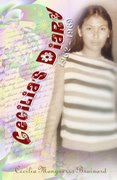
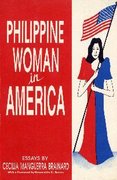
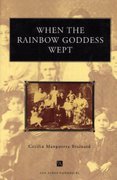
Cecilia Manguerra Brainard, author of Out of Cebu: A Collection of Essays and Personal Prose. The book collects 28 essays about the author’s Cebuano ties and her pride of heritage, including colorful accounts about her mother’s family, the Cuencos, a prominent political family in Cebu. The book also includes writings about the author’s life and travels outside of Cebu. She is the author of When the Rainbow Goddess Wept: A Novel; Magdalena: A Novel; Acapulco at Sunset and Other Stories; Philippine Woman in America; Woman with Horns and Other Stories; Cecilia’s Diary, 1962-1968; and Fundamentals of Creative Writing.
She has edited four anthologies: Growing Up Filipino, 1 & 2; Fiction by Filipinos in America; and Contemporary Fiction by Filipinos in America.
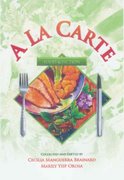
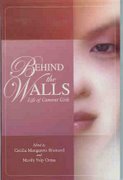
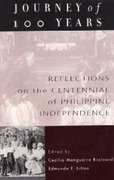
With Edmundo Litton, she co-edited Journey of 100 Years: Reflections on the Centennial of the Philippine Independence. With Marily Orosa, she co-edited three anthologies: Behind the Walls: Life of Convent Girls; A La Carte: Food and Fiction; and Finding God: True Stories of Spiritual Encounters.
With four other authors, she co-wrote Angelica’s Daughters, a Dugtungan Novel.

Ofelia V. Dirige and Aurora S. Cudal, co-authors of Global Filipino Cuisine: Healthy Recipes. First published in 2009 with the late Dr Riz A. Oades,
this is a revised and expanded edition of 100 modified choices with nutrient analysis. This is a much-needed book for healthy eating in the community.
Proceeds from sales of this title will cover programs and services of the FilAm Wellness Center/Kalusugan Community Services which is located at
1419 E 8th Street., National City, CA 91950. www.WebKalusugan.org / Info@WebKalusugan.org

Other authors who will attend and will sign their books include Ludy Astraquillo Ongkeko, Forty Years of Writing in America; Carina Monica Montoya
(AKA Carina Forsythe), Los Angeles’s Historic Filipinotown; Filipinos in Hollywood and Let's Cook Adobo!, a juvenile cookbook; Roselyn Estepa Ibanez, co-author, Filipinos in Carson and the South Bay; and Carlene Sobrino Bonnivier, Seeking Thirst: A Novel and Autobiography of a Stranger.

If you will be unable to attend but would like a signed copy of any of the books mentioned here, you can place your order with:
linda@philippineexpressionsbookshop.com or linda_nietes@sbcglobal.net

This is an ongoing program of Philippine Expressions Bookshop to reach out to the FilAm community and to increase the visibility of Filipinos in mainstream
America. $25.00 Lunch, inclusive of drinks, dessert and gratuities. Menu to be emailed upon reservation. Limited seating. The event is also open to male
guests. The venue is owned by Pinay entrepreneur Hilda Mauro. RSVP: linda@philippineexpressionsbookshop.com or call (310) 514-9139.

----

Philippine Expressions Bookshop
The Mail Order Bookshop dedicated to
Filipino Americans in search of their roots.

PO Box 4201, Main Post Office
Palos Verdes Peninsula, CA 90274, USA Tel (310) 514-9139
www.philippineexpressionsbookshop.com
orders@philippineexpressionsbookshop.com
Join Friends of Philippine Expressions Bookshop in FaceBook
http://www.linkedin.com/pub/linda-nietes/29/558/7ab
Visit the personal page of Linda Nietes in FaceBook
----

"Do not go where the path may lead, go
instead where there is no path and leave a trail." - Ralph Waldo
Emerson.

We have blazed the trail in promoting Philippine books in America.
2012 marks our 28th year of service to the Filipino American
community. Mabuhay.

Tuesday, February 21, 2012

Cecilia Brainard Reads March 9, 2012 in Long Beach

Hi, there,
I'll be doing a reading on Friday, March 9, at Exhibit A Gallery, 555 Pine Avenue, Long Beach. I understand I'll be on, for an hour. I'll read from my new book, Out of Cebu, and from my other books. I'll post the Press release re this program with the details, but do come.http://www.blogger.com/img/blank.gif


Directions:
From Santa Monica, take I-405 toward Long Beach
Take Exit on left toward Downtown/Aquarium
Keep right to take the 6th St. ramp
Stay straight to go onto W. 6th St.
Turn right onto Pine Ave
555 Pine Ave is on the right


Cecilia

Saturday, October 8, 2011

Pictures from Book Talk, Carson Public Library

These pictures were taken at Book Talk, with Carlene Bonnivier, Cecilia Brainard, Lorenzo Paran, and Samantha Sotto, sponsored by Philippine Expressions and the Carson Public Library, Saturday, Oct. 8, 2011.


Photos:
Top l-r: Cecilia Brainard, Lorenzo Paran, Samantha Sotto, and Carlene Bonnivier
Next l-r: Cecilia Brainard, Samantha Sotto
Next l-r: Lucila Dypiangco, Cecilia Brainard
The rest of the pictures show Oscar and Lucila Dypiangco with guests, most of them Theresians.

Thursday, September 15, 2011

INQUIRER NEWS RE SAN FRANCISCO FILBOOKFEST

One Hundred Authors, Thousands of Books at Filbookfest
http://globalnation.inquirer.net/12533/one-hundred-authors-thousands-of-books-at-filbookfest
September 15, 2011

The largest convergence of authors with Filipino roots outside the Philippines is taking place on October 1 and 2 at San Francisco’s Civic Center for the first-ever Filipino American International Book Festival (FilBookFest).

The Philippine contingent includes former Philippine president Fidel V. Ramos, National Artist for Literature Virgilio Almario (aka Rio Alma), National Artist for Visual Arts Ben Cabrera (aka BenCab), journalists Marites Vitug, Cris Yabes and Pete Lacaba, historians Ambeth Ocampo and Felice Sta. Maria, critic Isagani Cruz, noted psychologist Dr. Honey Carandang, cultural activist John Silva, author/chef Claude Tayag and multi-awarded authors Jose “Butch” Dalisay, Ed Maranan and Neni Sta. Romana Cruz, among others.

The bigger group of writers/authors of course are Filipino Americans and include such notables as Cecilia Brainard, Marivi Soliven Blanco (who just won the Palanca Award for Best Novel), Ben Pimentel (another new Palanca awardee), R. Zamora Linmark, Oscar Penaranda, Barbara Jane Reyes, Evangeline Buell, Tess Uriza Holthe, Luis Francia, Leny Strobel and Reme Grefalda, publisher of the online magazine, Our Own Voice.

A Filipino-Canadian author, Romeo Honorio, is flying in from Calgary while Filomenita Hogsholm will be joining from Denmark.

There will be something for everyone to look forward to and enjoy at Filbookfest.

Presented by the Literacy Initiatives International Foundation (LIIF), the San Francisco Public Library, the Asian Art Museum and the Philippine Department of Tourism, in cooperation with TFC/ABS-CBN Foundation International, FilBookFest is headed by Al Perez, the moving force behind the annual Pistahan celebration. Perez is festival director.

Among its highlights:

• Children’s book readings by well-known Filipinos, arts and crafts, a lesson on writing in baybayin (ancient Filipino script) and video showings at the second floor of the San Francisco Main Library. To be featured are Filipino American children’s book authors reading their works , and a large selection of children’s books published in the Philippines

• Lectures on Filipino cuisine by cultural historian/author Felice Sta. Maria, who will talk on the fascinating historical evolution of Filipino food, and chef/artist/author Claude Tayag, who will describe the many flavors of regional cuisine. The audience will be treated to a taste of a variety of Filipino dishes created by local chefs.

• A balagtasan (traditional debate in poetry) on a timely topic by the Philippines’ best known balagtasan performers, Teo Antonio, Vim Nadera and Mike Coroza.

• Hot Off the Press featuring Filipino American authors reading from their newest books

• In the evening of October 1, A Tribute to Filipino Literary Laureates, a special program honoring Filipino authors who have created classic works that celebrate our history and culture: Carlos Bulosan, NVM Gonzalez, Bienvenido Santos, Jose Garcia Villa, F. Sionil Jose, Al Robles, Ceres Alabado, Fred and Dorothy Cordova, Evangeline Buell, Linda Ty-Casper and Nick Joaquin. There will be a reception to precede the program.

• Thousands of books by Filipino and Filipino American authors will be available for sale from various booksellers on Fulton St., between the San Francisco Public Library and the Asian Art Museum.

• The best Filipino dishes from restaurants and food trucks also on Fulton St.

• Hourly prize drawings and a grand prize drawing at the end of each day of the festival. The grand prize is a round-trip ticket to the Philippines, courtesy of Philippine Airlines.

FilBookFest is sponsored by The Asia Foundation, the University of San Francisco’s Yuchengco Philippine Studies Program, Target, Chevron, Ramar Foods International, AT&T, Mama Sita’s, Philippine News, Inquirer.net and Asian Journal. Partner organizations include the Book Development Association of the Philippines, the National Book Development Council, the National Commission for Culture and Arts, the Philippine American Writers and Artists Inc. (PAWA), the Filipino American National Historical Society (FAHNS), the Filipino American Arts Exposition (FAEE), the Friends of the San Francisco Library and Philippine Expressions Bookshop.

For more festival information, please check out www.filbookfest.org regularly.

Sunday, December 5, 2010

Introduction ~ VIGAN AND OTHER STORIES by PROF. OSCAR CAMPOMANES


Introduction to VIGAN AND OTHER STORIES, a short story collection by Cecilia Manguerra Brainard (Anvil, 2011)
by Oscar V. Campomanes

Cecilia Manguerra Brainard, Scenographer It gives me great pleasure to introduce this new anthology of Cecilia Manguerra Brainard’s fiction even as she really needs no introduction to a Philippine readership. As the young scholar Marge Rafols discovered in a recently completed study of Brainard’s institutional politics and creative work, Cecilia has consistently pursued a rather telling strategy, of which the publication by Anvil of this collection is only the latest example. Despite extended residence in the US for much of her adult life, and her considerable publishing success in that country, Cecilia has primarily oriented her writing to—and sought to circulate/publish it for the most part in—the Philippines, wanting Filipino readers to have first access to the fruits of her labors as a literary artist. Rafols reads this bifocality of Brainard’s career as an institutional politics on the writer’s part that addresses two major concerns: the constant need for diasporic storytellers like her to affirm and sustain a connection to and an investment in the cultural development of the ancestral homeland; and the endemic institutional invisibility or exclusion of Filipino Americans and migrants in the American cultural and political arenas (Rafols 2010). One, obviously, has everything to do with the other, and both can make sense, as Rafols amply demonstrates in her accomplished study, when construed in the context of the “special” (that is, neocolonial) relationship between the Philippines and the United States.

The cultural and political liminality in US society to which Filipino Americans and migrants had been historically and chronically doomed (a fate that is beginning, fortunately, to look up)—on account of the politics of self-disavowal of the American Empire which is now the object of a flourishing Filipino American postcolonial critique—might in some way explain the effet de retour of diasporic identity politics of the kind Brainard manifests. And the strategy to reorient one’s work as a writer to readers back ‘home’ without much care as to its potential for recognition from an American or international audience could perhaps mean, at one and the same time, an investment in Philippine literary culture, and an oblique but pragmatic realization of the nearly irremediable lot of Filipino American and migrant marginality in the colonizer’s context. One is then led to the unlikely wager that by contributing to homeland cultural development as the priority, the diasporic writer might effectively escape from the limiting and oppressive determinations of American institutional invisibility or paradoxically induce American establishment culture and institutions (still the arbiters of global literary visibility and celebrity) to take notice of one’s iconoclastic work or perspectives resulting from such a politics of location and self-displacement.

Whatever the actual results of such an institutional and publishing strategy in terms of critical and publishing coups in the United States, Cecilia’s ‘wager’ has been rewarded by an unusual number of local critical studies devoted to her writing, and the sustained interest expressed by Filipino academic students in her literary innovations, cultural activism, and personal identity politics. Apart from Rafols at Ateneo and others I know, University of Santo Tomas literature professor John Jack Wigley wrote his splendid MA thesis (2004) on the strategic and political gynocentrism of Woman with Horns and Other Stories, and the up-and-coming local literary critic of Filipino American literature, Frances Jane Abao of the University of the Philippines has rigorously located When the Rainbow Goddess Wept in an emergent tradition of the ‘ethnic bildungsroman’ (2001). By the late 1990s and early 2000s, other Filipino American and migrant writers like the poets Eileen Tabios and Ma. Luisa Igloria, the fictionist M. Evelina Galang, even Filipino diasporic writers from other global locations like Australia, Europe, and Japan, had begun to follow Cecilia’s lead and, at the very least, to count publication in the Philippines and access to a Filipino readership as an important component of their individual quests or career aspirations. The ‘return effect,’ in Brainard’s own case, saw not only the eventual republication of When the Rainbow Goddess by both an American trade publisher and university press after first being published as Song of Yvonne by New Day in Manila, but also a spate of critical studies of this novel and her other works by feminist and Asian American literary critics like Helena Grice, Dolores de Manuel, Guiyou Huang, C. Hua, Rocio Davis, Alicia Otano, S.T. Leonard, etc. in American learned journals, critical anthologies, and reference volumes.

What has been said of Carlos Bulosan’s village stories that “[they] are so simple as to seem effortless”—something similar having been said of N.V.M. Gonzalez by a crusty American critic that the latter’s stories are “so understated as to seem so artless”—may be said of Brainard’s fictions, generally, and of her stories in this collection, in particular. I qualify this seemingly left-handed assessment by citing a caveat made by the same critic of Bulosan’s village stories that, in fact, “such stories are the most difficult to write.” Cecilia’s style is even more spare or sparing, letting the words do the barest work possible of depicting action, description, or sequencing the events, for example. I’d call this style, which seems fairly unique to her (even when compared to that of old masters like Bulosan and Gonzalez), as scenographic, to borrow a term from cinema. In flash-fiction pieces like “The Dirty Kitchen,” “Flying a Kite,” and “The Che Guevarra Night,” this tendency and skill of staging fictional character, event, or setting as barely apprehensible scene/s—moving at a pace like that of briskly edited montage—is in most evidence. But the scenographic style also marks the stories that seem to form a cycle by their common setting of Ubec (Brainard’s noteworthy fictional inversion and immortalization of her beloved city of birth, Cebu), or are presented as separate pieces that can stand on their own, from their obvious provenance as chapters in an abortive novel (“Vigan,” “The Rice Field,” “Tia Octavia,” “The Last Moon-Game of Summer,” “Sagada” etc).

Like Manuel Puig’s cinematextual idiom in Kiss of the Spider Woman, Jessica Hagedorn’s filmic crosscuttings in Dogeaters, or M. Evelina Galang’s phototexts (as I call her ‘verbal pictures’) in One Tribe, but again less opulently so, Brainard’s fictional scenography seems calculated, by contrast, to allow for the emergence of what Walter Benjamin once predicted, marveling at the power of the cinematic, as a new habitus of perceiving and thinking, to which Benjamin gave the enigmatic appellation “the critic in a state of distraction” (1968 [1955]). This is another way of saying that Cecilia’s stories, by their narrative minimalism (they are so scenographic as to seem uneventful), ostensibly seem to create the ample space for a more active readerly collaboration that is not so much consciously thought out as reflexively elicited. Here I have in mind a story like “Romeo” which willfully violates the rule that first-person narration cannot be omniscient, suggesting that it can be scopic if the forgiving reader is willing to supply the missing angles of vision—a pretty defamiliarizing strategy of rendering fictional action as scene/s best exemplified and demonstrated by the clairvoyant narrator of “My Mother is Dying” or in the epistolary exchanges between immigrant mother Nelia and the Old World grandmother (‘Mama’) about the errant Filipino American daughter Mindy/Arminda in the delightful yet poignant story “Flip Gothic.” In short, Cecilia’s compositional aesthetic allows for that strange physics that the technology of cinematic vision and storytelling—one that penetrates and dissolves dimensional planes—enables, or makes eminently imaginable, according to Water Benjamin.

I would like to speculate that this scenographic style is very much in accord with what the late Southeast Asianist scholar Les Adler once determined to be Brainard’s historiographic politics of keeping the lives of her men and women characters—set as these are in both historical and contemporary milieux—“continually in the camera’s eye” (Adler 1996). Watch these stories unfold, do not simply read them, in other words. When watching them—like they were projected on the screen of one’s osmotic imagination—do so, as Walter Benjamin says, as if one is engulfed by the flood of scenic images (mindful in some way that they are strategically arranged or sequenced by the writer’s filmic and historiographic sensibility), and thus as if moved to connect them, if only half-consciously, to one’s subliminal image-repertoires of a history shared with so many others, which would otherwise remain fragmentary and unarticulated, but, in the hands of a skillful and unobtrusive verbal auteur like Brainard, now form some absorbing montage of seamless and crosscut continuity shots.

Works Cited
Abao, Jane Frances P. 2001. “Retelling the Stories, Rewriting the Bildungsroman: Cecilia Manguerra-Brainard’s When the Rainbow Goddess Wept.” Humanities Diliman (January-June).
Adler, Les. 1996. “Acapulco Sunset and Other Stories: A Review.” Pilipinas 26 (Spring).
Benjamin, Walter. 1968 [1955]. “The Work of Art in the Age of Mechanical Reproduction.” In Reflections, transl. Harry Zohn and ed. Hannah Arendt. New York: Harcourt Jovanovich Inc.
Rafols, Margarita. 2010. “Hide and Seek: Redefining ‘Filipino’ in Cecilia Manguerra-Brainard’s Fiction by Filipinos in America (1993) and Contemporary Fiction by Filipinos in America (1997).” BA Literature Thesis, Ateneo de Manila University
Wigley, John Jack. 2004. “Representations of the Female Body in Cecilia Manguerra-Brainard’s Fiction.” MA Literature Thesis, University of Santo Tomas.


PROFESSOR OSCAR V. CAMPOMANES teaches critical theory and literary/cultural studies in the Department of English, Ateneo de Manila University; and semiotics, media criticism, and culture theory in the Communication Program of the UST Graduate School. His recent essays regarding American empire critique, Filipino American postcoloniality and literary history, and cultural semiotics have appeared in such journals as PMLA, Japanese Journal of American Studies, and Philippine Studies; and the anthologies Positively No Filipinos Allowed (Temple 2006; Anvil 2008) and Vestiges of War (NYU Press/Anvil 2002). An anthology of his critical writings is currently under preparation for publication both in the Philippines and the United States


For copies of Vigan and Other Stories, contact ANVIL (www.anvilpublishing.com)
email: anvilpublishing@yahoo.com
Vigan and Other Stories is available as a Kindle Edition at Amazon.com
In the US contact Philippine Expressions or PALHBOOKS.COM.

Thursday, November 11, 2010

Growing Up Filipino II - Readings by Contributors

Here are YouTube video clips of Readings by some contributors to the book, Growing Up Filipino II: More Stories for Young Adults:


YouTube - Veronica Montes Reads from Growing Up Filipino II

YouTube - Rashaan Alexis Meneses Reads from Growing Up Filipino II

YouTube - Amalia Bueno's Story in Growing Up Filipino II (read by Barbara Jane Reyes)

YouTube- Marianne Villanueva Reads from Growing Up Filipino II

YouTube - Tony Robles Reads from Growing Up Filipino II

The book is Available from: www.palhbooks.com, Philippine Expressions, Arkipelago, Amazon.com, The Book House, Follet Library Resources, Midwest Library.

SCHOOL LIBRARY JOURNAL BOOK REVIEW 5/1/2010:
BRAINARD, Cecilia Manguerra, ed. Growing Up Filipino II: More Stories for Young Adults. 254p. PALH. 2010. Tr $29.95. ISBN 978-0-9719458-2-1; pap. $21.95. ISBN 978-0-9719458-3-8. LC 2002104406.

Gr 9 Up—This collection of 27 short stories, the follow-up to the critically acclaimed Growing Up Filipino (PALH, 2003), reflects the impact of post-9/11 wartime sensibilities among Filipino writers living in the Philippines, the United States, and Canada. Although similar topics of family, memoir, and coming-of-age thread through both collections, the pieces are not grouped by theme, but nevertheless weave a constantly shifting tapestry of Filipino identity. The challenges and conflicts of unique ancestry and struggles for identity provide a rich background for modern urban realism. The brittle memoirs reflected in "Here in the States," "Nurse Rita," and "Hammer Lounge"; original legend in "A Season of 10,000 Noses"; and breathtaking tragedy in "How My Mother Flew," among others, are compelling reading. Some selections have terse, spare language; others are almost commonplace in their apparent simplicity; all capture moments and nuances of the modern Filipino experience that will envelop readers. Brainard has again selected powerful, evocative stories of family: of promises and disappointment, failure and resentment, tenacious and all-consuming love, anxiety and transcendent hope. There is plenty here to stimulate discussion and encourage an appreciation of Filipino writing and culture. This anthology is a worthy successor to the first volume and has appeal to an audience beyond high school literature courses.—Roxanne Myers Spencer, Western Kentucky University, Bowling Green

Source: http://www.schoollibraryjournal.com/article/CA6727442.html?industryid=47067

Wednesday, November 10, 2010

FIL-AM AUTHORS WRITING, by Libay Linsangan Cantor, The Manila Times

I just found this article that mentions me. Thanks to Libay Linsangan Cantor for this:

Fil-Am Authors WritingThe Manila Times, 7/4/10

With all the buzz about Filipino YouTube singing sensation Charice finally making it to Hollywood’s “it” show of the moment, Glee, I wonder if fellow Pinoys are familiar with other Filipino talents already making names for themselves as Filipino-American authors. If we would take a look at Pinoys getting published in the USA, we might have more pride about our race making it in the land of milk and honey when it comes to the literary field.

Most people might have missed Jessica Hagedorn when she visited Manila a few years ago to promote her latest novel, Dream Jungle, published by Viking Books in 2003. She is more identified with her very postmodern take on the Marcos regime in her novel Dogeaters published by Penguin Books in 1990. While it might sound very political, this novel of hers is a very interesting read, given the very eclectic voices of the characters we encounter in Metro Manila amid the backdrop of many pop culture trappings we Filipinos drown in on a daily basis. Hagedorn was born and raised in the Philippines and moved to San Francisco when she was a teenager. In the US, she also dabbles in other art forms as a poet, performance artist and playwright.


Cecilia Manguerra Brainard is another person that comes to mind when we talk about Fil-Am authors. She is the author of the 1990s novel When The Rainbow Goddess Wept published several times by different international and local publishing houses. She has also authored various creative nonfiction books to her name, and sometimes visits the Philippines to promote them or to give talks during their launch here.
Brainard is also active as an editor of various short story collections and nonfiction anthologies like Growing Up Filipino: Stories For Youth Adults, a collection of how it’s like to grow up as a Filipino in the Philippines and in other parts of the world. I’m proud to have an essay of mine included in that 2003 young adult anthology of hers, and I’m also happy to learn that this anthology is being used in some US schools in teaching children and young adults about Filipino experiences. Brainard was born in Cebu and finished college here in the Philippines before migrating to the USA and settling down there to start a family. She is currently active as a teacher at the Writer’s Program of the University of California Los Angeles (UCLA) Extension.


Another Fil-Am author with an acclaimed novel is Bino Realuyo, author of Umbrella Country published in 1999 by Ballantine Reader’s Circle. The novel is a heartwarming tale about a boy living in an impoverished urban poor community in Manila who undergoes a lot of challenges in his life, including dealing with sexuality issues. The son of a Bataan Death March survivor, Realuyo was born and raised in the Philippines and moved to the US where he made New York his home for many years. He is also a poet, educator and works on various labor rights and human rights issues.

Just these three Fil-Am authors’ achievements alone make us proud that they uphold their Pinoy roots through their literature. Next time, we’ll try to discover more Fil-Am writers writing about our worlds.

Sunday, October 24, 2010

Re GAWAD KALINGA'S "AN AFTERNOON TEA" IN PASADENA, CALIFORNIA


October 23, 2010 -
I just got back from the Gawad Kalinga's (www.GKIWorld.com)"An Afternoon Tea" with the theme of "Women Inspiring Women Inspiring Change." Honorees included 6 authors and Chef Cecilia de Castro. Tony Meloto, the founder of Gawad Kalinga flew in from the Philippines to attend the program. Chef Cecilia De Castro handled the elegant fare with scones, sandwiches and other delicious tidbits with tea, coffee, and calamansi seltzer, served in bone china and silver.

The six authors were: Cecilia Brainard, May Respicio Koerner, Carina Monica Montoya, Myrna De La Paz, Marjorie Light, and Ludy Ongkeko. Philippine Expressions made the books by these authors available. The writers' bios follow:
A gathering of trail blazers...

Cecilia Manguerra Brainard, author and editor of fourteen books which include the internationally acclaimed When The Rainbow Goddess Wept and other titles such as Growing Up Filipino, Vols. l and ll and her latest, Angelica's Daughters, A Dugtungan Novel, which she co-authored;

Carina Monica Montoya, also known as Carina Forsythe, author of Filipinos in Hollywood, Los Angeles's Historic Filipinotown and Let's Cook Adobo cookbook designed for children;

Mae Respicio Koerner, author of Filipinos in Los Angeles;

Myrna de la Paz Mulhern, writer, producer, director, lyricist and filmmaker of ABADEHA: The Philippine Cinderella.

Marjorie Light, a Fil Am writer, performer and DJ who has contributed an article in the book, Babaylan: Filipinos and the Call of the Indigenous on Decolonization and the Filipino Arts Community in LA.

Ludy Ongkeko, a columnist for the Philippine News since 1971, a tenured professor for many years with the University of Southern California and author of "Forty Years of Writing in America."


Live music was provided by Linda Madrid, Jane Provido, Andy Tecson, and Bob Schroeder. Floral artistry was provided by Grace Na; Jewelry design by Victoria Duque, professional makeovers by Au Mauricio.

A lovely afternoon put together by lovely women, including the hostess, Gloria Lilly, and Tess Castro.


~~~
Top photo: l-r:Myrna De La Paz, Linda Nietes, Cecilia Brainard, Hermie Ongkeko, Ludy Ongkeko
Next down: l-r: Cecilia Brainard, Chef Cecilia De Castro, Guest
Third down: l-r: Cecilia Brainard, Carina Monica Montoya

Fourth down: l-r: Carina Monica Montoya, Gloria Lilly, Myrna De La Paz, Cecilia Brainard
Fifth down: l-r: Cecilia Brainard,Mae Respicio Koerner
Sixth picture down: l-r: Carina Monica Montoya, Myrna De La Paz, Linda Nietes, Cecilia Brainard,
Seventh down: l-r: Cecilia Brainard, Carina Monica Montoya
Eighth down: Mae Respecio Koerner, Myrna De La Paz, Linda Nietes, Carina Monica Montoya, Cecilia Brainard
Ninth down: With guest
Tenth down: The Lilly's backyard
Eleventh down: The Lilly's fabulous house
Twelfth down: High Tea

Tuesday, October 12, 2010

FORTHCOMING BOOK SIGNINGS - Angelica's Daughters and other books


Saturday, October 23, 2010, Cecilia Brainard will be signing at the booth of Linda Nietes at the Gawad Kalinga's "An Afternoon Tea" in Pasadena; and this Saturday, october 16, Veronica Montes will do a reading and signing of Angelica's Daughters at Eastwind Books, in Berkeley.

Thursday, October 7, 2010

Book Review Contemporary Fiction by Filipinos in America


(I only got the copy of this review now although I was aware that Manoa did a review of the anthology. Contemporary Fiction by Filipinos in America is available from ANVIL (www.anvilpublishing.com);email: anvilpublishing@yahoo.com)

BOOK REVIEW
CONTEMPORARY FICTION by FILIPINOS IN AMERICA
Edited by Cecilia Manguerra Brainard
Anvil Publishing, 1997, 254 pages
MANOA, Vol. 13, No., 1, Silence to Light: Japan and the Shadows of War (Summer, 2001) pp. 201-203
by Harold Augenbraum

Contemporary F iction by Filipinos in America.Edited by Cecilia
Manguerra Brainard. Pasig City, Philippines: Anvil Publishing, 1997.
254 pages, paper $22.95.


A couple of years ago, I asked a colleague of mine who was preparing a comprehensive
anthology of world literature which Filipino writers he was going to
include.He wasn't aware of any, he replied, adding that they probably hadn't been
translated yet.


I explained that many of the best Filipino writers in the Philippines wrote in
English, a legacy of American colonialism from 1898 to 1946. With great enthusiasm
and some hope, I mentioned a half dozen that he might want to consider,
including N .V. M. Gonzalez, L inda Ty-Casper, and F.Sionil Jose. I wasn't surprised,
however, when the anthology appeared without a one.


In the United States, the Philippines has always been esteemed for its strategic
importance while Filipino culture has been almost invisible.The truth is that the
Philippines has a rich literary heritage, extending from the archipelago to the various
other countries in which Filipinos have settled, including former colonial
masters Spain and the United States.The writers who have made a name for themselves
in the States-Carlos Bulosan, Bienvenido Santos, Linda Ty-Casper,
Ninotchka Rosca, perhaps N ick Carbo, and certainly JessicaH agedorn - are few,
though their writing is powerful and consistently good. Hagedorn is the most
honored: her nomination for the National Book Award for Dogeaters brought
some attention to lesser-known F ilipino writers toiling in the vineyards of the literary
lord, such as Cecilia Manguerra Brainard. The University of Washington
Press has loyally kept Santos and Bulosan in print, as well as brought Gonzalez to
the attention of the American public - about as much as a small university house
can do for these writers.


The anthologies of Filipino and Filipino American writing published in the
States have also appeared infrequently. In 1966, Leonard Casper, a prominent
critic and the husband of LindaT y-Casper, compiled an extraordinary collection
called New Writing from the Philippines. A few Filipino American pieces were
included in the seminal 1974 Asian American anthology Aiieee! though the vastly
different experiences of Filipinos in the States, and a wholly different literary tradition,
resulted in two separate introductions to the book: one for Chinese and
Japanese Americans; the other for Filipino Americans.


In 1992, Luis Francia edited the marvelous Brown River,White Ocean, which
thrived despite the publisher's barely useable design. F rancia's next contribution
was 1996's Flippin' Filipinos on America, which he and Eric Gamalinda edited for
the Asian American Writers' Workshop, based in New York. A writer's book,
composed half of poetry and half of prose, it is filled with the sheer pleasure of literary
achievement and remains the best Filipino American anthology available
today.


Cecilia Manguerra Brainard's 1993 anthology, F iction by Filipinos in America,
was a low-budget collection published by New Day Publishers in Quezon City,
Philippines. For it she collected a good cross-section of Filipino writers, from the
little known to the more accomplished, producing a good introduction to Filipino
writing in America.Contemporary Fiction by Filipinos in America, also published
in the Philippines, covers some of the same grounds even of the twenty-five contributors were included in the earlier collection, though it is comforting to see
Gonzalez and Ty-Casper again.

(Linda Ty-Casper)


Since the late nineteenth century, the Philippines has been wracked by political
difficulties: its revolt against Spain in 1898, American domination, a Japanese
invasion,and the Marcos plutocracy. Yet except for the hints of this situation in
Gonzalez's story "Confessions of a Dawn P erson," and the migrant background in
Alma Jill Dizon's promising "Bride," the stories in Contemporary Fiction by Filipinos
in America focus little, if at all, on the history of the Filipino experience in
the Philippines. This is a favorite theme of at least one U.S..-resident writer who is
not included here, Ninotchka Rosca, who weaves that history into the fabric of her
work.


With its political legacy omitted, the Philippines is neither idealized nor demonized.
As an ancestral home, the place of one's consciousness before coming to
America, it becomes another "worldly" place: subtly powerful, vivid, and distant.
Within the Filipino a nd Filipino American world, trials and tribulations focus the
self within a social context, but not on the context. Even in Brainard'cs ontribution,
" Flip Gothic," in which an uncontrollable young woman on the verge of
adulthood is sent by her family in the States to live with her grandmother in
Manila, the national culture of the Philippines is subjugated to the household culture,
and the homeland is affective, but amorphous.


By pulling these personal, fictional quests together, the reader indeed comes
away with a varied portrait of Filipinos in America, not the expression of dark
causality present in the earlier generations of writers, such as Bulosan and Santos-
those fantastic conjurors of Filipino America n literature - but of people cautiously
settling into what they hope will be a comfortable position.


In Veronica Montes's "Of M idgets and Beautiful Cousins," a Filipino American
teenager and her sister, visiting their cousins in Manila, are taken to a dance club
called "Small World," where the entire staf is made up of midgets.The girl is nervous
and edgy. Against a backdrop of raucous eroticism - American soldiers hoot
at the torch singer onstage - her cousin introduces her to a friend of his who is a
waiter there and who shows an obvious interest in her. This makes her feel even
more anxious, and she panics. They leave, and as they walk through the rain to
their car, the waiter comes running up with an umbrella to shelter her - a sad ending
to a sad evening of Filipinos, Americans, and Filipino Americans.


So many of these stories convey loneliness, disconnectedness, and an inability
to form lasting attachments. They are stories rooted in rootlessness. Dizon's
" Bride" harkens back to the days before World War II, when Pinoys made up a
good part of the migrant workers on the plantations of Hawai'i, California, and
Oregon. Cut off from the women of their homeland, they would troll the streets
for hours, seeking companionship, drifting in and out of Chinese bordellos and
dance bars - pictures that Bulosan drew with pathos and lyricism. Dizon's Candido
has left a family behind in the Philippines; his wife has died and his children
moved away. Decades pass. H awai'ii s now a state, the gateway to America. An old
man, Candido receives a letter from a cousin. She knows a young woman who
might want to marry, w hich Candido recognizesa s an obvious immigration ploy.
Despite this, he agrees and they wed. She quickly becomes pregnant, an unexpected
event since Candido is in his early seventies. Two months after the birth of
their child, she commits suicide.


The well-worn ground of the woman in a sanitarium is LindaT y-Casper's
cenario in "Dark Star/Altered Seeds."F rom a lesser writer, the story might be stale,
but Ty-Casper is so deft with language - a fact known to readers of literary magazines
and the slim novels she has published with Readers International, Inc. - it
seems fresh. The narrator's husband has left her for another woman, but his
return does not cure the ills that abandonment has caused:
Is she pretty? Was t hat the question that woke her up? Then why did he leave?
Every nameless, faceless woman; every young and jubilant face she meets
becomes that woman. She. When he holds her now she becomes her, too.
The narrator's own identity has been usurped by her husband's thoughtless
exchange of women, and even the reader becomes somewhat confused by the
manner in which Ty-Casper has placed her pronouns. This collection abounds
with such tension.


Though Contemporary Fiction by Filipinos in America could benefit from the
addition of a bit more humor and a few East Coast writers - such as Rosca, Gamalinda,
Hagedorn, and Regie Cabico - these are quibbles. Brainard has done a fine
job of bringing many ittle-known writers - and the edginess of Filipinosi n America -
to the fore.


HAROLD AUGENBRAUM

Monday, July 19, 2010

Fil-Am Authors Writing, by Libay Linsangan Cantor, 7/4/10

Fil-Am Authors Writing
by Libay Linsangan Cantor
The Manila Times.net
http://www.manilatimes.net/index.php/sunday-times/20732-fil-am-authors-writing
With all the buzz about Filipino YouTube singing sensation Charice finally making it to Hollywood’s “it” show of the moment, Glee, I wonder if fellow Pinoys are familiar with other Filipino talents already making names for themselves as Filipino-American authors. If we would take a look at Pinoys getting published in the USA, we might have more pride about our race making it in the land of milk and honey when it comes to the literary field.

Most people might have missed Jessica Hagedorn when she visited Manila a few years ago to promote her latest novel, Dream Jungle, published by Viking Books in 2003. She is more identified with her very postmodern take on the Marcos regime in her novel Dogeaters published by Penguin Books in 1990. While it might sound very political, this novel of hers is a very interesting read, given the very eclectic voices of the characters we encounter in Metro Manila amid the backdrop of many pop culture trappings we Filipinos drown in on a daily basis. Hagedorn was born and raised in the Philippines and moved to San Francisco when she was a teenager. In the US, she also dabbles in other art forms as a poet, performance artist and playwright.

Cecilia Manguerra Brainard is another person that comes to mind when we talk about Fil-Am authors. She is the author of the 1990s novel When The Rainbow Goddess Wept published several times by different international and local publishing houses. She has also authored various creative nonfiction books to her name, and sometimes visits the Philippines to promote them or to give talks during their launch here.
Brainard is also active as an editor of various short story collections and nonfiction anthologies like Growing Up Filipino: Stories For Youth Adults, a collection of how it’s like to grow up as a Filipino in the Philippines and in other parts of the world. I’m proud to have an essay of mine included in that 2003 young adult anthology of hers, and I’m also happy to learn that this anthology is being used in some US schools in teaching children and young adults about Filipino experiences. Brainard was born in Cebu and finished college here in the Philippines before migrating to the USA and settling down there to start a family. She is currently active as a teacher at the Writer’s Program of the University of California Los Angeles (UCLA) Extension.

Another Fil-Am author with an acclaimed novel is Bino Realuyo, author of Umbrella Country published in 1999 by Ballantine Reader’s Circle. The novel is a heartwarming tale about a boy living in an impoverished urban poor community in Manila who undergoes a lot of challenges in his life, including dealing with sexuality issues. The son of a Bataan Death March survivor, Realuyo was born and raised in the Philippines and moved to the US where he made New York his home for many years. He is also a poet, educator and works on various labor rights and human rights issues.

Just these three Fil-Am authors’ achievements alone make us proud that they uphold their Pinoy roots through their literature. Next time, we’ll try to discover more Fil-Am writers writing about our worlds.

Comments? Suggestions? E-mail libay.scribevibe@gmail.com This e-mail address is being protected from spambots. You need JavaScript enabled to view it . She is also at leaflenspopmedia.wordpress.com.