Fil-Am Authors Writing
by Libay Linsangan Cantor
The Manila Times.net
http://www.manilatimes.net/index.php/sunday-times/20732-fil-am-authors-writing
With all the buzz about Filipino YouTube singing sensation Charice finally making it to Hollywood’s “it” show of the moment, Glee, I wonder if fellow Pinoys are familiar with other Filipino talents already making names for themselves as Filipino-American authors. If we would take a look at Pinoys getting published in the USA, we might have more pride about our race making it in the land of milk and honey when it comes to the literary field.
Most people might have missed Jessica Hagedorn when she visited Manila a few years ago to promote her latest novel, Dream Jungle, published by Viking Books in 2003. She is more identified with her very postmodern take on the Marcos regime in her novel Dogeaters published by Penguin Books in 1990. While it might sound very political, this novel of hers is a very interesting read, given the very eclectic voices of the characters we encounter in Metro Manila amid the backdrop of many pop culture trappings we Filipinos drown in on a daily basis. Hagedorn was born and raised in the Philippines and moved to San Francisco when she was a teenager. In the US, she also dabbles in other art forms as a poet, performance artist and playwright.
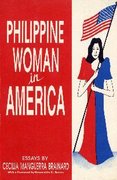
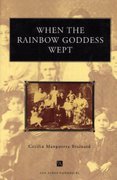
Cecilia Manguerra Brainard is another person that comes to mind when we talk about Fil-Am authors. She is the author of the 1990s novel When The Rainbow Goddess Wept published several times by different international and local publishing houses. She has also authored various creative nonfiction books to her name, and sometimes visits the Philippines to promote them or to give talks during their launch here.
Brainard is also active as an editor of various short story collections and nonfiction anthologies like Growing Up Filipino: Stories For Youth Adults, a collection of how it’s like to grow up as a Filipino in the Philippines and in other parts of the world. I’m proud to have an essay of mine included in that 2003 young adult anthology of hers, and I’m also happy to learn that this anthology is being used in some US schools in teaching children and young adults about Filipino experiences. Brainard was born in Cebu and finished college here in the Philippines before migrating to the USA and settling down there to start a family. She is currently active as a teacher at the Writer’s Program of the University of California Los Angeles (UCLA) Extension.
Another Fil-Am author with an acclaimed novel is Bino Realuyo, author of Umbrella Country published in 1999 by Ballantine Reader’s Circle. The novel is a heartwarming tale about a boy living in an impoverished urban poor community in Manila who undergoes a lot of challenges in his life, including dealing with sexuality issues. The son of a Bataan Death March survivor, Realuyo was born and raised in the Philippines and moved to the US where he made New York his home for many years. He is also a poet, educator and works on various labor rights and human rights issues.
Just these three Fil-Am authors’ achievements alone make us proud that they uphold their Pinoy roots through their literature. Next time, we’ll try to discover more Fil-Am writers writing about our worlds.
Comments? Suggestions? E-mail libay.scribevibe@gmail.com This e-mail address is being protected from spambots. You need JavaScript enabled to view it . She is also at leaflenspopmedia.wordpress.com.
Showing posts with label Philippine American literature.Cecilia Brainard. Show all posts
Showing posts with label Philippine American literature.Cecilia Brainard. Show all posts
Monday, July 19, 2010
Fil-Am Authors Writing, by Libay Linsangan Cantor, 7/4/10

 Cecilia Manguerra Brainard's official website is ceciliabrainarddotcom. She is the award-winning author and editor of 22 books, including When the Rainbow Goddess Wept, The Newspaper Widow, Magdalena, Selected Stories, Vigan and Other Stories, and more. She edited Growing Up Filipino 1, 2, & 3, Fiction by Filipinos in America, Contemporary Fiction by Filipinos in America, and other books..
Her work has been translated into Finnish and Turkish; and many of her stories and articles have been widely anthologized.
Cecilia has received many awards, including a California Arts Council Fellowship in Fiction, a Brody Arts Fund Award, a Special Recognition Award for her work dealing with Asian American youths, as well as a Certificate of Recognition from the California State Senate, 21st District, and the Outstanding Individual Award from her birth city, Cebu, Philippines.
She has lectured and performed at UCLA, USC, University of Connecticut, University of the Philippines, PEN, Shakespeare & Company in Paris, and many others. She has served in the Board of literary arts groups such as PEN, PAWWA (Pacific Asian American Writers West), among others.
Cecilia Manguerra Brainard's official website is ceciliabrainarddotcom. She is the award-winning author and editor of 22 books, including When the Rainbow Goddess Wept, The Newspaper Widow, Magdalena, Selected Stories, Vigan and Other Stories, and more. She edited Growing Up Filipino 1, 2, & 3, Fiction by Filipinos in America, Contemporary Fiction by Filipinos in America, and other books..
Her work has been translated into Finnish and Turkish; and many of her stories and articles have been widely anthologized.
Cecilia has received many awards, including a California Arts Council Fellowship in Fiction, a Brody Arts Fund Award, a Special Recognition Award for her work dealing with Asian American youths, as well as a Certificate of Recognition from the California State Senate, 21st District, and the Outstanding Individual Award from her birth city, Cebu, Philippines.
She has lectured and performed at UCLA, USC, University of Connecticut, University of the Philippines, PEN, Shakespeare & Company in Paris, and many others. She has served in the Board of literary arts groups such as PEN, PAWWA (Pacific Asian American Writers West), among others.
Sunday, April 18, 2010
Cecilia Brainard's Upcoming Literary Events
April 23, Friday, 2010 - Philippine Expressions is hosting its Annual Authors' Night and Cecilia Brainard will be there to sign Finding God and Growing Up Filipino II***
$10.00 Seats are limited. RSVP necessary. Reply by April 22.
Free parking. email or call (310) 514-9139
April 24 & 25, 2010 - Cecilia will be signing her books at the LA Times Festival of Books, UCLA, Philippine Expressions Booth, Zone D, Booth #427: April 24- 3-5 p.m.; April 25 - 3-4 p.m. I hope to see some of you there!
May 5, 2010, 7 p.m. - LA Central Library ALOUD event - MIGUEL SYJUCO
(Illustrado) In conversation with novelist Cecilia Manguerra Brainard
Reservations suggested - tel: 213-228-7025; 630 W. Fifth St., LA, CA 90071
Wednesday, June 9, 7-9:30 pm - Cecilia will be reading along with other instructors at UCLA Extension Publication Party 2010
Doors Open at 7 p.m.
Readings begin at 7:30 p.m.; Skirball Cultural Center
2701 North Sepulveda Blvd.
$10.00 Seats are limited. RSVP necessary. Reply by April 22.
Free parking. email
April 24 & 25, 2010 - Cecilia will be signing her books at the LA Times Festival of Books, UCLA, Philippine Expressions Booth, Zone D, Booth #427: April 24- 3-5 p.m.; April 25 - 3-4 p.m. I hope to see some of you there!
May 5, 2010, 7 p.m. - LA Central Library ALOUD event - MIGUEL SYJUCO
(Illustrado) In conversation with novelist Cecilia Manguerra Brainard
Reservations suggested - tel: 213-228-7025; 630 W. Fifth St., LA, CA 90071
Wednesday, June 9, 7-9:30 pm - Cecilia will be reading along with other instructors at UCLA Extension Publication Party 2010
Doors Open at 7 p.m.
Readings begin at 7:30 p.m.; Skirball Cultural Center
2701 North Sepulveda Blvd.
Cecilia Manguerra Brainard's official website is ceciliabrainarddotcom. She is the award-winning author and editor of 22 books, including When the Rainbow Goddess Wept, The Newspaper Widow, Magdalena, Selected Stories, Vigan and Other Stories, and more. She edited Growing Up Filipino 1, 2, & 3, Fiction by Filipinos in America, Contemporary Fiction by Filipinos in America, and other books..
Her work has been translated into Finnish and Turkish; and many of her stories and articles have been widely anthologized.
Cecilia has received many awards, including a California Arts Council Fellowship in Fiction, a Brody Arts Fund Award, a Special Recognition Award for her work dealing with Asian American youths, as well as a Certificate of Recognition from the California State Senate, 21st District, and the Outstanding Individual Award from her birth city, Cebu, Philippines.
She has lectured and performed at UCLA, USC, University of Connecticut, University of the Philippines, PEN, Shakespeare & Company in Paris, and many others. She has served in the Board of literary arts groups such as PEN, PAWWA (Pacific Asian American Writers West), among others.
Saturday, November 21, 2009
WHERE THE DAYDREAMING CAME FROM, by Cecilia Manguerra Brainard

Click on Reprint with many pictures
(I'm sharing this personal essay to my readers. Copyright 2009 by Cecilia Brainard)
WHERE THE DAYDREAMING CAME FROM
Cecilia Manguerra Brainard
(part of the anthology Cebu We Know (Anvil 2009, Ed. Cuizon)
I have always been prone to daydreaming, traits which sometimes got me into trouble. “Pay attention, Cecilia!” the nuns used to tell me. The upside to the daydreaming is that the active fantasy world led to storytelling, which led me into writing.
But let me trace my beginnings to see where this daydreaming came from.
I was born and raised in the island of Cebu where my mother’s people came from. My father and his people came from another part of the Philippines – the North, Laguna specifically, where people spoke another dialect and ate meat and vegetable dishes with strong flavors. Laguna used to fascinate me for the simple fact that my father was born and raised there. Otherwise, it looked like any other provincial town, with a city hall, old church, and Spanish colonial stone and wood houses. I never lived there and only heard secondhand stories about my father’s family, about how, for instance, they had owned huge tracks of land which my grandfather gambled away. Laguna was a kind of mythic place which I didn’t really know.
It is Cebu I know. The very first breath I took was in Cebu. My first words were those spoken by Cebuanos. Even though I’d gone on to live in other places in the world, it is as if I carry a part of it within me always and likewise I feel as if Cebu has a place for me always.
My mother was in the nearby island of Opon for the fiesta of the Birhen sa Regla (Virgin of the Rule), patroness of the place, when her birth pains came. This was in 1947, two and a half years after Liberation. She had to catch the ferry to hurry to St. Anthony’s Maternity Clinic in Cebu City. It was Doctora Ramona Fernandez who assisted her. She had to be summoned when the waves of pain came in the early morning. On November 21, at 8:30 a.m. I was born, the fifth child of my mother, although one had died during wartime and so I grew up with three siblings. I was a large baby, almost 10 lbs, but with beriberi, a disease caused by thiamine deficiency and characterized by edema, weakness, irritability, and more serious problems such as heart problems. My mother suffered from lingering effects of World War II when she carried me in her womb. She was malnourished, which meant I too was malnourished. The lack of Vitamin B1 caused the beri-beri and I almost died.
My mother turned to the Santo Niño de Cebu, the Child Jesus patron of Cebu, famous for being miraculous. She danced her prayers just like the women you can still see shuffling their prayer-dances in front of the old stone church that houses the beloved Child Jesus. For the rest of her life, my mother always reminded me of my debt to the Santo Niño. “You owe your life to him,” she said, as she dragged us to hear Mass in the Santo Niño church. There I watched women dance their prayers and walk on their knees down the center aisle, and I smelled incense and burning candles, and looked in awe at the small-sized Niño clothed in red robes, while waiting for the interminable Mass to end. I continue to make it a point to visit the Santo Niño when I’m in Cebu.
Back in 1947 - from the clinic, I was brought to the house my family lived in, in Talisay. It was a temporary dwelling, a place my parents and their three children stayed in after the war ended. When they first got married, my parents lived in Manila but when World War II broke out, they evacuated to Mindanao, traveling by outrigger boats, with their two young children and some servants. My father joined the guerrilla movement in Mindanao, and there they had to move and hide from the Japanese soldiers. It was there where my mother gave birth to her third child behind some bushes with a Japanese patrol walking nearby; it was there where she lost her fourth child, a boy, whom we never discussed but who had taught my mother about the fragility of babies and life in general. The beri-beri had frightened her and when I was a girl she made sure I got my Vi-Dalin vitamins daily, and I had to drink milk every morning with breakfast. In the evening she made me take one raw egg – the whole slimy thing. She was constantly prodding me to eat, giving me choice morsels from the dining table, chicken gizzard and liver for instance. I recall a supper episode when I had to eat some dreaded vegetables, and finally to silence my mother I pretended to chew the veggies, only to secretly spit them into my hands and give them to one of our Police dogs.
That first house in Talisay belonged to my mother’s brother. The house was made of wood, on stilts, like a big nipa hut. It was situated near the sea and so early on I slept and awoke to the sound of waves lapping the shore and to fishermen shouting as they beached their outriggers. I was used to taking in the sea breeze and to having salt on my skin and in my hair. I was carried through coconut groves to the sandy beaches where I wondered at all the living things scampering on the gray sand, and where barefoot women sold fried bananas skewered together, and dripping with caramelized sugar. I ate rice, fish, pork, chicken, seaweed, mallungay, sweets made from coconut and sugarcane, and other simple straightforward foods still eaten by Cebuanos. Even now I will hanker for inununan, fish cooked in vinegar with crushed garlic, salt, and pepper.
My father worked as a District Engineer. He had done other things before the war but I’d only heard bits and pieces that he’d been to Thailand, that he’d worked for some bureau, and that he’d even worked in Indiana where he’d gone to engineering school. By the time I was born, he has 59 and had already led a full life. But I think that the more memorable things that my father did was teaching at the engineering department of the University of the Philippines, fighting as a guerrillero during World War II, and constructing roads and buildings, many of them still existing. I do not think I picked up my daydreaming from him because he was a very logical, methodical person.
I am not sure I got it from my mother either, who had a keen business mind, although she was more helter-skelter than my father. My mother said she was malnourished when she was carrying me within her because she would sometimes forget to eat. She and her lifelong friend, Mercedes Rodriguez, had a buy-and-sell business, and they sold things like army surplus goods and fire wood, and just about anything they could get their hands on. Later on, they went on occasional trips to Hong Kong to shop for merchandise to sell. All her life, my mother was busy with her business ventures. I’m sure that in Talisay, we children were left in the care of servants. My sisters talk of how my mother’s sisters looked down on us children because we smelled of fish or were not dressed nicely. This was possible since my mother came from a political family with some pretensions, and the kind of down-home style of living we had in Talisay was probably too “country” for my aunts who carried some ancient sibling rivalry with my mother. My mother’s sisters also questioned why my siblings attended the local public school instead of a private convent school. And why were we living in a glorified nipa hut as if it were still wartime and we were in the hinterlands of Mindanao?
It was probably my father, with his logical, methodical mind who decided we had to move to better quarters sooner or later. The event that may have precipitated our departure from the place was the horrific typhoon that blew into Cebu. The heavy rains caused waist-high floods and the violent sea rose and roiled up the local cemetery so that corpses floated about on the flooded streets. There were stories, which I can picture in my head as if they were my own experiences, of my siblings swimming through flooded streets to get home from school. Shortly after this, my parents finally talked about building their home in the city.
My mother’s brother helped my parents acquire the land in Cebu City, where they finally built our home, across some corn fields, near a river and the foothills, an area that was sparsely populated and remote. My father drew the plans and hired workers to construct the house. It was a Spanish-style house, with balconies, marble floors and crystal chandeliers. The surrounding grounds were spacious and my mother did most of the landscaping – fruit trees mostly – jack fruit, star apple, guava - flowering shrubs and low flowering plants. There was a teeter-totter and canopied swings so that even grownups could sit on the swings in the late afternoon to enjoy the cool breeze and supervise the gardener as he swept dry leaves and branches and burned them. We believed the smoke drove away mosquitoes and other insects. There was the main house with the kitchen, living room, dining room, bedrooms, bathrooms, veranda and balconies. There was another structure for the servants and for the cooking on the open hearth. There was a water tank and way in the back of the property was a garage, storage building, a place that I rarely visited because rats and monitor lizards lived in there, and more importantly, the nearby jack fruit tree had an agta, an enchanted black giant living in it. Needless to say there were endless stories about the agta, how the servants, even my brother had seen him one night when the moon was full. There were some other creepy happenings in our house: a maid became possessed and had to be exorcised by the Redemptorist priests; on Lent strange happenings would occur and all credited to the encantados that lurked around the area.
Indeed living in that house stimulated my daydreaming abilities because there were endless supernatural stories, as well as down-to-earth stories like love affairs and out-of-wedlock pregnancies. The radio soap operas in the early evening were also good primers in make-believe, because most evenings the servants listened to the convoluted plots dealing with love, revenge, and other deep human passions, all interlaced with conflict. I would sit and listen with them, in the outside kitchen with the open hearth, where I watched live chickens being decapitated for that night’s supper.
After a few years, the trees my mother had planted grew tall. I loved to climb the tall star apple trees with slender branches. There I indulged in fantasies about enchanted forests and magical giant pearls found in the heart of a banana fruit – the mutya. Sometimes I would get utterly lost in my dream world and would miss the call for lunch. Grumbling, my sister would have to threaten me in order for me to come down from those beloved trees.
When I was four my mother enrolled me in St. Theresa’s College. This ended the unhindered daydreaming I had in that house. My life became more regimented: up at 6 a.m., shower, don on the starched blue-and-white uniform, eat breakfast, leave for school by 7:15; first class at 8 a.m. I learned about rules and homework and sitting still with my hands folded together. This was the time I started to get scolded for daydreaming, that is for “not paying attention.” However the nuns did allow daydreaming when it came to theatrical plays and theme writing, which I loved. But I would say this was the time when I learned about discipline more than daydreaming.
###
Cecilia Manguerra Brainard's official website is ceciliabrainarddotcom. She is the award-winning author and editor of 22 books, including When the Rainbow Goddess Wept, The Newspaper Widow, Magdalena, Selected Stories, Vigan and Other Stories, and more. She edited Growing Up Filipino 1, 2, & 3, Fiction by Filipinos in America, Contemporary Fiction by Filipinos in America, and other books..
Her work has been translated into Finnish and Turkish; and many of her stories and articles have been widely anthologized.
Cecilia has received many awards, including a California Arts Council Fellowship in Fiction, a Brody Arts Fund Award, a Special Recognition Award for her work dealing with Asian American youths, as well as a Certificate of Recognition from the California State Senate, 21st District, and the Outstanding Individual Award from her birth city, Cebu, Philippines.
She has lectured and performed at UCLA, USC, University of Connecticut, University of the Philippines, PEN, Shakespeare & Company in Paris, and many others. She has served in the Board of literary arts groups such as PEN, PAWWA (Pacific Asian American Writers West), among others.
Wednesday, December 31, 2008
Chapter from Re-imagining Language and Literature of the 21st Century (paper on When the Rainbow Goddess Wept) - #CeciliaBrainard

I found this article in the net and I would like to critique this paper, written by Hope Sabanpan-Yu, a short story writer/poet from Cebu City Philippines, with a Ph.D. in Comparative Literature from the University of the Philippines, and now connected with the University of San Carlos in Cebu City, Philippines.
This paper was written for the XXII International Congress of FILLM held at Assumption University, and is part of a book, Re-imagining Language and Literature for the 21st Century, published in 2005.
Dr. Yu has made me and another Filipina American novelist, Jessica Hagedorn, her subject matter, focusing on my novel When the Rainbow Goddess Wept and Hagedorn’s novel, Dogeaters.
Dr. Yu’s paper sets out to answer questions of whether an immigrant, such as Hagedorn and myself, can speak on behalf of the Filipino people. She questions whether we can depict an authentic Philippines, “after years and years of being away.” Further she questions whether I – “a highly-educated woman from an upper-class Philippine family” know anything about the situation of the Filipino people. Dr. Yu concludes that Hagedorn and I “cannot know enough to represent the common Filipino.”
Quoting an online critic (Balce-Cortes) of Hagedorn and me, Yu goes on to say, “Their works (Hagedorn’s and mine) have been perceived by Filipino critics as “a racist and fetishistic” exoticizing project to gain “acceptance into the U.S. Literary mainstream.” Dr. Yu fails to mention these Filipino critics, however, relying solely on a statement by Balce-Cortes which Dr. Yu found in the internet.
Dr. Yu continues with her sweeping statements, without documentation, as when she says, “Many critics take offense at Brainard’s portrayal of the Philippines.” Dr. Yu does not mention these critics; she does not quote them. She does quote one other critic, Hidalgo. Basically Dr. Yu has used two Filipina critics as her sources, despite the number of critical studies made on When the Rainbow Goddess Wept, including a well-lauded essay by Leonard Casper and numerous book reviews by Booklist, Publishers Weekly, Los Angeles Times, and many more.
While Dr. Yu has lumped Hagedorn and me together as guilty of orientalising and being fetishistic, she takes a position that Hagedorn is “seldom accused of being unfair to the Filipinos, “ but “Brainard is lambasted… because she fails to make a balanced representation.” Again, this position is not supported by any sound research. Who has lambasted me? Who has accused me of being unfair to the Filipinos? Are these Dr. Yu’s personal conclusions? And based on what? She does not know me. Her statement that I have been away for “years and years” from the Philippines is incorrect; I visit the Philippines regularly, sometimes twice a year. It is unfortunate that Dr. Yu did not bother emailing me, and she might have learned that I am very much in touch with Philippine-matters.
 While Dr. Yu does mention some interesting ideas by Faoucalt and Bhabha about authorship and immigrant writers, Dr. Yu’s paper comes across as one that has been cut-and-pasted by someone who did not do proper research and who had to resort to sweeping statements and conclusions based on meager and false information. Aside from using unreliable sources, Dr. Yu clearly lacks knowledge of fiction writing. And indeed her bio in Wikipedia mentions some three publications for her poems, nothing for her fiction. Someone who knows fiction writing would understand that the fiction writers’ responsibility is to write a good story, not to represent all 90 million Filipinos, nor solve all the ills of Philippine culture and society. Someone so knowledgeable would know about fiction elements such as “voice” and “point of view” – points carefully discussed by noted critic, Leonard Casper in his critical essay about Song of Yvonne also known as When the Rainbow Goddess Wept (see Jan. 1 blog entry).
In any case, I would like to thank Dr. Yu and the editors for continuing the dialogue about When the Rainbow Goddess Wept, me, my work, and Philippine literature in general.
-end comments by Brainard-
Article by Hope Saban-pan Yu begins:
Representation in Philippine American Women Writers:
Between Authenticity and Orientalism
By Hope Saban-pan Yu, University of Calgary, Canada
(From the book, Re-imagining Language and Literature for the 21st Century, edited by Suthira Duangsamosorn (et al), published by International Federation for Modern Languages)
Can an American know the heart of a Filipino? Can a writer speak on behalf of her people? For whom does she speak? This question of representation besets immigrant writers the world over. Whenever they write, they are believed to be representing someone. Toni Morrison in “Paradise Found” for instance, talks of having to answer sociological and political questions during book reading, instead of queries that address literary concerns (Gray 65). What should the roles of writers be given their positions of power and responsibility?
Filipino writers who have made America their home like Cecilia Manguerra Brainard and Jessica Hagedorn are faced with the same questions. Should they depict the Philippines the way they see it now, after years and years of being away? Can they speak on behalf of the Filipinos? Occupying such controversial positions, these writers are read by Filipinos and Americans alike and are judged on the basis of how well they represent the Philippines. While one is praised for sympathetically portraying her subject, the other is condemned for criticizing the Philippines. A closer study though, reveals that neither Brainard nor Hagedorn, nor any Filipino immigrant writer writes from a purely Philippine perspective. They fail to come up to the immigrants’ expectation of representation.
Having been observed and analyzed by the Spaniards then the Americans, the rest of the world has read and heard their views. Filtered through their eyes, the Philippines became a country “nearly a successful replica of the United States-except that its citizens are mostly dark-skinned, poor, ostensibly ‘Roman Catholic’ in faith” (San Juan 5-6). The Filipinos were thought friendly and hospitable, but not necessarily ambitious. Masterpieces like the Banaue Rice Terraces are praised for their uniqueness but for all the agricultural accomplishment, the Philippines is still perceived as a backward country. Occasionally on television, men are seen coming home from fishing and counting out the day’s meagre earnings. They smile, the only positive bent in which the Filipino is perceived. The Philippines, famed pearl of the Orient, rich in natural resources, home of friendship and hospitality, is today a land of corruption, mail-order brides and domestic helpers. Like the sultry woman in a Tanduay rum advertisement, the Philippines has found itself perpetually objectified. Tentative impressions have often led to racial stereotypes that encourage misrepresentations of the Filipino. So when a writer like Brainard or Hagedorn writes, and is heard, she breaks through the gaze and the silence. She is no longer object but subject. She defines herself as she writes her story.
The complication emerges when the audience assumes that the writer is also writing their story in her story. In many critical readings the writer is assumed to be the spokesperson of a group. Although it is not difficult to understand how writers are tasked with representation, the idea becomes problematic. Questions like whose Philippines - hers or theirs – should she represent, come up. Should it be the Philippines she knows, even if it is not the Philippines of the masses? Since this is an opportunity, maybe she should focus on deorientalizing the Philippines. But critics argue that the task of deorientalizing the Philippines can only be achieved if the author knows the Philippines “as it really is” and not as the exotic paradise the colonizers have shown it to be. It is at this point that the writers come under very close inspection. Can Brainard represent the real Philippines when she hails from a Western tradition of writing? Since kindergarten “she had been educated in English, not her native Cebuano, and taught from a mostly Eurocentric perspective. At the same time she grew up surrounded by American culture – watching Hollywood movies, reading American books and magazines” (Huebler 100). How can this highly-educated woman from an upper-class Philippine family, living “in a Spanish-style villa, tended by servants and surrounded by gardens of orchids” (Huebler 98), know anything about the situations of the masses? Powerful political kinship ties have accorded Brainard special status in the community. She cannot know enough to represent the common Filipino. The same goes for Jessica Hagedorn. Essentially, both writers are criticized for not representing the Philippines authentically. Their works have been perceived by Filipino critics as “a racist and fetishistic” exoticizing project to gain “acceptance into the U.S. literary mainstream” (Balce-Cortes online).
Before we can discuss authenticity, we should be able to understand what orientalism is. Edward Said defines orientalism as “a system of knowledge about the Orient, an accepted grid for filtering through the Orient into Western consciousness” (Said 6). Orientalism is how the West makes sense of the Wast. On a very basic level, it is a set of stereotypes that when applied to new observations, provide an easy and convenient way to analyse the subject. For example, once Orientalism perceives the Filipino as indolent, all actions will be studied within the parameters of such perceived indolence. The body of generalizations that will evolve remain unchallenged and uncontested. But this is not to say the “Orient,” which is a construct, does not exist in reality. We cannot just dismiss it as “a structure of lies or of myths which, were the truth about them to be told, would simply blow away” (Said 6). Said explains that the orientalising efforts of the colonizing era have given birth to
a body of ideas, beliefs, clichés, or learning about the East, and other schools of thought at large in the culture. Now one of the important developments in nineteenth-century Orientalism was the distillation of essential ideas about the Orient – it’s sensuality, its tendency to despotism, its aberrant mentality, its habits of inaccuracy, its backwardness – into a separate and unchallenged coherence. (Said 205)
Susan Montepio, a critic of Brainard’s works, claims the sense of continuity of When the Rainbow Goddess Wept is sacrificed in the retelling of epic stories in the novel. I believe that this fragmented sense of continuity is a result of the author’s subconsciously subscribing to Orientalism. Inspite her good intentions to capture “the essence of Filipino culture by weaving in folklore and epic songs” (Huebler 101), many of her observations are informed with Western perspective, with
(page missing)
When I was twelve, I begged my parents to allow me to travel with Inuk. I cried for days until my mother accompanied me to the singer to inquire if I could be his apprentice. I sang to him the epic fragments which I had learned from a villager. He made a face, saying I had a lot to learn, but he took me in. We travelled from village to village for weddings, funerals, all sorts of celebrations, and Inuk would sing these beautiful songs, about the maiden in the skyworld, and the gentle goddess Meybuyan. (45)
But ironically, all the while that Brainard gets blamed for orientalising, she seems perfectly aware of this phenomenon of orientalism. Her characters understand the disparity between the world’s understanding of the East and the actual East. Time and again we see this sort of understanding filtering through the beliefs and behavior of Max, one of her characters. Max has lived so long in America that he thinks and behaves like an American. He is “frightened of a lot of things – animal innards, blood soup” (46) but he is not afraid of eating “his fee, bloody. ‘Rare’ he calls it” (46). This is not the only instance of orientalism laid bare. Just as much as Max stereotypes the Orient, believing the ways of all who lived here are primitive and unhygienic, Brainard shows that the Philippines is a fertile hunting ground for libidinous American males like Martin Lewis:
He often attended barrio fiestas to pick out young beauty queens – seventeen year-old girls wearing lipstick, high heels, and long gowns for the first time – and talk the girls’ parents into letting him take them to Ubec to ‘train them to be radio announcers.’ The only kind of announcing they did was the moaning and groaning executed on Lewis’ circular bed. When he grew tired of them, he dispatched them back to their barrio with fifty pesos in their purses – hymen fee. (161)
Many critics take offense at Brainard’s portrayal of the Philippines. She reinforces the West’s patriarchal attitude toward the East. As the West always suspected, Brainard’s Philippines, the backward impoverished country, cannot fight its own war. It needs intervention from the Americans: “William Cushing, an American guerilla leader in Mindanao, found a place for us in the mountains” (43). This stereotype of the helpless Filipino waiting for the aid of benevolent Americans provide a vehicle for American patriarchy.
Hidalgo implies that Brainard fails to seize the “opportunity to explore the problem” (99) and instead retreats into the banal. Brainard completely de-individualizes herself:
One waits in vain for any insight on what the customs, practices and beliefs signify besides being material for memories of an idyllic time. The author is silent on what they might reveal of the culture she purports to be explaining. In fact, there are no explanations. (98)
One can assert that this de-individualization makes the novel the product of what Foucault terms “author function” (107). Instead of Brainard, the individual author, the voice in the novel would represent different socially determined roles. Brainard’s words reflect a number of forces acting upon her like the hegemonic ideas of postcolonialism and the immigrant culture of the United States. Her works reflect not what Brainard thinks, but rather, what her times think.
Foucault states that we are accustomed to defining the author as “the genial creator of a work in which he deposits, with infinite wealth and generosity, an inexhaustible world of signification” (118). However the truth is “the author is an ideological product” (119). By bringing the author down to the level of a “product,” Foucault underscores the forces around the author that “create” them as much as they are “creating” their characters. He shifts the focus from author being the creator of all signifiers, to his or her conditions being the author’s creators. In the world of fiction, the author is not the prime mover, but the environment. Foucault would say that Brainard does not produce wholly independent ideas – no one does. Rather, she serves as the vehicle for the ideas of her times. For Foucault the question would be, not “What kind of person created these fictional works?” but rather “What kind of times and situations created this author?” Foucault would argue that Brainard has internalized some Orientalism, but he would continue that she has also internalized her experience of living in the Philippines, of immigrating and of assimilating to the United States. Hers is a blend of all these different perspectives, all these different lives. When she thinks of faith healing, for example, she cannot possibly think of it in a way unbiased by Western thought. Her views on Philippine issues are far more complex than the critics would have it. In the novel, for instance, note the depiction of faith healing as a fraudulent business:
“Asin, suca / get-teng, luya / bawang, lasona’ … ‘Salt, vinergar / scissors, ginger garlic, onion’ … An invocation against death, to protect her unborn child” (13) There is just the incantation but not physical cutting up of the body.
But even Hagedorn, an advocate of matters Filipino, gives in to the established ideal. She provides evidence of Said’s argument that the idea of the Orient is weighted with backwardness. Lola Narcisa and the servants she portrays in Dogeaters weep without shame listening to a radio serial entitled “Love Letters:”
Without fail, someone dies on Love Letters. There’s always a lesson to learned, and its always a painful one… pure love, blood debts, luscious revenge, the wisdom of mothers, and the enduring sorrow of Our Blessed Virgin Barbara Villanueva.” (12)
Despite such Orientalism in her work, Hagedorn is seldom accused of being unfair to the Filipinos. Just as one does with Brainard, one could easily argue, for instance, that by making these stereotypical portrayals of Filipinos, Hagedorn is perpetuating the Oriental myth. One could say that the Philippines still struggles to free herself of the notions of backwardness and widespread low-brow sensibilities that she presents in Dogeaters. But Hagedorn is usually praised for creating characters that reveal “the complex nature of the Filipino” (Davis 124).
Finally, all criticism whether positive or negative, intersect at the juncture at which the author is perceived as having successfully represented the people who she believes she speaks for. When Brainard is lambasted, it is because she fails to make a balanced representation. When Hagedorn is lauded, it is because she depicts the Philippines as it really is. Evidently, even some authors like Ninotchka Rosca are convinced that the purpose of literature is utilitarian: “to represent this self in fiction, the writer assumes part of the responsibility for defining it even as he or she reflects it” (Rosca 242).
As we have seen earlier, the problem with this attitude is manifold. After having been born in one world and relocated to live in another world, which “self” does a writer recreate? The backward self or the modern self? Can these two be ever untied from the other? In her article on Brainard, Hidalgo argues that the author presents both sides at the same time. Hidalgo further asserts that Brainard projects her own privileged position of power and influence upon her exoticized Filipino subjects.
There is certainly some cause to Hidalgo’s complaint but one can also argue that anyone who finds herself at the intersection of two cultures must recreate her world, must redefine her culture. Similarly, all immigrants are in some stage of integration. As Hagedorn writes in Dogeaters, one does not know when “reality will diminish the grandeur of [the] childhood image of home” (245). And this is true for all things and all people, not just immigrants.
Modernization invades Filipino places one person at a time. Our fellowmen continue to modernize while our memories are locked and sealed tight. Or worse, the places of the past alter in our memories – into idyllic edens that resemble neither past nor modern. Homi Bhabha calls this idealism “the fatality of thinking of ‘local’ cultures as uncontaminated or self-contained” (Bhabha 54). Instead of being pure, they are, as Brainard’s and Hagedorn’s novels show, in flux. They are always being contaminated.
Immigration hastens the process of change. Bhabha states “the people who have taken with them only a part of the total culture…the culture which develops on the new soil must therefore be bafflingly alike, and different from the parent culture” (54). These authors write about this new culture from their new perspective. Their views can be held to be neither Filipino nor American. They represent, if anything, the inner dialogue in which the individual writer engages, about the duality of the lives she has known. Bhabha quotes Mikhail Bakhtin:
The…hybrid is not only double-voiced and double-accented…but is also double-languaged; for in it there are not only (and not eve so much) two individual consciousness, two voices, two accents, as there are [doublings of] socio-linguistic, consciousnesses, two epochs…that come together and consciously fight it out on the territory of the utterance…It is the collision between the different points of view on the world that are embedded in these forms…such unconscious hybrids have been at the same time profoundly productive historically: they are pregnant with potential for new world views, with new ‘internal forms’ for perceiving the world in words. (58)
Instead of lamenting an untraditional perspective, Bakhtin celebrates the conception of new worlds. He sees these worlds in not only the author’s perspectives but also in their words. He provides the postcolonial reader with a new way to read and appreciate this outlook. His is a concept where there is a venue for faith healer/doctor, backward/modern and Filipino/American.
-end-
Cecilia Manguerra Brainard's official website is ceciliabrainarddotcom. She is the award-winning author and editor of 22 books, including When the Rainbow Goddess Wept, The Newspaper Widow, Magdalena, Selected Stories, Vigan and Other Stories, and more. She edited Growing Up Filipino 1, 2, & 3, Fiction by Filipinos in America, Contemporary Fiction by Filipinos in America, and other books..
Her work has been translated into Finnish and Turkish; and many of her stories and articles have been widely anthologized.
Cecilia has received many awards, including a California Arts Council Fellowship in Fiction, a Brody Arts Fund Award, a Special Recognition Award for her work dealing with Asian American youths, as well as a Certificate of Recognition from the California State Senate, 21st District, and the Outstanding Individual Award from her birth city, Cebu, Philippines.
She has lectured and performed at UCLA, USC, University of Connecticut, University of the Philippines, PEN, Shakespeare & Company in Paris, and many others. She has served in the Board of literary arts groups such as PEN, PAWWA (Pacific Asian American Writers West), among others.
Subscribe to:
Posts (Atom)