Showing posts with label writing. Show all posts

Thursday, May 16, 2019

Interview of Cecilia Brainard by Students and Campus Bulletin

(I'm reposting some older posts because Google's changes make them difficult to find. This was originally posted in 2007 - Cecilia)


Interview of Cecilia Manguerra Brainard, by Students and Campus Bulletin in the Philippines, 2007

A REASON TO WRITE


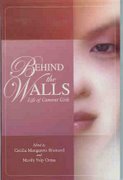
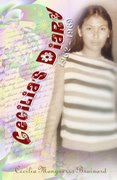
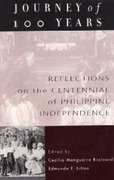
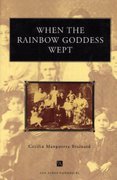
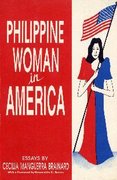
Cecilia Manguerra Brainard is the award-winning author and editor of 12 books, including the internationally- acclaimed novel, "When the Rainbow Goddess Wept," "Magdalena," Acapulco at Sunset and Other Stories," Philippine Woman in America," and "Woman With Horns and Other Stories" She edited "Growing Up Filipino: Stories for Young Adults," "Fiction by Filipinos in America," "Contemporary Fiction by Filipinos in America," and "Journey of 100 Years: Reflections on the Centennial of Philippine Independence." The book, "Cecilia's Diary 1962-1968" was released in August 2003. The anthology, "Behind the Walls: Life of Convent Girls," which she co-edited,was released in 2005.

Her work has been translated into Finnish, and many of her stories and articles have been widely anthologized. Brainard has received a California Arts Council Fellowship in Fiction, a Body Arts Fund Award, and a Special Recognition Award for her work dealing with Asian American youths, as well as a certificate of recognition from the California State Senate, 21 st District.

She has been also awarded by the Filipino and Filipino American communities she has served. In 1998, she received the Outstanding Individual Award from her birth city, Cebu, Philippines. She has lectured and performed in worldwide literary arts organizations and universities, including UCLA, USC, University of Connecticut, University of the Philippines, PEN, Beyond Baroque, Shakespeare & Company in Paris, and many others. She teaches creative writing at the Writers Program at UCLA- Extension. In this interview, Ms. Brainard shares her expertise on the one subject she's passionate about: writing.

Students and Campus Bulletin (SCB): Are there any good and bad reasons for being a writer?

Cecilia Manguerra Brainard (CMB): The bad reasons are for fame, money, immortality, and revenge. The good reasons are because you have no choice but to write; for self-expression, to keep sane, to create something beautiful out of something painful or unpleasant; to educate others and ultimately to educate yourself.

SCB: What are the common misconception about writers and writing?

CMB:The common misconceptions about writers are: They are (or will be) rich and famous; that they are good and therefore not subject to being criticized by someone who isn't a writer; that they are right/correct about what they write about.

SCB: What are the biggest writing fears and how does one get over them?

CMB: These are the biggest writing fears: that one's work is terrible, embarrassing, and awful. How does one get over them? A writer has to accept that the first (or second or even third) draft will generally not be perfect. Anne Lammott in her book, Bird by Bird, calls this the "Shitty First Draft." So what the writer should do is write this "shitty first draft" afterwards, look at it and see what is in that draft that's worth developing, and take it from there. Very rarely is a first draft ready for publication. At times, first drafts may even need to be discarded. Sometimes, there is a kernel there, a seed, a line or two, or paragraph, or maybe more, that sparkles and can be developed.

SCB: What is considered "basic etiquette" for writers?

CMB: Writers live with many unwritten rules, for instance, in terms of giving feedback to someone else's work - a writer should always start by mentioning the strengths of the piece, before mentioning the weaknesses. Another unwritten rule is to mention sources for material you quote or refer to in your own writing. In other matters, if a writer happens to be in a panel for instance, the writer should make sure he/she is not taking more time than others in answering the questions. Perhaps all of the above can be summarized by saying a basic etiquette for writers is to try always to be generous and thoughtful to other writers.

SCB: How does one live with writing rejection?

CMB: Rejection is so much a part of a writers life and a beginning writer needs to understand early on that there are many reasons why a piece is rejected, aside from the quality of the work. It's possible that the editor does not have the space in the magazine or journal. It's possible that the editor has just published a similar piece recently, etc. However, having said this, I will say that if my work is rejected over and over, I will stop sending it out and scrutinize it once again, seriously asking myself if there is indeed something wrong with the piece. If my conclusion is that the piece is publishable, I will continue sending it out.

SCB: How does one respond to comments, criticisms and reviews?

CMB: First you need to realize that critiquing or feedback of your work is necessary. A writer can only do so much, and then he/she loses objectivity. Having others read your work can help you a lot. Think of it as having someone hold up a mirror to your work, allowing you to see the flaws as well as the strengths. If you are in a workshop, and your work is being critiqued, keep quiet, take notes, don't protest or explain. Sit quietly, listen carefully, jot down what is said about your work, and after, and only after, should you ask questions to those giving feedback. Ask specific questions. Don't challenge the critics. And lastly, thank the critics because they have taken the time and effort to read your work and thought things through. Even if they said things that were not positive, thank them anyway. It is the gracious thing to do. Anything can be rewritten. Besides you the writer do not have to act on everything told you; you are the author and should make the final decisions.

YCB: How does one spot and ignore bad writing advice?

CMB: Good writing advice is usually specific, for instance, the dialogue was confusing, or there was a lot of repetition. Bad writing advice is broad, mean, and is given not to help the writer, but to make the critic sound smart. In many cases, I like to attend writing workshops so that more than one or two people read the work. If five or say nine people read it, I can better gauge my work from their comments. For instance if more than one half say the dialogue is not strong, then, I will look carefully at the dialogue. There are also some people whom I trust and whose comments I respect. Further, I can feel in my gut when someone says something about my work and it resonates inside, then I have to pay attention to what was said.

YCB: What would you advise beginning writers on the craft?

CMB: 1) Keep a journal and write, write, write;

2) Read a lot, and read the type of pieces that are similar to what you want to write (articles or stories or poems);

3) Don't compare yourself with the others. It will do you no good to fret because some of your contemporaries are getting published or getting awards. You have your own struggle, your own stories to write.

4) Take classes or join workshops so you have a structure.

Tags: Philippine Literature, #CeciliaBrainard 

Friday, January 15, 2016

Manila: The Power of Pen Food Writing Workshop February 13, 2016


Transforming your Food Passion into Words

On a daily basis, we always deal with food. It inspires us in more ways than one. We cook, we plant, we harvest , we enjoy taking photos and we even write about it! 
To develop each of these interests takes an effort and great joy on the part of any human being. There is pure love and satisfaction in writing! 

Thursday, November 5, 2015

Rachelle Benveniste's "Writing from the Inner Self" #writing

To honor my friend and teacher, Rachelle Benveniste, who passed away recently, I am reprinting one of her numerous publications. 

She was a fine writer, teacher and friend. Rest in peace, Rachelle.


Writing from the Inner Self
by
Rachelle Benveniste
Reprinted from Contemplative Journal

Take a gentle deep breath, and as you exhale, relax, letting go of the activities and concerns previous to this moment so we may relax in the present moment, the only moment that is.  You might want to take another gentle deep breath, and as you exhale, relax even more. Now, we will rest in the stillness, for just a moment or two, and if thoughts intrude, as they often do, don’t scold yourself, just allow them without becoming engaged in them. Just let them drift on by, like drifting clouds, and come back to your breath, breathing you. 

Saturday, August 29, 2015

Some Writers' Quotes About Writing


I've been thinking some more about this need that writers have to write, and I looked into some quotes by authors about writing. Here are some quotes that resonate within me. Read them, then read them again, and again.  Have a great weekend! ~Cecilia


"Find out the reason that commands you to write; see whether it has spread its roots into the very depth of your heart; confess to yourself if you would have to die if you were forbidden to write." ~ Rainer Maria Rilke

"There is no greater agony than bearing an untold story within you."  ~ Maya Angelou

"Art is not a handicraft, it is the transmission of feeling the artist has experience." ~ Leo Tolstoy

Friday, August 28, 2015

Does Creative Writing Release Endorphins?


I haven't had time to work on my novel-in-progress, but now that my life is settling down, I feel a great urge to get back to writing.  It feels like a hunger, a need: it's something I must do in order for me to feel I'm doing something productive with my time.

Thursday, December 23, 2010

Voodoo Poems and Magic Prose by Angus Woodward

This was just forwarded to me; it mentions me.- cb

Voodoo Poems and Magic Prose (c) Angus Woodward

I don't have to tell you how uncertain our profession can be. Whether a writer has been heaped with praise or buried by rejection, we all know that our luck-- good or bad-- can change abruptly. We listen attentively to the stories of writers who toil in obscurity for years before lightning strikes; we also remember the names of writers who we thought had achieved fame, even canonization, but who are no longer read or even mentioned. We hear legends of great books being abandoned by publishers on the eve of publication, and tales of obscure small press titles achieving classic status through word-of-mouth. On a smaller scale, we watch literary magazines sprout and fade like dandelions. In my case, three separate magazines have accepted my stories, only to fold before my work reached print. In some ways we are like athletes, who with one lucky bounce or fortuitous gust can become legends, and who with one misstep can lose their careers to injury. But do writers react to such uncertainty the way many athletes have, with bizarre superstitious rituals, eating only fried chicken before writing, wearing lucky sweaters, wielding lucky pens?

Others have noticed, I am sure, that writers have a reputation for superstitiousness. It seems that every interviewer asks his or her subject about superstition or ritual-- often enough that any question about a writer's work habits sounds like a fishing trip. Perhaps it has something to do with the well-known tales of Hemingway insisting on writing standing up, with twenty sharpened pencils at the ready. George Plimpton reported in the late fifties that "Hemingway finds it difficult to talk about writing . . . he feels so strongly that such ideas should remain unexpressed, that to be asked questions on them `spooks' him." Plimpton also wrote that near the space where Hemingway worked there was "an odd assortment of mementos: a giraffe made of wood beads, a little cast iron turtle, tiny models of a locomotive, two jeeps and a Venetian gondola . . ." and that these were "tokens" which "[had] their value." Plimpton referred to these talismans again when he concluded that "Hemingway may admit superstitions of this sort, but he prefers not to talk about them, feeling that whatever value they may have can be talked away." In other words, Papa was superstitious about his superstitions. The image of Hemingway standing at the bureau, fingering fetishes and widening his eyes at the thought of discussing the writing process has lingered, influencing the public's perception of writers.

While Hemingway's oft-cited interview has done much to perpetuate writers' reputations for superstitiousness, many profiles and interviews of recent years have kept the myth alive. Dana Huebler, in a profile of Philippine writer Cecilia Manguerra Brainard for Poets and Writers, stated that "Having just completed the first draft of her second novel, Brainard is superstitious about discussing the details of the book, fearing it may `kill' the work." Without a verbatim quote from Brainard, it is difficult to know whether the writer sees herself as superstitious, but in any case Huebler touches on an issue that seems to be a litmus test of a writer's superstitiousness: commenting on work-in-progress. We are at our most uncertain when the work is incomplete and unproven, and questions about unfinished products bring writers' "spookiness" to light. Cynthia Ozick's response to a question about a novel in progress has a ring of superstition to it, for example: "I'd better say no more, or the Muse will wipe it out ... I have lost stories and many starts of novels before. Not always as punishment for `telling,' but more often as a result of something having gone cold and dead because of a hiatus." John Edgar Wideman refused to identify favorites among his books for his interviewer, saying "It's sort of like kids; even if you did have favorites, you wouldn't say that aloud because you might hurt the others' feelings." I've heard that fishermen's wives in traditional fishing communities are careful not to let the ocean hear them bid their husbands good-bye, for fear that it will take them away for good. Brainard, Ozick and Wideman are similarly reluctant to offend the spirits of inanimate objects, confirming their interrogators' suspicions.
But it is not only interviewers and profilers who perpetuate the notion that writers are superstitious. Many writers have admitted to being devoted to particular writing rituals, and ritual is closely associated with superstition. Even in the religious sense, ritual relies on repetition, as do superstitions: knocking wood every time a rosy prophecy is made, throwing a ball to the first baseman at the end of each inning. Maya Angelou told George Plimpton that she every time she writes, she lies "on a made-up bed with a bottle of sherry, a Roget's Thesaurus, yellow pads, an ashtray, and a Bible," in hotel rooms whose walls have been stripped bare of any decoration. Joan Didion was asked, "Do you have any writing rituals?" and responded by saying, "The most important is that I need an hour alone before dinner, with a drink, to go over what I've done that day . . . Another thing I do, when I'm near the end of the book, is sleep in the same room with it." Derek Walcott, speaking for himself and all writers, associated ritual with religion (which some equate with superstition), when he said, "I don't know how many writers are willing to confess to their private preparatory rituals before they get down to putting something on paper. But I imagine that all artists and all writers in that moment before they begin their working day or working night have that area between beginning and preparation, and however brief it is, there is something about it votive and in a sense ritualistic."

Some writers explicitly deny their own superstitiousness, but reveal an assumption that other writers are superstitious. Elie Wiesel has said, "I am disciplined, hardworking. I have no superstitions," but added, ". . . Some writers need all kinds of idiosyncrasies. One took a wet cloth to the forehead; another had to get drunk; a third had to take drugs. Hemingway stood, another was sitting, another was lying." Robert Stone seems to know what the interviewer is fishing for-- and to have other writers in mind-- when he says, "There are no particular rituals connected with [the working environment] for me, like having a special cup of coffee or sharpening six pencils."

Other writers have commented publicly on their reluctance to discuss work in progress, but attribute their reticence to more practical concerns than those of Brainard, Ozick and Wideman. E.L. Doctorow was asked if he'd ever lost a story by discussing it before it was written, and replied, "Yes. When you're talking about a story you're writing it. You're sending it out into the air, it's finished, it's gone." I asked fiction and non-fiction writer Dinty W. Moore to comment on such practices. "To me, it is an explainable phenomenon," he wrote. "If you discuss the ending of a story with a friend, some of the urgency of finishing it on the page can be lost." Poet William Trowbridge is similarly pragmatic: "I'm reluctant to discuss a work in progress but only because I want to concentrate all my energy on writing rather than talking about it."

Doctorow, Moore and Trowbridge come across as more practical than superstitious, but it is as easy to associate their policies with superstition. There are as many superstitions involving "never" as there are involving "always," so that never discussing work-in-progress, whatever the reason, can be perceived as "just like" never walking under a ladder. People tend to associate any writing habit or rule with ritual, and to associate ritual with superstition. It is easy to forget or ignore the fact that some rituals are not superstitious, and that some habits are not rituals.

Virtually any writer, when asked by interviewers, emphasizes the importance of some aspect of the creative process, which adds fuel to the fire of superstitious reputation. Bernard Malamud put it very succinctly: "If [a writer] is not disciplined, no sympathetic magic will help." One's discipline may include six sharpened pencils, black fine-point Pilot pens, or a reluctance to "offend" one's books. While a writer may not perceive his or her attachment to such habits as irrational voodoo, others may.

It is perhaps more accurate to say that writers are attached to their tools, beliefs, rituals and methods in the same way that a horn player is dedicated to a particular trumpet, or a wood carver to certain familiar tools. Unaccustomed tools, instruments, surroundings or processes come between the writer and the poem or story, interfering with the symbiosis between the player and the music, the carver and the object, simply by being noticeable. Familiarity allows us to forget about the objects in our hands, so that we can get closer to the character, the music, the image. John Hersey has pointed out that "Disturbing the rituals surrounding writing may be very confusing, very difficult." It is reasonable to assume that Maya Angelou insists on bare walls to reduce distraction. William Trowbridge is certainly concerned with the elimination of distraction: "Because I started writing poems on legal paper, I continue to do so in order to keep the physical medium familiar and therefore non-distracting." Dinty Moore confesses that "I still can only write using an ancient version of a DOS-based software . . . the crude software with which I first began serious writing." This attachment to "what worked before" may seem irrational to others, and may seem to come out of fear that the "magic" will be lost. Irrationality and fear being components of superstition, it is no wonder that writers strike others-- and sometimes themselves-- as superstitious.
Although the superstitiousness of writers seems to be exaggerated, the result of misinterpretations of writers' comments on idiosyncratic processes, writers have good reason to be superstitious, due to the high level of uncertainty that plagues the profession. Charles Baxter could almost as easily have been talking about athletes as writers in saying, "So much good writing depends on talent and good luck that writers probably fear that their talent and their good luck will run out. Writers don't necessarily get better as they get older. Frequently they get worse. Superstition is the natural result of all this, as it would be in any occupation where the injury rate increases with age." Superstition often arises in response to doubt, whether it is the superstitions of a primitive tribe or of fishermen's wives. In our chaotic world, we gather some comfort from the idea that throwing salt over our shoulders may avert disaster, which we know may arrive quite suddenly. Poet Rodger Kamenetz theorizes that "Writers probably are superstitious because how their work is valued does not depend entirely on their efforts. . . Every writer is a speculator by definition-- most of us work on spec and every writer is a gambler and every gambler I know of is superstitious." Poet David Starkey seconds the notion when he laments that, "Even after ten years of sending things out, it still seems like such a crap shoot . . . ."

Many writers have been superstitious, which simply means that they view their dedication to certain work habits as superstitious, while others may explain their own rituals more rationally. Some are "spooked" by the idea of discussing work in progress; others simply refrain. It comes down to the fact that when we write, we face the uncertainty alone, with only our black ballpoints, our cast iron turtles, or our DOS-based software for company. Facing the blank page is strictly a solitary pursuit, and Samuel Johnson cautioned us to "Remember that the solitary mortal is certainly luxurious, probably superstitious, and possibly mad." Time will tell whether my decision to forsake Pilot and try my luck with 7mm Zebras was mad.

Works Cited Huebler, Dana. "An Interview with Cecilia Manguerra Brainard." Poets and Writers. March/April 1997: 96-105.
Oleander, Renee. "An Interview with John Edgar Wideman." AWP Chronicle 29:3 (December 1996): 1-8.
Plimpton, George, ed. Writers at Work: The Paris Review Interviews. 2nd Series. New York: Viking, 1963. [Hemingway]
----------. Writers at Work: The Paris Review Interviews. 5th Series. New York: Viking, 1981. [Didion]
----------. Writers at Work: The Paris Review Interviews. 6th Series. New York: Viking, 1984. [Malamud]
----------. Writers at Work: The Paris Review Interviews. 8th Series. New York: Viking, 1988.[Doctorow, Hersey, Ozick, Stone, Walcott, Wiesel]
----------. Writers at Work: The Paris Review Interviews. 9th Series. New York: Penguin, 1992. [Angelou]

Saturday, June 9, 2007

LANCASTER, CALIFORNIA PROCLAIMS FILIPINO WEEK


Just got back from the Banquet dinner of Buklod Ng Pagkakaisa, in Lancaster, California. It was part of a week-long celebration of Filipino Week, as proclaimed by the city officials of Lancaster. I wrote my speech down - see below - but in fact I did not read it, and so the actual talk came out slightly different. It was a well-attended event, with almost 150 guests, including State Senator George Runner and his wife Assemblywoman Sharon Runner, Mayor Bishop Henry W. Hearns, and Vice Mayor Andy Visokey. The event ran smoothly, thanks to the organizers, including Dante Gilhang, Armand Rivera, Ray Childs, Susan Bernardo, Medelin Webb, Emerita Ross, Robert Resurreccion, Gina Gilhang, Pacita Alarcon, Carlos Alarcon, Dory Quiambao, and Socrates Oberes. It was a very pleasant event, with food, dancing (folk and modern), a few speeches, and a lot of nice people and dedicated people around. I might add that Mayor Hearns was most charming to me and my son. He had a lengthy talk with my civil engineer son; apparently Mayor Hearns was himself a civil engineer.

This service group does a lot of good work and should be congratulated.


Talk Given to the Filipino Week Banquet and Dinner Dance of Buklod ng Pagkakaisa (Bond of Unity) – Saturday, June 9, 2007, 7-midnight, Lancaster Room, Esssex House, 44916 N. 10th St. West Lancaster, CA 93534

Good evening – my husband could not be here; he had to go to Wisconsin, consequently my youngest son Andrew is here to accompany me. When you see him, please thank him for sacrificing his Saturday night, to be able to drive me here.

Before my husband left, I was thinking aloud about what I should say to you, and my husband said, “Crack a joke.” I wondered what I could share with you and the only one I could think off was the one that involves Filipinos in Daley City near San Francisco. It goes: Why is it very foggy in Daley City? The answer is because all the rice cookers are on.

I would like to thank Pacita Alarcon for inviting me. I am honored to be here with you. Pacita sent me a copy of your January Induction Ball program and I noted that you have programs to feed the homeless, you give scholarships, you have established the celebration of Filipino week in June, and have gotten a Proclamation of Filipino Week from your city officials since 1994. I was particularly impressed with your seniors program and looked at the pictures of the May-June senior Prince and Princesses celebrating their birthdays at your Lunch-Bingo hour. I understand that aside from the Lunch-Bingo hour, there is also a social hour, with dancing . . . and food – I am certain of it. I cannot imagine any Filipino event without food.

These senior get-togethers are very important, especially because many of our older folk feel lonely and misplaced here in America – and so these get-togethers where they meet other Filipinos is psychologically significant.

The mother of my friend Susan, who lives in Norwalk, was a widow and for the longest time since she immigrated to America, she felt lonely and abandoned until she found a Filipino senior’s group. She blossomed. Instead of moping around looking depressed, she had her hair fixed and nails done, and in the middle of the day, she would put on a terno or saya for a senior’s event. In fact, my friend Susan told me of how her mother couldn’t wait to go to the senior’s events. And then, Susan said, there were numerous phone calls and her mother always rushed to the phone to answer it, followed by mysterious whisperings. It turned out her mother found a boyfriend, a Filipino veteran. All of her 6 or 7 children were in uproar and didn’t know what to do with the situation. In time, what I heard was that the boyfriend got sick, and at that point Susan’s mom dropped him, because she was afraid she’d end up taking care of him. She had taken care of her husband and she was not sure she wanted to take care of another man.

Even though this love story didn’t have a happy ending, it shows that these Filipino seniors social activities pull people out of their homes, their depressions, and brings them together to laugh, have fun, sometimes fall in love too.


Pacita asked me to talk to you about my work.

I am a writer and editor. I have written and edited around 13 books: two novels, 2 short story collections, 1 collection of essays, and 1 collection of my high school diary. I have also published books; I sell books; and I also teach. I currently teach creative writing at the UCLA Extension’s Writers’ Program. I wear many hats, but what got me involved in editing, publishing, selling, and teaching, was writing in the first place.

My love for writing started early. After my father died when I was nine, I used to write him to update him of my life. I kept a diary; and for some reason I even named my diary Sharon – I have forgotten why I did that; I think I was imitating Anne Frank who wrote to Kitty in her Diary. I later dropped writing "Dear Sharon," and just went on journal writing, which I continue to do today.

When I arrived in this country back in 1969, I was a student in film making at UCLA, but I didn’t really enjoy that very much. At the time, it was a very difficult field for a woman, and a foreigner at that. The other thing I noticed was that film making is very collaborative and my initial concept of the project ended up very differently by the time the cameraman, actors, editor had given their input.

I had meant to return to the Philippines, but as Life would have it, I married a Peace Corp Volunteer whom I had first met in Cebu, my home town. While he was a law student and early in his law career I had to work. I worked as a secretary, as an Adminstrative Assistant, and as a PR/Fund raiser in a non-profit for years. By the time I had three sons, it became difficult to juggle work and driving them back and forth to school, doctor’s and dentists offices, and I stayed home to take care of them. This was during the Women’s Lib era when it was embarrassing to say, “I’m a housewife.” I decided to do something else with myself and I arranged with Philippine American News to write a weekly column; Filipina American Perspective was the name.

Meantime I had a story that kept running through my head and I just couldn’t write it properly. I finally took a Creative Writing class at UCLA Extension where I now teach. I picked up a lot of skills and learned how and where to submit my stories. Bit by bit I got my stories published. There were a lot of rejections and difficulties, and I’m fast-forwarding here, I went on to write a novel, which was published by a big New York publisher in 1994. When the Rainbow Goddess Wept, which is about a coming of age of a young girl in the Philippines during World War II, is still available in paperback by the University of Michigan Press.

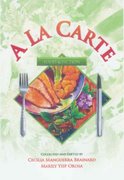
I went on and wrote my other books, many of which are still in print, mainly because educators use them in their classrooms. One of the most popular books I have edited and published is Growing Up Filipino Stories for Young Adults, which is available both in the US and the Philippines. The reason for its popularity, aside from the fact that the stories included are very good, is the fact that there are few books for young adults, that is between the ages of 11-21. There is a new book that I co-edited, Ala Carte Food & Fiction which is a collection of 29 stories and Filipino recipes, which has just been released and which should do all right.


While this talk may make it seem it has all been easy for me as a Filipino writer here in America – let me make clear right now that it has not been easy at all. If I have accomplished some things, it has been with a lot of energy and persistent, a bull-headedness that if my husband where here, he could attest to.

When I started writing here in California in the 1980s, there were very few Filipino American writers to speak off. Carlos Bulosan, our most famous writer, had been dead for almost 20 years, and the only other Filipino writers spoken off were: Jose Garcia Villa, a poet living in New York; Ben Santos, teaching in Kansas; N.V.M. Gonzalez, teaching in the Bay Area. There were other Filipino writers in America off course, but I didn’t know of them because I couldn’t get hold of their publications. I recall going to libraries to look for books, stories by Filipino/Filipino-American writers, and I found some books by Jose Rizal, and a book by Ninotchka Rosca – and that was it. Early on, I realized that there was little or no distribution of Filipino/Filipino-American books in this country; and even libraries did not have books by these authors. It was as if Filipinos in America did not have a literary voice, as if we barely existed.

My first book, a collection of short stories entitled Woman With Horns and Other Stories, was published by New Day Publisher in Quezon City. Mrs. Rodriguez, the acting Manager, loved my work and went on to publish a collection of essays, my first novel, and she approved my proposal to do a collection of short stories by Filipino Americans. This book was published in 1993 and is entitled Fiction by Filipinos in America. I followed this with another collection entitled, Contemporary Fiction by Filipinos in America. My attempt in these collections was to document some of the writings or our Filipino writers in America. It was as if I wanted to preserve the voice of these writers, to make sure we have our say in America, and not be non-existent or voiceless.

My work expanded to include book selling because I also discovered that it was impossible to find Filipino Filipino/American books, especially in the 1980s-1990s. My friend Susan Montepio and I had founded Philippine American Literary House and we sold select Filipino books here in America. We also got involved in publishing several books – two children’s books, 1 anthology of historical essays, and 1 collection of short stories.

There have been great changes these past 10 years. The internet has made Filipino books more accessible all over the world. You still can’t walk into a Barnes and Noble and find Filipino books, but you can go online and find them.

Whereas there used to be just 3-4 Filipino American writers published mainstream, now there are more, such as Brian Roley, Noel Alumit, Tess Holthe, and many other writers.

The internet also offers our Filipino American writers a voice – so it is quite easy to find a blog for instance of a Filipino American poet, whereas it had been impossible 20 years ago.

But even though there have been improvements in the literary scene of Filipino Americans, there is still room for improvement.

I was in Janelle So’s program, Kababayan LA, just last May 24, and Janelle mentioned the low literacy rate of Filipinos and she asked me what I thought of that. I had no time to think about her question and I went on to talk about how Filipinos have an oral culture. If there had been time to discuss the issue more carefully, I think the difference between literary and reading may have come up – literacy being a level of competence, and reading a skill. One can be literate but not read. In fact Filipinos have a high literacy rate, but they generally do not read. For instance Filipinos prefer getting their news from TV and radio, not from magazines and newspapers. While I respect the Filipino love for oral tradition, I think that we should do something to make our population a reading one.

I would like to suggest that your group get involved in a book program. Perhaps you can send books to libraries and schools to the Philippines. It is easy to find inexpensive books here.

In the mid-1990s, I participated in a PEN writers’ conference in Barcelona, Spain. I met some Catalan and Kurdish writers who talked about their work in publishing books in their own language. They were very serious about making sure their writers and poets were published in their own native tongue, that their works were preserved in libraries and read by their people. It was not enough for them to have an oral tradition; they wanted documentation, hard copy. I was very impressed by this. In fact, at that time in Barcelona, it was St. George’s Day – and people in the Catalan region celebrated this day by giving books to one another. It was part of their cultural tradition; for no other reason than that it was St. George’s day, people bought books and gave books to one another. Their love and respect for books were made clear to me then.

It would be nice if we follow this tradition and give books as gifts for birthdays and Christmas and other special events. It is important to develop a love and respect for books. I was in Costa Rica recently, and it has a literacy rate of 99%. It is one of the most progressive countries in Central America, which proves to me that there is a connection between a country's literacy rate and its level of development.

It is important for our young people to be readers. We need to give our children books so they develop a love for these early in their lives. When we buy books, the publishers of these books make enough to continue to publish more books which are written by our own writers, who after tell our stories. And ultimately it is important for us to preserve our stories, otherwise we will seem voiceless, non-existent, forgotten.

Photo 1(top) - l-r: State Senator George Runner (17th District), Assembly Woman Sharon Runner (36th District), Andrew Brainard, Cecilia Brainard, Mayor Hearns, and Vice Mayor Andy Visokey.
Photo 2- l-r: Andrew Brainard and Lancaster City Mayor Bishop Henry W. Hearns.
Photo 3 - Members of Buklod ng Pagkakaisa doing a Filipino dance.
Photo 3 - l-r: Cecilia Brainard, Mayor Hearns, Susan Bernardo, Vice Mayor Andy Visokey, and Buklod President Dante Gilhang