Just got back from the Banquet dinner of Buklod Ng Pagkakaisa, in Lancaster, California. It was part of a week-long celebration of Filipino Week, as proclaimed by the city officials of Lancaster. I wrote my speech down - see below - but in fact I did not read it, and so the actual talk came out slightly different. It was a well-attended event, with almost 150 guests, including State Senator George Runner and his wife Assemblywoman Sharon Runner, Mayor Bishop Henry W. Hearns, and Vice Mayor Andy Visokey. The event ran smoothly, thanks to the organizers, including Dante Gilhang, Armand Rivera, Ray Childs, Susan Bernardo, Medelin Webb, Emerita Ross, Robert Resurreccion, Gina Gilhang, Pacita Alarcon, Carlos Alarcon, Dory Quiambao, and Socrates Oberes. It was a very pleasant event, with food, dancing (folk and modern), a few speeches, and a lot of nice people and dedicated people around. I might add that Mayor Hearns was most charming to me and my son. He had a lengthy talk with my civil engineer son; apparently Mayor Hearns was himself a civil engineer.
This service group does a lot of good work and should be congratulated.
Talk Given to the Filipino Week Banquet and Dinner Dance of Buklod ng Pagkakaisa (Bond of Unity) – Saturday, June 9, 2007, 7-midnight, Lancaster Room, Esssex House, 44916 N. 10th St. West Lancaster, CA 93534
Good evening – my husband could not be here; he had to go to Wisconsin, consequently my youngest son Andrew is here to accompany me. When you see him, please thank him for sacrificing his Saturday night, to be able to drive me here.
Before my husband left, I was thinking aloud about what I should say to you, and my husband said, “Crack a joke.” I wondered what I could share with you and the only one I could think off was the one that involves Filipinos in Daley City near San Francisco. It goes: Why is it very foggy in Daley City? The answer is because all the rice cookers are on.
I would like to thank Pacita Alarcon for inviting me. I am honored to be here with you. Pacita sent me a copy of your January Induction Ball program and I noted that you have programs to feed the homeless, you give scholarships, you have established the celebration of Filipino week in June, and have gotten a Proclamation of Filipino Week from your city officials since 1994. I was particularly impressed with your seniors program and looked at the pictures of the May-June senior Prince and Princesses celebrating their birthdays at your Lunch-Bingo hour. I understand that aside from the Lunch-Bingo hour, there is also a social hour, with dancing . . . and food – I am certain of it. I cannot imagine any Filipino event without food.
These senior get-togethers are very important, especially because many of our older folk feel lonely and misplaced here in America – and so these get-togethers where they meet other Filipinos is psychologically significant.
The mother of my friend Susan, who lives in Norwalk, was a widow and for the longest time since she immigrated to America, she felt lonely and abandoned until she found a Filipino senior’s group. She blossomed. Instead of moping around looking depressed, she had her hair fixed and nails done, and in the middle of the day, she would put on a terno or saya for a senior’s event. In fact, my friend Susan told me of how her mother couldn’t wait to go to the senior’s events. And then, Susan said, there were numerous phone calls and her mother always rushed to the phone to answer it, followed by mysterious whisperings. It turned out her mother found a boyfriend, a Filipino veteran. All of her 6 or 7 children were in uproar and didn’t know what to do with the situation. In time, what I heard was that the boyfriend got sick, and at that point Susan’s mom dropped him, because she was afraid she’d end up taking care of him. She had taken care of her husband and she was not sure she wanted to take care of another man.
Even though this love story didn’t have a happy ending, it shows that these Filipino seniors social activities pull people out of their homes, their depressions, and brings them together to laugh, have fun, sometimes fall in love too.

Pacita asked me to talk to you about my work.
I am a writer and editor. I have written and edited around 13 books: two novels, 2 short story collections, 1 collection of essays, and 1 collection of my high school diary. I have also published books; I sell books; and I also teach. I currently teach creative writing at the UCLA Extension’s Writers’ Program. I wear many hats, but what got me involved in editing, publishing, selling, and teaching, was writing in the first place.
My love for writing started early. After my father died when I was nine, I used to write him to update him of my life. I kept a diary; and for some reason I even named my diary Sharon – I have forgotten why I did that; I think I was imitating Anne Frank who wrote to Kitty in her Diary. I later dropped writing "Dear Sharon," and just went on journal writing, which I continue to do today.
When I arrived in this country back in 1969, I was a student in film making at UCLA, but I didn’t really enjoy that very much. At the time, it was a very difficult field for a woman, and a foreigner at that. The other thing I noticed was that film making is very collaborative and my initial concept of the project ended up very differently by the time the cameraman, actors, editor had given their input.
I had meant to return to the Philippines, but as Life would have it, I married a Peace Corp Volunteer whom I had first met in Cebu, my home town. While he was a law student and early in his law career I had to work. I worked as a secretary, as an Adminstrative Assistant, and as a PR/Fund raiser in a non-profit for years. By the time I had three sons, it became difficult to juggle work and driving them back and forth to school, doctor’s and dentists offices, and I stayed home to take care of them. This was during the Women’s Lib era when it was embarrassing to say, “I’m a housewife.” I decided to do something else with myself and I arranged with Philippine American News to write a weekly column; Filipina American Perspective was the name.
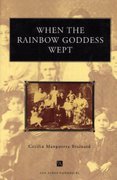
Meantime I had a story that kept running through my head and I just couldn’t write it properly. I finally took a Creative Writing class at UCLA Extension where I now teach. I picked up a lot of skills and learned how and where to submit my stories. Bit by bit I got my stories published. There were a lot of rejections and difficulties, and I’m fast-forwarding here, I went on to write a novel, which was published by a big New York publisher in 1994. When the Rainbow Goddess Wept, which is about a coming of age of a young girl in the Philippines during World War II, is still available in paperback by the University of Michigan Press.
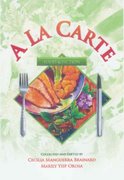
I went on and wrote my other books, many of which are still in print, mainly because educators use them in their classrooms. One of the most popular books I have edited and published is Growing Up Filipino Stories for Young Adults, which is available both in the US and the Philippines. The reason for its popularity, aside from the fact that the stories included are very good, is the fact that there are few books for young adults, that is between the ages of 11-21. There is a new book that I co-edited, Ala Carte Food & Fiction which is a collection of 29 stories and Filipino recipes, which has just been released and which should do all right.

While this talk may make it seem it has all been easy for me as a Filipino writer here in America – let me make clear right now that it has not been easy at all. If I have accomplished some things, it has been with a lot of energy and persistent, a bull-headedness that if my husband where here, he could attest to.
When I started writing here in California in the 1980s, there were very few Filipino American writers to speak off. Carlos Bulosan, our most famous writer, had been dead for almost 20 years, and the only other Filipino writers spoken off were: Jose Garcia Villa, a poet living in New York; Ben Santos, teaching in Kansas; N.V.M. Gonzalez, teaching in the Bay Area. There were other Filipino writers in America off course, but I didn’t know of them because I couldn’t get hold of their publications. I recall going to libraries to look for books, stories by Filipino/Filipino-American writers, and I found some books by Jose Rizal, and a book by Ninotchka Rosca – and that was it. Early on, I realized that there was little or no distribution of Filipino/Filipino-American books in this country; and even libraries did not have books by these authors. It was as if Filipinos in America did not have a literary voice, as if we barely existed.
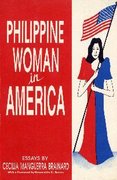
My first book, a collection of short stories entitled Woman With Horns and Other Stories, was published by New Day Publisher in Quezon City. Mrs. Rodriguez, the acting Manager, loved my work and went on to publish a collection of essays, my first novel, and she approved my proposal to do a collection of short stories by Filipino Americans. This book was published in 1993 and is entitled Fiction by Filipinos in America. I followed this with another collection entitled, Contemporary Fiction by Filipinos in America. My attempt in these collections was to document some of the writings or our Filipino writers in America. It was as if I wanted to preserve the voice of these writers, to make sure we have our say in America, and not be non-existent or voiceless.
My work expanded to include book selling because I also discovered that it was impossible to find Filipino Filipino/American books, especially in the 1980s-1990s. My friend Susan Montepio and I had founded Philippine American Literary House and we sold select Filipino books here in America. We also got involved in publishing several books – two children’s books, 1 anthology of historical essays, and 1 collection of short stories.
There have been great changes these past 10 years. The internet has made Filipino books more accessible all over the world. You still can’t walk into a Barnes and Noble and find Filipino books, but you can go online and find them.
Whereas there used to be just 3-4 Filipino American writers published mainstream, now there are more, such as Brian Roley, Noel Alumit, Tess Holthe, and many other writers.
The internet also offers our Filipino American writers a voice – so it is quite easy to find a blog for instance of a Filipino American poet, whereas it had been impossible 20 years ago.
But even though there have been improvements in the literary scene of Filipino Americans, there is still room for improvement.
I was in Janelle So’s program, Kababayan LA, just last May 24, and Janelle mentioned the low literacy rate of Filipinos and she asked me what I thought of that. I had no time to think about her question and I went on to talk about how Filipinos have an oral culture. If there had been time to discuss the issue more carefully, I think the difference between literary and reading may have come up – literacy being a level of competence, and reading a skill. One can be literate but not read. In fact Filipinos have a high literacy rate, but they generally do not read. For instance Filipinos prefer getting their news from TV and radio, not from magazines and newspapers. While I respect the Filipino love for oral tradition, I think that we should do something to make our population a reading one.
I would like to suggest that your group get involved in a book program. Perhaps you can send books to libraries and schools to the Philippines. It is easy to find inexpensive books here.
In the mid-1990s, I participated in a PEN writers’ conference in Barcelona, Spain. I met some Catalan and Kurdish writers who talked about their work in publishing books in their own language. They were very serious about making sure their writers and poets were published in their own native tongue, that their works were preserved in libraries and read by their people. It was not enough for them to have an oral tradition; they wanted documentation, hard copy. I was very impressed by this. In fact, at that time in Barcelona, it was St. George’s Day – and people in the Catalan region celebrated this day by giving books to one another. It was part of their cultural tradition; for no other reason than that it was St. George’s day, people bought books and gave books to one another. Their love and respect for books were made clear to me then.
It would be nice if we follow this tradition and give books as gifts for birthdays and Christmas and other special events. It is important to develop a love and respect for books. I was in Costa Rica recently, and it has a literacy rate of 99%. It is one of the most progressive countries in Central America, which proves to me that there is a connection between a country's literacy rate and its level of development.
It is important for our young people to be readers. We need to give our children books so they develop a love for these early in their lives. When we buy books, the publishers of these books make enough to continue to publish more books which are written by our own writers, who after tell our stories. And ultimately it is important for us to preserve our stories, otherwise we will seem voiceless, non-existent, forgotten.
Photo 1(top) - l-r: State Senator George Runner (17th District), Assembly Woman Sharon Runner (36th District), Andrew Brainard, Cecilia Brainard, Mayor Hearns, and Vice Mayor Andy Visokey.
Photo 2- l-r: Andrew Brainard and Lancaster City Mayor Bishop Henry W. Hearns.
Photo 3 - Members of Buklod ng Pagkakaisa doing a Filipino dance.
Photo 3 - l-r: Cecilia Brainard, Mayor Hearns, Susan Bernardo, Vice Mayor Andy Visokey, and Buklod President Dante Gilhang