Showing posts with label Brainard Book. Show all posts

Friday, March 24, 2023

Confessions of an "Interna" by Imelda M. Nicolas


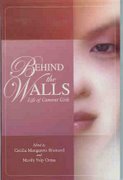
The following article is by Imelda N. Nicolas. This is part of the book BEHIND THE WALLS: LIFE OF CONVENT GIRLS, a collection of personal essays by graduates of Philippine Convent Schools.  The collection includes writings by Gemma Cruz, Neni Sta Romana Cruz, Herminia Menez Coben, and others. 

For more information about the book, visit  https://ceciliabrainard.com/book/behind-the-walls/ . The online store of the publisher Anvil Philippines may have a few copies. 


BIO: Imelda M. Nicolas was former Cabinet-rank Secretary at Commission on Filipinos Overseas. Commission on Filipinos Overseas. She was chair of the National Commission on the Role of Filipino Women (NCRFW) from 1993 to 1998, where she institutionalized the Gender and Development (GAD) budget in the government’s Appropriations Act. She also served as Secretary-General of the National Anti-Poverty Commission (NAPC) from 2004 to 2005. She is presently the cabinet-rank Secretary of the Commission on Filipinos Overseas (CFO) under the office of the President of the Philippines. The CFO uses migration and development as its framework with the end of view of responding to its challenges. It envisions to establish itself as the premier institution in the Philippines vis-à-vis migration and development and overseas Filipinos’ diaspora engagement.


CONFESSIONS OF AN “INTERNA”

by Imelda M. Nicolas

 Copyright 2005 & 2023 by Imelda M. Nicolas


It was June of 1955. I was entering the fourth grade and without knowing why I found myself, together with my older sister Loida (who was a sixth grader), being enrolled by my mother in St. Agnes’ Academy, a convent school run by German Benedictine sisters in Legaspi, some 50 kilometers away from Sorsogon, the town where I grew up in.

Because of the school’s distance from my hometown, it was taken as a matter of course that both Loida and I would be internas in St Agnes. We would live with the nuns, sharing a dormitory with 80-odd other girls who hailed from places in the Bicol region, many of which I heard for the first time: Masbate, Guinobatan, Pilar, Daet, Iriga — the list seemed endless.

Looking back, I am not surprised that my first days at St. Agnes’ were a haze. I am sure I suffered from sensory overload — there was just too much to take. There was the majestic, ever-changing but ever-present Mayon Volcano looming over the school. There was the school building itself, elegant in a timeless way, seemingly embracing all who strayed into its portals. There were the nuns, in their traditional black-and-white habits, clucking over the children, like mother hens with their chicks.


Legaspi, which the more metropolitan Manileños may consider the backwater, the boonies, was to me THE Big, Bad City, compared to my bucolic, idyllic, more-countryside-than-cosmopolitan hometown of Sorsogon.

In my mind’s eye, I can see the dormitory as one large hall full of uniform beds and drawers, overflowing with my soon-to-be fellow boarders, who came in all sizes and shapes -- from the youngest, teeny-weeny grade-oner, to the most senior graduating high school students, who, to my ten-year-old eyes and perspective then, towered over me like giants. As I got to know the girls I would be living with for the next 300 schooldays, I found out soon enough that their characters, quirks and upbringing were even more varied than their sizes and shapes.

To a newcomer there seemed no rhyme nor reason in the arrangement of our beds — you took that small piece of real estate in the dorm that was assigned to you, period. The little privacy that you could enjoy was provided by a thin piece of white curtain that you drew. The written instructions on what bedding you needed were simple and stark — white linens, a blanket, pillowcases for your two pillows, a mosquito net. Uniforms and underwear went into the small drawers between the beds.

Before I knew it, it was time for my mother to leave my sister and me in this strange and unfamiliar place. That was the first time I was going to live away from my parents and I knew inadvertently that I was going to be miserable.

Sorsogon may be not be the most exciting place in the world but my father, a self-made businessman, a quintessential entrepreneur forever churning out new businesses, had seen to it that our home was at the same time a place of commerce. We owned one of the three movie houses in town, we had the town’s only bowling alley and billiard hall, complete with a bar serving beers and soft drinks . My mother had her own share of entrepreneurial blood flowing in her veins and being a licensed pharmacist, she had a drugstore on the ground floor of our building as well. We lived on the second floor of this “entertainment center” cum pharmacy.

Although my two older brothers, Kuya Danny and Kuya Jay had already been dispatched by my parents to out-of-town schools (Ateneo de Naga and Ateneo de Manila, respectively), our youngest brother, Francis, was still running around with the town’s street urchins and having a great time. I had a similar set of free-wheeling barkadas in the neighborhood and among my schoolmates from the nearby public school where I studied from grade one to grade three. I couldn’t understand how all of a sudden I was replacing all my friends with a bunch of people I was meeting for the first time, in a place, that from all appearances, was joyless, regimented, and terribly far from home.

But the deed was done — I had been registered both as a grade four student and a boarder in St. Agnes. Loida and I had to stay. Again, I can’t remember if I cried in front of my mother and made a scene — but I must have, for even now, there is still a lingering memory of how heavy my heart felt then and my great sense of foreboding.

My first nights as an interna were precursors of things to come. In Sorsogon, after doing our homework, we would run to our movie house (which incidentally was named after my sister, “Loida Theater”) for a quick preview of what movies were scheduled to be shown in the next few weeks and had a repeat viewing of our favorite scenes of what was currently showing. That was our pre-TV nightly entertainment break. Then off to bed in a room I shared with my sister.

And now, as in interna in St. Agnes, I was introduced to the very spartan, silence-laden, disciplined nighttime of the nuns. By 5:30 in the afternoon when all the students who were not boarders had gone home, seemingly bringing with them the sound of laughter, small talks and girlish what-have-you’s , all the boarders were herded to the “study room” where complete silence was to be observed while we were doing our assignments. No one was allowed to leave the room and if one had a reasonable excuse to go to the dorm which was several classrooms away, she still was subjected to the withering and suspicious look of the nun-in-charge.

At 6:45 pm, a bell would be rung (and very soon, I found out that my entire life as a boarder would be run by bells). In double file, we were herded to the “refectory” where dinner was served. Needless to say, our meals would never make it to Zagat’s book of recommended cuisine and eating places. The nuns’ food was our standard fare and unfortunately for us, they have taken the vow of poverty, together with chastity and obedience. The only concession the sisters gave us for dinner was that we could talk among ourselves, perhaps to distract us from the measly plate before us.

At 8:00 pm, with dinner over, the bells rang again and off we went to the campus ground for a 30-minute walk or games, for those who were more athletically inclined. By 8:30 pm, we were done with our evening “entertainment” and we started with our bedtime ablutions, again, in deep silence. At 9:30 pm it was lights out, signaled with the now part-of-our-lives ringing of bells.

Every night became a nightmare for me, literally and figuratively. Having been exposed to all kinds of horror movies in our Sorsogon movie house, my imagination worked overtime the moment darkness enveloped our dorm. I heard all kinds of noises, from the rattling of chains to the haunting hooting of an owl, from the annoying, incessant chirping of the cicadas who lived in the open field beside the school’s campus, to scratches of mice and other unknown creatures in the attic.

My fear would reach a boiling point so that I had to creep to the bed of my sister Loida to still the tremors and the rapid palpitation of my heart, and to fall asleep in her arms. This was a no-no to Sister Jovita, the bosomy and huge Teutonic nun who was in charge of the boarders and who struck fear with her booming voice and her crisp German accent. If caught, a boarder’s punishment from Sister. Jovita ranged from being thrown into the broom closet to ponder on your “sin,” to not being allowed to go home for the week-end. But my nightmare was stronger than any penalty I could face so there were more nights that I spent in my sister’s bed than in mine.

Early morning brought relief with the coming of the light and the singing of the sisters in the chapel. Sometimes, in between sleep and waking up, I easily imagined that I had died and gone to heaven, mistaking the angelic voices of the nuns as God’s welcome to one of His straying flocks. But the inevitable bells would rudely bring me back to reality as the boarders were obliged to attend the early morning mass with the nuns. After mass, another unexciting breakfast awaited us, and off we were to our respective classrooms.

And so went my days and nights. Once in a while, my nights would be interrupted by my attempts to read books under the blanket with a flashlight after lights out, or by one of the boarders asking me to join her in the dorm’s shower room with “smuggled” food from the nearby panciteria, known far and wide for its pancit canton.

In my fourth grade class, I was the new girl in town, the oddity of the year. Thank God that while in the campus all of us had to speak English and not Bicol, since it seems there are as many variations of the dialect as there are provinces in the region. Those from Naga claimed that theirs was the purest while those from Sorsogon spoke more Waray or Samareno than Bicol. To complicate my language problem further, since my mother was a Tagala (from Atimonan, Quezon) and my father was a Pampango (from Moncada, Tarlac), we all spoke Tagalog at home. So it came to pass that every time I attempted to say a few Bicol words, my classmates would be rolling in the aisle laughing their hearts out with my awkward Bicol and my strange mélange of Waray and Bicol words.

When it came to academics, while in the past I had not put extra effort to earn honors in school, this time I felt I had to prove myself to my new classmates. It came as an epiphany during one of those spelling contests where I got a perfect score and led the winning team. It was one of those “Aha!!” moments, when I realized that I had what it took to be first in my class if I put my mind to it.

One other incident during that memorable year of my fourth grade in St. Agnes was the very strong earthquake that sent all of us scampering out of the classrooms in the middle of the morning, terrified that Judgment Day had come, true to the ominous warnings of the sister who taught us Religion. But our Science teacher straightened us out with the explanation that Mayon Volcano was showing signs of eruption, and earthquakes were part of the phenomenon. The continuing after-shocks and the possible paroxysm of the volcano put everyone in the school on the state of constant and nervous alert, prepared to dig and dive into our figurative foxholes at a moment’s notice. But Mt. Mayon changed its mind, decided not to go through with its threat and eventually settled down to its past serene grandeur. Things returned to normal but I never forgot that behind all that beauty lurks danger and even death. I never again looked at the Volcano with the same eyes.

I don’t know how, but I did survive my grade 4 in St. Agnes. But my sister Loida must have told our mom how miserable I was and that I was too young to be weaned away from her and home.

So, again, without my knowing exactly why, I was back in Sorsogon on my fifth grade — back to my barefooted and bakya-clad barkadas and classmates, to my nightly joyous respite from assignments via our movie house, the hurly-burly of our home serving as the town’s entertainment center, the warm presence of my mom and the antics of my youngest brother, Francis.

I stayed in Sorsogon to finish my elementary grades. As I entered my first year in high school, I was back in St. Agnes . . . but then that would be another story.


READ ALSO 

Neni Sta Romana Cruz's Growing up St. Scholastican 

Herminia Menez Coben's Behind the Walls of St Scholastica College 

Gemma Cruz-Araneta's Benevolent Assimilation 


Tags: #Philippineeducation #Filipinoschools #Catholicschools 


Wednesday, March 22, 2023

Growing Up St. Scholastican by Neni Sta Romana Cruz


The following article by is Neni Sta. Romana Cruz. This is part of the book BEHIND THE WALLS: LIFE OF CONVENT GIRLS, a collection of personal essays by graduates of Philippine Convent Schools.  The collection includes writings by Gemma Cruz, Imelda Nicolas, Herminia Menez Coben, and others. 

For more information about the book, visit  https://ceciliabrainard.com/book/behind-the-walls/ . The online store of the publisher Anvil Philippines may have a few copies. 


 GROWING UP ST. SCHOLASTICAN

by Neni Sta. Romana Cruz

copyright 2005 and 2023 by Neni Sta Romana Cruz

Because my mother and her four sisters had all studied at St. Scholastica’s College in their girlhood, I too, like the rest of my female first cousins, had to study there, if I was deemed to be brought up with the proper trappings of respectability. 

Saturday, March 4, 2023

Benevolent Assimilation by Gemma Cruz-Araneta


The following is an article by Gemma Cruz-Araneta. This is part of the book BEHIND THE WALLS: LIFE OF CONVENT GIRLS ( Anvil 2005), a collection of personal essays by graduates of Philippine Convent Schools.  The collection includes writings by Neni Sta. Romana Cruz, Imelda Nicolas, Herminia Menez Coben, and others. For more information about the book, visit  https://ceciliabrainard.com/book/behind-the-walls/ .

Gemma Cruz Araneta  graduated from Maryknoll College with a Bachelor of Arts degree in Foreign Service in 1963.  She worked at the National  Museum of the Philippines as Information Writer and Chief Docent. In 1968, she was appointed Director.  In 1965, Gemma won the Miss International Beauty pageant at Long Beach, California — the first Filipina to bring home an international beauty title

A professional writer since she was nine, she has been a weekly columnist for various national newspapers and magazines and has published six books: Makisig, Little Hero of Mactan, Hanoi Diary, Fashion & Beauty for the Filipino Woman, Sentimiento: Fiction and Nostalgia, Stones of Faith and El Galeon de Manila, Un Mar de Historias (co-author).

Gemma studied in two convent schools, St. Theresa’s College and Maryknoll College for a total of 15 years.


BENEVOLENT ASSIMILATION

Gemma Cruz-Araneta

copyright 2023 by Gemma Cruz-Araneta

       AT MARYKNOLL COLLEGE, where I studied for eleven years, I was completely enraptured by the ethereal magic of Catholic liturgy and religious pomp. Life was a series of rituals that fortified the spirit. On first Fridays, a high Mass was celebrated at the Marian Auditorium where we sang  Gregorian chants and received the Holy Eucharist. There were joyful processions to the Infant Jesus, floral offerings, and sacred hymns to Our Lady.  How mystical it was to kneel in perpetual adoration  before the Blessed Sacrament,  resplendent in a golden monstrance. Sometimes, we were carried away by religious fervor. A classmate once claimed that Our Lady appeared to her in the chapel and when she was brutally murdered  the summer after, we were stricken with guilt for having doubted her.

              However, I was not sent to Maryknoll only for religious instruction. In my family, we were all God-fearing, devout, thinking Catholics, proud of having two pious Jesuits, an angelic Carmelite abbess and an eminent bishop in our midst. I was enrolled at my mother’s alma mater, which was a convent school with irrefutable academic standards. But I was transferred to Maryknoll College, ostensibly to learn good, American English.

            Since language cannot be taught nor learned in a vacuum, my student life was dichotomized by two perpetually contending perspectives.   American English came with everything else that was American -- images of an alien   lifestyle, cultural prejudices and preferences, and later in college, policies and politics that often clashed with what I was learning at home. In fact, the only common denominator of school and home was the Catholic religion.

            Yet, I only have happy memories of Maryknoll. I had favorite nuns while in the primary and secondary levels.  Sister Catherine Therese was sweet, friendly and energetic enough to teach us how to  do-si-do and sing “Oh, Susana.”  Sister Zoe Marie made us feel like Broadway stars. She produced and directed Tekakwita, a play about the first native American saint. She taught us how to decorate those Indian costumes; we made bead necklaces and trimmed head bands with duck feathers. She lent us books about native Americans and we felt we were authorities on the subject.  However, at home, there were after-dinner comments about Tekakwita and references to a “Philippine reservation” at the St. Louis Exposition.  I suddenly remembered that Sister Zoe Marie did say her father had been worried about her coming here and that he had told her to buy a shot gun. It was only much later, when I had connected all the dots that I finally  understood what they  meant.

            American English was taught systematically and intensively. During those eleven years, I must have written hundreds of compositions and book reports, fragmented and diagramed thousands of sentences, honed tongue and vocal cords during interminable phonics classes.  Our national language was also a compulsory subject, but strangely enough, we could speak it only during that hour-long class.

            Had the Department of Education sent a circular to all private schools forbidding the use of the national language outside the classroom?  To this day, my ex-classmates and I are outraged at the way  we were severely  reprimanded  for speaking in the vernacular.  My nemesis was Sister Celine Marie who often caught me babbling in Tagalog in the school cafeteria. She was not even our English teacher; she was the Logic professor so I felt she had no right to threaten me with expulsion. Besides, I was getting good grades in English. Because most of us were bilingual at home, it was almost impossible not to use both languages (not Taglish) in an animated conversation during our free time.

             In college, the dichotomy went beyond the language debate and into the realm of politics and policies. In defiance to a Philippine law that dictated the inclusion of the Rizal Course in the  curriculum, only a single lecture on the life of the national hero was given at Maryknoll. During a Monday morning assembly at the Marian Auditorium, Sister Miriam Catherine, the college dean, read a paper that compressed the required semesters. As a footnote, we were enjoined not to read Rizal’s revolutionary novels, Noli Me Tangere and El Filibusterismo, because the Archbishop of Manila had declared them anti-Church. That really caused a furor at home where the works of Philippine heroes, especially Jose Rizal’s,   were in the must-read list of even my bishop uncle.

             And what else are the nuns going to forbid? — my elders wanted to know. What about Philippine history?  That was how I found out that Sister Joanna Marie had been assigned to teach Philippine History. An American nun, teaching Philippine History?  What is this — Benevolent Assimilation?  But, anything for American English, I suppose.   To remedy that unacceptable situation, I was sent to the University of the Philippines, for the entire summer, to take Philippine History and Philippine Government I,  which I had to take all over again under Sister Joanna Marie.           

            After that, the dichotomy between school and home became more glaring.   Filipino political leaders who were nationalist icons of my family — Claro M. Recto, Lorenzo Tanada, Jose Diokno to name a few — were branded communists in school. Non-alignment, self-reliance, neo-colonialism, US intervention, the military bases, the CIA, the Parity Amendment, including  salvation outside the Catholic Church,  had irreconcilable  definitions at school and at home.  But I survived all that without becoming schizophrenic. Today I have a habit of looking at both sides of the picture. 

            The Maryknoll nuns taught us good American English which has become our comparative advantage in the extremely competitive labor market. Under their tutelage, we became better Catholics, in thought word and deed. But, although they instructed us to love God above all things,  the nuns  could not  show us how to be proud of being Filipinos nor how to love the Philippines more than ourselves.  Fortunately, many of us learnt that at home.


Read also:

Read also:

Neni Sta Romana Cruz's Growing up St. Scholastican 

Herminia Menez Coben's Behind the Walls of St Scholastica College 

Gemma Cruz-Araneta's Benevolent Assimmilation 

Imelda M. Nicolas's Confessions of an Interna 

Watch also: THE CEBUANA IN THE WORLD: Cecilia Manguerra Brainard Writing out of Cebu


Tags: #Philippineeducation #Filipinoschools #Catholicschools #missuniverse #missinternational #missphilippines #filipinabeautyqueens


Friday, March 3, 2023

Behind the Walls of St. Scholastica's College by Herminia Meñez Coben

The following is an article by Dr. Herminia Meñez Coben "Behind the Walls of St. Scholastica's College." This is part of the book BEHIND THE WALLS: LIFE OF CONVENT GIRLS ( Anvil 2005), a collection of personal essays by graduates of Philippine Convent Schools.  The collection includes writings by Gemma Cruz Araneta, Neni Sta. Romana Cruz, Imelda Nicolas, and others. For more information about the book, visit https://ceciliabrainard.com/book/behind-the-walls/ .

Dr. Herminia Menez Coben, a retired Professor of American Multicultural Studies at Cal State, Sonoma, is author of EXPLORATIONS IN PHILIPPINE FOLKLORE and VERBAL ARTS IN PHILIPPINE INDIGENOUS COMMUNITIES: POETICS, SOCIETY, AND HISTORY.


BEHIND THE WALLS OF SSC

by

Herminia Meñez Coben

copyright 2023 by Herminia Menez Coben 


“God writes straight with crooked lines”. . . “Ora et labora”. . .

“That in All Things God May be Glorified”. . .

“Ad Majorem Et Gloriam” . . . “You Can Change the World,” etc.


AT AGE THIRTEEN, I was sent to live as an “interna” for the next four years under the disciplined guidance of the Benedictine Sisters inside the walls of St. Scholastica’s College (SSC) on Pennsylvania Avenue, now Leon Guinto. Months before my mother and I sailed for Manila, her seamstress had sewn a dozen navy and white uniforms, ink-stamped with my assigned number, “38" (for laundry purposes), the same number that appeared on everything else I wore except for the “civilian” dresses on week-ends outside the walls.

Manila in 1949 was just recovering from the devastations of the Second World War. SSC’s main building still bore the pockmarks from the siege of the Japanese-occupied city by American liberation forces. The fighting was brutal at De La Salle College, our neighbor on Taft Avenue, which the Japanese had used for their quarters, and where hand-to-hand combat had left the hallways bullet-scarred and splattered with the blood of the enemy.

Our own campus appealed to my wild imaginings about the ghosts of war, and in the company of my equally adventurous young friends, we haunted the ruins of St. Cecilia’s Hall, the premier college music auditorium, built in 1932 in the art-deco style of the period, shelled and bombed to the ground in 1945. The rubble became our stage for play and games. Nothing grew there except weeds and a wild aratilis tree bearing tiny translucent berries which when popped between the teeth melted in the mouth and emitted a sweet scent.


Our dormitories occupied the two upper floors of the main building. On week-ends, through a boxed opening on each floor, we listened to the music majors rehearse their graduation concertos with the Manila Symphony Orchestra on the ground floor which served as the temporary auditorium. Musically inclined or not, we were thus exposed to the best composers of classical music. It was in that same hall where those of us who took piano lessons at the College of Music gave annual group recitals on the grand Steinway.

Life behind the walls was highly regimented, a near carbon copy, we thought, of the nuns’ lives inside the cloister. Our beds, set hospital style in a cavernous room, were curtained on one side for privacy at night, but were always open for inspection by a nun who did the rounds, aisle by aisle, with a flashlight. If not in our respective beds, we could be discovered in the narrow balcony overlooking the acacia-shaded lawn sharing a midnight snack or up in the forbidden roof garden, smoking smuggled American cigarettes while enjoying the lights of the city. I had brought my walking doll which an uncle had sent from California, and one evening, I propped her up on a pillow as though I was in bed, but I knew that Sister L. had discovered my trick when she inquired the next day, “How’s the dolly, Herminia?”

Each morning at five-thirty, at the sound of Sister L’s bell, we rushed to the huge common bathroom, clacking our wooden clogs on the bare cement floor on the way to individual shower stalls which enterprising boarders had reserved the night before by draping their towels over the door. After our quick morning routines, slowly we filed into the chapel in another building where still half asleep we heard the handsome but shy Father M. say Mass and listened to a choir of nuns sing the Gregorian chant.


Thursday, June 16, 2022

Guest Blogger: Lynley Ocampo: Mama Mary Answered My Prayer


2024 Update: A Catholic religious book that I collected and edited has a new edition - MAGNIFICAT: MAMA MARY'S PILGRIM SITES gathers 24 people's accounts of Marian sites wherein they found comfort, solace, and sometimes miracles. The pilgrim sites include familiar shrines in Lourdes, Vailankanni, Guadalupe, Fatima, Ephesus, as well as lesser known ones including several in the Philippines (Antipolo, Manaoag, Odlot, Caysasya and more).  It is available from Amazon.

The book was issued an Imprimatur by Archbishop Antonio G. Tagle D.D. of Manila and Nihil Obstat by Rev. Fr. Rufino C. Sescon, Jr. Chancellor. 

Bishop Leopold C. Jaucian, SVD. DD, Bishop of Bangued, Philippines praises the book as follows:

 Profoundly Marian and beautifully written by the contributors as these are personal experiences! To our fellow devotees and would-be-devotees of the Blessed Virgin Mary, you will surely fall in love with Magnificat: Mama Mary's Pilgrim Sites, and love Our Blessed Mother ever more."

This book is part of the Marian Collection at the  Marian Library of the University of Dayton, Ohio.

*** 

I was thrilled to hear back from a contributor, Atty. Lynley Ocampo, a lawyer from Cebu City, who emailed me to say her prayer has been answered with the help of Mary:

"I am happy to announce that my family and I have moved to our new home in ____. This was an answered prayer -- as I mentioned in MAGNIFICAT .. more than two years in the making. We moved in last 12 June, significantly as if to declare our independence from abusive and oppressive landlords/landowners. Bittersweet, as we’ve spent almost 80 years - beginning with my grandmother, mother, down to the more recent generation - in our old place."  

She included two photos of their beautiful pristine and airy home and said, "Our new home."

I am sharing the original article Lynley Ocampo wrote for the book, MAGNIFICAT: MAMA MARY'S PILGRIM SITES, wherein she attests to religious changes in her after visiting our Lady of Odlot in the Philippines. Please read the excerpt with her writeup:

Thursday, July 29, 2021

Selected Short Stories by Cecilia Manguerra Brainard Released by USTPH


The University of Santo Tomas Publishing House and PALH released Selected Short Stories by Cecilia Manguerra Brainard, a collection of 39 of her stories. In the US, the book is available in paperback and Kindle format from Amazon, Barnes and Noble, and other venues. In the Philippines, the softcover book is available from Lazada and Shopee. 

The book includes some of Brainard’s best short stories including the popular: Woman with Horns, Flip Gothic, Romeo, and Brainard’s recent stories: The Syrian Doctor in Paris, and Melisande in Paris, and more.

Friday, March 12, 2021

Press Release SELECTED SHORT STORIES by Cecilia Manguerra Brainard


 PRESS RELEASE 3/12/2021

The University of Santo Tomas Publishing House will soon release SELECTED SHORT STORIES by Cecilia Manguerra Brainard, a collection of 39 stories. This collection will also be released in the US later this year. Please stay tuned for order information.

The book includes some of Brainard’s best short stories including the popular: Woman with Horns, Flip Gothic, Romeo, and Brainard’s recent stories: The Syrian Doctor in Paris, and Melisande in Paris, and more.

The book cover was created by noted Filipino artist, Felix Magno.

Tuesday, February 16, 2021

Growing Up Filipino Stories for Young Adults - Now in Hardcover and New Cover


The  collection of stories, GROWING UP FILIPINO: STORIES FOR YOUNG ADULTS,  now has a hardcover edition (ISBN 9781953716002). The softcover edition has a new cover. 


GROWING UP FILIPINO was the first publication of PALH (Philippine American Literary House). Written by established and emerging writers, the book delves into universal but at the same time personal themes of how it is to grow up Filipino.  The book has received received critical acclaim. 


Finalist for the Philippine National Book Award, this collection of stories along with the follow-up book GROWNG UP FILIPINO: MORE STORIES FOR YOUNG ADULTS continues to be read and used by educators. Last summer, the National Geographic included both books in its Summer Reading list.


Here are some book review excerpts of the book: 

School Library Journal: 
"These 29 short stories offer a highly textured portrait of Filipino youth and an excellent sampling of creative writing. Thematically arranged, most of the pieces have been written since the turn of the 21st century. Each story is introduced by a thumbnail sketch of the author and a paragraph or two about some element that is relevant to the story ... The high caliber and broad but wholly accessible range of this collection, however, makes this title a solid purchase for multiple reasons." 

Bookbird Journal International Children's Literature (Glenna Sloan): 
"Emerging and established award-winning writers are the authors of this fine collection of 29 stories about what it means to be Filipino in the Philippines and in the United States ... This impressive array captures the complexities of both the Filipino culture and history and the realities of the lives of young adults no matter what their ethnic affiliation." 

Booklist:
"In this fine short-story collection, 29 Filipino American writers explore the universal challenges of adolescence from the unique perspectives of teens in the Philippines or in the U.S. Organized into five sections -- Family, Angst, Friendship, Love, and Home -- all the stories are about growing up and what the introduction calls "growing into Filipino-ness, growing with Filipinos, and growing in or growing away from the Philippines ... The cultural flavor aspect never overwhelms the stories, and readers will be drawn to the particulars as well as the universal concerns of family, friends, love, and leaving home."' 

Bookseller can order the book from Ingram and readers can easily find this book in Amazon, Barnes and Noble and other booksellers. 

For more information, please visit:   https://ceciliabrainard.com/book/growing-up-filipino-stories-for-young-adults/


tags: young adult literature, young adult fiction, teen literature, YA fiction, YA short stories

Monday, November 30, 2020

Herminia Menez Coben Reviews Cecilia Brainard Short Story Collections


BOOK REVIEW OF CECILIA BRAINARD'S TWO SHORT STORY COLLECTIONS

Review by Dr. Herminia Menez Coben

The Halo-Halo Review, Nov. 24, 2020

WOMAN WITH HORNS AND OTHER STORIES by Cecilia Manguerra Brainard

(PALH 2020, New Day 1987) 

and

ACAPULCO AT SUNSET AND OTHER STORIES by Cecilia Manguerra Brainard

(PALH 2020, Anvil 1995)

BOOKS' LINK

In her debut collection of short stories, WOMAN WITH HORNS, Cecilia Manguerra Brainard launches her mythical Ubec (Cebu) – a historic, cosmopolitan and vibrant city – the setting of many of her short stories, as well as her most recent novel, THE NEWSPAPER WIDOW.

Thursday, September 17, 2020

Contemporary Fiction by Filipinos in America, anthology book in Kindle


The collection of short stories, CONTEMPORARY FICTION BY FILIPINOS IN AMERICA edited by Cecilia Manguerra Brainard, is available on Kindle. 

https://www.amazon.com/dp/B08HPK6J7W

This book is a follow-up of the collection, Fiction by Filipinos in America. Contemporary Fiction by Filipinos in America collects 26 stories by Filipino American authors including (in no particular order): Fatima Lim Wilson, Mila Faraon-Heubeck, Eileen Tabios, John Silva, Veronica Montes, Cecilia Manguerra Brainard, Lilia V. Villanueva, Mar V. Puatu, Vince Gotera, Oscar Penaranda, Luis Cabaquinto, F. Delor Angeles, Melissa R. Aranzamendea, Eulalio Yerro Ibarra, Nadine Sarreal, Jay Ruben Dayrit, Ligaya Victorio Fruto, Edgar Poma, Marianne Villanueva, Linda Ty-Casper, Paulino Lim, Jr. Greg Sarris,Lee Respecio Colomby, N.V.M. Gonzalez, Alma Jill Dizon. 


Harold Augenbraum reviewed the book in Manoa, saying: "“By pulling these personal, fictional quests together, the reader indeed comes away with a varied portrait of Filipinos in America, not the expression of dark causality present in the earlier generations of writers, such as Bulosan and Santos—those fantastic conjurors of Filipino American literature—but of people cautiously settling into what they hope will be a comfortable position … So many of these stories convey loneliness, disconnectedness, and an inability to form lasting attachments … This collection abounds with such tension … Brainard has done a fine job of bringing many little-known writers – and the edginess of Filipinos in America – to the fore. ”

Friday, September 4, 2020

Eve La Salle Caram & Cecilia Brainard Authors of Two Novellas


Autbors of two novellas in the book PLEASE, SAN ANTONIO! & MELISANDE IN PARIS, Eve La Salle Caram and Cecilia Brainard. The novellas are set in Rome and Paris about women seeking healing. Amazon has both hard copy and Kindle formats of this book on sale.


It is also available from Barnes and Noble Online, in which there is a nice review of it that says:
"Great Summer Read that Takes you to Italy & France: I love this book of two novellas by two creative writing teachers. One story is set in Italy and the other in Paris, and so reading the book is like taking a vacation. The protagonists are women who find healing in relationships. There's good writing in these gentle lovely stories. The book also has delightful illustrations by Nina Lim-Yuson. I enjoyed this book very much."


Tags: book, books, international, women, Italy, France, Rome, Paris, love, healing, #summerreading2020


Monday, March 16, 2020

Aloy Polintan Reviews Magnificat: Mama Mary's Pilgrim Sites (edited by Cecilia Brainard)


Book Review by Aloy Polintan

Book: Magnificat: Mama Mary's Pilgrim Sites

Collected and Edited by Cecila Manguerra Brainard

Anvil, 2012, softcover, 168 pages, ISBN 9789712727115
Available in Amazon Kindle

This book collects 24 Marian devotees’ accounts of their experiences in Marian pilgrim sites. The sites are found in Bosnia-Herzegovina, Eritrea, Ethiopia, France, India, Mexico, Poland, Portugal, Spain, Turkey, the United States, and there are eight Pilgrim sites in the Philippines. The book includes short write-ups of other international pilgrim sites and some Catholic Prayers. The book has an Imprimatur issued by Archbishop Tagle of Manila.


Flash Book Review No. 95 by Aloy Polintan (twitter: @PolintanAloy)
"And whatever form Mother Mary chooses to make herself known to me, be it as visible as an apparition or a subtle whisper, I knew I would receive her presence with wonder and gratitude."

This collection of personal essays on encounters with Mama Mary in Marian pilgrim sites around the world, culled and curated by critically acclaimed writer and editor Cecilia Brainard, brings us into a journey of bewilderment and adoration, having us amazed at how people of different ages, professions and cultures responded to the invitation to ask for Mary's intercession in their lives' aspirations and circumstances, as well as drawing us back and forth to recognizing how miracles attributed to Her can change our perspectives, and thus deepen our faith.

We are brought to various sites with one driving force: to make Mary known to us. And this book is special because Filipino writers based in the Philippines and those assigned to jobs abroad or those who chose to live permanently overseas come together for a purpose: to find a home, more so in these most unhomely of times.

"I have come to appreciate the resilience of immigrants who have come before me, undaunted by the challenges of a homeland, armed with little more than faith, yet secure in the knowledge that God would become manifest wherever their journeys end."

Each essay is laid out with nothing but the assurance that the Holy Spirit is at work in the writer's life and his or her writings. We get a glimpse of the contributors' private lives, particularly the periods in their earthly journeys when journeying of the spirit was much needed and have always been at hand. After the trial, there was triumph. After sharpenings, there was transformation. After sicknesses and deaths, there was hope energizing those left and bereft. And all of these testaments were rendered with ardor, research, gracefulness and conviction.

"The psychological change in me is not only spiritual, but also richly emotional, creative and transformative."

These days when hope for healing is bordering on paranoia and restlessness, may this book, published by Anvil in 2012, serve not just a pinch, but a grip to a path "worthy of belief".

Bio: Aloy Polintan is the Senior High School Department Coordinator at the Divina Pastora College in Gapan, Nueva Ecija, Philippines


More informaton about Magnificat: Mama Mary's Pilgrim Sites:

Contributors are: Lucy Adao McGinley, Cecilia Manguerra Brainard, Angelita Caluag Cruz, Maria Ciocon, Celeste, Ma. Ceres P. Doyo, Millicent Dypiangco, Ma. Milagros T. Dumdum, Penelope V. Flores, Almira Astudillo Gilles, Ma. Teresita Herrera-Tan, Fe Aida Lacsamana-Reyes, Jaime C. Laya, Guia Lim, Linda Nietes-Little, Ma. Teresa Z. Lopez, Aimee Gaboya Ortega Lucero, Lynley Salome R. Ocampo, Ma. Cristina Padilla-Sendin, Marsha C. Paras, Rev. Dr. Sebastian Periannan, Brian Ascalon Roley, Julia H. Wolski, and Linda Yamamoto.

Praise for Magnificat
“This is another outstanding book by Cecilia Manguerra Brainard. Profoundly Marian and beautifully written by the contributors as these are their personal experiences! To our fellow devotees and would-be devotees of the Blessed Virgin Mary, you will surely fall in love with Magnificat: Mama Mary’s Pilgrim Sites and love Our Blessed Mother even more.” (Bishop Leopoldo C. Jaucian, SVD, DD, Bishop of Bangued, Philippines)

“The devotion to Mama Mary is strong in the hearts of every Filipino.” (Father James B. Reuter, SJ)

“The Magnificat has always been a testament to God’s paradoxical dealings with his people. This book assembles a tableau of witnesses to how a fleeting visit with Mary can turn into a life-changing introduction to her Son. Through their stories the author offers their readers the distinct possibility of setting the stage for a personal, if vicarious, epiphany.” (Father Dionisio M. Miranda, SVD, President, University of San Carlos in Cebu)

“Running as a leitmotif in all the essays in this book is the writers’ palpable love for Mama Mary. Each writer has undergone a change in his or her life or outlook following a visit to a Marian site. Some may have experienced a “miracle,” or felt consoled and renewed; others a deepening of spirituality, or an epiphany, an insight into the divine. Although we know that Jesus is the only Way to the Father, it is our belief in the power of Mary’s intercession to her Son, borne out of the Bible’s Cana story, that makes us all turn to Her, whom Her divine Son will never refuse. Kudos to Cecilia Manguerra Brainard for putting together an engaging collection of stories that magnify the humble handmaid of the Lord.” (Erlinda E. Panlilio, Writer and Editor)


Tags: book review, Marian, Mama Mary, Catholic, religion, Christianity, anthology