Showing posts with label convent schools. Show all posts

Friday, March 3, 2023

Behind the Walls of St. Scholastica's College by Herminia Meñez Coben

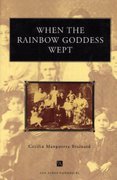
The following is an article by Dr. Herminia Meñez Coben "Behind the Walls of St. Scholastica's College." This is part of the book BEHIND THE WALLS: LIFE OF CONVENT GIRLS ( Anvil 2005), a collection of personal essays by graduates of Philippine Convent Schools.  The collection includes writings by Gemma Cruz Araneta, Neni Sta. Romana Cruz, Imelda Nicolas, and others. For more information about the book, visit https://ceciliabrainard.com/book/behind-the-walls/ .

Dr. Herminia Menez Coben, a retired Professor of American Multicultural Studies at Cal State, Sonoma, is author of EXPLORATIONS IN PHILIPPINE FOLKLORE and VERBAL ARTS IN PHILIPPINE INDIGENOUS COMMUNITIES: POETICS, SOCIETY, AND HISTORY.


BEHIND THE WALLS OF SSC

by

Herminia Meñez Coben

copyright 2023 by Herminia Menez Coben 


“God writes straight with crooked lines”. . . “Ora et labora”. . .

“That in All Things God May be Glorified”. . .

“Ad Majorem Et Gloriam” . . . “You Can Change the World,” etc.


AT AGE THIRTEEN, I was sent to live as an “interna” for the next four years under the disciplined guidance of the Benedictine Sisters inside the walls of St. Scholastica’s College (SSC) on Pennsylvania Avenue, now Leon Guinto. Months before my mother and I sailed for Manila, her seamstress had sewn a dozen navy and white uniforms, ink-stamped with my assigned number, “38" (for laundry purposes), the same number that appeared on everything else I wore except for the “civilian” dresses on week-ends outside the walls.

Manila in 1949 was just recovering from the devastations of the Second World War. SSC’s main building still bore the pockmarks from the siege of the Japanese-occupied city by American liberation forces. The fighting was brutal at De La Salle College, our neighbor on Taft Avenue, which the Japanese had used for their quarters, and where hand-to-hand combat had left the hallways bullet-scarred and splattered with the blood of the enemy.

Our own campus appealed to my wild imaginings about the ghosts of war, and in the company of my equally adventurous young friends, we haunted the ruins of St. Cecilia’s Hall, the premier college music auditorium, built in 1932 in the art-deco style of the period, shelled and bombed to the ground in 1945. The rubble became our stage for play and games. Nothing grew there except weeds and a wild aratilis tree bearing tiny translucent berries which when popped between the teeth melted in the mouth and emitted a sweet scent.


Our dormitories occupied the two upper floors of the main building. On week-ends, through a boxed opening on each floor, we listened to the music majors rehearse their graduation concertos with the Manila Symphony Orchestra on the ground floor which served as the temporary auditorium. Musically inclined or not, we were thus exposed to the best composers of classical music. It was in that same hall where those of us who took piano lessons at the College of Music gave annual group recitals on the grand Steinway.

Life behind the walls was highly regimented, a near carbon copy, we thought, of the nuns’ lives inside the cloister. Our beds, set hospital style in a cavernous room, were curtained on one side for privacy at night, but were always open for inspection by a nun who did the rounds, aisle by aisle, with a flashlight. If not in our respective beds, we could be discovered in the narrow balcony overlooking the acacia-shaded lawn sharing a midnight snack or up in the forbidden roof garden, smoking smuggled American cigarettes while enjoying the lights of the city. I had brought my walking doll which an uncle had sent from California, and one evening, I propped her up on a pillow as though I was in bed, but I knew that Sister L. had discovered my trick when she inquired the next day, “How’s the dolly, Herminia?”

Each morning at five-thirty, at the sound of Sister L’s bell, we rushed to the huge common bathroom, clacking our wooden clogs on the bare cement floor on the way to individual shower stalls which enterprising boarders had reserved the night before by draping their towels over the door. After our quick morning routines, slowly we filed into the chapel in another building where still half asleep we heard the handsome but shy Father M. say Mass and listened to a choir of nuns sing the Gregorian chant.


Wednesday, April 4, 2012

Reflecting on the Bikini Girls of STC Cebu


Reflecting on the Bikini Girls of STC Cebu
by Cecilia Manguerra Brainard

It's the kind of summer scandal that a small place like Cebu in Central Philippines loves.

First, pictures of two teenage convent girls in bikinis (reportedly holding a bottle of liquor and a cigarette) appeared in Facebook. The girls, who attend St. Theresa's College (STC), an exclusive girl's school, were barred from attending their graduation ceremony.

The parents of the girls filed a law suit; Judge Navarro of the Regional Trial Court ruled in their favor, saying, it was "un-Christian" and possibly illegal to stop the girls from attending their graduation ceremony.

The girls with their mothers and sheriff went to school on the day of the graduation and guards prevented them from entering. In short, the nuns defied court orders.

Public uproar prompted the nuns to write an official statement, owning up to the fact that they had prevented the students from attending the graduation rites despite the court order, and that they had filed a very Urgent Motion for Reconsideration. The nuns insisted that the students were barred not only because of the bikini photos, but because the photos were obscene, sexually provocative, and revolting; the students had broken school rules when they posted and uploaded "pictures on the Internet that entail ample body exposure." Further, while the students claimed that the pictures were taken at a family picnic, the incidences occurred in a public place - hotel, bar or club.

The Judge apparently spent sleepless nights after the order was disobeyed and finally inhibited himself from the case, saying two of his daughters graduated from STC.

Last I heard, the case is being raffled off to a family court.

As a graduate of St. Theresa's College, Cebu and Manila, I have been asked repeatedly about what I think about this case. My reply has been: "The St. Theresa's nuns are strict. They were strict before and apparently they remain strict now."

I don't have all the details of course and have just read news reports and emails from friends about what happened. If it is true that the bikini pictures were taken at a bar with a girl holding liquor and a cigarette, and this photo was published in Facebook - I can understand how the nuns would prevent the girls from the graduation rites.

St. Theresa's College isn't your regular high school. It's a convent school where students are taught proper values along with the academic subjects. Parents who enroll their children in STC know this; in fact many of them pay extra to put their children in exactly this type of school so their children are "raised properly and taught right from wrong."

Likewise the students in STC know what is expected from them; the nuns make that very clear from Day 1. Their standards are high; they are strict disciplinarians.

If students don't want to follow the rules or style of this convent school, then they shouldn't bothering enrolling there.

I am not "siding" with the school because I am perturbed that the nuns defied the court order;I don't know if their filing the Urgent Motion for Reconsideration made it legally all right to prevent the girls from participating in the graduations rites. Or did the nuns' arrogance exceed legal boundaries this time? Will they be jailed? - I think not. Will they be fined? Perhaps.

I can just imagine the drama that went on that day, with the parents and girls and sheriff arguing with the guards, the other girls and teachers trying to carry on with graduation rites when their minds were riveted on the "outcasts" outside.

This story continues to evolve as I write. At first, the public felt sorry for the 16-year old girls; but when the story surfaced that the picture had been taken in a bar, not a family picnic, people started asking questions. There are always two sides to a story.

I'll write addenda to this article as the story evolves.
~~~~~
The photo is circa 1963 - St. Theresa's girls in San Marcelino

~~~~
COMMENT FROM ARACELI LORAYES:
The nuns aren't just strict; they're stubborn too, when they believe they're right. Just think of the closing of the college department; that created an uproar too, and parents went to court. I understand that now they realize it was a wrong move, since vocations have dwindled. And not just stubborn; tough, too. As social progressives, the STC nuns are battle-hardened veterans of street confrontations.

But I digress. I had a feeling that there was more to the story than meets the eye.

I have a feeling that these girls had a history of flouting school regulations, to which their parents turned a blind eye. Scratch a misbehaving student and you'll find "kunsitidor" parents, or weak parents. The problem is that such parents put their girls in a school like St. Theresa's and then abdicate all parental responsibility, expecting the school to do their job for them. It doesn't work out that way.

I think there was a better way for the school administration to express its displeasure then to call them lewd and lascivious; but on the other hand, if the girls were flaunting their sexuality, they have to expect hurtful words to come their way in a conservative culture like Cebu's.

If the nuns flouted the court, well, they had a precedent in Leila de Lima's flouting of the Supreme Court order to allow GMA to travel abroad. In both cases, the disobedient ones felt that they were doing right, and relied on technicalities.

My fearless forecast: to save face, the parents will huff and puff, and when the furor dies down, quietly withdraw the charges (especially if the nuns had the foresight to print the pictures, and present them in court, which opens them to public scrutiny). And STC's enrollment will jump, due to those parents who think, "That's just the sort of school I want for my girls."


~~~

Read also:
Supreme Court Decision Reached on Bikini Girls of STC Cebu 
 
tags: Cebu, Philippines, Catholic school, education, St. Theresa's College

Tuesday, December 7, 2010

ARTICLE RE BEHIND THE WALLS, Edited by Brainard & Orosa


THE COLEGIALA EXPERIENCEby Maria Clarissa Estuar (The Philippine Star), Dec. 5, 2010

THIS WEEK’S WINNER
MANILA, Philippines - Maria Clarissa Estuar, 34, is a scriptwriter for ABS-CBN. She is part of the creative teams behind the primetime soap opera Kristine and a soon-to-be-launched teen drama. She has seven Palanca awards to her name.

In a couple of weeks, a wedding will bring my high school barkada together for the first time in 13 years. We were sophomores when we gravitated towards each other at the exclusive school for girls where we were enrolled. E-mails and Facebook helped keep the friendship alive even though half of our group has settled in North America, and the other half has remained in the Philippines. I’ve been feeling understandably sentimental, so when I chanced upon the book Behind the Walls: Life of Convent Girls, I got myself a copy and started skimming it.

Behind the Walls is a collection of essays from women who went to convent schools from before World War II to the 1990s. I immediately skipped to the essay by Eunice Noelle Lucero after figuring out that she went to the same school on Leon Guinto just a few years after my friends and I graduated from there. The soundtrack to my barkada’s high school experience was New Kids on the Block while hers was Pearl Jam, but I discovered that not much had changed during her time. Our ancient Filipino teacher still terrorized girls on a daily basis. The typing teacher still made her students wear brown paper bags on their heads during touch-typing exercises. She wielded a small triangle that she hit to signal the class to start pounding on their typewriters’ keys. To help keep the pace, she played music from a portable cassette recorder and stomped her foot to the beat. I suddenly remembered somebody telling me that once, the typing teacher’s heel got stuck in a hole on the teacher’s platform. Apparently, she timed her efforts to pull herself free to the beat of the music.

Reading that piece was a nice start because it brought me down memory lane, but I wondered if I would enjoy the essays written by women who went to other schools. As students, we held biases against girls from our rival schools and old prejudices die hard, I suppose, but I promised myself I’d keep an open mind as I plowed through the other essays.

I was amused by what appeared to be a universal difficulty in following our schools’ dress codes. Several essayists mentioned how they waged battles on skirt lengths, the resentment they felt for being forbidden to wear colored (and not just neutral) hair accessories, and how they managed to experiment with makeup even though the nuns who ran their schools frowned upon the use of mere pressed powder. Our own blue and white uniforms caused us a fair amount of grief whenever our teachers caught us walking around with one jumper strap artfully dangling off one shoulder or when we were basically using our skirts as mops whenever we sat down on the floor and slid to our friends to gossip with them.

As Holy Ghost alumna Milagros Delgado Enage pointed out, colegialas have always been expected to live out the virtues of order, simplicity and modesty, but honestly, the indoctrination process wasn’t exactly painless.

For the record, I did not go to school with a bunch of well-behaved girls. For the most part, we behaved like high-spirited teens who refused to be caged in. “Boisterious” was how fellow Scholastican Neni Sta. Romana-Cruz described us.

Through the years, colegialas have tried to stretch the boundaries in different ways. Rosemarie Montañano related that back in the 1960s, she was on her way back to school with her fellow internas when they made an unplanned detour to pick guavas by the roadside even though they knew they’d be severely reprimanded. Maria Concepcion Abeleda-Beltran confessed to procuring a contraband copy of Lady Chatterly’s Lover, only to be disappointed by how badly written it was.

In a way, the good nuns who ran these schools contributed to the cultivation of this daring side of many colegialas. In keeping with their goal to provide a well-rounded education to their girls, many of these institutions had outreach programs that required students to go to depressed areas to teach catechism, distribute food and clothing, and be exposed to certain social realities for the first time in their lives.

Karina Africa Bolaso pointed out how ironic this was, for she was sent to a “harmless convent school” because her parents believed no harm could come to her there because it was a place where “fine, well-bred young gentlemen went to look for their future wives.” Little did her parents know that within a year, their precious daughter would be joining protest rallies and going to evacuation centers with the blessings of her school’s administration.

Many colegialas do look back and remember how their schools gave them the chance to get out of their gated communities sans parents and amahs for the first time in their lives, forcing them to be a little more independent. Bettina Rodriguez Olmedo asserted though that in her own experience, these outreach activities “were not sufficiently involving to be capable of bursting life’s lovely bubble for the average Theresian who was usually equipped with a pair of ‘blinders’… For her, life’s problems were magnified a hundredfold. Papa’s refusal to raise her allowance was a disaster. Having to wear the same dress at another party attended by the same circle of friends was a catastrophe. Failing to catch the eye of a heartthrob was a major tragedy.”

Lolita Delgado Fansler seemed to support this view, for she wrote, “Ours was a sheltered childhood. Separated or divorced parents didn’t inhabit our tiny world because parents never gossiped about troubled marriages in front of us. Going to non-Catholic schools in the United States — or even the University of the Philippines — for college was not something colegialas were supposed to do, lest we become atheists, communists, rebels, or fallen women.”

For the most part, my own colegiala experience was peppered with trivial concerns. At times, my barkada’s discussions revolved around the stone tables, and how they became our school’s most prestigious tambayan even though it meant eating lunch on top of bathroom tiles and constantly worrying about the very real threat of higad falling from the tree that provided shade to those tables.

Other times, we tried balancing chemical equations while I nagged my friends into helping me decide if I should risk asking my crush who had spiked hair to go to the prom with me, or if I should just settle for my best friend’s cousin. I think being in the school pergola with a panicky friend when the big earthquake struck in mid-1990 was the most traumatic event in my stint as a Kulasa.

A Theresian and a Maryknoller contributed essays to the book, which spoke about a particular aspect of colegiala life that doesn’t come up often. Despite the high tuition fees, some middle class girls do manage to enroll in these schools, and I was one of them. Even though we got to wear the same uniform and learned the same lessons, we didn’t experience convent school life in the same, exact way as our more affluent peers.

Alma Clutario-Patist related how a swimming party turned sour when her friend’s mother came home to find her there: “Casually, she asked me a few questions — what’s your name, where do you live? From her look of disinterest, I knew that that would be the last time I would be swimming in their pool. My family background did not come up to her family’s standards.”

In her own essay, Sonia Carreon admitted to being subjected to “verbal bullying” from one of her classmates. She wrote, “I never pretended to be rich nor even acted rich, but I guess my effort at trying to blend in was not working. Someone actually did not like me because I was poor and from the province. What had I done to make this girl hate me?”

Luckily, I didn’t go through anything as dramatic. It helped that I was surrounded by friends who also had parents who worked hard and pinched centavos just to pay our tuition. It made things a little easier, but I still remember feeling bad — no, ashamed — because I couldn’t afford those Marks and Spencers crocheted socks that almost everybody else was wearing. Actually, I probably could have extorted enough money from my parents to buy one pair, but it didn’t feel right to indulge myself when they sacrificed so much just so that I could continue studying in that rich girls’ school.

Years after this, I got my first paycheck and was tempted to use part of it to buy myself a pair of those socks even though I had no idea where I’d wear them because my days of wearing shiny Mary Janes were long gone. I was able to fend off the impulse though because by then, I had learned that it is possible not to define one’s self through designer labels. I’d like to think that because of this, I’ve made our school’s Benedictine nuns proud.

The preface of Behind the Walls posed this question: “Is being a colegiala today of as great significance as it was then?” Almost all of the essayists in this book asserted that they developed a taste for higher learning that probably wouldn’t have germinated in another environment. We learned to push ourselves, we became comfortable competing with others, partly because we didn’t have to worry about male peers watching us and thinking, “That’s not ladylike behavior at all.” Without realizing it, being driven to succeed was seared into our system little by little.

But most of all, the essayists and I appreciate our colegiala experience because this was when we established lifelong friendships. I met Pia, Hannah and Joy when we were silly school girls who spent an inordinate amount of time teasing our bangs into a tsunami shape while trying to breathe under a cloud of Aqua Net. We drank from one Coleman during breaks and suffered through trigonometry, arnis and carpentry classes together.

Our lives now are infinitely more complex, but I have a feeling when we see each other again, it would be as if we hadn’t been apart. It would be just like old times.
~~~~

BEHIND THE WALLS: LIFE OF CONVENT GIRLS
Edited by Cecilia Manguerra Brainard & Marily Y. Orosa
Anvil Publishing, softcover, 222 pages
(www.anvilpublishing.com)
email: anvilpublishing@yahoo.com