Showing posts with label Cebu Manila Philippines pictures. Show all posts

Wednesday, July 27, 2011

PICTURES OF CEBU, MANILA, SAIGON - JULY 2011

Here are some pictures I took this past month while I was in Cebu, Manila and Saigon. I may have to break up the pictures in several blog entries, and I'll do writeups later on. I just got back to Santa Monica and am still jetlagged.


~~
From top to bottom, l-r:
Lynley Ocampo, Cecilia, Gavin Bagares;
Terry Manguerra, Helen Franco Misa, Cecilia
Group picture shows: front row - Helen Misa, Chinggay Utzurrum, Inday Blanco, Terry Manguerra, Middle row - Cecilia, Joy Uy, Steve Aznar, Jimmy Sy, Diana Franco, Father Dodong Desuyo, Back row: Gavin Bagares, Louie Nacorda, Dodong Canete'

Group photo taken in Yap-Sandiego House: Boging Sandiego, Chinggay Utzurrum, Inday Blanco, Mrs. Sandiego, Terry Manguerra, Cookie Neuman, Cecilia;

Group photo taken during the Fiesta of Parian: Seated- Inday Blanco and Cecilia; back row - Gavin Bagares, Terry Manguerra, Chinggay Utzurrum, Jaime Picornell;

Group photo taken at Zubu Chon - Lynley Ocampo, Cecilia, Gavin, and Manager of Zubu Chon;

There's the glorious pair having breakfast in Makati - Angelica's Daughters - Nadine Sarreal and Cecilia;
Another pair having breakfast in Makati - Cecilia and Yvette Fernandez, editor of Town and Country Philippines;
Cecilia and Marily Orosa having lunch in Banko Central
Group photo showing STC highschool classmates: Front - Ginny Genato, Cecilia, Evelyn Bosh, Cynthia Posa, Carol Teodoro; Back: Aida Grino; Norma Lucero, Sandy Sampaico, Lilu Gimenez; Meng Sandico; Dina Karaan; Monina Magallanes, Mila Santillan

Sunday, February 6, 2011

The Trip to the Philippines & Vietnam - 1


I just got back from a trip to the Philippines and Vietnam and I'll be posting pictures in my blog in the next weeks. The visit to these places were great. More, later.
~~~
Top picture: picture taken during the taping of Amazing Cebu TV show, with Gavin Bagares (to my left) interviewing me and Stephen Azanar (to my right, with director and crew;
Next: l-r: John Silva, me, and Hilary Walling, having lunch at La Tienda in Bel Air after John gave us a wonderful private tour of the American Cemetery;
Third from top: l-r: Cecilia, Pat, Lauren, and Doug Noble having drinks at the famous Caravelle Hotel;
Fourth from top: Cecilia in front of Dragon made of flowers in Saigon park; the people were celebrating Tet;
Fifth: Cecilia and Lauren in the beautiful city of Hoi An, which used to be a major port until the river silted up;
Sixth from top: Cecilia at the Cham temple of My Son;
Bottom: Lauren and Cecilia in Saigon airport waiting for a Vietnam Air Lines flight to Hanoi (which turned out to be very, very cold - we had to fish out our jackets when we arrived! The hotel was caught off guard and didn't have adequate heat; our group had to ask for space heaters and extra blankets.)

Tuesday, December 7, 2010

ARTICLE RE BEHIND THE WALLS, Edited by Brainard & Orosa


THE COLEGIALA EXPERIENCEby Maria Clarissa Estuar (The Philippine Star), Dec. 5, 2010

THIS WEEK’S WINNER
MANILA, Philippines - Maria Clarissa Estuar, 34, is a scriptwriter for ABS-CBN. She is part of the creative teams behind the primetime soap opera Kristine and a soon-to-be-launched teen drama. She has seven Palanca awards to her name.

In a couple of weeks, a wedding will bring my high school barkada together for the first time in 13 years. We were sophomores when we gravitated towards each other at the exclusive school for girls where we were enrolled. E-mails and Facebook helped keep the friendship alive even though half of our group has settled in North America, and the other half has remained in the Philippines. I’ve been feeling understandably sentimental, so when I chanced upon the book Behind the Walls: Life of Convent Girls, I got myself a copy and started skimming it.

Behind the Walls is a collection of essays from women who went to convent schools from before World War II to the 1990s. I immediately skipped to the essay by Eunice Noelle Lucero after figuring out that she went to the same school on Leon Guinto just a few years after my friends and I graduated from there. The soundtrack to my barkada’s high school experience was New Kids on the Block while hers was Pearl Jam, but I discovered that not much had changed during her time. Our ancient Filipino teacher still terrorized girls on a daily basis. The typing teacher still made her students wear brown paper bags on their heads during touch-typing exercises. She wielded a small triangle that she hit to signal the class to start pounding on their typewriters’ keys. To help keep the pace, she played music from a portable cassette recorder and stomped her foot to the beat. I suddenly remembered somebody telling me that once, the typing teacher’s heel got stuck in a hole on the teacher’s platform. Apparently, she timed her efforts to pull herself free to the beat of the music.

Reading that piece was a nice start because it brought me down memory lane, but I wondered if I would enjoy the essays written by women who went to other schools. As students, we held biases against girls from our rival schools and old prejudices die hard, I suppose, but I promised myself I’d keep an open mind as I plowed through the other essays.

I was amused by what appeared to be a universal difficulty in following our schools’ dress codes. Several essayists mentioned how they waged battles on skirt lengths, the resentment they felt for being forbidden to wear colored (and not just neutral) hair accessories, and how they managed to experiment with makeup even though the nuns who ran their schools frowned upon the use of mere pressed powder. Our own blue and white uniforms caused us a fair amount of grief whenever our teachers caught us walking around with one jumper strap artfully dangling off one shoulder or when we were basically using our skirts as mops whenever we sat down on the floor and slid to our friends to gossip with them.

As Holy Ghost alumna Milagros Delgado Enage pointed out, colegialas have always been expected to live out the virtues of order, simplicity and modesty, but honestly, the indoctrination process wasn’t exactly painless.

For the record, I did not go to school with a bunch of well-behaved girls. For the most part, we behaved like high-spirited teens who refused to be caged in. “Boisterious” was how fellow Scholastican Neni Sta. Romana-Cruz described us.

Through the years, colegialas have tried to stretch the boundaries in different ways. Rosemarie MontaƱano related that back in the 1960s, she was on her way back to school with her fellow internas when they made an unplanned detour to pick guavas by the roadside even though they knew they’d be severely reprimanded. Maria Concepcion Abeleda-Beltran confessed to procuring a contraband copy of Lady Chatterly’s Lover, only to be disappointed by how badly written it was.

In a way, the good nuns who ran these schools contributed to the cultivation of this daring side of many colegialas. In keeping with their goal to provide a well-rounded education to their girls, many of these institutions had outreach programs that required students to go to depressed areas to teach catechism, distribute food and clothing, and be exposed to certain social realities for the first time in their lives.

Karina Africa Bolaso pointed out how ironic this was, for she was sent to a “harmless convent school” because her parents believed no harm could come to her there because it was a place where “fine, well-bred young gentlemen went to look for their future wives.” Little did her parents know that within a year, their precious daughter would be joining protest rallies and going to evacuation centers with the blessings of her school’s administration.

Many colegialas do look back and remember how their schools gave them the chance to get out of their gated communities sans parents and amahs for the first time in their lives, forcing them to be a little more independent. Bettina Rodriguez Olmedo asserted though that in her own experience, these outreach activities “were not sufficiently involving to be capable of bursting life’s lovely bubble for the average Theresian who was usually equipped with a pair of ‘blinders’… For her, life’s problems were magnified a hundredfold. Papa’s refusal to raise her allowance was a disaster. Having to wear the same dress at another party attended by the same circle of friends was a catastrophe. Failing to catch the eye of a heartthrob was a major tragedy.”

Lolita Delgado Fansler seemed to support this view, for she wrote, “Ours was a sheltered childhood. Separated or divorced parents didn’t inhabit our tiny world because parents never gossiped about troubled marriages in front of us. Going to non-Catholic schools in the United States — or even the University of the Philippines — for college was not something colegialas were supposed to do, lest we become atheists, communists, rebels, or fallen women.”

For the most part, my own colegiala experience was peppered with trivial concerns. At times, my barkada’s discussions revolved around the stone tables, and how they became our school’s most prestigious tambayan even though it meant eating lunch on top of bathroom tiles and constantly worrying about the very real threat of higad falling from the tree that provided shade to those tables.

Other times, we tried balancing chemical equations while I nagged my friends into helping me decide if I should risk asking my crush who had spiked hair to go to the prom with me, or if I should just settle for my best friend’s cousin. I think being in the school pergola with a panicky friend when the big earthquake struck in mid-1990 was the most traumatic event in my stint as a Kulasa.

A Theresian and a Maryknoller contributed essays to the book, which spoke about a particular aspect of colegiala life that doesn’t come up often. Despite the high tuition fees, some middle class girls do manage to enroll in these schools, and I was one of them. Even though we got to wear the same uniform and learned the same lessons, we didn’t experience convent school life in the same, exact way as our more affluent peers.

Alma Clutario-Patist related how a swimming party turned sour when her friend’s mother came home to find her there: “Casually, she asked me a few questions — what’s your name, where do you live? From her look of disinterest, I knew that that would be the last time I would be swimming in their pool. My family background did not come up to her family’s standards.”

In her own essay, Sonia Carreon admitted to being subjected to “verbal bullying” from one of her classmates. She wrote, “I never pretended to be rich nor even acted rich, but I guess my effort at trying to blend in was not working. Someone actually did not like me because I was poor and from the province. What had I done to make this girl hate me?”

Luckily, I didn’t go through anything as dramatic. It helped that I was surrounded by friends who also had parents who worked hard and pinched centavos just to pay our tuition. It made things a little easier, but I still remember feeling bad — no, ashamed — because I couldn’t afford those Marks and Spencers crocheted socks that almost everybody else was wearing. Actually, I probably could have extorted enough money from my parents to buy one pair, but it didn’t feel right to indulge myself when they sacrificed so much just so that I could continue studying in that rich girls’ school.

Years after this, I got my first paycheck and was tempted to use part of it to buy myself a pair of those socks even though I had no idea where I’d wear them because my days of wearing shiny Mary Janes were long gone. I was able to fend off the impulse though because by then, I had learned that it is possible not to define one’s self through designer labels. I’d like to think that because of this, I’ve made our school’s Benedictine nuns proud.

The preface of Behind the Walls posed this question: “Is being a colegiala today of as great significance as it was then?” Almost all of the essayists in this book asserted that they developed a taste for higher learning that probably wouldn’t have germinated in another environment. We learned to push ourselves, we became comfortable competing with others, partly because we didn’t have to worry about male peers watching us and thinking, “That’s not ladylike behavior at all.” Without realizing it, being driven to succeed was seared into our system little by little.

But most of all, the essayists and I appreciate our colegiala experience because this was when we established lifelong friendships. I met Pia, Hannah and Joy when we were silly school girls who spent an inordinate amount of time teasing our bangs into a tsunami shape while trying to breathe under a cloud of Aqua Net. We drank from one Coleman during breaks and suffered through trigonometry, arnis and carpentry classes together.

Our lives now are infinitely more complex, but I have a feeling when we see each other again, it would be as if we hadn’t been apart. It would be just like old times.
~~~~

BEHIND THE WALLS: LIFE OF CONVENT GIRLS
Edited by Cecilia Manguerra Brainard & Marily Y. Orosa
Anvil Publishing, softcover, 222 pages
(www.anvilpublishing.com)
email: anvilpublishing@yahoo.com

Wednesday, October 20, 2010

CEBU'S 1730 JESUIT HOUSE - published in Zee Lifestyle

Zee Lifestyle's November 2010 issue will feature my article about San Miguel Allende and Guanajuato, Mexico. I'm reprinting here an article I wrote for Zee last year, about Cebu's 1730 Jesuit House, located on Zulueta Street, Parian, Cebu City. It's the oldest documented house in the Philippines, a historical treasure, and a tourist must-see in Cebu City.


CEBU’S 1730 JESUIT HOUSE
by Cecilia Manguerra Brainard
Published in Zee Lifestyle, October 2009


I first learned about the eighteenth century Jesuit House in historic Cebu from Concepcion Briones’ book, Life in Old Parian. Intrigued by their history of the Jesuits, I also read The Jesuits in the Philippines 1581-1768 by H. de la Costa.

The Jesuits, also known as the Black Robes, came to the Manila in 1581. By 1595 they were in Cebu. The Jesuits went on to administer a free primary school teaching Spanish, Visayan, and Chinese students Christian doctrine, reading, writing, arthimetic, and deportment, grammar.

After 1605, the Jesuits appointed a Vice Provincial who acted as an overseer, a roving supervisor of missions, and who acted as a liaison among the mission stations and the provincial superior and civil government. The Vice Provincial had his own residence, and the 1730 Jesuit House, located between Zulueta and Binacayan, near Mabini, was such a house.

When the Jesuits were expelled from the Philippines in 1768, the 1730 Jesuit House ended up in the hands of others. In its 279 years of existence, the Jesuit House has been used for different purposes: it was the residence of the Vice Provincial of the Jesuits; it became the headquarters of the Japanese military during World War II; it was a private nightclub in the 1950s; it was used as a hospital by the Americans; and it was also the residence of the Alvarez family who sold the place to Nicanor Sy in the mid-1960s.

Sy converted the premises into the Ho Tong warehouse and for some forty years the Jesuit House took on the guise of a bodega. Sometime after the Sy family acquired the property, they placed an iron gate to protect the antique wood gate and three medallions above the gate with the emblems of Jesus, Mary, and Joseph; and so thankfully, the sixteenth buildings, gate, and coral wall are still there.

Three years ago, I dared enter the Ho Tong Hardware bodega and asked a woman if I could visit the Jesuit House. She graciously asked some workers to lead me to the middle of the enclosed compound where two adjoining buildings stood. I had to be careful not to trip over metal cables and piles of stuff stockpiled all around the buildings as well as within the buildings. The first building I encountered was smaller; it had stairs that led to a dark rectangular space, like a huge hallway, cluttered with more hardware stuff, but I could see huge antique foundation posts — huge tree trunks painted red. From this first structure I crossed a covered bridge to get to a larger building — still dark and cluttered but this building had a sign above a doorway that said, “1730.” In the darkness and clutter, and I realized that this was the sign that made this building the oldest recorded building in the entire Philippines. I was led through a huge room, like a sala, to the other end of this bigger building with wide wooden stairs that led to the ground floor. Briones had written that the original stairs had been removed by the Alvarez family and brought to Bohol. These then were the replacement stairs. But it was dark and difficult to catch details of the stairs and of the buildings. I would have to wait three years before I would see the Jesuit House again, this time with more light and without the warehouse clutter, and in fact this time the Jesuit House would be a musuem.

Jimmy Sy, son of Nicanor Sy now the head of the Sy family decided sometime in June 2009 to turn the Jesuit House into a museum. How a businessman like Jimmy, who for most of his life had lived with the Jesuit House buried underneath the Ho Tong bodega, got the inspiration to turn the place into a museum is a story in itself. Jimmy attended Sacred Heart School and the Ateneo de Manila University – schools run by Jesuits. While he was in the Ateneo library, he pulled out a 1936 pictorial book by Father Repetti, a seismologist whose hobby was taking pictures of old religious structures in the Philippines. When Jimmy flipped the pages, he saw an image that looked familiar – it was the Jesuit House in the Ho Tong Hardware bodega. Jimmy made a copy of the picture and showed it to his father. His father filed it away and for the moment the story ended there, but in fact Jimmy kept that information in his head, information that very well could have been the seed of his decision to develop the Ho Tong bodega into the Jesuit House Museum. Looking forward to this retirement, Jimmy welcomed the idea of becoming the steward of this oldest documented building in the entire Philippines. He felt the urge to share the place with others.


I revisited the Jesuit House Museum in August 2009, and since it was only a two-three month project, the warehouse clutter was still around. Jimmy explained that he is still building a bodega and it will take time to develop the Jesuit House Museum. However, the two building structures have been cleared and are being spruced up. Jimmy has decorated some areas with antique furniture and oil lamps so that visitors can have an idea of what the Jesuit House looked almost three hundred years ago. I could now see that the first structure was a large covered azotea. A covered bridge connected this to the main building, which had been the house of the Jesuit Vice Provincial in the sixteenth century. Both structures had two stories, and I only visited the upper floor. The main structure, that is the actual residence of the Vice Provincial, has a large central room, with rooms surrounding this space. These rooms have not been developed and are closed to the public.

Jimmy has also decorated this large space with furniture, an altar, lamps. He has likewise fixed up the original entrance to the building from Binacayan road. Plants, antique angel wood carvings, antique oil lamps, and wrought iron grills on windows give one a good idea of how the place looked like in the past.

According to Jimmy and his conservation architect Anthony Abelgas research must first be done. They are working with Jesuit Father Rene Javellana who is providing them with the historical aspect. In fact, Father Javellana has already written about the Jesuit House and Jimmy generously provided me with a copy of Javellana’s 1987 article, “The Jesuit House of 1730” published in Philippine Studies.

Jimmy Sy sounds like a religious convert, brimming with fervor and enthusiasm, when he talks about the Jesuit House. In the bigger building, he explains that the first original door had faced Binacayan Street, the tiny winding street close to Colon Street. Once upon a time there had been a gate and stairs on the Binacayan side. Jimmy excitedly pointed at the wood planks on the floor, pointing out where another kind of wood had patched up stud-holes. He showed me a square space to the right of the main stairs where a painting must have hung. He pointed out ancient carved wood beams through ceiling holes and showed off windows in the first floor area underneath the azotea, wondering why windows should be in a now-enclosed space. He pointed out a cemented area near the stairs that he says was a burial spot.

And the best part was when this business man started talking about the spirits in the place. Apparently Jimmy had invited a Jesuit classmate who is psychic to the place. The man said he felt the presence of so many spirits in the place. A ritual was done to ask permission from the spirits to do work on the place. There are still bits and pieces of red offerings on top of the burial spot near the stairs.

Jimmy also talked about a local oral legend about a sacristan who murdered seven Jesuits. Feeling remorseful, he carved a Cross on the coral stone wall outside. Jimmy searched for the Cross and found it, on the Binacayan side, near an area of the wall that looked like it had been enclosed. There had once been a gateway there, but it had been sealed. A new gateway was transferred to where the current opening is.

News that the Jesuit House is now finally a museum is a source of great delight to historians, heritage-lovers, tourists, and media. The new Jesuit House Museum already has a steady stream of visitors: guests from Manila, America, Europe, Australia, Korea, Cebuanos themselves (some of whom had never even heard of the Jesuit House), and many more. The 1730 Jesuit House always had visitors, even when it was buried underneath the Ho Tong Hardware, but now, the public is clearly anxious to see the eighteenth century Jesuit House properly restored and offered for public view. It is after all one of the treasures of the Philippines
~~~~

Side Bar: The Jesuits in Cebu
It was the Jesuit superior, Antonio SedeƱo himself who founded a house in Cebu on what is today M. J. Cuenco Avenue. SedeƱo was a veteran missionary who like St. Ignatius had been in the military when he was young. He had gone to England as a page of the Duke of Feria when Mary Tudor was queen. On March 13, 1568, he sailed for Florida with a group of Jesuits headed by Juan Bautista de Segura. In 1572, SedeƱo was the first Jesuit sent to Mexico, and it was while he was acting Rector of the college there that he was informed he was chosen as superior of the first Philippine Mission. Traveling with three companions, he sailed from Acapulco on the galleon San Martin on March 29 and arrived Manila in July. There SedeƱo and his company learned Tagalog. After much hemming and hawing as to whether the Manila Jesuits would head the entire Far East or the Philippines, and as to what type of work they would actually do there, the King of Spain sent an order for the Jesuits to establish a Jesuit College where they would teach not only Spanish boys but also mestizos and sons of the ruling class.

Cebu, the site of the first Spanish settlement was not forgotten, and by June 30, 1595 SedeƱo himself headed a small group composed of Alonso de Humanes, Mateo Sanchez, and a lay brother to sail to Cebu for the purpose of founding a Jesuit house there. The people received them warmly and donated 500 pesos, which the Jesuits used to buy a house near the beach. The city corporation donated adjacent land for a yard and garden. The trip to Cebu had been on an uncovered sailboat, exposing the Jesuit passengers to the stormy weather for three weeks. SedeƱo became ill and passed away in Cebu on September 2, 1595. They buried him in the domestic chapel on the ground floor of their first house, but three years later, Father Pedro Chirino transferred SedeƱo’s remains to the new Jesuit church.
~~~


Read also
Life in Parian Now
Cebu's 1730 Jesuit House 
The Secret Hall of Angels 
A Story of Hope
Finding Jose Rizal in Cebu
Lola Remedios and her Sayas
Lunch with F. Sionil Jose
Pre-Colonial Gold in Cebu
~~
tags: Cebu, Philippines, Jesuits,. history, Cebuano, 1730 Jesuit House, Spanish Colonial


Saturday, October 2, 2010

A Story of Hope, published in Zee Lifestyle, June 2010


A STORY OF HOPE
Cecilia Manguerra Brainard
Published in Zee Lifestyle, June 2010

My family called it, “Ang Palacio ni Yvonne - Yvonne’s Palace.” We used to drive by it most afternoons after Papa picked us up from our schools and took us on a ride. The route included a stop at the kiosk near Magellan’s Cross for Coca Cola and packages of M&Ms; a drive down the pier for fresh sea air; a stop at Monay’s Bakery for hot Pan Frances and Pan Monay; then the ride home down what is now M.J. Cuenco Avenue. That’s when we’d see old stone Provincial Jail and we children used to point and exclaim, “Ang palacio ni Yvonne!” We were referring to my Yaya Yvonne who had stolen some things from our house and ended up in the Provincial Jail of Cebu – the Carcel de Cebu. I used to feel sad that she had ended up there. She had after all taken care of me; she had even taught me to love raw green onions.

These memories were running through my head when I visited the old Carcel one January day, Sinulog week in fact, when traffic was impossible, and to my surprise discovered that the Carcel was walking distance from old Historic Cebu where I stay when I am in Cebu. I heard that the Carcel had been turned into a museum in August 2008, another welcome addition to the increasing cultural developments in Old Cebu. I was curious as I made my way to the place. I remembered it as a dreary place with gray walls and electrified barbed wire; it was near the old cemetery and the ice plant. It was heartening to see the pretty landscaping in front and the new signs announcing its respectable new name, Museo Sugbo. I liked the elegant ring of the name too – Museo Sugbu –which made me think of the Museo de Oro of Lima, Peru.

I stared at the clean walls of the Carcel, surprised that they were made of antique coral stone blocks after all. All my life, I thought it was made of cement that had turned dark and dingy. It was Jobers Bernales, Director of the Museum who explained that the walls had been stripped off its cement plaster to uncover the coral blocks, which probably came from Parian Church, a grand structure in historic Cebu, demolished in 1877-78 by the Bishop after a long battle with its parishioners. Indeed the Carcel displayed a Spanish Colonial look. Jobers explained that this was the look that Governor Gwen Garcia wanted when she envisioned the creation of the museum. The Provincial government developed and funds the museum.

The museum had been built in the tailend of the Spanish Occupation as a one-story building to house prisoners of the entire Visayas District, accounting for its fairly large size. Don Domingo de Escondrillas, the only Cebuano engineer-architect, designed it. The second floor was added during the American occupation. The Americans not only used the facilities for prisoners, but at some point used the place as horse stables. When the Japanese occupied Cebu, they used the Carcel to imprison guerrillas, the lucky ones who survived the torture they endured at the Cebu Normal School. When World War II ended, Cebuanos threw Japanese collaborators into the Carcel.

Steeped in this dark history, the Carcel should have been a depressing place but somehow the work done to the facilities – the chipping off the cement, the removal of extraneous rooms and shacks – erased any negative feelings of the place. The ten galleries surrounding a courtyard have a crisp solid look. The galleries are not huge; they are not crammed with a lot of artifacts, but there’s a respectful elegance in the display of the items that document Cebuano history on culture.
On the left near the entrance is one of my favorite galleries – the Pre-History Gallery. It gives visitors a good idea of how ancient Cebuanos looked like physically, the tattoos they had, what they wore, what tools they used, how they lived, as well as how they died. The Pre-History Galley has pottery shards, earthenware, ceramics, stoneware, shell beads, log coffins, and other funerary items. What caught my attention was a skull with pinprick holes on the forehead, possibly a result of syphilis, but more significant was the sloping shape of the forehead, indicating the person had undergone skull formation; the baby’s skull had been bound somehow to create the sloping elongation. The only other place I’d seen skull formation was in Peru’s National History Museum in Lima, where I saw elongated skulls and skulls with two large protrusions on top. It was interesting to relate the similarities of these two cultures.

The galleries unfold as if telling a story, and from the pre-Hispanic section, I climbed the steep stairs to the second floor with the Spanish gallery which shows
copies of the official appointment of Miguel Lopez de Legazpi as governor of Cebu, dated August 6, 1569; there is a copy of Legazpi’s letter to the King of Spain, dated May 27, 1565, the oldest letter to have been sent from the Philippines.
There is a Katipunan Gallery with an anting-anting vest as well as an anting-anting handerchief that belonged to Leon Kilat, a name I used to puzzle over whenever I saw his statue in Carcar. Born Pantaleon Villegas, he was the Katipunero who led the Cebuanos against the Spaniards in the Tres de Abril (April 3, 1898) Revolution. The story goes that the Spaniards had informed the Cebuano families that Carcar would be destroyed if they didn’t turn over Leon Kilat; the old families obliged by having Leon Kilat assassinated.

Another section that fascinated me was the National Museum Branch which has artifacts from recent excavations done in Plaza Independencia and Boljoon Church grounds. Most interesting are gold death facial covers, the skull on which these gold coverings were found, gold chain, a rare blue and white ceramic ewer, celadon ware, and a rare underglaze blue covered powder box decorated with a Chinese boy carrying a puppet. The gold death facial covers interested me most because I had also seen similar gold death masks and facial covers in Peru.

The other museum galleries include: the War Memorial Gallery; and memorabilia of Edward Sharp (a Thomasite), Justice Sotero Cabahug, Senator Vicente Rama, and Gregorio Abellana (a Katipunero). These galleries also document interesting periods of Cebuano history.

Jobers Bernales says the museum plans to add interactive facilities in the form of LCD monitors with videos in the prehistory and history galleries. They will be adding a changing gallery, which will showcase monthly or quarterly exhibits. There will also be a media gallery complete with old printers and broadcasting equipment. A gift shop and small cafƩ will be opened on the ground floor of the former bartolinas or isolation cells, near the old Spanish-period wishing well.
By August, the museum hopes to have a branch of the National Library, a multimedia library with internet facilities. Finally, once the twelve galleries are complete, Museo Sugbo plans to print a Museum Guide for Teachers, with lesson plans and questionnaire for classroom use.

By the time I leave the Museo Sugbo, any dread about the old Carcel has vanished and in its place I feel pride for my Cebuano heritage. The documentation of Cebuano culture and history in the Museo Sugbo validates what I had always known, what had always been there, but which had been ignored for so long.

The sad story of Yvonne’s Palace has been replaced with a story of hope.
~~~~

Read also
Life in Parian Now
Cebu's 1730 Jesuit House 
The Secret Hall of Angels 
A Story of Hope
Finding Jose Rizal in Cebu
Lola Remedios and her Sayas
Lunch with F. Sionil Jose
Pre-Colonial Gold in Cebu 
~~
tags: Cebu, Philippines, Sugbo Museum, history, Spanish Colonial, architecture, Filipino


Finding Jose Rizal in Cebu, published Zee Lifestyle, June 2009


FINDING JOSE RIZAL IN CEBU
Cecilia Manguerra Brainard
First published in Zee Lifestyle, June 2009

It was my friend, Marily Orosa, publisher of the award-winning coffee table book, Rizal, who mentioned that she visited Cebu to do research for her book. She raved over the rare Rizal artifacts she had found in Cebu. I had no idea that Cebu had Jose Rizal artifacts; I had always thought that belongings and documents of Rizal were in Luzon where this Philippine National hero came from. It wasn’t until a year ago when I visited Rizal Museum at the University of Southern Philippines and realized, after talking to Dr. Odette Jereza, Vice President of the University of Southern Philippines, that Rizal Museum was where Marily had found the Rizal artifiacts.

I thought the Rizal artifacts may have ended up in USP’s Rizal Museum because of Josephine Bracken, the 18-year old Irish lass whom Rizal fell in love with in Hong Kong. She was the step-daughter/companion of George Taufer who had cataracts and had sought Rizal’s medical assistance. It turned out that Rizal and Josephine Bracken fell in love with each other. Bracken left Taufer and lived with Rizal in Dapitan. They had wanted to get married by there were complications because Rizal was a Mason. They got married only shortly before Rizal was shot. As his widow, she joined the revolutionary movement, but after the revolution, the American colonial government hired her as a public school teacher in Cebu. Cebu historians will talk about where Bracken had lived while she was in Cebu – somewhere in One of her students was reportedly Sergio OsmeƱa who later became President of the Philippines. Bracken also taught in Manila, but when it became politically dangerous for her, she fled to Hong Kong. It was there where she met her Cebuano husband, Vicente Abad who worked for Tabacalera, and with whom she had a daughter named Dolores. It was this Abad connection that made me certain the Rizal collection came via the Abad family.

I proved wrong. The collection in Rizal Musuem had belonged to one of Rizal’s younger sisters, Trinidad, who gave the collection to her niece, the daughter of another sister of Rizal, Lucia. The niece, Concepcion Herbosa married Escolastico Duterte who was the former Vice President of the University of Southern Philippines.

The lights in Rizal Museum have to be dim, and the temperature has to be just right, in order to protect the artifacts from disintegrating further. One huge room displays these artifacts. Some treasures in Rizal Hall are: Jose Rizal’s personal clothing, from overcoats, pants, summer clothes, undershirts, to socks that have been meticulously darned. The 1899 and 1900 copies of the novels, Noli Me Tangere ad El Filibusterismo are there with the original receipt from Chofre Printing company. There are genealogy charts and numerous pictures of Rizal’s family members, his home in Dapitan, his prison cell, the place where he was baptized, and more. There is a report card of Trinidad Rizal; a complete set of 1908 Jose Rizal Memorabilia postcards; a 1906 handkerchief with prints of the song, “Canto Patriotico de Maria Clara.”

Photographs of the women Rizal reportedly loved (Segunda Katigback, Leonar Rivera, Gertrude Becket, O Sei San, Suzanne Jacoby, Nelly Bousted, and of course Josephine Bracken His medical books are displayed there. Some of Rizal’s art works, including a carving of Josephine Bracken, crayon sketch of another Rizal-love, Leonor River, and other art pieces are there. A very important treasure in the Hall is the original KKK Kataastaasan Kagalanggalangan Katipunan) flag, which Marily Orosa featured in another coffee table book, The Tragedy of the Revolution.

There are original love letters of Josephine Bracken and Jose Rizal. And there is a letter from Josephine Bracken to Rizal’s sister Josephine Rizal, where one can see Bracken’s evenly spaced handwriting. It is dated May 1894 and references her Hong Kong address. This was clearly written after Rizal and Bracken had met in Hong Kong, but before Bracken accompanied her stepfather George Taufer from Hong Kong to Dapitan to seek Rizal’s medical attention for his eyes.

I fell in love with the drawings by Rizal of Josephine Bracken. One shows Bracken in the nude, reclining on a divan, with two angels near her, one hovering from the top, and one standing and seemingly staring at her stomach. I wondered if this drawing was made after Bracken’s miscarriage in Dapitan, and if the angels had something to do with the child they had lost.

The drawings made me think of Josephine Bracken, the shortness of her life, its turbulence: Her mother died soon after giving birth to her; her military father abandoned her in the care of George Taufer; she lived with Rizal, a man, who was on the hit-list of the Spaniards; when Rizal died, she bounced around, from Cebu, to Manila, to Hong Kong. Perhaps she had a few good years with Vicente Abad, but by the time she was 26, she was dead from tuberculosis.

Those interested in the life of Jose Rizal will discover much in Rizal Musuem, which is in the University of Southern Philippines in Lahug. It seems to be a secret museum that Cebuanos hardly know, except perhaps for students. But I know for a fact that serious Rizaliana researchers always make a stop there to view and study the numerous Rizal artifacts kept there.

And what a treasure Cebu has with these artifacts!

###

Read also
Life in Parian Now
Cebu's 1730 Jesuit House 
The Secret Hall of Angels 
A Story of Hope
Finding Jose Rizal in Cebu
Lola Remedios and her Sayas
Lunch with F. Sionil Jose
Pre-Colonial Gold in Cebu 
~~~
tags: Cebu, Manila, Philippines, history, literature, Jose Rizal, F. Sionil Jose, Cecilia Brainard, lifestyle, 

Wednesday, August 25, 2010

Safari in Kenya

We recently went on Safari to Kenya, which was great! I'll be uploading pictures taken at that wonderful trip.
top photo, taken at Maasai Mara in a Maasai Village, l-r: Cecilia Brainard, John Allen, Elizabeth Allen, and Maasai hosts. I'll be uploading more pictures on to this page in the coming days.


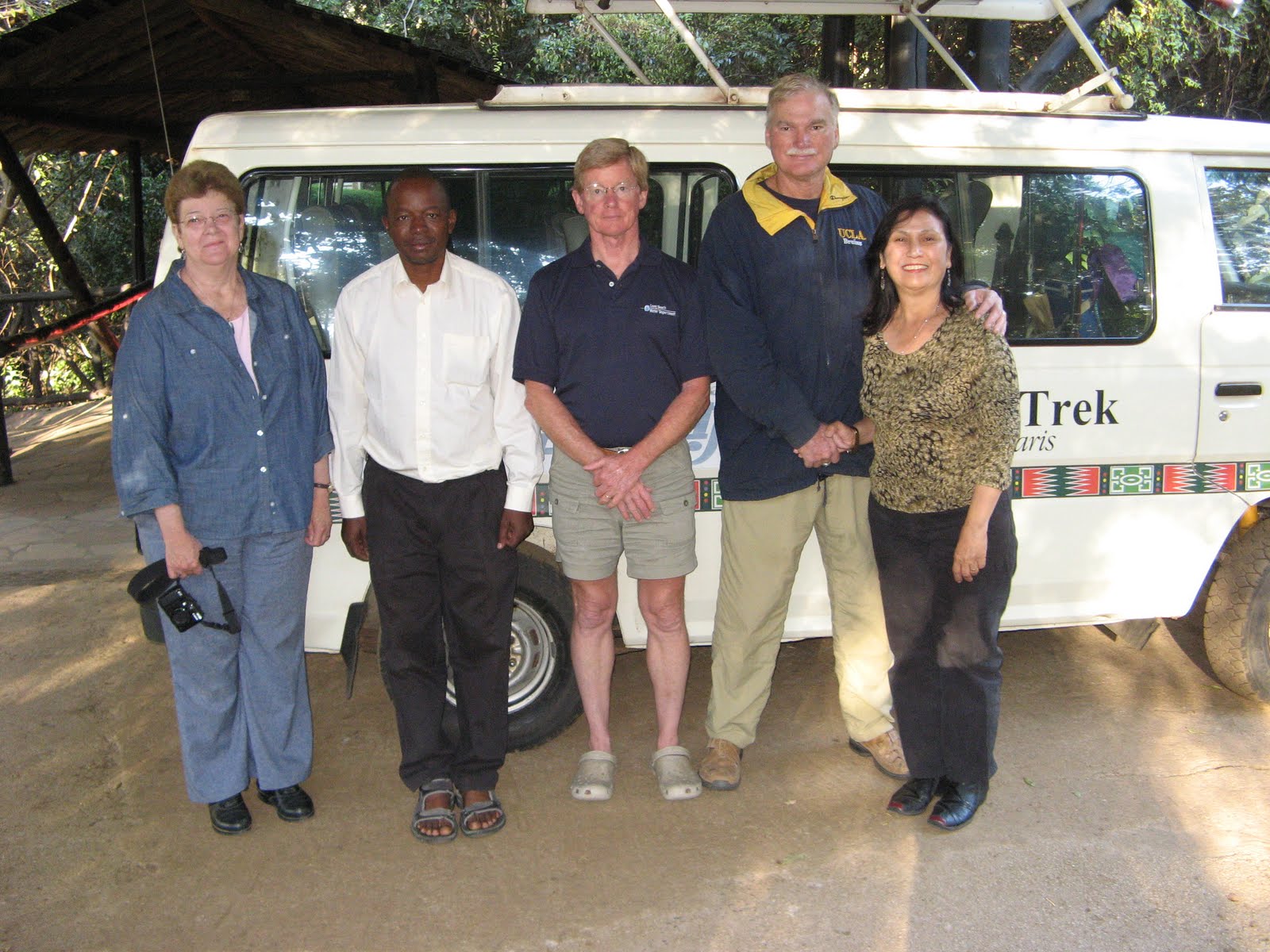
group photo, l-r: Elizabeth Allen, Ben Juma (our driver/guide), John Allen, Lauren Brainard, Cecilia Brainard

Cecilia Brainard feeding a rare Bongo

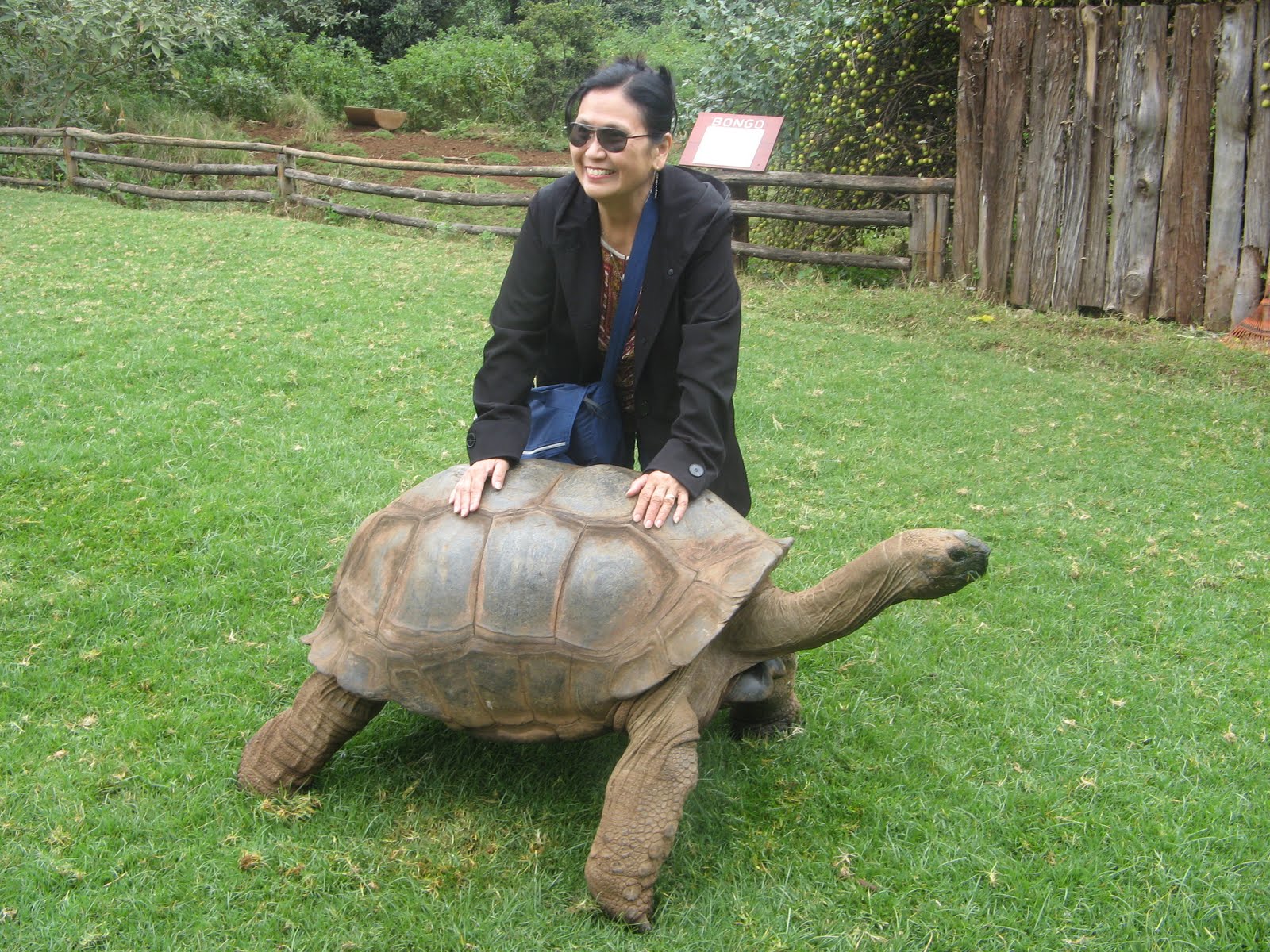
Cecilia Brainard on a tortoise

Lauren Brainard resting in the Maasai camp

Lauren Brainard with Maasai warriors

Wednesday, July 14, 2010

PHILIPPINE PICTURES - JUNE-JULY 2010

These pictures were taken during my recent visit to Cebu and Manila. From the top: Araceli Lorayes at the Parian Fiesta, Cebu City;

Next, L-R: Jun Dumdum, Cecilia Brainard, Erma Cuizon, and Jay Bautista at the Parian Fiesta, Cebu;
The next photos show the staff and friends of the Rizal Library of Cebu City, where I donated some of my books;
The group of five dining are L-R: Cecilia, Dr. Gyo Miyahara, Jimmy Sy, Gavin Bagares, and friend;
The group of four pose at Cafe Elysa's in the Parian: L-R: Lynley Ocampo, Gavin Bagares, Steve Aznar, and Cecilia;
The group of six show my dear STC friends dining at the French restaurant in Hotel Celeste, Makati: Starting from my left, clockwise: Mila Santillan, Guia, Araceli Lorayes, Darn Posa, and Lilu Gimenez;
The group of six in front of the fountain: Back, l-r: Cecilia, Jaime Picornell, Chona Bernad; front, l-r: Chinggay Utzurrum, Terry Manguerra, Inday Blanco
The group of three: Cecilia, Nadine Sarreal, Karina Bolasco


Saturday, June 26, 2010

Yap-Sandiego Museum with Parian Brats!


Cecilia Brainard with Araceli Lorayes and descendants of early residents of the Parian in Old Cebu.

Monday, November 16, 2009

Gold and Ancient Cebu, Philippines

Excerpt from the National Commission for Culture and the Arts - article by Prof. Felipe de Leon, Jr., Oct. 6, 2003:

"The answer to this is Pigafetta's account, at the time when the Magellan expedition sailed into Cebu harbor on April 7, 1521 when a large settlement of people hugging the shore greeted the Spanish. Sugbu was strung out four to five miles along the shore with a population estimated to number several thousands.

A narrow channel separated the settlement from the small flat island of Mactan, Cebu which was then ruled by a Rajah who was called Humabon--the title obviously appropriated from Malay. Pigafetta noted down the word Raja for King. He also mentioned two Siamese junks in Cebu with a cargo of gold and slaves.

Raja Humabon, Pigafetta further describes, "was seated on the ground on a mat of palms, with many people. He was quite naked, except for a cloth covering his private parts."

"Round his head was a very loose cloth, embroidered with silk. Round his neck was a very heavy rich chain, and in his ears were two gold rings hung with precious stones. He was a short man, and fat, and had his face painted with fire in diverse patterns. He ate on the ground from another palm mat, and then he was eating turtle eggs on two porcelain dishes, and he had four jars full of palm wine, which he drank with reed pipes."

It can also be mentioned that "barter rings" (large rings of pure gold) were used as currency--the size were as big as doughnuts, which traders carried and used in transacting business. Ancient Filipino gold, according to Ramon Villegas, was known as "Tumbaga" or red gold.

Jewelry making in Cebu, and other areas in the Philippines, could be one of the oldest in the world. The craftsmanship and artistry of early goldsmiths rival the finest that have come out of ancient jewelry centers like Bactria, India, and the Middle East, and Majapahit, Indonesia.

The unique characteristic of producing droplets of the granulated gold beads, each perfectly round, is a feat matching the early Etruscan's. Copper ring was found beside a copper tweezer-like object in Cebu similar to what was later found in Butuan, suggesting goldsmith or jewelry-making in Cebu. The copper tweezers were probably used to pick up minute gold granules or gold filigree.

In Naga, Cebu, 22 kilometers south, a burial site yielded an adze used for boat-making, native pottery shards, shell bracelets, beads and iron points.

From the artifacts unearthed in the three excavation sites in Cebu City, Dr. Rosa Tenazas and Carl Hutterer, a team of anthropologists from the University of San Carlos point to Cebu as a fishing village that evolved into a trading center, a manufacturing center that produced metal craft, jewelry, boats and cotton cloth.

It was also a trading center where nearby islanders could exchange forest products and food crops with finished goods or imported commodities. It was this concentration of technological skills and its strategic location that must have drawn people in ancient times to flock to old Sugbu..."


Gold found in Boljoon, Cebu, from SEAArch, April 2009:
" Gold jewelry was unearthed, again, at the archaeological dig located within the Patrocinio de Maria parish compound in Boljoon town, south of Cebu.

A 14 karat to 18 karat gold necklace measuring 1.1 meter long and weighing 34.1 grams was found in a burial ground along with the remains of a female.

They were unearthed by Capitol heritage consultant Jose Eleazar “Jobers” Bersales and a team from the University of San Carlos (USC) Department of Sociology and Anthropology.

The monetary value of the necklace, based on current exchange rate, is P22,650 but the historical significance and archaeological value, according to Bersales are “immeasurable.”"

Gold death masks - click here June 2009

The University of San Carlos, located in Cebu, is hosting an exhibit of rare finds, the Cebu Daily News reports.

Archaeologists from the institution's department of sociology and anthropology uncovered the pieces, which include a gold burial face mask.

It was found at Cebu's Plaza Independencia during a project that concluded last month, the news source noted.

Also on show is a gold necklace measuring over one metre in length and weighing more than 34 grams, which was uncovered at a burial site in Boljoon.

Tuesday, October 27, 2009

Cebu's 1730 Jesuit House - in October issue of Zee Quarterly.


CEBU’S 1730 JESUIT HOUSE
Cecilia Manguerra Brainard
First published in Zee Quarterly, October 2009 issue, copyright by Cecilia Brainard
The article has its own pictures and has been carefully edited; the pictures in this blog entry are mine; this blog entry may have some typos/mistakes.


I first learned about the eighteenth century Jesuit House in historic Cebu from Concepcion Briones’ book, Life in Old Parian. Intrigued by the history of the Jesuits, I also read The Jesuits in the Philippines 1581-1768 by H. de la Costa.
The Jesuits, also known as the Black Robes, came to the Manila in 1581. By 1595 they were in Cebu. The Jesuits went on to administer a free primary school teaching Spanish, Visayan, and Chinese students Christian doctrine, reading, writing, arthimetic, and deportment, grammar.

After 1605, the Jesuits appointed a Vice Provincial who acted as an overseer, a roving supervisor of missions, and who acted as a liaison among the mission stations and the provincial superior and civil government. The Vice Provincial had his own residence, and the 1730 Jesuit House, located between Zulueta and Binacayan, near Mabini, was such a house.

When the Jesuits were expelled from the Philippines in 1768, the 1730 Jesuit House ended up in the hands of others. In its 279 years of existence, the Jesuit House has been used for different purposes: it was the residence of the Vice Provincial of the Jesuits; it became the headquarters of the Japanese military during World War II; it was a private nightclub in the 1950s; it was used as a hospital by the Americans; and it was also the residence of the Alvarez family who sold the place to Nicanor Sy in the mid-1960s.

Sy converted the premises into the Ho Tong warehouse and for some forty years the Jesuit House took on the guise of a bodega. Sometime after the Sy family acquired the property, they placed an iron gate to protect the antique wood gate and three medallions above the gate with the emblems of Jesus, Mary, and Joseph; and so thankfully, the eighteenth buildings, gate, and coral wall are still there.

Three years ago, I dared enter the Ho Tong Hardware bodega and asked a woman if I could visit the Jesuit House. She graciously asked some workers to lead me to the middle of the enclosed compound where two adjoining buildings stood. I had to be careful not to trip over metal cables and piles of stuff stockpiled all around the buildings as well as within the buildings. The first building I encountered was smaller; it had stairs that led to a dark rectangular space, like a huge hallway, cluttered with more hardware stuff, but I could see huge antique foundation posts — huge tree trunks painted red. From this first structure I crossed a covered bridge to get to a larger building — still dark and cluttered but this building had a sign above a doorway that said, “1730.” In the darkness and clutter, and I realized that this was the sign that made this building the oldest recorded building in the entire Philippines. I was led through a huge room, like a sala, to the other end of this bigger building with wide wooden stairs that led to the ground floor. Briones had written that the original stairs had been removed by the Alvarez family and brought to Bohol. These then were the replacement stairs. But it was dark and difficult to catch details of the stairs and of the buildings. I would have to wait three years before I would see the Jesuit House again, this time with more light and without the warehouse clutter, and in fact this time the Jesuit House would be a museum.

Jimmy Sy, son of Nicanor Sy now the head of the Sy family decided sometime in June 2009 to turn the Jesuit House into a museum. How a businessman like Jimmy, who for most of his life had lived with the Jesuit House buried underneath the Ho Tong bodega, got the inspiration to turn the place into a museum is a story in itself. Jimmy attended Sacred Heart School and the Ateneo de Manila University – schools run by Jesuits. While he was in the Ateneo library, he pulled out a 1936 pictorial book by Father Repetti, a seismologist whose hobby was taking pictures of old religious structures in the Philippines. When Jimmy flipped the pages, he saw an image that looked familiar – it was the Jesuit House in the Ho Tong Hardware bodega. Jimmy made a copy of the picture and showed it to his father. His father filed it away and for the moment the story ended there, but in fact Jimmy kept that information in his head, information that very well could have been the seed of his decision to develop the Ho Tong bodega into the Jesuit House Museum. Looking forward to this retirement, Jimmy welcomed the idea of becoming the steward of this oldest documented building in the entire Philippines. He felt the urge to share the place with others.

I revisited the Jesuit House Museum in August 2009, and since it was only a two-three month project, the warehouse clutter was still around. Jimmy explained that he is still building a bodega and it will take time to develop the Jesuit House Museum. However, the two building structures have been cleared and are being spruced up. Jimmy has decorated some areas with antique furniture and oil lamps so that visitors can have an idea of what the Jesuit House looked almost three hundred years ago. I could now see that the first structure was a large covered azotea. A covered bridge connected this to the main building, which had been the house of the Jesuit Vice Provincial in the sixteenth century. Both structures had two stories, and I only visited the upper floor. The main structure, that is the actual residence of the Vice Provincial, has a large central room, with rooms surrounding this space. These rooms have not been developed and are closed to the public.

Jimmy has also decorated this large space with furniture, an altar, lamps. He has likewise fixed up the original entrance to the building from Binacayan road. Plants, antique angel wood carvings, antique oil lamps, and wrought iron grills on windows give one a good idea of how the place looked like in the past.

According to Jimmy and his conservation architect Anthony Abelgas research must first be done. They are working with Jesuit Father Rene Javellana who is providing them with the historical aspect. In fact, Father Javellana has already written about the Jesuit House and Jimmy generously provided me with a copy of Javellana’s 1987 article, “The Jesuit House of 1730” published in Philippine Studies.

Jimmy Sy sounds like a religious convert, brimming with fervor and enthusiasm, when he talks about the Jesuit House. In the bigger building, he explains that the first original door had faced Binacayan Street, the tiny winding street close to Colon Street. Once upon a time there had been a gate and stairs on the Binacayan side. Jimmy excitedly pointed at the wood planks on the floor, pointing out where another kind of wood had patched up stud-holes. He showed me a square space to the right of the main stairs where a painting must have hung. He pointed out ancient carved wood beams through ceiling holes and showed off windows in the first floor area underneath the azotea, wondering why windows should be in a now-enclosed space. He pointed out a cemented area near the stairs that he says was a burial spot.

And the best part was when this business man started talking about the spirits in the place. Apparently Jimmy had invited a Jesuit classmate who is psychic to the place. The man said he felt the presence of so many spirits in the place. A ritual was done to ask permission from the spirits to do work on the place. There are still bits and pieces of red offerings on top of the burial spot near the stairs.
Jimmy also talked about a local oral legend about a sacristan who murdered seven Jesuits. Feeling remorseful, he carved a Cross on the coral stone wall outside. Jimmy searched for the Cross and found it, on the Binacayan side, near an area of the wall that looked like it had been enclosed. There had once been a gateway there, but it had been sealed. A new gateway was transferred to where the current opening is.

News that the Jesuit House is now finally a museum is a source of great delight to historians, heritage-lovers, tourists, and media. The new Jesuit House Museum already has a steady stream of visitors: guests from Manila, America, Europe, Australia, Korea, Cebuanos themselves (some of whom had never even heard of the Jesuit House), and many more. The 1730 Jesuit House always had visitors, even when it was buried underneath the Ho Tong Hardware, but now, the public is clearly anxious to see the sixteenth century Jesuit House properly restored and offered for public view. It is after all one of the treasures of the Philippines.
###


Side Bar: The Jesuits in Cebu

It was the Jesuit superior, Antonio SedeƱo himself who founded a house in Cebu on what is today M. J. Cuenco Avenue. SedeƱo was a veteran missionary who like St. Ignatius had been in the military when he was young. He had gone to England as a page of the Duke of Feria when Mary Tudor was queen. On March 13, 1568, he sailed for Florida with a group of Jesuits headed by Juan Bautista de Segura. In 1572, SedeƱo was the first Jesuit sent to Mexico, and it was while he was acting Rector of the college there that he was informed he was chosen as superior of the first Philippine Mission. Traveling with three companions, he sailed from Acapulco on the galleon San Martin on March 29 and arrived Manila in July. There SedeƱo and his company learned Tagalog. After much hemming and hawing as to whether the Manila Jesuits would head the entire Far East or the Philippines, and as to what type of work they would actually do there, the King of Spain sent an order for the Jesuits to establish a Jesuit College where they would teach not only Spanish boys but also mestizos and sons of the ruling class.

Cebu, the site of the first Spanish settlement was not forgotten, and by June 30, 1595 SedeƱo himself headed a small group composed of Alonso de Humanes, Mateo Sanchez, and a lay brother to sail to Cebu for the purpose of founding a Jesuit house there. The people received them warmly and donated 500 pesos, which the Jesuits used to buy a house near the beach. The city corporation donated adjacent land for a yard and garden. The trip to Cebu had been on an uncovered sailboat, exposing the Jesuit passengers to the stormy weather for three weeks. SedeƱo became ill and passed away in Cebu on September 2, 1595. They buried him in the domestic chapel on the ground floor of their first house, but three years later, Father Pedro Chirino transferred SedeƱo’s remains to the new Jesuit church.
 ~~~

Read also
Life in Parian Now
Cebu's 1730 Jesuit House 
The Secret Hall of Angels 
A Story of Hope
Finding Jose Rizal in Cebu
Lola Remedios and her Sayas
Lunch with F. Sionil Jose
~~
tags: Cebu, Philippines, history, Jesuits, 1730 Jesuit House, Sugbo, Spanish Colonial, religious

Tuesday, September 1, 2009

More Pictures Taken in the Philippines, August 2009

Gossiping in Makati, l-r: Marily Orosa, Cecilia Brainard, Maribel Paraz, Mila Santillan

Taken in Cebu at a dinner hosted by the Francos: l-r seated: Lucy Garcia, Terry Manguerra,Cecilia Brainard; l-r standing: Chinggay Utzurrum, guest, Diana Ledesma, Helen Misa

Taken in Edith Alcantara's condominium in the Fort, a gathering of some Maryknollers: l-r: Precy Florentino, Marily Orosa, Meldee Perez, Edith Alcantar, Cecilia Brainard, Milla Santillan, Maribel Paraz, Lyn Enriquez

l-r: Edith Alcantara, Lynn Enriquez, Marily Orosa, Cecilia Brainard, Maribel Paraz

Dinner in a Greek Restaurant in Greenbelt, Makati: l-r: Cecilia Brainard, Araceli Lorayes, Guia Lim, Tess Tan

With STC classmates: l-r: Joy Atienza, Darn Posa, Lilu Gimenez, Mila Santillan, Cecilia Brainard

In Tagaytay: l-r: Darn Posa, Mila Santillan, Cecilia Brainard, Joy Atienza

Lunch at Tootsies in Tagaytay, l-r: Mila Santillan, Cecilia Brainard, Darn Posa, Joy Atienza

Taken in Borussia's Northern Cebu l-r: Inday Blanco, Terry Manguerra holding Aya, Chona Bernad, Chuchi Mannchen, Cecilia Brainard