Showing posts with label World War II. Show all posts

Saturday, June 8, 2019

Philippine Edition of Cecilia Brainard's War Novel at #CebuLitFest


PHILIPPINE EDITION OF CECILIA BRAINARD’S WAR NOVEL AT THE #CEBULITFEST


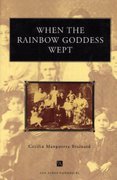
The Philippine edition of Cecilia Manguerra Brainard’s novel, When the Rainbow Goddess Wept, will be released by the University of Santo Tomas Publishing House. The author, Cecilia Manguerra Brainard, will be at the Cebu Literary Festival (CebuLitFest) on June 29 and 30, 2019, Ayala Center, Cebu, Philippines, to celebrate this publication.


The internationally acclaimed novel, When the Rainbow Goddess, first appeared under the title of Song of Yvonne in 1991. New York publisher Dutton/Penguin published it in 1994 under the title of When the Rainbow Goddess Wept. It was subsequently published by the University of Michigan Press (Ann Arbor Imprint). The novel, which received favorable reviews, was translated into Turkish by the Bilge Kultur Sanat in 2001. In print for almost thirty years, the novel remains the subject of numerous academic studies and continues to be used in English, Literature, History, even Political Science classrooms.

Thursday, May 16, 2019

WORLD WAR II VETERAN'S LOVE STORY WITH FILIPINA


(I'm reposting some earlier blog entries because Google had changes making it difficult to access these blogs. - Cecilia)


This account will come in several blog entries. As I continue to gather information, I'll be posting it here. This account is true, but I will not be using real names. I am sharing this story because it is a unique one.

Around 7 years ago, I heard from a World War II American veteran. It was December when he first sent an email to my business http://www.palhbooks.com, expressing interest in an antique necklace. It was a gift for a Filipina who had been his fiancee back in 1947-49. They had been in love and were supposed to get married, but something happened and they broke up. They both went on to marry other people, and have families. But somehow, via internet, John (not his true name) learned that Ligaya (not her true name either) was now living in the U.S. Her family had liked him as a young man, and her family members in the U.S. reconnected with him. In fact when John learned that Ligaya's relative was hospitalized, he went to see the person - and saw once again Ligaya.

Now in their 70s, they found they still cared for each other. But since they had their own families, they did not want to hurt any one and did nothing about their feelings, beyond a few friendly phone calls. I post here his recent emails to me:

~~~~~~~
My name is John _____and in December 2000 I bought a necklace
from you for a lady that I was engaged to in 1947-1949 in
Paranaque. The information you gave me was that you
found it in Vigan, Northern Philippines. The lady's name
was Ligaya ______. It was a
beautiful necklace and she loved it. I don't know if you
asked or I just volunteered our story but to quote your
response, you said "I love your love story". I do not
know how much of our story I told you but I often think
I would like to write the story but am not a skilled writer.
I just feel sad that when we are both gone, no one will
remember our story. I guess her sister will but she is
also getting old.

She (and I) are now 79 years of age. She had a birthday
September __ and mine was December __.

She is not in the best of health (on medicines and oxygen).
but well enough that we converse by phone several
times a month.
~~~~~~~~~
I located Ligaya and I
began communicating again in 1999 and wrote a "poem"
(I think I later mailed them to her
but am not sure). I know they sadden me when I
read them but do not know if they are good, corny
terrible, morbid or what. As for our story being
forgotten; I do not think I care if people remember
it; I just do not think (had to stop and dry my eyes!)
something as sad and beautiful as our (or anyone
else's) story should just vanish when we "pass on"
although I imagine there are thousands that have.

You are welcome to put us on your blog and I trust
you not to put anything that would cause Ligaya
any sadness if someone that knew her figured out
who it was on your blog. I do not think you would
remember it as I told it 7 years ago so let me know
if you need me to email kind of an outline or something
of the story. Every time I think or write about it
the tears come even after all these years. Naturally
some her relatives know all about
it but Ligaya worries about her grandchildren or
my children or Grandchildren knowing that we
communicate. Also we are both married and, even
though I do not think there is anything wrong with
us keeping in touch, since the feeling involved are
so deep, I guess there is a slight feeling of guilt
even though there is actually no wrong-doing.

I had better end this email before it becomes a
book!

Here is one of the (cannot think of a descriptive word)
that I had. I sometimes think that if I was rich and no
longer married I would, as a kind of memorial, love
to have a beautiful log home with acres or a "small"
sturdy castle with about an acre of the yard as a
formal garden with marble "statues" modeled from
the few pictures I have had since the late 1940s
of Ligaya and I in the formal garden. Not much of
a description but hope you get the picture.

Sorry I ramble on and on but there is a lot bottled
up inside.

Thanks for your thoughtfulness

~~~~~~

Tags: #lovestory #WorldWarII #WWII #WorldWarTwo #veteran

Monday, December 7, 2015

World War II Fiction - Excerpt, Cecilia Brainard's When the Rainbow Goddess Wept


Ten hours after the bombing of Pearl Harbor on December 7, 1941, the Japanese attacked Manila.  

I'm posting the first chapter of my novel, When the Rainbow Goddess Wept, which is about the coming of age of a young girl in the Philippines during World War II. The World War II pictures are courtesy of Wikipedia.


 Rumblings of War
Excerpt from Cecilia Brainard's When the Rainbow Goddess Wept:


Mother Ignacia, fourth-grade teacher at Santa Teresa's School, made us pray for peace, and she kept our souls clean by taking us to weekly confession and communion.
“If war should catch you with mortal sins in your souls, you will end up condemned, with chains, and you will roam the earth for all eternity,” she warned.
It was a scary thought: I, Yvonne Macaraig, entangled with heavy chains, barred from heaven, barred even from purgatory, destined only to drag myself and the chains, and scare people away. There was a condemned soul who frightened the people in the house down the street from where we lived. He had borrowed fifty pesos and never paid it back, that's why his soul was not at peace.
To prepare us for the feast of the Immaculate Conception, Mother Ignacia talked about the Virgin Mary. “She did not have a speck of venial sin,” Mother Ignacia said. “She was spotless, perfect. She did not commit concupiscence. Does anyone here know the meaning of the word concupiscence?

Wednesday, September 9, 2015

Sexual Violence Against Women During War


When I visited Berlin last year I found the city gray and dreary, with an edge, as if the ghosts of World War II still hovered about.

I experienced this edgy feeling once again when I watched A Woman in Berlin, a 2009  movie directed by Max Farberbock. Based on a diary by a woman journalist, the movie documents the last days of World War II when Berlin fell to the Soviet Army. The movie is well-done but dark and tense. Several times I threatened to stop watching it because of its relentless lack of cheer, but the history was fascinating.

Monday, May 18, 2015

Travel France: Normandy Beaches and World War II


The biggest attraction in Normandy, France are the beaches of Normandy where the Allied Forces of World War II landed to liberate the French and launch an attack against Nazi Germany.

Thursday, December 17, 2009

IN MEMORIAM KIRKUS REVIEWS


Kirkus Reviews will close at the end of the year. From LA Times, "Kirkus was founded in 1933 and was published biweekly. It relied on a small staff and an army of freelancers who reviewed about 5,000 books a year three months before their publication dates. Authors looked to Kirkus reviews to test how their books would be received; libraries and independent bookstores turned to them to decide what to buy."

I didn't realize until now how well-respected the book reviews by Kirkus have been, since Kirkus did not hesitate giving bad reviews, "When I was a book publicist, the worst part of my job was having to read a Kirkus review over the phone to an author. 2 cigs before, 2 after,” recalled Laura Zigman, an author and former book publicist for Alfred A. Knopf, in a Twitter post.

To express my sadness at the closing of Kirkus, I post here a review of When the Rainbow Goddess Wept, published in Kirkus Reviews, July 1, 1994.

When the Rainbow Goddess Wept by Cecilia Manguerra Brainard (first published by Dutton, current publisher is University of Michigan Press)

"A fast-paced,sensitively written first novel about the psychological damage war wreaks, seen through the eyes of an intelligent resilient young girl.

During WWII, as Japanese forces invade her native city of Ubec in the Philippines, nine-year-old Yvonne Macaraig escapes with her father and mother into the mountains, where they stay in villages whose inhabitants are fighting the Japanese. Yvonne's father, an engineer, joins a guerrilla regiment. In wartime, Yvonne learns, people change. Her mother bears a stillborn baby in the jungle while Japanese soldiers lurk nearby, prevents an enemy soldier from stealing their chickens, and asks Yvonne's father to kill the prisoner of war he takes. Her father refuses, but confesses after he shoots the man for trying to escape that he enjoyed killing him, as revenge for the dead baby. When Yvonne's father disappears on a mission, the girl develops the "practicality" war requires. "I wondered what we would do if Papa were really dead. Would the guerrilleros cast us aside...?" She refuses to give up hope and "learns how to will (her) father to live...centering (her) energy on keeping Papa alive." The author, herself born in the Philippines, skillfully interweaves realistic events with myths of women fighters and goddesses, as well as fantastic dreams. She relates dramatic events in an understated way, such as the family's ride up into the mountains on horseback, with a spare horse carrying dynamite, and she enhances her understanding of Yvonne's pre-war world through the use of ironic details: In the Ubec cinema "the roof leaked...From the loge, one could see the movie reflected upside down on the wet floor."

Brainard's appealing characters are larger-than-life people who change before our eyes, yet remain convincing." -

Thank's again Kirkus for this review and I'm sorry you won't be around! Kirkus must have judged the novel correctly because When the Rainbow Goddess is still in print 15 years later.

Monday, February 16, 2009

Battling Bastards of Bataan, by James Litton

I got this from Edmundo Litton:

Dear Cecilia,

My dad wrote about his experiences during the Battle of Manila. See below for the link. It may be of interest to you.


http://battlingbastardsbataan.com/james.htm

Thursday, January 1, 2009

Leonard Casper's Possibilities of Humaneness in an Age of Slaughter (critique of When the Rainbow Goddess Wept)


Song of Yvonne (or When the Rainbow Goddess Wept)
Possibilities of Humaneness in an Age of Slaughter

By Leonard Casper

(From Sunsurfers Seen From Afar Critical Essays 1991-1996, by Leonard Casper, Anvil 1996)

Also published in Philippine Studies
Recommended Citation Casper, Leonard (2012) "Song of Yvonne: Possibilities of Humanities in An Age of Slaughter," Philippine Studies: Historical and Ethnographic Viewpoints: Vol. 41: No. 2, Philippine Studies vol. 41, no. 2 (1993): 251–254 
Article 8. DOI: https://doi.org/10.13185/2244-1638.4830 Available at: https://archium.ateneo.edu/phstudies/vol41/iss2/8  

With each passing generation, Filipinos are more inclined to let slip from their collective memories the horrendous events of the Japanese Occupation fifty years ago. One result is that unwittingly, they become accomplices to the attempt of Japanese revisionists, in recent “historical” accounts, to deny that their war ministry ever dreamed of aggressive empire building and to assert that they were forced by American treachery to invade the Philippines. In addition, during nearly half of the “postwar period” Filipinos had had reason to examine violence done by themselves against their hopes of national fulfillment; and therefore to be grateful for gifts and loans from the financial giant which Japan has become since determining to leave war and the production of war materials to other countries. Who then would feel guilty of having no knowledge whatsoever of A.V. H. Hartendorp’s The Japanese Occupation of the Philippines, I and II (1967), or Teodoro Agoncillo’s The Fateful Years (also in two volumes, 1965), or Hignio de Uriarte’s A Basque Among the Guerrillas of Negros (1962), or Jesus A. Villamor’s They Never Surrendered (1982), or the many books about Bataan and Corregidor, the Death March, guerrilla action in Mindanao, liberation of survivors in Sto. Tomas and Los Baños, recorded by American writers? Only in the early 1990s did the United States begin to honor its battlefield promise of American citizenship to Filipino veterans, should they choose it. Nationalists were properly outraged by the protracted delay; but how many Filipinos themselves cared to know details of those war years, not out of perpetual thoughts of revenge or reparation, but so that lessons learned would not be lost; and so that the heroic or powerless dead would not be “killed again” by forgetfulness?

Faded from memory too is the fiction by those who personally endured the hardships, the soul-testing, of the early forties: such as J.C. Laya’s This Barangay (1950); Stevan Javellana’s Without Seeing the Dawn (1947); Edilberto tiempo’s Watch in the Night (1953), More than Conquerors (1964), and The Standard-Bearer (1984). More memorable perhaps are Wilfrido D. Nolledo’s But for the Lovers (1970; 1994) and F. Sionil Jose’s Ermita (1985) whose events flow largely from the rape of a Filipina by a Japanese soldier; but their seriousness may be lost on readers attracted only to their pungent eroticism.

Unlike these authors, Cecilia Manguerra Brainard was born, in Cebu, after the war. However her father was a guerrilla engineer, just as Papa is in Song of Yvonne; and both real and fictional fathers brought their families temporarily to Mindanao, to survive under the renowned Col. Wendell Fertig. Brainard has listened to “endless” anecdotes about the war, until she began to imagine herself the child Yvonne narrating this composite story. In her preface she laments the fact that “Unlike Filipinos, the Japanese are very good at immortalizing injustices to them”; they remember Nagasaki and Hiroshima, while Filipinos forget their own numerous dead, their own cultural as well as material wounds. Yet her principal motive in memorializing the days of wrath and wounds, Brainard says, is not to authenticate that victimization so much as thereby to dramatize the “triumph of the Filipino spirit over foreign oppression.”

She does not flinch from describing atrocities: the rape and mutilation of a nurse; the beheading of Doc Mendez’s family; the torture of a former governor, after his wife is shot and his sons bayoneted because he refuses to join the puppet government; the massacre of entire towns; the loss of limbs from booby traps. Other events equally terrible but not caused by the enemy are presented: Nida’s pregnancy, which results when she distracts a Japanese guard from imminent discovery of contraband in Mama’s possession; Bitong’s accidental severing of his toe with a bolo; Doc’s nearly fatal penitential self-crucifixion; the betrayal of guerrilla leaders by Martin Lewis, an American amok. Each episode is as carefully detailed as if the narrative were autobiographical. Yet Brainard prevents the novel from descending into either melodrama or polemic by maintaining young Yvonne as her singular narrator through, a gilr not yet in her teens. “I lived that terrible War through Yvonne,” she writes in her preface, meaning that in a special way she intended a story of innocence/naivete gradually tested and tempered but never wholly torn to shreds by a violence for which the close, simple family life in Ubec (Brainard’s code word for Cebu) could hardly prepare Yvonne. Even as the girl’s experience darkens and she realized that only a thin line separates night and day, death and life, the perspective of a growing child is faithfully kept. Adults are making war. Her share of its pain is naturally scaled down – except as she is constantly aware of and responding to the greater trials of her family or their friends.

It is this controlled resonance which raises Song of Yvonne even beyond its evident importance as a documentary of Visayan resistance to the Japanese invasion; and which adds an unexpected dimension to this story of ritual passage into premature adulthood. By the time of liberation Yvonne finds herself bleeding, and her mother explains to her that this is the beginning of her period. What is symbolized but not stated is the fact that blood, so recklessly shed in ambush and torture chamber, also signifies life and the promise of continuity. Her menstruation, for example, parallels Nida’s ultimate decision not to abort the child which rape has placed inside her; Biton’s determination to go on despite loss of a crucial big toe; crucified Doc Mendez’ near-death experience and “resurrection”; Engineer Macaraig’s vision of Ubec rebuilt, based on his understanding of even pre-history: “I saw people living in Ubec centuries before me and centuries after me – an endless parade of humanity through time. And I knew that invaders would not really destroy Ubec, could never destroy its people.” He is including self-interested Americans like Lewis among those who threaten the Filipino dream not just of nationalism but of peaceful, communal life. The question of excessive American interference (Lolo Peping and Gil Alvarez’ grandparents have all witnessed the atrocities and needless deaths of famine which occurred during the Philippine-American War) is treated forthrightly, though with forgiveness for those who later fought alongside the Filipino scouts and guerrillas.

What is acknowledged is that the resoluteness of Filipinos under fire is final proof of their loyalty not to American sovereignty but to democratic ideals of self-determination consonant with a viable Filipino nation. The Macaraigs and Alvarezes take no lasting in their victories; war weariness, both in conscience as well as in body, sets in early. Their sole wish is merely to return safely to one another, once more. Symbolic of the price of violence eve in self-defense is the loss of Doc Mendez’ strange ability to judge the health of his patients on the basis of colorful auras surrounding them, as he engages more and more in military action.
Though Yvonne herself understands that the prewar world can never be wholly regained (the lost eden theme common to much of Philippine literature), in the midst of change she senses the need to conserve/restore constancy drawn from the native culture’s narratives of faith. At first it is only curiosity which makes her listen to Laydan, the family cook, tell of her youth as a disciple of Inuk, singer of epic tales. Laydan herself once briefly became a singer of legendary events, until excessive pride stole her voice away because she failed to follow Inuk’s advice, to become the epic; to surrender self-image to folk feeling and need. But having been humbled by war, Laydan’s voice is restored by the serenity of the land. Meanwhile her stories of many-breasted goddess Meybuyan, mother to all those in need, and of woman warrior Bongkatolan who helped save the Ilianon tribe from rapacious Maguindanaos, teach Yvonne the means of comforting those who suffer and sorrow. When Laydan dies (apparently summoned by a companionate angel of death across a country river), it is Yvonne who chants the tale of Tuwaang and the Maiden of the Buhong Sky: the rainbow brings promise of sunnier days, after a giant creates havoc; the slain are raised to life through the application of betel juice. (In the 1992 U.S. edition the novel’s title became When the Rainbow Goddess Wept.)

Other mythic remembrances become similar counterforces to the horrors of war. Nida’s unwanted pregnancy moves Yvonne to sing of how Tuwaang rescued the Maiden of Monawon from Deathless Man by discovering his soul concealed in a flute and smashing it. When Yvonne finds the corpse of a Japanese airman and contemplates the possibility that he too might have a child at home, she sings of Lam-ang whose bones were reassembled after he was swallowed by a monster fish and his mother’s apron restored him to life. Later Yvonne distracts Cris, the distraught survivor of the Alvarez family, with the tale of Banna, turned into a python that restored to full humanity and to marriage by a stranger’s betel juice. Finally, at the time of liberation and the family’s return to Ubec City, Yvonne rediscovers Inuk’s vet originally given her on Laydan’s deathbed. Immediately the girl thinks of how the Ilianons, ravaged and dispirited by Maguindanao warriors, were resurrected and, by ship, guided by Agyu to a place of paradise, Nalandagan…

Like Laydan, Yvonne has become the spine and flesh of her people. They are her song. She is their future; the past recreated, recovered; her song is the spirit of healing, the resilience of trial/national memory that will not let essence die.

By splicing together folktale, family anecdotes, and the realities of slaughter mitigated by the possibility of humaneness, Brainard has herself become Yvonne; has become singer of the songstress who commemorates a people at their finest, in times at their worst; and Brainard has managed that singularity-rising -from-complexity by finally finding the proper form for images from her earlier work. Stories of Ubec previously occurred in Woman with Horns and Other Stories (1987) where however they were mixed indiscriminately with other sketches and anecdotes and where they were in careful disorder themselves. Several, for example, could have been arranged chronologically but were not. “1521” offers as Lapu-Lapu’s reason for killing Magellan revenge for the death of his infant son at Spanish hands. “Alba” is more acquiescent to the mixed heritage brought to the islands by Europeans when, during the English occupation of Manila in 1763, Doña Saturnina gives birth to a fair-skinned son who nevertheless is tacitly accepted by her husband. And in “The Black Man in the Forest” old guerrilla general Gregorio, seeking Macario’s troops for a linkup in 1901, kills an Afro-American soldier but, despite his own men being near starvation, does not allow the body to be cannibalized. The title story recounts how, in 1903, an American Public Health director/widower finds a renewal of interest in life with seductive widow Agustina whose flirtation, though unconventional, is considered less than scandalous. The postwar period is marked, in “Miracle of Santo Niño Church,” by Tecla’s dreams of the Japanese who bayoneted her family; the 1960s, in “The Blue-Green Chiffon Dress,” when Gemma has a brief encounter with a GI headed back to Viet Nam; and the updating, in “The Discovery,” of a Filipina’s torn loyalties between her American husband and a former Filipino lover who however, like her homeland itself, seems corrupted and ravaged by time. The remaining stories are less amenable to chronological sequencing, yet do reach toward one another through the recurrence of identical characters, as if in search of a novel form.

Brainard’s occasional control over her short story, combining quietude with certitude, perhaps is best exemplified by “Friday Evening at the Seashore,” in which a young priest tries to console a lovelorn girl without realizing that he is the object of her love and despair. In Song of Yvonne the author joins this reliance on restraint and the focus on Ubec to a growing girl’s plainsong, further dimensioned by a chorus of folk echoes finally heard as one irrevocable voice, one song of diversified unity that sings itself.
~end~

Read also

tags: Philippine literature, Filipino, author, writer, novel, fiction, World War II, Philippines, Cebu, Cecilia Manguerra Brainard, Cecilia Brainard

Monday, December 22, 2008

Conference Paper re When the Rainbow Goddess Wept

I received the following Google Alert:

An abstract of a conference paper citing When the Rainbow Goddess Wept:
Maxwell, T. "“Let the Dead Bury the Dead”: Remembering the Unspeakable during the American and Japanese Occupations" Paper presented at the annual meeting of the American Studies Association . 2008-12-11 from http://www.allacademic.com/meta/p113801_index.html

Publication Type: Conference Paper/Unpublished Manuscript
Abstract: Why do certain traumatic memories become part of public memory while others are forgotten? In protesting a particularly vicious campaign in the town of Calendaria during the Philippine-American War in 1901, four Filipinas testified of rape and molestation by American soldiers. In total, seventy women of Calendaria complained of abuses, yet the commanding officer Captain Boughton discounted their testimonies. Though hardly isolated incidences, these war atrocities were virtually erased from Filipino and American public memory. The women of Calendaria decided not to testify, claiming that it was better “to let the dead bury the dead.” My project explores what it would mean to honor these women’s voices. Recovering these testimonies from official archives such as the military records of the Philippine-American War at the National Archive in Washington, D.C., this paper examines how the elision of sexual trauma and rape in the history of the Philippine-American War signals imperial trauma. Although feminist scholars such as Anne McClintock point out the connection between sexual trauma and war, such violence has not been explicitly investigated in the United States’ military conquest and the Philippine-American War specifically. This study debunks the image of the good old American soldier by showing how acts of American conquest and empire were tied to acts of violence against women.

In contrast to the elision of American war atrocities against women during the Philippine-American War, the sexual atrocities committed against Filipinas during World War II by Japanese soldiers elicited public outrage. Called “comfort women,” these women were held as slaves to be raped and tortured. Recently, these lolas or grandmothers have spoken out and demanded reparations from the Japanese government. Why has this trauma become part of public discourse while the raping of Filipina women by U.S. soldiers remains nearly invisible? This paper analyzes both layers of trauma, how the prevalence of Japanese war atrocities in collective memory serves as a touchstone for earlier war crimes during the Philippine-American War. Examining the story of the Japanese war atrocities in Cecilia Brainard’s novel When the Rainbow Goddess Wept, I argue that the war crimes against women during the Philippine-American War haunt the narrative of World War II atrocities, and that the figure of the Japanese soldier stands in for the American soldier. My reading shows how imperial trauma shapes collective and cultural memory through historical layering. By juxtaposing women’s testimonies of Philippine-American war atrocities next to Brainard’s novel, my project interrogates the construction of the archive while simultaneously contesting imperial trauma.

Monday, March 31, 2008

READER'S COMMENTS RE WHEN THE RAINBOW GODDESS WEPT


-----Original Message-----
From: Bob Kemerait
To: CBrainard@aol.com
Sent: Sat, 29 Mar 2008 3:21 pm
Subject: Rainbow Goddess

Dear Ms. Brainard:

I have recently purchased and read your novel "When the Rainbow Goddess Wept".
I found this to be a very satisfying and thought-provoking book- one that fed my
passion for the Philippines and the history of the Philippines. I most enjoyed
the integration of traditional stories and likely your family's memories of the
war years into the story.

The only distractions I had were on what I perceive (from my studies of the
period) to be occasional historical inaccuracies. For example, I do not know of
any instance where Japanese soldiers mutilated an American nurse; in fact, for
whatever reason,American nurses captured by the Japanese in the Philippines were
not violated physically (as many Filipinas and Asian women in other countries
were). Secondly, I do not believe that American forces bombed Filipino towns or
villages in their retreat during 1942. Quite the contrary, Manila was left as
an "open city" by Americans to avoid unnecessary loss of civilian life. Upon
return to Manila in 1944, the Japanese soldiers remaining in Manila would not
vacate, and thus a blood bath ensued where approximately 100,000 civilians were
killed in the cross-fire that destroyed the city. Also- I do not know of the
American guerilla who caused such misery late in the story, but of course such
is certainly possible and such behavior has tragically, been vented upon the Filipinos by other Americans throughout our 100-year relationship.

Again, thanks for such a wonderful work to share with my Fil-Am children and
Pinay bride. I believe I will purchase your novel "Magdalena" next.

Sincerely,
Bob Kemerait

~~~~
Cecilia's Reply:
Dear Bob,
Thank you for your email.

Re your comments:
1) the American nurse who was mutilated - I can no longer find my source, but this is historically accurate;
2) the Americans bombing - yes, this happened - Manila and Cebu were bombed - I think part of the reasoning was so as not leave behind anything the enemy could use - airports, roads, buildings, resources, etc. and thus thwart the enemy.

I have posted some sites below about World War II, but there are more.

The American character is fictional.

http://www.geocities.com/rolborr/lumapak.html

http://www.philpost.com/1100pages/ww2stories1100.html

http://en.wikipedia.org/wiki/Nanking_Massacre

http://news.bbc.co.uk/1/hi/world/223038.stm

http://www.ww2pacific.com/atrocity.html
~~~
When the Rainbow Goddess Wept, University of Michigan's Ann Arbor Press - here's a little tidbit about the cover - it shows the turn-of-the-century photo of the Cuenco family, which you may have seen in my other blog entries.