Tuesday, November 16, 2010

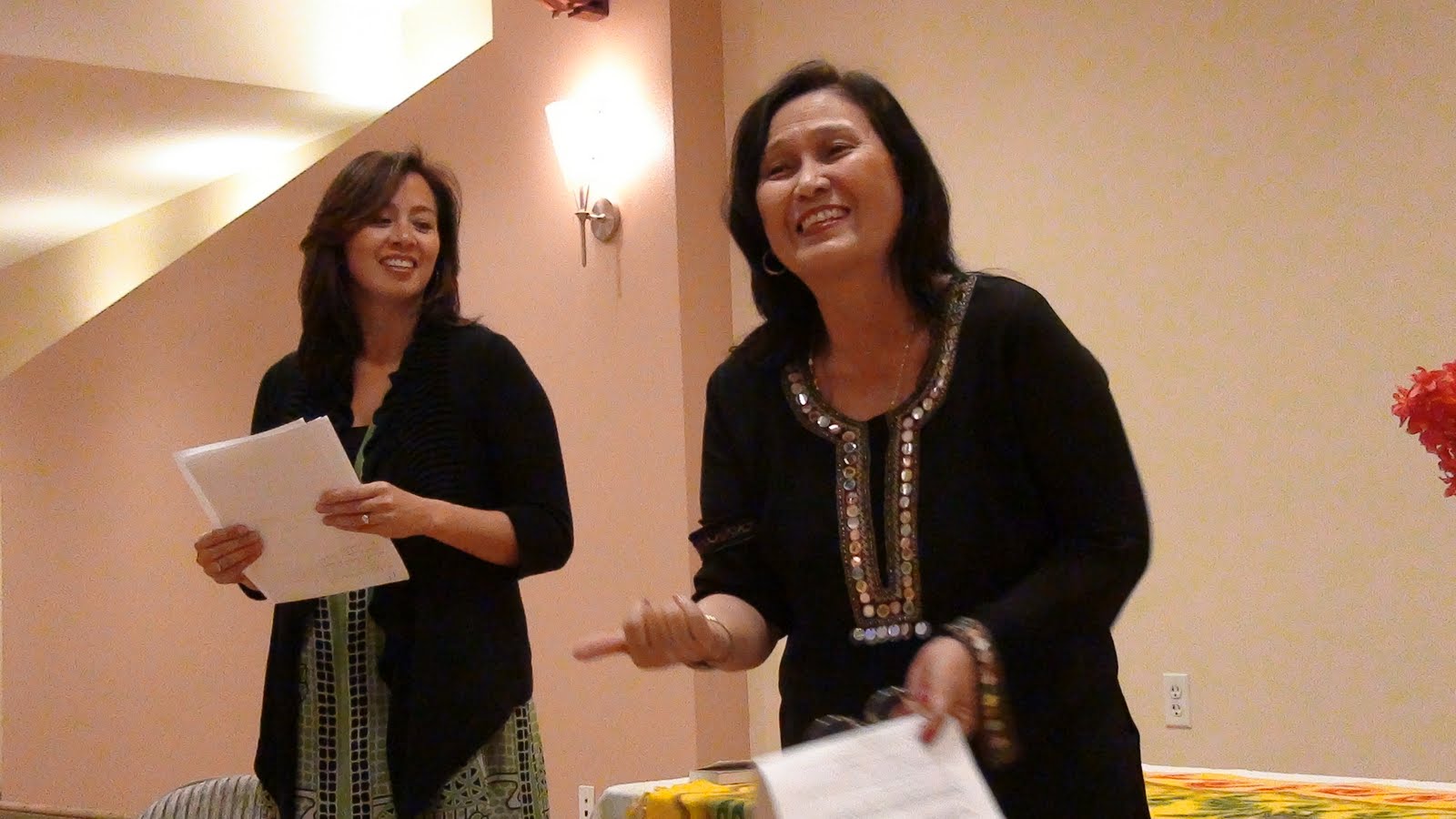
VIGAN AND OTHER STORIES by Cecilia Manguerra Brainard Released in the Philippines


WITHOUT any fanfare, my third short story collection will be released on November 17 in the Philippines by Anvil. If you're in the Philippines and find this book in National Bookstore or Powerbooks, do pick up a copy of the orphan. I haven't even seen the actual book! The cover study with the blurbs below is not the final one. I am sure that Philippine Expressions in the U.S. will have copies of this book in a few months time.

I'll be writing more about my three short story collections, what the stories are about, the publishers, and other anecdotes related to the books, so visit my blog again.

“In this, her third collection of short stories, Cecilia Manguerra Brainard shows an uncanny talent for speaking in varied voices that bridge time and place: she is at home in Vigan, the mythical Ubec (Cebu), Sagada, Manila, Cusco, Peru, Calcutta, Chartres, California, bringing each location alive with loving detail. She speaks as a school girl, an older woman, a love-struck boy, a stolen child, an underground revolutionary. She writes of her own family and childhood with love and sadness and a deep sense of humanity. Most charming? “Meeting Che Guevara”, which starts out “I was nineteen when I met Che Guevara.”’ ~ Susan Evangelista, Professor, Palawan State University


“This is a rich and generous collection of stories. They spring from various sources--autobiographical, anecdotal and experimental. It entertains the casual reader, instructs aspiring and practising writers alike, and enriches the country's culture. “ ~ Paulino Lim, Jr., Professor Emeritus, California State University

“Cecilia’s style is even more spare or sparing, letting the words do the barest possible work of depicting action, description, or sequencing the events in the collected narratives…I’d call this style, which seems fairly unique to her (even when compared to that of old masters like Bulosan and Gonzalez), as scenographic, to borrow a term from cinema.” ~ Oscar V. Campomanes, Professor, Ateneo de Manila University

Cecilia's Bio:Cecilia Manguerra Brainard is the award-winning author of eight books, including the internationally-acclaimed novel, When the Rainbow Goddess Wept, Magdalena, Vigan and Other Stories, Acapulco at Sunset and Other Stories, Philippine Woman in America, Woman With Horns and Other Stories, Cecilia's Diary 1962-1968, and Fundamentals of Creative Writing. She edited four books: Growing Up Filipino I and II, Fiction by Filipinos in America, Contemporary Fiction by Filipinos in America. Cecilia co-edited six books, including Journey of 100 Years: Reflections on the Centennial of Philippine Independence; Behind the Walls: Life of Convent GirlsAla Carte: Food and Fiction, and Finding God: True Stories of Spiritual Encounters. She has also written a novel with four other women entitled, Angelica's Daughters, a Dugtungan Novel. Her work has been translated into Finnish and Turkish; and many of her stories and articles have been widely anthologized.

Cecilia has received a California Arts Council Fellowship in Fiction, a Brody Arts Fund Award, a Special Recognition Award for her work dealing with Asian American youths, as well as a Certificate of Recognition from the California State Senate, 21st District. She has also been awarded by the Filipino and Filipino American communities she has served. In 1998, she received the Outstanding Individual Award from her birth city, Cebu, Philippines. She has received several travel grants in the Philippines, from the USIS (United States Information Service). In 2001, she received a Filipinas Magazine Award for Arts.

She has lectured and performed in worldwide literary arts organizations and universities, including UCLA, USC, University of Connecticut, University of the Philippines, PEN, Beyond Baroque, Shakespeare & Company in Paris, and many others. She teaches creative writing at the Writers Program at UCLA-Extension. 

She is married to Lauren R. Brainard, a former Peace Corp Volunteer to Leyte, Philippines; they have three sons.


Thursday, November 11, 2010

Growing Up Filipino II - Readings by Contributors

Here are YouTube video clips of Readings by some contributors to the book, Growing Up Filipino II: More Stories for Young Adults:


YouTube - Veronica Montes Reads from Growing Up Filipino II

YouTube - Rashaan Alexis Meneses Reads from Growing Up Filipino II

YouTube - Amalia Bueno's Story in Growing Up Filipino II (read by Barbara Jane Reyes)

YouTube- Marianne Villanueva Reads from Growing Up Filipino II

YouTube - Tony Robles Reads from Growing Up Filipino II

The book is Available from: www.palhbooks.com, Philippine Expressions, Arkipelago, Amazon.com, The Book House, Follet Library Resources, Midwest Library.

SCHOOL LIBRARY JOURNAL BOOK REVIEW 5/1/2010:
BRAINARD, Cecilia Manguerra, ed. Growing Up Filipino II: More Stories for Young Adults. 254p. PALH. 2010. Tr $29.95. ISBN 978-0-9719458-2-1; pap. $21.95. ISBN 978-0-9719458-3-8. LC 2002104406.

Gr 9 Up—This collection of 27 short stories, the follow-up to the critically acclaimed Growing Up Filipino (PALH, 2003), reflects the impact of post-9/11 wartime sensibilities among Filipino writers living in the Philippines, the United States, and Canada. Although similar topics of family, memoir, and coming-of-age thread through both collections, the pieces are not grouped by theme, but nevertheless weave a constantly shifting tapestry of Filipino identity. The challenges and conflicts of unique ancestry and struggles for identity provide a rich background for modern urban realism. The brittle memoirs reflected in "Here in the States," "Nurse Rita," and "Hammer Lounge"; original legend in "A Season of 10,000 Noses"; and breathtaking tragedy in "How My Mother Flew," among others, are compelling reading. Some selections have terse, spare language; others are almost commonplace in their apparent simplicity; all capture moments and nuances of the modern Filipino experience that will envelop readers. Brainard has again selected powerful, evocative stories of family: of promises and disappointment, failure and resentment, tenacious and all-consuming love, anxiety and transcendent hope. There is plenty here to stimulate discussion and encourage an appreciation of Filipino writing and culture. This anthology is a worthy successor to the first volume and has appeal to an audience beyond high school literature courses.—Roxanne Myers Spencer, Western Kentucky University, Bowling Green

Source: http://www.schoollibraryjournal.com/article/CA6727442.html?industryid=47067

Wednesday, November 10, 2010

FIL-AM AUTHORS WRITING, by Libay Linsangan Cantor, The Manila Times

I just found this article that mentions me. Thanks to Libay Linsangan Cantor for this:

Fil-Am Authors WritingThe Manila Times, 7/4/10

With all the buzz about Filipino YouTube singing sensation Charice finally making it to Hollywood’s “it” show of the moment, Glee, I wonder if fellow Pinoys are familiar with other Filipino talents already making names for themselves as Filipino-American authors. If we would take a look at Pinoys getting published in the USA, we might have more pride about our race making it in the land of milk and honey when it comes to the literary field.

Most people might have missed Jessica Hagedorn when she visited Manila a few years ago to promote her latest novel, Dream Jungle, published by Viking Books in 2003. She is more identified with her very postmodern take on the Marcos regime in her novel Dogeaters published by Penguin Books in 1990. While it might sound very political, this novel of hers is a very interesting read, given the very eclectic voices of the characters we encounter in Metro Manila amid the backdrop of many pop culture trappings we Filipinos drown in on a daily basis. Hagedorn was born and raised in the Philippines and moved to San Francisco when she was a teenager. In the US, she also dabbles in other art forms as a poet, performance artist and playwright.


Cecilia Manguerra Brainard is another person that comes to mind when we talk about Fil-Am authors. She is the author of the 1990s novel When The Rainbow Goddess Wept published several times by different international and local publishing houses. She has also authored various creative nonfiction books to her name, and sometimes visits the Philippines to promote them or to give talks during their launch here.
Brainard is also active as an editor of various short story collections and nonfiction anthologies like Growing Up Filipino: Stories For Youth Adults, a collection of how it’s like to grow up as a Filipino in the Philippines and in other parts of the world. I’m proud to have an essay of mine included in that 2003 young adult anthology of hers, and I’m also happy to learn that this anthology is being used in some US schools in teaching children and young adults about Filipino experiences. Brainard was born in Cebu and finished college here in the Philippines before migrating to the USA and settling down there to start a family. She is currently active as a teacher at the Writer’s Program of the University of California Los Angeles (UCLA) Extension.


Another Fil-Am author with an acclaimed novel is Bino Realuyo, author of Umbrella Country published in 1999 by Ballantine Reader’s Circle. The novel is a heartwarming tale about a boy living in an impoverished urban poor community in Manila who undergoes a lot of challenges in his life, including dealing with sexuality issues. The son of a Bataan Death March survivor, Realuyo was born and raised in the Philippines and moved to the US where he made New York his home for many years. He is also a poet, educator and works on various labor rights and human rights issues.

Just these three Fil-Am authors’ achievements alone make us proud that they uphold their Pinoy roots through their literature. Next time, we’ll try to discover more Fil-Am writers writing about our worlds.

Sunday, November 7, 2010

CECILIA BRAINARD & VERONICA MONTES READ FROM ANGELICA'S DAUGHTERS


Literary Reading by Cecilia Brainard and Veronica Montes from the book, Angelica's Daughters, a Dugtungan Novel - enjoy! The reading was at the Book Launching of Angelica's Daughters in San Francisco, November 6, 2010, sponsored by PAWA and Arkipelago Bookstore.

http://www.youtube.com/watch?v=i4Hhg-YL29g

Pictures:
1) Veronica Montes and Cecilia Brainard ham it up at the Literary Reading;
2) Group photo shows l-r: Cecilia Brainard, Penelope Flores Carmen Domingo-Kirk, Veronica Montes
3) PAWA President Edwin Lozada and Cecilia Brainard

Thursday, November 4, 2010

Upcoming Literary Events for Cecilia


Friday - Cecilia Brainard is giving a talk to some students at Galileo Science and Technology who have read the novel, When the Rainbow Goddess Wept in their classroom;
Saturday - Book launch of Angelica's Daughters in San Francisco, sponsored by PAWA, with Veronica Montes and Cecilia Brainard reading and signing the book.

Thursday, October 28, 2010

BRAINARD KENYA SAFARI VIDEO - Reposted

Reposting our short video of our Kenya Safari. The baby rhino and baby elephant shown in the video died. The baby elephant who didn't make it is the one the child blesses. Very sad.
Click here to view the 6-minute YouTube video http://www.youtube.com/watch?v=eTt_5vtZfVg


Wednesday, October 27, 2010

GK's Tony Meloto Laud Filipino Women's Success in U.S. - from Asian Journal


Gawad Kalinga'S TONY MELOTO LAUD FILIPINO WOMEN'S SUCCESS IN U.S.
Tuesday, October 27, 2010, Asian Journal Press

La CANADA – In an afternoon tea event to celebrate Filipinas in Los Angeles, Gawad Kalinga Founder Antonio "Tony" Meloto praised successful Filipina women for achieving success in the United States and for being the backbone of GK.

"These Filipina women are quite accomplished in their chosen profession and have achieved success in the most competitive marketplace," said Meloto at the ‘Women Inspiring Women Inspiring Change’ event held at the home of Mark and Gloria Lilly.

"The Filipina women especially here in California in the early 2000 were the first supporters of GK when it wasn’t fashionable or popular. These women have supported us through the years. These women are game changers."

The event featured a who’s who of several successful Filipina women – from Chef Cecilia De Castro, who catered the event; film director and author of Abadeha: The Philippine Cinderella Myrna de la Paz Mulhern; authors Carina Monica Montoya, Cecilia Manguerra Brainard and Mae Respicio Koerner, among others.

Manguerra Brainard said it’s important to celebrate Filipina women.

"Throughout the years, we as women have often been marginalized or not taken seriously," said Manguerra Brainard who has written several books including When The Rainbow Goddess other titles such as Growing Up Filipino, Vols. l and ll. "It’s time for our community to recognize our achievements."
De la Paz Mulhern agrees. She said this event is about women inspiring other women.

"It’s very challenging in the Filipino community but as you can see from the women in this event and the authors that we are doing that. Our work inspires other women to do their best."

Donations raised in the event benefited GK.

( www.asianjournal.com )

NEIL SEDAKA SONG HITS ON YOUTUBE

We were supposed to have gone to a Neil Sedaka Concert at the Disney Hall tonight, but it's been postponed. Sigh!

So I got started listening to his songs on YouTube. They are good! Here are some YouTube sites with Neil Sedaka songs:

Love Will Keep Us Together http://www.youtube.com/watch?v=dYFrxUGCwxM

Laughter in the Rain http://www.youtube.com/watch?v=eKn8saVQbts

Calendar Girl http://www.youtube.com/watch?v=Rb-9PNgIeo0

Happy Birthday Sweet Sixteen http://www.youtube.com/watch?v=WusQjMnD0cs&feature=related

Breaking Up is Hard to Do http://www.youtube.com/watch?v=tbad22CKlB4&feature=related

Oh Carol http://www.youtube.com/watch?v=aHm7PnCCd4E&feature=related

.

INVITATION - BOOK LAUNCH ANGELICA'S DAUGHTERS, NOV. 6, SAN FRANCISCO

PAWA INVITES YOU TO THE BOOK LAUNCHING OF

ANGELICA’S DAUGHTERS, A DUGTUNGAN NOVEL

By: Cecilia Brainard, Erma Cuizon, Susan Evangelista,
Veronica Montes, & Nadine Sarreal

Saturday, November 6, 2010, 5:30-7 p.m.
Bayanihan Community Center, 1010 Mission Street, San Francisco, CA


There will be a literary reading, book signing, & light refreshments. The event is free and open to the public. Cecilia Brainard & Veronica Montes will be there.


What they say about Angelica's Daughters, a Dugtungan Novel:

"Chick lit with a comfortable dose of smartness and historical verve. Angelica's Daughters celebrates audacious heroines primed by deep passion and fairytale romance! Set in the heat of a 19th-century Asian revolution and what its setting becomes by the 21st Century, Angelica's Daughters beguiles with its mythic splendor, threat of a generational curse, masterful betrayals, and female leads readers can fall in love with. The story is a delightful read by five writers who cherish their Hispanic, Filipino, and American cultural roots." ~ Felice Sta. Maria

“Part of the pleasure of reading Angelica's Daughters is seeing how deftly the authors deal with the challenge of writing in this resurrected literary form. The result, in this case, is an ensemble performance that contains something of the exhilaration of theatrical improv. One watches these accomplished authors inventively weave a historical romance, creating gripping heroines and turns of plot, crossing decades and national boundaries, tapping into cultural roots of the Philippines, Spain and America. Reading Angelica's Daughters is a gripping experience.” ~ Brian Roley

"This collective and collaborative novel proves that writers share much more than just an interest in, as one of the authors puts it, “the idea of creating something of rare beauty out of nothing at all.” They share a Creative Unconscious that, when working on a common text, comes up with startling and unpredictable imaginative delights and insights. This tale of two women living a century apart (and the women and men in their lives) told sequentially by five women is truly an ensemble performance worth a standing ovation." ~ Isagani R. Cruz, Philippine Star

The novel has a site at www.palhbooks.com/cbrainardangelica.html, and a blog at http://angelicasdaughters.wordpress.com/.

Monday, October 25, 2010

More Re Gawad Kalinga's Activities

(I'm reprinting a letter from Benita Delfin about Gawad Kalinga. The first time I had heard about Gawad Kalinga was from my St. Theresa's college chums who talked about how Gawad Kalinga helped poor people build homes in the Philippines - perhaps something like Carter's Habitat for Humanity.)

Good evening/morning to all of you:

Yesterday, Tony Meloto was the guest speaker at one of the Methodist Church here in Cypress CA organized by its pastor, Jose Padilla and Ernie Delfin. Ernie and I had been involved in fund raising efforts especially Ernie who is currently out of town and had known Tony for quite some time since he has been a guest at our home, at University of CA Rotaract Club and now the Methodist Church.

He is a dynamic speaker who speaks from the heart-no “notes” at all and very knowledgeable about what is happening in the Philippines and around the world. He inspires and truly cares about people. Late President Cory Aquino supported Gawad Kalinga in her administration and now is being continued by her son, current President Noynoy Aquino. Tony has been offered government position but declined and wanted to work only as an “ordinary person”. He has a book called “ Builder of Dreams”. Please read more at http://www.asianjournal.com/aj-magazine/midweek-mgzn/4121-gawad-kalinga-founder-antonio-p-meloto-builder-of-dreams.html?start=2

Tony Meloto is such a powerful speaker and very positive and has a “can do” attitude that is influencing not only the poor, rich, middle class people in the Philippines, Canada and Europe that have been around him but also those local government units(LGUs) leaders (Mayor, Vice Mayor) including people that have been corrupt like Imelda Marcos and ex President Joseph Estrada. His goal is to change the mindset of people starting with themselves by having strong moral values, by caring (kalinga) and by sharing (bayanihan). He realizes the weaknesses and strengths of Filipinos and humble enough to share his beginnings as being poor and lucky enough to have scholarships that brought him to the United States where he finished his high school and Ateneo where he got his Masters. He is very visionary and I made a comment to him that he is such an inspiring leader and model and wished him good health and stamina to be able to continue his work and to handle all the challenges he has to deal with. I also said he talks like an architect - building from scratch to finish since my background includes knowledge in architecture. He talks about building, sustainability, preserving the environment –the basic tenets of Leadership in Energy and Environmental Design (LEED) and how Gawad Kalinga houses adopt to the location where they are going to be built such as some houses will be have to be on stilts because of existing water condition. Gawad Kalinga also teaches and makes the families proud and work for what they have such as making their own houses clean and beautiful and planting vegetables to help support themselves.

Observing him he doesn’t want people to be “in awe” with him as a person - very low key as far as his dress code as opposed to his projects - the Gawad Kalinga houses - the colors chosen are upbeat colors that attract people’s attention immediately! And I believe the reason is …. people will have the pride of ownership of having a home they never had or will never have if not for Gawad Kalinga’s supporters. Tony Meloto receives the Social Enterpreneur Award very recently and is very happy about it because he can participate in the World Entrepreneurs Sessions. With his work cut out for him he has to be a Master Enterpreneur! Gawad Kalinga is now involved on building roads and bridges with the local government units.

In the afternoon, Cely Adamo, a Rotarian and active Gawad Kalinga supporter and I went to a very beautiful home in La Canada, CA for “A Special Tea and Inspiration” event. This event is also to support Gawad Kalinga projects and at the same time meet Filipino Authors and their books sponsored by Philippine Expressions owned by our friends Linda Nietes and Bob. Tony Meloto spoke to the big crowd with his inspiring talk. I had also the opportunity to meet and bought their autographed books…Cecilia Manguerra Brainard - Growing Up as a Filipino, Dr.Ludy Ongkeko - Forty Years of Writing in America and Carina Montoya Forsythe – Filipinos in Hollywood and of course Tony Meloto - Builder of Dreams. We also met the parents of one of the members of Mango Quartet who performs at the White House. Met new people and old friends from different backgrounds while enjoying the music on the air (violin and piano and a lovely singer) and the food washed out by calamansi juice with spritzer prepared by one of the famous Los Angeles Filipina chef- Cecilia De Castro and her students.

It is always beautiful to be inspired and meet and enjoy the company of new and old friends. Faith in Action, Caring (Kalinga) and Sharing (Bayanihan) are words I took going home.

Please check out Gawad Kalinga’s website. http://www.gk1world.com/


Best to all of you.

Benita

Sunday, October 24, 2010

Re GAWAD KALINGA'S "AN AFTERNOON TEA" IN PASADENA, CALIFORNIA


October 23, 2010 -
I just got back from the Gawad Kalinga's (www.GKIWorld.com)"An Afternoon Tea" with the theme of "Women Inspiring Women Inspiring Change." Honorees included 6 authors and Chef Cecilia de Castro. Tony Meloto, the founder of Gawad Kalinga flew in from the Philippines to attend the program. Chef Cecilia De Castro handled the elegant fare with scones, sandwiches and other delicious tidbits with tea, coffee, and calamansi seltzer, served in bone china and silver.

The six authors were: Cecilia Brainard, May Respicio Koerner, Carina Monica Montoya, Myrna De La Paz, Marjorie Light, and Ludy Ongkeko. Philippine Expressions made the books by these authors available. The writers' bios follow:
A gathering of trail blazers...

Cecilia Manguerra Brainard, author and editor of fourteen books which include the internationally acclaimed When The Rainbow Goddess Wept and other titles such as Growing Up Filipino, Vols. l and ll and her latest, Angelica's Daughters, A Dugtungan Novel, which she co-authored;

Carina Monica Montoya, also known as Carina Forsythe, author of Filipinos in Hollywood, Los Angeles's Historic Filipinotown and Let's Cook Adobo cookbook designed for children;

Mae Respicio Koerner, author of Filipinos in Los Angeles;

Myrna de la Paz Mulhern, writer, producer, director, lyricist and filmmaker of ABADEHA: The Philippine Cinderella.

Marjorie Light, a Fil Am writer, performer and DJ who has contributed an article in the book, Babaylan: Filipinos and the Call of the Indigenous on Decolonization and the Filipino Arts Community in LA.

Ludy Ongkeko, a columnist for the Philippine News since 1971, a tenured professor for many years with the University of Southern California and author of "Forty Years of Writing in America."


Live music was provided by Linda Madrid, Jane Provido, Andy Tecson, and Bob Schroeder. Floral artistry was provided by Grace Na; Jewelry design by Victoria Duque, professional makeovers by Au Mauricio.

A lovely afternoon put together by lovely women, including the hostess, Gloria Lilly, and Tess Castro.


~~~
Top photo: l-r:Myrna De La Paz, Linda Nietes, Cecilia Brainard, Hermie Ongkeko, Ludy Ongkeko
Next down: l-r: Cecilia Brainard, Chef Cecilia De Castro, Guest
Third down: l-r: Cecilia Brainard, Carina Monica Montoya

Fourth down: l-r: Carina Monica Montoya, Gloria Lilly, Myrna De La Paz, Cecilia Brainard
Fifth down: l-r: Cecilia Brainard,Mae Respicio Koerner
Sixth picture down: l-r: Carina Monica Montoya, Myrna De La Paz, Linda Nietes, Cecilia Brainard,
Seventh down: l-r: Cecilia Brainard, Carina Monica Montoya
Eighth down: Mae Respecio Koerner, Myrna De La Paz, Linda Nietes, Carina Monica Montoya, Cecilia Brainard
Ninth down: With guest
Tenth down: The Lilly's backyard
Eleventh down: The Lilly's fabulous house
Twelfth down: High Tea

Saturday, October 23, 2010

MANILA BULLETIN ARTICLE RE FINDING GOD WINNING GINTONG AKLAT AWARD


Gintong Aklat Awards Feted at MIBF0 Comments | Manila Bulletin, Sept 24, 2010
The prestigious biennial Gintong Aklat Awards, mounted by the Book Development Association of the Philippines (BDAP) and the National Book Development Board, was held at the recently concluded Manila International Book Fair, the paramount event for the Philippine book industry.

Established in 1981, the Gintong Aklat Awards recognizes books that are judged for all-around excellence in book manufacture and design, writing, and editing. Categories are Literature (English and Filipino), Social Science, Natural Science, Arts and Culture, Inspirational and Culinary.

For 2010, 12 finalists and nine winners were chosen among 268 entries.

The Gintong Aklat 2010 winners include: "Compendium of the Economically Important Seashells in Panay, Philippines" by Liberato Laureta, UP Press for Natural Science; "Finding God: True Stories for Spiritual Encounters" by Cecilia Manguerra Brainard and Marilyn Ysip Orosa, Anvil Publishing and "Everyday Warriors: The Faces and Stories of Breast Cancer" by Jay Lara and Cathy Paras-Lara, UST Publishing for Inspirational; "Kulinarya: A Guide Book to Philippine Cuisine" by Asia Society Philippine Foundation, Anvil Publishing for Culinary; "Palaspas: An Appreciation of Palm Leaf Art in the Philippines" by Elmer Nocheseda, Ateneo Press for Arts and Culture; "Ah, Wilderness! A Journey Through Sacred Time" by Simeon Dumdum, Jr., Ateneo Press and "The Revolution According to Raymundo Mata" by Gina Apostol, Anvil Publishing for Filipino Literature; and "The Philippines Through European Lenses: Late 19th Century Photographs MIBFfrom the Meerkamp Van Embden Collection" by Otto van Den Muijzenberg, Ateneo Press for Social Science.

Finalists include: "Desk Book: Philippine Medicinal Plants in Primary Health Care" Volume 1 by Dietmar J. Rummel, C&E Publishing for Natural Science; "Reading and Hearing the Old Testament in Philippine Context" Volume II by Noriel Capulng, New Day Publishers, "Flying on Broken Wings" by Grace D. Chong and Rosie Lovely T. Romulo, New Day Publsihers, and "The Heart of Healing" by Ardy Roberto, OMF Literature for Inspirational; "Philippine Fermented Foods" by Priscilla Chinte-Sanchez, UP Press for Culinary; "The Life and Art of Francisco Coching" by Patrick D. Flores, Vibal Foundation for Arts & Culture; "Soledad's Sister" by Jose Dalisay, Anvil Publishing; "The Highest Hiding Place" by L. Lacambra Ypil, Ateneo De Manila University Press; and "Balikbayang Sinta: An E. San Juan Reader" by Epifanio San Juan Jr., Ateneo de Manila University Press for English Literature. "Inintokan" by Victor N. Sugbo, UP Press; and "Unang Ulan ng Mayo" by Ellen Sicat, Anvil Publishing for Filipino Literature; and "Between Tiger and Dragon" by Claude Haberer, Anvil Publishing and "Verbal Arts in Philippine Indigenous Communities: Poetics, Scoiety and History" by Herminia Menez Coben, Ateneo de Manila University Press for Social Science.

MIBF was organized by Primetrade Asia, Inc. in partnership with Asian Catholic Communicators, Inc., Book Development Association of the Philippines, Philippine Booksellers Association, Inc., and Publishers Representatives Organization of the Philippines.

COPYRIGHT 2010 Manila Bulletin Publishing Corp.

Friday, October 22, 2010

MANILA TIMES writeup re Angelica's Daugters, by Libay Cantor


THE “DUGTUNGAN” WRITING EXERCISE
by LIBAY LINSANGAN CANTOR
Sunday, 17 October 2010

Is there such a thing as a collaborative writing procedure?

In the Philippine literary circles, yes, there is, and we call it dugtungan, meaning one writer writes one part of the story, passes it on to another writer who will continue the next part of the story, and will pass it again to another writer, and so on. Each writer can be free in his/her collaboration, and that’s what makes the work fresh and exciting.

I first heard of this dugtungan style during my stints as a creative writing workshop fellow. To while away time, my poet co-fellows would entertain us by starting a renga, the old Japanese tradition of shared writing, much like the Filipino dugtungan. They will write one line, pass the paper to another fellow, until we had the paper full of combined thoughts.

But more than just an exercise, the dugtungan is a kind of literary collaboration among writers. Perhaps it’s not usual to hear of authors co-writing stuff with other authors since we are more used to the fact that literary writers write alone, and produce their own individual works. Plus individual authors get recognition because of their individual works, of course.

Other writing disciplines such as film and television scriptwriting employ collaborative writing more than literary writing since the finished products of those industries are different compared to literary outputs. But yes, it is still possible to produce quality work from such literary collaborations, as the renga has attested, as well as the dugtungan. Filipino writers in the early 1900s used this technique to produce novels, and now, contemporary writers have, once again, employed the technique to create a new novel.

I’m talking about the latest book by Anvil Publishing entitled Angelica’s Daughters, authored by five distinguished women—Cecilia Manguerra Brainard, Erma Cuizon, Susan Evangelista, Veronica Montes and Nadine Sarreal. The book was launched at the Manila International Book Fair last month.

The novel has an interesting premise; it is basically a historical romance telling the story of two women from different eras (past and present), in the process characterizing their families’ tales and their own romantic tales. I just got a copy and I’m eager to read it, given the kind of interesting work these women writers could come up with.

The idea for the dugtungan actually stemmed from an online creative writing workshop which Brainard started in the early 2000s. The informal and encouraging atmosphere of that workshop was meant to inspire participants to write something new (based on a weekly writing prompt) and have fellow writers comment on these early drafts. Some of these drafts were eventually developed until they were published in different anthologies. The earlier participants of that workshop actually produced a dugtungan short story entitled New Tricks which was anthologized in Milfrores Publishing’s 2007 anthology Sawi: Funny Essays, Stories and Poems on All Kinds of Heartbreaks. That story was the product of the dugtungan efforts of Brainard, Montes, Sarreal and Evangelista, plus Noelle de Jesus and yours truly.

Congratulations to these authors and here’s hoping that more of these literary collaborations would be produced in the future.

ANGELICA'S DAUGHTERS has a blog at http://angelicasdaughters.wordpress.com

Wednesday, October 20, 2010

CEBU'S 1730 JESUIT HOUSE - published in Zee Lifestyle

Zee Lifestyle's November 2010 issue will feature my article about San Miguel Allende and Guanajuato, Mexico. I'm reprinting here an article I wrote for Zee last year, about Cebu's 1730 Jesuit House, located on Zulueta Street, Parian, Cebu City. It's the oldest documented house in the Philippines, a historical treasure, and a tourist must-see in Cebu City.


CEBU’S 1730 JESUIT HOUSE
by Cecilia Manguerra Brainard
Published in Zee Lifestyle, October 2009


I first learned about the eighteenth century Jesuit House in historic Cebu from Concepcion Briones’ book, Life in Old Parian. Intrigued by their history of the Jesuits, I also read The Jesuits in the Philippines 1581-1768 by H. de la Costa.

The Jesuits, also known as the Black Robes, came to the Manila in 1581. By 1595 they were in Cebu. The Jesuits went on to administer a free primary school teaching Spanish, Visayan, and Chinese students Christian doctrine, reading, writing, arthimetic, and deportment, grammar.

After 1605, the Jesuits appointed a Vice Provincial who acted as an overseer, a roving supervisor of missions, and who acted as a liaison among the mission stations and the provincial superior and civil government. The Vice Provincial had his own residence, and the 1730 Jesuit House, located between Zulueta and Binacayan, near Mabini, was such a house.

When the Jesuits were expelled from the Philippines in 1768, the 1730 Jesuit House ended up in the hands of others. In its 279 years of existence, the Jesuit House has been used for different purposes: it was the residence of the Vice Provincial of the Jesuits; it became the headquarters of the Japanese military during World War II; it was a private nightclub in the 1950s; it was used as a hospital by the Americans; and it was also the residence of the Alvarez family who sold the place to Nicanor Sy in the mid-1960s.

Sy converted the premises into the Ho Tong warehouse and for some forty years the Jesuit House took on the guise of a bodega. Sometime after the Sy family acquired the property, they placed an iron gate to protect the antique wood gate and three medallions above the gate with the emblems of Jesus, Mary, and Joseph; and so thankfully, the sixteenth buildings, gate, and coral wall are still there.

Three years ago, I dared enter the Ho Tong Hardware bodega and asked a woman if I could visit the Jesuit House. She graciously asked some workers to lead me to the middle of the enclosed compound where two adjoining buildings stood. I had to be careful not to trip over metal cables and piles of stuff stockpiled all around the buildings as well as within the buildings. The first building I encountered was smaller; it had stairs that led to a dark rectangular space, like a huge hallway, cluttered with more hardware stuff, but I could see huge antique foundation posts — huge tree trunks painted red. From this first structure I crossed a covered bridge to get to a larger building — still dark and cluttered but this building had a sign above a doorway that said, “1730.” In the darkness and clutter, and I realized that this was the sign that made this building the oldest recorded building in the entire Philippines. I was led through a huge room, like a sala, to the other end of this bigger building with wide wooden stairs that led to the ground floor. Briones had written that the original stairs had been removed by the Alvarez family and brought to Bohol. These then were the replacement stairs. But it was dark and difficult to catch details of the stairs and of the buildings. I would have to wait three years before I would see the Jesuit House again, this time with more light and without the warehouse clutter, and in fact this time the Jesuit House would be a musuem.

Jimmy Sy, son of Nicanor Sy now the head of the Sy family decided sometime in June 2009 to turn the Jesuit House into a museum. How a businessman like Jimmy, who for most of his life had lived with the Jesuit House buried underneath the Ho Tong bodega, got the inspiration to turn the place into a museum is a story in itself. Jimmy attended Sacred Heart School and the Ateneo de Manila University – schools run by Jesuits. While he was in the Ateneo library, he pulled out a 1936 pictorial book by Father Repetti, a seismologist whose hobby was taking pictures of old religious structures in the Philippines. When Jimmy flipped the pages, he saw an image that looked familiar – it was the Jesuit House in the Ho Tong Hardware bodega. Jimmy made a copy of the picture and showed it to his father. His father filed it away and for the moment the story ended there, but in fact Jimmy kept that information in his head, information that very well could have been the seed of his decision to develop the Ho Tong bodega into the Jesuit House Museum. Looking forward to this retirement, Jimmy welcomed the idea of becoming the steward of this oldest documented building in the entire Philippines. He felt the urge to share the place with others.


I revisited the Jesuit House Museum in August 2009, and since it was only a two-three month project, the warehouse clutter was still around. Jimmy explained that he is still building a bodega and it will take time to develop the Jesuit House Museum. However, the two building structures have been cleared and are being spruced up. Jimmy has decorated some areas with antique furniture and oil lamps so that visitors can have an idea of what the Jesuit House looked almost three hundred years ago. I could now see that the first structure was a large covered azotea. A covered bridge connected this to the main building, which had been the house of the Jesuit Vice Provincial in the sixteenth century. Both structures had two stories, and I only visited the upper floor. The main structure, that is the actual residence of the Vice Provincial, has a large central room, with rooms surrounding this space. These rooms have not been developed and are closed to the public.

Jimmy has also decorated this large space with furniture, an altar, lamps. He has likewise fixed up the original entrance to the building from Binacayan road. Plants, antique angel wood carvings, antique oil lamps, and wrought iron grills on windows give one a good idea of how the place looked like in the past.

According to Jimmy and his conservation architect Anthony Abelgas research must first be done. They are working with Jesuit Father Rene Javellana who is providing them with the historical aspect. In fact, Father Javellana has already written about the Jesuit House and Jimmy generously provided me with a copy of Javellana’s 1987 article, “The Jesuit House of 1730” published in Philippine Studies.

Jimmy Sy sounds like a religious convert, brimming with fervor and enthusiasm, when he talks about the Jesuit House. In the bigger building, he explains that the first original door had faced Binacayan Street, the tiny winding street close to Colon Street. Once upon a time there had been a gate and stairs on the Binacayan side. Jimmy excitedly pointed at the wood planks on the floor, pointing out where another kind of wood had patched up stud-holes. He showed me a square space to the right of the main stairs where a painting must have hung. He pointed out ancient carved wood beams through ceiling holes and showed off windows in the first floor area underneath the azotea, wondering why windows should be in a now-enclosed space. He pointed out a cemented area near the stairs that he says was a burial spot.

And the best part was when this business man started talking about the spirits in the place. Apparently Jimmy had invited a Jesuit classmate who is psychic to the place. The man said he felt the presence of so many spirits in the place. A ritual was done to ask permission from the spirits to do work on the place. There are still bits and pieces of red offerings on top of the burial spot near the stairs.

Jimmy also talked about a local oral legend about a sacristan who murdered seven Jesuits. Feeling remorseful, he carved a Cross on the coral stone wall outside. Jimmy searched for the Cross and found it, on the Binacayan side, near an area of the wall that looked like it had been enclosed. There had once been a gateway there, but it had been sealed. A new gateway was transferred to where the current opening is.

News that the Jesuit House is now finally a museum is a source of great delight to historians, heritage-lovers, tourists, and media. The new Jesuit House Museum already has a steady stream of visitors: guests from Manila, America, Europe, Australia, Korea, Cebuanos themselves (some of whom had never even heard of the Jesuit House), and many more. The 1730 Jesuit House always had visitors, even when it was buried underneath the Ho Tong Hardware, but now, the public is clearly anxious to see the eighteenth century Jesuit House properly restored and offered for public view. It is after all one of the treasures of the Philippines
~~~~

Side Bar: The Jesuits in Cebu
It was the Jesuit superior, Antonio Sedeño himself who founded a house in Cebu on what is today M. J. Cuenco Avenue. Sedeño was a veteran missionary who like St. Ignatius had been in the military when he was young. He had gone to England as a page of the Duke of Feria when Mary Tudor was queen. On March 13, 1568, he sailed for Florida with a group of Jesuits headed by Juan Bautista de Segura. In 1572, Sedeño was the first Jesuit sent to Mexico, and it was while he was acting Rector of the college there that he was informed he was chosen as superior of the first Philippine Mission. Traveling with three companions, he sailed from Acapulco on the galleon San Martin on March 29 and arrived Manila in July. There Sedeño and his company learned Tagalog. After much hemming and hawing as to whether the Manila Jesuits would head the entire Far East or the Philippines, and as to what type of work they would actually do there, the King of Spain sent an order for the Jesuits to establish a Jesuit College where they would teach not only Spanish boys but also mestizos and sons of the ruling class.

Cebu, the site of the first Spanish settlement was not forgotten, and by June 30, 1595 Sedeño himself headed a small group composed of Alonso de Humanes, Mateo Sanchez, and a lay brother to sail to Cebu for the purpose of founding a Jesuit house there. The people received them warmly and donated 500 pesos, which the Jesuits used to buy a house near the beach. The city corporation donated adjacent land for a yard and garden. The trip to Cebu had been on an uncovered sailboat, exposing the Jesuit passengers to the stormy weather for three weeks. Sedeño became ill and passed away in Cebu on September 2, 1595. They buried him in the domestic chapel on the ground floor of their first house, but three years later, Father Pedro Chirino transferred Sedeño’s remains to the new Jesuit church.
~~~


Read also
Life in Parian Now
Cebu's 1730 Jesuit House 
The Secret Hall of Angels 
A Story of Hope
Finding Jose Rizal in Cebu
Lola Remedios and her Sayas
Lunch with F. Sionil Jose
Pre-Colonial Gold in Cebu
~~
tags: Cebu, Philippines, Jesuits,. history, Cebuano, 1730 Jesuit House, Spanish Colonial


Tuesday, October 19, 2010

ANGELICA'S DAUGHTERS - LAUNCH NOV. 6, SAN FRANCISCO


PLEASE MARK YOUR CALENDAR - Saturday, Nov. 6, 5:30-7 pm, Angelica's Daughters in San Francisco


Just to let all know that Veronica Montes and I will be doing a reading/signing of ANGELICA'S DAUGHTERS, A DUGTUNGAN NOVEL, in a PAWA sponsored event, Saturday, November 6, 5:30-7 p.m. at the Bayanihan Community Center, 1010 Mission Street, San Francisco, California.

I have requested that copies of Growing Up Filipino II be made available at the event as well. I hope that those of you in the Bay Area can attend. Or please, tell your friends who live in the San Francisco area, or post in your blogs, etc.

Wednesday, October 13, 2010

VIVA CHILE! (Some pictures taken when we were in Chile)


I'm very happy the Chilean miners have been saved. I'm sharing pictures taken in Chile, 2006.


Tuesday, October 12, 2010

FORTHCOMING BOOK SIGNINGS - Angelica's Daughters and other books


Saturday, October 23, 2010, Cecilia Brainard will be signing at the booth of Linda Nietes at the Gawad Kalinga's "An Afternoon Tea" in Pasadena; and this Saturday, october 16, Veronica Montes will do a reading and signing of Angelica's Daughters at Eastwind Books, in Berkeley.

Thursday, October 7, 2010

Book Review Contemporary Fiction by Filipinos in America


(I only got the copy of this review now although I was aware that Manoa did a review of the anthology. Contemporary Fiction by Filipinos in America is available from ANVIL (www.anvilpublishing.com);email: anvilpublishing@yahoo.com)

BOOK REVIEW
CONTEMPORARY FICTION by FILIPINOS IN AMERICA
Edited by Cecilia Manguerra Brainard
Anvil Publishing, 1997, 254 pages
MANOA, Vol. 13, No., 1, Silence to Light: Japan and the Shadows of War (Summer, 2001) pp. 201-203
by Harold Augenbraum

Contemporary F iction by Filipinos in America.Edited by Cecilia
Manguerra Brainard. Pasig City, Philippines: Anvil Publishing, 1997.
254 pages, paper $22.95.


A couple of years ago, I asked a colleague of mine who was preparing a comprehensive
anthology of world literature which Filipino writers he was going to
include.He wasn't aware of any, he replied, adding that they probably hadn't been
translated yet.


I explained that many of the best Filipino writers in the Philippines wrote in
English, a legacy of American colonialism from 1898 to 1946. With great enthusiasm
and some hope, I mentioned a half dozen that he might want to consider,
including N .V. M. Gonzalez, L inda Ty-Casper, and F.Sionil Jose. I wasn't surprised,
however, when the anthology appeared without a one.


In the United States, the Philippines has always been esteemed for its strategic
importance while Filipino culture has been almost invisible.The truth is that the
Philippines has a rich literary heritage, extending from the archipelago to the various
other countries in which Filipinos have settled, including former colonial
masters Spain and the United States.The writers who have made a name for themselves
in the States-Carlos Bulosan, Bienvenido Santos, Linda Ty-Casper,
Ninotchka Rosca, perhaps N ick Carbo, and certainly JessicaH agedorn - are few,
though their writing is powerful and consistently good. Hagedorn is the most
honored: her nomination for the National Book Award for Dogeaters brought
some attention to lesser-known F ilipino writers toiling in the vineyards of the literary
lord, such as Cecilia Manguerra Brainard. The University of Washington
Press has loyally kept Santos and Bulosan in print, as well as brought Gonzalez to
the attention of the American public - about as much as a small university house
can do for these writers.


The anthologies of Filipino and Filipino American writing published in the
States have also appeared infrequently. In 1966, Leonard Casper, a prominent
critic and the husband of LindaT y-Casper, compiled an extraordinary collection
called New Writing from the Philippines. A few Filipino American pieces were
included in the seminal 1974 Asian American anthology Aiieee! though the vastly
different experiences of Filipinos in the States, and a wholly different literary tradition,
resulted in two separate introductions to the book: one for Chinese and
Japanese Americans; the other for Filipino Americans.


In 1992, Luis Francia edited the marvelous Brown River,White Ocean, which
thrived despite the publisher's barely useable design. F rancia's next contribution
was 1996's Flippin' Filipinos on America, which he and Eric Gamalinda edited for
the Asian American Writers' Workshop, based in New York. A writer's book,
composed half of poetry and half of prose, it is filled with the sheer pleasure of literary
achievement and remains the best Filipino American anthology available
today.


Cecilia Manguerra Brainard's 1993 anthology, F iction by Filipinos in America,
was a low-budget collection published by New Day Publishers in Quezon City,
Philippines. For it she collected a good cross-section of Filipino writers, from the
little known to the more accomplished, producing a good introduction to Filipino
writing in America.Contemporary Fiction by Filipinos in America, also published
in the Philippines, covers some of the same grounds even of the twenty-five contributors were included in the earlier collection, though it is comforting to see
Gonzalez and Ty-Casper again.

(Linda Ty-Casper)


Since the late nineteenth century, the Philippines has been wracked by political
difficulties: its revolt against Spain in 1898, American domination, a Japanese
invasion,and the Marcos plutocracy. Yet except for the hints of this situation in
Gonzalez's story "Confessions of a Dawn P erson," and the migrant background in
Alma Jill Dizon's promising "Bride," the stories in Contemporary Fiction by Filipinos
in America focus little, if at all, on the history of the Filipino experience in
the Philippines. This is a favorite theme of at least one U.S..-resident writer who is
not included here, Ninotchka Rosca, who weaves that history into the fabric of her
work.


With its political legacy omitted, the Philippines is neither idealized nor demonized.
As an ancestral home, the place of one's consciousness before coming to
America, it becomes another "worldly" place: subtly powerful, vivid, and distant.
Within the Filipino a nd Filipino American world, trials and tribulations focus the
self within a social context, but not on the context. Even in Brainard'cs ontribution,
" Flip Gothic," in which an uncontrollable young woman on the verge of
adulthood is sent by her family in the States to live with her grandmother in
Manila, the national culture of the Philippines is subjugated to the household culture,
and the homeland is affective, but amorphous.


By pulling these personal, fictional quests together, the reader indeed comes
away with a varied portrait of Filipinos in America, not the expression of dark
causality present in the earlier generations of writers, such as Bulosan and Santos-
those fantastic conjurors of Filipino America n literature - but of people cautiously
settling into what they hope will be a comfortable position.


In Veronica Montes's "Of M idgets and Beautiful Cousins," a Filipino American
teenager and her sister, visiting their cousins in Manila, are taken to a dance club
called "Small World," where the entire staf is made up of midgets.The girl is nervous
and edgy. Against a backdrop of raucous eroticism - American soldiers hoot
at the torch singer onstage - her cousin introduces her to a friend of his who is a
waiter there and who shows an obvious interest in her. This makes her feel even
more anxious, and she panics. They leave, and as they walk through the rain to
their car, the waiter comes running up with an umbrella to shelter her - a sad ending
to a sad evening of Filipinos, Americans, and Filipino Americans.


So many of these stories convey loneliness, disconnectedness, and an inability
to form lasting attachments. They are stories rooted in rootlessness. Dizon's
" Bride" harkens back to the days before World War II, when Pinoys made up a
good part of the migrant workers on the plantations of Hawai'i, California, and
Oregon. Cut off from the women of their homeland, they would troll the streets
for hours, seeking companionship, drifting in and out of Chinese bordellos and
dance bars - pictures that Bulosan drew with pathos and lyricism. Dizon's Candido
has left a family behind in the Philippines; his wife has died and his children
moved away. Decades pass. H awai'ii s now a state, the gateway to America. An old
man, Candido receives a letter from a cousin. She knows a young woman who
might want to marry, w hich Candido recognizesa s an obvious immigration ploy.
Despite this, he agrees and they wed. She quickly becomes pregnant, an unexpected
event since Candido is in his early seventies. Two months after the birth of
their child, she commits suicide.


The well-worn ground of the woman in a sanitarium is LindaT y-Casper's
cenario in "Dark Star/Altered Seeds."F rom a lesser writer, the story might be stale,
but Ty-Casper is so deft with language - a fact known to readers of literary magazines
and the slim novels she has published with Readers International, Inc. - it
seems fresh. The narrator's husband has left her for another woman, but his
return does not cure the ills that abandonment has caused:
Is she pretty? Was t hat the question that woke her up? Then why did he leave?
Every nameless, faceless woman; every young and jubilant face she meets
becomes that woman. She. When he holds her now she becomes her, too.
The narrator's own identity has been usurped by her husband's thoughtless
exchange of women, and even the reader becomes somewhat confused by the
manner in which Ty-Casper has placed her pronouns. This collection abounds
with such tension.


Though Contemporary Fiction by Filipinos in America could benefit from the
addition of a bit more humor and a few East Coast writers - such as Rosca, Gamalinda,
Hagedorn, and Regie Cabico - these are quibbles. Brainard has done a fine
job of bringing many ittle-known writers - and the edginess of Filipinosi n America -
to the fore.


HAROLD AUGENBRAUM

Saturday, October 2, 2010

Another Look at Magellan's Journey Around the World


ANOTHER LOOK AT MAGELLAN’S JOURNEY
AROUND THE WORLD
Cecilia Manguerra Brainard
First published in Journey of 100 Years (PAWWA)

For years I believed what many people probably still say today, and that is that the Portuguese explorer, Ferdinand Magellan, sailing for Spain, discovered the Philippines. Magellan was the first person to circumnavigate the world, I used to say. Only as a grown woman did I stop to think that Magellan had not “discovered” the Philippines; people had lived in the archipelago for centuries before his three ships showed up - the “Trinidad,” the “Victoria,” and the “Concepcion” - to irrevocably change the lives of the people born there.

It also took a while before I realized that Magellan was not the first to go around the world. The first European given this credit is Juan Sebastian del Cano, one of Magellan’s crewmen who ironically had participated in an aborted mutiny against the iron-fisted Magellan, but who later led the battered “Victoria” back to Seville from where they had departed. Del Cano and seventeen others, a ragtag group, marched barefoot to the churches of Santa Maria de la Victoria and Santa Maria Antiqua to thank God that they, out of 265 men, had suvived the tortuous three-year journey.

Even longer did it take me to understand that the first documented person to circumnavigate the world was Magellan’s Malay slave. “What an amazing moment, one of the most remarkable in the history of mankind!” wrote Stefan Zweig, author of Conqueror of the Seas, a biography of Magellan. “For the first time since our planet had begun to spin upon its axis and to circle in its orbit, a living man, himself circling that planet, had got back to his homeland. No matter that he was an underling, a slave, for his significance lies in his fate and not in his personality. He is known to us only by his slave-name Enrique; but we know, likewise, that he was torn from his home upon the island of Sumatra, was bought by Magellan in Malacca, was taken by his master to India, to Africa, and to Lisbon; travelled thence to Brazil and to Patagonia; and first of all the population of the world, traversing the oceans, circling the globe, he returned to the region where men spoke a familiar tongue. Having made acquaintance on the way with hundreds of peoples and tribes and races, each of which had a different way of communicating thought, he had got back to his own folk, whom he could understand and who could understand him.”

Most historical documents have assigned Enrique a background role, often summing him up as a footnote. However, if one reads between the lines one can see that Enrique was a major player in the events that took place between 1519 to 1521 in Spain, the high seas and the archipelago later called Las Islas Filipinas. My interest in Enrique lays in the fact that he spoke the same language as the people of Samar and Cebu, which in my eyes makes him my kababayan. I was, after all, born in Cebu, the land of the pintados (tattooed), a major turning point for Magellan and his crew.

Let me backtrack here and start from the beginning.

Ferdinand Magellan, also known by his Portuguese name of Fernao de Magalhaes e Sousa, was born about 1480 in Northern Portugal. At the time, the Portuguese were eager to corner the spice market. They sought a seaward route to the East Indies to transport the coveted spices from the east to Portugal. They were also engaged in an expansionist program whereby they captured trading posts along the African coasts all the way to the Far East. Magellan served in several East Indies expeditions - wars, one may more accurately say.

Several important events happened during those military forays: Magellan received several wounds, one in particular was a lance-thrust to his left knee so that he walked with a limp; second, Magellan struck a close friendship with Fernando Serrao, who later deserted the Portuguese navy to live in Ternate as captain-general of the local king. In exchange for his services as military advisor, the King of Ternate gave Serrao his own house with slaves. Serrao acquired a native wife and had children, and overall he lived an idyllic life, prompting the Zweig to comment, “Down to the day of his death, nine years later, the refugee from Western civilization never quitted the Sunda Islands, being not perhaps the most heroic, but probably the wisest and the happiest of the conquistadors and capitanos of the Great Age of Portugal.”

After seven years in the East Indies, Magellan served in Africa where he and another officer had the important job of looking after the horses and cattle taken from the Moors. An incident occurred where a dozen sheep vanished and Magellan and his companion were accused of secretly reselling the sheep back to the Moors or allowing the enemy to steal the sheep. Magellan packed off the Portugal to clear his name. His encounter with the king regarding this matter and a subsequent meeting regarding his proposal to go Westward to reach the Indies were disagreeable ones. Magellan finally asked King Manuel permission to serve another country. In an act that had deep repercussions, the king did not object. After a year of quietly gathering navigational information in Lisbon, Magellan with Enrique in tow, left for Seville. There he quickly married Beatriz Barboza, who as daughter of the alcalde of the Seville arsenal and Knight of the Order of Santiago, provided Magellan the necessary connections to make his dream a reality.

Magellan’s idea was to sail west to reach the Indies, a vision inspired by his friend Serrao’s enthusiasm for his adopted home: “I have found here a new world, richer and greater than that of Vasco da Gama.” Serrao’s letters gave precise geographical and statistical information about the Sunda Islands, which triggered in Magellan the thought that perhaps it was closer to go westward, instead of eastward, from Portugal to reach these same islands. It was this proposal that he parlayed to the Spaniards; and Magellan being the thorough person that he was had even astonished the Privy Council, a group of four councillors of the King of Spain, by presenting Enrique, a woman from Sumatra, and a pair of “Orientals,” the sight of whom made the fabled Spice Islands that much closer acccessible to the Spaniards.
The Spaniards financed the journey, not out of love for this Portuguese navigator whom many perceived as a traitor to his own country, but out of love for money. So expensive were spices in Europe that peppercorn was worth its weight in silver and was sold corn by corn. The way politics were at that time, Portugal owned the East, and Spain owned the West. If Spain could find a backdoor to the East via the West, well, they would have followed the rules and still get their spices. Magellan’s proposal was accepted but to check the Portuguese navigator, four high-ranking Spaniards were assigned captains of four of the five ships.

On August 10, 1519, the flagship “Trinidad” along with the “San Antonio,” “Victoria,” “Santiago,” and “Concepcion” sailed down the Guadalquivir Canal and on to the Atlantic. Members of the crew included Spanish, Italian, French, Portuguese, Greek, Catalan, German; and two Malays (one of them Enrique). With a few exceptions, the crew was a rough, uneducated bunch, who basically had little to lose. “Weeks and weeks had passed before they had been gathered from the alleys and the taverns. They arrived in rags, dirty and undisciplined,” wrote Zweig.
Surprisingly, one of the passengers was an Italian nobleman, Antonio Pigafetta, around 28 years of age, whose wanderlust compelled him to join the expedition. Most of what we know about that historic trip came from Pigafetta who was like a camera recording what transpired, in his famous journals.

One of the more monumental events that occurred was the mutiny led by the Spanish captains. Early in the trip, Magellan had been warned that the Spanish leaders would mutiny if they did not get their way. At Port San Julian, off the coast of South America, they staged their rebellion and demanded to turn back. Magellan dealt with the matter swiftly and surely. Pigafetta summed up the event in a few lines:
“We remained about five months in the port of Saint Julian. And as soon as we had entered the port, the captains of the other four vessels treacherously wanted to kill the Captain General. And they were Juan de Caragena, the treasurer Luis de Mendoza, Antonio de Coca, and Gaspar de Quesadea. The treachery having been discovered, the Treasurer was killed (by dagger blows) and quartered. Gaspar de Quesada was beheaded and quartered. Juan de Cartagena was left behind in Patagonia with a priest.”

Very slowly, very painfully, the journey continued. They lost one ship, another abandoned them, and down to three ships, they traversed the “paso” - the Strait of Magellan - on to the huge body of water they called Pacific because of its unrelenting tranquility. Pigafetta reported: “We sailed out from this strait into the Pacific Sea on the 28th of November in the year 1520, and we were three months and twenty days without eating anything (i.e., fresh food), and we ate biscuit, and when there was no more of that we ate the crumbs which were full of maggots and smelled strongly of mouse urine. We drank yellow water, altready several days putrid. And we ate some of the hides that were on the largest shroud to keep it from breaking and that were very much toughened by the sun, rain and winds. And we softened them in the sea for four or five days, and they we put them in a pot over the fire and ate them and also much sawdust. A mouse would bring half a ducat or a ducat. The gums of some of the men swelled over their upper and lower teeth, so that they could not eat and so they died. And nineteen men died from that sickness...”

They came upon two barren islands, which offered them nothing and which they called the Unfortunate Islands; but they had better luck on March 6, when they found a lush island, which they called Ladrones (Guam) because the natives stole their things. It had never occurred to Magellan that they too were guilty of stealing, that the very notion of splitting the world into two - one-half for Portugal, the other half for Spain, that they were “ladrones” all the same; and so with vengeance, Magellan and 40 men taught the natives a bitter lesson. They burned a village of 40 or 50 houses and killed people. “When our men hit some of them with arrows that passed through their flanks from one side to the other, they pulled out the arrows so that they could look at them; and when they had pulled them out they wondered greatly and so they died,” - from Pigafetta again.

March 16, 1521, was the day they hit Samar, which was populated with friendly people. Refreshed and delighted at the “reasonable” natives, they proceeded to explore the surrounding islands, which Magellan named the Archipelago of San Lazarus, but which was later renamed the Philippines.

And now we come to the part of the story where Enrique plays an important role. Despite his lowly position, Enrique was probably the man closest to Magellan. Acquired by Magellan when he was only 16 or 17, Enrique had spent over a decade as Magellan’s companion. When Magellan was one of the conquerors of Malacca in 1511, there was Enrique; when he was disgraced in Africa, there was Enrique; when he returned to Lisbon and was so poor he had to endure a lot of redtape to increase his pension by a few marvedis, there was Enrique; when he went to Seville to play the necessary game to get his expedition financed, there was Enrique; and when he finally sailed westward to waters and lands unknown, there was Enrique.

The slave/master relationship must have diminished in time, so that Magellan, before leaving Seville, wrote in his last will and testament: “I declare and ordain that from the day of my death thenceforward for ever, my captured slave Enrique, mulatto, native of the city of Malacca, of the age of twenty-six years more or less, shall be free and manumitted, and quit, exempt, and relieved of every obligation of slavery and subjection, that he may act as he desires and thinks fit; and I desire that of my estate there may be given to the said Enrique the sum of ten thousand maravedis in money for his support; and this manumission I grant because he is a Christian and that he may pray to God for my soul.”

On March 28, by Pigafetta’s reckoning, the explorers came to an island where Enriquez could understand the people’s language and be understood as well. “They saw a fire on the island,” Pigafetta recorded, “and they saw a small boat, and eight men in it, which approached the Captain’s ship, and a slave from Samatra, which is called Traporbane, being in the Captain’s ship, spoke, and they understood at once, and quickly came to the port of the ship, and did not want to board her.”
This was a landmark moment not only to him but also to Magellan who must have realized how close he was to reaching the Spice Islands and who understood the historic significance of his journey.

History books give little information about Enriquez, but he had probably been yanked away from his village by slave traders when he was young. For centuries, slave traiders sailing in their prahus raided coastal villages and kidnapped people, some of them mere babies. They were sold in slave markets in the same way Enriquez was sold in Malacca. As Magellan’s slave, he travelled far from his own people to places where the weather, people, and foods were alien to him. How strange he must have felt when Europeans looked at him as if he were an exotic or a freak. How cold he must felt when the clammy Iberian winters came. How surprised to note that Europeans rarely bathed unlike his own people who bathed daily in rivers and in the sea. How lonely he must felt when he found no one of his own kind to talk to.
When they crossed the Pacific, and even before they reached the Ladrones, he must have sensed a shift in humidity, a change in weather, signalling that they were entering the tropics; memories of his past must have drifted back to him. When he saw the people of Guam, his pulse must have quickened at the sight of their brown faces; and in Samar when at last he met people with whom he could converse with, his happiness must have been boundless.

They were “handsome people,” wrote Pigafetta about the people in Samar. “They go about naked and painted (tattooed), they wear a piece of tree-cloth over their shameful parts. The women are clothed from the waist down, with black hair reaching the ground. Their ears are pierced and full of gold. All day long these people chew a fruit that they call areca, and it is like a pear...And when they have chewed it well, they spit it out, and it makes their mouths red.”

Using Enrique as interpreter, Magellan inquired where the best place was to stock-up on food and supplies. The local kings named three places, one of them (and the largest) Cebu.

Magellan and his crew went there. “On the seventh day of April at midday, we entered the port of Zubu (Cebu), passing by many villages, and seeing many houses on tree trunks, and we approached the city. And the Captain ordered to ships to approach, and to lower their sails and arrange themselves in battle formation and to fire all their guns. Wherefore these people were greatly frightened.”

Pigafetta recorded the events that led to Magellan’s death as follows:
Instead of stocking up on their necessities and leaving for the Moluccas, Magellan and his crew tarried in Cebu where Magellan befriended the king. They exchanged gifts; they had a blood pact. The King of Cebu, called Rajah Humabon, even gave the Spaniards a place in the square to bury their dead. The Spanish crew traded their goods in Cebu’s market. Magellan talked of Christianity and insisted that the people burn their idols “made of wood, hollowed out behind...with bare arms and the feet turned up with bare legs, and a large face, with four teeth as large as boar tusks and ... painted all over.”

The king, queen, and many of their subjects were baptized. The queen, by the way, received a statue of the Child Jesus, which Magellan did not perceive as an idol. This same statue exists and is revered as the Santo Nino de Cebu.
Despite the seeming acquience of the people from Cebu, a village from nearby Mactan Island refused to obey Magellan; and the Spaniards burned down that village and set up a cross there.

Shortly after, Zula, the chief of Mactan, sent one of his sons to Magellan to ask for one boatload of men to help him fight Lapulapu who refused to obey the king of Spain.

Magellan sent three boats with 60 men; and he himself would fight to teach these natives a lesson. Even though Rajah Humabon was there with 20 or 30 boats, Magellan told him to stay put and watch how Spaniards fought. The Portuguese veteran of many wars was counting on European cannons, muskets and crossbows overpowering the natives with their charred bamboo and charred pointed stakes. They had done this many times before, go ashore, burn the village, kill people, and get back on their ships; they had done it effectively at the Ladrones. There was one matter that Magellan had missed, a question of logistics. He had not figured on when low tide or high tide was in this particular island. Specifically, he was unaware that the shallow coral reefs of Mactan extended far during low tide and boats could not navigate these extremely shallow waters. The coral reefs were as good a barrier as a moat, or a high wall or cliff. Magellan discovered this fact too late, when he and his men leaped into the shallow water and had to wade a long distance so that their boats were so far away. The shooting of the muskets and crossbows from the boats were totally ineffective, a fact that Lapulapu and his 1,500 men quickly noted and which made them shout louder and hurl their weapons at Magellan.

Hoping to frighten the natives, Magellan ordered some men to burn their houses. But this only infuriated the natives further. “And so great a number came upon us that they pierced the right leg of the Captain with a poisoned arrow, wherefore he ordered that they gradually retreat, and they would follow them, and six or eight remained with the Captain. These people aimed only at their legs because they were not covered with armor. And they had so many spears, darts and stones that Magellan’s soldiers could not withstand them, and the artillery of the fleet was so far away that it could not help them. And our men withdrew to the shore, fighting all the while, even up to their knees in water, and the natives recovered their own spears four or five times in order to throw them at us. They recognized the Captain and so many assailed him that twice they knocked his sallet from his head. And he, like a good knight, continued to stand firm with a few others, and they fought thus for more than an hour and refused to retreat. An Indian threw his bamboo spear into his face and he immediately killed him with his own spear and it remained in the Indian’s body. And the Captain tried to draw his sword and was able to draw it only half way, because he had been wounded in the arm with a spear. When our men saw this they turned their back and made their way to the ships, still pursued with lances and darts until they were out of sight, and they killed their native guide,” lamented the Italian who hero-worshipped Magellan.

Eight Europeans died with Magellan; four Christian Indians died from friendly fire from the Spanish ships; fifteen of Lapulapu’s men died.

What follows intrigues me and makes me wonder if the native chiefs had conspired to get rid of the European invaders, especially after hearing stories from a Moorish merchant about the horrors the Portuguese had committed in the conquer of Calicut, India, and Malacca. Enrique, one of those who had participated in the Mactan battle, had been wounded. He lay bedridden, nursing his wounds and mourning Magellan’s death, when along came Duarte Barbosa, Magellan’s brother-in-law, to command Enrique to get up and interpret for him. Barbosa, in a vile mood because of the recent disaster, told Enrique that although Magellan was dead, this did not mean he was a freeman, and that when they returned to Spain, he would have to serve Magellan’s widow Beatriz. Barbosa threatened to whip Enrique if he did go ashore as he commanded. Barbosa’s ill temper would cost him his life. Enrique, who must have known of Magellan’s last will and testament, hid his anger. Mustering whatever dignity he could, he rose and acted as if he did not mind Barbosa’s words, and then he went ashore and told Rajah Humabon that the Spaniards were planning to leave soon, but that he ought to take the Spanish ships and merchandise.

Humabon, who had been recorded by Pigafetta all along as Magellan’s ally, sent word to the Spaniards that he had ready the jewels for the King of Spain, and he invited them to eat with him. Twenty-nine crewmen walked straight into the trap, Barbosa among them. At an appointed time, Humabon ordered his men to attack the Europeans. The remaining crew, learning what was happening, prepared to sail away. It was a disgraceful hasty departure. Just as they had abandoned Magellan’s body in Mactan, they abandoned their fellow crewmen on Cebu. One of them, Jaoa Serrao, had managed to flee to the beach, where he begged his companions to ransom him, a plea that was ignored. Ony Enrique survived the massacre; and Pigafetta made note Enrique’s “treachery.”

The story continued: they had to burn one more ship, “Concepcion,” and they took a circuitous route to the Indies, stocked up on spices, and surprisingly the solitary ship “Victoria” that made it back to Seville on September 8, 1511, still made money from its spice cargo.

But what happened in Cebu and Mactan? Something more happened than was apparent to Pigafetta. My premise is that, the chieftains of Cebu and Mactan did not want to the Spaniards there. Magellan had arrived shooting bombards and swinging his weight; he had refused to pay the customary tribute to Humabon; he had forced the people to get rid of their old religion; his men had raped local women; all in all they had conducted themselves in a barbaric way and, playing the diplomat, Humabon had gritted his teeth, hoping they would leave soon for the Moluccas or wherever their destination was. Seeing that they were hanging around and had even burned a village in Mactan, and warned by the Moorish merchant of Portuguese barbarity, Humabon and other chiefs had pulled their forces together and duped Magellan and his men into that coral reef trap. One thousand five hundred men waited for Magellan and his men - this large number was a result of an amalgam of armies from the various chiefs, not one chief’s army.

How surprising that Humabon, supposedly an ally of Magellan, had not warned the Portuguese about the tides and coral reefs; how surprising the massacre the day after Magellan’s death; how interesting the display of hatred for the religion forced on them by the Portuguese: “Our men see from the ships that the beautiful cross which they had hoisted on a tree was hurled to the ground, and kicked to pieces by the savages with great fury,” reported Maximilian of Transylvania, who recorded another historical account of the famous journey.

As far as Enrique was concerned, I suspect he may have sensed that Humabon had not been a true friend to Magellan. He may have warned Magellan, but Portuguese arrogance may have gotten the better of the navigator who may have said, wait and see how he, Magellan, would bend the will of Humabon and his people. Perhaps Enrique may even have believed that Humabon had been bullied into compliance; but when his master was slain on the shores of Mactan, Enrique understood it all. After the battle, he assessed the situation, which was: Magellan and the whole lot of them had been tricked by the local people; but Enrique also knew that the Spanish crew had not been nice, that they had kidnapped and killed people, raped women; and he knew that if he continued on that journey, he would be probably die from the incompetence of the new captain, and if he did make it back to Seville, what faced him was a life of slavery for Beatriz. Cold dreary winters; cold harsh words; Barbosa had already given him a sample with his screaming and threatening to beat him. No thank you, must have been Enrique’s conclusion. And so he left the “Trinidad” and went ashore and threw his lot on the people who were more kin to him that those he had just left behind, and he made his deal with Humabon.

Was it treachery? Or was it a matter of survival? Was it nationalism? It all depends what your point of view is in terms of assessing the actions of those peoples in Cebu and Mactan and Enriquez. As one descended from those “Pintados” I look at the events of 1521 as early resistance to foreign domination. It was not petty tribal warfare that killed Magellan and drove the Spaniards away, but a concerted military effort by people who did not wish to be subjugated.

Of course another question enters my mind: why have historians always referred to Magellan’s death as a result of his involvement in tribal warfare? Was it very difficult for Pigafetta and other Western historians to consider that Magellan had been outwitted by the peoples of Cebu and Mactan, that in fact the people there had not wanted Spanish presence from the very start? Was it too humiliating to say that what occurred was a real battle, a war, the local people versus the Spaniards, and that in this battle, the Spaniards lost? Or was it a political manuever to say that the people welcomed them and Catholicism so that they could more easily finance future expeditions to the Philippines?

I leave it up to the readers to reflect and answer these questions
~~
Read also
Life in Parian Now
Cebu's 1730 Jesuit House 
The Secret Hall of Angels 
A Story of Hope
Finding Jose Rizal in Cebu
Lola Remedios and her Sayas
Lunch with F. Sionil Jose
Pre-Colonial Gold in Cebu 
~~
tags: Cebu, Philippines, history, Ferdinand Magellan, Spain, Spanish Colonial, Circumnavigation, Enrique, Humabon