Showing posts with label recipes. Show all posts

Thursday, May 16, 2019

Cooking with Cecilia: Binagoongang Baboy - Pork with Bagoong


I'll be fixing Binagoongang Baboy for some friends.

What, you may ask, is that?

It sounds terrible, but it's really good. It brings back memories of down-home meals in the homes we grew up in. It's not healthy - it has pork and is saltier than heck because of the shrimp fry. It's not anything one should eat often, but once in a while, why not? Here are the ingredients and directions, although I have noted alterations below.

Ingredients:

Binagoongang Baboy
1 kilo pork loin, cut into 1" cubes
1/2 cup vinegar (spicy preferred but not required)
1/2 cup bagoong, or for the Ilonggos, ginamus
6 cloves of garlic, crushed and then minced
6-10 peppercorns, crushed
2 bay leaves

Marinate the pork cutes in the othe ingredients overnight in the refrigerator. Heat 3 tablespoons of oil in a wok or large frying pan. Saute the bay leaves to bring out the fragrance. Add the marinated pork along with the marinade. Cook over a medium heat until the pork is nice and tender (30-45 minute). Check the frying pan every so often to make sure the sauce isn't drying out. If it is, lower th eheat and add 1/3 c. of water and stir.
Serve with rice, tomatoes, and sliced cucumbers.


In fact, I've altered the above recipe. I'm using pork hocks. I found some sliced around 1 1/2 inch thick, in my Filipino market (Seafood City, on Vermont). After washing them, I placed them in a huge pot. I got a nice lemon from my little prolific lemon tree and squeezed lemon juice on the meat. I was watching the Food Channel once and saw this Caribbean woman squeezing fresh lemon on the chicken she was fixing, and she said a blessing as she did that. She talked about the lemon removing smells and cleaning the chicken well. Ever since I saw that, I squeeze lemon on any meat I fix and say a little prayer that God bless this food that my family and friends will be eating, and I actually say a thanksgiving to God for the poor animal that gave up its life for us.

I put water into the pot - I have no idea how much, around 2/3rd pot-full? It's just to simmer the pork in, to tenderize it. I added 1/2 cup vinegar. Then I sliced onions and threw that in. I threw in 3 bay leaves and some black pepper. I also crushed 3-4 cloves of garlic and threw that in. I had some loose oregano and tossed a pinch in. I have not salted this because once the pork is tender, I'll mix in the bagoong in the last minute. Using pork hock and boiling it releases a kind of gel that marries with the bagoong into a nice sauce.

What gives this taste is the bagoong, which is wickedly salty and tasty. Americans say the stuff smells and perhaps it does, but the scent makes my mouth water, from all the years of associating it with food.

I saw another recipe that uses tomatoes, and I suppose it wouldn't hurt to add tomatoes. In fact, I wish I had some tomatoes to throw in.

That, dear Readers, is Cecilia's way of cooking Binagoongang Baboy!

Tags: cooking, recipes, Filipino, food

Read also:
Fried Chicken Caribbean Style

 Chicken soup for my bad cold


Cooking with Cecilia: Pasta with Crab Roe or Aligue

Cooking with Cecilia: Lengua Estofada

Philippine Cooking: Spam, Eggs, and Rice Breakfast

Philippine Cooking: Ube Halaya


Hot Chocolate Drinks: Chocolate-Eh, Chocolate-Mexicano, Chocolate Filipino


Tuesday, August 4, 2015

Health: Cecilia's Good Morning Smoothie Recipe


This is the smoothie I made this morning. 

I threw assorted fruit, nuts, even some vegies into the blender. I added a teaspoon each of flax seeds, powdered Brewer's Yeast, and powdered Moringa (Malunggay). I added around a cup of water. 

Monday, May 11, 2015

Cooking with Cecilia: Chicken Malunggay or Moringa Soup


While I'm on the mend, I haven't gotten rid of my cold. The worst day was Day 3, but at Day 6, I'm not done. I continue to be vigilant and am resting and taking my medicines. I've added Aleve to my arsenal of treatments.

Sunday, March 8, 2015

Philippine Cooking: Ube Halaya or Purple Yam Dessert


In the Philippines, we used to eat Purple Yam or Ube, a root with dense purple flesh. Sometimes this was boiled; sometimes this was added in other dishes. It had a distinctive pleasant taste, which I can't really describe beyond saying I could taste the forest in it.

Sunday, April 14, 2013

COOKING WITH CECILIA - LECHE FLAN (Vietnamese style), Cecilia Manguerra Brainard

 COOKING WITH CECILIA - LECHE FLAN (Vietnamese Style)

I'm cooking for some friends, and my menu includes Leche Flan. Here is my favorite Leche Flan Recipe, which has coconut milk.  The coconut milk seems to make the texture smoother.  I have other Leche Flan Recipes, from the Philippines and Mexico, but this one almost always turns out perfect. It may take more than 45 minutes to cook. You have to test with a knife. Poke and pull, if the knife is clean, the flan is cooked.

(The picture shows me with Beef Bourguignon, another favorite recipe. I'll post that recipe another time.)


Leche Flan with Vietnamese Touch
4 eggs
1 cup condensed milk
1 cup coconut milk
2 tbsp vanilla
sugar to carmelize container
Mix eggs, milk, and vanilla. I carmelize sugar in a pan and spoon out brown sugar-liquid into the bottoms of pyrex containers. I put the mixture into the containers, around 2/3 or 3/4 full. I double boil for around 45 minutes at 325 degrees.

Let the pyrex containers cool. Run knife around the edges and loosen flan before flipping onto a serving plate, spoon carmelized sugar over the top. Delicious!


Read also:
Cooking with Cecilia Brainard - Quiche
Cooking with Cecilia Brainard - Linguine with Clams
Cooking Lengua Estofada
Food Essay - Fried Chicken Caribbean-style
How I Learned to Make Leche Flan (or How I Met my Husband)
Cooking with Cecilia - Leche Flan (Vietnamese Style) 
Recipe for Balbacua Cebuana from Louie Nacorda 
Easy Filipino Recipes from Maryknollers
Cooking with Cecilia - Beef Bourguignon
Cooking with Cecilia - Chicken Soup for my Bad Cold

~~~
tags: cooking, recipes, dessert, leche flan, custard, cookbook, food

Sunday, March 9, 2008

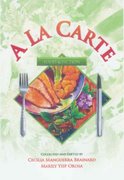
INTERVIEW FOR MELLON, re A LA CARTE FOOD & FICTION


There's some flurry of publicity in the Philippines, in response to A La Carte's winning the Gourmand Award in the Philippines, and vying for the Best in the World Gourmand Award. My co-editor of the anthology, A La Carte Food & Fiction (Anvil, 2007)asked me to answer some interview questions for Mellon. I sent in my draft, and Marily will add and edit our responses to this magazine (I'm assuming Mellon is a Magazine). Here are my unedited answers to the questions:

1. What inspired you and your co-editor to collect a compilation of short stories about food?
see our book, p. vi Introduction - "It was this deep connection that Filipinos have for food that prompted Marily Orosa and me to edit this collection of Philippine and recipes. Marily and I share a love for fiction primarily because we believe that stories reflect the soul or culture of a people. So does food, and we thought that combining stories and recipes in one book would reveal Filipino culture in a unique manner, and would invite lovers of both stories and food to take a look at our delectable collection."

2. How did you choose which stories to include in the anthology? How about the recipes?
We put out a search for short stories related to food. We let other writers know about our project; we used the internet primarily to put the word out.
When the stories came in, we chose what we thought were the strongest works of fiction that were food-related. In most cases, the authors provided recipes that connected with their stories. In some cases, we helped the authors find recipes that would work with their piece.

3.Aside from the obvious theme of food, is there any other running theme that connects all the stories in the book?
Relationships - is a strong theme in the stories.

4. Were there any problems you encountered during the process of creating the book? How did you overcome these obstacles?
It was work finding stories that were good and with the right food-theme. We had to make a lot of effort to track down writers all over the world.

5. Your book was recently shortlisted for the Gourmand World Cookbook Awards 2007. How do you feel about that? What do you think makes A La Carte different from other fiction books or books about food?
We are delighted and amused that the book won the Philippine Gourmand Cookbook Award, and is shortlisted for the Best in the World award. The stories included in this anthology are strong; they are character-driven stories, and as such reveal much about Filipinos, their relationships with families and others, and also about Filipino culture. We are amused primarily because we (Marily and Cecilia) did this book project because of our friendship from college days. Finding ourselves in the same literary world, we had talked for years about doing a book project together. We have edited two books, Behind the Walls (full title), and A La Carte Food & Fiction, to fulfill this promise.

6. What important insights did you learn during the whole course of making the book which you wish to impart on your readers?

Insights: Creativity and Fun go together - we had fun doing this book; it was meant to be a fun project, and the book also turned out to be a fine literary book;
Our stories (that is stories about Filipinos) and our books can be just as interesting and captivating as any other in the world, as evidenced by the attention the Gourmand people have given it. The Gourmand Awards are coveted by huge mainstream publishers worldwide and two books by Anvil are in the top three, vying for the international awards.

~~~~
Note: Marily Orosa is the publisher of Studio 5, which has published numerous award-winning coffee table books about Jose Rizal, Andres Bonifacio, and others.
Picture above shows Marily, me, and Lauren;
Next picture shows Marily and me at book launching of Behind the Walls. I'm the one in the extreme left, and Marily is wearing red; she's behind Linda Panlilio. Miss International, Gemma Cruz Aramet, whose piece is part of the anthology Behind the Walls, is on the far right;

Wednesday, February 27, 2008

GOURMAND WORLD COOKBOOK AWARDS

Anvil Publishing (www.anvilpublishing.com) has 7 books that won the Gourmand Awards, and 2 of them (A La Carte Food & Fiction and The Governor General's Kitchen by Felice Sta. Maria) are in the top 3, vying for the Best in the World Gourmand Awards. Winners will be announced in London, April 13.
Hmmm - I think the food and drink will be good there.

~~~~~~

Press Release, February 19, 2008

THE GOURMAND WORLD COOKBOOK AWARDS
BEST IN THE WORLD
SUNDAY APRIL 13, 2 pm

Gourmand received books from 107 countries in 2007. Now 845 cookbooks compete in 40 categories for Best in the World, after winning their country’s competition. Early guests from 32 countries had already confirmed by February 18.

• The event is filmed for television, with many media invited
• Live music by the 18-pieces James O’Carroll Big Band.
• Winners party at 5 pm with champagne Gosset and cognac Frapin

THE GOURMAND-LONDON BOOK FAIR COOKBOOK CORNER
APRIL 14-16

Stand U800 Gourmand-LBF Partnership.
• Exhibition of the best cookbooks from over 80 countries.
• Cooking demonstrations by 16 celebrity chefs from 14 countries.

Monday April 14

10 Chef Ramzi Lebanon
11 Sara La Fountain Finland
12 Chef Völundarssön Iceland
13 Julie Biuso New Zealand
14 Chef Wan Malaysia
15 Babette Guadeloupe
16 Jigyasa Giri and Pratibha Jain India
17 Richard Juhlin – Champagne Club Sweden

Tuesday April 15

10 Sahrap Soysal Turkey
11 Yvan Cadiou France
12 Angela Hartnett UK
13 Chakall Portugal
14 Annabel Langbein New Zealand
15 Hayden Wood The Liquid Kitchen-Australia
16 Chef China
17 Richard Juhlin – Champagne Club Sweden

Wednesday April 16

10 Fatema Hal Morocco
11 SURPRISE
12 Yann Barault – Le Cordon Bleu France
13 Art Smith US
14 LaurelAnn Morley Barbados
15 SURPRISE
16 Richard Juhlin – Champagne Club Sweden

CHAMPAGNE BAR Stand U801
With champagne Gosset.

Edouard Cointreau
President, Gourmand World Cookbook Awards
www.cookbookfair.com

Sunday, February 24, 2008

A LA CARTE FOOD & FICTION - GOURMAND AWARD

I just received the following notice from the people who run the Gourmand World Cookbook Awards. The anthology A La Carte already won the Gourmand Award in the Philippines, and is being considered for their International Award - in the top 3, according to the Gourmand contact. Top mainstream publishers vie for the Gourmand Awards, so this is good news for me, my co-editor, Marily Orosa, and publisher (Anvil, Karina Bolasco)!


SHORTLIST FOR THE BEST IN THE WORLD

CONGRATULATIONS

You are a Nominee on the shortlist for

Best in the World in the Gourmand Awards

With your book:
A La Carte: Food and Fiction

You compete in the category: 27 – Best Food Literature Book

There were books from 21 countries in that category.

The complete list will be published in the Gourmand Yearbook 2008 in April.

You are now in the top three.

The Best in the World will be announced on April 13 in London and called to the stage at Olympia Theatre. (London, UK)

Thursday, December 27, 2007

A La Carte Food & Fiction wins Gourmand Award

I missed the original email from Gourmandbooks.com, but Marily Orosa and Felice Sta. Maria informed me that the anthology which Marily and I co-edited, A La Carte: Food & Fiction, won a Gourmand World Cookbook Award 2007,in the category Best Food Literature Book. Apparently the book is a winner in the Philippines, and will be competing with other countries' winners.

Here's the official letter from Gourmand:
Congratulations!
Gourmand World Cookbook Award 2007
You are the winner in your country PhilippinesYou qualify for the next "Gourmand Best in the World Competition"

With:

A La Carte: Food & Fiction
Edited by Cecilia Manguerra Brainard and Marily Y. Orosa
25 Authors
Illustrations by Ice de Leon
ISBN: 978 9712718770
Anvil Publisher

In the category: Best Food Literature Book

The winners will appear in the website http://www.cookbookfair.com on January 8, 2008.

The following is more information about the award:

GOURMAND AWARDS
www.cookbookfair.com

WINNING
1.- THE PROCESS
In 2007, over 6000 books were received from 107 countries. All books compete within their own country, sometimes separated by languages, to correspond to the book trade established markets.

The deadline for receiving books was November 15. Entry is free, there are no fees. Anyone may send books to compete, the author(s), the publisher, the readers.
The winners receive personnally their notification at the end of 2007. The lists of winners are posted on internet in January 2008.

2.- THE IMPACT OF WINNING
Given the number of books in the competition, it is an honour to win. Winning books get more visibility in the market place and may get higher sales, often with new print runs.

The selection process tries to focus on books that have international potential. Winners books get international attention: translations and international rights deals may be negotiated.

Winners use self adhesive tickets to announce visibly their award to the public. They issue press releases in their local and international markets. There is much promotion of the awards on internet sites, publishers catalogues, in the next books, and in authors biographies.

3.- THE GOURMAND YEARBOOK
The Gourmand Yearbook 2006 and 2007 give much cookbook and wine book trade information which cannot be found elsewhere = market information, trends, lists of Gourmand winning books with comments on the books.

The Yearbook is distributed at the international book fairs that Gourmand attends, and it is the catalogue of the exhibitions, which follow the Yearbook classification of the winners. The Yearbook is also sold by major cookbook stores around the world, and directly by Gourmand.

4.- THE GOURMAND EXHIBITIONS
Last year winning books had the following exhibitions, free for the winners:

- April : Beijing Gourmand Awards, Dragon Springs Exhibition
Visitors: trade professionals from 36 countries plus many Chinese.

- October: Frankfurt Book Fair.
Gourmand Cookbook Stand of 130 m2.

- 2007-2008: Beijing International Book City
Permanent One Year Exhibition.
The Gourmand stand is one of the 10 biggest among the 48 foreigners present.

In the coming year 2008 there is the same exhibition plan, with a major presence at the major book fairs, such as the London International Book Fair, April 14-16: our Gourmand Cookbook Corner will be even bigger than in Frankfurt, with the exhibition, chefs demonstrations, and a Champagne Bar.

5.- THE FUTURE
Winners qualify for the “Best in the World” competition.
The results of that competition will be announced at the Gourmand yearly awards show in May 2008. The location will be communicated directly to you, and all information will be on internet in January 2008.

For more information, including the Gourmand history and the future schedule see: www.cookbookfair.com

Monday, March 12, 2007

HOW I LEARNED TO MAKE LECHE FLAN (OR HOW I MET MY HUSBAND)


THIS is how my husband Lauren tells it:


Cecilia wooed me under false pretenses. When I was in the Peace Corps, I got sick and had to be hospitalized in Cebu, Philippines. Cecilia and her friends visited me, and they had a platter with leche flan, and she led me to believe that she made it. It was the best leche flan I ever had and I couldn’t stop thinking about it even when I returned to California…”

I’m remembering that summer day in Cebu, trying hard to recall if I claimed to have made the leche flan. I’m certain I didn’t; I wouldn’t have lied about that. But I’m jumping ahead of the story. Let me back track.

During the summer of 1966 I was in the Island of Cebu. I loved Cebu. I was born and raised there, but my widowed mother had transferred me to Manila for my high school and college studies since she worked there. Manila was crowded, dusty, noisy, and the lifestyle was more hectic than Cebu’s. When the holidays came around I couldn’t wait to take the plane South to return home to Cebu. I loved our home there; I savored the quiet slower pace of life. And there were my friends, and food — I couldn’t wait to eat Cebuano food. I found Tagalog food too strong — too salty or too sour, too bitter, too intense. Cebuano food was more subtle, more flavorful. There was a directness and simplicity to the dishes: kinilaw, lechon, grilled fish, roasted chicken. The delicacies especially were wonderful: scrumptious rich tortas, soft buttery ensaimadas, crispy Titay’s Rosquillos cookies, and other delicacies that contribute to Cebu’s culinary fame.

That summer I did what I always did in past summers: I slept in, a luxury I could never do in Manila since it took me an hour each way to get to school and so I had to be up by 5:30 a.m. In Cebu, I could loll around until past 8 and by around 8:30 a.m. I was having breakfast with my brother and his family. Even though my fried eggs, over-easy, were somewhat cold, I loved the fried chorizo--Cebuano, scrumptious sausages special-ordered from the old woman who had made them for my grandparents. It was like that in Cebu — we had our favorite vendor for food like tableya Chocolate, bibingka, budbud kabog, even chicharon. The chorizos we got were huge and plump and glistened red-brown with the lard rendered from pork fat. Remember this was in the 60s before we thought of cholesterol; the chorizos were heavenly. Sometimes the cook prepared fried dried fish, such as dangit, small, crispy, salty, and as sinful as a potato chip.

After breakfast, I read or played with my nieces and nephews or did errands with my brother or sister-in-law, just for the ride. Soon it was lunchtime, which was an elaborate affair with several courses. Soup could be malanggay soup with chicken, followed by fried crablets, estofado, pork adobo, rice, and seasonal fruit or something more sinful like sansrival or leche flan. Hmmm – leche flan – our cook Menggay made the lightest, creamiest, tastiest flan in the entire world – but more of that later on.

After lunch, instead of taking siesta as the other members of the family did, I usually took off to see my cousin and friends. The seven of us (we actually called ourselves the Magnificent Seven) would either hang around in someone’s house where we practiced putting on makeup or fussed with our hair, or we would go see a movie. Afterwards, we had merienda in someone’s house — favorites were fried bananas or linusak (plantains pounded and mixed with brown sugar) or ginataan (plantains, sweet potatoes, langka and other fruit and roots cooked in coconut milk). As I write this now, I wonder how we managed to remain trim. It must have been the dancing we did at night, because practically every night, we were out to a party or to a club, dancing until 2 or 3 in the morning.


It was in one of these parties where I met my future husband. To be exact, we were in the Casino Español, and everyone who was anyone in Cebu was there. Earlier that day, our group had gone to the beauty parlor, had put on makeup, wore our flashiest dresses, and there we sat around a table in the second floor of the Casino Español, trying to appear sophisticated. We were silly of course, and young and prone to giggling fits at the slightest provocation, and it was during one of these giggling moments, when someone tapped me on my right shoulder. I turned and saw the tallest American I had ever seen. He was nice-looking, with reddish-brown hair. I didn’t know whether to talk to him or ignore him.


At this point, let me explain my ambivalence: in 1966 the Vietnam War was going on and nearby Mactan Island had an American base. This meant that American soldiers were all over Cebu. Our mothers warned us to stay away from the soldiers; however we were allowed to socialize with the American Peace Corps Volunteers. Our mothers felt sorry for the young volunteers who lived in remote towns without running water and electricity, and who seemed devoted to their duties of teaching or doing community work. We saw them tramping through the streets, riding jeepneys and buses to get to places, and couldn’t help but be touched by the sight of them.

Lauren extended his right hand, and I stared at it. It was my cousin’s boyfriend, Pete, an American Peace Corps Volunteer who solved my dilemma. “That’s Lauren, another volunteer,” Pete said. That meant it was all right for me to greet him. I took his hand, but — and to this day I have no idea why it happened — words escaped me: “Pleased me to meet you,” I said. I shook my head, tried to correct myself, but he already had me out on the dance floor. He stood 6’5” and I stood 5’4” — everyone watched, and a number of girls were snickering. I felt self-conscious, embarrassed, but Lauren was funny and cute, and so I did not mind dancing with him again.

He was based in another island, in Maasin, Leyte, but when he was in the city, he hung out with us. Then curiously, near the end of the summer, we didn’t see him. He simply vanished. We speculated he found a girl friend. I felt awful about this, but tried not to show my unhappiness. The truth is I missed him terribly; I’d grown accustomed to his stories and jokes.

It was Pete who informed us that Lauren was in the hospital. “What happened? What happened?” we gushed. Pete said something about surgery on his leg. Then we started to feel sorry for this young American, away from his home, alone in the hospital, waiting for surgery.


We decided to visit him. Just as we were leaving, I saw that our cook Menggay had a couple of platters of her famous leche flan in the kitchen. I grabbed one and brought it with us to the hospital. The seven of us marched into that hospital room that reeked of alcohol. There Lauren lay, on that cold steel hospital bed, with one leg hoisted up on some contraption. The doctors had cut into his leg. There is nothing more pathetic-looking than a huge man lying helpless on a hospital bed with his leg dangling up in the air. I imagined how miserable I would have felt if I were sick and helpless in a foreign country. I could have wept. I was so caught up feeling sorry for him that my cousin had to nudge me to give him the flan. He perked up; he tried to sit up to take a good look at the flan. It was a beautiful golden brown flan; a masterpiece. He beamed and smiled at me gratefully. He didn’t look as fallen as he had when we had walked in. I have no recollection of what I said that day. I don’t believe I claimed to have made the flan myself. But Lauren’s memory is that I made it, and to this day, he insists that I said I made that flan. “You wooed me under false pretenses,” he jokes.

Years later, when we were married and living in San Francisco where he was a law student, he kept badgering me to make leche flan. We were young and poor and lived in an apartment house directly across the Levi Strauss factory in the Mission District. He attended Hastings School of Law, and I worked as an Executive Secretary at McCormick-Schilling Corporation on Montgomery Street. “I can’t; I don’t have the leche flan mold,” I said, excusing myself. The truth is that beyond frying hamburgers, I could barely cook — I don’t know why he had not noticed that and still nurtured the belief that I could actually make leche flan. I never cooked when I lived in the Philippines; our cooks did all of that.

“Oh,” he said, “discouraged. “Maybe you can find it here.”

“I don’t think so,” I replied.

When we had a son and I brought him to the Philippines for a visit, he reminded me, “Be sure and find the flan mold.”

Back in Cebu, I made it a point to ask our cook Menggay for her leche flan recipe. She turned coy and with a smile said, “It’s very easy, some eggs, milk, sugar, that’s all.” She was an ageless, plain woman, who usually wore a scowl, and who now had a vile little smile.

“But what do you do with them?” I insisted.

“You mix them together, and then you double boil it, that’s all.”

I wasn’t getting anywhere, so the next time she prepared leche flan, I made it a point to stand right beside her to observe her. True enough, she mixed 4 eggs, 1 can of evaporated milk, 1 cup sugar, some vanilla, and did she throw in another cup of water? And then she placed sugar at the bottom of an empty metal Magnolia ice cream can, which she held over a low flame to carmelize the sugar into a rich golden brown. Afterwards, she poured in the mixture and placed the can in another container with water. She double boiled it for around 40 minutes. She tested it by pricking the flan with the tip of a knife; when it pulled out clean, it was done. After allowing the flan to cool, she got a knife, ran it between the pan and flan, to separate the flan. Then she placed a serving platter over the can, and flipped it, so the flan would fall onto the platter, bottom-side up. It looked like some kind of sunset; it was breathtaking.

That seemed simple enough, and backat home in the States, I bravely informed my husband I would be making leche flan. “You found the mold,” he said, happily.
I held up the Magnolia ice cream metal can.

“That’s the ice cream container in the Philippines,” he said, with a tinge of disappointment.

“That’s what we use.”

“Oh,” he said, “I thought the flan mold was a special dish or something.”

I did my best to imitate Menggay. I carmelized the sugar, burning my hand while doing so; I double boiled it; and I flipped the flan onto a pretty platter. The flan was a disaster. It didn’t look anything like Menggay’s at all. My carmelized sugar was too dark so the entire top of the flan was muddy brown. The worse part was that the texture of the flan was not right; it was bubbly and grainy, not smooth and creamy like Menggay’s.

Lauren took one look at it and said, “You didn’t make that flan, did you?” He looked disappointed.

“It’s a bit burned, but it’s okay,” I said, scraping off the burned top of the flan.

“I mean, you didn’t make that flan when I was in the hospital.”

“I never said I did.”

“But you said you did.”

I shook my head emphatically. “I didn’t know how to boil an egg. The cook did all the cooking.”

“The cook? Menggay? Menggay made the flan?”

“Of course Menggay made it.”

He looked sadder still and I became sad with him. I hadn’t realized how important that flan had been to him. Clearly it meant something greater than the flan itself; and what this meaning was I had no idea. I’m not sure he could have verbalized it either. In its simplest form, this was it: in 1966, he was young, and sick and alone, in a foreign country, and a young woman had given him this perfect delicious flan, and it had made life better for him. It was probably then when my lifelong love affair with leche flan began. I resolved I would learn how to make good flan.

It was my cousin, Manny, who considered himself something of a gourmet cook, who told me to do away with the Magnolia can and use small custard pyrex dishes – “Throw it out, I never want to see this again!” He taught me how to carmelize sugar in a pan and pour it onto the dishes. He also taught me to double boil for around 35 minutes. My presentation was great; and the texture and appearance of my flan improved a lot. It soon became my specialty. Indeed it was a favorite among my family and friends, especially during holidays.

I had another breakthrough when our family went on a holiday to Puerto Vallarta in Mexico. We were staying at a multi-level seaside mansion called Villa Tres Vidas, where we had our own driver and cook, courtesy of the wealthy Newport Beach owner of the mansion. One evening the Mexican cook made leche flan. I was certain it would be inferior to mine and was surprised (and humbled) to discover it was better. Using my broken Spanish, I extracted her recipe: 4 eggs, 1 cup condensed milk, 1 cup evaporated milk, 2 tablespoons vanilla, sugar to carmelize the bottom of the container. Leche Flan Villa Tres Vidas became a family favorite until I had another breakthrough.

This event happened when Lauren had a bad bout of flu. To cheer him up I offered to make leche flan. Cranky, with stuffy nose, and a horrible cough, he grumbled and said he probably couldn’t taste it all. “But, go ahead,” he said.

I had the den TV on to the cooking show channel while I gathered my materials in the kitchen. I was about to crack the eggs when I overheard the program host talk about – of all things - leche flan. I leaned over the counter so I could watch TV better. It was a Vietnamese woman and she was talking about a custard made in Vietnam that was almost exactly like my Leche Flan Villa Tres Vidas. The only difference was that coconut milk took the place of evaporated milk. Right then and there, I ran to the market, bought a can of coconut milk so I could follow her recipe. The result was wonderful! This was the best flan I had ever made: smooth, creamy, and incredibly light. My husband was in bed, coughing and somewhat feverish when I presented the flan. Cranky as he was, he lit up when he saw the perfect golden top. “Go ahead, try it,” I urged him. He did and smiled broadly. “Hmmm, it’s pretty good,” he said, giving his imprimatur to this new recipe.The Vietnamese version is now the favorite among my family and friends. But regardless, I’m always on the lookout for another recipe. In fact I have another leche flan recipe I have to try, one with coffee in it.

(2006 - This article is part of a collection of food essays, by Anvil. Above pictures show Lauren and Cecilia in Devin, Bratislava, and 1967 photos of Lauren as a Peace Corp Volunteer in the Philippines.)
 

Read also:
Cooking with Cecilia Brainard - Quiche
Cooking with Cecilia Brainard - Linguine with Clams
Cooking Lengua Estofada
Food Essay - Fried Chicken Caribbean-style
How I Learned to Make Leche Flan (or How I Met my Husband)
Cooking with Cecilia - Leche Flan (Vietnamese Style) 
Recipe of Balbacua Cebuana from Louie Nacorda
Easy Filipino Recipes from Maryknollers
Cooking with Cecilia - Beef Bourguignon
Cooking with Cecilia - Chicken Soup for my Bad Cold 

The Rats and James Dean's Porsche 
 
The Schools I attended, Part 1, St.Theresa's College
The Schools I attended, Part 2, UP & Maryknoll
The Schools I attended, Part 3, UCLA

Saying Goodbye to Papa
Where the Daydreaming Came From 
Death of a Carnival Queen

 tags: food, wine, cooking, recipes, love, family, Cecilia Manguerra Brainard, leche flan