Saturday, October 2, 2010

Finding Jose Rizal in Cebu, published Zee Lifestyle, June 2009


FINDING JOSE RIZAL IN CEBU
Cecilia Manguerra Brainard
First published in Zee Lifestyle, June 2009

It was my friend, Marily Orosa, publisher of the award-winning coffee table book, Rizal, who mentioned that she visited Cebu to do research for her book. She raved over the rare Rizal artifacts she had found in Cebu. I had no idea that Cebu had Jose Rizal artifacts; I had always thought that belongings and documents of Rizal were in Luzon where this Philippine National hero came from. It wasn’t until a year ago when I visited Rizal Museum at the University of Southern Philippines and realized, after talking to Dr. Odette Jereza, Vice President of the University of Southern Philippines, that Rizal Museum was where Marily had found the Rizal artifiacts.

I thought the Rizal artifacts may have ended up in USP’s Rizal Museum because of Josephine Bracken, the 18-year old Irish lass whom Rizal fell in love with in Hong Kong. She was the step-daughter/companion of George Taufer who had cataracts and had sought Rizal’s medical assistance. It turned out that Rizal and Josephine Bracken fell in love with each other. Bracken left Taufer and lived with Rizal in Dapitan. They had wanted to get married by there were complications because Rizal was a Mason. They got married only shortly before Rizal was shot. As his widow, she joined the revolutionary movement, but after the revolution, the American colonial government hired her as a public school teacher in Cebu. Cebu historians will talk about where Bracken had lived while she was in Cebu – somewhere in One of her students was reportedly Sergio Osmeña who later became President of the Philippines. Bracken also taught in Manila, but when it became politically dangerous for her, she fled to Hong Kong. It was there where she met her Cebuano husband, Vicente Abad who worked for Tabacalera, and with whom she had a daughter named Dolores. It was this Abad connection that made me certain the Rizal collection came via the Abad family.

I proved wrong. The collection in Rizal Musuem had belonged to one of Rizal’s younger sisters, Trinidad, who gave the collection to her niece, the daughter of another sister of Rizal, Lucia. The niece, Concepcion Herbosa married Escolastico Duterte who was the former Vice President of the University of Southern Philippines.

The lights in Rizal Museum have to be dim, and the temperature has to be just right, in order to protect the artifacts from disintegrating further. One huge room displays these artifacts. Some treasures in Rizal Hall are: Jose Rizal’s personal clothing, from overcoats, pants, summer clothes, undershirts, to socks that have been meticulously darned. The 1899 and 1900 copies of the novels, Noli Me Tangere ad El Filibusterismo are there with the original receipt from Chofre Printing company. There are genealogy charts and numerous pictures of Rizal’s family members, his home in Dapitan, his prison cell, the place where he was baptized, and more. There is a report card of Trinidad Rizal; a complete set of 1908 Jose Rizal Memorabilia postcards; a 1906 handkerchief with prints of the song, “Canto Patriotico de Maria Clara.”

Photographs of the women Rizal reportedly loved (Segunda Katigback, Leonar Rivera, Gertrude Becket, O Sei San, Suzanne Jacoby, Nelly Bousted, and of course Josephine Bracken His medical books are displayed there. Some of Rizal’s art works, including a carving of Josephine Bracken, crayon sketch of another Rizal-love, Leonor River, and other art pieces are there. A very important treasure in the Hall is the original KKK Kataastaasan Kagalanggalangan Katipunan) flag, which Marily Orosa featured in another coffee table book, The Tragedy of the Revolution.

There are original love letters of Josephine Bracken and Jose Rizal. And there is a letter from Josephine Bracken to Rizal’s sister Josephine Rizal, where one can see Bracken’s evenly spaced handwriting. It is dated May 1894 and references her Hong Kong address. This was clearly written after Rizal and Bracken had met in Hong Kong, but before Bracken accompanied her stepfather George Taufer from Hong Kong to Dapitan to seek Rizal’s medical attention for his eyes.

I fell in love with the drawings by Rizal of Josephine Bracken. One shows Bracken in the nude, reclining on a divan, with two angels near her, one hovering from the top, and one standing and seemingly staring at her stomach. I wondered if this drawing was made after Bracken’s miscarriage in Dapitan, and if the angels had something to do with the child they had lost.

The drawings made me think of Josephine Bracken, the shortness of her life, its turbulence: Her mother died soon after giving birth to her; her military father abandoned her in the care of George Taufer; she lived with Rizal, a man, who was on the hit-list of the Spaniards; when Rizal died, she bounced around, from Cebu, to Manila, to Hong Kong. Perhaps she had a few good years with Vicente Abad, but by the time she was 26, she was dead from tuberculosis.

Those interested in the life of Jose Rizal will discover much in Rizal Musuem, which is in the University of Southern Philippines in Lahug. It seems to be a secret museum that Cebuanos hardly know, except perhaps for students. But I know for a fact that serious Rizaliana researchers always make a stop there to view and study the numerous Rizal artifacts kept there.

And what a treasure Cebu has with these artifacts!

###

Read also
Life in Parian Now
Cebu's 1730 Jesuit House 
The Secret Hall of Angels 
A Story of Hope
Finding Jose Rizal in Cebu
Lola Remedios and her Sayas
Lunch with F. Sionil Jose
Pre-Colonial Gold in Cebu 
~~~
tags: Cebu, Manila, Philippines, history, literature, Jose Rizal, F. Sionil Jose, Cecilia Brainard, lifestyle, 

Life in Parian Now, published Zee Lifestyle, Nov. 2008


LIFE IN PARIAN NOW
Cecilia Manguerra Brainard
First published in Zee Lifestyle, November 2008


The first time I saw the building in Parian, Cebu, which I inherited from my mother, I wept. The three-story building was in terrible condition, just like many of the rundown structures in the old area of Cebu. The building needed a fresh coat of paint; the grounds needed cleaning up. I felt a wave of despair but deep inside I also felt an emotional attachment to this property which had belonged to my mother and to her mother before her. It is not easy to disregard such matters.

Keeping a stiff upper lip, I checked out the neighborhood. Even though I had grown up in Cebu, it was the first time I had walked around the Parian. I noted that my property was half a block from the Heritage Monument of Cebu and the 1730 Jesuit House (Ho Tong Hardware). The historic Yap-Sandiego house, Casa Gorordo and Rafi Building were also nearby. My property was walking distance to the Santo Nino Basilica, the Cathedral, Fort San Pedro, and historic Colon Street. From my building rooftop, I had an excellent view of the Cathedral, Cebu’s hills, city, and port.

It may seem farfetched to compare Cebu to Los Angeles and Paris, but I will mention here that seedy parts of these two great cities underwent gentrification to accommodate the growing population and to address transportation problems. In downtown Los Angeles specifically, many warehouses were turned into artists’ lofts and condominiums, with accompanying development of chic restaurants and shopping centers. I could see that the Parian had the potential of gentrifying as did these two places.

In the 1990s my mother, Concepcion Cuenco Manguerra, had hired Architect Abella to build a Deco style building on her Parian property. I had seen and admired it then. The building was solidly built with handsome details such as wrought iron balconies. The property did not flood, a common problem in the Parian. Recalling the building as it first looked encouraged me to convert the upper units of the building into my Cebu office/residence. I used a Mexican Spanish Colonial theme for colors and furnishings. I had the rooftop painted and decorated with potted plants, bamboo tables and chairs. I was delighted with the Old World effect which was in keeping with the history of the place. The rooftop in particular turned out to be a magical place, especially at night, with its magnificent view of the Cathedral’s steeple lit up in green and the city’s sparkling lights.

My family’s roots in the Parian date back to the late 1800s; documents indicate that my Great-great-grandmother Juana Lopez had bought land in the Parian area. At the turn of the century Juana’s daughter, Remedios Diosomito and her husband Mariano Albao Cuenco lived in a two-story house in then-fashionable Colon Street. There they raised their children and ran the Imprenta Rosario. Their second son, Mariano Jesus married Filomena Alesna from Carcar, and for a few years they lived in the Colon Cuenco house. By this time, Mariano Albao Cuenco had died and Remedios herself ran the Imprenta Rosario, becoming the first woman publisher in the Philippines. She ruled over her children, one of whom became an archbishop, the other a senator, the third a congressman, the fourth (woman), a writer. At some point, Mariano Jesus, Filomena and their family settled in a house in nearby Norte America. It was during this time when my grandmother Filomena bought land in Zulueta Street. It was this land that fell into my hands.

As history buffs know, the Parian is one of the oldest and most historic places in the entire Philippines. In the late 16th century, Chinese traders had settled here; the area developed into the commercial hub; by the early 1900s the Parian was the residential headquarters of Cebu’s wealthiest families, and it also became a publishing center. World War II and the subsequent destruction of Cebu changed the area drastically. Unfortunately, the wealthy families did not rebuild their Parian homes but fled to newer housing developments. The Parian declined, with many buildings turned into warehouses or low cost residences.

As I fixed my building, I developed a better appreciation of the Parian. I could easily walk to the Cathedral, Santo Nino Basilica, City Hall, the Malacanan of Cebu, downtown stores, bank, three internet cafes, LBC, hardware and building supplies stores. Transportation was easy to find. It was convenient to live here. A visiting American Fullbright Scholar, Dr. Michael Cullinane, chose to live in the Parian for the same practical reasons. There is also a Frenchman and his family who reside in the Parian, no doubt for the same reasons.

These are what I find charming about living in the Parian:
- looking out my balcony in the evening when the traffic has died down and the barbecue and food stalls have opened and people promenade up and down the street, talking, laughing, catching the sea breeze;
- seeing the Yap-Sandiego house all dolled up;
- walking down Binacayan street and catching a glimpse of the old Jesuit House’s gate;
- discovering traces of the 1730 Jesuit House in the Ho Tong premises;
- hearing the tooting of ships as they sail past the nearby port;
- sitting in my butaka chair with the windows wide open and enjoying the sea breeze zipping in and out;
- having Old Cebu lovers over for dinner and listening to them talk about Cebu events and personalities who had lived in the Parian a century ago;
- walking around the area and feeling as if I’m back in time, 1908 perhaps when my own grandmother herself walked along Mabini, Colon, Lopez Jaena, Logarta Streets.

It has its charm, the Parian. It is still depressed, but if you look at the Parian with the eyes of a lover, you will find secret gems tucked away. You can still sense its historic past. In fact, I detect a heightened consciousness among Cebuanos to preserve the rich heritage of Parian. Consider these events that are now happening in the area: Misa de Gallo procession in December, Sinulog festivities in January, Gabii Sa Kabilin in May, Independence Day festivities in June, the Parian Fiesta of San Juan Baustita on June 24, ongoing events and exhibits at the Casa Gorordo, the Cathedral Museum, the Santo Nino Museum, and Fort San Pedro. Tourist Police now patrol the area daily.

Who knows, perhaps historic Parian may experience a revival. In the meantime, I pray to the Santo Nino, and afterwards I buy bibingka in front of the basilica, and back home, I make myself chocolate-e and partake of these Cebuano delicacies just as my mother and her mother before her had done. And I thank them, these women ancestors of mine, for this historic gift.
~~~
Read also
Life in Parian Now
Cebu's 1730 Jesuit House 
The Secret Hall of Angels 
A Story of Hope
Finding Jose Rizal in Cebu
Lola Remedios and her Sayas
Lunch with F. Sionil Jose
Pre-Colonial Gold in Cebu
~~~
tags: Cebu, Philippines, Parian, history, Spanish Colonial, travel, tourism

Friday, October 1, 2010

ANGELICA'S DAUGHTERS, A DUGTUNGAN NOVEL, now available from palhbooks.com


Angelica's Daughters is now available in the US
Contact palh@aol.com
Angelica's Daughters, softcover, newsprint, 200 pages, $16.95
US shipping $4.95
PALH
PO Box 5099
Santa Monica, CA 90409
Tel/fax: 310-452-1195
Email: palh@aol.com; palhbooks@gmail.com

Philippine Expressions also has copies, email linda_nietes@sbcglobal.net

Brainard, Cuizon, Evangelista, Montes, and Sarreal. ANGELICA'S DAUGHTERS, A DUGTUNGAN NOVEL. Anvil, 2010, First Edition, softcover, newsprint, 200 pp, $16.99
"Chick lit with a comfortable dose of smartness and historical verve. Angelica's Daughters celebrates audacious heroines primed by deep passion and fairytale romance! Set in the heat of a 19th-century Asian revolution and what its setting becomes by the 21st Century, Angelica's Daughters beguiles with its mythic splendor, threat of a generational curse, masterful betrayals, and female leads readers can fall in love with.
The story found itself as one writer finished her chapter without consulting the others, and passed it on for the next writer in line to do with as she pleased. The amazing result is a delightful read by five writers who cherish their Hispanic, Filipino, and American cultural roots." ~ Felice Prudente Sta. Maria

This collective and collaborative novel proves that writers share much more than just an interest in, as one of the authors puts it, “the idea of creating something of rare beauty out of nothing at all.” They share a Creative Unconscious that, when working on a common text, comes up with startling and unpredictable imaginative delights and insights. This tale of two women living a century apart (and the women and men in their lives) told sequentially by five women is truly an ensemble performance worth a standing ovation.~ Isagani R. Cruz, Philippine Star


"Part of the pleasure of reading Angelica's Daughters, the engrossing new collaborative novel by five established Filipina writers, is seeing how deftly the authors deal with the challenge of writing in this resurrected literary form. A dugtungan is a genre of Tagalog novel popular early in the 20th century, in which each writer creates a chapter and hands it off to the next, who writes another chapter without direction. The result, in this case, is an ensemble performance that contains something of the exhilaration of theatrical improv. One watches these accomplished authors inventively weave a historical romance, creating gripping heroines and turns of plot, crossing decades and national boundaries, tapping into cultural roots of the Philippines, Spain and America. Reading Angelica's Daughters is a gripping experience.~ Brian Ascalon Roley, Author of American Son (W.W. Norton)

Monday, September 27, 2010

Bethany's Bookshelf Review of Growing Up Filipino II

Bethany's Bookshelf, Midwest Book Review

Growing Up Filipino II
Cecilia Manguerra Brainard, editor
Palh
PO Box 5099, S.M., CA 90409
9780971945838, $21.95, www.palhbooks.com

Everyone faces different challenges. "Growing Up Filipino II" is a collection of short stories from the pens of many different authors. These authors, all Filipino, offer a taste of Americana of their own as they reflect on their lives and the kinship they share with other people of their own race. These stories will give advice for young Filipinos, and give anyone insight into a different perspective of life. "Growing Up Filipino II" is a treasury of memoirs, recommended.

Cha: An Asian Literary Journal Review of Growing Up Filipino II


(I think this is called a Mixed Review. Tsay does not like the cover nor title, but she does say good things about the anthology. She says the book will not last. I disagree of course, knowing my books are long-lived. - cb)
The Undersell: Growing Up Filipino II

by Alice Tsay

Cecilia Manguerra Brainard, editor, Growing Up Filipino II: More Stories for Young Adults, PALH, 2010. 257 pgs.

If you're a fan of the sequel but the blockbusters that screened at your local movie theater this summer have struck you as too glossy and lacking in heart, Growing Up Filipino II may be a follow-up project that is more your cup of tea. Have you heard of it? No? Well, there may be a good reason why. It's definitely not for the reader who carries or even reads books for cultural cache. The red patterned cover is emblazoned with two rows of decorated flip-flops in every imaginable color, and the subtitle specifies it to be More Stories for Young Adults. In other words, not the type of book people tend to purchase for themselves. This combination of marketing decisions basically limits the main audience within the targeted ethnic demographic to girls of a certain age possessing either well-used library cards or bookstore-frequenting aunts who enjoy giving gifts—that is to say, only a very partial sampling of those who can find something valuable to take from the stories in this book.

So let's put aside the fact that these twenty-seven stories "written by Filipino writers in the Philippines, the United States, and Canada" most likely weren't meant for me or you. Being the subject of writing with a motive is usually a cause for suspicion anyway, which is probably why the introduction—a defense of the content that is a minefield of academic terms—falls a bit flat. We don't really read stories because of the "shifting discourses of ethnicity" that they "interrogate," the "models for cohesion" or "negotiations of transculturality" they provide. No, not even for the "multi-layered specificity" of an author's prose—at least not in the first burst of emotion that determines whether or not we like something we've just read.

Fortunately, the best stories in this collection wiggle skillfully out of the various boxes crafted for them, viewfinder attached. The girlish, juvenile fluff suggested by the cover and the ponderous analysis of the introduction have little to do with offerings of Growing Up Filipino II. Instead, the book offers a selection of pieces that use young central characters and unfussy English as ways of entering into the complications inherent in subjects such as religion, cultural identity, immigration, death and family. Oversimplification and condescension, the two banes of fiction "for" the young, are thankfully the exception rather than the norm. While there are some exceedingly dissatisfying entries in this volume, as a whole the stories reflect artistic philosophies close to that of Maurice Sendak, who has said of his work on picture books such as Where the Wild Things Are, "I never set out to write books for children."

If the short story told through the perspective of a young boy or girl can be considered a genre, then the bar for this genre is almost certainly set by Ernest Hemingway's 1924 "Indian Camp," in which a boy follows his father on a doctoring round that goes awry. Though contributions such as Edgar Poma's "Clothesline" and Oscar Peñaranda's "The Price" don't quite approach the compressed force and understated precision of Hemingway's piece, they are still achievements in their own right. Like Hemingway's Nick Adams, Poma's Robby and Peñaranda's unnamed narrator are honest depictions of boyhood in its first instances of contact with the bafflements presented by the world at large—Robby in encounters with an artistically inclined old man and new stepfather who is like "a garden gnome come to life," Peñaranda's protagonist in an experience with "fragile Uncle Andres" and a contested piece of land.

For readers unfamiliar with Filipino fiction, though, the most welcome discoveries in Cecilia Manguerra Brainard's selection here will probably be the stories by Veronica Montes and Dean Francis Alfar. In "My Father's Tattoo," Montes tracks the story of a couple's tense relationship through the eyes of their daughter. Her prose is rich in wry, telling details, from "the young artist" who "surrounded it [the problematic tattoo of the title] with elegant curlicues at no extra charge" to the little verbal game the girl plays with her father to the conversation that the girl's father and uncle have when they go to wake her up from a nap. It closes with a moment of uncertainty that tips over into resolution with just the right light touch.

Similarly engaging are the stories by Dean Francis Alfar, particularly "How My Mother Flew" and "Something Like That." The former frames its narrative with a child's study of her mother's face over a succession of family reunions, largely avoiding cliché as it moves toward an unfurling of silent action in its final lines that is like a breath suddenly expelled. The latter traces the shifting stream of thought as a newspaper article about a tragic death is read:

…People die, life goes on.

But you look at the accompanying photo and see the girl, half-burnt, sprawled in her bathroom, partially covered by singed towels that were soaking wet when she entrusted her life to their questionable abilities. The bathtub is intact, which makes you think "she must have been too terrified to climb in" and maybe you're right.

Or maybe not.

Maybe she didn't want to get boiled.

Or something like that.

In these lines, Alfar juxtaposes the specific and the vague, the carefully reasoned with the patently slick. The measure of insouciance that repeatedly resurfaces despite being repeatedly suppressed gives the story its unsettling texture, initiating that unwelcome spark of recognition with a flawed character that only good writers can deliberately orchestrate with success.

All greater a pity, then, that this is a book whose fate will almost certainly be determined by its flowery face and by its promotion in the Preface as an anthology designed to "inspire discussion" and serve as "a useful tool" for educators—a double kiss of death, as far as garnering a widespread literary audience is concerned. Though its intentions are noble, Growing Up Filipino II hobbles itself by associating itself so strongly with adolescence, whose diminished relevance in the long run is aptly summed by Aileen Suzara in "Period Mark": "The moment came, and went." As it stands, this anthology may be broadcasting its transience so loudly through its apparatus that its contents have little chance to make a case for themselves. However, despite the fact that it inspires the same denials of attachment as its cousin, the vacuous cinematic sequel, this second short story collection edited by Ms Brainard is worth settling down with for an afternoon if you get a chance. Just say, if you need to, that it was purchased by a well-meaning aunt.

*
Permanent link: http://www.asiancha.com/issue/12/alicetsay2/

Ruelle Electrique Review of Growing Up Filipino II: More Stories for Young Adults


From Ruelle Electrique
GoodReads Review on the anthology “Growing Up Filipino II: More Stories for Young Adults”
In Book Releases, Book Reviews, Writer as Critic on July 1, 2010 at 6:00 am

Growing Up Filipino II: More Stories for Young Adults

By Your Salonniere

Growing Up Filipino II: More Stories for Young Adults by Cecilia Manguerra Brainard

In her Borderlands/La Frontera, Gloria Anzaldúa writes of the mestiza consciousness: “The new mestiza copes by developing a tolerance for contradictions, a tolerance for ambiguity. She learns to be an Indian in Mexican culture, to be a Mexican from an Anglo point of view. She learns to juggle cultures. She has a plural personality, she operates on a pluralistic mode–nothing is thrust out, the good, the bad, and the ugly, nothing rejected, nothing abandoned. Not only does she sustain contradictions, she turns the ambivalence into something else.” The Filipino-ness, as discussed by Rocio G. Davis in his introduction and depicted by the twenty-plus authors in this anthology, develops more than a tolerance for contradictions but zeroes in on the good, the bad, and the ugly, drawing strength, voice, character, and meaning out of the ambiguity that lies at the inherent core of Filipino and Fiilpino-American experiences. Filipino history is Pluralism, and Cecilia Manguerra Brainard through her keen compilation and organization of these deceptively simple tales shows readers the complexity of individual experiences and stories in this beautifully orchestrated anthology.

Chandra Talpade Mohanty once explained ethnic writing as fiction where the “story does not serve to describe only an individual’s struggle, as is often the case with Euro-American autobiography. Instead, one speaks from within a collective as a participant in a larger struggle. This process is also known as validity-as reflective accounting allows for interaction between the writer, the topic, and the sense-making process (Altheide & Johnson, 1994). However in this anthology we know none of these stories can tell us what a true Fil or Fil Am experience is because there is no such thing as one true experience. We find only paradoxes. Some characters want to participate in a larger struggle, others deny the struggle or can never participate because their life is not reflected in an idealized larger collective. We’ve moved beyond the idea of one size fits all, and, reading these stories we find there’s no need to validate an identity through some conforming sense-making process. Sense-making for a collective group is not the intent of these stories, but sense-making for an individual, a living breathing and conflicted character, sense-making for a single moment in time as told through a unique point of view drives each of these stories, and this is ultimately what separates Art from politics.

Amalia Bueno’s “Perla and Her Lovely Barbie” knocks image and identity off its feet, reflecting the oppositional forces of white versus brown, pale and delicate versus dark and sturdy. Bueno presents these tropes through the fresh eyes of youth, and we can only hope that our young protagonist doesn’t fall for the simplistic dualism that seems to run rampant throughout her Hawaiian neighborhood. Bueno’s main character simulates a funeral to bury the iconoclastic Barbie Doll and metaphorically puts the image and all that the Mattel bombshell stands for to rest. Barbie’s sway no longer holds power over these young girls. Many of the stories in this collection take advantage of play-making to shatter preconceived notions: “We made our own rules because it was our funeral,” Bueno writes. Leslie Ann Hobayan’s “Double Dutch” also deals with images but from another end of the spectrum when the young protagonist Maria Elizabeth Ramos plays with her African American neighbors, and her parents give her a scolding when she gets home. Hobayan creates some wonderful details that really prick the skin. Her story juxtaposed with Bueno’s shows us how racism pervades each culture. We are none of us innocent. This realization is due to the excellent editorial work of Brainard who took great care in ordering the stories so they speak to one another and build and circle back on different themes, patterns, and motifs.

“Nurse Rita” by Paulino Lim Jr. presents the plight of OFW’s (overseas Filipino workers) who are shuttled into vocational schools to eke a living and support their families, crammed into statistics as their lives are turned to factoids, stripped of flesh and blood experience. Lim deftly reflects the struggle of raising a child as a single working mother. Dean Francis Alfar’s “How My Mother Flew” is one of the most startling stories in the collection, the characters will haunt readers. “I learned to understand my mother’s silent language when I was young, the flicker of pursed lips, the quickening of an iris,” Alfar depicts an unsettling, yet profoundly beautiful bond between mother and child. The ending is shockingly powerful when the body becomes a vehicle for a meaning larger than life. Marianne Villanueva, in her “Black Dog,” writes about mangkukulam’s or native healers. Villanueva deliciously serves up a tale about a mother’s language, sharing stories and making meaning through the magical connection between a mother and daughter: “…because she so enjoys seeing my eyes grow rounder and rounder, there is never anything like this in the Literary Reader. I have to slog through in Grade 6 at the Assumption Convent, the nuns at my school have no imagination and they are nothing, nothing like my mother.” The protagonist is hungry for narrative, and, like her, we lick our lips, ready to devour the suspense and find out what happens next. The story has no satisfying ending but leaves us wanting more, keeping its grip on us. In “Vigan” by Cecilia Manguerra Brainard’s, she turns our attention to a historical city in the Philippines:

“Vigan boasted of having been founded in the 16th Century Juan Salcedo the Spanish Conquistador who conquered Manila. In its heyday, it was the port of entry of the Spanish galleons coming from China and headed for the Walled City of Intramuros. The ships sailed up the river and moored at the edge of Old Town, near the Cathedral and Archbishop’s Palace. The merchant’s houses and warehouses clustered near the river. Here, the traders exchanged items such as indigo, cotton, silk, pearls, tobacco, porcelain, hemp, for silver and gold.”

Brainard navigates us through the twisted past of death, family customs, race, hierarchy, and the clash between Spanish and Chinese delineations in our protagonist’s family. Her story reveals wonderful details where regionalism on the islands cleaves rifts between families. If its not economic circumstances that divide people then its ethnicity or ideology. Like Villanueva’s protagonist, Brainard’s main character doesn’t fit in school and takes to stories and narratives outside the institution to define herself. The young girl tries to process her fractious and disparate world, and the legend of the black dog also reappears. A very nice juxtaposition of stories, once again, is reflected in the “Old Witch of San Jose.” Jonathan Jimena Siason weaves different folk myths and mythical creatures together. Scarier than a black monster, our dark pasts, our secret histories, the mistakes and regrets we carry with us are the truly terrifying haunts that can eat us alive. Charlson Ong’s “A Season of 10,000 Noses” covers an uprising in 1766 when another rift between tears a people apart. Ong reflects the multiplicities inherent within Filipino culture and shows us the complexity of pluralism. The best compliments to a short story is wishing it was a novel when the reader wants to know what happens next, and Ong keeps us breathless for more.

The father in Brian Ascalon Roley’s “Old Man” is another character who will haunt readers as the rift in this story between father and son takes readers to a more personal, a more intimate edge, which makes the story and characters all the more dangerous. Sticking with the paternal thread, In “My Father’s Tattoo” Veronica Montes creates a seamless, pitch-perfect story about a father and daughter’s unbreakable bond as they selfishly enjoy each other’s company despite the mother’s dramatics. Simplicity is truly complicated because we know, just as the father and daughter do, that this intimate bond cannot last but will have to give way to life’s inevitable changes.

There are some stories where Filipino-ness is incidental and other tales in this collection where plot and the character’s conflict is completely hinged on identity politics, and, if the ethnicity were removed, then all the makings of the story would spin out of orbit. “Clothesline” by Edgar Poma points us to California’s manong farmworkers who gave their lives laboring in the Central Valley. The main character learns his roots and his identity from a special manong, and we get a taste of that quintessential Filipino-ness that has been the backbone to Fil-Am identity. Tony Robles’ “Son of a Janitor” is a rough-hewn story just as pitch-perfect as Montes’ piece, and Robles gives an excellent profile of a working father, a sturdy man who has a solid and rich universe that may, at first glance, seem humble. This short piece will make readers want to shadow Robles’ characters for pages on end. “The Price” from Oscar Peñaranda is also about a father and son separated by a dreamer uncle. We see sibling rivalry, connection to land, and the art of losing a battle worth fighting for when every chance of hope seems stark.

The black sheep of the family are always appealing because they know something just beyond our grasp and have experienced life outside the lines while the rest of tend to stay within the borders. In Max Gutierrez’s “Uncle Gil” we get to step out of the safe zone and see how the other half lives. Geronimo G. Tagatac’s “Hammer Lounge” stands out among the stories in voice, age, and tone. As we’ve progressed through the anthology, we’ve grown up. Life has taken its toll on us, and the narrator looks back to a time when, “[w:]e were in our twenties and our futures were just a couple of fat checks waiting to be cashed.” Tagatac writes of two cousins who took entirely different paths and meet up again in adulthood, trying to capture some of their reckless youth. We see how they wrestle with themselves and each other, all the changes they’ve endured, the missed opportunities and the opportunities taken that have led them to where they are today as they dance around a pool table, slinging back drinks in a dive bar, an old haunt of their misspent youth. We learn in this tale that our friends and memories keep us young though we can never go back. “Be Safe” from Kannika Claudine D. Peña weaves pop culture throughout her narrative, showing us the thought process of her protagonist’s generation reflected in the prism of the eighties. The main character ponders over life and the possibility of what should seem impossible, an inconceivable loss of a baby. The mysterious tale of Dean Francis Alfar’s “The Music Teacher” fills readers’ mind with possibilities about what happened to the central eponymous character. Suspicions are raised and nerves are jarred. Aileen Suzara’s “Period Mark” returns us to youth as the main character tries to will nature and womanhood: “With periods you would look like grown up women. Not only could my body change, but I knew that my period would change me from being nerdy to being something else. It would set everything in logical order.” In “Outward Journey” by Jaime An Lin, the fractured life of a Philippine native is revealed when the protagonist imagines the different experiences his relatives play out in their homes scattered across the globe.

Dolores de Manuel’s “Someone Else” introduces us to the dangers of subtle racism, which are pervasive and serve as a wake up call for a young sheltered college student who realizes that people and circumstances are never what they seem at first. The only story told in second person, Dean Francis Alfar’s “Something Like That” also deals with pervasive dangers that creep up on us and haunt our lives, striking without any warning. The corrupt politics in the Philippines so often leaves innocent casualties and Alfar shows us how disturbing it is that these horrors are all too often accepted as a standard of living. In Maria Victoria Beltran’s “The Veil” we have our first and only story about a Muslim protagonist. Two college roommates, one Catholic and the other practicing Islam each affect one another in transformative ways: “There is an aura of aloofness about her that seems to say yes, we can be friends but not too close, please.” Then 9/11 explodes and shatters the already fragile relationship. “Shiny Blackboots” by M.G. Bertulfo shows us what democracy looks like when a young man wrestles with following his father’s footsteps as the war rages on in the aftermath of 9/11. The young girl in Rebecca Mabanglo-Mayor’s “Yellow is for Luck” clings to superstitions wrought out of desperation by her immigrant family who have sacrificed comfort and security to fight in the war against terrorism: No matter how poor you might be, always get at least one yellow primrose to plant in your garden. Yellow is the color of gold and planting a yellow primrose is like planting gold in your garden.” Lastly, but certainly not least, Katerina Ramos Atienza’s “Neighbors” captures the paradoxical expansion and suffocating feeling that Manila embodies. Readers get lost in the wonderful details of youth in the complex and diverse capital city.

Nietzsche wrote, “The more abstract the truth you want to teach the more you seduce the senses to it.” All of the truths in these stories are abstract in that they wind us down a twisted path, often switch-backing, sometimes losing sight of a perceived destination, which turns out not to be true. The journey is never straight forward, never simplistic but complex and contradictory like life. Each writer in this collection has conveyed what Filipino-ness is through their own individual experience, and these stories are made real to us through the craftsmanship of exquisite details, capturing not just what it means to be Filipino but how it is to be human. This is a collection that embodies singular fleeting moments of time made timeless in their telling.

Friday, September 24, 2010

Novel Train, by Ronald S. Lim, Manila Bulletin (re Angelica's Daughters)


Novel Train
By RONALD S. LIM
September 24, 2010, 11:22am
Reprinted from the Manila Bulletin

There’s an old saying that goes, “Too many cooks spoil the broth.”

But that is not the case with “Angelica’s Daughters: A Dugtungan novel.”

Collaboratively written by five woman authors, the novel is a historical romance tracing the romantic adventures and misadventures of a family of strong-willed women through centuries.

The novel is brainchild of five equally talented writers – Cecilia Manguerra-Brainard, Erma Cuizon, Susan Evangelista, Veronica Montes, and Nadine Sarreal. But what is even more amazing is that a huge part of it was constructed without the authors even meeting each other face to face!

Gathered by Brainard in 2002 through the Philippine American Literary House, the women had initially started out as online workshop participants working on a writing prompt every week. The idea of doing a collaborative work was still far from their minds.

“Every week we would have a theme or a sentence to start. It was just casual, nothing structured,” recalls Nadine Sarreal.

“I heard about this workshop and I wrote to Cecilia and asked if I could join. I thought that it would be fun and that it was an interesting group of people,” adds Susan Evangelista.

It wouldn’t be long before the group would find itself looking for a bigger challenge in the form of the dugtungan, a form of collaborative writing popular during the 1920s and 1930s. Their first attempt would be a short story.

“We just wrote an unrequited love story with a comic twist. We sent it off for publication and it got accepted, but it took three years before it came out. We were joking that they accepted it but they’re not going to publish it,” recalls Sarreal with a laugh.

NO FIVE EGOS

After that initial success, the group set its sights on an even bigger goal – writing a full-blown novel. With no specific assignments in mind, the group members found themselves gravitating towards the threads of the story that they were most comfortable in.

“The groupings kind of grew organically. We only had a loose idea of what was going to happen. As it progressed, it just sort of happened that Veronica and I were working on the modern story and Nadine and Cecilia were working on the other one,” says Evangelista.

“We gravitated towards our natural partners. Nobody gave any orders to anybody, no one was dictating anything. The outline came as we went but it wasn’t set in stone,” says Sareal.

The experience, however, wasn’t always smooth sailing. With a bigger plot to contend with, the members of the group would sometimes find themselves at odds with each other.

“Sometimes it was hard. Sometimes, you would get an idea of where you thought something was going, and then the next person would violate your ideas,” says Evangelista. “It was difficult of letting go once other people changed what you had written.”

“I did have a difficult time. I wanted it to go a certain way but the group had decided that they were going to do it a certain way,” admits Sarreal. “There were disagreements, but Cecilia kept us on track whenever things started to go too crazy. Otherwise, it would be five egos going five different directions.”

These minor disagreements, however, would prove to be the least of their problems. When the group submitted an initial draft of the story to Anvil Publishing, the novel got a scathing reception from the critic the publishing house had LIMasked to review the book.

“When we first gave the book to Anvil, they gave it to a critic who absolutely panned it. He said that it had no unity. He said that it was going in too many directions. Our hearts were on the floor. We felt discouraged,” shares Evangelista.

It would take a few months before the group would start working on the novel again, but Sarreal says that the less than flattering review of their earlier work had only spurned them to come up with an even better work.

“We shut down after the critic. We couldn’t write. But there was chatter on the e-mail na kaya natin ito. We slowly as a group kind of rebuilt our confidence,” says Sarreal. “It was for our own psychic health that we finished it just to show that we could rise above what the critic said about us.”

And indeed, the group did have the last laugh, as Anvil Publishing did put out “Angelica’s Daughters”.

“We didn’t have any expectations about getting published. We still would have finished the novel even if there were no offers to be published, but maybe not in such a refined form,” says Sarreal.

WRITING INTO FREEDOM

Both Sarreal and Evangelista agree that the reason everything worked out in the end was the fact that the group had built a strong rapport throughout the years they have been working and writing together online.

“We were a little inhibited at first, but over the years we wrote into freedom. We were freer with each other. We got to know one another’s personalities. The rapport is easier,” says Sarreal.

This understanding of each other’s styles and personalities are invaluable in any collaborative work, according to Sarreal.

“We were all in a workshop together and we understood each others style. We recognize how we are, and we know how to shift and adjust and work with each other without even talking about it,” she shares.

Both Evangelista and Sarreal agree that working together has not only improved their individual writing styles, but has given them confidence with regards to their own skills.

“I would see how much could be done with things. People would see good things in my work that I didn’t see,” explains Evangelista. “Maybe I haven’t learned how Nadine does her detailed histories, but I certainly have learned how to appreciate it.”

“I like working with the group because writing is so solitary. You don’t know if what you’re writing is making any sense. I really valued when somebody would tell me gently things about my work. It’s really improved the way I write,” adds Sarreal.

For writers looking to try out this collaborative form themselves, Sarreal says an open mind is essential if they want their efforts to succeed.

“Writers who want to try this out have to decide how they feel about being directed, so the work comes out still being creative without any of you guys struggling with each other because we’re already struggling with each other,” she says.

But perhaps even more importantly, writers looking to try this out should come into it with a light heart.
“Do it for fun. Be relaxed about it. Don’t be so serious about it that you get aggressive. What fun is that?” ends Sarreal.

Friday, September 17, 2010

ANGELICA'S DAUGHTERS - UPDATE


The novel, Angelica's Daughters,now has a blog at http://angelicasdaughters.wordpress.com

Wednesday, September 15, 2010

FINDING GOD WINS PRESTIGIOUS GINTONG AKLAT AWARD FOR 2009


I just learned from Marily Orosa that the anthology we edited, Finding God True Stories of Spiritual Encounters, won the prestigious GINTONG AKLAT AWARD FOR 2009. This award is given by the BDAP (Book Development Association of the Philippines. Book entries are judged for all-around excellence, and are subjected to close scrutiny by three professional panels in book manufacture and design, writing and editing.

I'm waiting for the details from Marily, but here's information about the book again:

Published by Anvil Publishing, Inc. Finding God: True Stories of Spiritual Encounters is a collection of 18 essays about people’s true-to-life experiences of encountering God. Contributors have written honestly about their spiritual encounter after the death of a family member, or illness of self or of family members, or infidelity of a spouse, or difficulties with family members. Others write of experiencing God’s presence during childbirth, in school, during a zen-moment, and during pilgrimages to Lourdes and Medjugorje. The experiences are varied; some writers are Catholics, some are Born-Again Christians. Eleven of the contributors are based in the United States, while seven are based in the Philippines. The book thus provides a Filipino and Filipino American points of view.

Contributors are: Mila D. Aguilar, Raquel Villavicencio Balagtas, M.G. Bertulfo, Susan Evangelista, M. Evelina Galang, Evelyn Regner Seno, Tony Robles, Edgar Poma, Aileen Ibardaloza, Paulino Lim, Jr., Brian Ascalon Roley, Marlinda Angbetic Tan, Lisa B. Martinez, Felice Prudente Sta. Maria, C. Sophia Ibardaloza, Reme A. Grefalda. Cecilia and Marily also have essays in the book.

Blurbs:
There is one thing I am sure of, and it is that God will never do anything that is bad for us. Our puny minds often cannot understand how all our sufferings can be good for us, but if we look back at our lives, we see how everything eventually works out well in the end. This is the faith that underlies the essays in this book. It is a simple faith, but a profound one.
Isagani R. Cruz, Philippine Star

My father confessor once told me, that at times one would not be able to see God's plan until one looks back or partake in the experience of others. This book, a collection of narratives on finding God will surely uplift our faith as we learn from the experience of others.
Jocelyn B. Gerra,Ph.D, OPL, ( Lay Dominican), Executive Director, Ramon Aboitiz Foundation, Inc.

Finding God on earth, next to entering heaven in eternal life is, to my mind, the greatest gift one can experience.I know that not everyone can be aware that he or she is finding God at
precisely the moment this experience is happening, but all the contributors are to be envied, for finding God can be such an awesome moment whether it happens when one is in great physical pain or in deep spiritual anguish. I am privileged to write one of the blurbs of a book being dedicated to the memory of my dear friend, Jose de Santos Orosa, who taught me what forgiveness is all about.
Josefina T. Lichuaco, columnist, former Secretary of the Department of
Transportation and Communications

BOOK REVIEW: "Finding God" BY ALLEN GABORRO (Philippine News, November 20, 2009)
TITLE: Finding God: True Stories of Spiritual Encounters
Edited by Cecilia Manguerra Brainard and Marily Ysip Orosa
PUBLISHER: Anvil Publishing (Manila)
158 pages, nonfiction
Distributed in the US by palhbooks.com, email palhbooks@gmail.com
-------------------------------------------------------------------------------------------------------
“Finding God: True Stories of Spiritual Encounters” is a righteous anthology of works that focus on the mark that God has made on the book‘s writers. A total of 18 pieces have been contributed to “Finding God” which was put together and edited by author Cecilia Manguerra Brainard and book publisher Marily Ysip Orosa.

Their publication is timely, depending of course on how you would identify yourself as either a religious person, an agnostic, or as a non-believer. The book attempts to fill the void between Christian ideals and the confounding reality of our modern, secular existence by trying to inspire its reading audience into realizing a closer, more personal relationship with God. And in a time when Filipinos and Filipino Americans are ever-mindful of the pressing demands of the temporal world, “Finding God” seeks to rebrand humanity with God’s fullness and grace.

At the risk of sounding evangelistic, Brainard and Orosa have touted their anthology as nothing less than “God’s book” and that they were “His tools” in the creation of that book. A little melodramatic perhaps, but that is not to say that the true believing reader will not feel God’s presence throughout the pages of “Finding God.” In fact, it is not an exaggeration to say that the editors have indisputably attributed the conception and the production of the book to God himself.

“Finding God” finds unity in diversity as it respects the authors’ individualism and the awareness that they share something in common that is very sublime and transcendent. That something is their Christian faith and it is the glue that holds all of the book’s contributors together. Brainard and Orosa apply that faith to create a consensus of spirituality out of a collection of people who, judging from the multiplicity of their backgrounds, may not agree at all on other issues.

Foremost among the stories in “Finding God” is the anthology’s very first one, titled “Losing God” by Mila D. Aguilar. To understand Aguilar’s essay, one need look no further than her life both as a young girl and then later, as a political revolutionary. As a young girl, Aguilar determined that God did not exist, that “there was no God, that he was but a figment of man’s imagination.” Her first-hand look at poverty in the Philippines caused Aguilar to conflate the deprivation she saw with the nonexistence of God. Consequently, her mindset acknowledged no other philosophy other than atheism and communism “as the ultimate solution to social inequality.”

The images of Aguilar’s arrest and incarceration in 1984 by Ferdinand Marcos’s security forces are filled with tension, drama, and danger. Surviving her imprisonment becomes tenuous at one point, as one of her interrogators implies that her days on earth are numbered. Ironically it is at this point that Aguilar, the atheistic revolutionary, refers her fate to a divinity in her moment of impending doom: “If that is what God wills…I was as ready to die or be butchered.” Aguilar eventually finds her way to God after her release from prison following the downfall of the Marcos regime.

A spiritual being can easily find divine inspiration in the collection’s narratives for “Finding God” reverently depicts the vital spirituality that colors its assortment of stories. However, a principally secular humanist and rationalist—there are far more of them among Filipinos and Filipino Americans than one might think—would take issue with this. The book is to the Filipino Christian faithful what a prayer meeting is to a gathering of devoted attendees. “Finding God” conveys a message that is totally commensurate with the Christian worldview and ethos, but one that is also at variance with any model of critical discussion. In this sense, Brainard’s and Orosa’s publication is a microcosm of Christianity’s immutable version of compassionate conservatism and pathos.

With seemingly intricate candor, “Finding God” tries to do justice to the completeness of God by posing an interchange between the spiritual lives and faith of its contributors and those who choose to closely consider the moral and historical contradictions that surround the Christian religion. By doing so, the book’s editors deliver a spiritually sobering yet uplifting message of faith that some readers will embrace and others will take with a grain of salt.

For more information, please visit the book's site: http://www.palhbooks.com/cbrainardfg.html

Tuesday, September 7, 2010

ANGELICA'S DAUGHTERS, A DUGTUNGAN NOVEL - by Brainard, Cuizon, Evangelista, Montes, Sarreal


ANGELICA'S DAUGHTERS, A Dugtungan Novel
by Cecilia Brainard, Erma Cuizon, Susan Evangelista, Veronica Montes, Nadine Sarreal

Anvil Publishing, 2010

For copies, contact ANVIL (www.anvilpublishing.com)

email: anvilpublishing@yahoo.com

The novel should be available at the Manila book Fair, Sept. 15-19, 2010. The novel is suitable for high school and college students, as well as the general public.

"Chick lit with a comfortable dose of smartness and historical verve. Angelica's Daughters celebrates audacious heroines primed by deep passion and fairytale romance! Set in the heat of a 19th-century Asian revolution and what its setting becomes by the 21st Century, Angelica's Daughters beguiles with its mythic splendor, threat of a generational curse, masterful betrayals, and female leads readers can fall in love with.
The story found itself as one writer finished her chapter without consulting the others, and passed it on for the next writer in line to do with as she pleased. The amazing result is a delightful read by five writers who cherish their Hispanic, Filipino, and American cultural roots." ~ Felice Prudente Sta. Maria

This collective and collaborative novel proves that writers share much more than just an interest in, as one of the authors puts it, “the idea of creating something of rare beauty out of nothing at all.” They share a Creative Unconscious that, when working on a common text, comes up with startling and unpredictable imaginative delights and insights. This tale of two women living a century apart (and the women and men in their lives) told sequentially by five women is truly an ensemble performance worth a standing ovation.~ Isagani R. Cruz, Philippine Star

"Part of the pleasure of reading Angelica's Daughters, the engrossing new collaborative novel by five established Filipina writers, is seeing how deftly the authors deal with the challenge of writing in this resurrected literary form. A dugtungan is a genre of Tagalog novel popular early in the 20th century, in which each writer creates a chapter and hands it off to the next, who writes another chapter without direction. The result, in this case, is an ensemble performance that contains something of the exhilaration of theatrical improv. One watches these accomplished authors inventively weave a historical romance, creating gripping heroines and turns of plot, crossing decades and national boundaries, tapping into cultural roots of the Philippines, Spain and America. Reading Angelica's Daughters is a gripping experience.~ Brian Ascalon Roley, Author of American Son (W.W. Norton)

Saturday, August 28, 2010

6-MINUTE VIDEO OF KENYA SAFARI OF BRAINARDS

Hot off the press (so to speak) this 6-minute video of the Brainard's Safari in Kenya. And check out the other two related videos, all posted in YouTube:

Brainard Kenya Safari - African Wild Animals

Images of Kenya - Hakuna Matata

AND THE PROVOCATIVE VIDEO

Ostrich Sex Dance, Male to Male

Thursday, August 26, 2010

Another Video: Images of Kenya - Hakuna Matata

Here's another video I made 'Images of Kenya to the tune of Hakuna Matata, the popular Swahili folksong.


http://www.youtube.com/watch?v=xFDsY0kz2sc

MALE OSTRICH SEXUALLY DISPLAYS & CHASES ANOTHER MALE


You have to see this video clip of two Somali Ostriches. A male displays, dances, and chases the other male.

CLICK ON LINK BELOW
http://www.youtube.com/watch?v=XeIx8rOzRIk

Wednesday, August 25, 2010

Safari in Kenya

We recently went on Safari to Kenya, which was great! I'll be uploading pictures taken at that wonderful trip.
top photo, taken at Maasai Mara in a Maasai Village, l-r: Cecilia Brainard, John Allen, Elizabeth Allen, and Maasai hosts. I'll be uploading more pictures on to this page in the coming days.


group photo, l-r: Elizabeth Allen, Ben Juma (our driver/guide), John Allen, Lauren Brainard, Cecilia Brainard

Cecilia Brainard feeding a rare Bongo

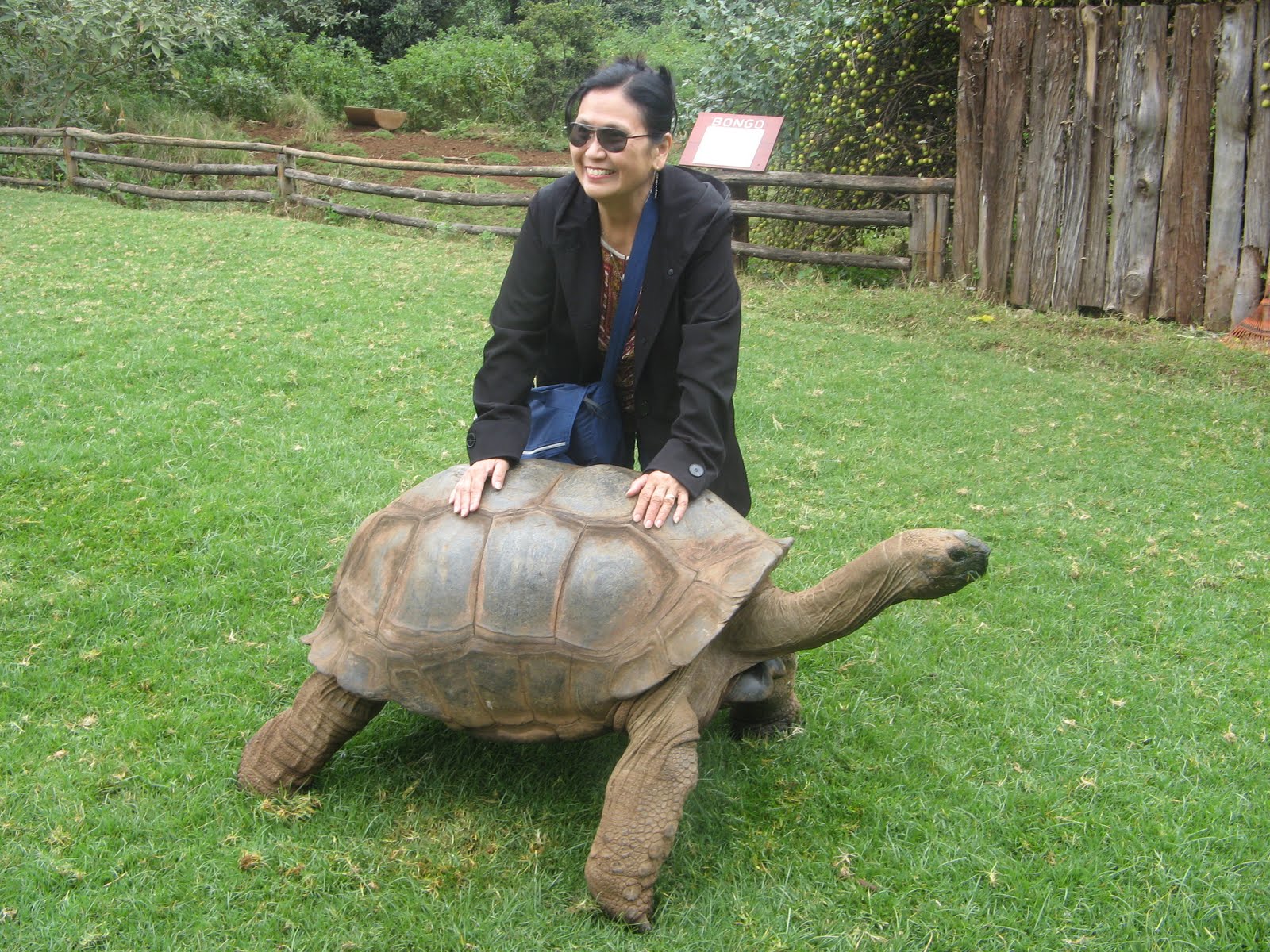
Cecilia Brainard on a tortoise

Lauren Brainard resting in the Maasai camp

Lauren Brainard with Maasai warriors

Monday, August 16, 2010

More Pictures from July 2010 Trip - Paris,France

Pictures taken in Paris, in the Louvre, L'Orangerie, and in a restaurant with Michael Genelin


Sunday, August 15, 2010

Update Paris France, July 2010

We visited Paris France in route to Kenya for a Safari. I'll be posting pictures and some comments these following days. In Paris, we met our friend, Michael Genelin, mystery writer of the Jana Matinova Series: Dark Dreams,Siren of the Waters, and another one forthcoming. Here are some pictures with Michael. Lauren is wearing red; and I'm not the blonde. I have more pictures taken in Paris, and even more of the fantastic Safari in Kenya, so visit again, Cecilia


Monday, July 19, 2010

Fil-Am Authors Writing, by Libay Linsangan Cantor, 7/4/10

Fil-Am Authors Writing
by Libay Linsangan Cantor
The Manila Times.net
http://www.manilatimes.net/index.php/sunday-times/20732-fil-am-authors-writing
With all the buzz about Filipino YouTube singing sensation Charice finally making it to Hollywood’s “it” show of the moment, Glee, I wonder if fellow Pinoys are familiar with other Filipino talents already making names for themselves as Filipino-American authors. If we would take a look at Pinoys getting published in the USA, we might have more pride about our race making it in the land of milk and honey when it comes to the literary field.

Most people might have missed Jessica Hagedorn when she visited Manila a few years ago to promote her latest novel, Dream Jungle, published by Viking Books in 2003. She is more identified with her very postmodern take on the Marcos regime in her novel Dogeaters published by Penguin Books in 1990. While it might sound very political, this novel of hers is a very interesting read, given the very eclectic voices of the characters we encounter in Metro Manila amid the backdrop of many pop culture trappings we Filipinos drown in on a daily basis. Hagedorn was born and raised in the Philippines and moved to San Francisco when she was a teenager. In the US, she also dabbles in other art forms as a poet, performance artist and playwright.

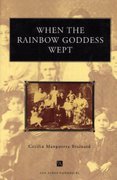
Cecilia Manguerra Brainard is another person that comes to mind when we talk about Fil-Am authors. She is the author of the 1990s novel When The Rainbow Goddess Wept published several times by different international and local publishing houses. She has also authored various creative nonfiction books to her name, and sometimes visits the Philippines to promote them or to give talks during their launch here.
Brainard is also active as an editor of various short story collections and nonfiction anthologies like Growing Up Filipino: Stories For Youth Adults, a collection of how it’s like to grow up as a Filipino in the Philippines and in other parts of the world. I’m proud to have an essay of mine included in that 2003 young adult anthology of hers, and I’m also happy to learn that this anthology is being used in some US schools in teaching children and young adults about Filipino experiences. Brainard was born in Cebu and finished college here in the Philippines before migrating to the USA and settling down there to start a family. She is currently active as a teacher at the Writer’s Program of the University of California Los Angeles (UCLA) Extension.

Another Fil-Am author with an acclaimed novel is Bino Realuyo, author of Umbrella Country published in 1999 by Ballantine Reader’s Circle. The novel is a heartwarming tale about a boy living in an impoverished urban poor community in Manila who undergoes a lot of challenges in his life, including dealing with sexuality issues. The son of a Bataan Death March survivor, Realuyo was born and raised in the Philippines and moved to the US where he made New York his home for many years. He is also a poet, educator and works on various labor rights and human rights issues.

Just these three Fil-Am authors’ achievements alone make us proud that they uphold their Pinoy roots through their literature. Next time, we’ll try to discover more Fil-Am writers writing about our worlds.

Comments? Suggestions? E-mail libay.scribevibe@gmail.com This e-mail address is being protected from spambots. You need JavaScript enabled to view it . She is also at leaflenspopmedia.wordpress.com.

Wednesday, July 14, 2010

PHILIPPINE PICTURES - JUNE-JULY 2010

These pictures were taken during my recent visit to Cebu and Manila. From the top: Araceli Lorayes at the Parian Fiesta, Cebu City;

Next, L-R: Jun Dumdum, Cecilia Brainard, Erma Cuizon, and Jay Bautista at the Parian Fiesta, Cebu;
The next photos show the staff and friends of the Rizal Library of Cebu City, where I donated some of my books;
The group of five dining are L-R: Cecilia, Dr. Gyo Miyahara, Jimmy Sy, Gavin Bagares, and friend;
The group of four pose at Cafe Elysa's in the Parian: L-R: Lynley Ocampo, Gavin Bagares, Steve Aznar, and Cecilia;
The group of six show my dear STC friends dining at the French restaurant in Hotel Celeste, Makati: Starting from my left, clockwise: Mila Santillan, Guia, Araceli Lorayes, Darn Posa, and Lilu Gimenez;
The group of six in front of the fountain: Back, l-r: Cecilia, Jaime Picornell, Chona Bernad; front, l-r: Chinggay Utzurrum, Terry Manguerra, Inday Blanco
The group of three: Cecilia, Nadine Sarreal, Karina Bolasco


Saturday, June 26, 2010

Yap-Sandiego Museum with Parian Brats!


Cecilia Brainard with Araceli Lorayes and descendants of early residents of the Parian in Old Cebu.

Monday, June 14, 2010

Forthcoming: CHERISHED: 21 WRITERS ON ANIMALS THEY'VE LOVED AND LOST

I received confirmation from Barbara Abercrombie that my essay about my cat, Kiki, will be part of the collection, "CHERISHED: 21 WRITERS ON ANIMALS THEY'VE LOVED AND LOST (New World Library, approx. April 2011). I'm thrilled to be in a book that'll include Anne Lamott and Jane Smiley and the other fine writers.

The contributors are:

Cecilia Manguerra Brainard
May-lee Chai
Michael Chitwood
Melissa Cistaros
Mark Doty
Samantha Dunn
Linzi Glass
Robert Goldman, DVM (Preface)
Monica Holloway
Judith Lewis
Ted Kooser
Sonia Levitin
Anne Lamott
Thomas McGuane
Billy Mernit
Joe Morgenstern
Robin Romm
Jenny Rough
Carolyn See
Jane Smiley
Jacqueline Winspear
Victoria Zackheim

Thursday, June 10, 2010

YOUTUBE - Cecilia Brainard Reads at UCLA Extension's Publication Party, 6/9/10


Click HERE to watch a YouTube link of Cecilia Brainard doing a literary reading at UCLA Extension's Publication Party, June 9, 2010. The award-winning author and instructor at UCLA Extension reads from her story Vigan, which is part of the anthology, Growing Up Filipino II: More Stories for Young Adults (PALH 2010).

http://www.youtube.com/watch?v=6fruNH6dv-Q

Tuesday, June 8, 2010

Filipino American Authors & Academics

Here are some pictures taken with some writer and academic friends:
Top pictures, from l-r: Brian Roley, Cecilia Brainard, & Paulino Lim
next, l-r: Brian Roley, Paulino Lim
next, l-r: Brian Roley, Ming Menez Coben, Lauren Brainard, Marilyn Alquizola, Alex Brainard, Paulino Lim, Barbara Lim
Bottom, l-r: Brian Roley, Cecilia Brainard, Lauren Brainard, Marilyn Alquizola, Ming Menez Coben, Paulino Lim, Barbara Lim


Friday, June 4, 2010

Upcoming Readings from Growing Up Filipino II


Upcoming Readings from Growing Up Filipino II:
CECILIA Brainard will read on Wed, June 9, 7-9-30 at the UCLA Extension Writers' Program along with 17 other writers/instructors, Skirball Cultural Center, 2701 North Sepulveda Blvd, LA, RSVP writers@uclaextension.edu or call 310-794-1846;
AMALIA Bueno, Oscar Penaranda, Rebecca Saxton, Geronimo Tagatac will read at the FAHNs Conference, July 21-13 in Seattle, WA, contact joan.may.cordova@post.harvard.edu