Saturday, July 28, 2007

WAITING IN CEBU FOR CARGO


I was supposed to have returned to the US early Sunday, but had to stay on because of delayed cargo from Manila, which I must receive here in Cebu.

I will point fingers here because this kind of mistake is unforgiveable, especially for an outfit that charged an arm and a leg. Never, but never use Lane Movers and Storage in Manila! I trusted them, contracted with them a door-to-door service to ship from furniture and household items from Manila to Cebu. The manager, Dennis de Guzman met with me once, and when I paid him, never showed up again. The packers did show up - and they seemed efficient. But Dennis never showed the day of the packing. The other thing Dennis did that was annoying was to give an initial quote, without mentioning that crating and insurance would be extra - and the costs were large - so the final price was a shocker. Insurance was mentioned to me AFTER the packers had whisked away my things.

But here's the really unforgiveable part. I made it very clear to Dennis that I was scheduled to leave for the US on a particular date and I had to receive the cargo in Cebu before then. He understood me clearly. Then this is what happened. I was told I'd get the cargo on Monday, then it was delayed, then I was told it'd get in Wednesday, then Thursday, and meantime, I'm scheduled to leave Sunday. The recent report from Lane is that my cargo will get in Monday - tomorrow. I had to cancel my Sunday flight to the US, with great difficulty as it is high season, not to mention the upset to my schedule and my family's disappointment.

So let us see if the cargo arrives tomorrow.

Meantime, Lane blames Sulpicio shipping for bumping off my cargo. A nephew said Sulpicio does do this. It seems unthinkable that I contracted Lane to send my cargo on July 16, and here it's July 30 and I don't have my cargo. This is not international shipping.

My big advice: DON'T USE LANE MOVERS AND STORAGE AT ALL.

Sunday, July 15, 2007

People and Places I've Seen This Past Week


Mila and Sito Santillan, Lilu Gimenez; Cynthia Posa, Araceli Lorayes, Nadne Sarreal, Karina Bolasco, Marily Ysip Orosa, Ambeth Ocampo, Guia Lim, Ina Garcia, Titang Gonzalez, Rene Wage.

Places: Japanese Restaurant in Rockwell; Ermita's Remedios Circle; Las Pinas Boys Choir performing in Phil Am Life auditorium; Sentros in Greenbelt 3; Breton's in Greenbelt 3; Old Manila; Glorietta; Dusit Hotel; Greenbelt Chapel; Don Bosco Chapel; Landmark; SM,Katutubo.

and I'm sure there are more people and places which I've missed.


Photo Above l-r: Nadine Sarreal, Cecilia Brainard, Karina Bolasco
Photo Below l-r: Sito, Cecilia, Mila

Friday, July 13, 2007

What Does One Do in Manila?


And what does one do in Manila?
1. Eat at Fat Michaels - now, unfortunately I can't give you the address of Fat Michaels because it's in the middle of nowhere. It's not that far from Makati, but it's not in Makati. It's near a building that says something like Makati View apartelle. It's a 1950s house that's been converted into a restaurant - very homey, artsy, eclectic indeed. And so successful, you need to make reservations. So successful they've opened a Fat Michaels in The Fort - fine dining here, which means more expensive. Order their Black Paella, and their salad is very nice, also their iced tea.

2. Eat at Cafe Juanitas - This restaurant is in Pasig, owned by a doctor turned restaurateur. It's an enchanting place filled with flamboyant, colorful, and unusual items - I understand the things in the restaurant are all for sale. Every corner is filled with a surprise - quite a fun and magical place. Try their callos, and fried fish.


3. Have a drink at the Handlebar in Bel Air Makati - bikers' bar this one; then have paella in nearby Alba's and La Tienda.

Photo above shows Cecilia and St. Theresa's HS classmates and Sister Consuelo Varela dining in The Fort
Photo next shows Guia Lim (VP Union Bank) in Cafe Juanita

Friday, July 6, 2007

MORE OF CEBU


What does one do in Cebu?
1. Go South and visit the old churches in Carcar, Argao, Boljoon and more. Aside from the Spanish colonial churches, you'll see old houses, and the countryside is green and beautiful, the seaside pristeen;
2. Eat at S.T.K. Ta Bay on #6 Orchid Street where they serve the best authentic homecooked Cebuano meals. Order shrimp sinigang soup, not the mixed seafood because you end up with unedible shells and crablets. Also try their fried garlic shrimp, scallops, and grilled tuna belly. All very good!
3. Well, you have to do the Historic town tour: Santo Nino Basilica and Museum, Magellan's Cross, Fort San Pedro, Cathedral and Museum, Casa Gorordo Museum. Take a peak at the Cebu Malacanan near Fort San Pedro, and the Yap-Sandiego house on the way to Casa Gorordo. Between the Cathedral Museum and the Yap-Sandiego house is the Shamrock where you can pick "pasalubong" - native delicacies for gifts. The small street fronting Santo Nino Basilica has little outdoor stalls that sell Cebuano delicacies such as bibingka, budbud kabug (Fridays), tagaktak, masareal, and more.
4. Other restaurants to try: Ocean Seafood on Sanson Street, near Gorordo; Bols Arciaga Restaurant that also sells native products.

Photo shows Cecilia, Manager of Thai Restaurant, Erma Cuizon, Gavin Bagares, Susan Evangelista, and Bingo after great Thai food

Monday, July 2, 2007

CEBU CITY BOOK LAUNCH AND OUTINGS


Saturday, June 30 - Karina Bolasco, publishing manager of Anvil, arrives Cebu from Manila, 9:10 a.m. I go to Mactan Aiport to meet her. At 1 p.m. Erma Cuizon picks up Susan Evangelista at the Mactan Airport; she's flown in from Palawan. We lunch, then Karina runs off to meet with a librarian. There is a heavy downpour at around 3:30, and we are slightly worried because the book launch of Ala Carte: Food and Fiction is at 5 p.m. The rain stops at around 4:30, but roads are wet, traffic bad. When we get to the Aboitiz Center for the launch, the guests have not arrived. WILA, who is the cosponsor of the event, decides to let the guests eat merienda first, which initially puzzles some of us, but it turns out to be a wise decision, becuase it gives people time to arrive. The program starts at around 6 p.m. Gingging Dumdum is the emcee; Ester Tapia speaks on behalf of WILA, and Karina Bolasco speaks on behalf of Anvil publishing. Then the reading begins, and we have: Carlos Cortes, Erma Cuizon, Susan Evangelista, Karina Bolasco, and Cecilia Brainard (me). Brief words by me, closing by Gingging, and then book signing. Around 50 people braved the wet roads and awful traffic, but they are a fantastic audience and were also generous in buying books. Seen among the crowd: Lucy Franco Garcia; Helen Franco Misa; Inday Blanco; Louie Nacorda; Linda Alburo, Jun Dumdum, Juliet Basa, Gavin Bagares, Andy, Tina, Angel Manguerra; Jojo, Tanya, and Inez Manguerra, and many more.

After the launch, Erma, Susan, Karina, Jun and Gingging Dumdum, and I came to my place for snacks, wine, some unwinding, and literary talk.


Sunday, July 1 - Karina, Susan, Erma, and I go to Plantation Bay for brunch; Karina leaves noonish back to Manila. The remaining three of us spend the rest of the day lounging in front of sparkling blue sea and watching a man raking the white beach clean. Later, a trip to Marco Polo so Susan to give Susan a bird eye's view of Cebu; then dinner at Ocean Seafood off of Gorordo.

Monday, July 2 - Susan, Erma, Gavin Bagares, and I do a tour of Southern Cebu, visiting Boljoon, Argao, and Carcar - great countryside, and old churches! Dinner in a lovely Thai restaurant in Talamban.

Ahhhhh - no rain on Saturday and Sunday!!!!


Photo above,l-r: Erma Cuizon, Susan Evangelista, Cecilia Brainard, in Boljoon
Photo in middle show Susan and Cecilia kicking back in Plantation Bay
Photo in bottom shows backside of someone

Monday, June 25, 2007

OLD CEBU TRADITIONS


The chapel of St. John the Baptist in the Parian District in Cebu City, is small and unimpressive, and so people may disregard it as another community chapel, one of many in the Philippines. What most people do not know is that this chapel sits on land that had belonged to the Jesuits in the 1700s, and in those days a huge church had stood there. It had been a very wealthy church, funded by the wealthy Chinese Filipino merchants who lived in Cebu's Parian District. As it turned out, the Jesuits were driven out of the Philippines, and the Church fell in the hands of the Diocese of Cebu. The church was torn down. Bit by bit the land was taken over the city and by squatters so that now, the land the chapel rests on has been considerably diminished. Unbeknown to many is that in that small chapel there is a cross that dates back to the Jesuit days of the 1700s. It's stands behind the altar.

Yesterday, the feast day of St. John the Baptist, people overflowed outside the chapel of St. John. After Mass, there was a procession. The three Santos images are centenery statues of Christ, St. John the Baptist and a charming dreamy angel that makes me think of a Mexican lass. This year, the confradia of St. John the Baptist, headed by Louie Nacorda, added banners with images depicting various points of St. John's life. There were a number of little girls dressed as angels who were supposed to accompany the banner-carriers, but for some reason, they ended in the back of a van, without any lights nor decoration - the poor girls went unnoticed.

The procession starts from the Chapel, curves around the Heritage Monument, past Val Sandiego's antique house that is all dolled-up, and then it turns right on Lopez Jaena toward the Casa Gorordo. In front of the house, the silver carrosa carrying the images stop, and the members of the Confradia sing some songs. At the same time, some people from the second story of the Casa Gorordo throw calachuchi petals down on the statues. Apparently, in the 1850s, it had been the custom for the procession in front of Bishop Gorordo's house - the Casa Gorordo.

The procession continues, winding its way through the Parian district, and then it returns to the chapel, and the images and silver carrosa are returned to the Casa Gorordo.

Meantime, outside the chapel, there are food vendors selling briskly to the locals; and further down Lopez Jaena, the Confradia hosts a dinner and performance to members and guests. The delightful folk singing and dancing are all courtesy of Val Sandiego's Dance Troupe.


It's a lovely revival of an old tradition, one that Pepit Revilles and Louie Nacorda have resuscitated. They say every year more people show up, and spotted last night were Chinggay Utzurrum, Gavin Bagares, Erma Cuizon, Linda Alburo, Beth Reyes, and some 95 other people.

Thank you Pepit and Louie for this charming tradition!
Photo shows antique Santos statues of St. John the Baptist, Jesus Christ, and an Angel
Bottom photo shows Val San Diego's Dance Troupe

Saturday, June 23, 2007

LET'S BRING BACK OLD SPANISH COLONIAL CEBU


Today, June 24 is the feast day of St. John the Baptist, who happens to be the patron saint of the old section of Cebu City, the Parian District. For the past 9 days, a novena has been said at the Parian Chapel next to the Heritage Center. For the past 3 nights, other devotees to St. John the Baptist, have also been praying at the Casa Gorordo. Louie Nacorda heads the group of 13 devotees to St. John the Baptist. They meet a couple of times a year and are committed to saying prayers to St. John on Thursdays.

The triduum prayers this past 3 nights were held on the lovely verandah of Casa Gorordo, which boasts of tiled floor, wood awning with creeping vines, pleasant breezes, and magnificent view of the garden.

I happen to love Casa Gorordo and have used this as the setting for several of my stories. Built around 1850, the house has airy rooms, tiled roof, and has numerous features unique to the architecture of the area. It is a favorite tourist spot in Cebu City. When I am in the Casa Gorordo, I am back in Old Cebu. In fact, the Parian district, wherein Casa Gorordo lays, brings me way back, to the 1700s when three story mansions owned by wealthy Chinese merchants lived here, and when boats carrying merchant goods sailed up and down the criss-crossing canals.

The Parian district, which is near the famous Santo Nino Basilica, Cathedral, Fort San Pedro, and the Cebu Malacanan Palace, is gentrifying. The area had been the ritziest in Cebu from the 16th century until World War II destroyed many mansions and the old families moved out to more popular subdivisions. Perhaps this has been a blessing-in-disguise, because the resulting stagnation prevented massive demolitions for modern buildings. True, many houses are run down, but the basic features are there, and the roads and bridges are still there.

The Aboitiz Family acquired Casa Gorordo in the 1980s and turned this into a museum. Eventually, they also bought and built the Aboitiz Study Center across the Casa Gorordo. Other develpments in Old Cebu followed: A Heritage Center was built next to the Parian Chapel; the Cathedral convent was restored and recently the Cathedral Museum opened. Val Sandiego also acquired the landmark antique house across the Parian chapel and has been busy restoring it. President Gloria Macapagal built a Cebu Malacanan on the old Post Office next to the sea. The Santo Nino Basilica has undergone restoration and expansion, and is filled with worshippers every day. Historical identifying important landmarks in the area were put up.

There was talk of having an outdoor market next to the Heritage Center, but this idea died. It would be good for Cebu's local government to reconsider this idea because it would stimulate tourism as well as help with Cebu's economy. Close off traffic, have little stalls selling food and souvenir items, and more tourists will come. As it is tourists do visit the area because when you are in Cebu, you must see Magellan's Cross, the Santo Nino, Fort San Pedro, the Cathedral, Casa Gorordo, etc. Cebu's claim to historical fame is that it is where the Spaniards first settled, and that the Portuguese navigator (who sailed for Spain), Ferdinand Magellan, was killed in nearby Mactan.


Indeed the Old Section of Cebu is filled with history - the 1700s Jesuit seminary is still there, although this is now a warehouse. The old bridges that went over the canals, albeit, the canals are dirty.

When I walk around the Old Cebu, I see the great potential in the place. If only the city government would post more police to increase security; if only the city cleaned up canals and roads, if only the city helped people like Val Sandiego and other history lovers who would like to bring to life Old Cebu once again, but who need assistance. I even have a little dream: If only the Aboitiz family would do some development in the area, which might encourage others to do the same.

It can be done. The City of Vigan, Northern Philippines, (a UNESCO World Heritage Site) for instance restored many of its Spanish colonial houses. In Vigan, the city officials concentrated on developing one street as a showcase area. The surrounding areas went along with the gentrification. Vigan is a favorite tourist spot for international visitors to see Spanish-colonial Philippines.

If only the government of Cebu and the Cebuanos themselves ... if only they could see the great potentional in the Old Section of Cebu City!

Photo Above shows mural of Old Colon Street in Val San Diego's Historic house;
Photo in Middle shows painting of Old Colon Street in my Cebu apartment, with artist of both mural and painting, Chris Almaden

Wednesday, June 20, 2007

UPDATE - TRAVEL TO CEBU, PHILIPPINES

I was surprised to find new changes in LAX, International airport. Just last January, when you arrived the International Airport, LAX, you had to drag your suitcases to the X-ray line; you had to wait for clearance from the TSA checkers, and then, you had to point out which were your bags, and TSA personnel carted your suitcases to the airline checkin counter; you walked along with him.

Now you proceed to the Airline checkin counter, then airline personnel places the tags on your bags, then you bring your bags to the X-ray section.

It's a lot quicker this way. Last January, we needed 3 hours to get processed; but during this recent trip, I was processed in around 40 minutes.

Here's a tip - don't bring bottled water, but bring an empty bottle so you can refill it in the airport. I paid $2.80 for the smallest bottle of water in LAX, and the Korean checkers took that away from me during my stopover.

Arriving in Cebu is much, much easier than arriving in Manila - it's not crowded at all, and people are friendlier.

Sunday, June 17, 2007

FATHER'S DAY - Mariano Flores Manguerra

Today is Father's Day and I'm remembering my own father, Mariano Flores Manguerra, born March 8, 1894, and died October 29, 1957. He was born in Sta. Rosa, Laguna, son of Pablo Manguerra and Maria Espina Flores. Papa's full-blood siblings were: Pablo Jr., Concepcion, Estefania, and Pura. His father, Pablo, had other children. Papa's mother (Maria Espina Flores) had a brother named Jose Flores, who had a daughter named Mariquita Flores (first cousin of Papa, then). Mariquita married Justice Villamor and they were the parents of the Philippine hero-pilot Jesus Villamor. Papa was a civil engineer. He attended Valparaiso University in Indiana, and when he returned to the Philippines became a professor of Engineering at the University of the Philippines. Papa had a first wife, Catalina Abad Santos, who died; they had no children. 

 Papa's second marriage was to Mama (Concepcion Alesna Cuenco). They had 4 children: Maria Victoria, Mariano Jesus, Ana Maria Teresita, and me (Cecilia Catalina). 

Aside from attending Engineering school in Indiana, he worked there. He also worked in South East Asian countries. During World War II, he was in the guerrilla movement in Mindanao. He brought his wife and 2 children with him to live in places like Malaybalay, in Mindanao. His third child was born in Mindanao; a fourth child (a boy) miscarried during the war. I was born after the war. Aside from being a Professor of Engineering, he worked as a District Engineer in Talisay, Cebu, and later became an independent Contractor building highways in Cebu and in Dumaguete. He had also built buildings in Jaro, Iloilo and Baker's Hall in Los Banos, Manila. The highways and buildings are still there. 

 Papa died of a heart attack while on a holiday in Hong Kong, on October 29, 1957. 

 (Photo l-r: Ana, Mariano, Cecilia, photo taken circa 1956)

Thursday, June 14, 2007

La Vie En Rose - Edith Piaf


We saw the movie, "La Vie En Rose," which is about the life of French singer Edith Piaf.

Generally I find movies about entertainers predictable, because it usually traces the rise of the performer and it's always cliched with the standard divorce and drug addiction. But this movie feels different, no doubt because the setting is France. It's non-linear, flipping back and forth in time, and the performance of the actress Marion Collard was spectacular. By the end of the movie, the audience was in tears.

Edith Piaf grew up dirt-poor in France. Her father was in the military when she was little and the mother abandoned her with the grandmother so she could pursue her singing career, which went nowhere. The maternal grandmother didn't take care of Edith. When the father had a furlough, he found Edith sickly and unkempt; he brought her to his own mother who ran a brothel. The women in the brothel, especially one in particular, took care of Edith. When the father returned, he took Edith away from the brothel and brought her to the circus where he was a contortionist. The father had a disagreement with the circus owner and he and Edith left. It was while they were begging in the streets of Paris when the father forced Edith to sing. It turned out the 9-year old could sing, and she continued singing in the streets of Paris for money. She had a break when a cabaret owner offered her the chance to sing in his cabaret; he was the one who named her "The Sparrow." She later found another mentor who trained her to perform for the music hall. From then on, it was history, with Edith performing not just in Paris, but in New York.

Despite this success, the hungry, frightened, abandoned little girl was always there. She seemed always looking for approval, for love, and performing meant everything to her. Her life was one of loss. She was rejected by her mother; she lost the woman in the brothel who took care of her; she lost the cabaret owner who gave her her first big break; she lost her lover when he died in a plane crash.

She was also a lush, just like her mother whom she despised, Later on Edith became addicted to stronger drugs. She was a broken person by the time she was in her 40s and died when she was only 47.

Here are some thoughts about this movie:

- There is something touching about a broken person, and it was really Edith's brokenness that won me, more than anything else. I was curious about a person who was a basket case, but who had tremendous talented. She didn't seem to be a nice person: when she was famous, she was bossy, and always drunk. But there was always that little girl that stared at the audience after a performance, looking for approval.

- I also wondered about artists who self-destruct. They can be so talented and have so much, and yet, remain quite unhappy.

I also thought about how God dispenses with His gifts liberally - you never know whom God will touch with His gifts.

- Another thought that came to me is that when people have gifts from God, they need to use this for other people, instead of getting caught up in the glamour of things and become greedy for more attention. Things have to be kept in perspective: God is the source of this gift, and this gift must be shared with others. The gift should not be for the person's greater glory, but for God's greater glory.

- Ultimately, a gift from God is also a responsibility.

- Still another thought: it is important always to add spirituality to one's life, whether one is famous or not. Being grounded in God will help people in their journey, whatever it may be.

About the movie "La Vie en Rose" - I highly recommend it.
~~~~~~~~~~~~~
More Information re Edith Piaf:
Born: December 15, 1915 in Paris, France
Years Active: 30 's, 40 's, 50 's, 60 's
Died: October 11, 1963 in Paris, France
~~~~
Photo: Album cover of Edith Piaf

Monday, June 11, 2007

ABOUT FRIENDSHIP


I don't have a lot of close friends. I never have. I'm one of those extroverts that get tired when I'm with a lot of people. Introverts are recharged when they're with people. I'm the opposite, I give out energy, so after any social event, I feel depleted.

I don't look like a loner because when I'm with people I'm gregarious, too talkative in fact. And I do enjoy being with other people; it just wears me out. I can be just as happy being by myself, reading a book, writing, gardening, doing one of my many, many projects It's amazing how quickly the day passes.

But I have a few really good friends.

One of them is Marily Ysip Orosa, whose blog site I just visited - Marily's Journey of Faith. She's been blogging the journey she and her husband Joe are going through. Joe is battling cancer and Marily's blog records all of this. Marily is a Christian and her reports are upbeat and cheerful, even if frank. She doesn't flinch about writing about colostomy bags, and platelets, and the audacity of hope, and faith, and love.

Let me reminisce here and recall when Marily and I first became friends, and that was when we were at Maryknoll College, Quezon City. We were both Communication Arts majors. For high school she had attended St. Theresa's College, Quezon City; I had attended St. Theresa's College, San Marcelino. We were educated by the same Belgian nuns in High School, and American nuns in College.

Marily and I were not the studious types that hung around the library, which did not mean we were not good students, because we always managed to get decent grades. I was even a Dean's Lister. But there were too many other things to do aside from studying! We partied; we had a singing group and actually performed in a couple of Television shows. We called ourselves The Rainmakers. We had endless talks in the famous "lanai" of Maryknoll College. Once we rebelled and started wearing "civilian clothes" instead of our green and white uniform; and we were promptly reprimanded by the nuns.


Marily and I took a class together - it was a 2-unit class called "Rizal" about the Philippine National Hero. It was a Saturday morning class - a real bummer. On the very first day, the professor announced that we didn't have to attend class, that we could do all our other work and that would be fine. Marily and I took one look at each other and didn't show up in that class until finals. We were shocked and incensed that we got C's; we thought we deserved As.

I mention this incident because Marily went on to publish an award winning coffee table book about Jose Rizal, titled In Excelsis, published by Studio 5, Marily's publishing house. It is an absolutely handsome and intelligent book. Marily is a publisher of coffee table books, aside from doing public relations work. The irony of this didn't escape us and we both had some laughs when In Excelsis won several Philippine National Book Awards.

.
Marily is one person who has always supported me, especially in the Philippines. Our other friend, Brenda Arroyo, calls her the opposite of a Fair Weather Friend, because when things are okay in your life, she doesn't bother calling etc. as she is busy herself. But when you need help, she will drop everything and run to your side. That's a good friend
I have some other dear friends, and I'll remember them some other time, but tonight I want to remember Marily and Joe and wish them the very best in this journey they're in.
~~~~~~
Photo 1-top -l-r: Marily, Cecilia, Lauren.
Photo 2 - Taken at the book launch of Behind the Walls which Marily and I co-edited. Our college heroine, Gemma Cruz, who won Miss Universe in 1964, is in the picture; she's second from the right.
Photo 3 - Taken at the book launch, guest, Marily, and Cecilia

Sunday, June 10, 2007

UCLA EXTENSION WRITING CLASSES SUMMER & FALL

FOR BEGINNING WRITERS AND/OR THOSE WHO WISH TO GATHER DRAFTS - I have some creative writing classes coming up at UCLA Extension's Writers' Program and I'm posting information here. Contact UCLA Extension's Writers' Program, 310-825-9415 for more information. I conduct my classes in a supportive atmosphere so the students can focus on learning. I know it's stressful to write and share your work, and critiquing/feedback is done in an encouraging positive way. After 6 weeks, many of my students are writing stories/personal essays. I'm also pasting below "Inspirational Quotes" which encouraged me when I was a beginning writer.

Summer Quarter - Starts 8/8/2007
The Essential Beginnings: An Introductory Creative Writing Workshop (Online) Many aspire to write creatively, but few know how to get started. For those who wish to write for personal or professional satisfaction, this supportive online workshop provides many fundamental techniques--from journal writing to imaginative in-class exercises--all geared to motivate and cultivate the beginning creative writer. Topics include writing from observation and experience, creating dynamic characters, developing points of view, and writing dialogue. By the course's completion, students should have a series of short sketches or a draft of a story. For technical requirements.


Fall Quarter: Starts 10/30/2007
The Writer's Sketchbook: Learning to Train Your Writer's Eye Whether you are writing fiction or nonfiction, it is important to train yourself to write in a "sensual" way--that is, to make your readers see, hear, feel, smell, taste, touch. Designed for beginning writers, as well as experienced ones who wish to infuse their writing with new power, this course sharpens your senses through the use of the writer's sketchbook. The course offers writing exercises that inspire you to create in a more vivid and more detailed way, and with a stronger voice. There is ample time for in-class exercises, allowing those with hectic schedules the opportunity to write or journal in a safe environment.

~~~~~~~~~INSPIRATIONAL QUOTES

Fyodor Dostoevsky: “I can never control my material. Whenever I write a novel, I crowd it with a lot of separate stories and episodes; therefore the whole lacks proportion and harmony … how frightfully I have always suffered from it, for I have always been aware it was so.”

John Steinbeck re Grapes of Wrath: “The saddest thing is that this was the best I could do.”

Vladimir Nabokov re Lolita: “The book developed slowly with many interruptions and asides. It had taken me some forty years to invent Russia and Western Europe. And now I was faced by the task of inventing America…Once or twice I was on the point of burning the unfinished draft.”

Henry James: “What is character but the determination of incident? What is incident but the illustration of character?... It is an incident for a woman to stand up with her hand resting on a table and look out at you in a certain way; or if it be not an incident, I think it will be hard to say what it is. At the same time, it is an expression of character.”


About Gustave Flauvert, author of Madame Bovary: “In 1851, following a trip to Egypt, Palestine, and Greece, Flaubert penned the first draft of “The Temptations of St. Anthony.” Upon its completion, he sent for his two closest friends, Maxine du Camp, editor of the Revue de Paris, and Louis Bouilhet, a shy peasant poet. Flaubert told them that he was going to read to them from the manuscript of his newest work. For almost 4 days, reading aloud 8 hours a day, Flaubert went through “The Temptation.” He completed his reading on a midnight, and waited for the verdict. One of his listeners said bluntly, “We think you ought to throw it in the fire and not speak of it again.”


Melinda Jaeb, Editor: “Many of the stories I published were rejected the first time around. Sometimes rejections are due to tons of unnecessary words, poor dialogues and grammar, and undeveloped scenes. If there is potential, I make suggestions for a rewrite specifying cuts here and there. Then, after the writer has done a rewrite and sends it back, the piece is often acceptable. With the help of feedback, the story can evolve into its best possible form.”

Saturday, June 9, 2007

LANCASTER, CALIFORNIA PROCLAIMS FILIPINO WEEK


Just got back from the Banquet dinner of Buklod Ng Pagkakaisa, in Lancaster, California. It was part of a week-long celebration of Filipino Week, as proclaimed by the city officials of Lancaster. I wrote my speech down - see below - but in fact I did not read it, and so the actual talk came out slightly different. It was a well-attended event, with almost 150 guests, including State Senator George Runner and his wife Assemblywoman Sharon Runner, Mayor Bishop Henry W. Hearns, and Vice Mayor Andy Visokey. The event ran smoothly, thanks to the organizers, including Dante Gilhang, Armand Rivera, Ray Childs, Susan Bernardo, Medelin Webb, Emerita Ross, Robert Resurreccion, Gina Gilhang, Pacita Alarcon, Carlos Alarcon, Dory Quiambao, and Socrates Oberes. It was a very pleasant event, with food, dancing (folk and modern), a few speeches, and a lot of nice people and dedicated people around. I might add that Mayor Hearns was most charming to me and my son. He had a lengthy talk with my civil engineer son; apparently Mayor Hearns was himself a civil engineer.

This service group does a lot of good work and should be congratulated.


Talk Given to the Filipino Week Banquet and Dinner Dance of Buklod ng Pagkakaisa (Bond of Unity) – Saturday, June 9, 2007, 7-midnight, Lancaster Room, Esssex House, 44916 N. 10th St. West Lancaster, CA 93534

Good evening – my husband could not be here; he had to go to Wisconsin, consequently my youngest son Andrew is here to accompany me. When you see him, please thank him for sacrificing his Saturday night, to be able to drive me here.

Before my husband left, I was thinking aloud about what I should say to you, and my husband said, “Crack a joke.” I wondered what I could share with you and the only one I could think off was the one that involves Filipinos in Daley City near San Francisco. It goes: Why is it very foggy in Daley City? The answer is because all the rice cookers are on.

I would like to thank Pacita Alarcon for inviting me. I am honored to be here with you. Pacita sent me a copy of your January Induction Ball program and I noted that you have programs to feed the homeless, you give scholarships, you have established the celebration of Filipino week in June, and have gotten a Proclamation of Filipino Week from your city officials since 1994. I was particularly impressed with your seniors program and looked at the pictures of the May-June senior Prince and Princesses celebrating their birthdays at your Lunch-Bingo hour. I understand that aside from the Lunch-Bingo hour, there is also a social hour, with dancing . . . and food – I am certain of it. I cannot imagine any Filipino event without food.

These senior get-togethers are very important, especially because many of our older folk feel lonely and misplaced here in America – and so these get-togethers where they meet other Filipinos is psychologically significant.

The mother of my friend Susan, who lives in Norwalk, was a widow and for the longest time since she immigrated to America, she felt lonely and abandoned until she found a Filipino senior’s group. She blossomed. Instead of moping around looking depressed, she had her hair fixed and nails done, and in the middle of the day, she would put on a terno or saya for a senior’s event. In fact, my friend Susan told me of how her mother couldn’t wait to go to the senior’s events. And then, Susan said, there were numerous phone calls and her mother always rushed to the phone to answer it, followed by mysterious whisperings. It turned out her mother found a boyfriend, a Filipino veteran. All of her 6 or 7 children were in uproar and didn’t know what to do with the situation. In time, what I heard was that the boyfriend got sick, and at that point Susan’s mom dropped him, because she was afraid she’d end up taking care of him. She had taken care of her husband and she was not sure she wanted to take care of another man.

Even though this love story didn’t have a happy ending, it shows that these Filipino seniors social activities pull people out of their homes, their depressions, and brings them together to laugh, have fun, sometimes fall in love too.


Pacita asked me to talk to you about my work.

I am a writer and editor. I have written and edited around 13 books: two novels, 2 short story collections, 1 collection of essays, and 1 collection of my high school diary. I have also published books; I sell books; and I also teach. I currently teach creative writing at the UCLA Extension’s Writers’ Program. I wear many hats, but what got me involved in editing, publishing, selling, and teaching, was writing in the first place.

My love for writing started early. After my father died when I was nine, I used to write him to update him of my life. I kept a diary; and for some reason I even named my diary Sharon – I have forgotten why I did that; I think I was imitating Anne Frank who wrote to Kitty in her Diary. I later dropped writing "Dear Sharon," and just went on journal writing, which I continue to do today.

When I arrived in this country back in 1969, I was a student in film making at UCLA, but I didn’t really enjoy that very much. At the time, it was a very difficult field for a woman, and a foreigner at that. The other thing I noticed was that film making is very collaborative and my initial concept of the project ended up very differently by the time the cameraman, actors, editor had given their input.

I had meant to return to the Philippines, but as Life would have it, I married a Peace Corp Volunteer whom I had first met in Cebu, my home town. While he was a law student and early in his law career I had to work. I worked as a secretary, as an Adminstrative Assistant, and as a PR/Fund raiser in a non-profit for years. By the time I had three sons, it became difficult to juggle work and driving them back and forth to school, doctor’s and dentists offices, and I stayed home to take care of them. This was during the Women’s Lib era when it was embarrassing to say, “I’m a housewife.” I decided to do something else with myself and I arranged with Philippine American News to write a weekly column; Filipina American Perspective was the name.

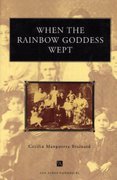
Meantime I had a story that kept running through my head and I just couldn’t write it properly. I finally took a Creative Writing class at UCLA Extension where I now teach. I picked up a lot of skills and learned how and where to submit my stories. Bit by bit I got my stories published. There were a lot of rejections and difficulties, and I’m fast-forwarding here, I went on to write a novel, which was published by a big New York publisher in 1994. When the Rainbow Goddess Wept, which is about a coming of age of a young girl in the Philippines during World War II, is still available in paperback by the University of Michigan Press.

I went on and wrote my other books, many of which are still in print, mainly because educators use them in their classrooms. One of the most popular books I have edited and published is Growing Up Filipino Stories for Young Adults, which is available both in the US and the Philippines. The reason for its popularity, aside from the fact that the stories included are very good, is the fact that there are few books for young adults, that is between the ages of 11-21. There is a new book that I co-edited, Ala Carte Food & Fiction which is a collection of 29 stories and Filipino recipes, which has just been released and which should do all right.


While this talk may make it seem it has all been easy for me as a Filipino writer here in America – let me make clear right now that it has not been easy at all. If I have accomplished some things, it has been with a lot of energy and persistent, a bull-headedness that if my husband where here, he could attest to.

When I started writing here in California in the 1980s, there were very few Filipino American writers to speak off. Carlos Bulosan, our most famous writer, had been dead for almost 20 years, and the only other Filipino writers spoken off were: Jose Garcia Villa, a poet living in New York; Ben Santos, teaching in Kansas; N.V.M. Gonzalez, teaching in the Bay Area. There were other Filipino writers in America off course, but I didn’t know of them because I couldn’t get hold of their publications. I recall going to libraries to look for books, stories by Filipino/Filipino-American writers, and I found some books by Jose Rizal, and a book by Ninotchka Rosca – and that was it. Early on, I realized that there was little or no distribution of Filipino/Filipino-American books in this country; and even libraries did not have books by these authors. It was as if Filipinos in America did not have a literary voice, as if we barely existed.

My first book, a collection of short stories entitled Woman With Horns and Other Stories, was published by New Day Publisher in Quezon City. Mrs. Rodriguez, the acting Manager, loved my work and went on to publish a collection of essays, my first novel, and she approved my proposal to do a collection of short stories by Filipino Americans. This book was published in 1993 and is entitled Fiction by Filipinos in America. I followed this with another collection entitled, Contemporary Fiction by Filipinos in America. My attempt in these collections was to document some of the writings or our Filipino writers in America. It was as if I wanted to preserve the voice of these writers, to make sure we have our say in America, and not be non-existent or voiceless.

My work expanded to include book selling because I also discovered that it was impossible to find Filipino Filipino/American books, especially in the 1980s-1990s. My friend Susan Montepio and I had founded Philippine American Literary House and we sold select Filipino books here in America. We also got involved in publishing several books – two children’s books, 1 anthology of historical essays, and 1 collection of short stories.

There have been great changes these past 10 years. The internet has made Filipino books more accessible all over the world. You still can’t walk into a Barnes and Noble and find Filipino books, but you can go online and find them.

Whereas there used to be just 3-4 Filipino American writers published mainstream, now there are more, such as Brian Roley, Noel Alumit, Tess Holthe, and many other writers.

The internet also offers our Filipino American writers a voice – so it is quite easy to find a blog for instance of a Filipino American poet, whereas it had been impossible 20 years ago.

But even though there have been improvements in the literary scene of Filipino Americans, there is still room for improvement.

I was in Janelle So’s program, Kababayan LA, just last May 24, and Janelle mentioned the low literacy rate of Filipinos and she asked me what I thought of that. I had no time to think about her question and I went on to talk about how Filipinos have an oral culture. If there had been time to discuss the issue more carefully, I think the difference between literary and reading may have come up – literacy being a level of competence, and reading a skill. One can be literate but not read. In fact Filipinos have a high literacy rate, but they generally do not read. For instance Filipinos prefer getting their news from TV and radio, not from magazines and newspapers. While I respect the Filipino love for oral tradition, I think that we should do something to make our population a reading one.

I would like to suggest that your group get involved in a book program. Perhaps you can send books to libraries and schools to the Philippines. It is easy to find inexpensive books here.

In the mid-1990s, I participated in a PEN writers’ conference in Barcelona, Spain. I met some Catalan and Kurdish writers who talked about their work in publishing books in their own language. They were very serious about making sure their writers and poets were published in their own native tongue, that their works were preserved in libraries and read by their people. It was not enough for them to have an oral tradition; they wanted documentation, hard copy. I was very impressed by this. In fact, at that time in Barcelona, it was St. George’s Day – and people in the Catalan region celebrated this day by giving books to one another. It was part of their cultural tradition; for no other reason than that it was St. George’s day, people bought books and gave books to one another. Their love and respect for books were made clear to me then.

It would be nice if we follow this tradition and give books as gifts for birthdays and Christmas and other special events. It is important to develop a love and respect for books. I was in Costa Rica recently, and it has a literacy rate of 99%. It is one of the most progressive countries in Central America, which proves to me that there is a connection between a country's literacy rate and its level of development.

It is important for our young people to be readers. We need to give our children books so they develop a love for these early in their lives. When we buy books, the publishers of these books make enough to continue to publish more books which are written by our own writers, who after tell our stories. And ultimately it is important for us to preserve our stories, otherwise we will seem voiceless, non-existent, forgotten.

Photo 1(top) - l-r: State Senator George Runner (17th District), Assembly Woman Sharon Runner (36th District), Andrew Brainard, Cecilia Brainard, Mayor Hearns, and Vice Mayor Andy Visokey.
Photo 2- l-r: Andrew Brainard and Lancaster City Mayor Bishop Henry W. Hearns.
Photo 3 - Members of Buklod ng Pagkakaisa doing a Filipino dance.
Photo 3 - l-r: Cecilia Brainard, Mayor Hearns, Susan Bernardo, Vice Mayor Andy Visokey, and Buklod President Dante Gilhang

Friday, June 8, 2007

HOW TO INCREASE VISITORS TO BLOG, and more

First, let me talk about this blog. I made a half-hearted start at blogging a few years ago, but didn't follow it up. Then I had the brilliant idea of posting my essays in the blog - most of them are travel essays about India, Cambodia, Peru, other places my husband and I have visited. The essays were written for publication, with some degree of formality, an attempt for perfection (if there's such a thing); and then I don't know exactly what happened, I felt like journaling.

I started looking at how other bloggers did theirs and realized they have thousands of hits! Thousands, and I barely had visitors to my blog, a realization which was very humbling.

So I tried to figure out how people got such large hits. I noticed that some bloggers have registered with Blog Catalogue, so I did this. Now suddenly I'm getting a lot of bloggers inviting me to be their "friend" or to be in their list. I have no idea how to respond to these invitations, and maybe someone kind and knowledgeable out there will inform me. And maybe someone can also explain how those counters work, and what's a hit exactly, and are viewers counted? I have no idea.

And while we're figuring these out, maybe someone out there can tell me what could possibly be wrong with my printer. I had to unplug it because I moved things around my office, and when I plugged it back it, it refused to work. It scans all right, but it's not getting messages from two computers. Initial research leads me to Port Drives - where is the port drive? Is that in my computer? Or is that in the printer? Or it that a soft ware? Any way, if any one reads this who's got ideas, let me know - cbrainard@aol.com.

Aside from that, I've had a busy day. This morning Jonathan Lorenzo and Jacob Rippens from the Filipino American Library in Los Angeles stopped by to get ideas about a literary journal they are considering. It's certainly a great idea. As far as I know there is only one Filipino American literary journal - Maganda - coming from the Bay Area. There's a journal, Pilipinas, but it's not exclusively about Filipino American issues. So, as far as I know, for 2.5 million Filipinos in America, there is one literary journal. Pretty pathetic, isn't it?

My cat just wandered in - she's an old tuxedo cat named Kiki, around 13 years old, and in her old age, she's developed allergies, of all things to fleas. One bite from a flea and she itches like crazy. She came in last night, scratching and as miserable as good be. I shampooed her, squirted some anti-itch stuff on her, and vowed she'd be an indoor cat from now on. But somehow today, what with the housekeeper and Jonathan and Jacob, and grandson Luke around, Kiki managed to escape. And after hours of being out there, where there are no doubt fleas, has returned, and I just swore under my breath that I'm not going to wash her again for this dermatitis.

I've discovered that B12 alleviates her itching, but it's difficult to give her the pill. I have to pry open her mouth and shove the little pink pill deep into her gullet so she can't regurgitate. Not a very pretty picture.

I'm going to look for the picture of Kiki with the TV clicker, post that, and I'm done blogging for the day.
(Photo below shows Kiki the cat beside Lauren, and she's holding the TV clicker

Thursday, June 7, 2007

CCD DISORDER - THE BEES ARE DYING!

I thought I'd write about the bees dying. My friend, Elizabeth Allen, was the first to mention this to me. Elizabeth is interested in psychic matters, hangs out with neo-shamans ... so when she mentioned that the bees are dying, I thought it was some New Age thing, like the time New Age-people talked about the end of "the world," i.e. end of an era, and then 9/11 happened, so well, they were right, weren't they, that an era had ended?

I did a little research and learned that indeed there is a phenomenon going on called Colony Collapse Disorder (CCD), which simply means a large population of bees have died. Many bee hives have been abandoned. The figures vary, sometimes newspapers say 50% of bees have died, other accounts say 70% have died. I find this alarming, but the world seems to go blithely on. It's as if the world is confident that the bees will return next year and everything will be fine. It's the same way with Global Warming, Tsunamis, Hurricanes, which we get excited about for a short spell, then quickly forget.


Something serious is happening in this Earth of ours. I've been to Alaska and to Patagonia and to the French Alps and have seen how large portions of glaciers have melted. Instead of white pristeen ice, there is black gray gravelly muck. (Take a look at the photo with Lauren, see the background, note the black foreground of the glacier) And still we continue living the way we do, paying a bit more for gasoline, feeling the pinch a bit, but still managing.

I have a Republican friend who said Al Gore invented Global Warming, that there is no such thing. She said a friend of hers in the Philippines complained that there was a cold spell there last December. If there's Global Warming, why did they have a cold spell in the Philippines, she asked, pleased with her logic.

I told her it meant there are changes in this earth: spring has started early in Japan for instance, so that Cherry Blossoms were blooming weeks before they usually do. And in some other place I'd read that the eggs of some birds had hatched early, but the problem was that the caterpillars that the baby chicks usually eat were not yet around, so there was a problem there. There are all sorts of inconsistencies, now, a lack of coordination if you will. Have you been hearing about the drought in Africa? And there's a serious drought brewing in California right now.

Elizabeth and I have discussed Global Warming and we agree that some of this is cyclical, but that we - mankind that is - have an obligation not to aggravate the situation.

I've asked myself what I can do about the matter, and here are some things I'll try do:

1. Conserve water - this is to address the drought in California. I will not hose down walkways. I will take shorter showers. (I'm even tempted to do it the Filipino way, with a bucket and cup - but Lauren can't go for that). I'll turn off the faucet when I'm brushing my teeth. I just will not let the faucets run for no reason at all.

2. Conserve energy - I'll wear a sweater, instead of have the heater on high; turn off lights and appliances that are unused.

3. I will replace my plants bit by bit with California native plants which do not need a lot of water. In fact I do have some - mantilla poppies for instance, the problem is they tend to take over and I've had to "hold them" back.

4. The car - hmmm, the car is a problem because I drive a Mercedes Benz wagon that is a gas guzzler, and it even wants premium, the gas hog! Maybe I should learn to take the bus around Santa Monica and take more walks too. One of my students was taking the bus to school even though he has a car because he is very conscious about this gas/oil problem.

5. I will continue my mini-composting - that is I save eggshells, vegetable matter in a bowl and I go to my rose garden and dig a hole and bury that. My roses have greatly improved ever since I started doing this, at the suggestion of my friend, Linda Ross.

6. For the bees and other little creatures of God - I will stop spraying my roses with insecticide and too bad if the plants have yellow leaves and don't look terrific; at least I won't be contributing to killing the bees and other insects.
Let me digress here: there is a folk saying in Cebu where I grew up that a house with living things was a good luck house. Living things included everything - snakes, termites, bugs, creatures that we don't normally like. My mother explained that if these creatures liked living in your house, then it's a good place. Now I see what she means.

And now I'm remembering how, many years ago, some bees built a hive above our front door - overnight it seemed. We didn't want a hive right above the front door, or any where near our house, and - God forgive me - we sprayed the hive with some bug killer - and the bees left and never came back.

Maybe that is what we have done in this world - we have sprayed bug killer all over the place so that the air is no good, and we are running out of water, and everything is a mess, and the bees have said, "Good bye, this is not a good place for us any more."
(Photo shows Lauren Brainard in South America)

UCLA WRITERS' PROGRAM Publication Party, and Other matters

Great publication party as usual. Linda Venis, Director of the Writers' Program at UCLA Extension always throws the best pub parties. Tonight 18 writers launched their books/journals. In order of appearance: Philomene Long, Rob Roberge, Aimee Liu, Linda Palmer, Andrea Seigel, Christopher Meeks, Dinah Lenny, Mark Haskell Smith, Jessica Barksdale Inclan, Laurel Ann Bogen, Bruce Bauman, Cecilia Manguerra Brainard (moi), Samantha Dunn, Mary Otis, Lou Mathews, Tod Goldberg, and Suzanne Lummis. This year's publication party was dedicated to poet Philomene Long who is retiring after 16 years of teaching at the Writers' Program. The party was held at the Skirball Cultural Center.

Visitors included Wanda Coleman and Austin Strauss, whom I haven't seen in years. I particulary enjoyed seeing Lou Mathews, Philomene, Aimee, Suzanne, and Lauren Ann Bogen again. Some former students showed up Ben, Ken, Emily, and Beverly. Actually it was fun to watch my students be entertained and dazzled by the event. The auditorium had a seating capacity of 300 people; I'd say around 250 were there.

UCLA Extension's Writers' Program under the leadership of Linda Venis has been excellent in creating a literary community among its writer/teachers and students. I took writing classes at the Writers' Program before Linda, and I know about the wonderful changes and growth Linda has initiated.

And the poets - how I love their uniqueness, their lonely yet persistent voices.

Dutton's Brentwood sold copies of the book. PE was supposed to provide copies of Ala Carte Food & Fiction to Dutton's but in the last minute I got a phone call from Dutton's that PE couldn't and they asked if I had personal copies. I gave Dutton's copies with an invoice. I had books on consignment at Dutton's Brentwood in the past and they didn't pay for all. So this time I was prepared with the invoice.

Philomene Long and I recalled where we first met, and that was at the First Annual Publication Party in 1994, held at the UCLA Extension facilities in the Santa Monica Mall. I told Philomene my grandmother's name was Filomena, and we went on to talk about St. Philomene. I just learned tonight that Philomene had been a nun. Here's how Linda Venis described her:

"Philomene Long - poet, filmmaker, devoted wife to legendary Venice poet John Thoma, former nun, Zen Buddhist, and Beat Queen of Venice..."

A small wrinkle about the reading: despite firm instructions for the readers not exceed 5 minutes - and in fact, some poor staff member had to sit in back of the auditorium to time everyone and flash a laser beam at 4 minutes, and again at 5 - some people still exceeded their alloted time. I wondered if perhaps they thought one page equals one minute reading time. But the fact is they were unprepared. They had not timed themselves; they had not worked on their excerpt beforehand.

It's thoughtless of course. I practise and time myself, making sure I do not exceed my alloted time, and also so I can do a decent presentation. Some writers rush and try to squeeze as much as they can, which of course is disastrous because the audience can barely understand them. Fortunately 5 minutes per reader is short enough so the audience can tolerate just about anything. But it's just too bad that writers don't realize that it's infinitely better if they slow down, pace their work, let the words, phrases, and sentences breathe.

I remember how the actress Jude Narita worked with me for a reading many years ago. She took the story and underlined words that should be emphasized. She analyzed each sentence as to it's emotional content, and she also taught me how to look at the audience at the back rows - I think the reason for this was so people could see your eyes. Jude would go, "Is it, 'We ate greasy HAMBURGERS? or is it We ate GREASY hamburgers?'" I've always remembered what Jude taught me about performances.

All for now. This blog is morphing into something else. I had envisioned it to be a collection of essays - and now it's getting to be ... well ... a blog ... I guess that's okay.

(Old photo showing Jude Narita, standing left, some other writers at a reading, and Cecilia Brainard, bottom right.)

Thursday, May 3, 2007

REFLECTIONS ON THE CRUISE TO PANAMA


(Work in Progress)
Reflections on the Cruise to Panama

I had the good fortune of taking a cruise from San Pedro, California to Panama, with various stops along the way. The 19 day cruise, which began on April 9 stopped at Cabo San Lucas, Mexico; Acapulco, Mexico; Huatulco, Mexico; Puntarenas, Costa Rica; Puerto Amador, Panama; Puerto Corinto, Nicaragua; Puerto Quetzal, Guatemala; Zihuatanejo, Mexico; and Puerto Vallarta, Mexico.
The cruise line we took was the Regal Princess, the same ship we took on a trip to South America in 2006. The Regal Princess is apparently on its last voyage for Princess since it will be acquired by an Australian outfit that will revamp it for journeys in Australian waters.
There is much to say about the cruise. Let me start by going through the various stops we made.
Cabo San Lucas, our first stop, was a surprise – not that it was a new place to me, since I had visited Cabo San Lucas 18 years ago, when it was a fledgling resort, with only a main street to talk about and one huge hotel complex. It had one pier and the boats in the area where mostly fishing boats. Now Cabo San Lucas is a full blown resort, and it now has a longer, nicer pier for the cruise ships and others that dock there. The minute you step off the tender boats, you see shops all around you – Diamonds International, other jewelry and tourist shops aside from the smaller shops and vendors selling t-shirts, shell necklaces, ceramic whistles, and other knick-knacks. Here in Cabo San Lucas, we spent most of our time in the Giggling Marling Bar and Restaurant, where we had been to, 18 years ago. The Giggling Marlin right in the downtown area, and it has now expanded it’s area and the façade is nicer. The prices have also risen and a humble chile relleno costs almost $9. It was fun to sit there with friends, and drink margaritas and beer, and nibble on chips, salsa and guacamole.
Acapulco, the next stop, was another familiar place, since we had also visited this some 17 years ago. (I had a sister-in-law who loved organizing family trips to Mexico.) We joined a walking tour that brought us to the Fort San Diego, which had a lot of information and artifacts of Spanish Colonial times. It had information about the galleon trade between Manila and Acapulco, which naturally interested me. The Fort is nicely maintained with adequate displays in the rooms. There were Chinese jars and ceramics, and manton de Manilas and other displays from this era.
From the fort, we walked to Mask Museum, and then to the Zocalo or town square with the cathedral and shops surrounding the square. It is an area that is used by normal residents, not just tourists, and it was interesting to see outdoor and side tables where they ate, and to see the stores and restaurants that the ordinary people used. We walked a short distance to a small hotel where we stopped for a soda and bathroom break. From there we walked to the house of President Benito Juarez, the creator of the Mexican Constitution of 1857. From there we walked to a souvenir shop that sold silver and handicrafts. We arranged for a driver to take us to a restaurant at La Quebrada where we watched the 1 o’clock show of the world-famous cliff divers. After the diving show, my girlfriend and I went to an artesan market where she found some hand-painted ceramics. Some artists were there, working on their pottery.
Our next stop was Huatulco, a fairly new Mexican resort. There were shops at the port community, some of them with very nice Mexican silver products – expensive, naturally. I took a $2 taxi ride to La Crucesita, a small, charming town with a central square and surrounding church, shops, and restaurant. La Crucesita, like Huatulco, is new, but built in the traditional style, and even though it has many tourists, the people are simple and nice. Here I found some lovely hand-embroidered Mexican dresses and a Mexican chocolate pot and molonillo (chocolate mixer).
Cost Rica was our next stop. From the Port Puntarenas, we took an all-day bus tour to San Jose, the capital, with a stop in the mountain town of Sarchi, famous for its colorful, hand-painted ox carts and other items. I found nesting tables, with vivid handpaintings of parrots and tucans.
All along the way, we saw sugarcane and coffee plantations; coffee is a major export of Costa Rica, along with bananas and ____. Our guide knew a lot about agriculture and shared with us real banana fruit, immature bananas, cocao fruit, even a cashew fruit.
We had lunch near San Jose in an hotel with sprawling gardens and an hacienda style restaurant – that is tiled roofing, not walls, so that you felt connected with the beautiful gardens.
In San Jose we visited the Gold Musuem, which was interesting, but not as impressive as the one in Lima, Peru. Nonetheless, it displayed miniature gold work of animal figures and gods; there was enough there to make one understand how sophisticated the pre-Columbian people were.
The National Theater was very European. Built by coffee plantation owners by taxing themselves, the theater boasts ornate 19th century neo-Classical architecture, elaborate murals, gilded baroque fixtures.
The next stop was the Panama Canal, and our ship sailed through the Miraflores, Pedro Miguel locks, to the ____ lake, which was created by damming up the _____ river. We had great views from our balcony and the bow of the ship, and saw how the locks closed so the height of the water could be raised or lowered, and the ship on it, allowing it to sail to the next part of the canal, once the locks were opened.
We learned the history of the Panama Canal: as early as the 16th century, the Spaniards had already considered building a canal to traverse the 50 miles that would connect the Pacific and Atlantic Oceans. The French attempted building a canal, like the Suez, that would connect both oceans. After ____ years and the loss of 22,000 people, they gave up. The Americans took over this project, but decided to use locks to raise the ships up, then down across the 50 mile expanse. Construction took place from 1904 to 1914 (?) with a loss of 5,600 lives. (Fewer lives were lost this time because the Americans had figured out that many of the diseases were vector caused – mosquitos causing malaria and yellow fever.)
Our ship sailed around the lake, then turned back to the Pacific side and docked at Fuerte Amador. We were able to visit Panama City – seeing Casco Viejo (Old Panama), which had been built by the Spaniards in the 1670s. It is an area that is undergoing gentrification; some buildings have been restored and are in great condition; some still in ruins; some areas are somewhat slummy. But looking at the sea walls, the fine architecture of the 17th century buildings, one can imagine what it might have looked like and what it can look like once the gentrification process is completed. Clearly, the government has cleared this area of slums, and has encouraged development; but more progress is needed.
We drove down Balboa Avenue through modern Panama with its skyscrapers and condominiums, to get to the ruins of the old city. Apparently Sir Henry Morgan had sacked and burned this city back in the 1600s, prompting the transfer of the capital to the Colonial Panama.
Puerto Corinto in Nicaragua was the biggest disappointing, not that the excursion did not provoke thought. The tour included a day trip to the ruins of Leon Viejo, a city built by the Spanish Conquistadores, and destroyed by the 1610 eruption of the Momotombo Volcano, burying the city in ash, until it was dug up in 1967. The tour also included a visit to Leon, where we had lunch in El Convento, a charming restaurant which had been a nunnery. It had a lovely inner courtyard with fountain, and those lovely airy rooms that open toward this courtyard. This particular hotel reportedly charged $40 a night, a king’s ransom in Nicaragua. From there we walked to an old 16th century church, not unlike many of the churches in the Philippines; and from there, we walked to the Cathedral. We visited the church, which houses the remains of the Nicaraguan poet, Ruben Dario; we climbed the steps to the roof of the cathedral where the view was nice. The city stretched around us, and many of the tiled roofs gleamed red; the roads were narrow and grid; the cloister below us was charming. But there is something depressing in Nicaragua. There are no flowers; whatever trees are around seem to be alive out of obligation. There is little joy in the places we visited. People are poor, but more than poor, because we have seen poor places, this place seems sad and gloomy. I do not know if this is a result of the awful unrest this place has been subjected to: the Sandinista, the Contras, etc.
Puerto Quetzal in Guatamela was like a breath of fresh air. At the port, there were stalls brimming with handicraft; there was a band playing lively Latin music; there were flowers, color, a vibrancy and promise in the place – unlike Nicaragua. The bus ride to Antigua showed green rich fields of sugar cane, tall trees, jungles; the highway was wide, clean, and in good condition; there were factories, oil refineries, signs of progress all around. Antigua, which was founded in the early 16th century, suffered a number of earthquakes in the 1700s, and the Spanish government moved its capital to Guatemala city. Antigua “froze” in time – and it is now one of the best examples of a Spanish colonial town. It reminded me of Cuzco – it’s huge central square had the cathedral on the one end, and government and other offices surrounding the square. The fountain in the middle of the central park had a woman holding her breasts, and water spouted out of her nipples. A walk from the central park brought us to the La Merced church (1767), painted yellow with white highlights on its façade. Antigua’s streets were grid and the buildings in a block were attached with walls facing the street. The courtyards were inside and rooms of the house oriented so they opened out to this courtyard. It was quite a joy then to walk down the streets, find a door ajar, peek in to find a courtyard with fountain, and plants, vines, flowers. There were quite a number of native people in their native dress, colorful handwoven wraparound skirts and colorful tops, and caps. The different tribes seemed to have their own weaving pattern. The patterns reminded me of the weavings in Northern Philippines – zigzag designs, reds, greens, browns, yellows, stripes, designs that suggested alligators, birds.

Thursday, March 29, 2007

TAKING CARE OF DYLAN


It starts as soft whimpering, ah-ah-ah. We take sharp breaths, listen for more sounds. We hear stirrings. He must be rubbing his eyes, kicking off the blanket. My husband and I freeze. We are in bed. It is 1 a.m. We are listening to our grandson who is in his porta-crib just eight feet away. If we are quiet; if we do not rustle the bed sheets; if we stop breathing, he will go back to sleep. But the whimpering rises, turns into crying — wah-wah-WAHHHH. If we keep our eyes closed, pretend we are asleep he will shut up. But the crying gains momentum, becomes more vigorous, and aside from that it is now sitting up fully awake and it is screaming its lungs out. Still we are hopeful; if we ignore it, if we do not acknowledge that the noise it is making is truly nerve-wracking, it will go back to sleep. We turn into stiff boards, dry planks of wood, laying side-by-side on the king-size bed like giant sardines, dead giant sardines, exhausted from having spent hours singing and rocking it to sleep just two hours ago. But now it is awake again. The sound it makes ricochets all around the room, fills every single corner, shadow, crevice, fills our inner ears like some kind of penetrating screw.

How can a tiny thing like that make such a gigantic, captivating, excruciating noise? It is relentless, will not stop. It does not even pause to breathe, but screams right on, so the noise it makes is one prolonged agonizing scream. There is no denying; it is up.

If I do not move, if I keep my eyes closed, my husband will think I am asleep, and he will have to deal with it. I turn limp. I can feel my husband doing the same thing. We are two relaxed human beings, totally asleep, dead to the world this early morning while our grandson is screaming. I snore a little bit. I have him on this one because he does not snore. He is always making fun of my snoring; he does not snore, so he cannot now snore. But I am snoring, so deep into sleep and I am dreaming of Machu Picchu; I am walking along the Inca trail.

“Stop pretending to be asleep,” he says.

I snort a little, make the sound that he finds repulsive.

He sighs. His eyes are open now, staring into the black ceiling. He has to get up tomorrow and go to work. But this early morning, his grandson is demanding milk or attention, or both. He gets up to go downstairs to get a bottle of milk.
And I open my eyes, slide out of bed, and walk to the porta-crib. “Grandma’s here,” I whisper. Tiny arms fly up in the air. I pluck him from the crib. The crying stops. Like something synchronized my husband appears with the bottle of milk. Together we change our grandchild, and feed him, and rock him once again to sleep.

(Written 2003. Above pictures show Dylan, and Dylan and Alex his Dad)

Tuesday, March 13, 2007

IMAGES OF THE FILIPINA IN LITERATURE


By the time I was a teenager, the Philippines had been a colony of Spain and the United States for a combined time of some four centuries. The dominating concept of beauty was Western; “white” was beautiful, “brown” ugly. When Gemma Cruz came around and won the Miss Universe contest of 1967, she changed the idea of beauty in the Philippines. Before her, all other Filipina beauty queens sent to international contests were mestizas, very European-looking. Her victory marked the decline of the colonial idea that fair was beautiful, and dark evil. Even Disney images showed blonde Snow Whites and Cinderellas, and dark-haired wicked stepmothers and witches.

Unknown to many, there were several foreign visitors to the Philippines who wrote about the beauty of the Filipina. I’ve put together here some excerpts of those writings.

As early as 1521, Antonio Pigafetta, Italian chronicler of Magellan’s voyage around the world, made some interesting observations about the women of Cebu. He wrote: “The prince led them (Spaniards) to his house, where he had four very beautiful girls, and almost white like ours, and he had them dance to metal cymbals, with them all naked, and he gave them refreshments, then they returned to the ship.”

Of the queen, Pigafetta reported, “The queen was very young and beautiful, covered with a white cloth, her mouth very red, a hat on her head with a crown on top of it like that of the Pope. And the hat and crown were made of palm leaves, and she goes nowhere without this crown.”
“One day,” he said, “the queen came with great pomp to hear mass, three young girls went before her with three of her men, hats in hand. She was dressed in black and white with a large gold-bordered silk veil on her head, which covered her shoulders. And on top of it she wore her hat. And many women followed her, who were barefoot and naked, except around the shameful parts, and a small kerchief around their heads, their hair loose.”
*
Antonio de Morga, a Spanish official in Manila from 1595 to 1603, wrote the history of the Philippines during the sixteenth century (Sucesos de las Islas Filipinas). He has interesting descriptions about the inhabitants of Luzon:
“They are of average height, are the colour of cooked quinces, and both men and women have fine features. Their hair is very black...they are very clever at anything to which they put their hands, they are sharp, hot-spirited, and determined.”

Even though he was not appreciative of the native custom of blackening their teeth, De Morga continued his respectful description:
“The women in the whole of this island wear jackets, with sleeves of the same stuffs, and of different colours: these they call varos (baros), they do not wear a chemise but have a white cotton wrap around the wasit, falling down to the feet. They also wear other coloured garments around the body, like mantles, which are very graceful. The principal women wear crimson ones, some made of silk, and other of cloths woven with gold, trimmed with fringes and other ornaments. They wear many gold necklaces, and have bracelets on their wrists and wear huge wrought-gold ear-rings, besides rings of gold with stones upon their fingers. Their hair, which is black, is gracefully tied up in a bowknot at the back of the head... The chieftains wear braids of beaten gold of varied design and many of them wear shoes, and their womenfolk also have dainty footwear, many using gold-trimmed velvet shoes, and white petticoats.
“Both men and women, especially the chief people, are very clean and tidy about their person and garments, and of goodly and graceful carriage. They are very particular about their hair and take a pride in having it very black; they wash it with the boiled bark of a tree called gogo and anoint it with oil of sesame mixed with musk and other perfumes.”


The Frenchman, Guillame Joseph Hyacinthe Jean Baptiste Le Gentil de las Galasiere, published in 1769 A Voyage to the Indian Seas, a record made shortly after the British troops pulled out of Manila. Le Gentil preferred native and mestiza women to the Spanish women in Manila whom he dismissed as deformed.

“For my part,” he said of the Filipino, “their color seems to me even more strange, and I find it difficult to compare it with anything. To me, it seems to approach more closely a light dead leaf color. The color of the women is lighter. They have beautiful black hair, of which they take great care, washing it with perfumed oil. They say that they do this to keep if free from dandruff, which, without the oil, would be quite considerable; but it is possible that a little vanity enters into this. However, the fact is that I have never seen among any other people with such beautiful hair as that of the native women of Manila. They wear it very long. It is by no means unusual to see women with very thick hair, so long that it touches the ground when they stand upright. They take pride in having long hair, and it would be impossible to inflict upon them a greater misfortune than cut it off. They do not use any ribbons or bands to die up their long hair. The men as well as the women braid their hair and tie it in a knot on top of the head. They have beautiful eyes, well shaped and black. Some of them have gray eyes...”


“They wear a kerchief, with a red border, around the neck. These kerchiefs are a great luxury in Manila...Wealthy women wear one over the hair, another around the neck, and carry another in the hand...
“The women’s chemises do not come down as far as the men’s shirts, and they are also worn very loose. They are made open at the throat and very low cut, so that they barely cover half of the breast. They are not made with cuffs like the men’s shirts, and are not fastened with buttons.
“For the rest of the body the women use a length of cloth which they wrap around themselves, tucking one of the ends in at the waist. This covering is called a tapis. The tapis is worn by all the native women of this archipelago. It is ordinarily made of silk and only comes down to the middle of the calf of the leg.
“...One sees women who have skirts of Indian cloth, made with tucks almost like those of our women, but they never go out without putting a tapis over the skirt. The foundation color of the tapis is chestnut brown, sometimes solid, sometimes with thin red stripes, and sometimes traversed by large red bands, occasionally embroidered. Over all this the women wear a sort of cape made in the Spanish style, with which they cover the whole body from head to foot. Around their necks, on their breasts, on their wrists and on their fingers they wear gold jewelry. A woman must be poor indeed not to have any. When they go out they wear very clean slippers embroidered with gold or silver. I do not understand how they can keep them on, for these slippers are as narrow and short as can be. They are in fact made in such a way that only the four big toes can be put inside, the little tow being left outside; and they are so short that these women have more than half of the heel projecting beyond the slipper. They wear a very large pin of gold or silver, very cleverly worked, which they use as an ornament for the coil they make of their hair.”


He contradicted a Franciscan friar’s statement that the native women wore modest clothes. “For my part, I take the liberty of not being entirely of this opinion. These garments are perhaps the most immodest which one could imagine...In order to get an idea of this clothing, outside the church, one must imagine a very pretty mestiza girl with a fine figure (as almost all of them have), whose beautiful black hair is piled up in a coil on her head, and the coil fastened with a gold pin. She wears a magnificent kerchief, embroidered and fastened so that it stands upright and goes around the head in such a way as to leave almost all the hair visible. The chemise, over which they put nothing, is loose fitting and made of a fabric so fine that it conceals nothing. Furthermore, this chemise is cut so low - that is to say, so open at the top - that it leaves uncovered the upper part of the shoulders and half of the breast. It is true that almost all these women wear an embroidered kerchief over the chemise; but this kerchief, to my mind, is nothing but a refinement of coquetery - indeed, it is not fastened in front, as our women wear it; the two sides and two bands hang carelessly under the arms.


“The skirt comes under the chemise and does not prevent it from floating loosely. A clean tapis is put over this skirt; but as it does not come more than half way down the leg, it exposes all the lower part of the skirt; and the tapis is wrapped so closely that from behind one can see the shape of the body. Add to this the tiny slippers the native women wear and which, with the tight-fitting tapis, perhaps require them to adopt their peculiar style of walking, and you will get an idea of the modest garments of the native women of the Philippines!”
*
Another Frenchman, Paul P. De La Gironiere, who lived in the Philippines from 1820 to 1840, wrote Twenty Years in the Philippines, in which he described his adventures in the archipelago and the estate he created, Jalajala. He too admired the women of the Philippines:
“In the evening, Spaniards, English, and French, go to the promenades to ogle the beautiful and facile half-breed women, whose transparent robes reveal their splendid figures. That which distinguishes the females half-breeds (Spanish-Tagalogs, or Chinese-Tagalogs) is a singularly intelligent and expressive physiognomy. Their hair, drawn back from the face, and sustained by long golden pins, is of marvellous luxuriance. They wear upon the head a kerchief, transparent like a veil, made of the pina fibre, finer than our finest cambric; the neck is ornamented by a string of large beads fastened by a gold medallion. A transparent chemisette, of the same stuff as the headdress, descends as far as the waist, covering, but not concealing, a bosom that has never been imprisoned in stays. Below, and two or three inches from the edge of the chemisette, is attached a variously coloured petticoat of very bright hues. Over this garment, a large and costly silk sash closely encircles the figure, and shows its outline from the waist to the knee. The small and white feet, always naked, are thrust into embroidered slippers, which cover but the extremities. Nothing can be more charming, coquettish, and fascinating, than this costume, which excites in the highest degree the admiration of strangers. The half-breed and Chinese-Tagalogs know so well the effect it produces on the Europeans, that nothing would induce them to alter it.”
*
Robert MacMicking, a Scot who lived in Manila and wrote Recollections of Manila and the Philippines (during 1848, 1849, and 1850) had his own opinion:
“A number of the women are very beautiful, for although their skin is dusky, the ruddiness of their blood shows through it on the cheek, producing a very beautiful colour, and their dark, lustrous eyes in general lit up with intelligence and vivacity of expression, than those of any Indians I have seen elsewhere.
“A very pleasant trait, to my taste, is the nearly universal frankness and candid look that nature has stamped upon their features which, when accompanied by the softness of manner common to all Asiatics, is particularly gratifying in the fairer part of creation.
“Their figures are well shaped, being perfectly straight and graceful, and nearly all of them have the small foot and hand, which may be regarded as a symbol of unmixed blood when very small and well shaped, as although the mestizas gain from their European progenitor a great fairness of skin, they generally retain the marks of it in their larger bones, and their hands and feet are seldom so well shaped as those of the pure-bred Indian, even though the Spaniards are noted for possessing these points in equal of greater perfection than the people of other European countries.

He too made note of their hair, “as one of the most remarkable beauties in the native and mestiza women, being very much longer and of a finer gloss, than that of any Europeans.”
*
The reader should not be misled into thinking that all foreigners’ accounts recorded Filipinas as beautiful because there were critical ones, curiously by Americans who visited the Philippines at the turn-of-the century. But for now let us glory in these early reports of admiration for our Filipino women
________
SOURCES
Recollections of Manila and the Philippines, by Robert MacMicking, originally published in 1851 by Richard Bentley of London; reprinted by the Filipiniana Book Guild, Manila, 1967;
A Voyage to the Indian Seas, by Guillaume Joseph Hyacinthe Jean Baptiste Le Gentil de la Galasiere, originally published in France in 1779-81 under the title Voyage dans les Mers de l’Inde; reprinted by the Filipiniana Book Guild, Manila, 1964;
Twenty Year in the Philippines, by Paul P. de la Gironiere, English translation published by Harper & Bros., New York, 1854; reprinted by the Filipiniana Book Guild, Manila, 1962;
The Voyage of Magellan, by Antonio Pigafetta, originally published in 1525; this edition translated by Paula Spurlin Paige, Prentice-Hall, New Jersey, 1969;
Sucesos de las Islas Filipinas, by Antonio de Morga, originally published in 1609, Mexico; this edition translated and edited by J. S. Cummins, Hakluyt Society, London, 1971
(Article was written in 1998)