Showing posts with label Istanbul. Show all posts

Sunday, May 17, 2009

Travel Tips to Turkey - #7


If you're planning to visit Turkey, here are some practical travel tips.

1. Money - If you can, get some Turkish lira before you leave - around $100 worth. I don't like to change money with money lenders in airports because the exchange is terrible. I live in the Los Angeles area and I buy foreign money from Mr. Mahesh Patel with World Banknotes Exchange, tel: 213-627-5404 or 888-533-7283. He has good rates. If you don't have time to get Turkish lira beforehand, buy some at the Istanbul airport. You can use ATMs there, but bring at least 2 credit cards, in case one doesn't work. I like to bring cash and not rely entirely on ATMs, but keep this secure in a money belt. I also like to bring 30-50 $1 bills because they come in handy for tipping or buying small items some times. It's better to use their money, so this is just emergency money.

2. Clothes - You're heard this before: travel light. Dark colored mix-matches, including pants and skirts, and a variety of tops are good. Skirts are great! A good waterproof coat is good. Scarves can dress up your outfits and are needed when visiting mosques. A heavy-duty shawl can be worn in the evening. Forget those cute high heel shoes, bring good walking shoes and/or sandals. I like to bring 2 pairs of shoes or sandals. In case one gets wet, there's another one to wear. If you like to dine out, it's nice to have evening shoes, but this is only if you have space in your suitcase. If you have black tennis shoes or sandals, this can be used in the evening.

3. Other matters: I like to bring a sling purse that I can secure across my torso so my arms are free. Bring sunblock, all the toiletries you need. Bring a hat. Bring a second suitcase that you can pack in your suitcase going there; you can fill this with your purchases coming home. I also like to have a small bag that folds and which I can open when I am there, to hold my hat, map, water, etc. Speaking of water, I like to throw in a small bottle of water in my suitcase, so when I arrive a place, I have water to drink, in case I'm very thirsty and still haven't bought/acquired water bottles. The empty bottle can also be refilled for daytime use, if needed. I like to pack some nuts or chocolates in my suitcase. Bring books and a notebook, a couple of pens, an extra pair of eyeglasses, all your medicines, copies of your passport and credit cards with vital info blacked out (to avoid identity theft but which gives you the info you may need should the originals get lost). I use a TSA lock on my suitcase; you can buy such a lock in Rite Aid or Target. This allows airport security personnel to open your suitcases if needed.

Tuesday, May 12, 2009

More on Turkey #3


By the time we left the European side of Turkey to get to the Asia Minor side, I realized that the clothes I brought were too light. It was colder than I expected and rainy as well, but we had some clear days. The thin silk shirts and sandals were generally put aside for pants, socks, shoes, long sleeved pullovers and a waterproof coat.

In any case, it was pleasant to sit in the tour bus and observe the dense buildings of Istanbul thin out until there were stretches of land, rolling hills that were not quite so pretty near Istanbul, but which got prettier the farther away we got. There were many farm lands and only few workers, mostly women, and older women at that, wearing billowy pants, loose shirts and scarves over their heads. The men wore pants with a coat or vest. (Cadir the assistant in our tour bus wore a smart leather jacket for most of the two weeks.)Some men, especially near the Mediterranean wore ethnic-looking clothing - pants tucked into boots with a colorful vest. But no fezzes - Ataturk (Mustafa Kemal), military leader of Turkey in the 1920s and 1930s enforced reforms in Turkey to modernize it, to make it more European, and out went the Sultanate and fezzes, among other things.

We saw the ancient city of Troy near the province of Canakkale. Forget the fake wooden horse that greets you in front of the park; focus on the ruins themselves, all 10 levels of cities. Homer's epic stories about the Iliad and the Odyssey talked of Troy and for the longest time, Troy was thought of as fiction. It was the German Schliemann who took Homer's accounts seriously and his diggings between 1870-1890 uncovered the ruins of Troy. His name is tarnished however because the Turkish government has accused him of stealing and damaging the site. (Charles McLaren is said to have first found the ruins of Troy in 1822.) I am not sure why Schliemann alone is accused of stealing from ancient ruins, when all one has to do is visit the British Museum or view the British Royal jewels to see stolen items.

The diggings continue in Troy and because there were settlements built on top of settlements, there are levels of the various "cities" of Troy. They are mostly rocks and walls and rubble, but the idea that fascinated me was the notion that folklore does document human life and history. My folklorist friends, Ming Menez, Susan Montepio among them, used to talk about the importance of folklore for information about people's history, culture, life. There are clues in these stories, Ming used to say, and one has to more or less read between the lines. The other thing they used to talk about is the fact that epics or other folk lore will be similar in different places, but that these can be traced back to a common source. The story of the Great Flood, for instance, is told in many places.

Anyway, Troy got me excited about folklore once again; this is why Troy stands out among ancient ruins - it was talked about by the epic singer Homer. As to whether there really was a Helen and whether there really was a Trojan horse is uncertain, but the important fact was that Homer was talking about a momentous battle between the land-people (the Trojans) and the seafarers (the Achaean or Aegean). So important was this battle that Egypt sent thousands of soldiers to help Troy resist the seafarers. The Trojans and Egyptians knew they had to hold back the seafarers or else eventually lose to them, which did happen.

We spent a night in Canakkale, a university town/city near the historic Dardanelles; and the next night we stayed in Izmir which is Turkey's third largest city of Turkey. It's ancient name was Smyrna, and St. Paul had visited the place.

That was another thing that was really great about Turkey - this was the land that Paul, Barnabas, our own Mother Mary, John the Beloved, and other early Christians, had walked on. The idea that Turkey, although it was not known as Turkey then, but was part of the Roman empire, was Mary's home fills me with awe and some affection to the land and people who had given refuge to Our Lady.

(More later)

Read also:

Check out these links as well:
 http://www.iwasinturkey.com/travelogues/300924-travel-tips-to-turkey

http://www.iwasinturkey.com/travelogues/300918-still-more-on-turkey

http://www.iwasinturkey.com/travelogues/300925-cappadocia-turkey

Monday, May 11, 2009

Travel to Turkey - #2 More on Istanbul


Our tour guide made sure we saw what needed to be seen in Istanbul - the Old city, Grand Bazaar, Spice Market, and a cruise down the Bosphorus Strait, which connects the Black Sea to the Sea of Marmara. Despite the occasional rain, everything was great. Istanbul was once the capital of the Roman, Byzantine and Ottoman empires and ruins and buildings from these civilizations fill the city. Even though I had taken history classes, I never quite understood how these empires came and went. It was something to see the narrow point of the Bosphorus Strait where the Romans had placed huge chains to hold back the Turks; finally I had an inkling of the bloody battles that went on to allow one power to drive another out of the place.

There were epiphanies like this one that happened to me during this visit. For example, as a school girl a nun told us about how the early Christians had to hide in catacombs and caves to hear Mass, and how privileged we were since we could hear Mass any time in Churches. When I saw the underground caves and tunnels in Capadoccia where the early Christians hid from the Romans and where early Monks had carved out chapels and their rooms, I recalled what that nun had said. But I am jumping ahead; let's stay in Istanbul a bit longer.

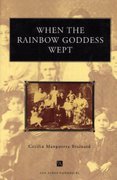
A highlight was meeting Nurten Hatirnaz, the editor of the Turkish publisher (Bilge Kultur Sanat) that translated my novel, When the Rainbow Goddess Wept, into Turkish. My husband, our friends John and Elizabeth Allen, and I slipped away from the group at the Grand Bazaar, and with the help of our Tour Director found the office of Bilge Kultur Sanat. We had delightful visit with Nurten. We had Turkish coffee, tea, met the staff, and took some pictures, which my husband accidentally deleted sometime during the trip - but that too is another story.

The fact the Bilge Kultur Sanat had translated my novel made me feel connected with Turkey in a special way. The thought had crossed my mind that my novel is part of Turkish literature. Meeting Nurten was like meeting an old friend.

It was like that in Turkey - one pleasantry after another. Even the members of our group all proved to be seasoned travelers - considerate and interesting people. Our tour guide was an archeologist, a Ph.D. who dazzled us with his knowledge on Turkish history, culture, politics, economics - name it. He was so passionate about everything Turkish so that we too started to see Turkey through his eyes and started to fall in love with the place and people. He also amused us with his delightful accent. Trained in German schools, he picked up the German habit of converting "v" into "w" so he would talk in this way: "After we wisit the Topkapi Palace, we will proceed to the Blue Mosque..." or "Even though the westal wirgens of the temple of Artemis had wows of chastity, they did in fact spend time with men who made huge donations and who vished to be united with the Goddess..." In a holiday mood, we turned silly and talked about making a wisit to whizz, in their toilets, which generally charged 1/2 or 1 Turkish lira.

We only grazed Istanbul, had just a little taste of this grand city, because really, how much can you see in three days? - and then we were on our way to other places in Turkey.

~~

Read also:
Check out these links as well:
 http://www.iwasinturkey.com/travelogues/300924-travel-tips-to-turkey

http://www.iwasinturkey.com/travelogues/300918-still-more-on-turkey

http://www.iwasinturkey.com/travelogues/300925-cappadocia-turkey

Sunday, May 10, 2009

Visit to Turkey - #1- Istanbul


I've been away for two weeks dear Readers, thus my silence. We visited Turkey and I'll be blogging about that visit these coming days.

Several years ago, while on a Mediterranean cruise, we stopped by Kusadasi and visited Ephesus. In particular we visited Mary's house and St. John's Basilica. Our ship was docked in Kusadasi and we had the chance to visit the Bazaar there where I found nice amber earrings and necklace. It was a very nice visit and we had made a note that we'd like to do a land tour of Turkey. I'm not sure what prompts one to say that - the place perhaps, the people certainly, but it seemed that Turkey would be a lovely interesting place to see.

It turned out that our friend, Elizabeth Allen, who had also visited Mary's house at around the same time, had come to the same conclusion about revisiting Turkey. We've traveled with Elizabeth and John Allen before - to Turkey and the Philippines, and so we planned a land trip to Turkey. We booked a 2-week tour via Grand European Tours. The tour included visits to: Istanbul, Gallipoli/Canakkale, Pergamon, Izmir, Ephesus, Pamukkale, Hierapolis, Antalya, Konya, Cappadocia, and Ankara. There were 43 of us in the American group, and our tour director was Yusuf Burak. The driver's name was Ilyas, and the assistant's name was Cadir. I mention them because they were all exceptionally nice and competent people who made our visit very pleasant. I should mention that the local tour company's name was Neon Tours; this was the company that actually took care of us in Turkey.


The Allens and we had visited Egypt together last year and the memories of Islam, dessert sand and long robes lingered with me. I had also retained in my head, pictures of Turks wearing fezzes and turbans, images similar to the turbaned Arabs,so that even though I knew (on an intellectual level) that Turkey was different from Egypt and other Arabic places, I expected long-robed, turbaned men there. I'd equated Islam with Arabic garb. I had to correct this misconception because men in Turkey wear regular western clothes,even though they are Muslims. Some women cover their heads and there were a few who wear burkas - visitors, our tour director insisted - because (our Tour Director emphasized) Turks are NOT Arabs. More women than men dress like other Arabic women - that is, they cover their heads.

The other misconception I had - this even though I had already visited Ephesus - is that Turkey would be arid. Wrong again - at least where we visited, the place was generally green and lush. I understand there are arid places in Turkey; the country is very large and offers different geographic features and sub-cultures. This is probably the only country I've visited that offers such a variety, and we didn't even visit the entire country.

The entire two weeks I spent rearranging images in my head, deleting the incorrect ones I had made up and trying my best to retain all the wonderful ones that presented themselves to me.

Istanbul: This is one of the most interesting cities I have ever visited. Even the drive from the airport to our hotel was a pleasure. It was a Saturday when we arrived and people were out enjoying themselves. The day was warm and pleasant, the sea shimmered to our right as we coasted down the highway, past ruins of ancient walls and buildings and fantastic blooming bulbs. The Conrad Hilton was a nice 5-star hotel, deserving of its five stars, although I would have preferred an hotel in the old city. There's something to be said about stepping out your hotel into ancient cobble stoned streets, right into the heart of things. But never mind, our room was great, with a view of a park, street, and buildings. The towels were the best ever - thick and lush, we all fell in love with the large European towels. The buffet breakfast was also nice - assorted olives, vegetables, fruit, a huge hunk of honeycomb, breads, sweets, the standard eggs, potatoes, mushrooms, and bacon. (The other hotels did not serve bacon - it's a Muslim country.)

Sunday we met our Tour Director, Yusuf, who bemoaned the fact that there were 43 of us, a large group, and it was raining to boot, and it seemed everything was just going to be awful. He was such a gloom and doom guy that we laughed, because really, we were all in a cheerful holiday mood. It was colder and wetter than I expected. I had the coat that I wore in Ireland - that was smart; but I wore sandals - that was dumb. At some point I had to put on socks.

In the old city, we saw the Topkapi Palace, Blue Mosque, Haghia Sofia, Hippodrome, and Cisterns. Click on this site for descriptions of these places.


(More later)


P.S. My cat, Kiki, survived our absence. She's gotten over her allergy but she still looks


bedraggled.

~~~

Check out these links as well:
 http://www.iwasinturkey.com/travelogues/300924-travel-tips-to-turkey

http://www.iwasinturkey.com/travelogues/300918-still-more-on-turkey

http://www.iwasinturkey.com/travelogues/300925-cappadocia-turkey