Showing posts with label Maryknoll College. Show all posts

Saturday, March 10, 2012

Maryknoll College '68 Reunion in Heiter Residence

Some pictures taken at a reunion of Maryknoll College graduates in Tina and Andy Heiter's house. Thank you Tina and Andy. Check back, I'll be posting more pictures.

Tina (nee Borja) and Andy Heiter hosted a luncheon at their Winter home in Palm Desert last Saturday, March 10, 2012, attended by 10 Maryknoll College graduates (class col 68) and some husbands. Tina and Andy prepared a wonderful Filipino lunch - pancit, adobo, lumpia, vegetables, meatballs, baked salmon, and the most wonderful Thai mango salad. The desserts were another whole story as well: carrot cake, Hawaiian cake, cookies, fruit.

Marichi Santiago Panganiban and her husband Homer, who live in the East coast, were fortunately in Southern California and were present. The women, some of whom had not seen each other for decades, had a lot of catching up to do. Gathered around the dining table, enjoying Tina and Andy's food, stories and laughter reigned; the men in the patio said their own stories were drowned-out by the women's happy sounds.

I asked Tina Borja Heiter, an accomplished artist who has her artwork in galleries in Zurich, to show me some of her paintings. I was delighted when she talked about her creative process. It was interesting to compare her creative process with mine as a writer. What caught my attention most was the fact that the image is not crystal-clear in her head when she starts a painting, and that the painting evolves to completion.

Those who attended the reunion were (in no particular order): Sim Ciocon, Raul Cruz, Homer Panganiban,Andy Heiter, Patrick McGinley; Marichi Santiago Panganiban, Lucy Adao McGinley, Maria Navarro Ciocon, Med Villanueva, Milette Estrada, Cecilia Manguerra Brainard, Tina Borja Heiter, Esther Quintos Parker, Lorna Cayco Cruz, Chona Saligumba Preston.


Present at the


~~~
Photos:
top, l-r, seated: Sim Ciocon, Raul Cruz, Homer Panganiban; standing: Andy Heiter, Patrick McGinley
Next: l-r, seated: Marichi Panganiban, Lucy McGinley, Maria Ciocon, Med Villanueva; standing: Milette Estrada, Cecilia Brainard, Tina Heiter, Esther Parker, Lorna Cruz, Chona Preston
Next: l-r, seated: Tina Heiter, Med Villanueva, Maria Ciocon, Milette Estrada; standing: Esther Parker, Lucy McGinley, Cecilia Brainard, Lorna Cruz; Marichi Panganiban
Assorted candid shots

Monday, September 5, 2011

Maryknollers in California - More pictures

I got together with some Maryknoll classmates over the weekend. Maria Ciocon is wearing black and white; Lucy Adao McGinley has the bow in her hair; Med Villanueva is in the animal print top; Cecilia has the red/orange top; the gentleman was hijacked to take our picture. The mural was taken at Mission San Viejo Church.


Wednesday, August 3, 2011

Maryknollers in California

Maria Ciocon, Frances Garrovillo, and I spent a nice today together, catching up. We three were Communication Arts majors at Maryknoll College. The pictures show Maria telling Frances (or Bingbing) about Our Lady of Velankanni or Our Lady of Good Health.


Tuesday, December 7, 2010

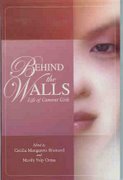
ARTICLE RE BEHIND THE WALLS, Edited by Brainard & Orosa


THE COLEGIALA EXPERIENCEby Maria Clarissa Estuar (The Philippine Star), Dec. 5, 2010

THIS WEEK’S WINNER
MANILA, Philippines - Maria Clarissa Estuar, 34, is a scriptwriter for ABS-CBN. She is part of the creative teams behind the primetime soap opera Kristine and a soon-to-be-launched teen drama. She has seven Palanca awards to her name.

In a couple of weeks, a wedding will bring my high school barkada together for the first time in 13 years. We were sophomores when we gravitated towards each other at the exclusive school for girls where we were enrolled. E-mails and Facebook helped keep the friendship alive even though half of our group has settled in North America, and the other half has remained in the Philippines. I’ve been feeling understandably sentimental, so when I chanced upon the book Behind the Walls: Life of Convent Girls, I got myself a copy and started skimming it.

Behind the Walls is a collection of essays from women who went to convent schools from before World War II to the 1990s. I immediately skipped to the essay by Eunice Noelle Lucero after figuring out that she went to the same school on Leon Guinto just a few years after my friends and I graduated from there. The soundtrack to my barkada’s high school experience was New Kids on the Block while hers was Pearl Jam, but I discovered that not much had changed during her time. Our ancient Filipino teacher still terrorized girls on a daily basis. The typing teacher still made her students wear brown paper bags on their heads during touch-typing exercises. She wielded a small triangle that she hit to signal the class to start pounding on their typewriters’ keys. To help keep the pace, she played music from a portable cassette recorder and stomped her foot to the beat. I suddenly remembered somebody telling me that once, the typing teacher’s heel got stuck in a hole on the teacher’s platform. Apparently, she timed her efforts to pull herself free to the beat of the music.

Reading that piece was a nice start because it brought me down memory lane, but I wondered if I would enjoy the essays written by women who went to other schools. As students, we held biases against girls from our rival schools and old prejudices die hard, I suppose, but I promised myself I’d keep an open mind as I plowed through the other essays.

I was amused by what appeared to be a universal difficulty in following our schools’ dress codes. Several essayists mentioned how they waged battles on skirt lengths, the resentment they felt for being forbidden to wear colored (and not just neutral) hair accessories, and how they managed to experiment with makeup even though the nuns who ran their schools frowned upon the use of mere pressed powder. Our own blue and white uniforms caused us a fair amount of grief whenever our teachers caught us walking around with one jumper strap artfully dangling off one shoulder or when we were basically using our skirts as mops whenever we sat down on the floor and slid to our friends to gossip with them.

As Holy Ghost alumna Milagros Delgado Enage pointed out, colegialas have always been expected to live out the virtues of order, simplicity and modesty, but honestly, the indoctrination process wasn’t exactly painless.

For the record, I did not go to school with a bunch of well-behaved girls. For the most part, we behaved like high-spirited teens who refused to be caged in. “Boisterious” was how fellow Scholastican Neni Sta. Romana-Cruz described us.

Through the years, colegialas have tried to stretch the boundaries in different ways. Rosemarie MontaƱano related that back in the 1960s, she was on her way back to school with her fellow internas when they made an unplanned detour to pick guavas by the roadside even though they knew they’d be severely reprimanded. Maria Concepcion Abeleda-Beltran confessed to procuring a contraband copy of Lady Chatterly’s Lover, only to be disappointed by how badly written it was.

In a way, the good nuns who ran these schools contributed to the cultivation of this daring side of many colegialas. In keeping with their goal to provide a well-rounded education to their girls, many of these institutions had outreach programs that required students to go to depressed areas to teach catechism, distribute food and clothing, and be exposed to certain social realities for the first time in their lives.

Karina Africa Bolaso pointed out how ironic this was, for she was sent to a “harmless convent school” because her parents believed no harm could come to her there because it was a place where “fine, well-bred young gentlemen went to look for their future wives.” Little did her parents know that within a year, their precious daughter would be joining protest rallies and going to evacuation centers with the blessings of her school’s administration.

Many colegialas do look back and remember how their schools gave them the chance to get out of their gated communities sans parents and amahs for the first time in their lives, forcing them to be a little more independent. Bettina Rodriguez Olmedo asserted though that in her own experience, these outreach activities “were not sufficiently involving to be capable of bursting life’s lovely bubble for the average Theresian who was usually equipped with a pair of ‘blinders’… For her, life’s problems were magnified a hundredfold. Papa’s refusal to raise her allowance was a disaster. Having to wear the same dress at another party attended by the same circle of friends was a catastrophe. Failing to catch the eye of a heartthrob was a major tragedy.”

Lolita Delgado Fansler seemed to support this view, for she wrote, “Ours was a sheltered childhood. Separated or divorced parents didn’t inhabit our tiny world because parents never gossiped about troubled marriages in front of us. Going to non-Catholic schools in the United States — or even the University of the Philippines — for college was not something colegialas were supposed to do, lest we become atheists, communists, rebels, or fallen women.”

For the most part, my own colegiala experience was peppered with trivial concerns. At times, my barkada’s discussions revolved around the stone tables, and how they became our school’s most prestigious tambayan even though it meant eating lunch on top of bathroom tiles and constantly worrying about the very real threat of higad falling from the tree that provided shade to those tables.

Other times, we tried balancing chemical equations while I nagged my friends into helping me decide if I should risk asking my crush who had spiked hair to go to the prom with me, or if I should just settle for my best friend’s cousin. I think being in the school pergola with a panicky friend when the big earthquake struck in mid-1990 was the most traumatic event in my stint as a Kulasa.

A Theresian and a Maryknoller contributed essays to the book, which spoke about a particular aspect of colegiala life that doesn’t come up often. Despite the high tuition fees, some middle class girls do manage to enroll in these schools, and I was one of them. Even though we got to wear the same uniform and learned the same lessons, we didn’t experience convent school life in the same, exact way as our more affluent peers.

Alma Clutario-Patist related how a swimming party turned sour when her friend’s mother came home to find her there: “Casually, she asked me a few questions — what’s your name, where do you live? From her look of disinterest, I knew that that would be the last time I would be swimming in their pool. My family background did not come up to her family’s standards.”

In her own essay, Sonia Carreon admitted to being subjected to “verbal bullying” from one of her classmates. She wrote, “I never pretended to be rich nor even acted rich, but I guess my effort at trying to blend in was not working. Someone actually did not like me because I was poor and from the province. What had I done to make this girl hate me?”

Luckily, I didn’t go through anything as dramatic. It helped that I was surrounded by friends who also had parents who worked hard and pinched centavos just to pay our tuition. It made things a little easier, but I still remember feeling bad — no, ashamed — because I couldn’t afford those Marks and Spencers crocheted socks that almost everybody else was wearing. Actually, I probably could have extorted enough money from my parents to buy one pair, but it didn’t feel right to indulge myself when they sacrificed so much just so that I could continue studying in that rich girls’ school.

Years after this, I got my first paycheck and was tempted to use part of it to buy myself a pair of those socks even though I had no idea where I’d wear them because my days of wearing shiny Mary Janes were long gone. I was able to fend off the impulse though because by then, I had learned that it is possible not to define one’s self through designer labels. I’d like to think that because of this, I’ve made our school’s Benedictine nuns proud.

The preface of Behind the Walls posed this question: “Is being a colegiala today of as great significance as it was then?” Almost all of the essayists in this book asserted that they developed a taste for higher learning that probably wouldn’t have germinated in another environment. We learned to push ourselves, we became comfortable competing with others, partly because we didn’t have to worry about male peers watching us and thinking, “That’s not ladylike behavior at all.” Without realizing it, being driven to succeed was seared into our system little by little.

But most of all, the essayists and I appreciate our colegiala experience because this was when we established lifelong friendships. I met Pia, Hannah and Joy when we were silly school girls who spent an inordinate amount of time teasing our bangs into a tsunami shape while trying to breathe under a cloud of Aqua Net. We drank from one Coleman during breaks and suffered through trigonometry, arnis and carpentry classes together.

Our lives now are infinitely more complex, but I have a feeling when we see each other again, it would be as if we hadn’t been apart. It would be just like old times.
~~~~

BEHIND THE WALLS: LIFE OF CONVENT GIRLS
Edited by Cecilia Manguerra Brainard & Marily Y. Orosa
Anvil Publishing, softcover, 222 pages
(www.anvilpublishing.com)
email: anvilpublishing@yahoo.com

Tuesday, March 24, 2009

Politics VS Good Manners, Maryknoll College Graduates bickering over politics again!

What happened to the old etiquette rule about not discussing politics and religion with friends? It seems my college classmates, who graduated from the exclusive convent school of Maryknoll College, Quezon City, where the nuns did their best to teach us not only academics but proper bearing, have forgotten this simple rule.

It's happened again. My classmates at Maryknoll College are bickering once again over US politics. The first time this happened was last year, during the heart of election season when someone posted an email about Obama being a Muslim and therefore dangerous and evil. The email quarreling started, Republicans versus Democrats. It got quite ugly with name-calling and insults hurled into cyberspace. The email fighting went on for weeks, and lifelong friendships hung on the balance (a cliche, forgive me).
Now, another one of those who was involved in that ugly fracas "innocently" sent an email to 67 of her email addresses something about a Tea Party/Tax Revolt (anti-Obama). Well, here, let me post those emails, without names. I will continue to air this quarrel on this blog until the person who started this political row has the commonsense to delete me from her email list:
~~~~~
Email #1: FW Tea Party/Tax Revolt
I will be attending so if anyone wants to join me, let me know.

Here is the info on the Tea Party/Tax Revolt. Please make plans to attend. It is time to stand up and be heard. We must stop letting the lazy, worthless low life's dictate how us hard working tax paying CITIZENS will live and spend OUR money.

Please try to round up some more sane people and make this a gargantuan event.
Go to the web site below for more details.
God bless you patriots, now lets kick some ass!!!
~~~
Email #2:
I'm sorry you all (whom I love and cherish.) But this is a croc of _____. Obama's plan is to fund health care - mostly for the working poor, to refurbish education for our youth - our collective future and to develop alternative fuel - for our global future. Why didn't you all throw a tea party when "W" racked up the biggest deficit in our history and spent our taxes on wars that haven't made us any safer?
~~~~
Email #3:
This is now beyond partisanship or politics. Decisions being made today involve amounts of money many of us never heard of even in the recent past. A trillion has 12 zeroes!!! What this administration wants to spend is now getting closer to 4 trillion, and compounded with interests, experts say will run up to 10 trillion before it's paid - who knows when, and at what real cost in human sacrifices (ours, mind you, not the ones who signed these bills). They're supposed to be stimulating the economy which is hanging on a string. The urgency here and the approval from tax payers rest on that assumption alone - stimulate the economy so people can go back to work!!!

Other good causes (to be sure) such as education, health care, etc. should go through the usual debates and discussions for their allocations to make sure every penny is spent wisely (these are our pennies!) not bamboozled down our throats as if schools and hospitals will close overnight if billions of $'s were not approved for them today - pronto!! What a cheap liberal tactic to ride on the miseries of honest, hard working people who are losing their jobs by the thousands on a daily basis. He (Obama), it seems to me, at least by his rhetoric, expects and wants all these people to be permanently out of job, on welfare and dependent on the government for health care and food stamps as long as they live!

For all the controversies behind the war in Iraq, the fact remains that there were no further successful attacks on US soil after 9/11 in the last 8 years (do you realize how scary it would have been if a similar attack got through again?) I think we can all agree that our enemies kept trying every single day to do it again, and again -- until we're ruined because that is their single-minded aim.

We went through difficult times the last 8 years, yes, but our economy and democratic way of life survived. The houseing market got out of hand, yes - but those who follow the reasons behind it know that there's enough blame to go around and it cannot be blamed only on the past President - in fact records show that he tried to steer the direction the other way, but opposing parties have so successfully smeared his name and honor, no one listened to him or his party. Indeed, 4-5 years ago, if you predicted what's going on now, you would've gotton rotten tomatoes thrown at you!! Well, we don't need Alqaida attacking us now --- all they need to do is watch us destroy our society morally and economically all by ourselves.

But some of us won't let that happen. We're going to a Tea Party!!!! Pleeese --- be heard and be counted. Political campaigns are OVER. We're talking real problems and real life situations. They're stacking us with debts we do not want, fund projects even they did not read "line by line" (music to everybody's ears when promised by Obama during his campaign) and as icing on this rotten cake, they're going to higher our taxes too! Can we be that stupid???
~~~~~
Email #4:
It looks like I've stirred up some passion again which I didn't mean to. I thought the tea party would be a good way to let our politicians know to quit their reckless spending that will hurt all of us eventually. I did not agree with Bush runaway spending either nor what our California governor is doing to California. Our politicians are spending too much no matter what affiliation you belong to. We are in the trouble we're in because of Bush runaway spending and Obama is following in the same path. We can't spend ourselves out of our problems. That money they are spending has to come somewhere. That is just basic accounting or economics.

Lets keep a healthy discussion. If we don't agree, then lets agree to dissagree. Our friendship is too valuable. Like you, I hope and pray Obama can solve the health care problems of our country. I don't think our schools are broken. They can tighten their belts like everybody else are doing nowadays. We have to make some sacrifices now for the future of our children. No more runaway spending and no more higher taxes! Give us some real stimulus, cut taxes!
~~~
Email #5:
As I’ve requested in the past, I would appreciate it if you would just send emails pertaining to personal news or upcoming social events.

Religion and Politics are two topics that most people would rather not discuss. That said, I hope this will be the last time I’d get emails of this nature.

Saturday, September 27, 2008

Maryknoll College 68 classmates at home


Maryknoll College class of 1968 classmates were over for some good old Filipino comfort food and catching up.

Top photo shows: Lucy Adao McGinley, Maria Ciocon, me
Bottom Photo shows: Lucy Adao McGinley, Med Villanueva, Maria Ciocon

Monday, November 5, 2007

UPDATE ARROWHEAD MINI-REUNION WITH MARYKNOLLERS


There was something that happened to us. We went to the same college, and we probably weren't even that close then. After college, we went on with our lives. Some of us stayed in the Philippines; some migrated to the U.S. or to Europe; some got married; some didn't. Some of us had children. Some of us had careers. We took different paths, and for many years, we barely saw one another. And then after not seeing one another for two decades and more (so hard to imagine it was that long ago) we got together and reconnected, got caught up with our lives, and now suddenly, these classmates whom we hadn't seen for ages became symbols of home, of our youth, and a kind of ease developed among us. It was no longer important to show off, to be the most popular, the most beautiful, the smartest, the most accomplished. It was all right to be overweight and all right to have dysfunctional families, and all right to have some neuroses. (Next year marks 40 years since we graduated from Maryknoll College!)

That is how it feels now to be with old high school and college friends. . . at least some of them. . . it feels like "going home" to be with them.

And that was how it felt to go to Arrowhead to be with Maria Ciocon and Med Villanueva, classmates from Maryknoll College (class of 68).

I had with me my lengua, some Didi Riese cookies, an overnight bag, when I drove to Upland to pick up Maria Ciocon. In fact Maria's nickname is Baby. So through the years, she has been Baby C. and I, Baby M. (for Manguerra, my maiden name). Technically, she ought to be called Baby N. (for her maiden name, Navarro), but somehow, we ended up calling her Baby C.

So, Saturday, after delays because of business phone calls, I threw my bag and food into my Mercedes Van and drove for about an hour to Upland where Baby lives. She was waiting for me, with a nice cup of brewed coffee. And then we drove to Arrowhead. We were both wondering if we would see evidence of the recent fires. We didn't, at least not from the highways we took.

Med was waiting for us, and the first thing we did, after greeting one another and dragging our stuff into Med's house, was to start heating the food. It's very Filipino to eat during gatherings. It's like Holy Communion. So, the lengua was in the microwave and the mongo soup was over the cooking range, and a chicken dish was in the oven. Rice was ready. The table was set, and by 12:30, we were eating our comfort food.

(Aside: Twice a month or so, I will go down to Vermont to my favorite turo-turo Filipino restaurant for my laing, dinuguan, binagoongan - Filipino dishes - and I pick up the Asian Journal or Philippine News, and I read about Macapagal pardoning Estrada while I eat my comfort food. The food is totally high in cholesterol, but it's all fun, and psychologically healing - it is like recharging a battery. After such a meal, I can leave Bibingkahan Restaurant and face "America" once again. I can go back to my American life.)

Eating Filipino food with other Filipinos doubles the same experience. My batteries feel doubly-charged. We eat the food we grew up on, and we talk about matters that we could not discuss with our husbands and American friends, and we can even do this in Taglish!


So there the three of us were, talking about the recent fire - Med's house had been spared, but she had to evacuate - and talking about our children and grandchildren, and of course our classmates, these other links to our youth and past.

We ate and talked from 12:30 to 2 p.m. And feeling we had to do something else, we went to town where there was an Oktoberfest going on. We window shopped and watched the Men's drinking contest. We each picked a possible winner and watched them down pints of beer in a few seconds flat. Maria thought the young college-age guys would have a lot of practise drinking beer. I picked an older man with a rotund stomach, thinking age and experience might have an edge. Med picked a younger fellow, who made third-runner up. Maria's and my candidates dropped out in the first round.

After the beer drinking contest, we went to Mass in Our Lady of the Lake Catholic Church. We were an hour early, so we said the Rosary and Our Divine Mercy Chaplet, and walked around the neighborhood, and the outdoor Stations of the Cross, and window-shopped in the Church store. Then we heard Mass. The priest talked about the fire and the victims; and a fellow from a volunteer group talked about their providing assistance to fire victims. The priest invited all to the refectory because the Red Cross had brought food.

We returned to Med's place and proceeded to pray the long version of the Healing the Family Tree prayers. It's a very powerful prayer for your ancestors - look it up sometime (I forget the title of the book with the prayers we said, but Kenneth McAll has an excellent book about the subject matter).

After praying, we ate some more. And then we changed into our nightwear and settled down to watch DVDs. Med's machine is apparently temperamental and it refused to read my DVD on Water (by Deepa Mehta), which I wanted to share with them. But it read the BBC's version of Pride and Prejudice, a 4 hour show. I dozed off and on, but Maria and Med stayed awake until around 3:30 a.m.

There were two beds in the guest room but I opted to sleep in the living room with the magnificent cathedral windows. It was chilly, and we welcomed it because this was different. It reminded us we were in another place. Maria kept saying, "Doesn't this remind you of Baguio?" - referring to the cool, mountain place, Baguio, with pine trees, in Luzon, a favorite vacation place.

I was awake by 7 a.m. and through the cathedral windows I watched blue jays hopping on pine trees branches. There were white fluffy clouds and the sky was blue. By 8:30, we congregated around the dining table again for a meal of garlic rice, eggs, bacon, dangit (dried fish), and fruit.

We talked until 1:30 p.m. and then Maria and I packed our things and put them in the car. The plan was to windowshop in antique stores, then we'd bring Med home, and head back home. In Cedar Glen's street mall, I parked the car, and we visited five shops. When we returned to the car, there was a note stuck in the windshield, saying my tire was soft. Indeed a huge bolt was stuck in my left rear tire and my tire was flat. We called triple A, had to wait over an hour, and got a guy named Paul who had a heck of a time figuring out what to do. We stopped by a gas station and had another guy put air into the spare tire and other tires. Then we dropped Med off, and Maria and I drove back down Freeway 10, to 210, and alone to 10 all the way to Santa Monica. The only hitch was I had to keep my car down to 50-60 mph because of my spare doughnut tire.

But I got home safely, and I dare say the three of us were charged once again to deal with Life.

There's talk of another mini-reunion before Christmas.


(Above photo: Seated l-r: Med Villanueva, Chona Preston, Standing: Cecilia and Maria Ciocon;
Middle photo was taken at another Mini-Maryknoll reunion: Seated l-r: Marieda Alba, Maria Ciocon, Standing l-r: Meldy Perez, Med Villanueva, Cecilia Brainard
Bottom photo was taken in New Delhi, India, l-r: Cecilia, Lulah Quiambao, Mila Santillan)