Showing posts with label filipino american literature. Show all posts

Tuesday, November 23, 2021

Poems by Valorie Slaughter Bejarano - Filipina American Poet


POEMS BY VALORIE SLAUGHTER BEJARANO


I have gathered the poems by Valorie Slaughter Bejarano, my friend and member of PAWWA (Philippine American Women Writers & Artists).  We lost Val in 2000. ~ Cecilia Brainard

Writer's Bio: A poet/writer, Valorie Slaughter Bejarano was born in Cebu, Philippines on October 15, 1950. She grew up in the Los Angeles Filipino communicty. A self-proclaimed "Temple Street Brat," she attended Belmont High School and UCLA. Her writings were published in Journey of 100 Years: Reflections on the Centennial of Philippine Independence; Making Waves: An Anthology By and About Asian American Women: Urthkin; Electruim; Misc. Magazine; Ang Katipunan; and others. She wrote two chapbooks: Ladies First and Before the Sun Comes up. Valorie co-wrote two poetry shows: Voices from the Other Side of the Wall and Lovers Make the Worst Ex-Husbands.

Monday, September 12, 2011

HOT OFF THE PRESS: LITERARY READINGS and MORE

The first ever Filipino American International Book Festival will be held in San Francisco on October 1 and 2. Some 100 Filipino writers from all over the world will converge in the Bay Area for the event. I'll be there and will be in several readings.

First:I'll be in a Literary Reading "The Places We Call Home" at the Eastwind Books of Berkeley. I'll be reading with Oscar Bermeo, Rashaan Alexis Meneses, Barbara Jane Reyes, Sunny Vergara, and Veronica Montes. That'll be on Thursday, September 29, at 7 p.m., and Eastwind is on 2066 University Avenue, Berkeley, 94704. Veronica Montes organized the reading at Eastwind in conjunction with the FilAm International Book Festival. Bios of readers follow:

Oscar Bermeo was born in Ecuador and raised in the Bronx. He is the author of the poetry chapbooks Anywhere Avenue, Palimpsest, Heaven Below and To the Break of Dawn.

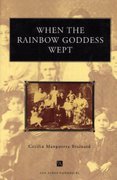
Cecilia Manguerra Brainard is the award-winning author of eight books, including the internationally-acclaimed novel When the Rainbow Goddess Wept, Magdalena, and Vigan and Other Stories.

Rashaan Alexis Meneses earned her MFA from Saint Mary’s College of California’s Creative Writing Program, where she was named a 2005-2006 Jacob K. Javits Fellow and awarded the Sor Juana Ines de La Cruz Scholarship for Excellence in Fiction.

Veronica Montes is the co-author of Angelica’s Daughters, as well as a short story writer whose work has appeared in Bamboo Ridge, Growing Up Filipino, and Philippine Speculative Fiction 5.

Barbara Jane Reyes is a recipient of the James Laughlin Award of the Academy of American Poets and the author of Diwata, which was recently noted as a finalist for the California Book Award.

Benito M. Vergara, Jr. was born and raised in the Philippines. He is the author of Displaying Filipinos: Photography and Colonialism in Early 20th-Century Philippines and Pinoy Capital: The Filipino Nation in Daly City.
For more info about the Berkeley Reading, visit this site: http://www.asiabookcenter.com/event/places-we-call-home-poetry-event

Second: PALH (Philippine American Literary House) will have a booth near Philippine Expressions. John Silva, Marily Orosa, Veronica Montes, Tony Robles, and I will be in the booth. We'll be there on Oct. 1 and 2; please stop by and say hi!

The book festival will take place in three adjacent locations in the Civic Center: the San Francisco Main Library, 100 Larkin St., the Asian Art Museum, 200 Larkin St., and on Fulton Street between Hyde and Larkin streets.


Third: Veronica and I are hosting 2 literary readings: HOT OFF THE PRESS, on Oct. 1, and Oct 2, from 12-1: 30 p.m. in the Koret Auditorium. Some 20 talented writers will be participating. More information forthcoming.

For more information about the Book Festival, please visit this site:
http://filbookfest.wordpress.com/2011/08/22/a-festival-like-no-other/

Monday, August 29, 2011

Literary Reading, Sept. 29, 7 p.m, Eastwind Books, Berkeley,

Eastwind Books of Berkeley Authors & Poets Reading:

"THE PLACES WE CALL HOME" featuring
Oscar Bermeo,
Cecilia Manguerra Brainard,
Rashaan Alexis Meneses,
Veronica Montes,
Barbara Jane Reyes,
Benito M. Vergara, Jr.

September 29, 2011 Thursday 7:00 pm

at Eastwind Books of Berkeley
2066 University Avenue
Berkeley, Ca. 94704

Free Event

For more event information call 510-548-2350 , email eastwindbooks@gmail.com, visit www.asiabookcenter.com
http://events.sfgate.com/berkeley-ca/events/show/208000345-the-places-we-call-home


"The Places We Call Home" -a literary event in celebration of the upcoming Filipino American International Book Festival.

Oscar Bermeo was born in Ecuador and raised in the Bronx. He is the author of the poetry chapbooks Anywhere Avenue, Palimpsest, Heaven Below and To the Break of Dawn.

Cecilia Manguerra Brainard is the award-winning author of eight books, including the internationally-acclaimed novel When the Rainbow Goddess Wept, Magdalena, and Vigan and Other Stories.

Rashaan Alexis Meneses earned her MFA from Saint Mary’s College of California’s Creative Writing Program, where she was named a 2005-2006 Jacob K. Javits Fellow and awarded the Sor Juana Ines de La Cruz Scholarship for Excellence in Fiction.

Veronica Montes is the co-author of Angelica’s Daughters, as well as a short story writer whose work has appeared in Bamboo Ridge, Growing Up Filipino, and Philippine Speculative Fiction

Barbara Jane Reyes is a recipient of the James Laughlin Award of the Academy of American Poets and the author of Diwata, which was recently noted as a finalist for the California Book Award.

Benito M. Vergara, Jr. was born and raised in the Philippines. He is the author of Displaying Filipinos: Photography and Colonialism in Early 20th-Century Philippines and Pinoy Capital: The Filipino Nation in Daly City.


For more information about the October 1 to October 2, 2011 Filipino American International Book Festival visit http://www.filbookfest.info/

--
Eastwind Books of Berkeley
2066 University Avenue; Berkeley, CA 94704
phone: 510 548-2350 fax: 510 548-3697
www.asiabookcenter.com email: eastwindbooks@gmail.com

Sunday, August 15, 2010

Update Paris France, July 2010

We visited Paris France in route to Kenya for a Safari. I'll be posting pictures and some comments these following days. In Paris, we met our friend, Michael Genelin, mystery writer of the Jana Matinova Series: Dark Dreams,Siren of the Waters, and another one forthcoming. Here are some pictures with Michael. Lauren is wearing red; and I'm not the blonde. I have more pictures taken in Paris, and even more of the fantastic Safari in Kenya, so visit again, Cecilia


Monday, June 14, 2010

Forthcoming: CHERISHED: 21 WRITERS ON ANIMALS THEY'VE LOVED AND LOST

I received confirmation from Barbara Abercrombie that my essay about my cat, Kiki, will be part of the collection, "CHERISHED: 21 WRITERS ON ANIMALS THEY'VE LOVED AND LOST (New World Library, approx. April 2011). I'm thrilled to be in a book that'll include Anne Lamott and Jane Smiley and the other fine writers.

The contributors are:

Cecilia Manguerra Brainard
May-lee Chai
Michael Chitwood
Melissa Cistaros
Mark Doty
Samantha Dunn
Linzi Glass
Robert Goldman, DVM (Preface)
Monica Holloway
Judith Lewis
Ted Kooser
Sonia Levitin
Anne Lamott
Thomas McGuane
Billy Mernit
Joe Morgenstern
Robin Romm
Jenny Rough
Carolyn See
Jane Smiley
Jacqueline Winspear
Victoria Zackheim

Tuesday, June 8, 2010

Filipino American Authors & Academics

Here are some pictures taken with some writer and academic friends:
Top pictures, from l-r: Brian Roley, Cecilia Brainard, & Paulino Lim
next, l-r: Brian Roley, Paulino Lim
next, l-r: Brian Roley, Ming Menez Coben, Lauren Brainard, Marilyn Alquizola, Alex Brainard, Paulino Lim, Barbara Lim
Bottom, l-r: Brian Roley, Cecilia Brainard, Lauren Brainard, Marilyn Alquizola, Ming Menez Coben, Paulino Lim, Barbara Lim


Thursday, May 6, 2010

"MIGUEL SYJUCO IN CONVERSATION WITH CECILIA BRAINARD


Photos taken at the LA Library Foundation ALOUD program, "Miguel Syjuco (Ilustrado) in Conversation with Novelist Cecilia Manguerra Brainard
Group of 3, l-r: Prosy Dela Cruz, Cecilia Brainard, Ming Menez Coben

CLICK HERE FOR AN EXCERPT OF THE SYJUCO-BRAINARD CONVERSATION http://www.youtube.com/watch?v=zNvmiG6vzoM

Sunday, May 2, 2010

SCHOOL LIBRARY JOURNAL REVIEW GROWING UP FILIPINO II


SCHOOL LIBRARY JOURNAL BOOK REVIEW 5/1/2010 (Grades 5 & Up):

BRAINARD, Cecilia Manguerra, ed. Growing Up Filipino II: More Stories for Young Adults. 254p. PALH. 2010. Tr $29.95. ISBN 978-0-9719458-2-1; pap. $21.95. ISBN 978-0-9719458-3-8. LC 2002104406.

Gr 9 Up—This collection of 27 short stories, the follow-up to the critically acclaimed Growing Up Filipino (PALH, 2003), reflects the impact of post-9/11 wartime sensibilities among Filipino writers living in the Philippines, the United States, and Canada. Although similar topics of family, memoir, and coming-of-age thread through both collections, the pieces are not grouped by theme, but nevertheless weave a constantly shifting tapestry of Filipino identity. The challenges and conflicts of unique ancestry and struggles for identity provide a rich background for modern urban realism. The brittle memoirs reflected in "Here in the States," "Nurse Rita," and "Hammer Lounge"; original legend in "A Season of 10,000 Noses"; and breathtaking tragedy in "How My Mother Flew," among others, are compelling reading. Some selections have terse, spare language; others are almost commonplace in their apparent simplicity; all capture moments and nuances of the modern Filipino experience that will envelop readers. Brainard has again selected powerful, evocative stories of family: of promises and disappointment, failure and resentment, tenacious and all-consuming love, anxiety and transcendent hope. There is plenty here to stimulate discussion and encourage an appreciation of Filipino writing and culture. This anthology is a worthy successor to the first volume and has appeal to an audience beyond high school literature courses.—Roxanne Myers Spencer, Western Kentucky University, Bowling Green

Source: http://www.schoollibraryjournal.com/article/CA6727442.html?industryid=47067

Wednesday, April 7, 2010

Book Launch, GROWING UP FILIPINO II, in San Francisco

Book Launch of GROWING UP FILIPINO II, April 17, 2010, 2-4 pm, I-Hotel Manilatown Center, 868 Kearny St. (& Jackson), San Francisco
Readers: Tony Robles, Rashaan Alexis Meneses, Veronica Montes, Oscar Penaranda, and Marianne Villanueva

For more info: 415-399-9580

Monday, December 28, 2009

Book Launch of Growing Up Filipino II, Jan. 16, 2-5 p.m. San Francisco

Edwin Lozada and Veronica Montes have been working together on the following book launch of Growing Up Filipino II, cosponsored by PAWA (Philippine American Writers and Artists) and Arkipelago Books, on Sat. Jan. 16, 2010, 2-5 p.m. at the Bayanihan Community Center, 1010 Mission St., San Francisco. Contact pawa@pawainc.com for more information.

I am sure there will be a Literary Reading by contributors in the Bay Area. I will update this post as I get more information. (Thanks Edwin and Veronica!)

Growing Up Filipino II, by Rebecca Mabanglo-Mayor

Thoughts on the new book Growing Up Filipino II, by Rebecca Mabanglo-Mayor

I love books. The weight. The smell. The deliberate slowness of reading and turning a page and reading some more.

The screen just isn't the same and that's good and bad. Good for scanning and absorbing information quickly. Bad for reflection and immersion.

I get lost in the process of reading books, lost in new worlds and new people.

Escapism doesn't begin to cover the sensation of unfolding a completely different universe with the flick of the wrist as each page turns.

My author copies of Growing Up Filipino II: More Stories for Young Adults arrived a couple of weeks ago.

In the run-up to Christmas, I had just enough time to show it off to a few friends and family, but very little time to really absorb what I held in my hands.

My first in-book publication.

Don't misunderstand - I'm grateful to the print and online magazines that have published my poetry and reviews. Each byline meant that I became less a could-be writer and more a in-fact writer.

But to hold my story in my hands, all printed and bound up with fabulous work by authors I admire as really-real writers, I stepped into a whole new world I knew existed, but didn't think I had the key to open.

With a flick of my wrist, I was there, in the book, a story peering back at me the reader, a reader peering into a writer's world and that writer was me.

And by 'was' I mean a past me, the one who wrote the snippet of the story over 5 years ago, polished it and submitted it 2 years ago, received an acceptance and proofed my galley last year, and proofed it again this year.

I'd been told that the birthing of a story takes a long time, and I thought that only meant the creation of it. I understand now that there's also the production of it, the long steps from one universe to the next. Who knew that the the distance from the front of the wardrobe to the back was so long, Lucy?

So, there's writing, then there's book-making, and now comes the book promoting.

The hardcover version is now available at Amazon and the soft and hardcopy versions can be ordered from your local brick and mortar store. Just tell them that they can get them from Ingram or Baker & Taylor.

If you know any of the contributors (Dean Francis Alfar, Katrina Ramos Atienza, Maria Victoria Beltran, M.G. Bertulfo, Cecilia Manguerra Brainard, Amalia B. Bueno, Max Gutierrez, Leslieann Hobayan, Jaime An Lim, Paulino Lim Jr., Rebecca Mabanglo-Mayor, Dolores de Manuel, Rashaan Alexis Meneses, Veronica Montes, Charlson Ong, Marily Ysip Orosa, Kannika Claudine D. Peña, Oscar Peñaranda, Edgar Poma, Tony Robles, Brian Ascalon Roley, Jonathan Jimena Siason, Aileen Suzara, Geronimo G. Tagatac, Marianne Villanueva) ask your bookstore owner if they'll set up a reading to promo the book, then let your friends, family, and total strangers you meet at the coffee shop or grocery store know.

Step into the stories imagined in a post-9/11 world, written from the perspective of the young adult but accessible to anyone who has struggled with issues of family, love, sexuality, home, and social change in the current modern age.

Tuloy! Come share our world.
Rebecca Mabanglo-Mayor's blog is http://wordbinder.blogspot.com/

Monday, November 30, 2009

LISTED IN AMAZON.COM GROWING UP FILIPINO II: More Stories for Young Adults


Amazon.com now lists the hardcover of Growing Up Filipino II: More Stories for Young Adults, click on this site:

<http://www.amazon.com/Growing-Up-Filipino-II-Stories/dp/0971945829/ref=sr_1_2?ie=UTF8&s=books&qid=1259619206&sr=1-2>

~~~~
DISTRIBUTED BY: Ingram, Baker & Taylor, Amazon.com, Barnes and Noble, among others
PUBLISHED BY:
PALH
P. O. Box 5099
S.M., CA 90409
Tel/fax: 310-452-1195; email:palh@aol.com; palhbooks@gmail.com;http://www.palhbooks.com

BOOK DESCRIPTION: Growing Up Filipino II: More Stories for Young Adults is the second volume of the Growing Up Filipino series by PALH. In this collection of 27 short stories, Filipino and Filipino American writers explore the universal challenges and experiences of Filipino teens after the historic events of 9/11. The modern demands do not hinder Filipino youth from dealing with the universal concerns of growing up: family, friends, love, home, budding sexuality, leaving home. The delightful stories are written by well known as well as emerging writers. While the target audience of this fine anthology is young adults, the stories can be enjoyed by adult readers as well. There is a scarcity of Filipino American literature and this book is a welcome addition.
CONTRIBUTORS: Dean Francis Alfar, Katrina Ramos Atienza, Maria Victoria Beltran, M.G. Bertulfo, Cecilia Manguerra Brainard, Amalia B. Bueno, Max Gutierrez, Leslieann Hobayan, Jaime An Lim, Paulino Lim Jr., Rebecca Mabanglo-Mayor, Dolores de Manuel, Rashaan Alexis Meneses, Veronica Montes, Charlson Ong, Marily Ysip Orosa, Kannika Claudine D. Peña, Oscar Peñaranda, Edgar Poma, Tony Robles, Brian Ascalon Roley, Jonathan Jimena Siason, Aileen Suzara, Geronimo G. Tagatac, Marianne Villanueva

BIO OF EDITOR: Cecilia Manguerra Brainard is the award-winning author and editor of over a dozen books, including the internationally-acclaimed novel, When the Rainbow Goddess Wept, Magdalena and Acapulco at Sunset and Other Stories. She edited Growing Up Filipino: Stories for Young Adults, Fiction by Filipinos in America, and Contemporary Fiction by Filipinos in America, and co-edited four other books. Cecilia also wrote Fundamentals of Creative Writing (2009) for classroom use. She teaches at UCLA-Extension’s Writers Program.

Tuesday, October 20, 2009

Update ~ GROWING UP FILIPINO II: MORE STORIES FOR YOUNG ADULTS


I started the book project, Growing Up Filipino II: More Stories for Young Adults in 2007. It took about a year to collect the stories, after which I submitted the manuscript to my Philippine publisher. I thought the publisher and I had an oral agreement that I would retain US publishing rights. Since Growing Up Filipino I was published by PALH in the US, I wanted this sequel to be published in the US as well. After hanging on to the manuscript for 9 months, the Philippine publisher said they wanted all publishing rights after all, not just Philippine rights. I withdrew my work and decided PALH would go ahead and do the US publication. It was now late 2008.

A friend offered to design the cover and book (for a fee), but unfortunately her husband passed away in early 2009. Understandably, the book project was hung up for months. It wasn't until August before attention was given Growing Up Filipino II. The inside pages and cover were completed this October. I had to continuously proof the work because mistakes were constantly being picked up - lines disappeared in the cover for instance. A contributor's name was misspelled on the cover, and in the last minute I had to resend cover files to the printer, and when you make corrections late in the game, you pay to have those mistakes corrected. The delay also means the book misses out on mainstream reviews because you have to send galleys 3-4 months before the book is released. The scheduling for Growing Up Filipino II has been so messed up, I'll be relieved if the book comes out at all, much less dream of mainstream reviews for the book (as GUFI received).

It's been truly a long haul, but the files are with a US printer and I am hoping the book will be out by mid-December. Wow - three years! It's taken three years to complete this book.

This experience prompted me to take an InDesign class so I can handle some production work myself, if I ever take on another book project. It's difficult to be dependent on other people. Even though you pay them, their priorities may not be your priorities.

Getting past all of that and looking forward, here's information about this wonderful collection. The cover is beautiful; the contributors great. The short stories are really quite good and I hope the book will be as successful as Growing Up Filipino I.

BOOK DESCRIPTION:

Growing Up Filipino II: More Stories for Young Adults is the second volume of the Growing Up Filipino series by PALH. In this collection of 27 short stories, Filipino and Filipino American writers explore the universal challenges and experiences of Filipino teens after the historic events of 9/11. The modern demands do not hinder Filipino youth from dealing with the universal concerns of growing up: family, friends, love, home, budding sexuality, leaving home. The delightful stories are written by well known as well as emerging writers. While the target audience of this fine anthology is young adults, the stories can be enjoyed by adult readers as well. There is a scarcity of Filipino American literature and this book is a welcome addition.

CONTRIBUTORS:

Dean Francis Alfar, Katrina Ramos Atienza, Maria Victoria Beltran, M.G. Bertulfo, Cecilia Manguerra Brainard, Amalia B. Bueno, Max Gutierrez, Leslieann Hobayan, Jaime An Lim, Paulino Lim Jr., Rebecca Mabanglo-Mayor, Dolores de Manuel, Rashaan Alexis Meneses, Veronica Montes, Charlson Ong, Marily Ysip Orosa, Kannika Claudine D. Peña, Oscar Peñaranda, Edgar Poma, Tony Robles, Brian Ascalon Roley, Jonathan Jimena Siason, Aileen Suzara, Geronimo G. Tagatac, Marianne Villanueva

Blurbs:
This collection of twenty-eight stories--of growing up Filipino in the Philippines, in the United States, in Canada--presents adolescents grappling, with some confusion and anxiety, about their place as affected by social and cultural mobility that separate and also enclose them. These are stories of discoveries about the young self at the brink of adulthood; of longing for a once-comfortable past, of fears arising from present economic hardships which threaten the future; of loneliness in family gatherings and in school, of racism, single parenthood…These are impeccable stories in range of subject matter and modes of narration: part of the story of the Philippines and wherever Filipinos live; part of the world's story.
Linda Ty-Casper, Novelist

Every story in this collection authentically captures the interdependence of society-at-large and some individual's growth, within extended families, both natural and ritual.
Leonard Casper
Professor Emeritus, American Studies
Boston College.


When read collectively, these stories become an embodiment of the Philippine mosaic, to highlight the fluidity of Filipino/American identity.
Rocio G. Davis
Associate Professor of American Literatures
University of Navarre

Wednesday, December 31, 2008

Chapter from Re-imagining Language and Literature of the 21st Century (paper on When the Rainbow Goddess Wept) - #CeciliaBrainard


I found this article in the net and I would like to critique this paper, written by Hope Sabanpan-Yu, a short story writer/poet from Cebu City Philippines, with a Ph.D. in Comparative Literature from the University of the Philippines, and now connected with the University of San Carlos in Cebu City, Philippines.

This paper was written for the XXII International Congress of FILLM held at Assumption University, and is part of a book, Re-imagining Language and Literature for the 21st Century, published in 2005.

Dr. Yu has made me and another Filipina American novelist, Jessica Hagedorn, her subject matter, focusing on my novel When the Rainbow Goddess Wept and Hagedorn’s novel, Dogeaters.

Dr. Yu’s paper sets out to answer questions of whether an immigrant, such as Hagedorn and myself, can speak on behalf of the Filipino people. She questions whether we can depict an authentic Philippines, “after years and years of being away.” Further she questions whether I – “a highly-educated woman from an upper-class Philippine family” know anything about the situation of the Filipino people. Dr. Yu concludes that Hagedorn and I “cannot know enough to represent the common Filipino.”

Quoting an online critic (Balce-Cortes) of Hagedorn and me, Yu goes on to say, “Their works (Hagedorn’s and mine) have been perceived by Filipino critics as “a racist and fetishistic” exoticizing project to gain “acceptance into the U.S. Literary mainstream.” Dr. Yu fails to mention these Filipino critics, however, relying solely on a statement by Balce-Cortes which Dr. Yu found in the internet.

Dr. Yu continues with her sweeping statements, without documentation, as when she says, “Many critics take offense at Brainard’s portrayal of the Philippines.” Dr. Yu does not mention these critics; she does not quote them. She does quote one other critic, Hidalgo. Basically Dr. Yu has used two Filipina critics as her sources, despite the number of critical studies made on When the Rainbow Goddess Wept, including a well-lauded essay by Leonard Casper and numerous book reviews by Booklist, Publishers Weekly, Los Angeles Times, and many more.

While Dr. Yu has lumped Hagedorn and me together as guilty of orientalising and being fetishistic, she takes a position that Hagedorn is “seldom accused of being unfair to the Filipinos, “ but “Brainard is lambasted… because she fails to make a balanced representation.” Again, this position is not supported by any sound research. Who has lambasted me? Who has accused me of being unfair to the Filipinos? Are these Dr. Yu’s personal conclusions? And based on what? She does not know me. Her statement that I have been away for “years and years” from the Philippines is incorrect; I visit the Philippines regularly, sometimes twice a year. It is unfortunate that Dr. Yu did not bother emailing me, and she might have learned that I am very much in touch with Philippine-matters.

While Dr. Yu does mention some interesting ideas by Faoucalt and Bhabha about authorship and immigrant writers, Dr. Yu’s paper comes across as one that has been cut-and-pasted by someone who did not do proper research and who had to resort to sweeping statements and conclusions based on meager and false information. Aside from using unreliable sources, Dr. Yu clearly lacks knowledge of fiction writing. And indeed her bio in Wikipedia mentions some three publications for her poems, nothing for her fiction. Someone who knows fiction writing would understand that the fiction writers’ responsibility is to write a good story, not to represent all 90 million Filipinos, nor solve all the ills of Philippine culture and society. Someone so knowledgeable would know about fiction elements such as “voice” and “point of view” – points carefully discussed by noted critic, Leonard Casper in his critical essay about Song of Yvonne also known as When the Rainbow Goddess Wept (see Jan. 1 blog entry).

In any case, I would like to thank Dr. Yu and the editors for continuing the dialogue about When the Rainbow Goddess Wept, me, my work, and Philippine literature in general.
-end comments by Brainard-
Article by Hope Saban-pan Yu begins:
Representation in Philippine American Women Writers:
Between Authenticity and Orientalism

By Hope Saban-pan Yu, University of Calgary, Canada
(From the book, Re-imagining Language and Literature for the 21st Century, edited by Suthira Duangsamosorn (et al), published by International Federation for Modern Languages)

Can an American know the heart of a Filipino? Can a writer speak on behalf of her people? For whom does she speak? This question of representation besets immigrant writers the world over. Whenever they write, they are believed to be representing someone. Toni Morrison in “Paradise Found” for instance, talks of having to answer sociological and political questions during book reading, instead of queries that address literary concerns (Gray 65). What should the roles of writers be given their positions of power and responsibility?

Filipino writers who have made America their home like Cecilia Manguerra Brainard and Jessica Hagedorn are faced with the same questions. Should they depict the Philippines the way they see it now, after years and years of being away? Can they speak on behalf of the Filipinos? Occupying such controversial positions, these writers are read by Filipinos and Americans alike and are judged on the basis of how well they represent the Philippines. While one is praised for sympathetically portraying her subject, the other is condemned for criticizing the Philippines. A closer study though, reveals that neither Brainard nor Hagedorn, nor any Filipino immigrant writer writes from a purely Philippine perspective. They fail to come up to the immigrants’ expectation of representation.

Having been observed and analyzed by the Spaniards then the Americans, the rest of the world has read and heard their views. Filtered through their eyes, the Philippines became a country “nearly a successful replica of the United States-except that its citizens are mostly dark-skinned, poor, ostensibly ‘Roman Catholic’ in faith” (San Juan 5-6). The Filipinos were thought friendly and hospitable, but not necessarily ambitious. Masterpieces like the Banaue Rice Terraces are praised for their uniqueness but for all the agricultural accomplishment, the Philippines is still perceived as a backward country. Occasionally on television, men are seen coming home from fishing and counting out the day’s meagre earnings. They smile, the only positive bent in which the Filipino is perceived. The Philippines, famed pearl of the Orient, rich in natural resources, home of friendship and hospitality, is today a land of corruption, mail-order brides and domestic helpers. Like the sultry woman in a Tanduay rum advertisement, the Philippines has found itself perpetually objectified. Tentative impressions have often led to racial stereotypes that encourage misrepresentations of the Filipino. So when a writer like Brainard or Hagedorn writes, and is heard, she breaks through the gaze and the silence. She is no longer object but subject. She defines herself as she writes her story.

The complication emerges when the audience assumes that the writer is also writing their story in her story. In many critical readings the writer is assumed to be the spokesperson of a group. Although it is not difficult to understand how writers are tasked with representation, the idea becomes problematic. Questions like whose Philippines - hers or theirs – should she represent, come up. Should it be the Philippines she knows, even if it is not the Philippines of the masses? Since this is an opportunity, maybe she should focus on deorientalizing the Philippines. But critics argue that the task of deorientalizing the Philippines can only be achieved if the author knows the Philippines “as it really is” and not as the exotic paradise the colonizers have shown it to be. It is at this point that the writers come under very close inspection. Can Brainard represent the real Philippines when she hails from a Western tradition of writing? Since kindergarten “she had been educated in English, not her native Cebuano, and taught from a mostly Eurocentric perspective. At the same time she grew up surrounded by American culture – watching Hollywood movies, reading American books and magazines” (Huebler 100). How can this highly-educated woman from an upper-class Philippine family, living “in a Spanish-style villa, tended by servants and surrounded by gardens of orchids” (Huebler 98), know anything about the situations of the masses? Powerful political kinship ties have accorded Brainard special status in the community. She cannot know enough to represent the common Filipino. The same goes for Jessica Hagedorn. Essentially, both writers are criticized for not representing the Philippines authentically. Their works have been perceived by Filipino critics as “a racist and fetishistic” exoticizing project to gain “acceptance into the U.S. literary mainstream” (Balce-Cortes online).

Before we can discuss authenticity, we should be able to understand what orientalism is. Edward Said defines orientalism as “a system of knowledge about the Orient, an accepted grid for filtering through the Orient into Western consciousness” (Said 6). Orientalism is how the West makes sense of the Wast. On a very basic level, it is a set of stereotypes that when applied to new observations, provide an easy and convenient way to analyse the subject. For example, once Orientalism perceives the Filipino as indolent, all actions will be studied within the parameters of such perceived indolence. The body of generalizations that will evolve remain unchallenged and uncontested. But this is not to say the “Orient,” which is a construct, does not exist in reality. We cannot just dismiss it as “a structure of lies or of myths which, were the truth about them to be told, would simply blow away” (Said 6). Said explains that the orientalising efforts of the colonizing era have given birth to

a body of ideas, beliefs, clichés, or learning about the East, and other schools of thought at large in the culture. Now one of the important developments in nineteenth-century Orientalism was the distillation of essential ideas about the Orient – it’s sensuality, its tendency to despotism, its aberrant mentality, its habits of inaccuracy, its backwardness – into a separate and unchallenged coherence. (Said 205)

Susan Montepio, a critic of Brainard’s works, claims the sense of continuity of When the Rainbow Goddess Wept is sacrificed in the retelling of epic stories in the novel. I believe that this fragmented sense of continuity is a result of the author’s subconsciously subscribing to Orientalism. Inspite her good intentions to capture “the essence of Filipino culture by weaving in folklore and epic songs” (Huebler 101), many of her observations are informed with Western perspective, with

(page missing)

When I was twelve, I begged my parents to allow me to travel with Inuk. I cried for days until my mother accompanied me to the singer to inquire if I could be his apprentice. I sang to him the epic fragments which I had learned from a villager. He made a face, saying I had a lot to learn, but he took me in. We travelled from village to village for weddings, funerals, all sorts of celebrations, and Inuk would sing these beautiful songs, about the maiden in the skyworld, and the gentle goddess Meybuyan. (45)

But ironically, all the while that Brainard gets blamed for orientalising, she seems perfectly aware of this phenomenon of orientalism. Her characters understand the disparity between the world’s understanding of the East and the actual East. Time and again we see this sort of understanding filtering through the beliefs and behavior of Max, one of her characters. Max has lived so long in America that he thinks and behaves like an American. He is “frightened of a lot of things – animal innards, blood soup” (46) but he is not afraid of eating “his fee, bloody. ‘Rare’ he calls it” (46). This is not the only instance of orientalism laid bare. Just as much as Max stereotypes the Orient, believing the ways of all who lived here are primitive and unhygienic, Brainard shows that the Philippines is a fertile hunting ground for libidinous American males like Martin Lewis:

He often attended barrio fiestas to pick out young beauty queens – seventeen year-old girls wearing lipstick, high heels, and long gowns for the first time – and talk the girls’ parents into letting him take them to Ubec to ‘train them to be radio announcers.’ The only kind of announcing they did was the moaning and groaning executed on Lewis’ circular bed. When he grew tired of them, he dispatched them back to their barrio with fifty pesos in their purses – hymen fee. (161)

Many critics take offense at Brainard’s portrayal of the Philippines. She reinforces the West’s patriarchal attitude toward the East. As the West always suspected, Brainard’s Philippines, the backward impoverished country, cannot fight its own war. It needs intervention from the Americans: “William Cushing, an American guerilla leader in Mindanao, found a place for us in the mountains” (43). This stereotype of the helpless Filipino waiting for the aid of benevolent Americans provide a vehicle for American patriarchy.

Hidalgo implies that Brainard fails to seize the “opportunity to explore the problem” (99) and instead retreats into the banal. Brainard completely de-individualizes herself:

One waits in vain for any insight on what the customs, practices and beliefs signify besides being material for memories of an idyllic time. The author is silent on what they might reveal of the culture she purports to be explaining. In fact, there are no explanations. (98)

One can assert that this de-individualization makes the novel the product of what Foucault terms “author function” (107). Instead of Brainard, the individual author, the voice in the novel would represent different socially determined roles. Brainard’s words reflect a number of forces acting upon her like the hegemonic ideas of postcolonialism and the immigrant culture of the United States. Her works reflect not what Brainard thinks, but rather, what her times think.

Foucault states that we are accustomed to defining the author as “the genial creator of a work in which he deposits, with infinite wealth and generosity, an inexhaustible world of signification” (118). However the truth is “the author is an ideological product” (119). By bringing the author down to the level of a “product,” Foucault underscores the forces around the author that “create” them as much as they are “creating” their characters. He shifts the focus from author being the creator of all signifiers, to his or her conditions being the author’s creators. In the world of fiction, the author is not the prime mover, but the environment. Foucault would say that Brainard does not produce wholly independent ideas – no one does. Rather, she serves as the vehicle for the ideas of her times. For Foucault the question would be, not “What kind of person created these fictional works?” but rather “What kind of times and situations created this author?” Foucault would argue that Brainard has internalized some Orientalism, but he would continue that she has also internalized her experience of living in the Philippines, of immigrating and of assimilating to the United States. Hers is a blend of all these different perspectives, all these different lives. When she thinks of faith healing, for example, she cannot possibly think of it in a way unbiased by Western thought. Her views on Philippine issues are far more complex than the critics would have it. In the novel, for instance, note the depiction of faith healing as a fraudulent business:

“Asin, suca / get-teng, luya / bawang, lasona’ … ‘Salt, vinergar / scissors, ginger garlic, onion’ … An invocation against death, to protect her unborn child” (13) There is just the incantation but not physical cutting up of the body.

But even Hagedorn, an advocate of matters Filipino, gives in to the established ideal. She provides evidence of Said’s argument that the idea of the Orient is weighted with backwardness. Lola Narcisa and the servants she portrays in Dogeaters weep without shame listening to a radio serial entitled “Love Letters:”

Without fail, someone dies on Love Letters. There’s always a lesson to learned, and its always a painful one… pure love, blood debts, luscious revenge, the wisdom of mothers, and the enduring sorrow of Our Blessed Virgin Barbara Villanueva.” (12)

Despite such Orientalism in her work, Hagedorn is seldom accused of being unfair to the Filipinos. Just as one does with Brainard, one could easily argue, for instance, that by making these stereotypical portrayals of Filipinos, Hagedorn is perpetuating the Oriental myth. One could say that the Philippines still struggles to free herself of the notions of backwardness and widespread low-brow sensibilities that she presents in Dogeaters. But Hagedorn is usually praised for creating characters that reveal “the complex nature of the Filipino” (Davis 124).

Finally, all criticism whether positive or negative, intersect at the juncture at which the author is perceived as having successfully represented the people who she believes she speaks for. When Brainard is lambasted, it is because she fails to make a balanced representation. When Hagedorn is lauded, it is because she depicts the Philippines as it really is. Evidently, even some authors like Ninotchka Rosca are convinced that the purpose of literature is utilitarian: “to represent this self in fiction, the writer assumes part of the responsibility for defining it even as he or she reflects it” (Rosca 242).

As we have seen earlier, the problem with this attitude is manifold. After having been born in one world and relocated to live in another world, which “self” does a writer recreate? The backward self or the modern self? Can these two be ever untied from the other? In her article on Brainard, Hidalgo argues that the author presents both sides at the same time. Hidalgo further asserts that Brainard projects her own privileged position of power and influence upon her exoticized Filipino subjects.
There is certainly some cause to Hidalgo’s complaint but one can also argue that anyone who finds herself at the intersection of two cultures must recreate her world, must redefine her culture. Similarly, all immigrants are in some stage of integration. As Hagedorn writes in Dogeaters, one does not know when “reality will diminish the grandeur of [the] childhood image of home” (245). And this is true for all things and all people, not just immigrants.

Modernization invades Filipino places one person at a time. Our fellowmen continue to modernize while our memories are locked and sealed tight. Or worse, the places of the past alter in our memories – into idyllic edens that resemble neither past nor modern. Homi Bhabha calls this idealism “the fatality of thinking of ‘local’ cultures as uncontaminated or self-contained” (Bhabha 54). Instead of being pure, they are, as Brainard’s and Hagedorn’s novels show, in flux. They are always being contaminated.

Immigration hastens the process of change. Bhabha states “the people who have taken with them only a part of the total culture…the culture which develops on the new soil must therefore be bafflingly alike, and different from the parent culture” (54). These authors write about this new culture from their new perspective. Their views can be held to be neither Filipino nor American. They represent, if anything, the inner dialogue in which the individual writer engages, about the duality of the lives she has known. Bhabha quotes Mikhail Bakhtin:

The…hybrid is not only double-voiced and double-accented…but is also double-languaged; for in it there are not only (and not eve so much) two individual consciousness, two voices, two accents, as there are [doublings of] socio-linguistic, consciousnesses, two epochs…that come together and consciously fight it out on the territory of the utterance…It is the collision between the different points of view on the world that are embedded in these forms…such unconscious hybrids have been at the same time profoundly productive historically: they are pregnant with potential for new world views, with new ‘internal forms’ for perceiving the world in words. (58)

Instead of lamenting an untraditional perspective, Bakhtin celebrates the conception of new worlds. He sees these worlds in not only the author’s perspectives but also in their words. He provides the postcolonial reader with a new way to read and appreciate this outlook. His is a concept where there is a venue for faith healer/doctor, backward/modern and Filipino/American.
-end-

Tuesday, December 30, 2008

Anthology A Taste of Home


I received my contributor's copies of the anthology A Taste of Home, edited by Edgar Maranan and Len Maranan-Goldstein. It's a handsome collection of some 40 essays written by Filipinos in diaspora about food.

Published by Anvil, one may order the book from Anvil, directly. Anvil carries most of my other titles as well. Visit the url below:

http://www.anvilpublishing.com/bookdetails.php?id=2008000067

Thursday, December 25, 2008

Fund Raiser for Growing Up Filipino II

The following is a fund raiser for the anthology Growing Up Filipino II - businesses, writers, academics, and others may want to be listed in the Sponsors List which will be published in the book. Let me know, at palh@aol.com, Cecilia
~~
In 2003, PALH or Philippine American Literary House published Growing Up Filipino: Stories for Young Adults, a book that received favorable mainstream reviews in the United States and is used by many educators. Booklist states:
"In this fine short-story collection, 29 Filipino American writers explore the universal challenges of adolescence from the unique perspectives of teens in the Philippines or the U.S…The stories are delightful!"

It was the success of the earlier volume, Growing Up Filipino, that prompted me to collect for publication Growing Up Filipino II: More Stories for Young Adults. Of this collection, Professor Rocio G. Davis of the University of Navarre says, "Cecilia Manguerra Brainard's second volume of Growing Up Filipino expands and deepens the paradigms presented in the frist book…This new collection retakes the first volume's constutive strategy and many of the themes but, importantly, extends some of the concerns…"

The 28 contributors to this forthcoming second volume are: Amalia B. Bueno, Leslieann Hobayan, Rashaan Alexis Meneses, Paulino Lim,Jr., Dean Francis Alfar, Marianne Villanueva, Cecilia Manguerra Brainard, Jonathan Jimena Siason, Charlson Ong, Brian Ascalan Roley, Veronica Montes, Edgar Poma, Tony Robles, Oscar Peñaranda, Max Guttierez, Geronimo G. Tagatac, Kannika Claudine D. Peña, Dean Francis Alfar, Aileen Suzara, Jaime L. An Lim, Elsa Orejudos Valmidiano, Erwin Cabucos, Dolores De Manuel, Maria Victoria Beltran, M.G. Bertul fo, Rebecca Mabanglo-Mayor, Katrina Ramos Atienza, and Marily Y. Orosa.

Unfortunately, the economic situation right now is particular bad in publishing. I have therefore decided to seek financial assistance from sponsors whose names will be acknowledged in Growing Up Filipino II: More Stories for Young Adults, which is expected to be released in 2009.

Donations of $100 or more will help defray the publishing cost of this anthology. Donors will be listed in a Sponsors List in the book.
For clarification, I mention that PALH is not a 501(C)3 nonprofit organization, and unfortunately t hese donations are not tax-deductible. However, I assure you, that every penny will be used in the publishing of this book.

As many of you know there is a scarcity of Filipino and Filipino American books. I hope you can help publish this worthwhile book. You may send your $100 or more, made out to PALH, to:
PALH
PO Box 5099
Santa Monica, CA 90409.

Since we are currently in production, I need the names for the Sponsors List by January 6, and you may email me at palh@aol.com to give me the name/names. These may be personal names or business names, even websites, which will be printed for posterity in the book.

Thanking you,

Cecilia Manguerra Brainard
Publisher and Editor of PALH (Philippine American Literary House)
PALH
PO Box 5099
SM, CA 90409
Tel/fax: 310-452-1195
Email: Palh@aol.com