Showing posts with label book review Growing Up Filipino II. Show all posts

Tuesday, May 10, 2011

2 BOOK REVIEWS - GROWING UP FILIPINO II


Book Review of Growing Up Filipino II: More Stories for Young Adults (PALH, 2010)
by Karen Pierce Gonzalez


What I like most about folk stories is that they tell us something important about other people. They create specific examples of universal themes that exist in all cultures; they express the uniqueness of a particular time and a particular people that enlightens us all about our own humanity.

This is what I recently experienced after reading Growing Up Filipino II: More Stories for Young Adults, a collection of contemporary stories for young adults collected and edited by Cecilia Manguerra Brainard. The 257-page book published by PALH (Philippine American Literary House) was first brought to my attention by fellow writer Rebecca Mabanglo-Mayor. A bright writer herself who lives in Washington, she was able to share with me not only the beauty of her own literary work but also the richness of her cultural heritage.

Thanks to her I was allowed into the post 9/11 world of Filipino and Filipino American youth. Through this I was introduced to a culture that admittedly I knew very little about.

I learned through the stories that many Filipino children are raised in a very strong patriarchal system that often over rules the individual child’s needs to ‘fit in’ with the dominant American culture. For example, in ‘Double Dutch’ (Leslieann Hobayan) when young Maria Elizabeth comes home one day with her hair braided by her African American school friend her family responds by telling her the braids are ugly and she is no longer allowed to play with her friend. I could feel the poignancy of Maria Elizabeth’s dilemma as she withdrew from the schoolyard community she enjoyed so much.

Other stories also reveal the hard facts of immigrant life. Alma (‘Here in the States’ by Rashaan Alexis Meneses) struggles to understand how hard her mother must work as a nanny to make ends meet. Shame and sadness mingle when she questions the discrepancy between her mother’s role as a respected professional back home and her new role as a domestic helper. Adolescent resentment and rebellion about having to help care for younger siblings (something the maid back home did) further complicate Alma’s efforts to make sense of this new world. It is in her mother’s quiet strength and acceptance of life’s uncertainties that Alma finds her greatest comfort and connection.

While the book is designed to reflect the issues young adults face, it does much more than that. It reaches out to the rest of us in a way that invites deeper understanding and awareness of how our Filipino and Filipino American brothers and sisters experience life in America. Fraught with the angst of adolescence that exists everywhere and grounded in an abiding sense of strong Filipino family/cultural values, the authors of these stories have something valuable to tell us about our own desires and struggles to belong in whatever world we live in.

We are fortunate to have access to such a formidable anthology. It is certainly a must read for anyone who wants to celebrate our multicultural society.

Rohnert Park/Cotati writers: got a book you'd like me to review? Let me know by emailing folk@folkheartpress.com.

~~~~
From Amazon.com Book Review of Growing Up Filipino II by Vonsbiz

This is an absolute fantastic read. I read Growing Up Filipino I many years ago, I was in my early 20's then. I remember it being such a great read, I had to get part II. Although Part II is wonderful, I still think Part I takes the cake. I've purchased several copies of Part I as gifts for nieces and nephews who are now in their late teens. I also had to purchase another copy of Part I for myself since I never got my original copy back from a loaner. Part I and II are both excellent. Short stories, great for bedtime, each story with a visual and emotional message.

Tuesday, February 15, 2011

Those from Chicago - You're Invited to Coming Together in Skokie

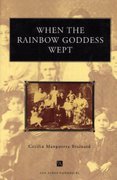
You're Invited to Coming together in Skokie which is featuring my novel, When the Rainbow Goddess Wept and Growing Up Filipino: Stories for Young Adults.

I will be in Skokie, Il to speak about When the Rainbow Goddess Wept and my experiences both in the Philippines and America on the following days. The events are open to the general public. Register for Skokie Public Library events at events.skokielibrary.info or call 847-673-3733
Monday, March 7
10:30 a.m. to 12:30 p.m. at Niles West High School Auditorium, 5701 Oakton St., Skokie
7 p.m. - 8:30 p.m. - at Skokie Public Library

Tuesday, March 8
10:30 a.m. to 12:30 p.m. at Niles North High School Auditorium, 9800 Lawler Ave, Skokie

Since January there have been book discussions of When the Rainbow Goddess Wept, and here I'll mention:
Thursday, February 24, 12:30 p.m. - 1:30 p.m. - District 219 Adminstrative Office, 7700 Gross Point Road, Skokie;
Thursday, February 24, 1 p.m. - 2 p.m. - Oakton Community College, Skokie Campus, Room c111

Wednesday, March 2, 12 p.m. - 1 p.m. - Oakton Community College, Des Plaines Campus, Library, Lower Level

Thursday, March 10, 7:15 a.m. - 8 a.m. - Niles West High School, IRC

Tuesday, March 15, 3:45 p.m. - 5 p.m. - Niles North High School, IRC

Growing Up Filipino is also discussed on March 1 (Tues) - 6:30 p.m., Niles Township Schools ELL Parent Center; and on March 3 (Thurs) - 12:30 p.m. - 1:30 p.m. District 219 Administrative Offices

There are Philippine and Philippine-American related art exhibits, movies, and events on going, contact 847-673-3733 or visit this site http://www.skokielibrary.info/s_programs/ComingTogether/index.asp>

Monday, September 27, 2010

Bethany's Bookshelf Review of Growing Up Filipino II

Bethany's Bookshelf, Midwest Book Review

Growing Up Filipino II
Cecilia Manguerra Brainard, editor
Palh
PO Box 5099, S.M., CA 90409
9780971945838, $21.95, www.palhbooks.com

Everyone faces different challenges. "Growing Up Filipino II" is a collection of short stories from the pens of many different authors. These authors, all Filipino, offer a taste of Americana of their own as they reflect on their lives and the kinship they share with other people of their own race. These stories will give advice for young Filipinos, and give anyone insight into a different perspective of life. "Growing Up Filipino II" is a treasury of memoirs, recommended.

Cha: An Asian Literary Journal Review of Growing Up Filipino II


(I think this is called a Mixed Review. Tsay does not like the cover nor title, but she does say good things about the anthology. She says the book will not last. I disagree of course, knowing my books are long-lived. - cb)
The Undersell: Growing Up Filipino II

by Alice Tsay

Cecilia Manguerra Brainard, editor, Growing Up Filipino II: More Stories for Young Adults, PALH, 2010. 257 pgs.

If you're a fan of the sequel but the blockbusters that screened at your local movie theater this summer have struck you as too glossy and lacking in heart, Growing Up Filipino II may be a follow-up project that is more your cup of tea. Have you heard of it? No? Well, there may be a good reason why. It's definitely not for the reader who carries or even reads books for cultural cache. The red patterned cover is emblazoned with two rows of decorated flip-flops in every imaginable color, and the subtitle specifies it to be More Stories for Young Adults. In other words, not the type of book people tend to purchase for themselves. This combination of marketing decisions basically limits the main audience within the targeted ethnic demographic to girls of a certain age possessing either well-used library cards or bookstore-frequenting aunts who enjoy giving gifts—that is to say, only a very partial sampling of those who can find something valuable to take from the stories in this book.

So let's put aside the fact that these twenty-seven stories "written by Filipino writers in the Philippines, the United States, and Canada" most likely weren't meant for me or you. Being the subject of writing with a motive is usually a cause for suspicion anyway, which is probably why the introduction—a defense of the content that is a minefield of academic terms—falls a bit flat. We don't really read stories because of the "shifting discourses of ethnicity" that they "interrogate," the "models for cohesion" or "negotiations of transculturality" they provide. No, not even for the "multi-layered specificity" of an author's prose—at least not in the first burst of emotion that determines whether or not we like something we've just read.

Fortunately, the best stories in this collection wiggle skillfully out of the various boxes crafted for them, viewfinder attached. The girlish, juvenile fluff suggested by the cover and the ponderous analysis of the introduction have little to do with offerings of Growing Up Filipino II. Instead, the book offers a selection of pieces that use young central characters and unfussy English as ways of entering into the complications inherent in subjects such as religion, cultural identity, immigration, death and family. Oversimplification and condescension, the two banes of fiction "for" the young, are thankfully the exception rather than the norm. While there are some exceedingly dissatisfying entries in this volume, as a whole the stories reflect artistic philosophies close to that of Maurice Sendak, who has said of his work on picture books such as Where the Wild Things Are, "I never set out to write books for children."

If the short story told through the perspective of a young boy or girl can be considered a genre, then the bar for this genre is almost certainly set by Ernest Hemingway's 1924 "Indian Camp," in which a boy follows his father on a doctoring round that goes awry. Though contributions such as Edgar Poma's "Clothesline" and Oscar Peñaranda's "The Price" don't quite approach the compressed force and understated precision of Hemingway's piece, they are still achievements in their own right. Like Hemingway's Nick Adams, Poma's Robby and Peñaranda's unnamed narrator are honest depictions of boyhood in its first instances of contact with the bafflements presented by the world at large—Robby in encounters with an artistically inclined old man and new stepfather who is like "a garden gnome come to life," Peñaranda's protagonist in an experience with "fragile Uncle Andres" and a contested piece of land.

For readers unfamiliar with Filipino fiction, though, the most welcome discoveries in Cecilia Manguerra Brainard's selection here will probably be the stories by Veronica Montes and Dean Francis Alfar. In "My Father's Tattoo," Montes tracks the story of a couple's tense relationship through the eyes of their daughter. Her prose is rich in wry, telling details, from "the young artist" who "surrounded it [the problematic tattoo of the title] with elegant curlicues at no extra charge" to the little verbal game the girl plays with her father to the conversation that the girl's father and uncle have when they go to wake her up from a nap. It closes with a moment of uncertainty that tips over into resolution with just the right light touch.

Similarly engaging are the stories by Dean Francis Alfar, particularly "How My Mother Flew" and "Something Like That." The former frames its narrative with a child's study of her mother's face over a succession of family reunions, largely avoiding cliché as it moves toward an unfurling of silent action in its final lines that is like a breath suddenly expelled. The latter traces the shifting stream of thought as a newspaper article about a tragic death is read:

…People die, life goes on.

But you look at the accompanying photo and see the girl, half-burnt, sprawled in her bathroom, partially covered by singed towels that were soaking wet when she entrusted her life to their questionable abilities. The bathtub is intact, which makes you think "she must have been too terrified to climb in" and maybe you're right.

Or maybe not.

Maybe she didn't want to get boiled.

Or something like that.

In these lines, Alfar juxtaposes the specific and the vague, the carefully reasoned with the patently slick. The measure of insouciance that repeatedly resurfaces despite being repeatedly suppressed gives the story its unsettling texture, initiating that unwelcome spark of recognition with a flawed character that only good writers can deliberately orchestrate with success.

All greater a pity, then, that this is a book whose fate will almost certainly be determined by its flowery face and by its promotion in the Preface as an anthology designed to "inspire discussion" and serve as "a useful tool" for educators—a double kiss of death, as far as garnering a widespread literary audience is concerned. Though its intentions are noble, Growing Up Filipino II hobbles itself by associating itself so strongly with adolescence, whose diminished relevance in the long run is aptly summed by Aileen Suzara in "Period Mark": "The moment came, and went." As it stands, this anthology may be broadcasting its transience so loudly through its apparatus that its contents have little chance to make a case for themselves. However, despite the fact that it inspires the same denials of attachment as its cousin, the vacuous cinematic sequel, this second short story collection edited by Ms Brainard is worth settling down with for an afternoon if you get a chance. Just say, if you need to, that it was purchased by a well-meaning aunt.

*
Permanent link: http://www.asiancha.com/issue/12/alicetsay2/

Ruelle Electrique Review of Growing Up Filipino II: More Stories for Young Adults


From Ruelle Electrique
GoodReads Review on the anthology “Growing Up Filipino II: More Stories for Young Adults”
In Book Releases, Book Reviews, Writer as Critic on July 1, 2010 at 6:00 am

Growing Up Filipino II: More Stories for Young Adults

By Your Salonniere

Growing Up Filipino II: More Stories for Young Adults by Cecilia Manguerra Brainard

In her Borderlands/La Frontera, Gloria Anzaldúa writes of the mestiza consciousness: “The new mestiza copes by developing a tolerance for contradictions, a tolerance for ambiguity. She learns to be an Indian in Mexican culture, to be a Mexican from an Anglo point of view. She learns to juggle cultures. She has a plural personality, she operates on a pluralistic mode–nothing is thrust out, the good, the bad, and the ugly, nothing rejected, nothing abandoned. Not only does she sustain contradictions, she turns the ambivalence into something else.” The Filipino-ness, as discussed by Rocio G. Davis in his introduction and depicted by the twenty-plus authors in this anthology, develops more than a tolerance for contradictions but zeroes in on the good, the bad, and the ugly, drawing strength, voice, character, and meaning out of the ambiguity that lies at the inherent core of Filipino and Fiilpino-American experiences. Filipino history is Pluralism, and Cecilia Manguerra Brainard through her keen compilation and organization of these deceptively simple tales shows readers the complexity of individual experiences and stories in this beautifully orchestrated anthology.

Chandra Talpade Mohanty once explained ethnic writing as fiction where the “story does not serve to describe only an individual’s struggle, as is often the case with Euro-American autobiography. Instead, one speaks from within a collective as a participant in a larger struggle. This process is also known as validity-as reflective accounting allows for interaction between the writer, the topic, and the sense-making process (Altheide & Johnson, 1994). However in this anthology we know none of these stories can tell us what a true Fil or Fil Am experience is because there is no such thing as one true experience. We find only paradoxes. Some characters want to participate in a larger struggle, others deny the struggle or can never participate because their life is not reflected in an idealized larger collective. We’ve moved beyond the idea of one size fits all, and, reading these stories we find there’s no need to validate an identity through some conforming sense-making process. Sense-making for a collective group is not the intent of these stories, but sense-making for an individual, a living breathing and conflicted character, sense-making for a single moment in time as told through a unique point of view drives each of these stories, and this is ultimately what separates Art from politics.

Amalia Bueno’s “Perla and Her Lovely Barbie” knocks image and identity off its feet, reflecting the oppositional forces of white versus brown, pale and delicate versus dark and sturdy. Bueno presents these tropes through the fresh eyes of youth, and we can only hope that our young protagonist doesn’t fall for the simplistic dualism that seems to run rampant throughout her Hawaiian neighborhood. Bueno’s main character simulates a funeral to bury the iconoclastic Barbie Doll and metaphorically puts the image and all that the Mattel bombshell stands for to rest. Barbie’s sway no longer holds power over these young girls. Many of the stories in this collection take advantage of play-making to shatter preconceived notions: “We made our own rules because it was our funeral,” Bueno writes. Leslie Ann Hobayan’s “Double Dutch” also deals with images but from another end of the spectrum when the young protagonist Maria Elizabeth Ramos plays with her African American neighbors, and her parents give her a scolding when she gets home. Hobayan creates some wonderful details that really prick the skin. Her story juxtaposed with Bueno’s shows us how racism pervades each culture. We are none of us innocent. This realization is due to the excellent editorial work of Brainard who took great care in ordering the stories so they speak to one another and build and circle back on different themes, patterns, and motifs.

“Nurse Rita” by Paulino Lim Jr. presents the plight of OFW’s (overseas Filipino workers) who are shuttled into vocational schools to eke a living and support their families, crammed into statistics as their lives are turned to factoids, stripped of flesh and blood experience. Lim deftly reflects the struggle of raising a child as a single working mother. Dean Francis Alfar’s “How My Mother Flew” is one of the most startling stories in the collection, the characters will haunt readers. “I learned to understand my mother’s silent language when I was young, the flicker of pursed lips, the quickening of an iris,” Alfar depicts an unsettling, yet profoundly beautiful bond between mother and child. The ending is shockingly powerful when the body becomes a vehicle for a meaning larger than life. Marianne Villanueva, in her “Black Dog,” writes about mangkukulam’s or native healers. Villanueva deliciously serves up a tale about a mother’s language, sharing stories and making meaning through the magical connection between a mother and daughter: “…because she so enjoys seeing my eyes grow rounder and rounder, there is never anything like this in the Literary Reader. I have to slog through in Grade 6 at the Assumption Convent, the nuns at my school have no imagination and they are nothing, nothing like my mother.” The protagonist is hungry for narrative, and, like her, we lick our lips, ready to devour the suspense and find out what happens next. The story has no satisfying ending but leaves us wanting more, keeping its grip on us. In “Vigan” by Cecilia Manguerra Brainard’s, she turns our attention to a historical city in the Philippines:

“Vigan boasted of having been founded in the 16th Century Juan Salcedo the Spanish Conquistador who conquered Manila. In its heyday, it was the port of entry of the Spanish galleons coming from China and headed for the Walled City of Intramuros. The ships sailed up the river and moored at the edge of Old Town, near the Cathedral and Archbishop’s Palace. The merchant’s houses and warehouses clustered near the river. Here, the traders exchanged items such as indigo, cotton, silk, pearls, tobacco, porcelain, hemp, for silver and gold.”

Brainard navigates us through the twisted past of death, family customs, race, hierarchy, and the clash between Spanish and Chinese delineations in our protagonist’s family. Her story reveals wonderful details where regionalism on the islands cleaves rifts between families. If its not economic circumstances that divide people then its ethnicity or ideology. Like Villanueva’s protagonist, Brainard’s main character doesn’t fit in school and takes to stories and narratives outside the institution to define herself. The young girl tries to process her fractious and disparate world, and the legend of the black dog also reappears. A very nice juxtaposition of stories, once again, is reflected in the “Old Witch of San Jose.” Jonathan Jimena Siason weaves different folk myths and mythical creatures together. Scarier than a black monster, our dark pasts, our secret histories, the mistakes and regrets we carry with us are the truly terrifying haunts that can eat us alive. Charlson Ong’s “A Season of 10,000 Noses” covers an uprising in 1766 when another rift between tears a people apart. Ong reflects the multiplicities inherent within Filipino culture and shows us the complexity of pluralism. The best compliments to a short story is wishing it was a novel when the reader wants to know what happens next, and Ong keeps us breathless for more.

The father in Brian Ascalon Roley’s “Old Man” is another character who will haunt readers as the rift in this story between father and son takes readers to a more personal, a more intimate edge, which makes the story and characters all the more dangerous. Sticking with the paternal thread, In “My Father’s Tattoo” Veronica Montes creates a seamless, pitch-perfect story about a father and daughter’s unbreakable bond as they selfishly enjoy each other’s company despite the mother’s dramatics. Simplicity is truly complicated because we know, just as the father and daughter do, that this intimate bond cannot last but will have to give way to life’s inevitable changes.

There are some stories where Filipino-ness is incidental and other tales in this collection where plot and the character’s conflict is completely hinged on identity politics, and, if the ethnicity were removed, then all the makings of the story would spin out of orbit. “Clothesline” by Edgar Poma points us to California’s manong farmworkers who gave their lives laboring in the Central Valley. The main character learns his roots and his identity from a special manong, and we get a taste of that quintessential Filipino-ness that has been the backbone to Fil-Am identity. Tony Robles’ “Son of a Janitor” is a rough-hewn story just as pitch-perfect as Montes’ piece, and Robles gives an excellent profile of a working father, a sturdy man who has a solid and rich universe that may, at first glance, seem humble. This short piece will make readers want to shadow Robles’ characters for pages on end. “The Price” from Oscar Peñaranda is also about a father and son separated by a dreamer uncle. We see sibling rivalry, connection to land, and the art of losing a battle worth fighting for when every chance of hope seems stark.

The black sheep of the family are always appealing because they know something just beyond our grasp and have experienced life outside the lines while the rest of tend to stay within the borders. In Max Gutierrez’s “Uncle Gil” we get to step out of the safe zone and see how the other half lives. Geronimo G. Tagatac’s “Hammer Lounge” stands out among the stories in voice, age, and tone. As we’ve progressed through the anthology, we’ve grown up. Life has taken its toll on us, and the narrator looks back to a time when, “[w:]e were in our twenties and our futures were just a couple of fat checks waiting to be cashed.” Tagatac writes of two cousins who took entirely different paths and meet up again in adulthood, trying to capture some of their reckless youth. We see how they wrestle with themselves and each other, all the changes they’ve endured, the missed opportunities and the opportunities taken that have led them to where they are today as they dance around a pool table, slinging back drinks in a dive bar, an old haunt of their misspent youth. We learn in this tale that our friends and memories keep us young though we can never go back. “Be Safe” from Kannika Claudine D. Peña weaves pop culture throughout her narrative, showing us the thought process of her protagonist’s generation reflected in the prism of the eighties. The main character ponders over life and the possibility of what should seem impossible, an inconceivable loss of a baby. The mysterious tale of Dean Francis Alfar’s “The Music Teacher” fills readers’ mind with possibilities about what happened to the central eponymous character. Suspicions are raised and nerves are jarred. Aileen Suzara’s “Period Mark” returns us to youth as the main character tries to will nature and womanhood: “With periods you would look like grown up women. Not only could my body change, but I knew that my period would change me from being nerdy to being something else. It would set everything in logical order.” In “Outward Journey” by Jaime An Lin, the fractured life of a Philippine native is revealed when the protagonist imagines the different experiences his relatives play out in their homes scattered across the globe.

Dolores de Manuel’s “Someone Else” introduces us to the dangers of subtle racism, which are pervasive and serve as a wake up call for a young sheltered college student who realizes that people and circumstances are never what they seem at first. The only story told in second person, Dean Francis Alfar’s “Something Like That” also deals with pervasive dangers that creep up on us and haunt our lives, striking without any warning. The corrupt politics in the Philippines so often leaves innocent casualties and Alfar shows us how disturbing it is that these horrors are all too often accepted as a standard of living. In Maria Victoria Beltran’s “The Veil” we have our first and only story about a Muslim protagonist. Two college roommates, one Catholic and the other practicing Islam each affect one another in transformative ways: “There is an aura of aloofness about her that seems to say yes, we can be friends but not too close, please.” Then 9/11 explodes and shatters the already fragile relationship. “Shiny Blackboots” by M.G. Bertulfo shows us what democracy looks like when a young man wrestles with following his father’s footsteps as the war rages on in the aftermath of 9/11. The young girl in Rebecca Mabanglo-Mayor’s “Yellow is for Luck” clings to superstitions wrought out of desperation by her immigrant family who have sacrificed comfort and security to fight in the war against terrorism: No matter how poor you might be, always get at least one yellow primrose to plant in your garden. Yellow is the color of gold and planting a yellow primrose is like planting gold in your garden.” Lastly, but certainly not least, Katerina Ramos Atienza’s “Neighbors” captures the paradoxical expansion and suffocating feeling that Manila embodies. Readers get lost in the wonderful details of youth in the complex and diverse capital city.

Nietzsche wrote, “The more abstract the truth you want to teach the more you seduce the senses to it.” All of the truths in these stories are abstract in that they wind us down a twisted path, often switch-backing, sometimes losing sight of a perceived destination, which turns out not to be true. The journey is never straight forward, never simplistic but complex and contradictory like life. Each writer in this collection has conveyed what Filipino-ness is through their own individual experience, and these stories are made real to us through the craftsmanship of exquisite details, capturing not just what it means to be Filipino but how it is to be human. This is a collection that embodies singular fleeting moments of time made timeless in their telling.

Wednesday, April 7, 2010

Book Launch, GROWING UP FILIPINO II, in San Francisco

Book Launch of GROWING UP FILIPINO II, April 17, 2010, 2-4 pm, I-Hotel Manilatown Center, 868 Kearny St. (& Jackson), San Francisco
Readers: Tony Robles, Rashaan Alexis Meneses, Veronica Montes, Oscar Penaranda, and Marianne Villanueva

For more info: 415-399-9580

Tuesday, December 29, 2009

REVIEW OF GROWING UP FILIPINO II, by Karen Pierce Gonzalez, Folkheart Press

Review of Growing Up Filipino II: More Stories for Young Adults, by Karen Pierce Gonzales, Folkheart Press website, Dec. 29, 2009

What I like most about folk stories is that they tell us something important about other people. They create specific examples of universal themes that exist in all cultures; they express the uniqueness of a particular time and a particular people that enlightens us all about our own humanity.

This is what I recently experienced after reading Growing Up Filipino II: More Stories for Young Adults, a collection of contemporary stories for young adults collected and edited by Cecilia Manguerra Brainard. The 257-page book published by PALH (Philippine American Literary House) was first brought to my attention by fellow writer Rebecca Mabanglo-Mayor. A bright writer herself who lives in Washington, she was able to share with me not only the beauty of her own literary work but also the richness of her cultural heritage.

Thanks to her I was allowed into the post 9/11 world of Filipino and Filipino American youth. Through this I was introduced to a culture that admittedly I knew very little about.

I learned through the stories that many Filipino children are raised in a very strong patriarchal system that often over rules the individual child’s needs to ‘fit in’ with the dominant American culture. For example, in ‘Double Dutch’ (Leslieann Hobayan) when young Maria Elizabeth comes home one day with her hair braided by her African American school friend her family responds by telling her the braids are ugly and she is no longer allowed to play with her friend. I could feel the poignancy of Maria Elizabeth’s dilemma as she withdrew from the schoolyard community she enjoyed so much.

Other stories also reveal the hard facts of immigrant life. Alma (‘Here in the States’ by Rashaan Alexis Meneses) struggles to understand how hard her mother must work as a nanny to make ends meet. Shame and sadness mingle when she questions the discrepancy between her mother’s role as a respected professional back home and her new role as a domestic helper. Adolescent resentment and rebellion about having to help care for younger siblings (something the maid back home did) further complicate Alma’s efforts to make sense of this new world. It is in her mother’s quiet strength and acceptance of life’s uncertainties that Alma finds her greatest comfort and connection.

While the book is designed to reflect the issues young adults face, it does much more than that. It reaches out to the rest of us in a way that invites deeper understanding and awareness of how our Filipino and Filipino American brothers and sisters experience life in America. Fraught with the angst of adolescence that exists everywhere and grounded in an abiding sense of strong Filipino family/cultural values, the authors of these stories have something valuable to tell us about our own desires and struggles to belong in whatever world we live in.

We are fortunate to have access to such a formidable anthology. It is certainly a must read for anyone who wants to celebrate our multicultural society.

Growing Up Filipino II: More Stories for Young Adults will be released March, 2010. For more information, visit their website.

Posted by Karen Pierce Gonzalez at 9:19 AM