Wednesday, February 11, 2009

NICE INTERIORS AND EXTERIORS

Here are some favorite pictures of exteriors and interiors of buildings from places we have visited, including: Peru, Chile, Argentina, Ireland, Italy, Philippines, France, Nicaragua, Panama, Egypt, and more...


Tuesday, February 10, 2009

CLEAN UP RIVERS, CREEKS, CANALS IN OLD CEBU!

The recent January Sinulog festival in Cebu City drew approximately a million people. That's a lot of people. There were quite a lot of foreigners - Europeans, Americans, balikbayans. The city was packed with people.

Anyway, one day during the Sinulog week, I walked down Logarta Street in Historic Cebu, and I saw a foreigner, a young man, gawking at the creek or canal under the historic bridge there. I forget the historic designation of this particular bridge, but there is a plaque beside it that Mayor Tommy Osmena put up a number of years ago.

To my great embarrassment, this foreign young man looked with horror at the filth in the canal; and indeed it was dirty. It had every bit of imaginable filth in there - plastic, paper, dead things, no doubt excrement from the slum houses that jut out over the canals. Really, I was filled with such shame. I have been very enthusiastic about the gentrifying of historic Old Cebu, and have lauded the efforts of the Aboitizes with their work in Casa Gorordo Museum and RAFI, and the tireless enthusiasm and creativity of Val Sandiego; and the Cathedral Museum people are also doing their share. In fact the Cathedral is sprucing up the church, sidewalks, and lot in front of the church. There is so much improvement going on, and I've been so proud of it, but my stomach churned when I saw the expression of disgust on this foreigner's face, and frankly the canal was repulsive. You could have caught every disease on earth if you fell in it. Such filth near human beings is not sanitary. Even animals know to defecate and urinate far away from where they sleep. I've heard of cases of dengue in Cebu - haven't people considered that dirty places such as these rivers and canals just may be responsible?

I mentioned Cebu's dirty rivers, creeks, and canals to some people. The answer I got was that the dirt is coming from higher areas, not just from the downtown Cebu. I'm not sure about this, because I can see that the rickety houses with makeshift rooms hanging over the creeks are probably using these creeks as their toilets. They do not think twice about throwing garbage into these creeks, or on the streets for that matter.

Cebu officials ought to do something about this problem. It's one thing to be poor, another to be dirty. One can be poor and clean. It is inexcusable, unpardonable to be dirty. In fact it is unsanitary to the point of risking the lives of children when such filth is right under people's noses. Germs live there; germs cause diseases.

For starters, is it not possible for someone to rake the floating debris off the water? Even that effort could make the creeks look 80% better. If Cebu has street sweepers, how about canal cleaners?

And if the debris is coming from higher areas, can't the people who live there, as well as those who live downtown, be educated about cleaning our rivers and creeks?

In 2000, Manila decided to clean up the equally filthy Pasig River. I remember that the Pasig River used to be so dirty, no fish lived in it. It was covered with plant life, which meant the river itself was dead. Well, Manila got a financial assistance package of $176 million, approved by the Asian Development Bank. I can say that the program definitely worked. I have taken the ferry down the Pasig and have seen fish in the Pasig. The river is for the most part sparkling clean. There are slogans painted on walls, constant reminders that the river is our life. Click here to read about the clean-up program of Pasig.

I say that if the Pasig River could be cleaned up, the rivers and creeks of Cebu can also be cleaned up. But we need government involvement, and we need public participation. We need education, a heightened consciousness that there is a problem, and that each one can do something to solve the problem.

I understand there is now a cleanup program for the Guadalupe River (click here to read article City Uses Korean model for river rescue plan); why don't we extend that cleanup program to include the downtown creeks? If Korea cleaned up their river in three years and turned it into a major attraction for locals and tourists, so can Cebu.

Water is vital to life. I hope that the people of Cebu, whether they be in the government or private sector pay attention to this problem. Maybe City officials who are now starting to see the tourist potential of Historic Cebu can do something to clean up our rivers, creeks, and canals. It's not just about tourism; it's basic hygiene. These rivers, creeks, canals are serious health hazards. Imagine where the water from these rivers, creeks canals go - straight to the sea; imagine fish and other living things in that sea bombarded by all that filth; imagine our fishermen catching fish from that sea; imagine that same fish on your dining table. It's just all a cycle.

I'm posting some clean canals in other places: Bangkok, Amsterdam,Venice, Norway, and yes the Pasig. They are clean, they are tourist spots. If they can have clean rivers and creeks, so can Cebu.


For more information, read below:
MMDA Plans to Clean-up and Rehabilitate Metro Manila's Rivers
President Orders Pasig River Rehab
How to Organize a River Cleanup

The Freeman published this article in their Opinion Section - here

Sunday, February 8, 2009

Remembering the Bee Farm in Bohol, Philippines


It’s raining here in California and I’m still jetlagged, so I thought I’d write about our trip to Bohol two years ago. A group of us stayed in the Bee Farm, a very nice hotel in Bohol, right along the sea, although the seashore is rocky and full of corals. Nonetheless the view of the sea was spectacular, and the rooms in the Bee Farm were nicely done with bamboo furniture and there were plenty of windows, making the space look bright and airy.

There were nine of us: 4 high school classmates – Tillic, Mila, Darn, and Tessa; plus husband Lauren, and American friends Doug, Elizabeth and John.


Two memories crowd my mind right now. First was the whale watching boat trip that the “girls” and Lauren took at dawn. Off they went on an outrigger boat to see whales and dolphins. It must have been around 4:30 a.m. when they left. At 7 I got up and looked out the window and saw their boat in the distance. I thought they’d get back in thirty minutes and so I slowly pulled myself together. After half an hour, I looked out the window again and saw that their boat was still far from shore. I think I crawled back into bed and dozed off. When I awoke and went downstairs, I was surprised that they hadn't arrived. Just when I was about to try and find out what had happened to them, the group straggled in, soaking wet, feet and legs bleeding.

What had happened was that the tide was low when they returned and the boat couldn’t come close to shore. The boatman didn’t think to dock them someplace else. The girls, counting on Lauren, gave him their cameras, cellphones, and other valuables, carefully and trustingly hanging these around his neck. He jumped in, and to the surprise of the girls, the water reached his neck. What this meant was that someone like Mila, who couldn’t swim, could… well… drown. In any case, the four girls did jump into the water, and all five of waded through the corals and urchin-laded rocky shore until they made it ashore. They had urchin spines embedded in the soles of their feet, cuts everywhere, and yes, their cell phones and cameras got wet. But their spirits were high and they were all laughing at their adventure. Instead of urine for the urchin spine – the usual cure – they used vinegar as suggested by a dentist who was also staying in the Bee Farm.

So that was one incident, the other one is not quite so dramatic. Tillic had talked about the wonderful massage she got at the Bee Farm, so Elizabeth and I decided to try it. We made an appointment at sunset, and the massage place was an enclosed area overlooking the sea. We got to wear the native wraparound tapis, as we lay on bamboo cots, and we looked out at the sea where a gorgeous sunset was taking place. It was like a South Pacific movie set. The masseuse had some nice-smelling aromatic oil or something smoldering nearby and so everything seemed perfect. The only problem was that both our masseuses had heavy hands, and we were dumb enough to keep quiet and just take all that painful kneading. By the time we limped back to the hotel Elizabeth and I confessed to each other that we had been in pain most of the time. The next day we had quite a lot of bruises.

Moral of this entry: Do not be afraid to tell your boatman to dock you somewhere shallow and safe; do not be afraid to tell your masseuse to go light!
~~
Photo above shows Doug, Elizabeth, John, and me
Next photo shows Cecilia, Tess, Tillic, Darn, Mila

Wednesday, February 4, 2009

January 2009 Visit of the Philippines- Pictorial

There's a video of the sinulog dance at the Handumanan at the bottom.


Captions from the top:
Vice Mayor Mike Rama, Cecilia at the Handumanan Event
The entire Cast of the Handumanan Event
Lilu Gomez, Norma Lucero, Chinggay Utzurrum, Terry Manguerra
Joy Gerra, Cecilia, Norma Lucero, Lilu Gomez, Ambeth Ocampo, Chinggay Utzurrum
Old House in Carcar
Norma Lucero, Lilu Gomez, Terry Manguerra in old house in Carcar
Norma Lucero with antique Argao House she had lived in
Cecilia, Terry, Norma, Lilu in front of Argao House that Norma had lived in
Norma in front of Argao Church Bell Tower
Lechon in Parian Night
Chona Bernad, Chelete, Lynley Ocampo, Gavin Bagares, Terry
Jackie Werkman, Eva Gullas, Norma, Chona Bernad
Louie Nacorda, Terry, Erma Cuizon
Jackie Werkman, Eva Gullas, Norma, Chona and Cecilia (standing)
Erma, Inday Blanco, Chinggay Utzurrum, Lilu
Lynley Ocampo, Chellet, Gavin Bagares, Joy Gerra
Norma, Lilu, Chinggay
Norma, Cecilia, Lilu
STC HS 64 at the Sapphire dance rehearsal
Marissa, Tina, Marily, Cynthia (Ysip sisters)
Marily, Cecilia
Guia Lim, Cecilia, Tillic Lorayes
Darn, Mila, Lilu, Norma, Cecilia
The Manguerra Clan
Chinggay, Cecilia, Terry
Cecilia, Diana Ledesma, Helen Misa
Chinggay, Terry, Jing Ramos, Cecilia

Monday, February 2, 2009

Gold Museum Ayala, Philippines

Sitting in Hongkong airport, almost midnight, with plane delayed; thank God there's free Wi-fi. Time to catch up. Let's take it from short visit to Manila.

I got to participate in a dance rehearsal of the STC (Theresian) girls who, under the tutelage of Randy can now do a Philippine folkloric dance in Las Vegas. Seriously, I thought Randy would weep when he saw these women struggling to change step, step-brush, grapevine, etc. His eyebrows slightly lifted, I could read his mind: Why didn't I go into accounting??? After two hours and a cheat-sheet on the blackboard, the group got the dance number together. Randy himself started to look hopeful and started coaxing the group to look up, tilt their heads just so, fine-tuning in other words. This dance number is for our Sapphire celebration in late February, which I will be missing.

Araceli Lorayes, Rose Cuisia Franco and I saw the gold exhibit in the Ayala Museum. It's officially titled, "Gold of Ancestors: Pre-Colonial Treasures in the Philippines." If you're in Makati, it's worth the visit, head straight for the fourth floor and view 10-13th century gold death masks, necklaces, earrings, cups, figurines, and a most curious "chastity cover." It's not a chastity belt; it's a cover, triangular in shape with intricate design and with tiny holes on the sides allowing you to string it around your waist. I was left wondering who wore this, when, where? Did they wear these under their skirts? Was this for married women, or for courtesans? I have no idea.

The death masks are also quite fascinating. There are larger pieces depicting facial features - eyes, nose, mouth. There's another version where separate gold pieces covered the mouth, nose, and eyes.


The necklaces, earrings, bracelets, anklets, etc. are very heavy pieces, some weighing more than a kilo.

The interesting thing is that the entire collection - and it's a substantial and impressive one - came from a single collector, Leandro Locsin. Imagine what other gold pieces are sitting in other collectors' hordes. It is clear that ancient Filipinos had a lot of gold, and had the sophistication to make such gold pieces.

I had asked noted historian Ambeth Ocampo, who was in Cebu, if it was possible that the Spanish colonizers had destroyed a gold-rich civilization just as they did in Peru. (I have visited the Museo de Oro in Lima, Peru.) Basically he said yes, but that this still has to be researched and written about.

If you know the history of Peru, and how the Spaniards had destroyed the Inca civilization, you can imagine how such a destruction might have taken place in the Philippines.

When I took up history in Philippine schools, I had no notion that my ancestors made gold work such as this - and more importantly that my ancestors had a sophisticated civilization. The Spaniards had done such a number on Filipinos that it seemed as if Philippine civilization began in 1521, Magellan's "discovery" of the Philippines.

Historians in the Philippines have a lot of work ahead of them. And such exciting work too!

Saturday, January 24, 2009

The Handumanan - Carnaval Queen and Miss 24-inch Waistline


I know, I know, I haven't written in a while. Tag it to being busy, tag it to having my bronchitis recur. Excuses, excuses I know. Now, there's so much that's happened I don't know where to begin.

The Handumanan Carnaval Queen event happened (my offering to my mother who would have loved the event). I have realized that this sort of thing is not my cup of tea, dear readers. It was amusing but not great fun to have your hair blowed dried to oblivion, have makeup so thick you looked like a Kabuki. The Carnaval Queen Persona is not part of my Persona-Repertoire.

But in any case I amused myself.

For instance, there were two other "damas" or princesses and one of them was a lovely young woman whose only topic of conversation was her 24 inch waistline. This was her claim to fame. Everyone knew about her 24-inch waistline. Miss 24-inch Waistline herself announced that her teenage daughters had thicker waistline than she had. The entire time we were being madeup, she and the gay hair dresser and make up artist discussed her waistline, and how scandalous it was that beauty queens have 26-inch waistlines. The dress designer declared, "I send them away. I tell them to go on a diet before I make their gowns." It seems that Miss 24-inch Waistline, maintains her waistline, not just by dieting, but by wearing a custom-made corset every single night. (She is married; I wonder what her husband thinks of that. And I wonder how healthy it is to sleep in a corset at night. It's like feet-binding.)

The Handumanan event (Handumanan means remembrances or memories) used the carnaval queen business as a way of framing their program. The performers performed to the Queen and damas. So there was a couple who sang Cebuano songs, and man who did a balak (spontaneous Cebuano poetry. Vice Mayor Mike Rama also did a balak. Performer Max Zurban did songs and jokes in Cebuano. Here's one Max Zurban joke: A nun went jogging at 4 in the morning and was raped. The next day, the other nuns went jogging at 4 in the morning. Of course this is funnier in Cebuano, and told by Max Zurban.

The finale was Cebuana singer Dulce who was very, very late, the poor audience and even I were tired and sleepy.

The program ended with a sinulog dance; and then I couldn't wait to get out of the gown and into my normal clothes. Had a late supper with my sister-in-law and my two Manila guests, Norma Lucero and Lilu Giminez. And back home, was happy to scrub all that makeup off and take down my hair.


More to come, including a visit to the Gold Museum in Ayala Museum - a 10-13th century Philippine gold artifact exhibit.

Friday, January 9, 2009

Update #1 from Cebu, Philippines

Pit Senyor, from Cebu, where the Sinulog festival is warming up! Last year a million people were here to participate in the week-long celebration focusing on the Santo Nino (Child Jesus) of Cebu. These past years, festivities have expanded to include not just the religious proceesion and mardi-style parade, but exhibits, performances, etc. One such event is the Handuman, which focuses on the revival of the Cebu pre-War Carnaval Days. Odette Jereza, vice president of the University of Southern Philippines, was appointed Handuman Chair by Vice Mayor Mike Rama. Odette conceived of the Carnaval idea, and apparently the memorial website of my mother, Concepcion Cuenco Manguerra, inspired her. There will be a full-blown production this Jan. 17 at USP's theater.

And Odette asked me to be Carnaval Queen, to represent my mother. My first instinct was to decline: I don't have anything to wear, I will have guests here in Cebu and must take care of them, etc. etc. But I heard a little nudging in my heart - I will call it my mother's voice: Go ahead, hija, you'll have fun. So, even though Odette is calling me Carnaval Queen, I call myself a proxy of my mother.

They are making a gown that'll echo what my mother wore during those Carnaval Days (1930s), and all festivities will "copy" what had happened back in the 1930s - including a balak by Vice Mayor Rama. The Carnaval Queen will have 2 attendants, and apparently whatever dancing, singing (by famous Cebuana Dulce) will be offered to the Carnaval Queen and attendants. So, basically, after whatever walk the Queen does, she just sits and watches the program. There is talk of a throne, crown, and a projected background of my mother in her Carnaval garb.

Very funny - I will keep you posted about all this, dear readers.

Cebu's traffic is now getting impossible because the processions and parades have started and roads blocked. You can feel the heightening excitement of the people in Cebu.

As far as I'm concerned I'm still nursing a congested ear, which occurred in California but which got aggravated in the plane. Seems to be better today, but it's like that: the ears feel clear in the morning, but gets congested in the afternoon.

I attended the art exhibit of Paulina Constanzia, Cebuana artist who lives in Canada. There I saw familiar faces: Terry Manguerra, Chinggay Utzurrum, Tina Escanao Chiongbian, Elena Chiongbian Young, Marilou Briones Chiongbian, and many more.

I was saddened to hear that Tony Garcia, husband of Lucy Franco Garcia, died on Christmas Eve. I also heard that Mayor Tommy Osmena has cancer and undergoing chemo treatments. Cecilia Picornell had a mini-stroke, but is doing fine. Husband, Jaime reported she and Cecilia are on a diet and Cecilia has lost kilos. These are my childhood friends dear readers, which adds to my disconcertment.

I haven't had time to connect with the historian/academic crowd, although I did hear from Jing Ramos of Zee Quarterly. A number of people praised the article (Life in Parian Now) in the November issue of Zee Quarterly, and Jing (who had invited me to write the article) will be dropping by to give me copies.


All for now, dear readrs.

Tuesday, January 6, 2009

Update Fund Raiser for Growing Up Filipino II - more

I feel gratified that more people have contacted me, wanting to support the publication of Growing Up Filipino II:

John and Elizabeth Allen, Carol Ojeda-Kimbrough, and Carolyn Williams contacted me last week. Here's the message from Carolyn Williams, Director of the Writers House in Rutgers University:

"I'm eager to help the publication of Growing Up Filipino II, but I've only just put my check in the mail. I hope it's not too late to include me!
Carolyn Williams
Director, Writers House
Rutgers University"

Special thanks to the following Sponsors whose support makes possible the publication of Growing Up Filipino: More Stories for Young Adults:

John and Elizabeth Allen
Christopher Brainard Law Offices – www.christopherbrainard.com
Emmanuel Gonzalez
Barbara Lim
In memory of Arcadio, Maria, Sylvestre, and Celerina
Carol Ojeda-Kimbrough
Marily Y. Orosa
Remy’s on Temple Art & Garden – www.remysontemple.com
Tony Robles – www.tony-robles.com
Studio 5
Carolyn Williams, Director, Writers House, Rutgers University - http://wh.rutgers.edu/

Monday, January 5, 2009

HOW TO WIN AT THE HORSE RACING TRACKS


Dear Readers,
I am happy to report that I won 3 exactas the other day at Santa Anita Track. I am sure you are dying to know how I did this.

First, it was a miserably cold day - worse than Ireland or any other cold place we'd been too. It was cold and clammy, and the air oozed with moisture. Usually we sit outside where you can actually see the race, but I felt I'd get instant-pneumonia if I did that. We had tickets to the Clubhouse so I parked myself in a warm room with a television nearby. It turned out that some serious gamblers were in that room. They would discuss the horses; and one man was getting bets or tips via cell phone, and so he would shout out: "What? Victorina? And who else is good?" etc. etc.

So, dear Readers, I listened to this man and his friends, jutted down the names of the horses that they tossed out. And I had some 3 newspaper predictions of which horses would win. I looked at the horses names and came up with the top 3 mentioned by all these sources. Believe it or not, I bet three exactas and won three exactas. Basically I boxed my 3 top horses. I didn't bet a lot, since I only bet for entertainment - if I cash a few tickets now and then, I'm happy - but I was ahead.

I've tried other methods of divining the winners, such as following my instinct, betting on gray horses, studying the trot of the horses to see which horse really wants to win, waiting for a horse to wink at me, using birthdays or lucky numbers, even trying to decipher the racing forms; but this was the method that has worked best for me. Three exactas is not easy to divine.

That makes for a good day at the track!

Friday, January 2, 2009

Upddates

Happy New Year, dear Readers! I'm off to the track today, but before I do so would like to give you some updates:

1. Re the Fund Raiser for Growing Up Filipino, John and Elizabeth Allen also made a donation. I feel gratified that just by emails these people have quickly responded to my call. Thanks to these people who believe in my work.

Sponsors' List for Growing Up Filipino II

John & Elizabeth Allen
Christopher Brainard Law Offices – www.christopherbrainard.com
Emmanuel Gonzalez
Barbara Lim
In memory of Arcadio, Maria, Sylvestre, and Celerina
Carol Ojeda-Kimbrough
Marily Y. Orosa - http://marilyo.multiply.com
Remy’s on Temple Art & Garden – www.remysontemple.com
Tony Robles – www.tony-robles.com
Studio 5

2. I must admit that that critical essay by Dr. Yu got me riled up and I updated my response/comments to her work, which can be found right before her critique (Dec. 31 blog entry). To balance out the dialogue about the novel, me, and my work, I posted a critical essay by noted critic Leonard Casper (Jan. 1 blog entry).

I wish to clarify that I am more interested in this dialogue than I'm annoyed, although I have to say that it left me breathless to read that someone would accuse me of "racist and fetishitic" writing, as well as exoticing and orientalising. These must be new buzz words, trendy accusations within the Asian American and/or Women's literature world. I'll read more on this. I'm curious to know if novelist Linda Ty Casper has received the same accusations.

All for now as I run off into this cold January morning to the race track. The question now is: Will I win? Or will I lose?

Stay tuned dear readers, stay tuned!

Thursday, January 1, 2009

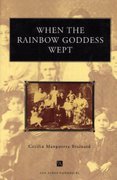
Leonard Casper's Possibilities of Humaneness in an Age of Slaughter (critique of When the Rainbow Goddess Wept)


Song of Yvonne (or When the Rainbow Goddess Wept)
Possibilities of Humaneness in an Age of Slaughter

By Leonard Casper

(From Sunsurfers Seen From Afar Critical Essays 1991-1996, by Leonard Casper, Anvil 1996)

Also published in Philippine Studies
Recommended Citation Casper, Leonard (2012) "Song of Yvonne: Possibilities of Humanities in An Age of Slaughter," Philippine Studies: Historical and Ethnographic Viewpoints: Vol. 41: No. 2, Philippine Studies vol. 41, no. 2 (1993): 251–254 
Article 8. DOI: https://doi.org/10.13185/2244-1638.4830 Available at: https://archium.ateneo.edu/phstudies/vol41/iss2/8  

With each passing generation, Filipinos are more inclined to let slip from their collective memories the horrendous events of the Japanese Occupation fifty years ago. One result is that unwittingly, they become accomplices to the attempt of Japanese revisionists, in recent “historical” accounts, to deny that their war ministry ever dreamed of aggressive empire building and to assert that they were forced by American treachery to invade the Philippines. In addition, during nearly half of the “postwar period” Filipinos had had reason to examine violence done by themselves against their hopes of national fulfillment; and therefore to be grateful for gifts and loans from the financial giant which Japan has become since determining to leave war and the production of war materials to other countries. Who then would feel guilty of having no knowledge whatsoever of A.V. H. Hartendorp’s The Japanese Occupation of the Philippines, I and II (1967), or Teodoro Agoncillo’s The Fateful Years (also in two volumes, 1965), or Hignio de Uriarte’s A Basque Among the Guerrillas of Negros (1962), or Jesus A. Villamor’s They Never Surrendered (1982), or the many books about Bataan and Corregidor, the Death March, guerrilla action in Mindanao, liberation of survivors in Sto. Tomas and Los Baños, recorded by American writers? Only in the early 1990s did the United States begin to honor its battlefield promise of American citizenship to Filipino veterans, should they choose it. Nationalists were properly outraged by the protracted delay; but how many Filipinos themselves cared to know details of those war years, not out of perpetual thoughts of revenge or reparation, but so that lessons learned would not be lost; and so that the heroic or powerless dead would not be “killed again” by forgetfulness?

Faded from memory too is the fiction by those who personally endured the hardships, the soul-testing, of the early forties: such as J.C. Laya’s This Barangay (1950); Stevan Javellana’s Without Seeing the Dawn (1947); Edilberto tiempo’s Watch in the Night (1953), More than Conquerors (1964), and The Standard-Bearer (1984). More memorable perhaps are Wilfrido D. Nolledo’s But for the Lovers (1970; 1994) and F. Sionil Jose’s Ermita (1985) whose events flow largely from the rape of a Filipina by a Japanese soldier; but their seriousness may be lost on readers attracted only to their pungent eroticism.

Unlike these authors, Cecilia Manguerra Brainard was born, in Cebu, after the war. However her father was a guerrilla engineer, just as Papa is in Song of Yvonne; and both real and fictional fathers brought their families temporarily to Mindanao, to survive under the renowned Col. Wendell Fertig. Brainard has listened to “endless” anecdotes about the war, until she began to imagine herself the child Yvonne narrating this composite story. In her preface she laments the fact that “Unlike Filipinos, the Japanese are very good at immortalizing injustices to them”; they remember Nagasaki and Hiroshima, while Filipinos forget their own numerous dead, their own cultural as well as material wounds. Yet her principal motive in memorializing the days of wrath and wounds, Brainard says, is not to authenticate that victimization so much as thereby to dramatize the “triumph of the Filipino spirit over foreign oppression.”

She does not flinch from describing atrocities: the rape and mutilation of a nurse; the beheading of Doc Mendez’s family; the torture of a former governor, after his wife is shot and his sons bayoneted because he refuses to join the puppet government; the massacre of entire towns; the loss of limbs from booby traps. Other events equally terrible but not caused by the enemy are presented: Nida’s pregnancy, which results when she distracts a Japanese guard from imminent discovery of contraband in Mama’s possession; Bitong’s accidental severing of his toe with a bolo; Doc’s nearly fatal penitential self-crucifixion; the betrayal of guerrilla leaders by Martin Lewis, an American amok. Each episode is as carefully detailed as if the narrative were autobiographical. Yet Brainard prevents the novel from descending into either melodrama or polemic by maintaining young Yvonne as her singular narrator through, a gilr not yet in her teens. “I lived that terrible War through Yvonne,” she writes in her preface, meaning that in a special way she intended a story of innocence/naivete gradually tested and tempered but never wholly torn to shreds by a violence for which the close, simple family life in Ubec (Brainard’s code word for Cebu) could hardly prepare Yvonne. Even as the girl’s experience darkens and she realized that only a thin line separates night and day, death and life, the perspective of a growing child is faithfully kept. Adults are making war. Her share of its pain is naturally scaled down – except as she is constantly aware of and responding to the greater trials of her family or their friends.

It is this controlled resonance which raises Song of Yvonne even beyond its evident importance as a documentary of Visayan resistance to the Japanese invasion; and which adds an unexpected dimension to this story of ritual passage into premature adulthood. By the time of liberation Yvonne finds herself bleeding, and her mother explains to her that this is the beginning of her period. What is symbolized but not stated is the fact that blood, so recklessly shed in ambush and torture chamber, also signifies life and the promise of continuity. Her menstruation, for example, parallels Nida’s ultimate decision not to abort the child which rape has placed inside her; Biton’s determination to go on despite loss of a crucial big toe; crucified Doc Mendez’ near-death experience and “resurrection”; Engineer Macaraig’s vision of Ubec rebuilt, based on his understanding of even pre-history: “I saw people living in Ubec centuries before me and centuries after me – an endless parade of humanity through time. And I knew that invaders would not really destroy Ubec, could never destroy its people.” He is including self-interested Americans like Lewis among those who threaten the Filipino dream not just of nationalism but of peaceful, communal life. The question of excessive American interference (Lolo Peping and Gil Alvarez’ grandparents have all witnessed the atrocities and needless deaths of famine which occurred during the Philippine-American War) is treated forthrightly, though with forgiveness for those who later fought alongside the Filipino scouts and guerrillas.

What is acknowledged is that the resoluteness of Filipinos under fire is final proof of their loyalty not to American sovereignty but to democratic ideals of self-determination consonant with a viable Filipino nation. The Macaraigs and Alvarezes take no lasting in their victories; war weariness, both in conscience as well as in body, sets in early. Their sole wish is merely to return safely to one another, once more. Symbolic of the price of violence eve in self-defense is the loss of Doc Mendez’ strange ability to judge the health of his patients on the basis of colorful auras surrounding them, as he engages more and more in military action.
Though Yvonne herself understands that the prewar world can never be wholly regained (the lost eden theme common to much of Philippine literature), in the midst of change she senses the need to conserve/restore constancy drawn from the native culture’s narratives of faith. At first it is only curiosity which makes her listen to Laydan, the family cook, tell of her youth as a disciple of Inuk, singer of epic tales. Laydan herself once briefly became a singer of legendary events, until excessive pride stole her voice away because she failed to follow Inuk’s advice, to become the epic; to surrender self-image to folk feeling and need. But having been humbled by war, Laydan’s voice is restored by the serenity of the land. Meanwhile her stories of many-breasted goddess Meybuyan, mother to all those in need, and of woman warrior Bongkatolan who helped save the Ilianon tribe from rapacious Maguindanaos, teach Yvonne the means of comforting those who suffer and sorrow. When Laydan dies (apparently summoned by a companionate angel of death across a country river), it is Yvonne who chants the tale of Tuwaang and the Maiden of the Buhong Sky: the rainbow brings promise of sunnier days, after a giant creates havoc; the slain are raised to life through the application of betel juice. (In the 1992 U.S. edition the novel’s title became When the Rainbow Goddess Wept.)

Other mythic remembrances become similar counterforces to the horrors of war. Nida’s unwanted pregnancy moves Yvonne to sing of how Tuwaang rescued the Maiden of Monawon from Deathless Man by discovering his soul concealed in a flute and smashing it. When Yvonne finds the corpse of a Japanese airman and contemplates the possibility that he too might have a child at home, she sings of Lam-ang whose bones were reassembled after he was swallowed by a monster fish and his mother’s apron restored him to life. Later Yvonne distracts Cris, the distraught survivor of the Alvarez family, with the tale of Banna, turned into a python that restored to full humanity and to marriage by a stranger’s betel juice. Finally, at the time of liberation and the family’s return to Ubec City, Yvonne rediscovers Inuk’s vet originally given her on Laydan’s deathbed. Immediately the girl thinks of how the Ilianons, ravaged and dispirited by Maguindanao warriors, were resurrected and, by ship, guided by Agyu to a place of paradise, Nalandagan…

Like Laydan, Yvonne has become the spine and flesh of her people. They are her song. She is their future; the past recreated, recovered; her song is the spirit of healing, the resilience of trial/national memory that will not let essence die.

By splicing together folktale, family anecdotes, and the realities of slaughter mitigated by the possibility of humaneness, Brainard has herself become Yvonne; has become singer of the songstress who commemorates a people at their finest, in times at their worst; and Brainard has managed that singularity-rising -from-complexity by finally finding the proper form for images from her earlier work. Stories of Ubec previously occurred in Woman with Horns and Other Stories (1987) where however they were mixed indiscriminately with other sketches and anecdotes and where they were in careful disorder themselves. Several, for example, could have been arranged chronologically but were not. “1521” offers as Lapu-Lapu’s reason for killing Magellan revenge for the death of his infant son at Spanish hands. “Alba” is more acquiescent to the mixed heritage brought to the islands by Europeans when, during the English occupation of Manila in 1763, Doña Saturnina gives birth to a fair-skinned son who nevertheless is tacitly accepted by her husband. And in “The Black Man in the Forest” old guerrilla general Gregorio, seeking Macario’s troops for a linkup in 1901, kills an Afro-American soldier but, despite his own men being near starvation, does not allow the body to be cannibalized. The title story recounts how, in 1903, an American Public Health director/widower finds a renewal of interest in life with seductive widow Agustina whose flirtation, though unconventional, is considered less than scandalous. The postwar period is marked, in “Miracle of Santo Niño Church,” by Tecla’s dreams of the Japanese who bayoneted her family; the 1960s, in “The Blue-Green Chiffon Dress,” when Gemma has a brief encounter with a GI headed back to Viet Nam; and the updating, in “The Discovery,” of a Filipina’s torn loyalties between her American husband and a former Filipino lover who however, like her homeland itself, seems corrupted and ravaged by time. The remaining stories are less amenable to chronological sequencing, yet do reach toward one another through the recurrence of identical characters, as if in search of a novel form.

Brainard’s occasional control over her short story, combining quietude with certitude, perhaps is best exemplified by “Friday Evening at the Seashore,” in which a young priest tries to console a lovelorn girl without realizing that he is the object of her love and despair. In Song of Yvonne the author joins this reliance on restraint and the focus on Ubec to a growing girl’s plainsong, further dimensioned by a chorus of folk echoes finally heard as one irrevocable voice, one song of diversified unity that sings itself.
~end~

Read also

tags: Philippine literature, Filipino, author, writer, novel, fiction, World War II, Philippines, Cebu, Cecilia Manguerra Brainard, Cecilia Brainard

Wednesday, December 31, 2008

Chapter from Re-imagining Language and Literature of the 21st Century (paper on When the Rainbow Goddess Wept) - #CeciliaBrainard


I found this article in the net and I would like to critique this paper, written by Hope Sabanpan-Yu, a short story writer/poet from Cebu City Philippines, with a Ph.D. in Comparative Literature from the University of the Philippines, and now connected with the University of San Carlos in Cebu City, Philippines.

This paper was written for the XXII International Congress of FILLM held at Assumption University, and is part of a book, Re-imagining Language and Literature for the 21st Century, published in 2005.

Dr. Yu has made me and another Filipina American novelist, Jessica Hagedorn, her subject matter, focusing on my novel When the Rainbow Goddess Wept and Hagedorn’s novel, Dogeaters.

Dr. Yu’s paper sets out to answer questions of whether an immigrant, such as Hagedorn and myself, can speak on behalf of the Filipino people. She questions whether we can depict an authentic Philippines, “after years and years of being away.” Further she questions whether I – “a highly-educated woman from an upper-class Philippine family” know anything about the situation of the Filipino people. Dr. Yu concludes that Hagedorn and I “cannot know enough to represent the common Filipino.”

Quoting an online critic (Balce-Cortes) of Hagedorn and me, Yu goes on to say, “Their works (Hagedorn’s and mine) have been perceived by Filipino critics as “a racist and fetishistic” exoticizing project to gain “acceptance into the U.S. Literary mainstream.” Dr. Yu fails to mention these Filipino critics, however, relying solely on a statement by Balce-Cortes which Dr. Yu found in the internet.

Dr. Yu continues with her sweeping statements, without documentation, as when she says, “Many critics take offense at Brainard’s portrayal of the Philippines.” Dr. Yu does not mention these critics; she does not quote them. She does quote one other critic, Hidalgo. Basically Dr. Yu has used two Filipina critics as her sources, despite the number of critical studies made on When the Rainbow Goddess Wept, including a well-lauded essay by Leonard Casper and numerous book reviews by Booklist, Publishers Weekly, Los Angeles Times, and many more.

While Dr. Yu has lumped Hagedorn and me together as guilty of orientalising and being fetishistic, she takes a position that Hagedorn is “seldom accused of being unfair to the Filipinos, “ but “Brainard is lambasted… because she fails to make a balanced representation.” Again, this position is not supported by any sound research. Who has lambasted me? Who has accused me of being unfair to the Filipinos? Are these Dr. Yu’s personal conclusions? And based on what? She does not know me. Her statement that I have been away for “years and years” from the Philippines is incorrect; I visit the Philippines regularly, sometimes twice a year. It is unfortunate that Dr. Yu did not bother emailing me, and she might have learned that I am very much in touch with Philippine-matters.

While Dr. Yu does mention some interesting ideas by Faoucalt and Bhabha about authorship and immigrant writers, Dr. Yu’s paper comes across as one that has been cut-and-pasted by someone who did not do proper research and who had to resort to sweeping statements and conclusions based on meager and false information. Aside from using unreliable sources, Dr. Yu clearly lacks knowledge of fiction writing. And indeed her bio in Wikipedia mentions some three publications for her poems, nothing for her fiction. Someone who knows fiction writing would understand that the fiction writers’ responsibility is to write a good story, not to represent all 90 million Filipinos, nor solve all the ills of Philippine culture and society. Someone so knowledgeable would know about fiction elements such as “voice” and “point of view” – points carefully discussed by noted critic, Leonard Casper in his critical essay about Song of Yvonne also known as When the Rainbow Goddess Wept (see Jan. 1 blog entry).

In any case, I would like to thank Dr. Yu and the editors for continuing the dialogue about When the Rainbow Goddess Wept, me, my work, and Philippine literature in general.
-end comments by Brainard-
Article by Hope Saban-pan Yu begins:
Representation in Philippine American Women Writers:
Between Authenticity and Orientalism

By Hope Saban-pan Yu, University of Calgary, Canada
(From the book, Re-imagining Language and Literature for the 21st Century, edited by Suthira Duangsamosorn (et al), published by International Federation for Modern Languages)

Can an American know the heart of a Filipino? Can a writer speak on behalf of her people? For whom does she speak? This question of representation besets immigrant writers the world over. Whenever they write, they are believed to be representing someone. Toni Morrison in “Paradise Found” for instance, talks of having to answer sociological and political questions during book reading, instead of queries that address literary concerns (Gray 65). What should the roles of writers be given their positions of power and responsibility?

Filipino writers who have made America their home like Cecilia Manguerra Brainard and Jessica Hagedorn are faced with the same questions. Should they depict the Philippines the way they see it now, after years and years of being away? Can they speak on behalf of the Filipinos? Occupying such controversial positions, these writers are read by Filipinos and Americans alike and are judged on the basis of how well they represent the Philippines. While one is praised for sympathetically portraying her subject, the other is condemned for criticizing the Philippines. A closer study though, reveals that neither Brainard nor Hagedorn, nor any Filipino immigrant writer writes from a purely Philippine perspective. They fail to come up to the immigrants’ expectation of representation.

Having been observed and analyzed by the Spaniards then the Americans, the rest of the world has read and heard their views. Filtered through their eyes, the Philippines became a country “nearly a successful replica of the United States-except that its citizens are mostly dark-skinned, poor, ostensibly ‘Roman Catholic’ in faith” (San Juan 5-6). The Filipinos were thought friendly and hospitable, but not necessarily ambitious. Masterpieces like the Banaue Rice Terraces are praised for their uniqueness but for all the agricultural accomplishment, the Philippines is still perceived as a backward country. Occasionally on television, men are seen coming home from fishing and counting out the day’s meagre earnings. They smile, the only positive bent in which the Filipino is perceived. The Philippines, famed pearl of the Orient, rich in natural resources, home of friendship and hospitality, is today a land of corruption, mail-order brides and domestic helpers. Like the sultry woman in a Tanduay rum advertisement, the Philippines has found itself perpetually objectified. Tentative impressions have often led to racial stereotypes that encourage misrepresentations of the Filipino. So when a writer like Brainard or Hagedorn writes, and is heard, she breaks through the gaze and the silence. She is no longer object but subject. She defines herself as she writes her story.

The complication emerges when the audience assumes that the writer is also writing their story in her story. In many critical readings the writer is assumed to be the spokesperson of a group. Although it is not difficult to understand how writers are tasked with representation, the idea becomes problematic. Questions like whose Philippines - hers or theirs – should she represent, come up. Should it be the Philippines she knows, even if it is not the Philippines of the masses? Since this is an opportunity, maybe she should focus on deorientalizing the Philippines. But critics argue that the task of deorientalizing the Philippines can only be achieved if the author knows the Philippines “as it really is” and not as the exotic paradise the colonizers have shown it to be. It is at this point that the writers come under very close inspection. Can Brainard represent the real Philippines when she hails from a Western tradition of writing? Since kindergarten “she had been educated in English, not her native Cebuano, and taught from a mostly Eurocentric perspective. At the same time she grew up surrounded by American culture – watching Hollywood movies, reading American books and magazines” (Huebler 100). How can this highly-educated woman from an upper-class Philippine family, living “in a Spanish-style villa, tended by servants and surrounded by gardens of orchids” (Huebler 98), know anything about the situations of the masses? Powerful political kinship ties have accorded Brainard special status in the community. She cannot know enough to represent the common Filipino. The same goes for Jessica Hagedorn. Essentially, both writers are criticized for not representing the Philippines authentically. Their works have been perceived by Filipino critics as “a racist and fetishistic” exoticizing project to gain “acceptance into the U.S. literary mainstream” (Balce-Cortes online).

Before we can discuss authenticity, we should be able to understand what orientalism is. Edward Said defines orientalism as “a system of knowledge about the Orient, an accepted grid for filtering through the Orient into Western consciousness” (Said 6). Orientalism is how the West makes sense of the Wast. On a very basic level, it is a set of stereotypes that when applied to new observations, provide an easy and convenient way to analyse the subject. For example, once Orientalism perceives the Filipino as indolent, all actions will be studied within the parameters of such perceived indolence. The body of generalizations that will evolve remain unchallenged and uncontested. But this is not to say the “Orient,” which is a construct, does not exist in reality. We cannot just dismiss it as “a structure of lies or of myths which, were the truth about them to be told, would simply blow away” (Said 6). Said explains that the orientalising efforts of the colonizing era have given birth to

a body of ideas, beliefs, clichés, or learning about the East, and other schools of thought at large in the culture. Now one of the important developments in nineteenth-century Orientalism was the distillation of essential ideas about the Orient – it’s sensuality, its tendency to despotism, its aberrant mentality, its habits of inaccuracy, its backwardness – into a separate and unchallenged coherence. (Said 205)

Susan Montepio, a critic of Brainard’s works, claims the sense of continuity of When the Rainbow Goddess Wept is sacrificed in the retelling of epic stories in the novel. I believe that this fragmented sense of continuity is a result of the author’s subconsciously subscribing to Orientalism. Inspite her good intentions to capture “the essence of Filipino culture by weaving in folklore and epic songs” (Huebler 101), many of her observations are informed with Western perspective, with

(page missing)

When I was twelve, I begged my parents to allow me to travel with Inuk. I cried for days until my mother accompanied me to the singer to inquire if I could be his apprentice. I sang to him the epic fragments which I had learned from a villager. He made a face, saying I had a lot to learn, but he took me in. We travelled from village to village for weddings, funerals, all sorts of celebrations, and Inuk would sing these beautiful songs, about the maiden in the skyworld, and the gentle goddess Meybuyan. (45)

But ironically, all the while that Brainard gets blamed for orientalising, she seems perfectly aware of this phenomenon of orientalism. Her characters understand the disparity between the world’s understanding of the East and the actual East. Time and again we see this sort of understanding filtering through the beliefs and behavior of Max, one of her characters. Max has lived so long in America that he thinks and behaves like an American. He is “frightened of a lot of things – animal innards, blood soup” (46) but he is not afraid of eating “his fee, bloody. ‘Rare’ he calls it” (46). This is not the only instance of orientalism laid bare. Just as much as Max stereotypes the Orient, believing the ways of all who lived here are primitive and unhygienic, Brainard shows that the Philippines is a fertile hunting ground for libidinous American males like Martin Lewis:

He often attended barrio fiestas to pick out young beauty queens – seventeen year-old girls wearing lipstick, high heels, and long gowns for the first time – and talk the girls’ parents into letting him take them to Ubec to ‘train them to be radio announcers.’ The only kind of announcing they did was the moaning and groaning executed on Lewis’ circular bed. When he grew tired of them, he dispatched them back to their barrio with fifty pesos in their purses – hymen fee. (161)

Many critics take offense at Brainard’s portrayal of the Philippines. She reinforces the West’s patriarchal attitude toward the East. As the West always suspected, Brainard’s Philippines, the backward impoverished country, cannot fight its own war. It needs intervention from the Americans: “William Cushing, an American guerilla leader in Mindanao, found a place for us in the mountains” (43). This stereotype of the helpless Filipino waiting for the aid of benevolent Americans provide a vehicle for American patriarchy.

Hidalgo implies that Brainard fails to seize the “opportunity to explore the problem” (99) and instead retreats into the banal. Brainard completely de-individualizes herself:

One waits in vain for any insight on what the customs, practices and beliefs signify besides being material for memories of an idyllic time. The author is silent on what they might reveal of the culture she purports to be explaining. In fact, there are no explanations. (98)

One can assert that this de-individualization makes the novel the product of what Foucault terms “author function” (107). Instead of Brainard, the individual author, the voice in the novel would represent different socially determined roles. Brainard’s words reflect a number of forces acting upon her like the hegemonic ideas of postcolonialism and the immigrant culture of the United States. Her works reflect not what Brainard thinks, but rather, what her times think.

Foucault states that we are accustomed to defining the author as “the genial creator of a work in which he deposits, with infinite wealth and generosity, an inexhaustible world of signification” (118). However the truth is “the author is an ideological product” (119). By bringing the author down to the level of a “product,” Foucault underscores the forces around the author that “create” them as much as they are “creating” their characters. He shifts the focus from author being the creator of all signifiers, to his or her conditions being the author’s creators. In the world of fiction, the author is not the prime mover, but the environment. Foucault would say that Brainard does not produce wholly independent ideas – no one does. Rather, she serves as the vehicle for the ideas of her times. For Foucault the question would be, not “What kind of person created these fictional works?” but rather “What kind of times and situations created this author?” Foucault would argue that Brainard has internalized some Orientalism, but he would continue that she has also internalized her experience of living in the Philippines, of immigrating and of assimilating to the United States. Hers is a blend of all these different perspectives, all these different lives. When she thinks of faith healing, for example, she cannot possibly think of it in a way unbiased by Western thought. Her views on Philippine issues are far more complex than the critics would have it. In the novel, for instance, note the depiction of faith healing as a fraudulent business:

“Asin, suca / get-teng, luya / bawang, lasona’ … ‘Salt, vinergar / scissors, ginger garlic, onion’ … An invocation against death, to protect her unborn child” (13) There is just the incantation but not physical cutting up of the body.

But even Hagedorn, an advocate of matters Filipino, gives in to the established ideal. She provides evidence of Said’s argument that the idea of the Orient is weighted with backwardness. Lola Narcisa and the servants she portrays in Dogeaters weep without shame listening to a radio serial entitled “Love Letters:”

Without fail, someone dies on Love Letters. There’s always a lesson to learned, and its always a painful one… pure love, blood debts, luscious revenge, the wisdom of mothers, and the enduring sorrow of Our Blessed Virgin Barbara Villanueva.” (12)

Despite such Orientalism in her work, Hagedorn is seldom accused of being unfair to the Filipinos. Just as one does with Brainard, one could easily argue, for instance, that by making these stereotypical portrayals of Filipinos, Hagedorn is perpetuating the Oriental myth. One could say that the Philippines still struggles to free herself of the notions of backwardness and widespread low-brow sensibilities that she presents in Dogeaters. But Hagedorn is usually praised for creating characters that reveal “the complex nature of the Filipino” (Davis 124).

Finally, all criticism whether positive or negative, intersect at the juncture at which the author is perceived as having successfully represented the people who she believes she speaks for. When Brainard is lambasted, it is because she fails to make a balanced representation. When Hagedorn is lauded, it is because she depicts the Philippines as it really is. Evidently, even some authors like Ninotchka Rosca are convinced that the purpose of literature is utilitarian: “to represent this self in fiction, the writer assumes part of the responsibility for defining it even as he or she reflects it” (Rosca 242).

As we have seen earlier, the problem with this attitude is manifold. After having been born in one world and relocated to live in another world, which “self” does a writer recreate? The backward self or the modern self? Can these two be ever untied from the other? In her article on Brainard, Hidalgo argues that the author presents both sides at the same time. Hidalgo further asserts that Brainard projects her own privileged position of power and influence upon her exoticized Filipino subjects.
There is certainly some cause to Hidalgo’s complaint but one can also argue that anyone who finds herself at the intersection of two cultures must recreate her world, must redefine her culture. Similarly, all immigrants are in some stage of integration. As Hagedorn writes in Dogeaters, one does not know when “reality will diminish the grandeur of [the] childhood image of home” (245). And this is true for all things and all people, not just immigrants.

Modernization invades Filipino places one person at a time. Our fellowmen continue to modernize while our memories are locked and sealed tight. Or worse, the places of the past alter in our memories – into idyllic edens that resemble neither past nor modern. Homi Bhabha calls this idealism “the fatality of thinking of ‘local’ cultures as uncontaminated or self-contained” (Bhabha 54). Instead of being pure, they are, as Brainard’s and Hagedorn’s novels show, in flux. They are always being contaminated.

Immigration hastens the process of change. Bhabha states “the people who have taken with them only a part of the total culture…the culture which develops on the new soil must therefore be bafflingly alike, and different from the parent culture” (54). These authors write about this new culture from their new perspective. Their views can be held to be neither Filipino nor American. They represent, if anything, the inner dialogue in which the individual writer engages, about the duality of the lives she has known. Bhabha quotes Mikhail Bakhtin:

The…hybrid is not only double-voiced and double-accented…but is also double-languaged; for in it there are not only (and not eve so much) two individual consciousness, two voices, two accents, as there are [doublings of] socio-linguistic, consciousnesses, two epochs…that come together and consciously fight it out on the territory of the utterance…It is the collision between the different points of view on the world that are embedded in these forms…such unconscious hybrids have been at the same time profoundly productive historically: they are pregnant with potential for new world views, with new ‘internal forms’ for perceiving the world in words. (58)

Instead of lamenting an untraditional perspective, Bakhtin celebrates the conception of new worlds. He sees these worlds in not only the author’s perspectives but also in their words. He provides the postcolonial reader with a new way to read and appreciate this outlook. His is a concept where there is a venue for faith healer/doctor, backward/modern and Filipino/American.
-end-

Update Fund Raiser for Growing Up Filipino II

As some of you know, I'm raising funds to help defray the cost of publishing the book, Growing Up Filipino II; donors will be acknowledged in the book. The first
Growing Up Filipino volume was quite successful and ended up in numerous
American libraries, and was also used by educators; there is also a Philippine
edition of the first volume. We plan a Philippine edition of the second volume
as well.

Thus far, the following have pledged $100 each:

John & Elizabeth Allen
Christopher Brainard Law Offices – www.christopherbrainard.com
Emmanuel Gonzalez
Barbara Lim
In memory of Arcadio, Maria, Sylvestre, and Celerina
Marily Y. Orosa - http://marilyo.multiply.com
Remy’s on Temple Art Gallery – www.remysontemple.com
Tony Robles – www.tony-robles.com
Studio 5


Thanks for considering and happy New Year,
Cecilia Brainard
~~~~~
In 2003, PALH or Philippine American Literary House published Growing Up
Filipino: Stories for Young Adults, a book that received favorable mainstream
reviews in the United States and is used by many educators.About Growing Up
Filipino, Booklist states:

"In this fine short-story collection, 29 Filipino American writers explore the
universal challenges of adolescence from the unique perspectives of teens in the
Philippines or the U.S…The stories are delightful!"

It was the success of the earlier volume, Growing Up Filipino, that prompted me
to collect for publication Growing Up Filipino II: More Stories for Young
Adults. Of this collection, Professor Rocio G. Davis of the University of
Navarre says, "Cecilia Manguerra Brainard's second volume of Growing Up Filipino
expands and deepens the paradigms presented in the frist book…This new
collection retakes the first volume's constutive strategy and many of the themes
but, importantly, extends some of the concerns…"

The 27 contributors to this forthcoming second volume are: Amalia B. Bueno,
Leslieann Hobayan, Rashaan Alexis Meneses, Paulino Lim,Jr., Dean Francis Alfar,
Marianne Villanueva, Cecilia Manguerra Brainard, Jonathan Jimena Siason,
Charlson Ong, Brian Ascalan Roley, Veronica Montes, Edgar Poma, Tony Robles,
Oscar Peñaranda, Max Guttierez, Geronimo G. Tagatac, Kannika Claudine D. Peña, Aileen Suzara, Jaime L. An Lim, Elsa Orejudos Valmidiano,
Erwin Cabucos, Dolores De Manuel, Maria Victoria Beltran, M.G. Bertulfo, Rebecca
Mabanglo-Mayor, Katrina Ramos Atienza, and Marily Y. Orosa.

Unfortunately, the economic situation right now is particularly bad in publishing. I have therefore decided to seek financial assistance from sponsors whose names will be acknowledged in Growing Up Filipino II: More Stories for Young Adults, which is expected to be released in 2009.

Donations of $100 or more will help defray the publishing cost of this
anthology. Donors will be listed in a Sponsors List in the book.

For clarification, I mention that PALH is not a 501(C)3 nonprofit organization,
and unfortunately these donations are not tax-deductible. However, I assure
you, that every penny will be used in the publishing of this book.
As many of you know there is a scarcity of Filipino and Filipino American
books. I hope you can help publish this worthwhile book. You may send your
$100 or more, made out to PALH, to:

PALH
PO Box 5099
Santa Monica, CA 90409.
Since we are currently in production, I need the names for the Sponsors List by
January 6, and you may email me at palh@aol.com to give me the name/names. These
may be personal names or business names, even websites, which will be printed for
posterity in the book.

Thanking you,
Cecilia Manguerra Brainard
Publisher and Editor of PALH (Philippine Am erican Literary House)
http://www.palhbooks.com
PALH
PO Box 5099
SM, CA 90409
Tel/fax: 310-452-1195
Email: Palh@aol.com

Philippine American Democrats Inauguration Watch Party

Joselyn Geaga writes:
Join the Philippine American Democrats celebrate! Pass the word. Please click
on link to get details.


http://www.PALADems.com