Thursday, August 2, 2018

Book Review of Cecilia Brainard's Growing Up Filipino by School Library Journal


From School Library Journal

Grade 9 Up-These 29 short stories offer a highly textured portrait of Filipino youth and an excellent sampling of creative writing. Thematically arranged, most of the pieces have been written since the turn of the 21st century. Each story is introduced by a thumbnail sketch of the author and a paragraph or two about some element of Filipino culture or history that is relevant to the story. Authors include those born and continuing to live in the Philippines, emigres, and American-born Filipinos. Tough but relevant topics addressed include a gay youth's affection for his supportive mother, the role of religious didacticism in the formation of a childhood perception, consumer culture as it is experienced by modern teens in Manila, and coping with bullies of all ages and stations in life. While the introduction seems more appropriate to graduate school than high school students, and the layout and book design are not attractive, there is much here to merit consideration. There are more Filipinos living in the U.S. than most people realize, but finding literature reflective of their experiences is difficult. The high caliber and broad but wholly accessible range of this collection, however, makes this title a solid purchase for multiple reasons.


Francisca Goldsmith, Berkeley Public Library, CA
Copyright 2003 Reed Business Information, Inc. 

Book Review of Cecilia Brainard's Growing Up Filipino by Linda Kintanar-Alburo


“DIYANDI” Freeman Magazine, for July 2003

"A Book-Launching in UCLA"

by Linda Kintanar-Alburo


Before returning to Cebu, I enjoyed a three-week break during which I gained eight pounds from a series of Filipino parties. Aside from those, there were more educational activities I attended. One of these was a book-launching at a bookstore that carried Asian and Asian-American books.

Baby Manguerra-Brainard had just finished editing a pioneering collection called Growing Up Filipino: Stories for Young Adults and it was for its launching last May that

I went to UCLA. The book has twenty-nine short stories, some partly autobiographical, taking up from 3 to 13 pages each. Although all of the twenty-nine writers focused on a

significant adolescent experience in a bildungsroman form of narrative, they are of three sorts: the Filipinos in the Philippines (including well-known names like Jimmy Abad, Krip Yuson, Jing Hidalgo, Tony Tan, and Gilda Fernando), Philippine-born emigres (again including the well-known like Linda Casper, Bert Florentino, Marianne Villanueva, Oscar Penaranda, and Mar Puatu), and Fil-Ams (familiar like Vince Gotera, Evelina Santos, Connie Maraan who's at DLSU; and new ones like Veronica Santos, Edgar Poma, and Brian Roley).

Among the contributors are three Cebuanos: Baby Brainard herself, co-WILA Ruby Enario-Carlino and USC alumnus Alex Dean Bru. Baby and Alex were at the launching, but Ruby couldn't make the trip from Virginia.

Despite its title, the book is also for adults. Its five sections on Family, Angst, Friendship, Love and Home carry us through the different ways that a young Filipino (or Filipino-American) negotiates life. Understandably, many of the stories by the emigres look backward nostalgically, like Paula Angeles' "Lola Sim's Handkerchief" which tells us of a young girl's recollection of going to the market with her lola back home and cooking sinigang for the family (I asked her if they cooked sinigang with carrots like she describes in the story and she said yes, or perhaps she forgot?).

Personally, I find the book an enjoyable read not only for the stories with their gamut of emotions accompanying "first" experiences (love and kissing, physical violence, deceit, encounter with the NPA, gay club, seeing agta and santilmo, camp life, tuli, losing a favorite toy, etc.). The brief notes before each story that inform the unfamiliar reader (apparently for an American audience) are gems. Take the note to Paula Angeles' story on "Lively Philippine Markets", which ends: "For safekeeping, old-fashioned Filipinas will tie their money in a handkerchief and pin this small bundle inside their blouses next to their bosoms."

But interesting to us would be those notes by the Fil-Ams: For example, Veronica Montes writes, to introduce the story "Lolo's Bride," of the Filipino American family: "At my Lolo and Lola's small home in Daly City, California, certain things could be counted on: an abundance of food (naturally), a visitor or two from the Philippines, the fact that you would be forced against your will to sing in front of everyone, and---best of all---an ongoing undercurrent of drama provided by the strong, sometimes overwhelming personalities of certain women in my family." There's also "Filipinos in America" for Brian Roley's "American Son Epilogue": "Few Americans know that the Philippines used to be a U.S. colony; I was never taught about our common history in high school, though we spent two weeks on British Colonialism in India."

As to the Cebuano pieces, Baby's uses the patintero game as metaphor (as in a poem by Cora Almerino's) for the love pursuit. Ruby's is more painful because of treachery on the part of a man who takes advantage of the loneliness of the narrator's Aunt Julia, who is dying. Alex' "The Spirits of Kanlanti" says farewell to the foreigner parish priest, an important personage in a small town in Leyte whose life story has most probably inspired the young narrator's decision to become a priest himself.

When it gets here, do grab a copy!

***

Writer’s Bio: Linda Kintanar-Alburo is Director, Cebuano Studies Center of the University of San Carlos, where she teaches literature, folklore and research. She was in the US as Fulbright Senior Research Fellow from February to May 2003.

Book Review of Cecilia Brainard's Growing Up Filipino by Multicultural Review


From Multicultural Review
Vol. 12, Number 3, September 2003


A wide range of views and insights into growing up Filipino are compiled in this anthology of short stories and memoirs. As one who grew up experiencing politically and socially what it means to be part of an ethnic group that has been known as the forgotten Asian Americans, I identify closely with the experiences conveyed by contributors to this volume. On the one hand, Philippine-born writers such as Mar V. Puatu and Anthony L. Tan reminded me of stories my relatives and friends from the Philippines would tell; on the other hand, American-born writers such as Edgar Poma and Vince Gotera struck a personal chord with my experiences as an American-born Filipino.

The term Flip, the penchant for singing songs in front of relatives and friends, social conflicts among American-born and Philippine-born Filipinos, experiences of being gay, and experiences working in migrant camps are among the more significant cultural, social, and political realities depicted in this collection. Because the writings focus on issues related to childhood and adolescence, with a style that appeals to teen readers, this book is highly recommended for young adults>

Sam Cacas, San Francisco, CA
Copyright 2003 Multiculturual Review

Book Review of Cecilia Brainard's Growing Up Filipino by Melus


Growing Up Filipino: Stories for Young Adults. Edited
by Cecilia Manguerra Brainard. Santa Monica,
California: PALH, 2003. 298 pages. $18.95, paper.


Growing Up Filipino: Stories for Young Adults
REVIEW BY MELUS, Spring, 2004 by Pearl Ratunil


Growing up is not easy. Adolescence is fraught with misunderstandings, loneliness, feelings of exile, and bad haircuts. In an anthology edited by Cecilia Manguerra Brainard, authors explore numerous facets of this time of life. This alone does not make the collection unique; what does, however, is that all the protagonists in these stories are Filipino or Filipino American. What comes through is that being an adolescent is awful, no matter where or who you are, because adolescence is about awakenings: learning things that one did not want to know and rejecting things one thought one did know.


The anthology is divided into five sections, each with a theme: family, angst, friendship, love, home. While this imposes a kind of order and structure on the stories, it seems unnecessary. What makes the collection compelling is what Rocio Davis calls in the introduction the "multifariousness of the Filipino experience" (ix), and it is this variety which cannot be contained within the five themes. As one reads the stories, one forgets (as one should) that these stories are examples of the theme. Instead the voice of each protagonist and narrator comes through individually, speaking a new idea each time. For example, two stories from the section titled "Family" begin with first sentences describing grandmothers. Paula Angeles starts her story "Lola Sim's Handkerchief" with this: "When my Lola Sim, my mother's mother, died after my sixteenth birthday, no one wanted to open her armoire"(3); while Veronica Montes begins her story "Lolo's Bride," with this: "After my grandmother died, Lolo Ting spent three months blinking" (13). These stories could have repeated each other like bad echoes, but instead they describe two completely different kinds of grief. Angeles' story describes a girl's regret about the relationship with her grandmother: "my teenage years with my grandmother echoed with the volleys of words in our continuous argument game" (4). In contrast, Montes' story is almost humorous in describing a girl watching her mother's on-going self-delusion about her grandfather's new "maid"--in actuality, a much younger wife. So while these stories may be categorized together because of the common feature of the Lola, or grandmother, they are very different from each other. That difference enables the anthology to escape a dull homogeneity.


The anthology's "multifariousness" is heard not only in the voices of the characters but also in the subject of the stories. M. Evelina Galang's "Her Wild American Self" is about a Filipino-American girl in love with her own cousin; Joel Barraquiel Tan writes about a gay man's friendship with his mother, who upon learning her son was gay, responds: "Okay! Good...." (125); Oscar Penaranda in "Day of the Butterfly" writes about migrant workers in the orchards of California. Penaranda's narrator offers an apt description of the experience of reading the anthology itself. As the storyteller, but not the witness to the events of the story, the narrator admits to and describes the challenges of his job. "I had to piece things together, use liberties to fill in gaps, iron out seeming contradictions, and restrain the implausible, to make palatable, to make sense out of the whole fiasco that was the roadside showdown on freeway Interstate 80, about 40 miles northeast of San Francisco where we were all from. And even then it was still open for several interpretations" (89). Here too, the reader of these stories must iron out contradictions. How is it, for instance, that Filipinos can have so many commonalities, and yet be so distinct from each other? Is it plausible that an old man can marry a young woman and pass her off as his maid to his family? Then, how can immigrating for a better life in America turn out to be such a disaster? The challenge of reading and writing Filipino literature is what makes this anthology exciting.


Growing up Filipino is a valuable addition to Asian American literature. One feature of the anthology's title, however, may be misleading. The subtitle "stories for young adults" may direct potential readers away from the anthology, readers who assume (erroneously, perhaps) that the stories are simplistic or are themselves adolescent. They are not. The writing, the characters, and the stories are sophisticated and are appropriate for adult readers as well as young adult readers.


Pearl Ratunil
University of Illinois at Chicago
COPYRIGHT 2004 The Society for the Study of the Multi-Ethnics Literature of the United States

Book Review of Cecilia Brainard's Fiction by Filipinos in America by Isagani Cruz


BOOK REVIEW
FICTION BY FILIPINOS IN AMERICA
Edited by Cecilia Manguerra Brainard
New Day, 1994, 240 pages
PHILIPPINE STAR, Feb. 17, 1994
Mini-Critiques, by Isagani R. Cruz


FICTION BY FILIPINOS IN AMERICA, edited by Cecilia Manguerra Brainard, New Day Publishers, 1993, 240 pages.

Definitely one of the most outstanding anthologies published last year, this collection of stories by 23 Filipino writers who work or used to work in the United States is a must-read for all students of Philippine literature.

Until fairly recently, those of us who profess to know our own literature have been extremely insular in our approach - we hardly ever paid attention to the Filipino writers living abroad, except perhaps for Carlos Bulosan, Linda Ty Casper, Bienvenido Santos, and Jose Garcia Villa.

This book should open everybody's eyes to the wealth of unappreciated literary talent abroad, possessed by prophets who are not accepted in their land. Included are familiar pieces from Bulosan, Casper, Santos, and Villa, as well as from N.V.M. Gonzalez (since he came back only recently from an extended stay in Harward, California, he can be considered a Filipino-American writer), Alberto Florentino (since he now lives there, he is also a writer-in-exile), Manuel Viray (from New Day's Shawl from Kashmir), and Marianne Villanueva (her Gingsengwas released lately by Ateneo).

Also previously available in the Philippines are excerpts from Jessica Hagedorn's and Cecilia Manguerra Brainard's novels. Regular Manila visitor Paulino Lim's contribution comes from a work-in-progress and promises that the novel will be exciting when it finally comes out. Luis Cabalquinto publishes regularly in the Philippines, althought his fantasy piece is unfamiliar.

The writers who have generally been publishing for a while in the United States but who are still relatively unknowsn in our country turn out to be delightful. Erlinda Villamore Kravetz, for example, in a first story, talks about Philippine-style love and adultery in New York City. Michelle Cruz Skinner, a major young writer, contributes a lovely piece set during martial law. Ligaya Victorio Fruto uses creative non-fiction to achieve fiction's effects.

Similarly worth reading are texts by Juan C. Dionision, Jean Vengua Gier, Samuel Tagatac, Virginia R. Cerenio, Julia L. Palarca, Oscar Penaranda, Nadine R. Sarreal, Manuel R. Olimpo, and Nenutzka C. Villamar. Missing, howegver, are works by writers such as Ninotchka Rosca, Luis Francia, Fatima Lim Wilson and Dolores de Manuel. (Recommended for Filipinos who have relatives in the United States, and who hasn't?"

Book Review of Cecilia Brainard's Fiction by Filipinos in America by Pilipinas


BOOK REVIEW
FICTION BY FILIPINOS IN AMERICA
Edited by Cecilia Manguerra Brainard
New Day, 1994, 240 pages
MICHIGAN STATE UNIVERSITY
Pilipinas, No. 24, Spring 1995
by Sheng-mei Ma


Cecilia Manguerra Brainard professes in her brief "Introduction" that this present volume was conceived in the early 1980s when she found that "Filipinos were rendered voiceless" and that she wished to "find the elusive 'Filipino voice'"" (8). The result is a collection of stories, some frequently anthologized, such as the ones by Carlos Bulosan, Bienvenido N. Santos. N.V.M. Gonzalez, and Jessica Hagedorn, balanced by other lesser known pieces published recently by the younger generation. In contrast, Brown River, White Ocean: An Anthology of Twentieth Philippine Literature edited by Luis H. Francia (1993), an anthology of more canonized Filipino writers published the same year, includes, among its thirty-one prose writers, only the aforementioned four authors from Brainard's book. The nature of Brainard's anthology -"Filipinos in America" - justifies the exclusion of many famous writers and entails a juxtaposition of both established and burgeoning writers having resided or residing in the States, who may be first-generation, one-and-half-generation, or their descendants. This juxtaposition, however, is not as balanced as it sounds. There is in this a collection a move from, so to speak, Philippine-ness to American-ness. The earlier, longer pieces by an older generation of writers focusing on the Philippines - its culture, the Japanese Occupation, the American involvement in Southeast Asia, and Filipino migrant workers in the U.S. - give way to subsequent shorter vignettes by younger writers dwelling on the American-born generation. This change is somewhat signaled by Jean Vengua Gier's autobiographical piece reminiscing the Filipino working-class community revolving around weekend dancehalls. Stylistically, older writers are quite polished, presenting jewels of subtlety and irony, whereas younger writers tend to experiment with innovative forms of expression.

Most pieces in this anthology are not only set in the West Coast of the U.S. but reflect writers' own experiences associated primarily with that area. It seems that only two exceptions exist: Santos's "A Scent of Apples," which takes place in the Midwest, and Erlinda Villamore Kravetz's "Song From the Mountain" occurring in New York. One wonders whether it would be more accurate to entitle this collection Filipinos in California. Nor is one certain if this lopsided arrangement mirrors the concentration of Filipinos in California or if it ignores Filipinos scattered across the continent.

Is there, however, a more powerful organizing principle in such writings than the fact that these writers reside(d) in the States? After all, a number of stories were published in the Philippines, dealing with the island-nation exclusively (Gonzalez and Olimpo, for instance). Perhaps all too heavy an emphasis has been placed on one's national origin and physical location. The notion of "Filipinos in America" underscores writers' national and ethnic identity, hence suppressing two key characteristics of nearly all the pieces: language and class. As the subtitle of Francia's book suggests, a linguistic community of English both in the Philippines and abroad makes possible the consumption of these texts. A colonial legacy, the use of the English languages pulls Filipino texts away from purely nationalistic confines and places it squarely in postcolonial studies which has heretofore focused on Africa, the Caribbean, and South Asia. Moreover, the degree of facility with the colonizer's language often corresponds to one's socioeconomic class. As a result, it is intriguing to see if stories in Brainard's book indeed capture the essence of "the elusive 'Filipino voice'" or simply that of an elite expatriate class.

With few exceptions (Bulosan being the best known), the contributors to this collection are from the educated class who are privileged in having acquired an emigre status. Some served in the Philippine Foreign Service, others spent their lives in the academic world. Their background by no means precludes them from reflecting common Pinoys' life. Juan C. Dionisio, an overseas student turned diplomat, exemplifies this through his piece on the harsh experiences of workers in the Alaskan salmon canneries. A host of writers herein likewise demonstrate an expanding of petty bourgeois concerns to reach other social classes. However, the phenomenon of so many intellectuals going abroad to pursue advanced study, perhaps becoming naturalized U.S. citizens and giving birth to Filipino Americans (whose works are also anthologized), and converging in such a collection has to be traced back to the immediate cause of Cold War and post-Cold War politics and economy, which create a global bourgeosie migrating from developing countries to the West, from "the margins of culture" to its "metropolitan center." The nostalgice glances at the past and the reconstructing of a sense of "home" or "rootedness" so abundant in these stories bespeak a self-contradicting desire characteristic of third-world, middle-class professionals dwelling in the West: while seeking a better life in exodus, they often bemoan the loss of the essense of their being, be it national or cultural identity; nor could they possibly return home, which exists only in their literary imagination. With the advent of postcolonial studies, there is now a trend to institutionalize these exiles' subjectivities and desires in publication and in academe itself. These predicaments, however, have to be contextuatlized in the histories of colonialism and neocolonialism rather than be naively treated as individual angst.

Many stories, for instance, demonstrate an inextricable link between the Philippines and the U.S. or the West in general. Alberto S. Florentino's "Sabrina" follows Puccini's paradigm of Madam Butterfly in intersecting politics with private romance. The romance of an innocence Asian woman and combat-fatigued American soldier from Vietnam is obstructed by another Asian male, Sabrina's brother, and eventually destroyed by the Tet offensive where the solidier is killed in action, one day after his request for marriage with the Filipino woman is granted. Interracial conflicts in war and in love are used by Florentino to critique both the imperialistic American policies and the simplistic nativist rejection symbolized by Sabrina's brother, while showing great sympathy to individuals - American and Filipino alike - embroiled in the struggle.

Reflecting an earlier time which was directly under U.S. colonialism, Linda Ty-Casper's "A Swarm of Sun" caricatures town leaders and American colonialists, while finding their flaws almost endearing, a move similar to Florentino's theme of loving one's colonial masters. This love-hate paradox is perhaps the core of (neo-) coloniazlism and recurs in this anthology. One distinct manifestation of this relationship is the theme of interracial romance of the idolization of white women by Filipino men: the white Goddess Clarabelle duping a Filipino laborer in Bulosan; the intellectual Michelle, with "her whiteness against (the Filipino Jesuit's) brown skin" (155), in Paulino Lim, Jr.; and the affair in Kravetz, a materializing of the alleged dreams of "Asian men...making love to a white woman at least once in their lifetime" (203). While love and illicit affairs happen just as commonly among Filipinos themselves, this recurring motif of interracial eroticism denotes a curious convergence of the Philippines and the U.S., proving that the human body and its desires continue to require de-colonization in this fin-de-siecle, sonething this anthology has begun to engage in through its attempt to represent the ambiguity of Filipino existence.

end

Book Review of Cecilia Brainard's Novel Magdalena, by World Literature Today


World Literature Today, April-June 2003 v77 i1 p100(2)
Cecilia Manguerra Brainard. Magdalena. Book Review by Kathleen Flanagan.
Full Text: COPYRIGHT 2003 University of Oklahoma


Austin, Texas. Plain View. 2002. 164 pages. $15.95. ISBN 1-891386-29-8


CECILIA MANGUERRA BRAINARD'S novel Magdalena takes its title from a protagonist descended from several generations of equally compelling female characters. Brainard's earlier novel When the Rainbow Goddess Wept (1994) employed the viewpoint of an adolescent girl to recount the Japanese invasion of the Philippines during World War II. With Magdalena Brainard uses a nonlinear narrative and multiple points of view to describe the history of the Philippines that roughly corresponds to its contact with the United States from the Spanish-American War to the war in Vietnam. Magdalena begins and ends with the perspective of Juana, daughter of the title character and her American lover (a POW in Vietnam), who is herself pregnant and curious about her family history. Letters, diaries, and narratives from numerous characters help Juana reconstruct her maternal and, to a lesser extent, paternal lineage.


Stories of the women in Magdalena's family are woven together to demonstrate the dependency of the present on the events of the past. Magdalena's grandfather, a Filipino nationalist who fought the American military after the Spanish-American War, writes in his journal, "There must be two Americas, one that sets the captive free and one that takes a once-captive's new freedom away from him and picks a quarrel with him with nothing to found it on, then kills him to get his land." Such interactions with the United States, and similar earlier experiences with Spain, emphasize the importance of power to some characters, who reject love matches for marriages with financial and social advantages. The broken romances of Magdalena's mother and grandmothers affect their treatment of their daughters, just as the entwined histories of the United States and the Philippines throw into relief the American involvement in Vietnam in the 1960s setting of the novel.


Magdalena's absent American lover, Nathan Spenser, is portrayed through old letters as well as through segments describing the activities of his country in the Philippines. One of his remaining letters explains the patriotic impulses that led him to enlist but also records his disillusionment with the American war in Vietnam. Spenser's early idealism is juxtaposed with descriptions such as that of a U.S. colonel who gives a speech at a newly opened child-care center for prostitutes' children, many of whom are half-American, and begins to see Filipinos as more than "hearts and minds" to be won in support of the effort to spread American democracy in Asia.


The novel brings into focus not only the romantic and social conflicts of different generations of women but also economic and racial divisions in the Philippines. Magdalena's great-grandfather on her father's side is an immigrant from China, and his daughter finds it difficult to enter the highest levels of Philippine society, just as lower economic and social standing make it difficult for Magdalena's irascible mother, Luisa, to marry the man she loves. Interspersed throughout the novel are archival photographs of places and people, photographs that remind the reader that while the characters are fictional, the backdrop is historical reality.


Kathleen Flanagan


Longwood University


Tags: novel, book review 

Monday, July 30, 2018

A Food Article about Philippine Official National Dishes by Manny Gonzalez (Guest Blogger)


OFFICIAL NATIONAL DISHES – AN OFF-THE-WALL IDEA FOR REAL SOCIAL CHANGE THROUGH CULINARY PRIDE


By Manny Gonzalez, Resident Shareholder, Plantation Bay Resort & Spa.
This article was first published in the Philippine Inquirer. It is reprinted with permission by the author. Thanks to Manny Gonzalez for being my Guest Blogger.


As much as some of us like it, Lechon could never be our National Dish. Find out why in this article by a dedicated amateur chef and globe-trotting Filipino. 

Before we get to the food part (don’t worry, there’s lots of it), here are some very serious observations about our society and our economy.

Sunday, July 8, 2018

#CebuLitFest Invitation Launch Cecilia Brainard Book of Novellas


You are cordially invited to the book launching of

PLEASE, SAN ANTONIO! & MELISANDE IN PARIS
Two Novellas: Special International Edition
Published by PALH 2018

Authored by Cecilia Manguerra Brainard & Eve La Salle Caram

Date:  2 pm, Sunday, July 22, 2018
Place: Ayala Activity Center
Cebu City

Cecilia is part of the Diaspora Panel with Steve Monahan and Mike Obieta. 

The Event is free and open to the Public

Note:  Cecilia Manguerra Brainard will be signing books at a table at the #CebuLitFest on Saturday & Sunday, July 21-22, 2018, in Ayala.  Look for her!


DESCRIPTION:

Cecilia Manguerra Brainard and Eve La Salle Caram, awarded authors and long-time teachers of Creative Writing, team up in writing two novellas for the Special International edition published by PALH (Philippine American Literary House). The books is beautifully illustrated by Nina Lim-Yuson (of Manila's Museo Pambata) and designed by C. Sophia Ibardaloza. Caram’s and Brainard’s protagonists are women who journey to Rome and Pais and find creativity, love, and healing.

In Cecilia Manguerra Brainard's Melisande in Paris, a young seamstress from the French countryside comes to Paris to assist her dressmaker aunt, and discovers her talent, strength, and a precious "feeling of wholeness" in her new lover's arms.

In Eve La Salle Caram's Please, San Antonio! an emotionally isolated American woman's trip to Rome becomes a powerful quest to find what she has lost: her creativity, identity, and "an open place in her heart,"

Together, Caram's Beatrice and Brainard's Melisande cross geographical borders and borders of the heart with vitality and spirit, and will inspire those who believe in the possibility of heaven on earth.

BIOS OF AUTHORS:


Cecilia Manguerra Brainard has written three novels: When the Rainbow Goddess Wept, Magdalena, and The Newspaper Widow. She has also written and edited eighteen other books.

Cecilia has received a California Arts Council Fellowship in Fiction, a Brody Arts Fund Award, a Special Recognition Award for her work dealing with Asian American youths, as well as a Certificate of Recognition from the California State Senate, 21st District. She has also been awarded by the Filipino and Filipino American communities she has served. In 1998, she received the Outstanding Individual Award from her birth city, Cebu, Philippines. She has received several travel grants in the Philippines, from the USIS (United States Information Service). In 2001, she received a Filipinas Magazine Award for Arts. Her books have won the Gourmand Award and the Gintong Aklat Award.

Cecilia has a website at CeciliaBrainard.com .


Eve La Salle Caram's novella, Please, San Antonio!, is published by PALH as part of Please, San Antonio! & Melisande in Paris: Two Novellas, Special International Edition.

Eve is the author of five novels, those in her book Trio, A Corpus Christi Trilogy, and the interconnected duo of The Blue Geography and Wintershine. She is also the editor of Palm Readings, Stories from Southern California, a multicultural anthology of stories by Southern California women.

For over thirty years she has taught Literature and Writing at California State University, Northridge, and Fiction Writing at UCLA Extension’s renowned Writers’ Program where she won the Outstanding Instructor in Creative Writing in 2006. She also teaches at Los Angeles City College whose students helped inspire her novel, Rena, A Late Journey, and who asked her to write Looking for Johnny, the short novel that completes Trio. All of her books have been used in Literature and Writing classes in California and in Texas.

With her UCLA Extension Writers’ Program colleague and award winning fiction writer and poet, Carolyn Howard Johnson, Eve has conducted writing classes in a villa near the heart of Rome and looks forward to returning to both teach and write.

Her online site is: https://evecaram.blogspot.com.


#CebuLitFest Cebu, Philippines, literature, books, author, writer, novella

Philippine Literature: Dr. Leonard Casper Passes Away


From the author Linda Ty-Casper: 

"Len passed away in his sleep, on his 95th birthday yesterday.  He wanted to be cremated and didn't want an obituary but I wrote down something to remember him by. We'll have a private service for him. Please keep him in your prayers. Love, Linda
~~~
Leonard Ralph Casper passed away in his sleep on his 95th birthday, July 6. He was born in Fond du Lac, Wisconsin to Louis Casper and Caroline Eder. He had three brothers and four sisters. Louis; Rose; Ruth; Leo; Larry; Rita; and Roma.

He married Linda Ty-Casper at San Juan Rizal, Philippines on July 14, 1956. They have two daughters, Gretchen G. Casper, professor of Political Science at Pennsylvania State University; and Kristina Elise Casper-Denman,  professor of Anthropology at American River College, Sacramento. 


Len was inducted into the US Military during World War II; and saw active service starting May 26, 1943; serving in foreign service 4 months, 6 days; in Continental Service, 2 years, 4 months, 11 days. His specialty was Cannoneer, # 864. He was qualified as a Marksman Carbine June 13, 1944; was Grade Pfc. Army serial # 36 821 365.Organization: Battery A 389 the FA Battalion; 99th Infantry Division, 38th Field Artillery Regiment as Marksman, Cannoneer 864.

His battle campaigns included the Rhineland, Central Europe; Belgium, Czechoslovakia, Ruhr Valley. His decorations and citations were the World War II Victory Ribbon, American Theater Ribbon, EAME Theater Ribbon, Good Conduct Ribbon, 2 Bronze Stars. He was received his Honorable Discharge, 2/12/46 at Camp Chafee, Arkansas. 

Leonard with three brothers—Louis, Leo and Larry—and a sister, Rita, served in the US Army during World War II. Larry received the Purple Heart.


Len attended grade school at the St, Joseph Church, Fond du Lac High School; and received his BA, MA and PhD from the University of Wisconsin where he was a graduate assistant.

He taught at Cornell University, University of the Philippines, Ateneo de Manila University, Philippine Normal College, was lecturer at several colleges in the Philippines, in Taiwan and in Thailand on grants from the American Philosophical Society, the Ford Foundation, ACLS-SSRC, Asia Society. 

He was a Creative writing Fellow at Stanford, 1951; directed the Creative Writing Program at the University of Rhode Island, summer of 1958; Writing Fellow at Bread Loaf, 1961; a Fellow of the Rockefeller Foundation at Bellagio, 1994. He served on the editorial board of several literary magazines such as Literature East and West.

In 1956 he began teaching Contemporary American Literature and Creative Writing at Boston College; and in 1962 received the “Heights” Man of the Year Award in “recognition of his loyalty and service to the University and to its Young men.” After retirement in 1999, Len continued teaching at Boston College as Emeritus Professor; later teaching at the SOAR Federal Program—Seniors teaching Seniors—in Wellesley, MA.

Several of Lens creative writing students became published writers, poets, and editors, including George Higgins, whose first novel was The Friends of Eddie Coyle; Gemino Abad who dedicated his latest anthology, Philippine short Fiction in English from 1990-2008, to Leonard and three other of his professors; Michael J. Brien, editor, Amoskeag.


He wrote critical essays in his field which included American and Philippine literature. In 1966, his book on Robert Penn Warren, The Dark and Bloody Ground, the first on the author, was published by the University of Washington Press; his last book on Robert Penn Warren, The Blood Marriage of Earth and Sky, was published in 1997 by Louisiana State University Press.


Among his books are: Six Filipino Poets (1955), Wayward Horizon (1961) The Wounded Diamond (1964), New Writing from the Philippines (1966) Firewalker (1987), In Burning Bush (1991), The Opposing Thumb (1995) Sunsurfers Seen from Afar (1996) The Circular Firing Squad (1999) Green Circuits of the Sun (2002). With Thomas A. Gullason, he co-authored a textbook The World of Short Fiction: International Collection, Harper and Row, (1952).


While training for service and during active service in the US Army, his short stories were published in SouthWest Review of the Southern Methodist University, Texas; whose editors encouraged him to continue submitting his stories. In 1971 the Southern Methodist University Press published these short stories in a book, A Lion Unannounced, a National Council of the Arts Selection.


Len was a daily communicant at St. Jeremiah, Framingham until the church closed after 48 years. He was a communicant at St. George in Saxonville; and at the Sons of Mary Health of the Sick Missionaries, Framingham.
~~~


Tags: #Philippines #Filipino #literature #education 


Friday, June 22, 2018

The New Yorker Cover of Immigrant Children and Lady Liberty


July 2, 2018 Cover of The New Yorker

Immigrant Children cowering beside Lady Liberty

Give me your tired, your poor,
Your huddled masses yearning to breathe free, 
The wretched refuse of your teeming shore.
Send these, the homeless, tempest-tossed to me, 
I lift my lamp beside the golden door!" 

~ Sonnet "The New Collosus" by Emma Lazarus mounted on The Statue of Liberty

Tags: immigration, immigrant children, politics, Trump's Family Separation Immigration Policy

Read also

Tuesday, June 5, 2018

Flash Fiction: The Che Guevara Night by Cecilia Brainard


I'm sharing this short short or flash fiction of mine to honor a friend who recently passed away - Evelyn Ramirez Bosch.  Evelyn, or Ram, as friends called her, was my classmate in high school and college.  One night, she and I and another friend went to Cafe Havana in the Ermita district and had such rollicking fun that I wrote about it.  

Here is the story.   

(Ram, thanks for the laughter and good times. Rest in peace! Love, BabyM)


THE CHE GUEVARA NIGHT 

by Cecilia Manguerra Brainard
Part of Brainard's collection Vigan and Other Stories (published by Anvil, Kindle by PALH)
Copyright 2011 by Cecilia M. Brainard, all rights reserved


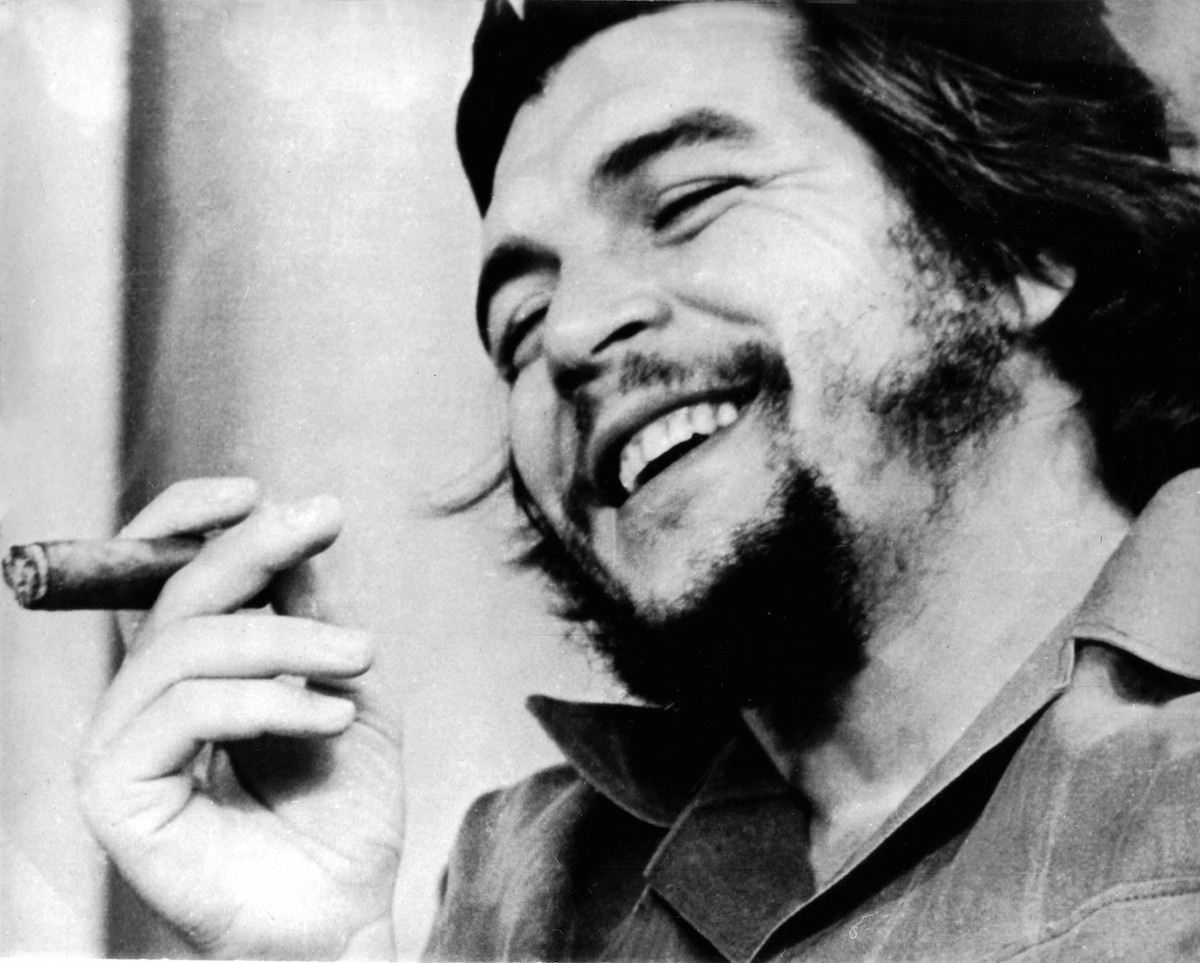
It was the night I call the “Che Guevara Night”—my last night in Manila, so a couple of girl friends and I went out to Malate, now a hot spot in Manila, to the Café Havana de Manila to be exact, Friday night it was, when streets were blocked off and the rotunda teemed with people, not just the baklas of long ago, although I understand Remedios Street still has gay bars—I am always amazed at how crowded places can get in Manila: malls, streets, packed with people night and day— and so at 8:30 we were seated in a corner of the Café, the Remedios side, looking out at the very same street my mother and I used to walk on every Sunday on our way to Malate Church—and oh, the bitter sweet memories of that time of my life when I was sixteen and living in Malate with my mother—but that night the three of us sat in that café which is not really a café but a high-priced restaurant packed with Che- memorabilia: framed pictures of the charming delicious Che smiling, smoking a cigar, and staring down at us, and waiters and waitresses looking cool with their red Che-berets, as we had our paella and lengua and two pitchers of Margarita, and because I’d be leaving the next day, we didn’t have enough time to tell the stories, by women past their prime, two still looking for Mr. Right, and talking about the Mr. Wrongs of their lives, now told with humor, although 15 years ago the same stories were told with tears, three women huddled together, laughing, with Che listening to every word and smiling, smiling, smiling.


~end~


Monday, June 4, 2018

Natural Treatments for Hair Growth


Natural Treatments for Hair Growth

GUGO or GOGO:   I have always known about Gugo Bark for hair growth and wrote about this a while back - "Cecilia's Recipe: How to Make Gugo or Gogo Shampoo."  The liquid from the Gugo bark soaked in water has been used for centuries in the Philippines as hair shampoo or rinse and is famously known for hair growth.

 Even as a girl, we used this in Cebu where I grew up in.  Now, there are shampoos and conditioners made with Gugo, but nothing beats the unprocessed liquid from the Gugo bark -- if you can find the bark at all, as this is now difficult to find.

I am fairly certain that Gugo is good for hair growth because it's a DHT blocker.

DHT or dihydrotestosterone is a derivative of the male hormone testorone which causes hair follicles to shrink and eventually die. Since men and women have testosterone and estrogen (in varying levels), women can also have DHT that harms their hair follicles.

Thursday, May 24, 2018

This Saturday! Filipino American Authors at LA Public Library 5/26/18 3 pm


AFTERNOON WITH FILIPINO AUTHORS
CECILIA BRAINARD & PAULINO LIM Jr.

Sat. May 26, 2018, 3 p.m.
Los Angeles Public Library, Meeting Room A
630 W. 5th Street, LA, CA 90071

Cecilia Brainard and Paulino Lim will talk about their experiences as Filipino authors in America. They will also read from their works, and there will be book signing. The International Languages Department of the Los Angeles Public Library hosts this free literary event.


Monday, May 21, 2018

Sicily: Greek, Roman, and Norman Influences


The Island of Sicily is 25,711 square kilometers, slightly smaller than Massachusetts (27,340 square kilometers). Because of its strategic location in the Mediterranean, it has always had invaders coming and going: Phoenicians, Carthaginians, Greeks, Romans, Arabs, Byzantines, Normans, French, Aragonese, Austrians, Spanish, and more.  

Saturday, May 19, 2018

Discovering Sicily: The Godfather and the Mafia


Before visiting Sicily, my ideas about Sicily were picked up from the movie The Godfather (Francis Ford Coppola 1972). Because Vito Corleone and many other Sicilians immigrated to America, I had the notion that Sicily must be a poor place. I also had the idea that Sicilians were all members of the Mafia, people who would make you an offer you couldn't refuse.  My brain teemed with preconceptions from the movie, and at the Milan airport, before boarding the plane for Catania in Sicily, I glanced at the dusky-skinned men with hooked noses, thought of Vito Corleone and his family, and felt as if I would meet Michael and the ill-fated Apollonia Corleone when we landed Catania.


Thursday, May 17, 2018

Visiting Paris in May


Dear Readers,

I've just returned from a trip to Paris, Sicily, and Malta.  I've been unable to blog because Blogger is slow, although I've been able to post pictures in my Facebook and Instagram accounts -- links below.

https://www.facebook.com/ceciliabrainard

https://www.instagram.com/ceciliabrainard/

I have much to share and will start with Paris.


Saturday, April 21, 2018

Novelist Cecilia Brainard Reading in Paris April 26


If you're in Paris, join me on Thursday April 26 @ 8-11:30 pm at the ParisLitUp at the Culture Rapide, 103 rue Julien Lacrois, Paris , Ile-de-France 75020. Metro Belleville. 

I'll be sharing excerpts from my three novels: When the Rainbow Goddess Wept, Magdalena, and The Newspaper Widow. 


Wednesday, April 18, 2018

Afternoon with Filipino Authors Cecilia Brainard & Paulino Lim - May 26 @ 3 pm


Please mark your calendar! This is a great opportunity to learn about Filipino and Filipino American Literature.

Afternoon with Filipino Authors Cecilia Brainard & Paulino Lim, Sat. May 26, 2018, 3 p.m. Los Angeles Public Library, Meeting Rm. A, 630 W. 5th St., LA, CA 90071


Tags: Philippines, Philippines, literature, FilAm, books, writers

Read also

Tuesday, April 17, 2018

Cecilia Brainard's Creative Writing Tips


Hi, I have some Creative Writing Tips, one-minute videos, sharing nuggets of information that I have learned through years of writing and editing 20 books. You can view them in YouTube. Please click on the links below:

Creative Writing Tip No. 1 - Sensuous Writing -
https://youtu.be/N5WnVQLHLMg

Creative Writing Tip No. 2 - Make a Date with Your Muse
https://youtu.be/b2RcLDzbAbI

Creative Writing Tip No. 3 - Show Don't Tell
https://youtu.be/KAAmYUBdE6k

Creative Writing Tip No. 4 - Writer's Block
https://www.youtube.com/watch?v=_7WGuqIJQJs

Creative Writing Tip No. 5 - Complex vs Flat Characters
https://www.youtube.com/watch?v=8pNCWjtYoO0

Creative Writing Tip No. 6 - Writing Space
https://www.youtube.com/watch?v=jA8XI_9a_N8


Creative Writing Tip No. 7 - What Is Your Story?
https://www.youtube.com/watch?v=I6Q1G7DEVeA

Stay tuned for more!  Please save this link and visit again.

Cecilia Brainard

Tags: beginning writing, how to write, fundamentals of writing, creative writing, elements of creative writing, literature, personal essays, Muse, novel, books, workshop #creativewriting #writing

Read also

Monday, April 16, 2018

Taking Charge of Fake News and Propaganda


Last February 2018, Special Prosecutor Robert Mueller indicted 13 Russian nationals and three Russian entities for allegedly meddling in the 2016 American presidential election among other counts. Acting Atty. General Rod Rosenstein said, "The defendants allegedly conducted what they called information warfare against the United States, with the stated goal of spreading distrust towards the candidates and the political system in general."

Number 4 of the Indictment reads:

"Defendants, posing as U.S. persons and creating false U.S. personas, operated social media pages and groups designed to attract U.S. audiences. These groups and pages, which addressed divisive U.S. political and social issues, falsely claimed to be controlled by U.S. activists when, in fact, they were controlled by Defendants. Defendants also used the stolen identities of real U.S persons to post on ORGANIZATION-controlled social media accounts. Over time, these social media accounts became Defendants' means to reach significant numbers of Americans for purposes of interfering with the U.S. political system, including the presidential election of 2016."

Saturday, April 14, 2018

Short Story by Cecilia Brainard, Waiting for Papa's Return


Hi, I'm sharing my short story, "Waiting for Papa's Return", which is part of my first short story collection, Woman with Horns and Other Stories. This story also appeared in the anthology Home to Stay: Asian American Women's Fiction, edited by Sylvia Watanabe and Carol Bruchac, Greeenfield Review Press. It was also published in Making Waves: An Anthology of Writings by and about Asian American Women, edited by Asian Women United of California, Beacon Press.

Woman with Horns and Other Stories is easily available in its Kindle ebook form. ~ #CeciliaBrainard
~~~
WAITING FOR PAPA'S RETURN
by Cecilia Manguerra Brainard
Copyright 2018 by Cecilia M. Brainard, all rights reserved.

When Reverend Mother Superior tells Remedios her father died, all she can think is how ugly the nun looks. Remedios stares at the mustache fringing the nun's upper lip; Reverend Mother Superior stares back with pale watery eyes.

“This morning, child. Heart attack,” the nun says.

Thursday, April 12, 2018

Cecilia Brainard's Creative Writing Tip No. 4 - Writer's Block


If you're suffering or have suffered writer's block, check out Cecilia Brainard's Creative Writing Tip No. 4 on how to overcome Writer's Block:

https://youtu.be/_7WGuqIJQJs


I'm also sharing a schedule of my upcoming literary events, including one in Paris, France, as the featured reader at ParisLotUp Open Mic Reading, Culture Rapide, 103 rue Julien Lacroix, 75020 Paris.  Here's their link:

http://parislitup.com/event/plu-open-mic-featuring-cecilia-brainard/

Have a great weekend!

Tags: beginning writing, how to write, fundamentals of writing, creative writing, elements of creative writing, literature, personal essays, Muse, novel, books, workshop #creativewriting