Thursday, February 10, 2011

Pictures of Pasig River

Here are some pictures of the cleaned-up Pasig River. Note the children playing in the river, in one picture.


Follow-Up: Cleaning Up Cebu's Creeks & Rivers


While I was in Cebu recently, I saw this sign hanging on the historic bridge on Logarta Street in Old Historic Cebu. The sign says: No Dumping of Garbage at This Area. Multa: P500.00 - P1,000.00 or 6 Months Imprisonment.

The Logarta Bridge is the same bridge where I had seen a foreigner stare with horror at the filth floating in the creek below two years ago. I was delighted that the Barangay Captain and Council have taken measures to stop the dumping of garbage into this creek.

Coincidentally, after the fluvial parade of the recent Sinulog, there were a number of articles that discussed the garbage that filled the sea and caused the malfunctioning of some motorboats. That filth that appeared in the sea most likely came from creeks and rivers. In a sense, it is good that people unfamiliar with the pollution of Cebu's rivers and creeks now know how bad the situation is.

It is commendable that the Barangay Captain and Council of the district where the Logarta Bridge is located should put up the No Dumping of Garbage Sign.

It is my hope that the other barangays and local governments will put up similar signs to prevent pollution of Cebu's rivers and creeks.

Likewise, streets should be kept clean, and perhaps local barangays can place garbage containers along the streets and encourage people to throw their garbage in them.

And while we're at it, how about some beautification of the sidewalks of Historic Cebu? After all, quite a lot of tourists who bring in money to the city visit Old Cebu.

And to go further, how about the city government offer residents of Old Historic Cebu a tax break for painting and fixing up their places? That should encourage some people to slap on some paint on buildings that currently look dilapidated.

Government officials must keep in mind that tourists bring in a lot of revenue and tourists want a place to be safe and clean, among other things.

I'm posting below the link to my February 2009 article about the pollution of Cebu's rivers and creeks.


http://webcache.googleusercontent.com/search?q=cache:wRx6oYbP7O8J:cbrainard.blogspot.com/2009/02/clean-up-canals-in-old-cebu.html+old+cebu+historic+bridge&cd=2&hl=en&ct=clnk&gl=us&source=www.google.com

Monday, February 7, 2011

Town & Country Philippine Edition - Article "Up Close and Personal with the Bongo" by Cecilia Brainard

Up Close and Personal with the Bongo
published in Town & Country, Philippine Edition, January 2011;

On a safari in Kenya, a party of tourists is treated to the beautiful – and rare – sight of an endangered species of antelope.

By Cecilia Manguerra Brainard

“Sometimes species do spring up in areas where they are least expected. I sighted and photographed a caracal in the Aberdare many years ago and this stunned many conservation biologists as caracals are savanna-dwelling species, yet the Aberdare is a montane forest.” —Dr. Charles Musyoki, senior research scientist of Kenya Wildlife Service.

It was winter in Kenya and there was enough chill that morning in Amboseli to make me and Lauren, my husband, throw on our light jackets. We opened the doors of our patio, hoping to see Mount Kilimanjaro. All we saw was the outline of the great mountain in a hazy shroud with two faint streaks of white ice at its peak. We made our way to the dining hall where we met up with our traveling companions, our old friends John and Elizabeth Allen.

That morning in July, we happily reviewed what we had seen in Kenya so far. In Nairobi we visited the Sheldrick Elephant Orphanage, the Giraffe Manor and the Karen Blixen Museum. In Amboseli we saw wildlife writer and conservationist Cynthia Moss in a van following a family of thirty elephants. We witnessed two hyenas shrieking from across the road and rushing toward each other to do their elaborate greeting. One evening we saw a hippo rise out of the lake and get up on land to feed – it still had clumps of wet leaves clinging to his head and body. We had other lucky sightings -- of giraffes, gazelles, waterbucks, birds of all kinds, all unusual and exciting for us who had seen these animals only in zoos. We didn’t know it then, but no game drive sighting would surpass the one we would witness later that same morning.


Our driver guide, Ben Juma, did his best to avoid the enormous potholes on the dirt road as we headed to the Aberdares. Ben had worked for fifteen years as a driver and guide and was professional, personable and very knowledgeable about all animals.

We were a kilometer away from the main road when Ben suddenly stepped on the brakes. It was around 9:30 A.M. Some forty feet ahead of us, something stirred on our right. Ben, who had excellent eyesight, could spot animals before any of us could. He said, “There are antelopes.”

We were in a Nissan van with a pop-up top. We watched one antelope walk in front of us, followed by three more. Everything happened quickly. They crossed the road from our right to the left, disappearing into the brush. Ben usually identified and gave information about the animals, but this time he said, “It’s a-a-a…” Quickly, even while the antelopes were still making their way through the brush, he reached for his field guide and flipped the pages.
I watched the animals in the brush. One of them looked back at us, while the rest of the herd went deeper into the brush. Like his companions, this antelope was huge and sported an attractive, bright red-brown coat. I saw his head, somewhat thick neck and horns that curved over his head in the shape of a lyre. He stared for what seemed like a long time, his head appearing ghostly in the midst of the brush. I wanted to take a picture but all of us had put away our cameras, thinking we were done with game drives for the time being.

Meanwhile, Ben held up his field guide which was opened to a page with pictures of antelopes. “Which one?” One of them had the same reddish-brown coat and shape I had just glimpsed, and simultaneously John pointed at the same animal, saying, “That one, with the stripes!” Ben nodded. “Bongo,” he said, then added, “No one will ever believe me.”


Ben told us the bongo was a rare animal, but we were nonchalant; we thought the sighting was just another lucky break. We didn’t know anything about the bongo.

Ben and John discussed the stripes they had seen on the sides of the animals; all of us talked about their vivid red-brown coats, their horns and enormous size. Their movements were cautious but not skittish. We rechecked the field guide book; only the mountain bongo matched what we had seen.

We arrived at the Aberdares National Park in the afternoon, hoping to see many animals at The Ark game lodge. We had to go to the Aberdare Country Club, and from there take a forty-minute bus ride to lush mountain terrain. The driver talked about the animals in the Aberdares. When he mentioned the bongo, we quickly said, “We saw bongos this morning.”

“In Amboseli?” He had an amused smile.
“Oh, yes,” we said, and proceeded to tell our story.
“Did your driver see this?” he asked.
“Oh yes,” we replied. His smile vanished.

At the lodge the director immediately asked us about the bongo sighting. He spent a good deal of time educating us about the critically endangered animal—meaning, there are more of the species in captivity than in the wild. The bongo can be found in the wild in only four places: Mount Kenya National Park, Mau Forest, Eburru Forest and the Aberdare National Park. There are only 500 bongos left in the world and most of them in zoos. In Kenya only 103 are in the wild and sixty-eight are in semi-captive facilities. The Aberdare Salient had electrified fences all around to keep poachers and loggers out. In April 2000, to protect the bongo population, two hundred lions were removed from the Aberdares Conservation Area.

The lodge director did not say so, but what he inferred was that it was simply unbelievable that our group had seen four bongos in Amboseli. Still, even though he could discount what the four of us tourists said, he couldn’t fully disregard what our driver and guide had to say.

After an uneventful night at The Ark, we returned to the Aberdare National Park. The director and another man also made their way there to interview Ben about the bongo sighting. They talked for a long time. They knew Ben knew his antelopes and there was no way he would have mistaken some other antelope for a bongo.

During our drive to Samburu, the Kenya Wildlife Service (KWS) called several times. They asked Ben and us about the bongo sighting. They wanted pictures or video of the bongo, which we did not have. They said they would send scientists to comb the area where we had seen the animals.


Call it serendipity, but on the same day the KWS called, the National Bongo Task Force met in Nyeri, Kenya, to discuss, among other things, the genetic testing on the bongos in semi-captivity as a prelude to their release to the wild. In the 1960s Wildlife Conservationists partnered with the Kenya Wildlife Department and American scientists to develop a plan to capture a small group of bongos and send them to American zoos to ensure their survival should they become extinct in Kenya. Between 1966 and 1975, thirty-six bongos were captured in the Aberdares and sent to U.S. zoos. The bongo did well in captivity, and by the end of 2001, 323 individuals were in the captive group.

KWS senior research scientist Dr. Charles Musyoki told us that in 2004, a breeding group of eighteen bongos were repatriated to the Mount Kenya Game Ranch. Eleven of them died. Ten from the original U.S. herd managed to breed. The current bongo captive population stands at sixty-eight (in Mount Kenya Game Ranch and Nanyuki).

While the plan is to reintroduce the offspring of the repatriated bongos to the wild, none of the captive bongos have yet been released into the wild. Last July, the task force members agreed that genetic issues need to be addressed by further analysis of wild and captive bongos. It was decided that some bongos would be released to fenced sanctuaries to prevent mixing with wild stock.

After our fourteen-day safari, I contacted Dr. Musyoki to ask what had been done in response to our sighting. He said their scientists were still surveying the area. He explained that poaching, habitat loss, disease and genetic factors had been contributing to the shrinking of the bongo population since the early 1900s. I was sad to learn that these elegant, non-aggressive animals were being killed for their horns and pelt.

The bongo has been selected as the flagship species for one of the world’s richest forest ecosystems. Its diminishing population reflects the destruction of the forest ecosystem. With the focus on the conservation of the bongo, it is hoped that other species that share its habitat or are vulnerable to the same threats may also be improved.


The last place we visited in Kenya was the Nairobi National Museum which is famous for its collection of five- to –ten-million-year-old hominid skulls. While my companions studied these artifacts, I went to another room which displayed mounted heads of a hartebeest, greater kudu and bongo. My eyes zeroed in on the bongo; this one looked like the head of the Amboseli bongo that had stared out at me from the brush—the same snout, markings, horns and ears sticking out just so. The Amboseli bongo had a brighter coat and the horns may have been shorter, but it was the same animal.

The sight of that mounted head brought me back to the moment when I saw that first bongo step out on the dirt road, followed by three more -- huge, horned, elegant animals with startling red-brown coats. One stood guard and stared at us, while the three vanished into the brush, and finally the fourth one turned and disappeared as well.

Sunday, February 6, 2011

The Trip to the Philippines & Vietnam - 1


I just got back from a trip to the Philippines and Vietnam and I'll be posting pictures in my blog in the next weeks. The visit to these places were great. More, later.
~~~
Top picture: picture taken during the taping of Amazing Cebu TV show, with Gavin Bagares (to my left) interviewing me and Stephen Azanar (to my right, with director and crew;
Next: l-r: John Silva, me, and Hilary Walling, having lunch at La Tienda in Bel Air after John gave us a wonderful private tour of the American Cemetery;
Third from top: l-r: Cecilia, Pat, Lauren, and Doug Noble having drinks at the famous Caravelle Hotel;
Fourth from top: Cecilia in front of Dragon made of flowers in Saigon park; the people were celebrating Tet;
Fifth: Cecilia and Lauren in the beautiful city of Hoi An, which used to be a major port until the river silted up;
Sixth from top: Cecilia at the Cham temple of My Son;
Bottom: Lauren and Cecilia in Saigon airport waiting for a Vietnam Air Lines flight to Hanoi (which turned out to be very, very cold - we had to fish out our jackets when we arrived! The hotel was caught off guard and didn't have adequate heat; our group had to ask for space heaters and extra blankets.)

Friday, December 31, 2010

Cecilia Brainard 2010 Retrospective in Pictures


~~
From top to bottom:
January - Cebu Normal University
February - India
April - San Miguel Allende, Mexico, with Lauren, Doug, Hilary, and Myrna
April - LA, with Linda Nietes, and other Filipino American writers
May - LA Library, with Miguel Syjuco
June - (photo taken in Mission Santa Barbara, California)
June - Cebu, Philippines, taken at Yap-Sandiego House
August - France,with Lauren and Michael Genelin
August - Kenya
October - LA, Gawad Kalinga, with Carina Montoya
November - San Francisco, with teachers of Galileo High School
November - San Francisco, with Veronica Montes
November - San Francisco,with Theresian High School chums (STC San Marcelino)

Thursday, December 23, 2010

COMING TOGETHER IN SKOKIE - FILIPINO CULTURE HIGHLIGHTED 2011

Coming Together in SkokieKnowledge. Awareness. Appreciation. events calendar
email announcements
Immerse yourself in the culture of the Philippines this winter as Coming Together in Skokie enters its second year. Each year, Coming Together in Skokie will highlight a different culture in our richly diverse community to build knowledge, awareness, and appreciation of our different backgrounds and to weave us all more closely into the vibrant tapestry that is Skokie. Here is a sneak preview–the complete schedule will be available in January. In the meantime, view the program book.
Reading together
Celebrating Filipino culture

--------------------------------------------------------------------------------

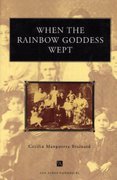
Reading Together The backbone of Coming Together in Skokie is reading and discussing books that are rich in cultural aspects. This year, we are highlighting author Cecilia Manguerra Brainard, who will be visiting Skokie in March. Numerous book discussions of When the Rainbow Goddess Wept will take place in January and February at the Library and both high schools and will be open to the entire community. Copies of Growing Up Filipino, short stories edited by Brainard, will also be available. In order to bring younger readers into the celebration this year, three additional books will be highlighted at the Library and in several schools.

Celebrating Filipino Culture The kickoff celebration, which will include a fashion show, dance, music, food, and a special theatrical presentation, will be held at Niles West High School on Friday, January 28, beginning at 5:45pm. Mark your calendar now!

Numerous events will follow, taking place throughout February and early March at locations throughout Skokie. Brochures with all of the details will be available in January. In addition to book discussions, the Library is hosting exhibits of Filipino art, an art workshop, a concert, a dessert night, and more. The full calendar will be posted here soon. Plan to be part of Coming Together in Skokie!

Review of Eleanor Ty's The Politics of the Visible in Asian North American Narratives

Someone forwarded this to me. Eleanor Ty looks at various books, including When the Rainbow Goddess Wept (by Cecilia Brainard, University of Michigan Press):

"The obvious strength of Ty's work is the lucid insistence with which she evokes the invisible dimensions of Asian North Americanidentities,which is accompanied by a paradoxical recognition of the visible." - from a review of Eleanor Ty's The Politics of the Visible in Asian North American Narratives. Toronto: University of Toronto Press, 2004

Voodoo Poems and Magic Prose by Angus Woodward

This was just forwarded to me; it mentions me.- cb

Voodoo Poems and Magic Prose (c) Angus Woodward

I don't have to tell you how uncertain our profession can be. Whether a writer has been heaped with praise or buried by rejection, we all know that our luck-- good or bad-- can change abruptly. We listen attentively to the stories of writers who toil in obscurity for years before lightning strikes; we also remember the names of writers who we thought had achieved fame, even canonization, but who are no longer read or even mentioned. We hear legends of great books being abandoned by publishers on the eve of publication, and tales of obscure small press titles achieving classic status through word-of-mouth. On a smaller scale, we watch literary magazines sprout and fade like dandelions. In my case, three separate magazines have accepted my stories, only to fold before my work reached print. In some ways we are like athletes, who with one lucky bounce or fortuitous gust can become legends, and who with one misstep can lose their careers to injury. But do writers react to such uncertainty the way many athletes have, with bizarre superstitious rituals, eating only fried chicken before writing, wearing lucky sweaters, wielding lucky pens?

Others have noticed, I am sure, that writers have a reputation for superstitiousness. It seems that every interviewer asks his or her subject about superstition or ritual-- often enough that any question about a writer's work habits sounds like a fishing trip. Perhaps it has something to do with the well-known tales of Hemingway insisting on writing standing up, with twenty sharpened pencils at the ready. George Plimpton reported in the late fifties that "Hemingway finds it difficult to talk about writing . . . he feels so strongly that such ideas should remain unexpressed, that to be asked questions on them `spooks' him." Plimpton also wrote that near the space where Hemingway worked there was "an odd assortment of mementos: a giraffe made of wood beads, a little cast iron turtle, tiny models of a locomotive, two jeeps and a Venetian gondola . . ." and that these were "tokens" which "[had] their value." Plimpton referred to these talismans again when he concluded that "Hemingway may admit superstitions of this sort, but he prefers not to talk about them, feeling that whatever value they may have can be talked away." In other words, Papa was superstitious about his superstitions. The image of Hemingway standing at the bureau, fingering fetishes and widening his eyes at the thought of discussing the writing process has lingered, influencing the public's perception of writers.

While Hemingway's oft-cited interview has done much to perpetuate writers' reputations for superstitiousness, many profiles and interviews of recent years have kept the myth alive. Dana Huebler, in a profile of Philippine writer Cecilia Manguerra Brainard for Poets and Writers, stated that "Having just completed the first draft of her second novel, Brainard is superstitious about discussing the details of the book, fearing it may `kill' the work." Without a verbatim quote from Brainard, it is difficult to know whether the writer sees herself as superstitious, but in any case Huebler touches on an issue that seems to be a litmus test of a writer's superstitiousness: commenting on work-in-progress. We are at our most uncertain when the work is incomplete and unproven, and questions about unfinished products bring writers' "spookiness" to light. Cynthia Ozick's response to a question about a novel in progress has a ring of superstition to it, for example: "I'd better say no more, or the Muse will wipe it out ... I have lost stories and many starts of novels before. Not always as punishment for `telling,' but more often as a result of something having gone cold and dead because of a hiatus." John Edgar Wideman refused to identify favorites among his books for his interviewer, saying "It's sort of like kids; even if you did have favorites, you wouldn't say that aloud because you might hurt the others' feelings." I've heard that fishermen's wives in traditional fishing communities are careful not to let the ocean hear them bid their husbands good-bye, for fear that it will take them away for good. Brainard, Ozick and Wideman are similarly reluctant to offend the spirits of inanimate objects, confirming their interrogators' suspicions.

But it is not only interviewers and profilers who perpetuate the notion that writers are superstitious. Many writers have admitted to being devoted to particular writing rituals, and ritual is closely associated with superstition. Even in the religious sense, ritual relies on repetition, as do superstitions: knocking wood every time a rosy prophecy is made, throwing a ball to the first baseman at the end of each inning. Maya Angelou told George Plimpton that she every time she writes, she lies "on a made-up bed with a bottle of sherry, a Roget's Thesaurus, yellow pads, an ashtray, and a Bible," in hotel rooms whose walls have been stripped bare of any decoration. Joan Didion was asked, "Do you have any writing rituals?" and responded by saying, "The most important is that I need an hour alone before dinner, with a drink, to go over what I've done that day . . . Another thing I do, when I'm near the end of the book, is sleep in the same room with it." Derek Walcott, speaking for himself and all writers, associated ritual with religion (which some equate with superstition), when he said, "I don't know how many writers are willing to confess to their private preparatory rituals before they get down to putting something on paper. But I imagine that all artists and all writers in that moment before they begin their working day or working night have that area between beginning and preparation, and however brief it is, there is something about it votive and in a sense ritualistic."

Some writers explicitly deny their own superstitiousness, but reveal an assumption that other writers are superstitious. Elie Wiesel has said, "I am disciplined, hardworking. I have no superstitions," but added, ". . . Some writers need all kinds of idiosyncrasies. One took a wet cloth to the forehead; another had to get drunk; a third had to take drugs. Hemingway stood, another was sitting, another was lying." Robert Stone seems to know what the interviewer is fishing for-- and to have other writers in mind-- when he says, "There are no particular rituals connected with [the working environment] for me, like having a special cup of coffee or sharpening six pencils."

Other writers have commented publicly on their reluctance to discuss work in progress, but attribute their reticence to more practical concerns than those of Brainard, Ozick and Wideman. E.L. Doctorow was asked if he'd ever lost a story by discussing it before it was written, and replied, "Yes. When you're talking about a story you're writing it. You're sending it out into the air, it's finished, it's gone." I asked fiction and non-fiction writer Dinty W. Moore to comment on such practices. "To me, it is an explainable phenomenon," he wrote. "If you discuss the ending of a story with a friend, some of the urgency of finishing it on the page can be lost." Poet William Trowbridge is similarly pragmatic: "I'm reluctant to discuss a work in progress but only because I want to concentrate all my energy on writing rather than talking about it."

Doctorow, Moore and Trowbridge come across as more practical than superstitious, but it is as easy to associate their policies with superstition. There are as many superstitions involving "never" as there are involving "always," so that never discussing work-in-progress, whatever the reason, can be perceived as "just like" never walking under a ladder. People tend to associate any writing habit or rule with ritual, and to associate ritual with superstition. It is easy to forget or ignore the fact that some rituals are not superstitious, and that some habits are not rituals.

Virtually any writer, when asked by interviewers, emphasizes the importance of some aspect of the creative process, which adds fuel to the fire of superstitious reputation. Bernard Malamud put it very succinctly: "If [a writer] is not disciplined, no sympathetic magic will help." One's discipline may include six sharpened pencils, black fine-point Pilot pens, or a reluctance to "offend" one's books. While a writer may not perceive his or her attachment to such habits as irrational voodoo, others may.

It is perhaps more accurate to say that writers are attached to their tools, beliefs, rituals and methods in the same way that a horn player is dedicated to a particular trumpet, or a wood carver to certain familiar tools. Unaccustomed tools, instruments, surroundings or processes come between the writer and the poem or story, interfering with the symbiosis between the player and the music, the carver and the object, simply by being noticeable. Familiarity allows us to forget about the objects in our hands, so that we can get closer to the character, the music, the image. John Hersey has pointed out that "Disturbing the rituals surrounding writing may be very confusing, very difficult." It is reasonable to assume that Maya Angelou insists on bare walls to reduce distraction. William Trowbridge is certainly concerned with the elimination of distraction: "Because I started writing poems on legal paper, I continue to do so in order to keep the physical medium familiar and therefore non-distracting." Dinty Moore confesses that "I still can only write using an ancient version of a DOS-based software . . . the crude software with which I first began serious writing." This attachment to "what worked before" may seem irrational to others, and may seem to come out of fear that the "magic" will be lost. Irrationality and fear being components of superstition, it is no wonder that writers strike others-- and sometimes themselves-- as superstitious.
Although the superstitiousness of writers seems to be exaggerated, the result of misinterpretations of writers' comments on idiosyncratic processes, writers have good reason to be superstitious, due to the high level of uncertainty that plagues the profession. Charles Baxter could almost as easily have been talking about athletes as writers in saying, "So much good writing depends on talent and good luck that writers probably fear that their talent and their good luck will run out. Writers don't necessarily get better as they get older. Frequently they get worse. Superstition is the natural result of all this, as it would be in any occupation where the injury rate increases with age." Superstition often arises in response to doubt, whether it is the superstitions of a primitive tribe or of fishermen's wives. In our chaotic world, we gather some comfort from the idea that throwing salt over our shoulders may avert disaster, which we know may arrive quite suddenly. Poet Rodger Kamenetz theorizes that "Writers probably are superstitious because how their work is valued does not depend entirely on their efforts. . . Every writer is a speculator by definition-- most of us work on spec and every writer is a gambler and every gambler I know of is superstitious." Poet David Starkey seconds the notion when he laments that, "Even after ten years of sending things out, it still seems like such a crap shoot . . . ."

Many writers have been superstitious, which simply means that they view their dedication to certain work habits as superstitious, while others may explain their own rituals more rationally. Some are "spooked" by the idea of discussing work in progress; others simply refrain. It comes down to the fact that when we write, we face the uncertainty alone, with only our black ballpoints, our cast iron turtles, or our DOS-based software for company. Facing the blank page is strictly a solitary pursuit, and Samuel Johnson cautioned us to "Remember that the solitary mortal is certainly luxurious, probably superstitious, and possibly mad." Time will tell whether my decision to forsake Pilot and try my luck with 7mm Zebras was mad.

Works Cited Huebler, Dana. "An Interview with Cecilia Manguerra Brainard." Poets and Writers. March/April 1997: 96-105.
Oleander, Renee. "An Interview with John Edgar Wideman." AWP Chronicle 29:3 (December 1996): 1-8.
Plimpton, George, ed. Writers at Work: The Paris Review Interviews. 2nd Series. New York: Viking, 1963. [Hemingway]
----------. Writers at Work: The Paris Review Interviews. 5th Series. New York: Viking, 1981. [Didion]
----------. Writers at Work: The Paris Review Interviews. 6th Series. New York: Viking, 1984. [Malamud]
----------. Writers at Work: The Paris Review Interviews. 8th Series. New York: Viking, 1988.[Doctorow, Hersey, Ozick, Stone, Walcott, Wiesel]
----------. Writers at Work: The Paris Review Interviews. 9th Series. New York: Penguin, 1992. [Angelou]

Tuesday, December 21, 2010

Cute YouTube Christmas Stories

I enjoyed these YouTube Christmas clips! Merry Christmas!


The Computer-Savvy Christmas Story http://www.youtube.com/watch?v=GkHNNPM7pJA&feature=youtu.be


Facebook Christmas
http://www.youtube.com/watch?v=QhcKd8uV6cM

Thursday, December 16, 2010

Bishop Declares Marian Site in Wisconsin, On par Fatima, Lourdes

I was delighted to read in yesterday's Los Angeles Times that there is a church-recognized Marian site in the U.S. Here are relevant links:
Shrine of Our Lady of Good Help <
http://shrineofourladyofgoodhelp.com/>
The Bishop's Declaration

Information re Our Lady of Good Help

Article re Our Lady of Good Help Shrine

Wednesday, December 15, 2010

A List of Filipino Writers by Ryan, Free Writing Center

Found this in the site of Free Writing Center, posted by Ryan; thank you for including me in your list.
http://www.freewritingcenter.com/a-list-of-filipino-writers/
A LIST OF FILIPINO WRITERSposted by Ryan,Nov. 17, 2010

In the English speaking world, many people don’t realize just how wonderful non-English speaking writers are. One of the communities that produce some of the most amazing writers is the Filipino community - so I’ve decided to offer this list of Filipino writers for our Filipino readers.

The following are a top list of Filipino writers, but at the bottom of this article you’ll also find a list of about thirty more that deserve mention.

Top 10 List of Filipino WritersIn a literary world dominated by English-speaking writers, it isn’t always easy to make your mark as a Filipino writer. However, the culture and heritage embodied by the carefully crafted words of some writers pay tribute to the creativity and writing skill of this community.

The following writers are a few of the best Filipino writers you’ll find. Whether you are Filipino or simply love the culture, make sure to check out these writers.

Manuel ArguillaManuel Arguilla was the author of the 1940 book of short stories titled How My Brother Leon Brought Home A Wife. It took first prize for short stories in the 1940 in the First Commonwealth Literary Contest. People that knew him said that he enjoyed doing his writing around one or two in the morning, when the stories came to him easily.

His stories reflect the heritage of his home town Barrio Nagrebcan, Bauang, La Union. Even though he moved away to Manila to earn his degree at the University of the Philippines in 1933, his heart remained back home.

Although his life seemed to revolve only around writing, teaching creative writing at the University and later editing Welfare Advocate for the Bureau of Public Welfare, there was a deeper aspect to Manuel. He expressed his political stance by putting together an intelligence unit to thwart the Japanese in WWII.

In October of 1944, he was captured by the Japanese army and brought to Fort Santiago, where he was tortured for information and then executed. He left behind his wife, Lydia Villaneuva, who happens to be another excellent Filipino writer.

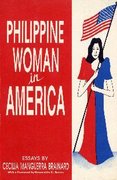
Cecilia Manguerra BrainardCecilia is an award-winning female Filipino author with a significant writing career including eight novels. Born in Cebu, Philippines, she wrote When the Rainbow Goddess Wept, the novel she is best known for. Other books include Magdalena, three books of short stories, Philippine Woman in America, Cecilia’s Diary 1962-1968 and Fundamentals of Creative Writing.

She also collaborated with four other female authors on the novel Angelica’s Daughters.

She received plenty of awards for her work, including a Brody Arts Fund Award, a Special Recognition Award, a Certificate of Recognition from the California State Senate, the Filipinas Magazine Award for Arts and the Outstanding Individual Award from Cebu, Philippines where she grew up.

She continues to teach and lecture about creative writing, and lives with her husband and former Peace Corp volunteer Lauren Brainard, as well as their three sons, in Leyte, Philippines.

Angela Manalang GloriaTo branch out into other areas of creative writing, it’s only fair to cover Angela Manalang Gloria, a pianist and poet who, despite her tragic life, wrote notable lyrical poets - sonnets - as part of her love of music. You can find a partial collection of her poems in Poems (1940).

One reviewer commented that her poems are “sweeter and more tender [and more melodious] than Tarrosa’s”.

Born in Albay, from a young age she loved reading and music. She started playing the piano at a very young age. Schooled within the girls’ schools run by the religious orders of the region, she was always top of her class. Her life was an exploration of talents, from being a pianist, to attending pre-law school, and even painting and art. Everything about her portrayed a skilled creativity.

Eventually she served as a literary editor at Philippine Collegian, and while there she married editor-in-chief Celedonio Goria, who later became a lawyer. Her storybook life took a turn for the worse during her work as an editor at Herald Mid-Week Magazine, when she became ill. To make matters worse, her husband served in World War II and lost his life. Many say that the harsh realities of her life transformed her into a pragmatist - and at the close of her life she no longer contributed as a Filipino writer…instead she entered into business and became financially successful on her own.

Additional List of Filipino Writers
Marivi Soliven Blanco earned her Literature digree from Simons College in Boston, and her mass communications degree in the Philippines. She wrote The Unicorn, Chief Flower Girl and The Toad and the Princess to name a few. In 1992 she won second prize in the Don Carlos Palanca Memorial Award for Literature.

Norma Olizon-Chikiamco was a journalist and editor of Food Magazine, Sunday Globe, Metro and Celebrity Magazine. She won first prize in the 1995 Don Carlos Palance Memorial Awards for Literature.

Leoncio P. Deriada won the 1994 Don Carlos first prize for The Man Who Hated Birds, and wrote The Dog Eaters and Other Plays, Night Mares and The Week of Whales.

Lina B. Diaz de Rivera won 2nd prize in the 1996 Don Carlos Awards for The Gem. She had her masters in reading and doctorate in English, and wrote Ferry in the Sun, Goldon Galleon and English for High School.

Angelo Rodriguez Lacuesta won 3rd prize in the 1996 Don Carlos for The Daughter of the Wind. He had a debree in biology, and published work in various magazines and journals such as Likhaan Anthology of Poetry and Fiction, The Evening Paper, The Philippine Daily Inquirer, and Sunday Inquirer Magazine.

Twink Macaraig won first prize in the Don Carlos in 1994 for What is Serendipity? She was a news anchor in Singapore, and wrote The Ultimate, and the Absolutely Indispensable Guide to Food Delivery in Metro Manila. She is currently a news anchor for Asia Business News in Singapore.

Ino M. Manalo won third prize in the Don Carlos in 1993 for Little Bird, Little Fish, and the Two Elephants. He also wrote The Architect’s Design and Botong: Alay at Alaala.

As you can see, the list goes on and on. The Filipino community clearly added a great deal to the Literary advancement of the world, and continues to do so every day.

*****
Ryan is a technology writer and investigative blogger. He has been working as an online writer for numerous clients for over 5 years, and now consults webmasters and blog owners about effective SEO optimization. Ryan has 53 post(s) at Free Writing Center

Holiday Gift Book List - reprinted from Barbara Jane Reyes/PAWA blog

I'm reprinting this from: http://pawainc.blogspot.com/search/label/Books

This holiday season, why not give the gift of literature? We will be posting reading lists and book buying suggestions from Filipino American authors here. This first one's from Eileen Tabios:

THE CHAINED HAY(NA)KU ANTHOLOGY Curated by Ivy Alvarez, John-Bloomberg Rissman, Ernesto Priego & Eileen Tabios. More info.

ARCHIPELAGO DUST by Karen Llagas (Meritage Press, 2010).

STAGE PRESENCE: CONVERSATIONS WITH FILIPINO-AMERICAN PERFORMING ARTISTS, Ed. Theodore S. Gonzalves (Meritage Press, 2007).

REQUIEM FOR THE ORCHARD by Oliver de la Paz (University of Akron Press, 2010).

TRAJE DE BODA by Aileen Ibardaloza (Meritage Press, 2010).

KALI'S BLADE by Michelle Bautista (Meritage Press, 2006).

THE THORN ROSARY: Selected Prose Poems & New (1996-2010) by Eileen R. Tabios, Edited with an Introduction by Thomas Fink and Afterword by Joi Barrios (Marsh Hawk Press, 2010). I realize I'm citing my book but I really want to draw attention to Dr. Barrios' essay which is useful in terms of discussing Filipina women's poetry. Ordering info: Hardback and Paperback.

PRAU by Jean Vengua (Meritage Press, 2007).


THE TRANSLATOR'S DIARY by Jon Pineda (New Issues Poetry and Prose, 2008). Semi-finalist in very competitive SF State Poetry Center Book Award contest that I judged.

POEMS OF THE BLACK OBJECT by Ronaldo Wilson (Futurepoem Books, 2009). Winner of 2010 AAWW Poetry Award that I judged with John Yau and Sesshu Foster.

DIWATA by Barbara Jane Reyes (BOA Editions, 2010).

~~~

Luis Francia: Holiday Gift Book List

The Beauty of Ghosts, by Luis H. Francia (Manila: Ateneo de Manila University Press, 2010). (Order at Philippine Expressions.)

Autobiography of Mark Twain: The Complete and Authoritative Edition, Vol. 1 (Berkeley: University of California Press, 2010).

Haywire: Flash Fictions, by Thaddeus Rutkowski (New York: Starcherone/Dzanc Books, 2010).

Poems of the Black Object, by Ronaldo Wilson (New York: Futurepoems Books, 2009).

Ilustrado, by Miguel Syjuco (New York: Farrar Straus & Giroux, 2010).

The Verso Book of Dissent: From Spartacus to the Shoe Thrower in Baghdad, edited by A. Hsiao & A. Lim (New York: Verso Books, 2010).
~~~~~
This list is from Karen Llagas:

Baker of Tarifa by Shadab Zeest Hashmi (Poetic Matrix Press, 2010).

Bulaklak sa Tubig: Mga Tula ng Pag-ibig at Himagsik / Flowers on Water: Poems on Love and Revolt by Joi Barrios (bi-lingual, Tagalog-English; Anvil Publishing, 2010).

The Place That Inhabits Us: Poems of the San Francisco Bay Watershed, edited by Sixteen Rivers Press (Sixteen Rivers Press, 2010).

Independence, by Sarah Lapido Manyika (Legend Press, 2008).

Crown of Dust, by Mary Volmer (Soho Press, 2010).

A Thousand Threads, by Steve Orlen (The Hollyridge Press Chapbook Series, 2009).

~~~~~
This list is from Veronica Montes:

What It Is (Drawn & Quarterly, 2008) and Picture This: The Near-Sighted Monkey Book (Drawn & Quarterly, 2010) by Lynda Barry. Writers and artists will be inspired by these two unorthodox “manuals” for the creative life. Written by hand and filled with Barry’s color-saturated collages, drawings, doodles, and whatnot, they're pretty much impossible to put down.


Pinoy Capital: The Filipino Nation in Daly City, by Benito M. Vergara, Jr. (Temple University Press, 2009). Like thousands of Filipinos before me, and hundreds of thousands after me, I grew up in Daly City. This is a fascinating anthropological take on my hometown, written in a style that is somehow both academic and conversational. A must-have for the bookshelf of anyone with even a tangential interest in a landscape that holds special meaning for Filipinos.

A History of the Philippines from Indios Bravos to Filipinos by Luis Francia (Overlook Press, 2010). A history of the Philippines written by a poet/journalist? Who could resist such a fine book? Pick up two copies: one for yourself, and one to offer as a gift to someone who has been very, very good this year.

Imago by Joseph O. Legaspi (CavanKerry Press, 2007). I had the chance to hear Joseph read from the poems in Imago when he participated in the PAWA Reading Series earlier this year, and was instantly drawn to his work. He captures all the beauty and innocence of childhood, tempered by the inevitable intrusion(s) of death, violence, sex (the confusing parts, that is). So good.

Diwata by Barbara Jane Reyes (BOA Editions, Ltd., 2010). Lush, lovely, inspired. These poems are filled with startling imagery, strong women, and story, story, story.


The Solemn Lantern Maker, by Merlinda Bobis (Delta, 2009). This novel begins just six days before Christmas with a mute boy trawling the streets selling his handmade paper lanterns. Add to this his best friend Elvis (who holds a terrible secret), an injured and missing American tourist, and a post-9/11 let’s-freak-everybody-out media frenzy, and what do you have? A really good story.

Growing Up Filipino II: More Stories for Young Adults, Cecilia Brainard, ed. (PALH Books, 2009). I would recommend this anthology even if I didn’t have a story in it. It’s one of those books I’d wished I’d had as a teenager and young adult, simply because it’s affirming to have our experiences transformed into a narrative on the page. You’ll find bits and pieces of yourself and yours in these stories, for sure.

I’d also like to recommend subscriptions to literary journals that seem to consistently support the work of Filipino writers. Bamboo Ridge Press, The Asian American Literary Review, and Manoa instantly come to mind.

~~~~~
Here's Vangie Buell's:

Sky High: The True Story of Maggie Gee, by Marissa Moss, illustrated by Carl Angel (Tricycle Press, 2009).

Cora Cooks Pancit, by Dorina K. Lazo Gilmore, illustrated by Kristi Valiant (Shen's Books, 2009).

Twenty Five Chickens and a Pig for a Bride: Growing up in an Filipino Immigrant Family, by Evangeline Canonizado Buell, illustrated by Carl Angel (T'Boli Publishing, 2006).

Images of America: Filipinos in the East Bay, by Evangeline Canonizado Buell, Evelyn Luluquisen, Ellie Luis, and Lillian Galledo (Arcadia Publishing, 2008).

Look for these books at Arkipelago Books and Eastwind Books of Berkeley.

~~~~
Here are Oliver de la Paz's recommendations:

In Canaan, by Shane McCrae (Rescue Press, 2010).

Burnings, by Ocean Vuong (Sibling Rivalry Press, 2010).

Each Crumbling House, by Melody S. Gee (Perugia Press, 2010).

Sweet Grass, by Micah Ling (Sunnyoutside Press, 2010).
~~~~~
Here's Barbara Jane Reye's list:

Lola: A Ghost Story, by J. Torres and Elbert Or (Oni Press, 2010).

Growing Up Filipino II: More Stories for Young Adults, edited by Cecilia Brainard (PALH Books, 2010).

breaking poems (Cypher Books, 2008), and Born Palestinian, Born Black (UpSet Press, 2010), by Suheir Hammad.

A History of the Philippines: From Indios Bravos to Filipinos (Overlook Press, 2010), and Eye of the Fish: A Personal Archipelago (Kaya Press, 2001), by Luis Francia.

The Solemn Lantern Maker (Delta, 2009), and Banana Heart Summer (Delta, 2008), by Merlinda Bobis.

In the Company of Strangers, by Michelle Cruz Skinner (Bamboo Ridge Press, 2009).

The Salt-Wind, Ka Makani Pa'akai, by Brandy Nalani McDougall (Kuleana 'Oiwi Press, 2009).

Outlaw: The Collected Works of Miguel Piñero (Arte Publico Press, 2010).

The Gods We Worship Live Next Door, by Bino A. Realuyo (University of Utah Press, 2006).

from unincorporated territory [saina], by Craig Santos Perez (Omnidawn Press, 2010).

Up Jump the Boogie, by John Murillo (Cypher Books, 2010).

Migritude, by Shailja Patel (Kaya Press, 2010).

Also remember, you can shop online at Arkipelago Books and Eastwind Books of Berkeley.
~~~

~~~~
Cecilia's List:
Lim, Paulino, Jr. REQUIEM FOR A REBEL PRIEST. New Day, 1996, First Edition, softcover, 225 pp., Paulino Lim is a professor of English at Cal State Long Beach.You can read his short story, Curacao Cure, in Our Own Voice (March 2002) http://www.oovrag.com/stories/stories2002a-3.shtml, Requiem for a Rebel Priest is his 3rd novel of a trilogy set during the Marcos and Aquino regimes follows the return of an ex-Jesuit to the Philippines when restless segments of the military were attempting to overthrow the Aquino government. You can find this and his other books in amazon.com

Ty-Casper, Linda. DREAM EDEN. Ateneo de Manila University Press, 1996, First Edition, softcover, 460 pp.,
One of the most prolific Filipino American writers is Linda Ty Casper who has written over 15 books. She is one author who should be admired not only for her talent but for her grace. This novel by Linda Ty-Casper is a portrait of the Philippines just before the Peaceful Revolution of 1986 up to the last coup of 1989.

Ty-Casper, Linda. AWAITING TRESPASS. New Day, 1989, First Edition, softcover, 180 pp.,
New York Times Book Review says: "Linda Ty-Casper pulls no punches in this unusual novel, which she describes as "a pasión" - yet she wears silk gloves. With jobs so deft they avoid the didactic but sting mightily, she indicts everything, from the values of the well-to-do to martial law.."


Brainard, Cuizon, Evangelista, Montes, and Sarreal. ANGELICA'S DAUGHTERS, A DUGTUNGAN NOVEL. Anvil, 2010, First Edition, softcover, newsprint, 200 pp,
Angelica's Daughters is a collaborative novel by five established Filipina writers, called a "dugtungan." A dugtungan is a genre of Tagalog novel popular early in the 20th century, in which each writer creates a chapter and hands it off to the next, who writes another chapter without direction. The result, in this case, is an ensemble performance that contains something of the exhilaration of theatrical improv. One watches these accomplished authors inventively weave a historical romance, creating gripping heroines and turns of plot, crossing decades and national boundaries, tapping into cultural roots of the Philippines, Spain and America. Reading Angelica's Daughters is a gripping experience.~ Brian Ascalon Roley, Author of American Son (W.W. Norton)


Briones, Concepcion G. LIFE IN OLD PARIAN. Kaguiakan 2000, softcover, new, 99 pages.
I love this hard to find book about historic old Cebu, especially because the Parian district is undergoing gentrification. Concepcion Briones writes about growing up in the old Parian district of Cebu. She writes about the old families who lived there; she describes the houses and landmarks of the place; she records gossip of the time. This book is a must-read for anyone interested in Cebu.

Evangelista, Susan. GROWING INTO ASIA AND OTHER ESSAYS. UP Press, First Edition, softcover, 102 pp.
This is a collection of charming and insightful essays by Susan Evangelista who straddles many worlds. She hails from Michigan but is married to a Filipino. She has traveled to Japan, China, Thailand, Cambodia, and many other places. In this collection, she explores her life as an American in the Philippines, and reflects on the many other facets of her fascinating life. Evangelista taught writing and literature at the Ateneo de Manila.

Wednesday, December 8, 2010

UPDATE NEIL SEDAKA CONCERT AT DISNEY HALL


Even though I was looking forward to the Neil Sedaka Concert at Disney Hall (December 7, 2010), I felt some nervousness. I wondered what he'd look like, and if he could still sing. A few years ago, my husband and I saw the Burt Bacharach concert at the famous Sydney Operahouse, and while we enjoyed the experience, we noticed that Burt was passing off a lot of the singing parts to his backup singers. Put simply, Burt could no longer sing well.

Those thoughts were running through my mind as I looked at the single grand piano on the stage - no full orchestra as Burt had - just a single piano. I wondered if Neil, at 71 years old, still had the voice.

When Neil Sedaka walked on to the stage,I am sure I was not alone in sizing him up. Thank God, he still looked like the Neil Sedaka of the 1960s. Okay,he looked older and he shuffled a bit but he still looked enough like that Neil of my youth.

He didn't say much - a short greeting, then he sat and played the piano and sang - and a wave of relief ran through me. The music was still good! More than good, great. The quality of his voice was still thankfully great. He seemed to avoid the high notes, but the voice itself was fine.

He started off with the old hits, giving bits of information about each song, and encouraging the audience to sing-along. The audience, clearly old fans, did just that, belting out 50 year old lyrics. And I have to admit, that so did I. Who would forget: Breaking Up Is Hard to Do, The Diary, Oh Carol, Calendar Girl, Happy Birthday Sweet Sixteen?

These songs brought me right back to my teens when I used to plaster my ear against the radio to listen to those hits. We all had a crush on Neil Sedaka. I had 45pm records that I also played (yes, I was one of the 40 million who bought Oh Carol). I also bought those Song Hits booklets with the words of the songs, and croon away at night. (I can still remember the lyrics of Run Samson Run, Little Devil, and his other songs.)

Here's a couple of things that he did last night that I liked: he'd turn his head now and then so the audience behind and to his side could see him; and he'd get up after each song and acknowledge the clapping by sweeping his right hand, and nodding to the audience all around him. (While it wasn't exactly a theater-in-the-round,there were a few seats behind him and to his left side, who had his back most of the time.)

From the old songs, he went on to songs he'd composed after the Beatles showed up and he suddenly ceased being popular. The Hungry Years had a haunting, melancholic sound as opposed to the perky cheerful songs of the '60s. I read somewhere that during his "hungry years" it was Australia that continued to give him work. So did England,the English continued to support him even while Americans had dumped him for the English boys. Last night he mentioned that a musical based on his life, "Laughing in the Rain," will be presented in London this March.

Good for Neil! Really, it's wonderful that this man, who has been playing the piano and singing for over half a century is getting the attention that he's getting now. Look at his contemporaries, I hardly hear about them - Paul Anka, Fabian, Connie Francis, Pat Boone. But here Neil Sedaka is still giving concerts to full houses.

I enjoyed the songs. His early songs were delightful,not only because of the joyful melody but because of the associated memories. His latter songs were pleasant to listen to and they were effective in evoking emotion, but they were difficult to remember. They didn't have that "jingle" effect that some of the early popular ones had.

The audience loved his old songs and his new songs. They gave him a standing ovation at the end so he had to come back and play some more.

I was left with respect for a man who has been true to his art. This was what I got from last night's concert. When a man has such a gift from God, he needs to honor that gift whether or not he is popular; you just have to use the gift.

This was what Neil did. He had the gift from the start. Son of Turkish-Jewish immigrants, he grew up in Brooklyn. His second grade teacher in a choral class suggested to his parents that he take piano lessons. His mother took a part-time job in a department store for six months to pay for a second-hand upright piano. In 1947, he attended the Julliard School of Music on Saturdays. He was big in the 1950s and the early 1960s, but by the late 1960s was losing popularity in the US. But he kept at it and found his audience outside the US. It seems he kept his life together - one wife, children, no drugs. And now at 71 years old, he's still doing his thing. That's what I call a blessing straight from God.

Go Neil!

Tuesday, December 7, 2010

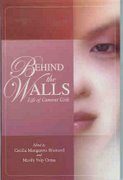
ARTICLE RE BEHIND THE WALLS, Edited by Brainard & Orosa


THE COLEGIALA EXPERIENCEby Maria Clarissa Estuar (The Philippine Star), Dec. 5, 2010

THIS WEEK’S WINNER
MANILA, Philippines - Maria Clarissa Estuar, 34, is a scriptwriter for ABS-CBN. She is part of the creative teams behind the primetime soap opera Kristine and a soon-to-be-launched teen drama. She has seven Palanca awards to her name.

In a couple of weeks, a wedding will bring my high school barkada together for the first time in 13 years. We were sophomores when we gravitated towards each other at the exclusive school for girls where we were enrolled. E-mails and Facebook helped keep the friendship alive even though half of our group has settled in North America, and the other half has remained in the Philippines. I’ve been feeling understandably sentimental, so when I chanced upon the book Behind the Walls: Life of Convent Girls, I got myself a copy and started skimming it.

Behind the Walls is a collection of essays from women who went to convent schools from before World War II to the 1990s. I immediately skipped to the essay by Eunice Noelle Lucero after figuring out that she went to the same school on Leon Guinto just a few years after my friends and I graduated from there. The soundtrack to my barkada’s high school experience was New Kids on the Block while hers was Pearl Jam, but I discovered that not much had changed during her time. Our ancient Filipino teacher still terrorized girls on a daily basis. The typing teacher still made her students wear brown paper bags on their heads during touch-typing exercises. She wielded a small triangle that she hit to signal the class to start pounding on their typewriters’ keys. To help keep the pace, she played music from a portable cassette recorder and stomped her foot to the beat. I suddenly remembered somebody telling me that once, the typing teacher’s heel got stuck in a hole on the teacher’s platform. Apparently, she timed her efforts to pull herself free to the beat of the music.

Reading that piece was a nice start because it brought me down memory lane, but I wondered if I would enjoy the essays written by women who went to other schools. As students, we held biases against girls from our rival schools and old prejudices die hard, I suppose, but I promised myself I’d keep an open mind as I plowed through the other essays.

I was amused by what appeared to be a universal difficulty in following our schools’ dress codes. Several essayists mentioned how they waged battles on skirt lengths, the resentment they felt for being forbidden to wear colored (and not just neutral) hair accessories, and how they managed to experiment with makeup even though the nuns who ran their schools frowned upon the use of mere pressed powder. Our own blue and white uniforms caused us a fair amount of grief whenever our teachers caught us walking around with one jumper strap artfully dangling off one shoulder or when we were basically using our skirts as mops whenever we sat down on the floor and slid to our friends to gossip with them.

As Holy Ghost alumna Milagros Delgado Enage pointed out, colegialas have always been expected to live out the virtues of order, simplicity and modesty, but honestly, the indoctrination process wasn’t exactly painless.

For the record, I did not go to school with a bunch of well-behaved girls. For the most part, we behaved like high-spirited teens who refused to be caged in. “Boisterious” was how fellow Scholastican Neni Sta. Romana-Cruz described us.

Through the years, colegialas have tried to stretch the boundaries in different ways. Rosemarie Montañano related that back in the 1960s, she was on her way back to school with her fellow internas when they made an unplanned detour to pick guavas by the roadside even though they knew they’d be severely reprimanded. Maria Concepcion Abeleda-Beltran confessed to procuring a contraband copy of Lady Chatterly’s Lover, only to be disappointed by how badly written it was.

In a way, the good nuns who ran these schools contributed to the cultivation of this daring side of many colegialas. In keeping with their goal to provide a well-rounded education to their girls, many of these institutions had outreach programs that required students to go to depressed areas to teach catechism, distribute food and clothing, and be exposed to certain social realities for the first time in their lives.

Karina Africa Bolaso pointed out how ironic this was, for she was sent to a “harmless convent school” because her parents believed no harm could come to her there because it was a place where “fine, well-bred young gentlemen went to look for their future wives.” Little did her parents know that within a year, their precious daughter would be joining protest rallies and going to evacuation centers with the blessings of her school’s administration.

Many colegialas do look back and remember how their schools gave them the chance to get out of their gated communities sans parents and amahs for the first time in their lives, forcing them to be a little more independent. Bettina Rodriguez Olmedo asserted though that in her own experience, these outreach activities “were not sufficiently involving to be capable of bursting life’s lovely bubble for the average Theresian who was usually equipped with a pair of ‘blinders’… For her, life’s problems were magnified a hundredfold. Papa’s refusal to raise her allowance was a disaster. Having to wear the same dress at another party attended by the same circle of friends was a catastrophe. Failing to catch the eye of a heartthrob was a major tragedy.”

Lolita Delgado Fansler seemed to support this view, for she wrote, “Ours was a sheltered childhood. Separated or divorced parents didn’t inhabit our tiny world because parents never gossiped about troubled marriages in front of us. Going to non-Catholic schools in the United States — or even the University of the Philippines — for college was not something colegialas were supposed to do, lest we become atheists, communists, rebels, or fallen women.”

For the most part, my own colegiala experience was peppered with trivial concerns. At times, my barkada’s discussions revolved around the stone tables, and how they became our school’s most prestigious tambayan even though it meant eating lunch on top of bathroom tiles and constantly worrying about the very real threat of higad falling from the tree that provided shade to those tables.

Other times, we tried balancing chemical equations while I nagged my friends into helping me decide if I should risk asking my crush who had spiked hair to go to the prom with me, or if I should just settle for my best friend’s cousin. I think being in the school pergola with a panicky friend when the big earthquake struck in mid-1990 was the most traumatic event in my stint as a Kulasa.

A Theresian and a Maryknoller contributed essays to the book, which spoke about a particular aspect of colegiala life that doesn’t come up often. Despite the high tuition fees, some middle class girls do manage to enroll in these schools, and I was one of them. Even though we got to wear the same uniform and learned the same lessons, we didn’t experience convent school life in the same, exact way as our more affluent peers.

Alma Clutario-Patist related how a swimming party turned sour when her friend’s mother came home to find her there: “Casually, she asked me a few questions — what’s your name, where do you live? From her look of disinterest, I knew that that would be the last time I would be swimming in their pool. My family background did not come up to her family’s standards.”

In her own essay, Sonia Carreon admitted to being subjected to “verbal bullying” from one of her classmates. She wrote, “I never pretended to be rich nor even acted rich, but I guess my effort at trying to blend in was not working. Someone actually did not like me because I was poor and from the province. What had I done to make this girl hate me?”

Luckily, I didn’t go through anything as dramatic. It helped that I was surrounded by friends who also had parents who worked hard and pinched centavos just to pay our tuition. It made things a little easier, but I still remember feeling bad — no, ashamed — because I couldn’t afford those Marks and Spencers crocheted socks that almost everybody else was wearing. Actually, I probably could have extorted enough money from my parents to buy one pair, but it didn’t feel right to indulge myself when they sacrificed so much just so that I could continue studying in that rich girls’ school.

Years after this, I got my first paycheck and was tempted to use part of it to buy myself a pair of those socks even though I had no idea where I’d wear them because my days of wearing shiny Mary Janes were long gone. I was able to fend off the impulse though because by then, I had learned that it is possible not to define one’s self through designer labels. I’d like to think that because of this, I’ve made our school’s Benedictine nuns proud.

The preface of Behind the Walls posed this question: “Is being a colegiala today of as great significance as it was then?” Almost all of the essayists in this book asserted that they developed a taste for higher learning that probably wouldn’t have germinated in another environment. We learned to push ourselves, we became comfortable competing with others, partly because we didn’t have to worry about male peers watching us and thinking, “That’s not ladylike behavior at all.” Without realizing it, being driven to succeed was seared into our system little by little.

But most of all, the essayists and I appreciate our colegiala experience because this was when we established lifelong friendships. I met Pia, Hannah and Joy when we were silly school girls who spent an inordinate amount of time teasing our bangs into a tsunami shape while trying to breathe under a cloud of Aqua Net. We drank from one Coleman during breaks and suffered through trigonometry, arnis and carpentry classes together.

Our lives now are infinitely more complex, but I have a feeling when we see each other again, it would be as if we hadn’t been apart. It would be just like old times.
~~~~

BEHIND THE WALLS: LIFE OF CONVENT GIRLS
Edited by Cecilia Manguerra Brainard & Marily Y. Orosa
Anvil Publishing, softcover, 222 pages
(www.anvilpublishing.com)
email: anvilpublishing@yahoo.com

Sunday, December 5, 2010

Introduction ~ VIGAN AND OTHER STORIES by PROF. OSCAR CAMPOMANES


Introduction to VIGAN AND OTHER STORIES, a short story collection by Cecilia Manguerra Brainard (Anvil, 2011)
by Oscar V. Campomanes

Cecilia Manguerra Brainard, Scenographer It gives me great pleasure to introduce this new anthology of Cecilia Manguerra Brainard’s fiction even as she really needs no introduction to a Philippine readership. As the young scholar Marge Rafols discovered in a recently completed study of Brainard’s institutional politics and creative work, Cecilia has consistently pursued a rather telling strategy, of which the publication by Anvil of this collection is only the latest example. Despite extended residence in the US for much of her adult life, and her considerable publishing success in that country, Cecilia has primarily oriented her writing to—and sought to circulate/publish it for the most part in—the Philippines, wanting Filipino readers to have first access to the fruits of her labors as a literary artist. Rafols reads this bifocality of Brainard’s career as an institutional politics on the writer’s part that addresses two major concerns: the constant need for diasporic storytellers like her to affirm and sustain a connection to and an investment in the cultural development of the ancestral homeland; and the endemic institutional invisibility or exclusion of Filipino Americans and migrants in the American cultural and political arenas (Rafols 2010). One, obviously, has everything to do with the other, and both can make sense, as Rafols amply demonstrates in her accomplished study, when construed in the context of the “special” (that is, neocolonial) relationship between the Philippines and the United States.

The cultural and political liminality in US society to which Filipino Americans and migrants had been historically and chronically doomed (a fate that is beginning, fortunately, to look up)—on account of the politics of self-disavowal of the American Empire which is now the object of a flourishing Filipino American postcolonial critique—might in some way explain the effet de retour of diasporic identity politics of the kind Brainard manifests. And the strategy to reorient one’s work as a writer to readers back ‘home’ without much care as to its potential for recognition from an American or international audience could perhaps mean, at one and the same time, an investment in Philippine literary culture, and an oblique but pragmatic realization of the nearly irremediable lot of Filipino American and migrant marginality in the colonizer’s context. One is then led to the unlikely wager that by contributing to homeland cultural development as the priority, the diasporic writer might effectively escape from the limiting and oppressive determinations of American institutional invisibility or paradoxically induce American establishment culture and institutions (still the arbiters of global literary visibility and celebrity) to take notice of one’s iconoclastic work or perspectives resulting from such a politics of location and self-displacement.

Whatever the actual results of such an institutional and publishing strategy in terms of critical and publishing coups in the United States, Cecilia’s ‘wager’ has been rewarded by an unusual number of local critical studies devoted to her writing, and the sustained interest expressed by Filipino academic students in her literary innovations, cultural activism, and personal identity politics. Apart from Rafols at Ateneo and others I know, University of Santo Tomas literature professor John Jack Wigley wrote his splendid MA thesis (2004) on the strategic and political gynocentrism of Woman with Horns and Other Stories, and the up-and-coming local literary critic of Filipino American literature, Frances Jane Abao of the University of the Philippines has rigorously located When the Rainbow Goddess Wept in an emergent tradition of the ‘ethnic bildungsroman’ (2001). By the late 1990s and early 2000s, other Filipino American and migrant writers like the poets Eileen Tabios and Ma. Luisa Igloria, the fictionist M. Evelina Galang, even Filipino diasporic writers from other global locations like Australia, Europe, and Japan, had begun to follow Cecilia’s lead and, at the very least, to count publication in the Philippines and access to a Filipino readership as an important component of their individual quests or career aspirations. The ‘return effect,’ in Brainard’s own case, saw not only the eventual republication of When the Rainbow Goddess by both an American trade publisher and university press after first being published as Song of Yvonne by New Day in Manila, but also a spate of critical studies of this novel and her other works by feminist and Asian American literary critics like Helena Grice, Dolores de Manuel, Guiyou Huang, C. Hua, Rocio Davis, Alicia Otano, S.T. Leonard, etc. in American learned journals, critical anthologies, and reference volumes.

What has been said of Carlos Bulosan’s village stories that “[they] are so simple as to seem effortless”—something similar having been said of N.V.M. Gonzalez by a crusty American critic that the latter’s stories are “so understated as to seem so artless”—may be said of Brainard’s fictions, generally, and of her stories in this collection, in particular. I qualify this seemingly left-handed assessment by citing a caveat made by the same critic of Bulosan’s village stories that, in fact, “such stories are the most difficult to write.” Cecilia’s style is even more spare or sparing, letting the words do the barest work possible of depicting action, description, or sequencing the events, for example. I’d call this style, which seems fairly unique to her (even when compared to that of old masters like Bulosan and Gonzalez), as scenographic, to borrow a term from cinema. In flash-fiction pieces like “The Dirty Kitchen,” “Flying a Kite,” and “The Che Guevarra Night,” this tendency and skill of staging fictional character, event, or setting as barely apprehensible scene/s—moving at a pace like that of briskly edited montage—is in most evidence. But the scenographic style also marks the stories that seem to form a cycle by their common setting of Ubec (Brainard’s noteworthy fictional inversion and immortalization of her beloved city of birth, Cebu), or are presented as separate pieces that can stand on their own, from their obvious provenance as chapters in an abortive novel (“Vigan,” “The Rice Field,” “Tia Octavia,” “The Last Moon-Game of Summer,” “Sagada” etc).

Like Manuel Puig’s cinematextual idiom in Kiss of the Spider Woman, Jessica Hagedorn’s filmic crosscuttings in Dogeaters, or M. Evelina Galang’s phototexts (as I call her ‘verbal pictures’) in One Tribe, but again less opulently so, Brainard’s fictional scenography seems calculated, by contrast, to allow for the emergence of what Walter Benjamin once predicted, marveling at the power of the cinematic, as a new habitus of perceiving and thinking, to which Benjamin gave the enigmatic appellation “the critic in a state of distraction” (1968 [1955]). This is another way of saying that Cecilia’s stories, by their narrative minimalism (they are so scenographic as to seem uneventful), ostensibly seem to create the ample space for a more active readerly collaboration that is not so much consciously thought out as reflexively elicited. Here I have in mind a story like “Romeo” which willfully violates the rule that first-person narration cannot be omniscient, suggesting that it can be scopic if the forgiving reader is willing to supply the missing angles of vision—a pretty defamiliarizing strategy of rendering fictional action as scene/s best exemplified and demonstrated by the clairvoyant narrator of “My Mother is Dying” or in the epistolary exchanges between immigrant mother Nelia and the Old World grandmother (‘Mama’) about the errant Filipino American daughter Mindy/Arminda in the delightful yet poignant story “Flip Gothic.” In short, Cecilia’s compositional aesthetic allows for that strange physics that the technology of cinematic vision and storytelling—one that penetrates and dissolves dimensional planes—enables, or makes eminently imaginable, according to Water Benjamin.

I would like to speculate that this scenographic style is very much in accord with what the late Southeast Asianist scholar Les Adler once determined to be Brainard’s historiographic politics of keeping the lives of her men and women characters—set as these are in both historical and contemporary milieux—“continually in the camera’s eye” (Adler 1996). Watch these stories unfold, do not simply read them, in other words. When watching them—like they were projected on the screen of one’s osmotic imagination—do so, as Walter Benjamin says, as if one is engulfed by the flood of scenic images (mindful in some way that they are strategically arranged or sequenced by the writer’s filmic and historiographic sensibility), and thus as if moved to connect them, if only half-consciously, to one’s subliminal image-repertoires of a history shared with so many others, which would otherwise remain fragmentary and unarticulated, but, in the hands of a skillful and unobtrusive verbal auteur like Brainard, now form some absorbing montage of seamless and crosscut continuity shots.

Works Cited
Abao, Jane Frances P. 2001. “Retelling the Stories, Rewriting the Bildungsroman: Cecilia Manguerra-Brainard’s When the Rainbow Goddess Wept.” Humanities Diliman (January-June).
Adler, Les. 1996. “Acapulco Sunset and Other Stories: A Review.” Pilipinas 26 (Spring).
Benjamin, Walter. 1968 [1955]. “The Work of Art in the Age of Mechanical Reproduction.” In Reflections, transl. Harry Zohn and ed. Hannah Arendt. New York: Harcourt Jovanovich Inc.
Rafols, Margarita. 2010. “Hide and Seek: Redefining ‘Filipino’ in Cecilia Manguerra-Brainard’s Fiction by Filipinos in America (1993) and Contemporary Fiction by Filipinos in America (1997).” BA Literature Thesis, Ateneo de Manila University
Wigley, John Jack. 2004. “Representations of the Female Body in Cecilia Manguerra-Brainard’s Fiction.” MA Literature Thesis, University of Santo Tomas.


PROFESSOR OSCAR V. CAMPOMANES teaches critical theory and literary/cultural studies in the Department of English, Ateneo de Manila University; and semiotics, media criticism, and culture theory in the Communication Program of the UST Graduate School. His recent essays regarding American empire critique, Filipino American postcoloniality and literary history, and cultural semiotics have appeared in such journals as PMLA, Japanese Journal of American Studies, and Philippine Studies; and the anthologies Positively No Filipinos Allowed (Temple 2006; Anvil 2008) and Vestiges of War (NYU Press/Anvil 2002). An anthology of his critical writings is currently under preparation for publication both in the Philippines and the United States


For copies of Vigan and Other Stories, contact ANVIL (www.anvilpublishing.com)
email: anvilpublishing@yahoo.com
Vigan and Other Stories is available as a Kindle Edition at Amazon.com
In the US contact Philippine Expressions or PALHBOOKS.COM.